
TL;DR

Get audio and creator gear delivered free with Prime
- Fast, free delivery on millions of items
- Prime Video, Amazon Music and more included
- Member-only deals all year
A tilt-shift lens is a manual-focus lens that shifts parallel to the sensor to straighten converging verticals, and tilts to move the plane of focus. Architecture and product photographers genuinely need one; fine-art landscape shooters can take it or leave it; hobbyists chasing the miniature effect should skip it entirely. Expect to pay $1,000 to $4,000 — and rent before you buy.
Stand at the base of a tall building, point your camera up, and the building falls over. Not literally — but on your sensor, those proud vertical lines lean inward like the tower is toppling backward. Every photographer hits this wall eventually, and most of us spend years fixing it the wrong way.
A tilt-shift lens fixes it the right way: inside the camera, before you ever press the shutter. But it costs anywhere from $1,000 to $4,000, focuses by hand only, and demands a slower, more deliberate way of working. So who actually needs one?
I’ve shot architecture and commercial work for years, and I’ve owned, rented, and adapted more tilt-shifts than I care to admit. Here’s the honest breakdown: what these lenses really do, the two kinds of photographer who genuinely need one, and the much larger group who should keep their money in their pocket.
Only two groups genuinely need a tilt-shift lens: architecture/real estate photographers (shift for straight verticals at full resolution) and product/commerci…
Fixing converging verticals in Lightroom always crops the frame and stretches edge pixels; in-camera shift keeps every pixel you captured.
Focus stacking replaces tilt only for static subjects — steam, hands, foliage, or anything that moves argues for the lens.
The miniature effect never justifies a $2,000 lens; a blur gradient in software fakes the look in seconds.
Rent the right focal length for one real paid job before buying, and purchase only when the lens would have paid for itself.
Gear Verdicts · Optics · Perspective Control
Tilt-Shift Lenses:
Who Actually Needs One
Stand at the base of a tall building, point your camera up, and the building falls over — on your sensor, those proud verticals lean inward like the tower is toppling. A tilt-shift lens fixes that inside the camera, before you ever press the shutter. But it costs real money, focuses by hand only, and punishes hurry. Here is the honest breakdown of who earns it back — and who should keep their wallet shut.
“Shift preserves 100% of your sensor’s resolution. Fixing the same shot in Lightroom always costs pixels.”
The Core Argument01 — The Mechanics
What a Tilt-Shift Lens Actually Does
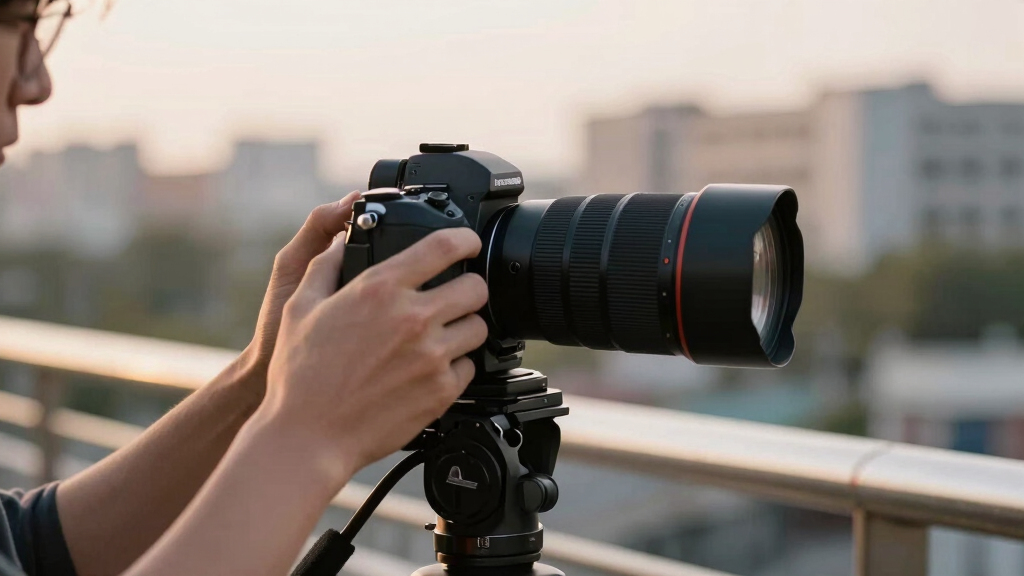
Think of it as a view camera’s front standard shrunk down to fit a normal camera mount: two mechanical movements built into the barrel, an oversized image circle so the frame never vignettes, and knobs with lock screws instead of autofocus.
Shift
The lens slides up, down, or sideways while staying parallel to the sensor. Keep the camera perfectly level and the lens simply reaches up into its image circle — the whole tower rises into frame with zero leaning lines.
Use: Architecture · Interiors · Stitching
Tilt
The lens plane rotates, and the focus plane rotates with it — the Scheimpflug principle. Lay the focus plane across a watch dial or a tabletop and everything is sharp at f/4. Flip it the wrong way and you get the razor-thin “miniature” slice.
Use: Product · Food · Still Life
Manual by Design
Nearly every tilt-shift ever made is manual focus only, driven by mechanical knobs. That sounds like a limitation — in practice it’s a filter: these lenses reward tripod-based, deliberate work and punish hurry.
AF: None · Workflow: Slow & Deliberate
02 — The Verdict
Find Your Row
Read this as a payback test. The top rows describe paid, deadline-driven work where the lens delivers something software can’t — or saves billable hours on every shoot. The bottom rows describe looks, and looks are cheap to imitate.
| Your Work | Verdict | Why |
|---|---|---|
| Architecture & Real Estate | ✓ Yes — The Core Case | Shift keeps verticals straight in-camera at full resolution. Post-correction crops the frame and stretches edge pixels you already captured. |
| Product, Food & Still Life | ✓ Yes — A Strong Case | Tilt gets the entire subject sharp at f/4–f/5.6 in a single frame — no focus stacking, no f/16 diffraction penalty. |
| Fine-Art Landscape | ~ Nice-to-Have | Shift-stitched panoramas and tilt genuinely help — but workarounds exist. It comes down to how large you print. |
| Miniature-Effect Hobbyists | ✗ Skip It | A blur gradient in software fakes the look in seconds, for free. The toy-town effect never justifies a $2,000 lens. |
| Portrait & Wedding | ✗ Skip It | Fast primes deliver creative blur for far less money, with autofocus and the speed event work demands. |
Rule of thumb — two groups genuinely need one; everyone else has a cheaper path to the same image.
03 — The Working Cases
Why Two Kinds of Photographer Pay Full Price
Architecture: lock the camera level, wind the shift knob upward, and the full facade rises into frame — straight, clean, every pixel intact. Product: tip the focus plane down along the subject and the whole piece is crisp in one exposure.
Pixels You Keep vs. Pixels You Throw Away
Lightroom’s guided upright tool is genuinely good for casual web-sized work. But on a demanding frame the crop bites hard, the top corners stretch, and on a tight site you can run out of frame entirely — the client wanted the plaza and the roofline, and the software made you choose.
Front-to-Back Sharp in a Single Frame
The watch three-quarter shot: at f/5.6 on a normal macro, maybe a third of the dial is sharp. Tilt the lens a few degrees and the focus plane lays down along the dial like a sheet of glass — crown to caseback, one exposure, done. Focus stacking does this too, until anything moves: steam off a dish, a settling garnish, a model’s hand.
04 — The Money
What $1,000 to $4,000 Buys
The market runs from budget manual glass to first-party classics and the first native mirrorless medium-format options. Rent the right focal length for one real paid job before you buy — then purchase only when the lens would have paid for itself.
Budget trade-offs: the Samyang/Rokinon 24mm is decent optically but a step below Canon and Nikon in build; Laowa’s 15mm and 20mm Zero-D lenses bring shift to Sony E, Nikon Z, Canon RF and L-mount at lower prices — shift only, no tilt. With no native Sony E or Nikon Z tilt-shift for years, adapting Canon TS-E and Nikon PC-E glass became the norm.
05 — Before You Spend
The Four-Step Test
Run this sequence in order. Most photographers wash out at step two — which is exactly the point of the test.
Audit Your Recent Paid Work
Count the shoots where straight verticals or single-frame depth would have saved the job — or the deliverable.
Push Software to Its Limit
Run guided upright and focus stacking until they break. If they never break for your work, stop here.
Rent for One Real Paid Job
Rent the right focal length — 17–24mm for buildings, 45–90mm for product — and shoot an actual commission.
Buy When It Pays for Itself
Purchase only when the lens would have earned back its price in saved hours and delivered frames.
06 — Work to Tool
From Your Work to the Right Tool
Every row maps a real assignment to the movement — or the cheaper alternative — that actually solves it.
What a Tilt-Shift Lens Actually Does
A tilt-shift lens is a manual-focus lens with two mechanical movements built into the barrel. Shift slides the lens up, down, or sideways relative to the sensor while keeping it parallel to it. Tilt rotates the lens plane, which moves your plane of focus. Typical movements run about ±8.5° of tilt and ±12mm of shift, depending on the model.
Think of it as a view camera’s front standard shrunk down to fit a normal camera mount. Shift is the movement you’ll reach for most. It lets you keep the camera perfectly level — sensor parallel to the building — and still get the top of the tower in frame. The lens simply reaches up into its oversized image circle and hands you the view, with zero leaning lines.
Tilt works on the Scheimpflug principle, a bit of optics that Austrian officer Theodor Scheimpflug patented back in 1904. It says the lens plane, sensor plane, and focus plane all intersect along one line. Tip the lens and the focus plane tips with it — like laying a sheet of glass flat across a tabletop instead of standing it upright. Suddenly an entire product, shot wide open at f/4, is sharp from front edge to back.
Both movements are driven by mechanical knobs and lock screws, and nearly every tilt-shift ever made is manual focus only. That sounds like a limitation. In practice it’s a filter: these lenses reward tripod-based, deliberate work and punish hurry. Flip the tilt the wrong way and you get the opposite effect — a slice of focus so thin it feels almost loud. That’s the famous miniature look, and we’ll get to why it shouldn’t drive your buying decision.
professional tilt-shift lens for architecture photography
As an affiliate, we earn on qualifying purchases.
As an affiliate, we earn on qualifying purchases.
Who Actually Needs a Tilt-Shift Lens — and Who Doesn’t
The photographers who actually need a tilt-shift lens are architecture and real estate shooters and product or commercial photographers. Fine-art landscape photographers benefit but can work around it. Hobbyists chasing the miniature effect and portrait or wedding photographers should skip it — cheaper tools do the same job for them.
Here’s the whole article in one table. Find your row, then read on for the reasoning.
| Your work | Verdict | Why |
|---|---|---|
| Architecture & real estate | Yes — the core case | Shift keeps verticals straight in-camera at full resolution |
| Product, food & still life | Yes — a strong case | Tilt gets everything sharp at f/4–f/5.6 in a single frame |
| Fine-art landscape | Nice-to-have | Shift-stitch panoramas and tilt help, but workarounds exist |
| Miniature-effect hobbyists | Skip it | Software fakes the look in seconds, for free |
| Portrait & wedding | Skip it | Fast primes deliver creative blur for far less money |
Read the table as a payback test. The first two rows describe paid, deadline-driven work where the lens either delivers something software can’t or saves billable hours every single shoot. The bottom two rows describe looks — and looks are cheap to imitate. The landscape row in the middle comes down to how large you print and how much you enjoy stitching.
manual focus tilt-shift lens for real estate
As an affiliate, we earn on qualifying purchases.
As an affiliate, we earn on qualifying purchases.
Why Architecture Photographers Have the Strongest Case
A tilt-shift lens earns its keep in architecture because shift corrects converging verticals in-camera, at full sensor resolution. Post-processing can straighten the same lines, but it does so by cropping the frame and stretching pixels at the edges — you throw away image area you already captured when photographing buildings.
Picture a real job: you’re across the street from a 40-story tower, hired to shoot the full facade. With a standard 24mm you have two bad options. Tilt the camera up and the building leans backward like it’s falling on you. Stay level and you get a frame full of street with the roof chopped off. With a 24mm tilt-shift, you lock the camera level, wind the shift knob upward, and the whole facade rises into the frame — straight, clean, every pixel intact.
The guided upright tool in Lightroom is genuinely good, and for a casual gallery of a dozen web-sized shots I’d use it without guilt. But watch what it does on a demanding frame: the crop bites hard, the top corners stretch, and on a tight site you can run out of frame entirely — the client wanted the plaza in front and the roofline, and the software made you choose.
Shift has a second trick interiors shooters lean on: capture one frame shifted left, one centered, one right, then stitch them into a high-resolution panorama with natural, undistorted proportions. Real estate clients notice the difference even when they can’t name it. Rooms look spacious but honest — never fisheye-wide and shouty.
As an affiliate, we earn on qualifying purchases.
The Product Photographer’s Quiet Advantage
Tilt solves the problem every product photographer knows: getting an entire subject sharp without stopping down to f/16 and sacrificing light, background softness, and often sharpness itself to diffraction. By tipping the focus plane to match the subject, a tilt-shift lens delivers front-to-back sharpness at f/4 or f/5.6 in a single frame.
Take the shot every watch client wants: the three-quarter angle. The near lug sits an inch from the front element while the far edge of the dial falls several inches back. At f/5.6 on a normal macro, maybe a third of that dial is sharp. Tilt the lens forward a few degrees and the focus plane lays down along the dial like a sheet of glass. Crown to caseback, crisp — one exposure, done.
Yes, focus stacking does this too, and I use it regularly. But stacking means multiple frames, alignment, blending, and it falls apart the moment anything moves: steam rising off a dish, a garnish settling, a model’s hand holding the product. Tilt gets it in one exposure. On a food spread shot along a long table, that’s the difference between ten minutes and an afternoon of retouching.
This is why the classic product tilt-shifts live at 45mm, 50mm, 85mm, and 90mm — working distances that suit a tabletop — with macro options like Canon’s TS-E 90mm and 135mm f/4L Macro for tighter still-life work. If your invoices say product, food, or jewelry, this is the row of the catalog to browse.
product photography tilt-shift lens
As an affiliate, we earn on qualifying purchases.
As an affiliate, we earn on qualifying purchases.
Can’t You Just Fix Everything in Software?
Honestly? Often, yes. Software has quietly eaten the entry-level case for tilt-shift lenses, and pretending otherwise would be dishonest. Guided upright in Lightroom straightens buildings, focus stacking replaces tilt for static subjects, and a one-slider blur fakes the miniature look convincingly. For casual and web-sized work, that’s genuinely enough.
Software wins these fights without breaking a sweat:
- Occasional building shots: perspective correction is fast and looks clean at screen sizes
- The miniature look: a blur gradient plus a saturation nudge fakes it in seconds — a $2,000 lens bought for this alone is poor value
- Static product shots: focus stacking matches tilt for anything that sits still
- Tight budgets: free beats a lens payment every single time
But software loses three fights, and they’re the ones that matter commercially. Keystone correction always costs pixels and can run out of frame on tight sites. Stacking fails the instant anything in the scene moves. And no blur filter reproduces the way a real tilted plane rakes focus across a scene at a wide aperture — the fake blurs in bands, the real thing blurs with distance, and your eye can tell.
So here’s the honest line I draw: if the work is personal, occasional, or destined for social media, software is the right answer. The lens earns its price when the work is paid, printed large, or shot on a deadline.
What They Cost and What Your Real Options Are
Expect to pay roughly $1,000 to $4,000 for a tilt-shift lens, depending on brand and format. The established classics — Canon’s TS-E 17mm f/4L and 24mm f/3.5L II, Nikon’s PC NIKKOR 19mm f/4E ED — sit at the top. Samyang’s 24mm tilt-shift lands near $1,000, and Laowa’s shift-only lenses sit around $1,200.
The main players, in plain terms:
- Canon TS-E 17mm f/4L and 24mm f/3.5L II: the architecture standards, plus the 50/90/135mm Macro trio refreshed in 2017 for product work
- Nikon PC NIKKOR 19mm f/4E ED (2016) and the PC-E 45mm and 85mm Micro lenses
- Samyang/Rokinon 24mm f/3.5: about $1,000 — decent optics, build quality a step below the big two
- Laowa 15mm f/4.5 and 20mm f/4 Zero-D Shift: around $1,200, native mirrorless mounts, but shift only — no tilt
- Fujifilm GF 30mm and 110mm T/S (2023): the first native tilt-shifts for a mirrorless medium-format system
Mirrorless shooters, take heart. No native Sony E or Nikon Z tilt-shift exists yet, so adapting Canon TS-E or Nikon PC-E glass became the norm — and mirrorless bodies are actually the best hosts these lenses have ever had. Magnified live view makes manual focus easier than any DSLR optical finder ever did. Rumors of autofocus RF-mount tilt-shifts from Canon circulate regularly; patents exist, but nothing is confirmed, so don’t put your work on hold waiting.
One more option worth knowing: shift adapters that put movement between your existing lenses and the body. They’re fiddly and limited, but they cost a fraction of a dedicated lens and can tell you whether shift genuinely changes your work before you commit real money.
A 4-Step Test Before You Spend the Money
Before you buy a tilt-shift lens, run a simple four-step test: audit your recent paid work, push your software workflow to its limit, rent the right focal length for a real job, and buy only when the lens would have paid for itself. Here’s how each step works in practice.
- Audit your last three months of work. Count the frames that genuinely needed straight verticals or front-to-back sharpness at a wide aperture. Fewer than a handful? Stop here and enjoy the money you just saved.
- Push software to its breaking point. Take your widest building shot and correct it fully in Lightroom. Measure the crop. If you lost the edges of the scene you were hired to capture, you have a real case.
- Rent the right focal length for a weekend. That’s 17–24mm for architecture and interiors, 45–90mm for product, food, and still life. One paying shoot with a rental teaches more than a month of reviews.
- Buy only when the numbers say so. If the lens would have saved or earned its rental fee three times over by now, it’s not a purchase anymore — it’s payroll.
A tilt-shift lens doesn’t make your photos better. It makes certain photographs possible. Buy it for the work that demands it — never for a look that software imitates for free.
And if you’re a beginner shooting your first real estate gigs, hear this clearly: a good wide-angle lens and careful post-correction will carry you until you’re billing regularly. Upgrade when the jobs tell you to — not when a gear forum does.
Frequently Asked Questions
Can’t I just fix converging verticals in Lightroom?
For casual and web-sized work, yes — the guided upright tool is genuinely good. But it always costs you: the frame gets cropped and the stretched edges lose resolution, and on tight sites you can run out of frame entirely. For professional architecture where clients expect perfect geometry at full resolution, in-camera shift is the cleaner answer.
Is a tilt-shift lens just for the miniature effect?
No — the miniature look is a side effect of tilting the focus plane the wrong way, and software fakes it convincingly with a blur gradient. The serious uses are perspective control (shift) and focus-plane control (tilt). Buying a $2,000 lens for the toy-town effect alone is poor value.
Why are tilt-shift lenses manual focus only?
The tilt and shift movements complicate autofocus design enormously, and the photographers these lenses serve work slowly on tripods — they don’t need AF. On modern mirrorless bodies, magnified live view makes manual focus faster and more precise than a DSLR optical finder ever managed.
Do tilt-shift lenses work on mirrorless cameras?
Very well. Canon TS-E and Nikon PC-E lenses adapt cleanly to Sony E, Nikon Z, and Canon RF bodies, and mirrorless live view suits them perfectly. Laowa also makes native shift-only lenses for those mounts, and Fujifilm’s GF 30mm and 110mm T/S are native to its medium-format GFX system.
What focal length should I buy first?
Match the lens to the work you’re billing for. 17–24mm covers architecture and interiors, where shift does the heavy lifting. 45–90mm covers product, food, and still life, where tilt is the star. Macro options around 90–135mm suit tighter product work like watches and jewelry.
Is a tilt-shift lens worth it for a beginner shooting real estate?
Not yet. A good wide-angle lens plus careful post-correction covers most starter work, and the money is better spent on lighting, a solid tripod, or marketing. Once you’re billing regularly and losing frame edges to software crops on paid shoots, the lens stops being a luxury and starts paying rent.
Conclusion
So who actually needs a tilt-shift lens? The photographer whose invoice depends on straight lines or impossible depth of focus — and almost nobody else. That’s not a knock on the lens. It’s the highest compliment a specialist tool can earn: irreplaceable for a few, unnecessary for most.
Next time you’re standing under a tower with your camera tilted skyward, watch those verticals lean in. If someone is paying you to keep them straight, you know what to rent this weekend. If not — enjoy the lean, fix it in post, and spend the $2,000 on a trip worth photographing.
Halloween Picks
halloween
As an affiliate, we earn on qualifying purchases.