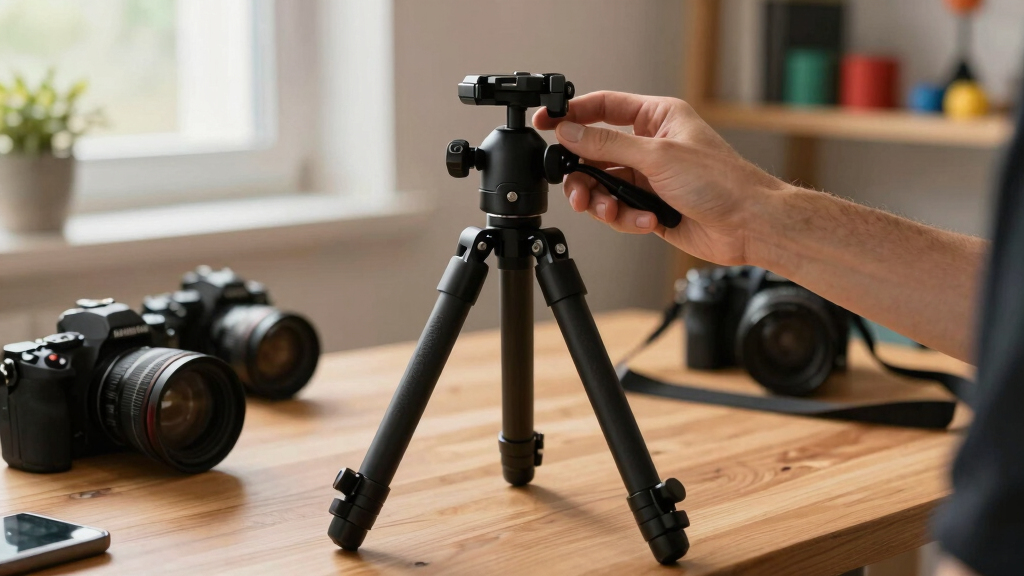
Finding the best tripods for macro photography comes down to three things: how low the tripod can shoot, how precisely you can frame, and how stable it stays at high magnification. After comparing this year’s most popular options, the Neewer 77-inch Tripod Monopod is my best overall pick — its short second center column drops the camera close to ground level, the ball head allows fine framing adjustments, and it converts to a monopod for field work, all at a price that undercuts most rivals. Shooters who want sturdier build quality should look at the Manfrotto 290 Xtra, while the K&F Concept 90-inch suits anyone doing overhead flat-lay or product macro. The main tradeoff across this category is flexibility versus rigidity: taller, feature-packed tripods tend to flex more at full extension, which is exactly where macro sharpness suffers. Keep reading for the full breakdown of all seven picks, who each one suits, and who should skip it.

Get audio and creator gear delivered free with Prime
- Fast, free delivery on millions of items
- Prime Video, Amazon Music and more included
- Member-only deals all year
Complete the kit


Key Takeaways
- The Neewer 77-inch Tripod Monopod takes the top spot because its short center column reaches near ground level — the single biggest factor in macro usability — while costing a fraction of the Manfrotto options.
- Minimum height beat maximum height in this ranking: the 230cm K&F Concept is a specialist for overhead product work, not an everyday macro tripod.
- Both Manfrotto entries ship with fluid video heads, which smooth focus pulls but slow down still composition — hybrid shooters gain, while pure macro shooters should budget for a ball head swap.
- Every sub-$80 aluminum model here flexes once the center column rises; shooting column-down with weight on the hook closes most of the gap with the pricier picks.
- Only the two Neewer models convert to monopods, making them the best fit for hikers who shoot macro on trails rather than at a bench.


| tripods for macro photography | Material | Weight | Maximum Height |
|---|---|---|---|
| Neewer 77-inch Camera Tripod M | Aluminum alloy | 3.53 lbs | 77 inches |
| K&F CONCEPT 90”/230cm Ultra H | Metal | 4.4 lbs / 2 kg | 90 inches / 2.3 m |
| K&F CONCEPT 64 inch Camera Tri | — | 2.53 lbs | — |
| NEEWER 72-inch Camera Tripod M | Aluminum alloy | — | 72.4 inches |
| Manfrotto 290 Xtra Aluminum 3- | Aluminum | — | — |
| Manfrotto Befree Live Travel V | Aluminum | 3.6 lbs (1.64 kg) | — |
| VICTIV 74” Camera Tripod for C | Aluminum | 3.14 lbs | 74 in |
More Details on Our Top Picks
Neewer 77-inch Camera Tripod Monopod for DSLR and Phone
Ask me to pick one tripod from this lineup for macro work and I’d point to the Neewer 77-inch first. The case is simple: an inverted center column that drops the camera to near ground level, where most macro subjects live, plus a 34 lb load rating that shrugs off a DSLR with a heavy macro lens and rail setup. Compared with the K&F Concept 64-inch, it’s taller, stronger, and steadier — though it weighs a full pound more, so long hikes hurt a bit. The K&F Concept 90-inch beats it for overhead reach, but that model’s extra height means more flex at full extension, and I trust this one’s stability more at the low angles macro demands. The small bubble level is a minor annoyance when leveling on uneven ground.
Pros:- Inverted center column enables true ground-level macro framing
- 34 lb load rating handles macro lenses, rails, and flash brackets
- Converts to a monopod for fast-moving field work
- 77-inch reach still covers eye-level non-macro shooting
Cons:- Inverting the center column adds setup steps when subjects move fast
- Bubble level is small and hard to read in the field
- A pound heavier than the budget K&F Concept 64-inch
Best for: Macro shooters who want one tripod covering ground-level flower and insect work plus everyday shooting, and who run heavier DSLR or mirrorless setups
Not ideal for: Backpackers counting ounces — at 3.53 lbs with a 19-inch folded size, the K&F Concept 64-inch travels lighter
- Maximum Height:77 inches
- Folded Size:19 inches
- Weight:3.53 lbs
- Max Load:34 lbs
- Material:Aluminum alloy
- Head:360-degree panoramic ball head
- Monopod Range:35 to 70 inches
Our verdict“The most balanced macro tripod here — strong, tall, and able to get low — and the one I’d recommend to most buyers.”
K&F CONCEPT 90”/230cm Ultra High Camera Tripod T254A7+BH-28L
Some macro subjects can’t be framed from ground level — think overhead shots of a styled flat lay or looking straight down into a flower bed. That’s where the K&F Concept 90-inch earns its place: it’s the tallest tripod in this roundup by a wide margin, topping the Neewer 77-inch by over a foot. The 28mm ball head with oil-free damping carries 22 lbs, plenty for a mirrorless body and macro lens. The tradeoff is physics: any tripod at full extension with the column raised will flex more, and macro magnifies every vibration, so I’d keep the center column low whenever the composition allows. At 4.4 lbs it’s the heaviest option here, and the multi-joint legs take practice. Buy it for reach, not for backpacking.
Pros:- 90-inch maximum height beats every rival here for overhead setups
- Legs tilt 0-180 degrees with 360-degree rotation for awkward angles
- 22 lb capacity covers full-frame bodies and macro lenses
- Detachable monopod adds a second shooting tool
Cons:- Flex and vibration at full extension threaten macro sharpness
- Heaviest tripod in the roundup at 4.4 lbs
- Multi-joint leg design has a steeper learning curve
Best for: Studio and tabletop macro shooters who need the camera positioned high above a subject for overhead compositions and flat lays
Not ideal for: Hikers and field shooters — it’s the heaviest pick in the lineup and overkill for ground-level insect work
- Maximum Height:90 inches / 2.3 m
- Collapsed Size:21 inches / 54 cm
- Weight:4.4 lbs / 2 kg
- Load Capacity:22 lbs / 10 kg
- Leg Sections:4
- Ball Head:28mm, oil-free damping
- Material:Metal
- Monopod:Detachable
Our verdict“The reach king: buy it if overhead macro angles are your priority and you can work around its weight and extension wobble.”
K&F CONCEPT 64 inch Camera Tripod with 360 Degree Ball Head and Cellphone Clip
If budget drives the decision, the K&F Concept 64-inch is where I’d start. It weighs just 2.53 lbs and folds to 15.5 inches — far easier to pack than the Manfrotto 290 Xtra — yet still holds 17.6 lbs, enough for a standard macro lens and body. The flip leg locks set up one-handed, which matters when an insect won’t wait for you. What you give up versus the Neewer 77-inch is ground-level flexibility: there’s no inverted or multi-angle center column here, so getting truly low means spreading the legs wide and accepting a higher minimum position. K&F also doesn’t specify the leg material, which leaves long-term durability an open question. For the price, those are fair compromises — I’d rather see a beginner put the savings toward a macro lens.
Pros:- Lightest tripod in the lineup at 2.53 lbs
- Folds to 15.5 inches for easy travel
- One-handed flip locks speed up field setup
- 17.6 lb capacity plus phone clip covers most starter macro rigs
Cons:- No invertible or multi-angle column limits ground-level macro
- Leg material is unspecified, so durability is a question mark
- No carrying case mentioned in the box
Best for: Beginners and hobbyists building a first macro kit who want low weight and low cost over maximum positioning options
Not ideal for: Photographers who mostly shoot ground-level subjects — without an invertible column it can’t get as low as the Neewer options
- Height Range:20.4 to 64.1 inches
- Folded Length:15.5 inches
- Weight:2.53 lbs
- Load Capacity:17.6 lbs / 8 kg
- Head Type:360-degree ball head
- Leg Locks:Flip lock
- Thread Size:1/4 inch
- Included:Cellphone clip
Our verdict“The smart buy for macro newcomers who’d rather spend the savings on a lens than on legs.”
NEEWER 72-inch Camera Tripod Monopod with Ball Head and Center Column
The multi-angle center column is why the Neewer 72-inch belongs on a macro list: swing it horizontal and the camera floats out over a flower, a mushroom, or a tabletop scene while the legs stay clear of the frame and the light. Neither the K&F Concept 64-inch nor the Manfrotto 290 Xtra can do that. The 33 lb load rating nearly matches the beefier Neewer 77-inch, so focus rails, flash brackets, and full-frame bodies are all fine. The cost is bulk: at 26.4 inches folded it’s the longest package in this roundup, and the column mechanism adds knobs and steps that frustrate when subjects move quickly. Compared with the simpler Neewer 77-inch, I’d call this the specialist’s tool — slower to use, but capable of angles nothing else here matches.
Pros:- Horizontal center column reaches over subjects without legs intruding
- 33 lb capacity supports stacked macro rigs with rails and flash
- Converts to a monopod for flexible field work
- 72.4-inch height covers standing eye-level shooting too
Cons:- Longest folded length in the roundup at 26.4 inches
- Column mechanism adds setup steps that slow down reactive shooting
- Complex enough to frustrate beginners
Best for: Dedicated macro photographers who regularly frame overhead or hard-to-reach subjects and shoot with rails, brackets, or heavier full-frame rigs
Not ideal for: Beginners or fast-moving field shooters — the column mechanism slows setup, and the 26.4-inch folded length won’t fit smaller bags
- Max Load:33 lbs
- Maximum Height:72.4 inches
- Folded Length:26.4 inches
- Material:Aluminum alloy
- Center Column:Multi-angle, vertical and horizontal
- Head:Panoramic ball head
- Compatibility:DSLR cameras and camcorders
- Extras:Monopod conversion, carrying bag
Our verdict“If precise camera placement around delicate subjects is your main problem, this is the tripod that solves it.”
Manfrotto 290 Xtra Aluminum 3-Section Tripod Kit with Fluid Video Head
The Manfrotto 290 Xtra plays a different game from the rest of this list. Its four leg angles, including a near-floor setting, genuinely help macro shooters get low, and the aluminum build sits a class above the budget options for rigidity. The catch is the fluid video head: silky for panning and focus-pull video, but slower and less precise for locking off a still macro composition than the ball heads on the Neewer 72-inch or K&F Concept 90-inch, which let you reframe instantly at any odd angle. I’d steer dedicated stills shooters toward those instead. Where this kit wins is hybrid work — product videos, focus-stack B-roll, and macro footage. You’re paying for Manfrotto build quality, and the leg locks reward practice more than the flip locks on the K&F Concept 64-inch.
Pros:- Four leg angles include a near-floor position for low macro
- Rigid aluminum build outclasses budget rivals
- Fluid head delivers smooth pans for macro video
- Shoulder bag included
Cons:- Fluid head is slower and less precise for still macro framing than a ball head
- Costs more than comparable ball-head options
- No monopod conversion or invertible column
Best for: Hybrid creators who split time between macro stills and video, and who value brand-grade build quality and long-term support
Not ideal for: Stills-only macro shooters — the fluid head is slower to position than a ball head and adds cost without payoff
- Material:Aluminum
- Leg Sections:3
- Height Range:15.9 to 67.5 inches
- Leg Angles:4, including floor level
- Head Type:Fluid video head
- Included:Shoulder bag
Our verdict“The pick for shooters who need one tripod to cover both macro video and stills — everyone else should choose a ball-head option.”
Manfrotto Befree Live Travel Video Tripod with Fluid Head
This option stands out for shooters who split their time between macro stills and video in the field. The fluid head delivers silky pans that a ball head like the one on the Neewer 77-inch simply can’t match, and the 15.7-inch folded length makes it the most packable Manfrotto here — far easier to carry to a wildflower meadow than the taller Manfrotto 290 Xtra. The tradeoff is precision: fluid heads are built for movement, not the tiny, locked-off adjustments macro focusing demands, and the 4 kg load limit rules out heavy rigs with focusing rails or twin flash brackets. Compared with the stills-first picks in this lineup, I’d treat this as the travel companion for hybrid shooters rather than a dedicated macro platform.
Pros:- Folds to under 16 inches — genuinely bag-friendly for hikes to shooting locations
- Fluid head gives smooth, controlled pans for macro video sequences
- Quick Power Lock levers make setup fast when light is changing
- Manfrotto build quality outclasses budget options like the VICTIV 74-inch
Cons:- 4 kg load ceiling excludes heavier macro rigs with rails or dual flash setups
- Fluid head is designed for motion, not the micro-adjustments stills macro demands
- Less planted on uneven ground than heavier full-size options like the Manfrotto 290 Xtra
Best for: Travel photographers who hike to macro subjects and need one carry-on-friendly tripod that handles both stills and smooth video
Not ideal for: Dedicated macro shooters running focusing rails, macro flash brackets, or heavy full-frame setups — the 4 kg ceiling and motion-oriented head work against precise static framing
- Material:Aluminum
- Head Type:Fluid video head
- Maximum Load:4 kg (8.8 lbs)
- Leg Locks:Quick Power Lock flip levers
- Leg Sections:4, adjustable angles
- Folded Length:15.7 in (40 cm)
- Weight:3.6 lbs (1.64 kg)
Our verdict“The right call if your macro work travels and mixes video with stills; look elsewhere for a locked-down, high-load macro platform.”
VICTIV 74” Camera Tripod for Camera and Phone with Carry Bag
This pick makes the most sense for anyone testing the macro waters without a real budget. The 74-inch reach and 3-way pan head allow deliberate, axis-by-axis framing that suits slow flower work, and the included phone mount means you can start with a smartphone before buying a macro lens. The catch shows up at ground level: a 19-inch minimum height keeps the camera well above low subjects, where the reversible columns on tripods like the NEEWER 72-inch get you right down to a mushroom’s eye view. The 9.5 lb capacity and lightweight aluminum build also mean more vibration at high magnification than the sturdier K&F CONCEPT 64 inch. For the price, it’s a fair starter — just expect to outgrow it once your subjects get smaller and lower.
Pros:- 74-inch maximum height covers everything from tabletop flowers to eye-level shrubs
- 3-way pan head allows one-axis-at-a-time framing, helpful for careful composition
- Ships with phone mount and carry bag — ready to shoot out of the box
- Weighs less than the Manfrotto Befree Live despite the taller reach
Cons:- 19-inch minimum height is a real handicap for ground-level macro subjects
- 9.5 lb load limit and budget build introduce shake at high magnification
- No inverted-column or low-angle option for getting the camera near the soil
Best for: Beginners exploring macro with a phone or lightweight mirrorless camera who want the most height range per dollar
Not ideal for: Anyone photographing ground-level subjects like fungi, moss, or insects — the 19-inch minimum height won’t get low enough without awkward workarounds
- Maximum Height:74 in
- Minimum Height:19 in
- Weight:3.14 lbs
- Load Capacity:9.5 lbs
- Material:Aluminum
- Mount:1/4″ screw, camera and spotting scope compatible
- Head:3-way pan head
- Phone Mount:360° adjustable, included
Our verdict“A sensible first tripod for casual macro on a tight budget, as long as your subjects sit above knee height.”
How We Picked
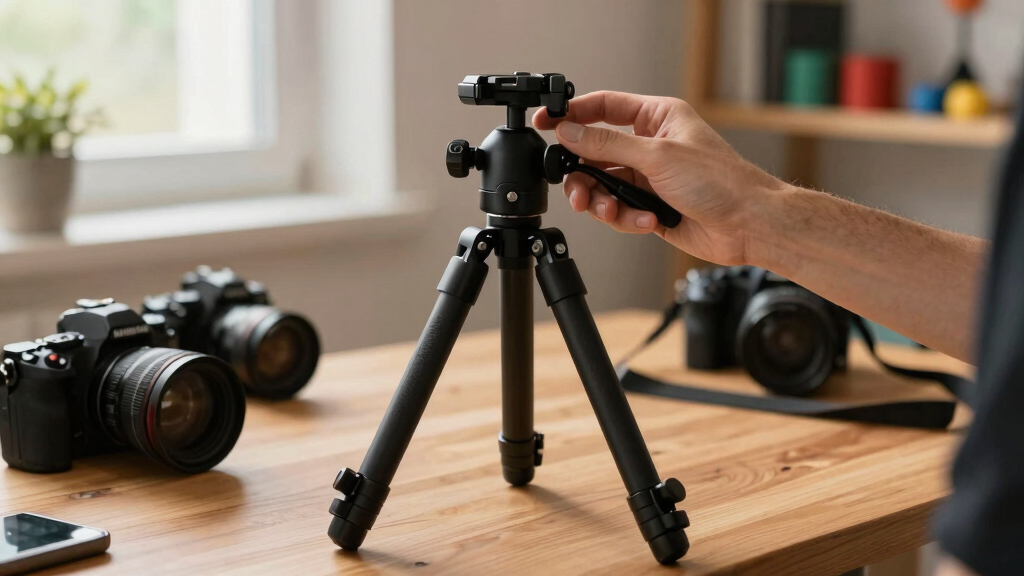
I ranked these seven tripods through one lens only: how well each serves still macro photography, not general-purpose shooting. The criteria I weighed most heavily were minimum working height and center-column design (whether the camera can reach ground level or reverse for low subjects), head type and framing precision (ball heads scored better than fluid heads for stills), and stability under magnification (leg-lock quality, column rigidity, and load rating relative to a typical macro rig). Build quality and brand track record came next, then portability and price. Models that looked strong on paper lost ground when they shipped with video-first heads or relied on tall center columns that flex at full extension.
The order reflects those priorities. The Neewer 77-inch leads because it combines a ground-hugging short column, monopod conversion, and a serviceable 360-degree ball head at a price that embarrasses the rest of the field. The Manfrotto 290 Xtra ranks on build quality and leg-angle versatility but pays a macro tax for its fluid head. The K&F Concept 90-inch earns its slot as an overhead specialist, while the remaining picks fill value, beginner, travel, and strict-budget roles. Each review spells out the tradeoff behind its position, including who should skip that model entirely.
| tripods for macro photography | Material |
|---|---|
| Neewer 77-inch Camera Tripod M | Aluminum alloy |
| K&F CONCEPT 90”/230cm Ultra H | Metal |
| K&F CONCEPT 64 inch Camera Tri | — |
| NEEWER 72-inch Camera Tripod M | Aluminum alloy |
| Manfrotto 290 Xtra Aluminum 3- | Aluminum |
| Manfrotto Befree Live Travel V | Aluminum |
| VICTIV 74” Camera Tripod for C | Aluminum |
Factors to Consider When Choosing Best Tripods For Macro Photography
The seven tripods in this roundup solve different macro problems, and the right choice depends less on budget than on where you shoot and what your subjects are. These are the factors I’d weigh before putting any of them in a cart.
Minimum Height Matters More Than Maximum Height
Most macro subjects — flowers, fungi, insects, jewelry on a tabletop — sit at or near ground level, so the spec that decides usability is minimum height, not the tall number printed on the box. A tripod that only gets low by splaying its legs wide still leaves the camera above many subjects and eats working distance. Look for a short or reversible center column and legs with independent angle locks, since those two features determine how close to the soil you can actually frame. The common mistake is shopping by maximum height because it reads as more tripod for the money; for macro, it mostly tells you how much the rig will wobble when extended. Overhead shooters are the exception: flat-lay and product work need height or a column that extends horizontally to boom over a table. Before buying, measure your macro lens’s working distance at 1:1 and check the tripod’s minimum height against it. A tripod that bottoms out at 40cm forces awkward compromises that a 15cm minimum simply avoids.
Ball Heads, Fluid Heads, and Framing Precision
Macro framing happens in millimeters, so the head matters as much as the legs. Ball heads reposition in one motion and lock with a single knob, which suits the constant tiny corrections of close-up composition. Fluid heads, like the ones on both Manfrotto entries here, are built to resist sudden movement for smooth video pans — and that same resistance fights you when all you want is a quick two-degree tilt on a stationary flower. If a tripod you like ships with a fluid head, budget for a swap rather than living with the mismatch; heads on all seven picks are removable. Check for an Arca-Swiss compatible plate too, since that’s the standard most macro focusing rails and L-brackets use. An independent pan axis helps when you’re nudging framing sideways without disturbing focus distance. If the budget forces a choice, spend on the head before the legs.
Stability Is the Spec You Feel, Not Read
At 1:1 magnification, vibration that would be invisible in a landscape shot becomes blur across an entire focus stack. The biggest culprit is rarely leg quality — it’s a raised center column, which acts like a mast and amplifies every wobble. Whatever you buy, plan to shoot column-down with the legs at their widest angle before extending anything upward. Hanging a camera bag from the center hook lowers the center of gravity and damps shake, a free upgrade most buyers never use. Aluminum legs flex more at full extension than carbon ones, so the taller budget models in this lineup need gentler handling at their limits. Pair any of these tripods with a remote release or two-second timer, because finger pressure on the shutter is its own vibration source. A mid-range tripod used with disciplined technique beats a premium one used carelessly every time.
Aluminum vs Carbon Fiber: Where the Money Actually Goes
Every pick in this lineup is aluminum, which keeps prices low but adds carry weight and lets vibration ring a little longer after you touch the rig. Carbon fiber damps that vibration faster and trims roughly a quarter of the carry weight, a difference that adds up on long hikes to wildflower fields. For studio and tabletop macro, aluminum’s extra mass works in your favor, since a heavier rig shrugs off bumps better. Carbon earns its premium mainly when you carry the tripod for hours at a stretch; if your macro happens within fifty steps of the car, redirect the price difference toward a better head or a focusing rail. Carbon legs also have a hidden downside: they can splinter under side impacts that would only dent aluminum. Neither material changes sharpness on its own — column discipline and technique matter far more than what the legs are made of.
Common Mistakes and When to Spend More
The most common mistake is buying for maximum height and video features when the real need is ground-level stills work. The second is spending the whole budget on legs and leaving nothing for the head, plate, and rail that do the precision work. Spend more when you shoot daily, work in wind, or hang a heavy full-frame rig off a reversed column — cheap flip locks wear and eventually slip under that kind of use. Save money when your subjects are indoor and stationary; a $70 aluminum tripod with weight hung from the hook performs within a hair of models costing three times more. Hikers should rank folded length and weight above every height spec. Hybrid creators should accept a fluid head only when video is the primary output. Match your spend to the failure you’ve actually experienced — blur, back pain, or slow setup — instead of buying features on spec.
Frequently Asked Questions
Do I really need a tripod for macro photography, or can I shoot handheld?
For anything beyond casual snapshots, a tripod stops being optional, and the reason is magnification math. At 1:1 reproduction, camera shake is magnified along with the subject, so handheld shutter speeds that work for normal photography fail at close range. Depth of field at macro distances often measures under a millimeter, which means the camera has to stay locked in place just to keep focus where you put it. A tripod also enables focus stacking, which depends on the frame staying identical across dozens of exposures. Image stabilization helps for single shots in bright light, but it can’t replace a locked position for stacking sequences. If you only chase insects at midday, handheld can work; for everything else, a tripod is the difference between keepers and deletions.
Is a fluid video head a dealbreaker for macro stills?
Not a dealbreaker, but a real mismatch worth understanding before you buy. Fluid heads resist movement to keep video pans smooth, and that resistance makes the small, fast repositioning of macro composition feel sluggish. Two of the seven picks in this roundup ship with fluid heads, and both make more sense for hybrid shooters who film as much as they photograph. If stills are your priority, a ball head with a single locking knob moves you from composition to composition far quicker. The upside is that heads are swappable on every model here, so a fluid-head kit becomes a stills rig with a $40 ball head later. Buy the legs you actually want and treat the stock head as replaceable.
Should I choose a tall tripod or one that goes low for macro?
For classic macro subjects, low wins almost every time. Flowers, mushrooms, and insects live within a few centimeters of the ground, and the only way to shoot them at eye level is a tripod that gets down there with you. Tall tripods still have a place — the 230cm K&F Concept in this lineup is the pick for overhead flat-lay and product work where the camera booms over a table. The mistake is treating maximum height as a quality proxy; it mostly indicates how much the rig will flex at full extension. Check the minimum height spec and whether the center column shortens or reverses. A tripod that covers both extremes, like the top Neewer picks, handles more real macro situations than one that only goes high.
What accessories should I buy alongside a macro tripod?
The first accessory worth adding is a macro focusing rail, which slides the whole camera forward and back in millimeter steps — far more precise than nudging the tripod or refocusing the lens. Second is a remote shutter release or the camera’s built-in timer, since pressing the shutter by hand reintroduces the shake you bought the tripod to eliminate. An Arca-Swiss compatible L-bracket comes third, letting you flip to portrait orientation without re-composing around the ball head’s drop notch. A small beanbag or bag weight for the center-column hook pays off on windy days. Once the rig is stable, a cheap diffuser or reflector improves macro results more than most hardware upgrades. None of these cost much, and each one sharpens output more than pricier legs would.
Are budget tripods stable enough for focus stacking?
They can be, with technique doing the heavy lifting. Budget aluminum models like the Neewer and VICTIV entries here flex most at full center-column extension, so keep the column down and spread the legs wide instead. Hang something heavy from the center hook and the rig’s effective stability jumps well beyond what the price suggests. Stacking is forgiving of minor softness in individual frames as long as the camera doesn’t shift between shots, and these tripods hold position fine when left untouched. Where budget models fall short is leg-lock durability — flip locks wear with heavy use and eventually slip under load. If stacking is a daily habit, the Manfrotto 290 Xtra’s build quality buys years of that wear; for weekend shooters, a $70 tripod used well beats a $300 one used carelessly.
Conclusion
If you want one answer, buy the Neewer 77-inch Tripod Monopod — it goes low enough for ground-level subjects, converts to a monopod for trail work, and leaves room in the budget for a focusing rail, making it the best overall pick for most macro shooters. The NEEWER 72-inch is the value alternative if the 77-inch sells out or climbs in price, since it delivers a nearly identical kit for less. Buyers who shoot daily and want legs that survive years of abuse should step up to the Manfrotto 290 Xtra, the premium pick on build quality — just plan for a ball head swap if stills outrank video. Beginners are best served by the K&F Concept 64-inch, which is light, simple, and cheap enough to learn on without regret. Overhead and product shooters should go straight to the K&F Concept 90-inch for its boom-friendly height, travelers and hybrid video creators to the Manfrotto Befree Live, and anyone dabbling in macro on the tightest budget — especially phone shooters — to the VICTIV 74-inch. Match the pick to where your subjects actually live, keep the center column down, and any of these seven will hold a macro rig steadier than your hands ever could.
Fall Picks
fall essentials
As an affiliate, we earn on qualifying purchases.