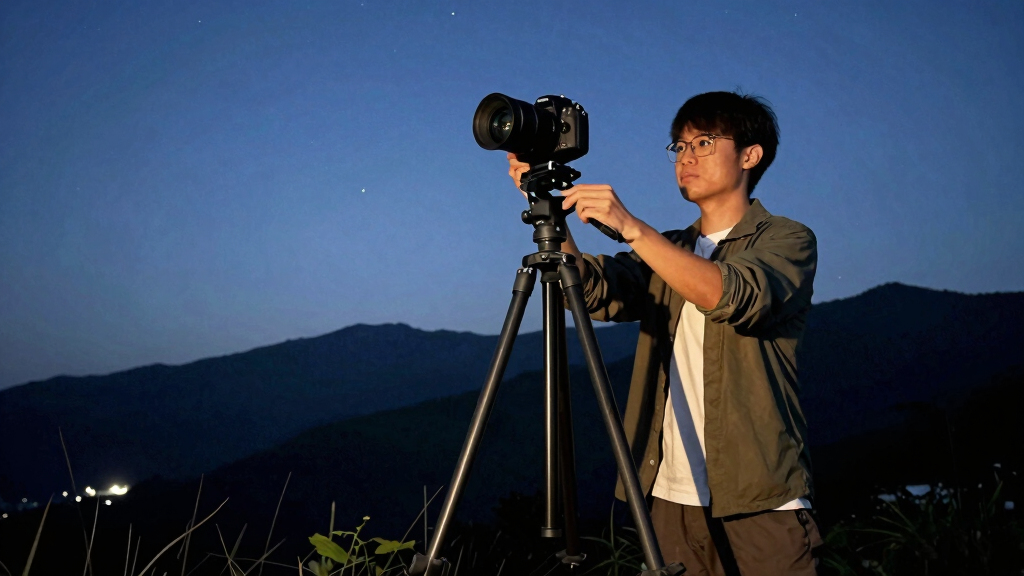
Astrophotography punishes weak support harder than almost any other genre: exposures stretch from seconds to minutes, and even a light breeze can smear a star field. After comparing nine of the best tripods for astrophotography, my best overall pick is the Sky-Watcher Star Adventurer GTI Mount Kit, because its motorized tracking lets a camera follow the stars for multi-minute exposures instead of fighting Earth’s rotation. For a conventional tripod, the K&F CONCEPT 64 inch stands out for beginners — light, affordable, and steady enough for wide-field Milky Way work — while the Manfrotto 290 Xtra is the premium-feeling option for shooters who want one set of legs for landscapes and night skies alike. The core tradeoff in this category is simple: a static tripod caps you at short exposures, while a tracker removes that ceiling but adds cost and setup time. Telescope owners face a second fork, since the two Celestron supports here are built for optical tubes, not cameras. Read on for the full ranking and the reasoning behind it.

Get audio and creator gear delivered free with Prime
- Fast, free delivery on millions of items
- Prime Video, Amazon Music and more included
- Member-only deals all year
Complete the kit


Key Takeaways
- Tracking trumps stability: no static tripod in this lineup allows exposures beyond roughly 15–25 seconds before stars trail, so the Sky-Watcher GTI’s motorized tracking is the single biggest image-quality upgrade here — worth more than any leg material or diameter.
- The budget cluster is separated by damping, not load ratings: the XXZU, VICTIV, K&F 64-inch, and Neewer sit within a narrow price band, and real-world steadiness plus head quality — not the printed 10–15 kg claims — is what ranks them.
- Head design can sink good legs: the Manfrotto 290 Xtra has the best-built legs among the static tripods, but its bundled fluid video head resists the quick, steep aiming that night-sky framing demands.
- Telescope supports are their own category: both Celestron models exist solely for optical tubes — the CPC 1100 for large Schmidt-Cassegrains, the Alt-Azimuth for smaller refractors — and neither doubles as a camera tripod.
- Height earns its keep at night: the 90-inch K&F lifts the camera above ground-level heat shimmer and keeps controls at eye level, though every extra centimeter of raised center column multiplies wobble in wind.


| tripods for astrophotography | Material | Weight |
|---|---|---|
| Neewer 77-inch Camera Tripod M | Aluminum alloy | 3.53 lbs |
| K&F CONCEPT 64 inch/163 cm Cam | — | 2.53 lbs / 1.15 kg |
| Manfrotto 290 Xtra Aluminum 3- | Aluminum | — |
| XXZU 75" Camera Tripod with Re | Aluminum alloy | 2.18 lbs |
| VICTIV 74” Camera Tripod for C | Aluminum | 3.14 lbs |
| Celestron Heavy Duty CPC 1100 | — | — |
| K&F CONCEPT 90”/230cm Ultra H | Metal | 4.4 lbs / 2 kg |
| Sky-Watcher Star Adventurer GT | — | — |
| Celestron Heavy Duty Alt-Azimu | Aluminum | — |
More Details on Our Top Picks
Neewer 77-inch Camera Tripod Monopod for DSLR and Phone with 360° Panoramic Ball Head
Stability is the whole game in astrophotography — a 20-second exposure magnifies every wobble — and that is why I rank the Neewer 77-inch first. Its 34 lb load rating is nearly double what the K&F Concept 64-inch and XXZU 75-inch manage, so a full-frame body with a fast wide lens, or even a compact star tracker, sits without strain. The 77-inch reach also lifts the camera above foreground clutter at dark-sky sites. The tradeoffs are real: at 3.53 lbs it is the heaviest full-size option in this lineup, and the 11 lb tilt limit on the ball head means heavy telephoto rigs aimed steeply upward can drift. Compared with the Manfrotto 290 Xtra, you give up refined machining but gain height and payload for less money.
Pros:- 34 lb load rating handles full-frame rigs and small trackers without strain
- 77-inch maximum height clears foregrounds and reduces crouching
- Converts to a monopod for daytime flexibility
- Ships with a carrying bag
Cons:- Heaviest tripod in this roundup at 3.53 lbs — noticeable on long hikes
- Ball head tilt load capped at 11 lbs, so heavy upward-angled setups can creep
- Inverted center column and assembly take extra setup time in the dark
Best for: Night shooters running heavier full-frame bodies, fast wide lenses, or a compact tracker who want the most stable platform per dollar
Not ideal for: Hikers covering miles to a dark site — at 3.53 lbs it is the heaviest pick here, and steep telephoto work runs into the 11 lb tilt ceiling
- Maximum Height:77 inches
- Minimum Height:19 inches
- Weight:3.53 lbs
- Maximum Load:34 lbs
- Tilt Load Limit:11 lbs
- Material:Aluminum alloy
- Ball Head:360-degree panoramic
- Folded Size:19 inches
Our verdict“The most capable all-round astro tripod here for anyone whose kit outgrows budget load limits.”
K&F CONCEPT 64 inch/163 cm Camera Tripod with 360 Degree Ball Head and Cellphone Clip
Astrophotography usually starts with a drive and a hike, and the K&F Concept 64-inch is the leg set I would want on my shoulder for that walk. It folds to 15.5 inches and weighs 2.53 lbs — a full pound lighter than the Neewer 77-inch — while the Arca-Swiss quick release plays nicely with the L-brackets and tracker plates many night shooters already own. The 36mm ball head is sized sensibly for mirrorless bodies and mid-weight DSLRs. Where it gives ground: the 17.6 lb load rating is half the Neewer’s, and the 64-inch ceiling means more bending at the screen when framing. No weather-resistance claims and no included bag also sting next to the bag-included Neewer and VICTIV.
Pros:- Lightweight 2.53 lb build and 15.5-inch folded length suit long hikes
- Arca-Swiss quick release works with common astro plates and L-brackets
- Quick flip leg locks speed up setup in the dark
- 36mm ball head handles mirrorless and mid-weight DSLR payloads
Cons:- 17.6 lb load rating is half the Neewer’s — a limit for trackers and big glass
- No carrying case or weather-resistance details
- 64-inch maximum height means more crouching than with taller rivals
Best for: Mirrorless and light DSLR shooters who hike to dark-sky locations and already own Arca-Swiss plates
Not ideal for: Anyone planning a star tracker or heavy telephoto — the 17.6 lb rating and 64-inch height cap leave little headroom to grow into
- Maximum Height:64.1 inches / 163 cm
- Minimum Height:20.4 inches / 52 cm
- Folded Length:15.5 inches / 39.5 cm
- Weight:2.53 lbs / 1.15 kg
- Load Capacity:17.6 lbs / 8 kg
- Ball Head Diameter:36mm
- Mount:1/4-inch thread with Arca-Swiss quick release
Our verdict“The right pick for hikers who count ounces and shoot with a compact mirrorless or DSLR kit.”
Manfrotto 290 Xtra Aluminum 3-Section Tripod Kit with Fluid Video Head
The Manfrotto 290 Xtra offers the best leg construction in this lineup — precisely machined aluminum, four leg-angle positions, and a padded shoulder bag, a clear step up in fit and finish from the Neewer and the budget picks. Here is the honest caveat for night shooters: the included fluid video head is built for smooth panning, not for locking a camera at a steep upward angle, so most astro buyers will end up swapping in a ball head they already own or buying one. That makes this a smarter buy for hybrid photo and video shooters than for dedicated sky work. On pure stability it outclasses the lighter K&F Concept and XXZU, though the 3-section legs top out at 67.5 inches and the kit is heavier than either.
Pros:- Machined aluminum legs with four spread angles handle uneven terrain well
- Fluid head delivers genuinely smooth motion for video work
- Includes a padded shoulder bag
- Brand build quality and long-term parts support
Cons:- Fluid video head is a poor match for astrophotography stills — budget for a ball head swap
- Heavier than the travel-oriented picks here
- 67.5-inch maximum height trails the Neewer, XXZU, and VICTIV
Best for: Hybrid photo and video shooters who want premium legs and plan to mount their own ball head for night work
Not ideal for: Dedicated astro shooters on a tight budget — the fluid head adds cost without helping stills, so total spend climbs past the Neewer
- Material:Aluminum
- Leg Sections:3
- Height Range:15.9 to 67.5 inches
- Leg Angles:4 positions
- Head:Fluid video head
- Included:Shoulder bag
Our verdict“Worth the premium only if you shoot video as well as stars and already own a ball head.”
XXZU 75″ Camera Tripod with Remote & 360° Ball Head, Aluminum Phone Tripod/Monopod for DSLR, Smartphone, and Digital Cameras
The XXZU 75-inch is the friendliest first step into night-sky shooting, and two details matter more than the spec sheet suggests. The bundled remote shutter works like a cable release, letting you trigger long exposures without touching the camera and shaking it — a real advantage over the VICTIV and K&F, which ship without one. The 14.17-inch folded length slips into almost any bag. At 2.18 lbs it is the lightest tripod here, lighter even than the travel-focused K&F Concept; that is a gift on the walk in and a liability in wind, so plan to hang a bag from the weight hook after dark. The 17.64 lb rating covers crop-sensor DSLRs and mirrorless bodies comfortably, though build precision trails the Manfrotto and the 10 m remote range is short.
Pros:- Bundled remote acts as a cable release for shake-free long exposures
- Lightest option here at 2.18 lbs with the smallest 14.17-inch fold
- 75-inch height plus monopod conversion at a beginner price
- Weight hook and anti-slip feet add usable stability
Cons:- Featherweight build sways in wind without a hung ballast bag
- Remote range limited to 10 meters
- Ball head precision trails the Manfrotto and Neewer heads
Best for: First-time Milky Way shooters using a phone, entry DSLR, or mirrorless body who want a remote trigger and minimal spend
Not ideal for: Windy ridgelines or heavy glass — the featherweight legs need ballast, and the head lacks the refinement of pricier options
- Maximum Height:75 inches
- Folded Length:14.17 inches
- Weight:2.18 lbs
- Maximum Load:17.64 lbs
- Material:Aluminum alloy
- Remote Range:10 meters
- Head:360-degree ball head
- Compatibility:Smartphones 4-7 inches, DSLR, webcam, ring light
Our verdict“The easiest, cheapest way to start shooting the night sky with a phone or lightweight camera.”
VICTIV 74” Camera Tripod for Camera and Phone with Carry Bag
The VICTIV 74-inch takes the last slot, and it is worth being clear why: its 9.5 lb load ceiling is the lowest in this roundup — under a third of the Neewer’s — so heavier bodies and fast telephotos are off the table from day one. What it does offer is a tall 74-inch reach and a 3-way pan head, which adjusts more slowly than the ball heads on the XXZU and K&F but lets you fine-tune framing one axis at a time, handy when nudging a composition toward Polaris. For lightweight mirrorless kits or phone-based night shots on a tight budget, it is serviceable, and the included carry bag helps. Anyone expecting to add a star tracker or long lens later should spend up for the Neewer instead of buying twice.
Pros:- 74-inch reach is generous for the price
- 3-way pan head allows precise single-axis framing adjustments
- Includes a carry bag
- Broad compatibility with cameras, phones, and spotting scopes
Cons:- 9.5 lb load ceiling rules out heavy camera and lens combinations
- At 3.14 lbs it is heavier than the stronger-rated K&F and XXZU
- Some camera models need extra accessories to mount properly
Best for: Casual shooters with a lightweight mirrorless, phone, or spotting scope who want maximum height for minimum money
Not ideal for: Anyone with a full-frame body and fast lens, or plans to add a tracker — the 9.5 lb limit is a dead end you will outgrow
- Height Range:19 to 74 inches
- Weight:3.14 lbs
- Maximum Load:9.5 lbs
- Material:Aluminum
- Head:3-way pan head
- Compatibility:Cameras, DSLR, smartphones, spotting scopes
Our verdict“A workable starter for very light kits, but the load limit makes it a short-term purchase.”
Celestron Heavy Duty CPC 1100 Tripod
This is the specialist of the group. The Celestron Heavy Duty CPC 1100 Tripod exists to do one job: hold an 11-inch SCT absolutely still, and a fork-mounted scope that heavy demands exactly this kind of mass. Where the Celestron Heavy Duty Alt-Azimuth Tripod tops out at small scopes and binoculars, this base is built for observatory-class loads, so vibrations die down fast after you touch the focuser — that means sharper stars at high power. Know what it isn’t: unlike the Sky-Watcher Star Adventurer GTI, it’s a support with no tracking motor or GoTo of its own. I’d steer everyone without a CPC toward lighter, cheaper options — the heavy build becomes dead weight, and Celestron publishes few hard specs beyond compatibility and the 2-year US warranty.
Pros:- Purpose-built mass keeps an 11-inch CPC steady at high magnification
- Heavy-duty construction damps vibration quickly after focus adjustments
- Backed by a 2-year US warranty
- Unlimited support from Celestron’s US-based team
Cons:- Limited to specific Celestron telescope models — useless for cameras or other brands
- No tracking motor; it’s a static support base only
- Sparse published specifications for a premium-priced item
Best for: Owners of a CPC 1100 (or sibling CPC scopes) who need a rock-solid semi-permanent base for high-magnification observing and planetary imaging
Not ideal for: Anyone shooting with a DSLR or small refractor — camera tripods in this roundup do that job for far less money and weight
- Model:93493
- Color:Black/Silver
- Compatibility:Celestron CPC 1100 telescope
- Construction:Heavy-duty metal
- Type:Static support base (no motorization)
- Warranty:2-year US warranty
- Support:Unlimited US-based expert support
Our verdict“A niche must-buy for CPC owners and a pointless purchase for everyone else.”
K&F CONCEPT 90”/230cm Ultra High Camera Tripod T254A7+BH-28L
Height is the whole story here. At 90 inches fully extended, the K&F CONCEPT T254A7+BH-28L lifts a camera over fences, crowds, and foreground clutter in a way the K&F CONCEPT 64-inch model in this roundup simply can’t — and it still folds to 21 inches for the car trunk. For astrophotography, that reach helps clear treelines without hiking for a gap. The 22 lb load rating means it can carry a star tracker plus DSLR, which the lighter VICTIV 74-inch tripod shouldn’t be trusted with. The detachable monopod is a nice bonus for daytime hiking. Tradeoffs: at 4.4 lbs it’s more to carry than budget picks, the tall center column adds wobble at full extension — hang weight off it in wind — and the leg-lock setup takes a learning session.
Pros:- 90-inch max height clears treelines and foreground clutter
- 22 lb load capacity safely carries a star tracker plus DSLR
- Detachable monopod doubles as a lightweight hiking setup
- Folds down to 21 inches for travel
Cons:- Tall center column wobbles at full extension in wind
- Heavier to carry than budget 75-inch alternatives
- Leg locks and ball head take practice for first-time users
Best for: Landscape shooters who frame the Milky Way over treelines or obstacles and want one tripod tall enough to skip the hike
Not ideal for: Minimalists shooting wide-open horizons — they’d pay for height they never use, and a shorter 64-inch K&F is lighter and cheaper
- Model:T254A7+BH-28L
- Maximum Height:90 in / 2.3 m
- Collapsed Size:21 in / 54 cm
- Weight:4.4 lbs / 2 kg
- Load Capacity:22 lbs / 10 kg
- Material:Metal
- Ball Head:28mm with smooth panoramic movement
- Monopod:Detachable
Our verdict“Buy it when foreground obstacles keep ruining your nightscapes; skip it if you shoot open desert skies.”
Sky-Watcher Star Adventurer GTI Mount Kit with Counterweight, Tripod, and Pier Extension
For readers who want tracked, long-exposure images rather than snapshots of stars, the Star Adventurer GTI is the pick I’d put at the top of this list. It’s the only product here with full GoTo and motorized equatorial tracking — the mount finds targets on its own and follows them as the sky rotates, which is what turns a Milky Way snapshot into a deep-sky image. Built-in WiFi means control from a phone, and the illuminated polar scope speeds up alignment in the dark. Compared with the Celestron Heavy Duty Alt-Azimuth Tripod, which only points and follows by hand, this kit is a different class entirely. The tradeoff is real: payload is portable-class, so big refractors are out, and beginners should budget an evening to learn polar alignment and the app.
Pros:- Full GoTo finds and tracks targets automatically
- Built-in WiFi enables wireless phone control
- Illuminated polar scope makes dark-site alignment faster
- Complete kit: tripod, pier extension, counterweight and bar included
Cons:- Portable-class payload rules out larger telescopes
- Polar alignment and app workflow demand a learning evening
- Costs several times more than a static camera tripod
Best for: Photographers moving from static Milky Way nightscapes into tracked deep-sky imaging with a DSLR or small refractor
Not ideal for: Owners of heavy 8-inch-plus SCTs — the portable payload ceiling can’t carry them, so they need a CPC-class base or a full-size EQ mount
- Mount Type:GoTo EQ tracking mount
- Tracking:Motorized, for long-exposure astrophotography
- Included:Counterweight, CW bar, tripod, pier extension
- Polar Alignment:Built-in polar scope with illuminator
- Connectivity:Built-in WiFi for wireless control
- Payload:Approx. 11 lbs / 5 kg (portable class)
- Design:Lightweight, travel-ready
Our verdict“If you own only one support system for astrophotography, make it this one — it’s the single true tracking mount in the lineup.”
Celestron Heavy Duty Alt-Azimuth Tripod
Not every night under the stars needs a tracking mount, and this is where I’d point a first-timer. The Celestron Heavy Duty Alt-Azimuth Tripod pairs an adjustable aluminum base with slow-motion controls, so a beginner can nudge a small scope smoothly across a planet instead of bumping it past — something ball-head camera tripods like the Neewer 77-inch can’t do without re-framing each time. The 1/4″-20 plate takes cameras, binoculars, and spotting scopes, so one tripod covers a whole closet of optics. Be clear-eyed about the ceiling: alt-az mounts can’t follow the sky’s rotation for long-exposure deep-sky work the way the Star Adventurer GTI can, so field rotation limits you to short shots. It’s also bulkier than lightweight travel tripods, and there’s no quick-release plate, so swapping optics means threading screws in the dark.
Pros:- Slow-motion controls allow smooth manual following of planets
- 1/4″-20 plate fits cameras, binoculars, spotting scopes, and small telescopes
- Sturdy adjustable aluminum build with accessory tray
- 2-year warranty with US-based support
Cons:- Alt-az design can’t track for long-exposure deep-sky imaging
- No quick-release plate — optic swaps mean threading screws in the dark
- Heavier and bulkier than lightweight travel camera tripods
Best for: New observers who want one affordable support for lunar and planetary viewing, daytime spotting, and short-exposure night shots
Not ideal for: Aspiring deep-sky imagers — without equatorial tracking, exposures stay short and they’ll outgrow it quickly
- Material:Aluminum
- Leg Sections:Two
- Center Brace:Yes
- Accessory Tray:Included
- Mounting Plate:1/4″-20 threaded
- Controls:Slow-motion for precise adjustments
- Compatibility:Spotting scopes, binoculars, cameras, small telescopes
- Warranty:2 years
Our verdict“The sensible first tripod for casual astronomy and daytime glass, provided long-exposure imaging isn’t the goal.”
How We Picked
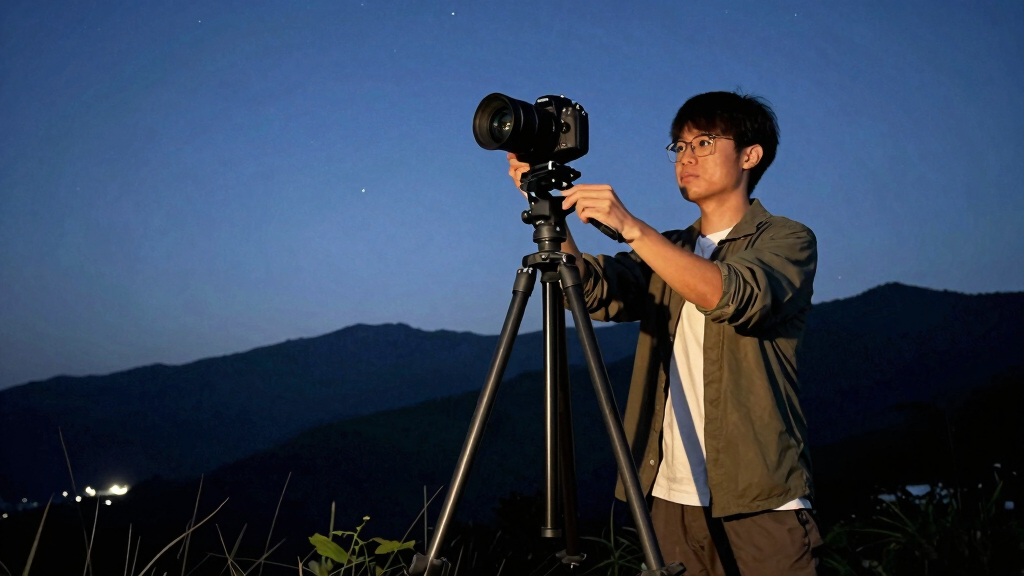
I evaluated each option against the demands specific to night-sky shooting rather than general photography. The criteria, in order of influence on the ranking: exposure capability (whether the support lets you shoot past the 500-rule ceiling, which is why the tracking-equipped Sky-Watcher leads), stability and vibration damping under realistic camera loads, head design for aiming upward in the dark, usable height range, portability for travel to dark sites, and value relative to the rest of the lineup. This ranking draws on published specifications, design analysis, and category knowledge rather than hands-on lab testing.
That weighting explains the order. A tracker outranks every static tripod because exposure time is the binding constraint in astrophotography. Among static legs, heavier and better-braced designs beat lighter travel models, and within the budget cluster, small differences in head quality and column rigidity decide position. The two Celestron supports are ranked strictly for telescope use, since folding them into the camera-tripod order would mislead the buyers this guide is for.
| tripods for astrophotography | Material |
|---|---|
| Neewer 77-inch Camera Tripod M | Aluminum alloy |
| K&F CONCEPT 64 inch/163 cm Cam | — |
| Manfrotto 290 Xtra Aluminum 3- | Aluminum |
| XXZU 75" Camera Tripod with Re | Aluminum alloy |
| VICTIV 74” Camera Tripod for C | Aluminum |
| Celestron Heavy Duty CPC 1100 | — |
| K&F CONCEPT 90”/230cm Ultra H | Metal |
| Sky-Watcher Star Adventurer GT | — |
| Celestron Heavy Duty Alt-Azimu | Aluminum |
Factors to Consider When Choosing Best Tripods For Astrophotography
The reviews above cover what each product does well and where it falls short. This section steps back to the broader decisions — the ones that determine which category of support you should even be shopping in — plus the mistakes that most often waste money in this niche.
Static Tripod vs. Star Tracker: Decide This Before Anything Else
Every static tripod in this roundup faces the same hard ceiling: Earth’s rotation limits untracked exposures to roughly 15–25 seconds at wide angles — less with telephoto lenses — before stars stretch into trails. The 500 rule, dividing 500 by your focal length, gives you that ceiling in seconds. A star tracker like the Sky-Watcher Star Adventurer GTI rotates the camera against that motion, stretching usable exposures to several minutes and cutting noise dramatically. That one capability matters more to final image quality than any difference in leg diameter or material. The most common mistake buyers make in this category is spending $250 on premium legs when a tracker would have improved their photos far more. Decide first whether your targets are wide Milky Way landscapes, where static is fine, or deep-sky objects like nebulae and galaxies, where tracking is close to mandatory — then shop within that answer.
Head Type Matters More Than Leg Brand
Astrophotography is mostly an exercise in aiming straight up, and head design determines how painless that is. Ball heads open up the full sky with one knob and let you recompose in seconds, which is why most of the camera tripods here ship with one. Fluid video heads, like the one bundled with the Manfrotto 290 Xtra, use damping cartridges tuned for smooth horizontal pans; tilted toward the zenith they fight you, and many don’t tilt far enough at all. Alt-azimuth telescope mounts move in slow-motion up-down and left-right axes, which suits star-hopping with an eyepiece but is clumsy for framing a camera. If a tripod you like arrives with the wrong head, check whether the head is removable — on the Manfrotto it is, which rescues it for night use. Budget ball heads often skimp on friction control, so heavy telephoto lenses can flop when you loosen the knob; that one detail separates the K&F and Neewer heads from the cheapest options here.
Load Ratings Are Marketing — Damping Is the Real Spec
Advertised load ratings are the least trustworthy number on a tripod spec sheet. There is no industry test standard, and a budget model claiming 15 kg can vibrate more under a 2 kg camera than a quality model rated for 8 kg. What actually protects long exposures is vibration damping: leg wall thickness, brace design, lock rigidity, and how quickly wobble dies out after you touch the camera. Aluminum damps faster than carbon fiber at this price tier, which is one reason the budget picks here remain usable at night. Treat the printed rating as a ceiling to halve, not a target to meet — a 3 kg rig belongs on legs rated for 6 kg or more. And use the center-column hook: hanging a camera bag under the tripod adds mass exactly where it helps most and costs nothing.
Height, Weight, and the Dark-Site Reality
Night photography happens away from home, usually at the end of a drive to a dark site, so the weight-versus-stability tradeoff has real consequences. Every tripod in this lineup is aluminum because carbon fiber at these prices rarely delivers meaningful savings, but the spread from about 1.2 kg to over 4 kg still matters on a hike. Height is underrated for sky work: a taller tripod keeps the camera above ground-level heat shimmer and raises the ball head to a position you can reach without crouching on a hillside. The catch is the center column — every centimeter you raise it acts like a monopod balanced on the legs, multiplying wobble. Shooters regularly buy tall and then shoot with the column fully extended, which undoes the point of the legs. Pick a tripod that reaches working height with the column down, like the 77-inch Neewer or the 90-inch K&F, and reserve the column for small adjustments.
Camera Tripods and Telescope Tripods Are Not Interchangeable
Two products in this roundup — the Celestron CPC 1100 and the Celestron Heavy Duty Alt-Azimuth — are telescope supports, and neither accepts a standard camera ball head. Telescope tripods use proprietary mounting interfaces matched to specific mounts or optical tubes, and they are built around slow-motion or motorized aiming rather than free-swinging ball movement. The reverse mismatch is worse: putting even a small refractor on a camera tripod’s 3/8-inch stud is a well-known way to watch an expensive telescope tip over. If you own or plan to buy a Schmidt-Cassegrain in the 8–11 inch class, budget for its matched support from the start — the CPC 1100 exists precisely for that. Visual observers with lighter refractors or Maksutovs get the right mix of damping and slow-motion control from the Alt-Azimuth model. Camera shooters should simply skip both Celestrons and shop the rest of the list.
Frequently Asked Questions
Do I need a tracking mount for astrophotography, or is a sturdy tripod enough?
It depends on what you want to photograph, and the split is cleaner than most buyers expect. For Milky Way landscape shots — the galactic core over a foreground — a stable static tripod is genuinely enough, because the 500 rule still allows 15–25 second exposures at wide focal lengths, and stacking several frames in free software closes much of the noise gap. The moment you aim at deep-sky targets like the Andromeda Galaxy or the Orion Nebula with a telephoto lens, the ceiling drops to a few seconds, and no amount of leg rigidity buys it back. A tracker is the only accessory that removes that limit, which is why the Sky-Watcher GTI leads this roundup despite costing more than the legs under it. If your budget forces a choice between premium legs and a tracker on modest legs, the tracker wins for image quality every time.
How much weight capacity do I need for my camera and lens?
Weigh your full rig — body, heaviest lens, any filter holder or intervalometer — and then double that number to find your minimum tripod rating. A typical astrophotography setup of a mirrorless body and a fast wide-angle lens runs about 1.5 kg, so an honest 3 kg rating suffices; a DSLR with a 70–200mm f/2.8 pushes past 2.5 kg and wants 5 kg or more. The doubling rule exists because manufacturers rate capacity near the tipping point, not the point of wobble-free stability, and night exposures amplify every vibration. If you plan to add a star tracker plus counterweight later, add another 2–3 kg to your math before buying legs. When in doubt, the heavier-rated Neewer 77-inch or K&F 90-inch cost little more than their lighter siblings and remove the guesswork.
Can I use a fluid video head for astrophotography?
You can, but you will work against the head instead of with it. Fluid heads are tuned for smooth horizontal pans at eye level, and their tilt mechanisms often stop short of pointing at the zenith — exactly where many night targets sit. The damping that makes video movement buttery also resists the quick, small recompositions that framing a star field requires, especially with gloves on. The Manfrotto 290 Xtra in this list is the clearest illustration: excellent legs held back by the bundled fluid head, and only worth its price if you mount a ball head on them instead. If your shooting splits between video and stills, buy the legs you want and treat the head as a separate purchase rather than a bundle decision.
Is a budget tripod under $100 good enough for Milky Way photography?
Yes, with technique doing the heavy lifting. Wide-angle Milky Way exposures sit comfortably inside what a budget aluminum tripod can hold steady, as long as you keep the center column down, hang weight from the hook, shield the setup from wind, and trigger the shutter with a remote or the camera’s self-timer. The XXZU even includes a Bluetooth remote, which removes one of those failure points for almost nothing. Where budget legs show their limits is with telephoto lenses, breezy ridgelines, and any accessory that raises the center of gravity — situations where the heavier Neewer or the Manfrotto hold critical sharpness more reliably. Buy cheap if your sights are set on wide-field nightscapes, and put the savings toward a fast lens or a tracker later.
What’s the difference between the Celestron tripods and the camera tripods on this list?
Everything above the leg spread. The Celestron Heavy Duty Alt-Azimuth and CPC 1100 are engineered as half of a telescope system: their tops carry proprietary fittings for specific mounts and optical tubes, and their motion is designed around slow, deliberate pointing rather than free ball-head movement. Camera tripods end in a standardized 3/8-inch stud meant for ball heads, and nothing on the Celestron pair adapts cleanly to one. The practical rule is that telescopes belong on telescope supports and cameras belong on camera tripods — crossing them over risks both safety and usability. If you shoot with both a camera and a telescope, budget for two supports rather than one compromise. That separation is why the Celestrons are ranked within their own telescope category instead of against the K&F or Manfrotto.
Conclusion
After weighing all nine against the specific demands of night-sky shooting, my recommendations by buyer type are clear. If you want the best overall path to better astrophotography, buy the Sky-Watcher Star Adventurer GTI — tracking is the upgrade that shows up in every frame. Beginners shooting their first Milky Way season should start with the K&F CONCEPT 64 inch, my best for beginners pick: cheap enough to learn on, steady enough not to frustrate. If you can stretch a little further, the Neewer 77-inch is the best value here, adding height and monopod versatility for a small premium. Buyers who want premium build quality in a static tripod should take the Manfrotto 290 Xtra — but pair it with a ball head, not the bundled fluid head. Smartphone shooters get the most from the XXZU 75-inch and its remote, the tightest budgets land on the VICTIV 74-inch, and anyone needing serious elevation should look at the K&F CONCEPT 90-inch. Telescope owners sit outside the camera ranking entirely: choose the Celestron Alt-Azimuth for small refractors or the Celestron CPC 1100 for a big Schmidt-Cassegrain, and don’t try to make one support serve both worlds.
Fall Picks
fall essentials
As an affiliate, we earn on qualifying purchases.