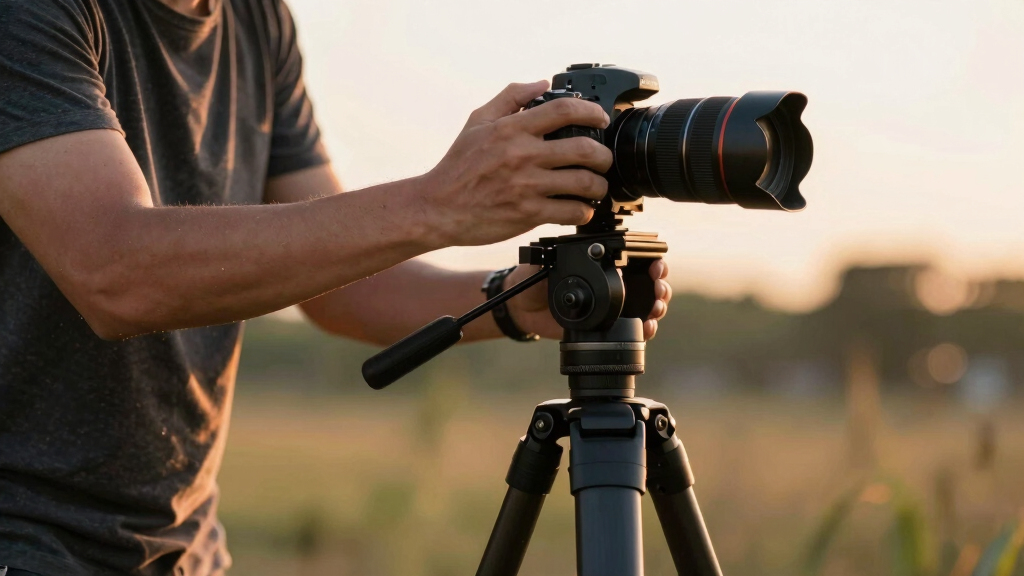
The Manfrotto XPRO 3-Way Head is my best overall choice among the best pan tilt tripod heads because it pairs precise three-axis framing with a faster, less cumbersome control layout than the geared models. For smooth video on a tighter budget, the NEEWER Fluid Head offers the strongest value, while the Manfrotto MHXPRO-3WG is the premium pick for photographers who need minute, repeatable adjustments. The main split is between fluid heads, which favor controlled movement during recording, and three-way or geared heads, which favor exact still-photo composition. Buyers also need to weigh payload, plate compatibility, packed size, and whether speed matters more than fine control. Continue reading for the full breakdown and a buyer-by-buyer recommendation.

Get audio and creator gear delivered free with Prime
- Fast, free delivery on millions of items
- Prime Video, Amazon Music and more included
- Member-only deals all year
Complete the kit


Key Takeaways
- The Manfrotto XPRO 3-Way ranks first because its independent axis control offers a stronger balance of speed, precision, and general photographic versatility than the slower geared heads.
- NEEWER delivers the best value for lightweight video, while SmallRig earns the compact role and Avella suits buyers seeking a simpler fluid-head setup.
- The two geared Manfrotto models serve different buyers: the MHXPRO-3WG favors faster operation, while the 410 favors deliberate support for heavier studio, macro, and architectural rigs.
- INNOREL F20 has the most creator-focused bundle, but its plates, phone clip, arm, and handle add value only for buyers who will use those accessories.
- Manfrotto 056 is the beginner still-photo pick, offering direct three-way control without the cost, size, or learning curve of a geared mechanism.


| pan tilt tripod head | Weight | Height | Base diameter | Tilt range |
|---|---|---|---|---|
| INNOREL F20 Fluid Head with Qu | 0.91 lb / 411 g | 3.31 in / 84 mm | 1.97 in / 50 mm | -90° to 90° |
| NEEWER Tripod Fluid Head Pan T | 10.93 oz | 2.91 in | 1.46 in | -55° to 90° |
| Avella Tripod Fluid Head with | 0.55 lb / 0.25 kg | 2.75 in / 70 mm | 1.77 in / 45 mm | -45° to 90° |
| Manfrotto XPRO 3-Way Head | 0.75 kg | — | — | — |
| Manfrotto Junior Geared Head | — | — | — | — |
| Manfrotto 3D Junior 3-Way Pan/ | 550g | — | — | — |
| Manfrotto MHXPRO-3WG Geared 3- | 1.65 lbs. | — | — | — |
| SmallRig CH10 Tripod Fluid Hea | 279g | 70mm | 36mm | +90°/-55° |
More Details on Our Top Picks
INNOREL F20 Fluid Head with Quick Release Plates, Handle, Magic Arm & Phone Clip
I rank the INNOREL F20 as the best accessory bundle because it arrives ready for cameras, phones, lights, and other small filming tools. Its 11-pound capacity exceeds the NEEWER and Avella heads by 4.4 pounds, giving mirrorless shooters more room for a larger lens or microphone. The included magic arm and phone clip also make it better suited to solo content production than those simpler alternatives. I would still choose the Manfrotto XPRO for a heavy still-photography rig: the F20 has a much smaller base and less load capacity. Its full 180-degree tilt span supports low and overhead framing, while the 360-degree pan handles basic video moves. The compromise is that this compact head lacks the mass and published drag controls associated with larger video heads, so demanding filmmakers may find it less controlled.
Pros:- 11-pound capacity provides more equipment headroom than the NEEWER and Avella models
- Magic arm, phone clip, handle, and quick-release plates create a flexible starter kit
- Full -90° to 90° tilt supports overhead, level, and low-angle framing
- CNC aluminum body balances durability with travel-friendly weight
Cons:- Small 1.97-inch base can feel undersized beneath bulky cameras or long lenses
- No published adjustable drag or counterbalance controls
- Lower load ceiling than the Manfrotto XPRO 3-Way Head
Best for: Solo creators and travel videographers who want one compact head for a mirrorless camera, phone, and small accessory setup
Not ideal for: Filmmakers using heavy cinema rigs or long lenses that need a wider, more substantial support platform
- Maximum load:11 lb / 5 kg
- Height:3.31 in / 84 mm
- Weight:0.91 lb / 411 g
- Base diameter:1.97 in / 50 mm
- Tilt range:-90° to 90°
- Material:CNC aluminum alloy
- Top screw:1/4 in
- Bottom screw:3/8 in
Our verdict“The INNOREL F20 is my pick for creators who value bundled versatility more than heavy-rig stability or advanced fluid controls.”
NEEWER Tripod Fluid Head Pan Tilt Head with Quick Release Plate and Handle
The NEEWER Fluid Head earns my best beginner position by combining familiar Arca-style mounting, a detachable handle, and manageable dimensions without adding specialist controls. Its -55-degree downward tilt reaches 10 degrees farther than the Avella, which helps when filming from a raised tripod, while the 360-degree pan covers interviews and simple tracking shots. NEEWER also allows the handle to sit on either side, a useful distinction for left-handed operators. At 10.93 ounces, though, it is heavier than the Avella despite sharing the same 6.6-pound capacity. The INNOREL F20 offers much more payload room and a broader tilt range, making it the safer choice for accessorized rigs. I see this NEEWER as a straightforward lightweight-camera head, not a platform for long lenses, cinema cages, or finely tuned drag adjustments.
Pros:- Arca-compatible plate makes camera mounting familiar and widely adaptable
- Handle supports left- or right-handed placement
- -55° to 90° tilt offers more downward reach than the Avella
- Compact dimensions suit travel tripods and small camera bags
Cons:- 6.6-pound capacity leaves little room for heavier lenses and accessories
- Heavier than the Avella despite having the same stated payload
- No published counterbalance or adjustable drag system
Best for: Beginning videographers using Arca-compatible compact, mirrorless, or lightweight DSLR camera kits
Not ideal for: Creators building camera cages or using long lenses that could approach or exceed the 6.6-pound load limit
- Height:2.91 in
- Base diameter:1.46 in
- Weight:10.93 oz
- Load capacity:6.6 lb / 3 kg
- Tilt range:-55° to 90°
- Pan rotation:360°
- Plate compatibility:Arca Swiss
- Camera compatibility:DSLR, mirrorless, and compact video cameras
Our verdict“I recommend the NEEWER to new video shooters who want simple Arca mounting and ambidextrous handling for a lightweight camera.”
Avella Tripod Fluid Head with Arca Type Quick Release Plate, Pan Tilt, and Detachable Handle
For buyers minimizing bag weight, I place the Avella Tripod Fluid Head in the best compact slot. Its 0.55-pound metal body is lighter than both the NEEWER and INNOREL F20, yet it matches NEEWER’s 6.6-pound stated capacity. That pairing makes it appealing for a compact mirrorless body and modest lens on a travel tripod. Arca compatibility also allows faster movement between compatible supports without changing plates. The cost of that portability appears in its movement range and payload ceiling: Avella stops at -45 degrees, while NEEWER reaches -55 degrees and INNOREL reaches -90 degrees. It also offers no published drag or counterbalance adjustment, so buyers cannot tune resistance for different camera weights. I would reserve this small all-metal head for uncomplicated pans and tilts rather than telephoto work or elaborate video builds.
Pros:- 0.55-pound body is lighter than the comparable NEEWER head
- Matches NEEWER’s 6.6-pound load rating in a smaller package
- Arca-type plate fits a widely used quick-release system
- Metal construction provides a sturdier foundation than lightweight plastic designs
Cons:- -45° downward limit is narrower than the NEEWER and INNOREL tilt ranges
- 6.6-pound capacity restricts heavier camera-and-lens combinations
- No published adjustable drag or counterbalance features
Best for: Weight-conscious travelers carrying a compact mirrorless camera and an Arca-compatible tripod
Not ideal for: Telephoto photographers and rigged-video shooters who need greater downward tilt, higher capacity, or tunable movement resistance
- Height:2.75 in / 70 mm
- Base diameter:1.77 in / 45 mm
- Weight:0.55 lb / 0.25 kg
- Load capacity:6.6 lb / 3 kg
- Material:Metal
- Tilt range:-45° to 90°
- Pan range:360°
- Plate compatibility:Arca type
Our verdict“The Avella makes the most sense when low carrying weight matters more than wide tilt travel or support for a large camera rig.”
Manfrotto XPRO 3-Way Head
I rank the Manfrotto XPRO 3-Way Head as the best overall photography option because its independent three-axis positioning and friction controls offer a strong balance of accuracy, speed, and load capacity. The 8-kilogram rating comfortably surpasses the INNOREL F20’s 5-kilogram limit, making the XPRO better suited to full-frame bodies, long lenses, and heavier studio combinations. Compared with the Manfrotto 410 Junior Geared Head, it favors direct repositioning over slow geared refinement; that makes composition changes quicker but less exact at very small increments. Its magnesium construction keeps weight to 0.75 kilogram despite the high payload. This is not my choice for cinematic pans, since it is a photographic three-way head rather than a fluid video design. Buyers must also use the Manfrotto 200PL plate system, which is less convenient for anyone already committed to Arca plates.
Pros:- 8-kilogram capacity supports substantially heavier equipment than the compact fluid heads
- Independent three-axis control makes careful photographic framing easier
- Friction adjustment helps match movement resistance to the mounted equipment
- Magnesium construction offers high capacity at a moderate head weight
Cons:- Three-way photographic movement is not designed for fluid video pans
- Manfrotto 200PL mounting does not directly match an Arca-based setup
- Less exact for tiny incremental adjustments than the Manfrotto 410 geared head
Best for: Landscape, studio, and architectural photographers who need independent axis control for a heavy camera-and-lens combination
Not ideal for: Video creators seeking fluid cinematic movement or photographers whose equipment is standardized around Arca-compatible plates
- Head type:3-way pan and tilt
- Movement axes:3
- Maximum load:8 kg
- Weight:0.75 kg
- Folded dimensions:13 × 13.5 × 13.5 cm
- Material:Magnesium
- Movement control:Friction adjustment on all axes
- Mounting plate:Manfrotto 200PL
Our verdict“I would choose the XPRO for serious still photography when high capacity and fast three-axis composition matter more than fluid video motion.”
Manfrotto Junior Geared Head (410)
The Manfrotto 410 Junior Geared Head takes my best precision framing role because geared movement lets photographers make small compositional corrections without nudging the camera by hand. That control is especially useful for architecture, products, and medium-format work, where a slightly tilted horizon or shifted edge can spoil a carefully arranged frame. Compared with the Manfrotto XPRO 3-Way Head, the 410 prioritizes measured adjustment over rapid repositioning; action and wildlife shooters may find that slower operating style restrictive. Its built-in quick release and 360-degree panoramic rotation support repeatable setup changes and stitched panoramas. The supplied data does not state its weight, dimensions, material, or maximum load, leaving portability and equipment compatibility harder to judge than with the XPRO. It also lacks the fluid movement focus of the INNOREL F20, so I would not select it for moving video shots.
Pros:- Geared adjustment supports fine compositional corrections
- Designed for SLR and medium-format camera use
- Built-in quick release simplifies mounting and removal
- 360° panoramic rotation supports stitched and precisely aligned sequences
Cons:- Geared operation is slower than the direct movement of the Manfrotto XPRO
- Published product data omits weight, dimensions, material, and load capacity
- Not designed to provide fluid cinematic pan-and-tilt movement
Best for: Architectural, product, and medium-format photographers who need controlled micro-adjustments for exact composition
Not ideal for: Run-and-gun videographers and fast-moving subjects where fluid motion or immediate reframing matters more than incremental accuracy
- Brand:Manfrotto
- Model:410
- Head type:Junior geared head
- Pan rotation:360°
- Quick-release plate:Built-in 3271 media QR plate
- Camera suitability:SLR and medium-format cameras
- UPC:719821287681
- Manufacturer part number:410
Our verdict“I recommend the Manfrotto 410 when exact still-image alignment outweighs portability, fast reframing, and fluid video performance.”
Manfrotto 3D Junior 3-Way Pan/Tilt Head (056)
I rank the Manfrotto 3D Junior 056 as the Best Lightweight Photo Head because its 550g build suits photographers who want deliberate three-way framing without carrying a larger geared model. Compared with the SmallRig CH10, this is the more photography-focused choice: its 360° movement and locking system favor carefully composed stills, while the SmallRig better supports flowing video moves and quick Arca-Swiss camera changes. The conical locking system also reduces the chance of an accidental release. I would pair it with 35mm or light medium-format equipment. Its limitations become clear with heavier rigs, though, and the ¼-inch camera mount offers less connection flexibility than the SmallRig. It also lacks the micro-step control that makes the MHXPRO-3WG better for architectural or studio precision.
Pros:- Weighs only 550g, making it easier to carry than larger geared heads
- Provides full 360° rotation for flexible still-photo composition
- Conical locking system guards against accidental release
- Three-way design supports deliberate adjustment for static subjects
Cons:- Intended for lighter cameras rather than heavy professional rigs
- ¼-inch camera connection is less versatile than a dual-thread system
- No geared micro-adjustment for highly exact framing
Best for: Traveling stills photographers using 35mm or light medium-format cameras who want a compact three-way head
Not ideal for: Photographers with heavy bodies, long lenses, or accessories that exceed the head’s light-to-medium camera focus
- Model Number:056
- Head Type:3-way pan/tilt
- Weight:550g
- Rotation:360°
- Camera Mount:¼-inch standard
- Camera Compatibility:35mm cameras
- Format Support:Light to medium format cameras
Our verdict“I recommend the 3D Junior 056 for mobile stills photographers who value low weight more than geared precision or heavy-load support.”
Manfrotto MHXPRO-3WG Geared 3-Way Pan/Tilt Head
I place the Manfrotto MHXPRO-3WG first for precision because its micro-step geared movement allows small corrections across every axis. That control matters for architecture, products, landscapes, and stitched panoramas, where a slightly tilted frame can spoil the result. Compared with the Manfrotto 3D Junior 056, it combines finer adjustment with a stated 8.8-pound payload, yet its 1.65-pound body remains manageable away from the studio. The SmallRig CH10 is a better choice for smooth video movement; this head favors exact placement over following a moving subject. The tradeoff is higher cost than a non-geared head, while the gearing can make broad reframing less immediate. Its 8.8-pound load ceiling also leaves little room for very heavy cameras, long lenses, or accessory-packed rigs.
Pros:- Micro-step geared movement supports highly accurate composition
- Adjustment is available across all three axes
- 8.8-pound capacity accommodates many DSLR and mirrorless setups
- 1.65-pound weight is relatively portable for a geared head
Cons:- Costs more than simpler non-geared three-way heads
- 8.8-pound payload is inadequate for heavier professional equipment
- Geared operation is less natural for continuous video movement
Best for: Architecture, product, landscape, and panorama photographers who need repeatable micro-adjustments on every axis
Not ideal for: Videographers following moving subjects or studio users whose camera-and-lens combinations exceed 8.8 pounds
- Model:MHXPRO-3WG
- Head Type:Geared 3-way pan/tilt
- Weight:1.65 lbs.
- Maximum Payload:8.8 lbs.
- Adjustment Style:Micro-step geared movement
- Geared Control:All axes
- Primary Movement:3-axis pan and tilt positioning
Our verdict“I recommend the MHXPRO-3WG when exact still-photo framing matters more than rapid movement, low price, or support for very heavy rigs.”
SmallRig CH10 Tripod Fluid Head with Arca-Swiss Quick Release Plate
I name the SmallRig CH10 the Best Compact Video Head because its 279g weight and 70mm height make smooth pan-and-tilt control practical for travel kits, compact video cameras, and lightweight DSLRs. It weighs almost half as much as the Manfrotto 3D Junior 056, while its Arca-Swiss plate makes switching compatible cameras faster. Unlike the geared MHXPRO-3WG, the CH10 favors flowing camera movement over tiny framing corrections, which better suits interviews, travel footage, and controlled tracking shots. Its dual ¼-inch and 3/8-inch-16 mounting support also fits more tripod setups. The compromise is fixed damping, which limits how closely resistance can match different rig weights. A 3kg payload ceiling restricts larger lenses and cages, and the +90°/-55° tilt range is less balanced than larger video heads.
Pros:- 279g construction adds little weight to a mobile video kit
- Fluid pan-and-tilt movement is better suited to video than geared stills heads
- Arca-Swiss quick-release plate speeds up compatible camera changes
- ¼-inch and 3/8-inch-16 mounting support expands tripod compatibility
Cons:- Fixed damping cannot be tuned for different camera weights or movement styles
- 3kg payload limits use with heavy lenses, cages, and accessories
- Downward tilt stops at -55°, reducing framing freedom
Best for: Travel videographers and hybrid shooters using compact cameras or lightweight DSLR rigs on Arca-Swiss-compatible supports
Not ideal for: Cinema-rig users who need adjustable drag, more than 3kg of capacity, or a broader downward tilt range
- Model:CH10
- Weight:279g
- Height:70mm
- Base Diameter:36mm
- Maximum Payload:3kg
- Tilt Range:+90°/-55°
- Swivel Range:360°
- Quick-Release and Mounting:Arca-Swiss plate; ¼-inch and 3/8-inch-16 threads
Our verdict“I recommend the SmallRig CH10 for lightweight video kits that need portability and smooth movement without the weight or precision bias of a geared head.”
How We Picked
I compared these heads through the buyer outcomes that matter most: control precision, smoothness for the intended medium, payload suitability, locking behavior, plate compatibility, and ease of adjustment. Fluid heads received credit for controlled video movement, while three-way and geared designs were judged more heavily on independent axis control and framing accuracy. I also weighed packed size, handle and knob placement, accessory usefulness, and how readily each design fits into an existing camera-support system. A high load rating alone did not move a head upward because stability, balance, and usable control matter more than a headline number.
The ranking favors products with a clear advantage for a defined buyer, not the longest feature list. The Manfrotto XPRO placed first for its broad speed-to-precision balance, while NEEWER ranked as the value leader for compact video rigs and the MHXPRO-3WG claimed the premium position for geared accuracy without extremely slow setup. Specialist strengths shaped the remaining roles: SmallRig for portability, INNOREL for bundled creator accessories, Manfrotto 410 for deliberate heavy-rig composition, Manfrotto 056 for basic three-way learning, and Avella for straightforward fluid operation. Bundle extras counted only after the head’s core movement and locking design.
| pan tilt tripod head | Tilt range |
|---|---|
| INNOREL F20 Fluid Head with Qu | -90° to 90° |
| NEEWER Tripod Fluid Head Pan T | -55° to 90° |
| Avella Tripod Fluid Head with | -45° to 90° |
| Manfrotto XPRO 3-Way Head | — |
| Manfrotto Junior Geared Head | — |
| Manfrotto 3D Junior 3-Way Pan/ | — |
| Manfrotto MHXPRO-3WG Geared 3- | — |
| SmallRig CH10 Tripod Fluid Hea | +90°/-55° |
Factors to Consider When Choosing Best Pan Tilt Tripod Heads
Choosing among these heads starts with the type of movement the camera needs, not the number of knobs or accessories in the box. I would match the mechanism to the dominant task, then narrow the field by payload and balance, plate compatibility, control layout, and realistic long-term value. A fluid head can be a poor match for exact still composition, just as a geared head can frustrate anyone trying to follow moving subjects. The following factors help separate useful engineering from features that may never improve the shot.
Match the Movement System to the Subject
Fluid heads favor continuous motion, making them the natural choice for recording pans, tilts, interviews, and moving subjects. A conventional three-way head locks each axis independently, which helps photographers level a horizon without disturbing the other parts of the composition. Geared heads trade speed for tiny corrections, a useful exchange for architecture, macro work, product photography, and carefully aligned landscapes. A handle does not automatically mean a head has refined fluid damping, so the overall mechanism matters more than its appearance. Buyers who shoot both stills and video should base the choice on the activity they perform most often rather than expecting one design to excel equally at both. Choose fluidity for motion and independent control for placement.
Calculate Payload From the Complete Camera Rig
Payload calculations should include the camera, lens, cage, microphone, monitor, and accessories, not just the camera body. Leaving some capacity above that total can reduce flex and make locks feel more decisive, but an oversized rating does not guarantee smoother control. Long lenses create leverage that may expose tilt creep even when the rig sits below the stated weight limit. Video buyers should also examine center of gravity and counterbalance behavior, since a poorly balanced rig can fall forward or backward when the tilt lock is released. A very large head may overwhelm lightweight tripod legs and add travel weight without improving a small mirrorless setup. I would match the head to the heaviest configuration used regularly, with a sensible margin rather than an extreme one.
Check the Entire Quick-Release Ecosystem
Arca-type compatibility can simplify switching between a tripod, monopod, slider, and gimbal, especially when several cameras already carry matching plates. The label is not a promise that every clamp, plate profile, safety pin, or anti-twist feature will work together. Video plates may offer better fore-aft balance adjustment but can be less convenient when the rest of the kit uses compact photo plates. Photographers who shoot vertically should check whether an L-bracket can remain attached without blocking controls or creating an awkward balance point. Spare-plate availability also matters because a lost proprietary plate can sideline the entire head. Before buying, I would verify the plate dimensions, clamp style, and release safeguards against the equipment already in the bag.
Evaluate Controls, Packing Size, and Tripod Fit
A head can support the camera securely yet remain frustrating if its locks, knobs, or handles collide with the tripod or camera body. Retractable levers help three-way heads pack smaller, while removable or reversible handles can suit tight shooting spaces and different operating positions. Geared controls benefit from a coarse-release function because turning a fine-adjustment knob across a large angle is slow. For panoramas, an independent pan lock and readable scale make repeatable frame spacing easier. Buyers working outdoors should favor controls large enough to operate with gloves and locks that are easy to identify by touch. The base connection matters too: a flat-base head with a common threaded socket fits many photo tripods, while bowl-based video legs may need a different arrangement. I would check control clearance and mounting compatibility before comparing minor accessories.
Know When a Higher Price Pays Off
Higher-priced heads usually make the most sense when small framing errors cost time or when the rig is used frequently enough for control feel and reduced play to matter. Architecture, macro, stitched panoramas, and studio product work can justify geared adjustment because repeatability has direct practical value. An affordable fluid head may be the smarter purchase for occasional clips, locked-off interviews, or a lightweight camera that does not need adjustable resistance. Travel buyers may gain more from lower weight and smaller packed dimensions than from extra capacity they will never use. Accessory bundles can appear economical, but unused plates, clips, or arms do not compensate for weak locks or awkward movement. I would pay first for reliable mechanics, compatible plates, and available replacement parts, then for extras.
Frequently Asked Questions
Should I Buy a Fluid Head or a Three-Way Pan-Tilt Head?
Choose a fluid head for video movement because its linked pan-and-tilt controls are designed around following action and producing controlled camera motion. Choose a three-way head for still photography when you want to adjust and lock the horizontal, vertical, and rotational axes separately. Landscapes, interiors, and product shots often benefit from that independent control. A fluid head can hold a still camera, but making tiny corrections may be less direct. If stills and video share equal priority, I would choose based on which task is less forgiving in your work.
Is a Geared Tripod Head Worth the Extra Cost?
A geared head is worth paying for when minute framing changes must be repeatable, particularly in architecture, macro, product, and studio photography. Its knobs move the camera in small increments without requiring the user to loosen an axis and reposition the entire rig. That precision comes with more weight, greater bulk, and slower large movements. Wildlife, sports, and casual travel photographers may find the mechanism restrictive rather than helpful. I would reserve the extra expense for work where correcting perspective or alignment repeatedly is already consuming time.
How Much Load Capacity Does My Tripod Head Need?
Add the weight of the full working rig, including the lens, cage, monitor, microphone, flash, bracket, and plate. I would select a head with capacity above that working total, but I would not buy solely by choosing the largest number. A long telephoto lens can create more tilt strain than a compact rig of similar weight because its mass sits farther from the pivot. Smooth operation also depends on balance, lock quality, and tripod stability. For most buyers, a moderate safety margin paired with the right head size is more useful than carrying an oversized support system.
Are All Arca-Swiss-Compatible Plates Interchangeable?
No, Arca-type does not always mean universal fit. Plate widths, bevel profiles, safety stops, clamp openings, and anti-twist features can vary across brands. A plate may slide into a clamp yet still interfere with a release mechanism or camera door. Buyers who already use an Arca-based system should compare exact clamp and plate details before assuming cross-compatibility. Staying within one proven plate ecosystem reduces setup friction, while an adapter can make sense when changing every plate would cost more.
Can One Pan-Tilt Head Handle Both Photography and Video?
One head can support both, but hybrid use involves a control compromise. Fluid heads are easier for moving shots, yet they may lack the independent fine adjustment photographers want for careful leveling. Three-way heads give still shooters better axis separation but generally cannot reproduce a fluid video pan with the same ease. A geared model is the least natural choice for following unpredictable movement because large reframing changes take longer. I would choose the mechanism that serves the primary medium and accept simpler performance for the secondary one.
Conclusion
For most photographers, I would choose the Manfrotto XPRO 3-Way Head as best overall because it offers a better speed-to-precision balance than either geared Manfrotto. The NEEWER Fluid Head is my best-value pick for lightweight video, while the Manfrotto 3D Junior 056 is the simpler beginner choice for still photography. Buyers who want the most polished mix of rapid positioning and fine geared correction should step up to the Manfrotto MHXPRO-3WG as best premium. The Manfrotto 410 makes more sense for heavier architectural, studio, or macro rigs where deliberate adjustment matters more than portability. For travel or a small mirrorless video kit, the SmallRig Fluid Head is the compact choice; choose the Avella when a straightforward detachable-handle fluid design is enough. The INNOREL F20 is the better fit for phone-and-camera creators who can use its included arm, clip, and extra plates rather than buying those pieces separately. My closing rule is simple: choose fluid motion for recorded pans, independent axes for general stills, and gearing for exact composition.
Halloween Picks
halloween
As an affiliate, we earn on qualifying purchases.