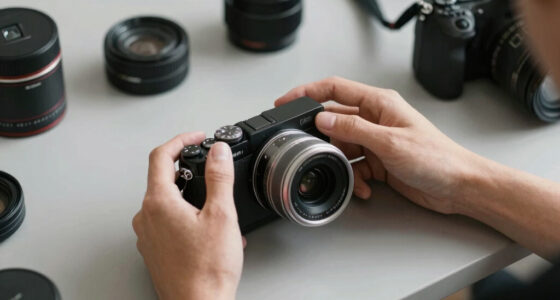
TL;DR
Refurbished cameras are pre-owned cameras that have been returned, inspected, repaired if needed, tested, and resold by a manufacturer or a reputable refurbisher. They can save you about 20-50% compared with buying new, but the real value depends on warranty length, return policy, seller reputation, and whether the body has been properly checked.
A clean shutter click can cost less than you think, but a cheap camera can also become expensive fast. I have bought backup bodies, lenses, and small lighting accessories through refurb channels, and the good ones arrived almost boringly normal: clean sensor, tight buttons, fresh firmware, no drama.
You will learn how to separate smart savings from false economy, what warranty language actually matters, and what to check before you trust a camera with a wedding, a family trip, or your first serious portrait session.
Refurbished cameras are safest when they come from the manufacturer or a reputable refurbisher with written testing, warranty, and return terms.
A 20-50% discount is attractive, but warranty length, return window, and seller reputation decide whether the deal is smart savings or false economy.
Manufacturer-certified refurbished gear usually carries lower risk than ordinary used gear because it has been inspected, repaired if needed, and supported.
Test every refurbished camera within the return window: sensor, autofocus, buttons, card slots, ports, video, and real shooting conditions.
For paid or once-only work, trust refurb gear only after it has proven itself in low-pressure shoots.
Buyer intelligence / camera gear
Refurbished Cameras: Smart Savings or False Economy
Refurbished cameras are returned, inspected, repaired if needed, tested, and resold by a manufacturer or reputable refurbisher. The best deals can save 20-50% versus new, but the real value depends on warranty length, return policy, seller reputation, and whether the body has been properly checked before you trust it with important work.
A clean shutter click can cost less than you think, but a cheap camera can become expensive fast.
The value is in the inspection, not the label.
A proper refurb process checks the parts that fail quietly: autofocus, sensor, shutter, card slots, ports, buttons, battery door, hot shoe, firmware, and cosmetic condition. That paper trail turns a mystery box into a supported purchase.
Lowest ambiguity
Usually inspected by the brand or authorized channel, repaired if needed, updated, tested, graded, and sold with written warranty terms.
Depends on standards
Can be excellent when the seller publishes testing, grading, return windows, and coverage. Vague listings increase risk.
More unknowns
May be cheaper, but often lacks inspection records, support, and repair coverage. The discount becomes a bet.

Canon EOS Rebel T7 DSLR Camera with 18-55mm Lens (Black) (Renewed)
High-Quality Imaging: The Canon EOS Rebel T7 DSLR Camera features a 24.1 Megapixel CMOS sensor for stunningly detailed…
As an affiliate, we earn on qualifying purchases.
As an affiliate, we earn on qualifying purchases.
Smart savings start where support begins.
A 35% discount feels clever only if repair costs, return friction, and missed shots do not eat the difference. The stronger the support, the more useful the savings become.
Buy capability, not cheapness.
Beginner win: put more budget into a better lens. Enthusiast win: step into weather sealing or stronger autofocus sooner. Professional win: add a backup body without tying up money better spent on lighting, insurance, or storage.
Deal quality spectrum
False economy to smart savings
Canon (Refurbished EOS RP Mirrorless Full Frame Camera RF 24-105mm F4-7.1 is STM Lens Kit – (Renewed)
This Certified Refurbished product is manufacturer refurbished it shows limited or no wear
As an affiliate, we earn on qualifying purchases.
As an affiliate, we earn on qualifying purchases.
Refurbished, used, or new?
The word refurbished matters only when it is backed by testing, warranty language, and a return window. Without those, it behaves more like ordinary used gear.
| Buying route | Inspection | Warranty | Return safety | Best use |
|---|---|---|---|---|
| Manufacturer-certified refurb | ✓ Brand checklist | ✓ Often 90d-2y | ✓ Usually stated | Backup bodies, serious travel, paid work after testing |
| Reputable third-party refurb | ~ Seller-dependent | ~ Read coverage | ✓ Look for 14-30d | Budget upgrades, lenses, accessories, older models |
| Ordinary used camera | ✗ Often unknown | ✗ Often none | ~ Marketplace varies | Low-stakes buys when you can absorb repair risk |
| New camera | ✓ Factory fresh | ✓ Full coverage | ✓ Retail support | Maximum certainty, latest features, primary pro kit |

shenghuo 4K Mini Body Camera,64G Wearable Camera with 360°Rotatable Clip & Magnetic Clip, Thumb Size, 96 Minutes for Recording, Easy to Use for Lecture, Traveling, Pet Walking and Outdoors(Black)
User Friendly:Customize your recordings by enabling or disabling timestamps to suit your preferences. This ensures precise time tracking…
As an affiliate, we earn on qualifying purchases.
As an affiliate, we earn on qualifying purchases.
From returned body to trusted camera.
A refurbished camera earns confidence through a visible chain: seller standard, technical inspection, repair if needed, real testing, warranty language, and your own return-window stress test.
Returned gear
Customer return, open box, trade-in, or unit needing service.
Inspection
Sensor, shutter, autofocus, ports, mount, controls, and card slots.
Repair and firmware
Faults corrected, firmware updated, cosmetic grade assigned.
Warranty terms
Coverage length, parts and labor, exclusions, and return policy.
Your proof shoot
Test before the return window closes, then trust gradually.
Test it before you trust it.
A good return policy only helps if you use it. Test every refurbished body immediately in real light, with your own cards, lenses, batteries, and shooting habits.
Seller first
Prefer manufacturer stores, respected camera retailers, or specialists with clear grading and support.
Warranty language
Look for 90 days to 2 years and confirm whether parts and labor are included.
Body inspection
Check mount, hot shoe, screen, viewfinder, battery door, card slots, ports, and every button.
Test frames
Shoot a plain wall, bright sky, dark scene, moving subject, video clip, and both card slots.

Canon EOS 2000D / Rebel T7 DSLR Camera w/EF-S 18-55mm f/3.5-5.6 Lens 3 Lens Kit: 128GB Memory + Wide Angle + Telephoto + Flash (Renewed)
Deluxe Bundle with: Camera, 18-55mm Lens, Wide-angle and Telephoto, 128gb, Case, Filter Kit, Flash, Tripod and More
As an affiliate, we earn on qualifying purchases.
As an affiliate, we earn on qualifying purchases.
What a Refurbished Camera Really Means Before You Buy
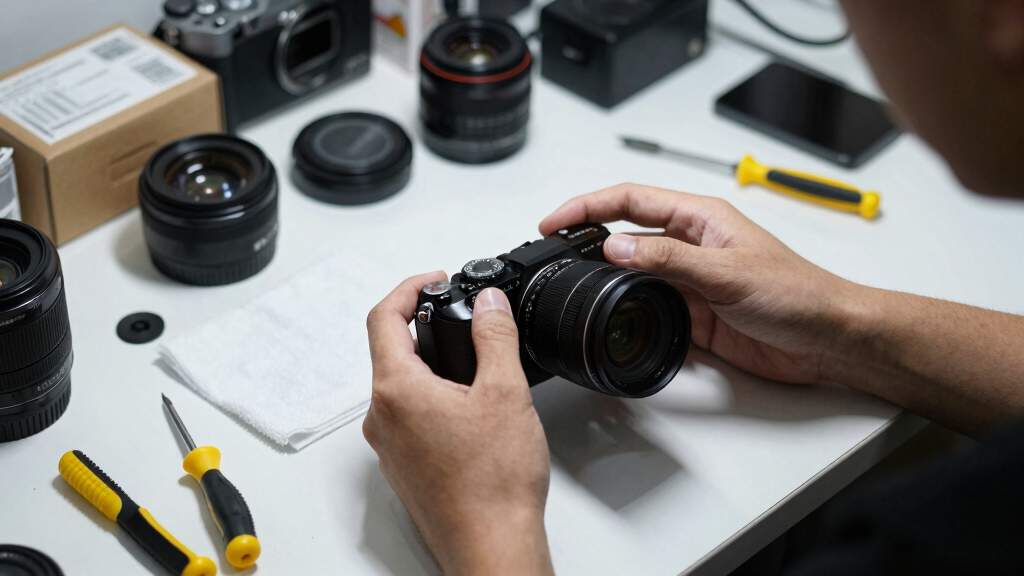
Refurbished cameras are pre-owned cameras that have been returned, inspected, repaired if needed, tested, and resold by the maker or a reputable refurbisher. Some are customer returns with barely a fingerprint on the grip. Others needed a part, a sensor clean, or updated firmware before being cleared for sale [1].
The important part is the work done between return and resale, because that work changes the risk you are actually buying. A proper refurb process checks the autofocus, sensor, shutter, card slots, ports, buttons, battery door, hot shoe, and sometimes cosmetic condition. Those checks matter because camera faults are often intermittent: a body can power on beautifully and still miss focus, corrupt files on one card slot, or show dust only at narrow apertures.
That is the difference between a camera with a paper trail and a mystery box wrapped in bubble wrap. The paper trail does not make the camera immortal, but it tells you someone had a standard, a checklist, and a reason to reject the unit if it failed. The tradeoff is that you may pay more than you would for an ordinary used body, but that extra cost buys less uncertainty.
I once bought a refurbished mirrorless body as a second camera for event work. It had one tiny shine mark near the strap lug, but the viewfinder was clear, the controls felt crisp, and the files matched my main body frame for frame. On a long reception shoot, that kind of quiet reliability matters more than the smell of a fresh retail box.
When Refurbished Cameras Save You Real Money
Refurbished cameras become smart savings when the discount is large, the seller backs the gear, and the camera still fits your work. Typical savings run around 20-50% compared with new models, especially on previous-generation DSLRs, mirrorless bodies, and older professional cameras [1]. The win is buying capability, not chasing cheapness.
That distinction matters because camera value is not only about release date. Last year’s camera does not suddenly forget how to make a sharp portrait, and a slightly older full-frame body with good autofocus, clean high ISO performance, and dual card slots can still handle paid work, travel, family documentary projects, and studio portraits beautifully. The implication is practical: if the older body already solves your photographic problem, the newer one may only solve a spec-sheet problem.
- Beginner win: you can put more budget into a better lens, which usually changes your images more than a newer body.
- Enthusiast win: you can step into weather sealing, stronger autofocus, or better ergonomics sooner.
- Professional win: you can add a backup body without tying up money better spent on lighting, insurance, or storage.
The tradeoff is that refurbished savings are strongest when you are honest about what you do not need. If you shoot still portraits, you may not need the newest video modes. If you photograph family travel, you may care more about battery life and comfortable controls than bleeding-edge subject tracking. Real savings happen when the discount leaves you with money for the parts of the system that actually affect your pictures.
The smell of savings is not glamorous. It is the soft clack of a shutter that works, the extra battery in your pocket, and the relief of knowing you did not drain your budget before buying glass.
Where Cheap Refurbs Turn Into Expensive Mistakes
Refurbished cameras turn into false economy when the seller hides the inspection process, offers no meaningful return window, or uses the word refurb as decoration. A low price cannot protect you from a sticky command dial, a misaligned lens mount, a tired shutter, or a sensor scratch you spot only after your first blue-sky test shot.
The danger is not that refurbished gear is bad. The danger is buying owned cameras that were merely wiped clean, photographed from flattering angles, and pushed back online with vague promises. If the listing says tested but never says what was tested, your risk goes up because you cannot tell whether the seller checked the parts that fail quietly under real use.
This is where the discount can become misleading. Saving 35% feels clever until the camera needs a repair that eats the entire difference, or until a missed focus problem ruins photos you cannot reshoot. Cheap gear also has a time cost: emails, returns, repair quotes, shipping labels, and the slow irritation of losing confidence in your kit.
Key warning: a cheap camera with no warranty is not a bargain; it is a bet. Make that bet only when you can afford to lose.
I have seen students get burned by bodies with broken rear screens or intermittent card slot errors. The camera worked for ten minutes at the kitchen table, then failed during a weekend trip. That is the kind of problem a return policy saves you from, because it turns a bad unit into an inconvenience instead of a sunk cost.
How to Check a Refurbished Camera in 20 Minutes
- Check the seller first. Buy from the manufacturer, a respected camera retailer, or a specialist with clear grading, testing, and warranty terms.
- Read the warranty. Look for 90 days to 2 years of coverage and confirm what parts and labor are included [2].
- Confirm the return window. A 14-30 day return policy gives you time to test the camera in real light [2].
- Inspect the body. Check the mount, hot shoe, screen, viewfinder, battery door, card slots, and every button.
- Shoot test frames. Photograph a plain wall, a bright sky, a dark scene, and a moving subject to check dust, focus, banding, and tracking.
Each step is meant to expose a different kind of risk. Seller checks protect you from weak support. Warranty checks protect you from repair costs. Physical inspection catches abuse. Test frames reveal the faults that only appear once light hits the sensor and the autofocus system has to work for a living.
A good 20-minute check can catch most obvious trouble before the return window closes. Take one photo at every shutter speed you commonly use, switch cards, record a short video clip, and connect the camera to your computer. Small faults love hiding in features you forget to test, so use the camera the way you will actually use it rather than treating the inspection like a museum visit.
My field test is simple. I photograph a white wall at a narrow aperture, a bookshelf for focus accuracy, a backlit window for metering, and someone walking toward me for autofocus tracking. If the files look clean and the controls feel natural, the camera starts earning trust. If something feels odd, I do not argue with the feeling; I repeat the test, document the issue, and decide quickly while the return clock is still on my side.
Manufacturer Refurbished vs Used: Which One Protects You Better?
| Buying route | What you usually get | Main risk | Best for |
|---|---|---|---|
| Manufacturer-certified refurbished | Tested gear, firmware updates, official parts, warranty, and support, often sold directly by the camera brand. | Stock changes quickly, and cosmetic grading may be conservative or vague. | Beginners, working photographers, and anyone who wants lower risk. |
| Third-party refurbished | Inspection and repair from a reputable refurbisher, often with a store warranty and return policy. | Testing standards vary from seller to seller. | Buyers who trust a specific retailer and read the terms carefully. |
| Ordinary used camera | A camera sold as-is or lightly checked, often from an individual owner. | Hidden faults, no warranty, uncertain history, and limited recourse. | Experienced buyers who can inspect gear in person. |
Manufacturer refurbished usually protects you better because the camera has been checked against brand standards and may include support close to new-product coverage. The advantage is consistency: the parts, firmware, testing process, and repair route all point back to the company that built the camera. The tradeoff is availability. You may not find the exact body, color, kit lens, or timing you want.
Third-party refurbished can also be excellent, but the seller’s process matters more. A strong camera shop with technicians, clear condition grades, and responsive service can be a very good place to buy. A vague marketplace listing using refurb language loosely is a different animal entirely. In that middle category, your job is to judge the seller as carefully as the camera.
Ordinary used gear can be fine, yet it asks you to become the inspector. That can be a fair trade if you know the model well, can test it in person, and are getting enough savings to justify the uncertainty. For a beginner buying a first interchangeable-lens camera, I would rather see you choose a certified refurb body with a modest lens than a flashy used body with no return path. For an experienced shooter meeting a local seller, used can work if you know how a healthy shutter, lens mount, and autofocus system should feel.
The Warranty Details That Matter More Than the Discount
The best warranty is specific, long enough for real testing, and backed by a seller you can reach. Look for coverage of parts and labor, a clear return period, and written terms before you buy. Many certified refurb models include warranties from 90 days to 2 years, while return windows often run 14-30 days [2].
Warranty length matters, but clarity matters more. A short warranty that plainly covers repair labor, electronic faults, and defective parts can be more useful than a longer promise full of exclusions. Read whether the warranty covers the shutter, sensor, ports, and rear screen. Check whether you pay shipping if something fails. A friendly return policy on day one can matter more than a vague long warranty you will struggle to use.
The deeper question is who carries the risk after purchase. With strong terms, the seller keeps some responsibility for the condition of the camera. With weak terms, that responsibility moves to you the moment the box lands on your porch. That changes the value of the discount: a 25% saving with support may be better than a 45% saving where every fault becomes your problem.
Here is a real scenario. You buy a refurbished camera before a family holiday, and the autofocus hunts in low light. With a 30-day return window, you can test it in your living room, on a rainy street, and at dinner before you commit. Without that window, you are troubleshooting instead of photographing.
What Pros Look For Before Trusting Refurb Gear
Working photographers judge refurb gear by reliability, service access, and job risk, not by the romance of buying new. A refurbished camera can be a smart backup body, a studio camera, or a travel kit anchor. For once-in-a-lifetime work, you should test it hard before it joins your paid bag.
The reason is simple: professional risk is not only the cost of replacing the camera. It is the cost of missing a first kiss, losing files from a corporate shoot, or arriving on location with gear you do not fully trust. A refurb body can absolutely earn a place in that world, but it earns it through repetition, not optimism.
I treat any new-to-me body like an assistant I have not worked with yet. It gets a few casual walks, a low-pressure portrait session, card swaps, battery changes, tether tests, and ugly lighting. I want to hear every button click and see how the files behave when the light goes thin and blue.
- For weddings: use refurbished bodies only after several full shoots or rehearsals without errors.
- For travel: favor cameras with common batteries, weather sealing, and easy service options.
- For studio work: check tethering, flash sync, hot shoe contact, and long shooting sessions.
- For beginners: prioritize comfort, clean menus, and lens choice over the newest processor.
The tradeoff for pros is attractive but real. Refurbished gear can free money for backups, lights, cases, and insurance, which may improve the whole kit more than one new body would. But if the job has no second chance, the savings only make sense after the camera has already proven it can behave under pressure.
The craft lesson is simple: gear earns confidence through use. Not through a product page. Put the camera in your hands before you put it in your plans.
Why Refurbished Can Be the Greener Camera Choice
Refurbished cameras reduce waste by keeping electronics, batteries, screens, metals, and precision parts in use longer. Camera bodies contain complex materials and careful machining; extending their working life avoids turning a usable tool into a drawer relic. Buying refurbished supports sustainability without asking you to accept poor performance [1].
Think of the magnesium frame, the glass-covered display, the rubber seals, the tiny screws, the sensor assembly tucked behind the mount. A camera is not disposable in spirit or design. When a returned body gets tested, repaired, and used for another five years, that is a better ending than dust on a warehouse shelf.
The environmental argument is strongest when the camera remains genuinely useful. A refurb body that replaces a new purchase, works with your lenses, receives batteries and accessories easily, and still has repair options can be both practical and lower waste. A body that is too old for your software, video needs, or service support may become another short-lived purchase, which weakens the benefit.
There is a tradeoff. If the refurb camera is too old for your lenses, software, video needs, or repair support, it may not serve you long. The greener buy is the one you will actually use, maintain, and carry into good light.
The Smart Buyer’s Rule: Match Risk to the Job
The smartest rule is to match the refurb risk to the importance of the shoot. A refurbished camera is a strong choice for learning, travel, family work, studio practice, backup duty, and many paid jobs after testing. It is a weaker choice when the seller is vague and the work cannot be repeated.
This is one of the most important aspects of buying camera gear: the same camera can be a bargain for one person and a mistake for another. If you shoot weekend portraits, a certified refurb body may be perfect. If you shoot remote documentary work with no service nearby, you may value newer support and full warranty more.
The implication is that there is no universal refurb verdict. You are not asking whether refurbished cameras are good or bad. You are asking whether this seller, this camera, this warranty, and this job fit together. A great discount on the wrong risk profile is still the wrong deal.
Use this practical filter before you buy: if the camera failed on day 10, would you have a return path, a backup plan, and enough time to recover? If yes, the savings may be smart. If no, the discount is whispering louder than your judgment.
Frequently Asked Questions
Are refurbished cameras reliable enough for serious photography?
Yes, refurbished cameras can be reliable enough for serious photography when they come from a manufacturer or a reputable refurbisher. Test the body during the return window before using it for paid work, travel, or any shoot you cannot repeat.
Is refurbished better than buying used?
Refurbished is usually safer than ordinary used because the camera has been inspected, repaired if needed, and often covered by a warranty. A used camera can still be a good buy, but you carry more of the inspection risk yourself.
What warranty should I expect on a refurbished camera?
Many certified refurbished cameras include warranty coverage from 90 days to 2 years, depending on seller and program [2]. Read the terms closely so you know whether parts, labor, shipping, and electronic faults are covered.
What should I test first when the camera arrives?
Start with the sensor, autofocus, shutter speeds, card slots, ports, viewfinder, rear screen, and every physical button. Shoot bright, dark, still, and moving subjects so faults show up while you can still return the camera.
Are refurbished cameras good for beginners?
Yes, refurbished cameras can be excellent for beginners because they free up budget for lenses, memory cards, batteries, and learning. Choose a simple, well-supported model with a clear return policy rather than chasing the most advanced body you can find.
Conclusion
Refurbished cameras are worth buying when the seller stands behind them and you test them like tools, not trophies. Buy the warranty, the return window, and the inspection record as much as the camera body itself.
The right refurb camera will not feel like a compromise in your hands. It will disappear into the work, leaving you with clean files, a lighter bill, and the quiet click of money well spent.