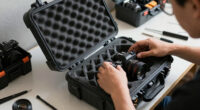
The SpiderPro Mirrorless Dual Camera System v2 is my best overall pick because it supplies a complete belt, two locking holsters, and camera plates for photographers who regularly work with two bodies. For hiking and travel, I prefer the Cotton Carrier Slingbelt: its single-camera twist-lock mount and safety tether offer a simpler balance of security, mobility, and hands-free carrying. The Spider Holster Clip-on is the leanest quick-draw choice for a mirrorless setup, especially when a full padded system feels excessive.

Get audio and creator gear delivered free with Prime
- Fast, free delivery on millions of items
- Prime Video, Amazon Music and more included
- Member-only deals all year
The main choice is between capacity, protection, and simplicity. SpiderPro prioritizes fast access to two cameras but adds weight and setup. Cotton Carrier supports active outdoor movement with one camera, while Thule places more emphasis on enclosure and pack integration. I ranked these systems by how convincingly each one solves a specific carrying problem, then accounted for compatibility limits, required accessories, and the effort needed to configure the hardware.
Complete the kit

Key Takeaways
- I rank the SpiderPro Dual Camera System first for professionals who need two cameras immediately accessible.
- I favor the Cotton Carrier Slingbelt for hiking because its tether adds backup security during active movement.
- I see the Spider Clip-on as the best compact choice, but it is less complete than the full SpiderPro belt package.
- I recommend the Thule holster only when VersaClick compatibility and enclosed protection matter more than universal fit.
- I would check camera plates, battery-door clearance, grip compatibility, and belt fit before choosing any system.
| SpiderPro Mirrorless Dual Camera System v2 |  | Best Overall Dual-Camera System | System Type: Dual-camera belt and holster system | Listed Item Weight: 0.99 kilograms | Belt Fit: 28–50 inches | VIEW LATEST PRICE | See Our Full Breakdown |
| Cotton Carrier Slingbelt with Tether for One Camera |  | Best for Hiking and Travel | System Type: Single-camera sling belt | Camera Capacity: One camera | Fabric: 100% nylon | VIEW LATEST PRICE | See Our Full Breakdown |
| Spider Holster Clip-on Camera Holster with Durable Stainless Steel Pin | 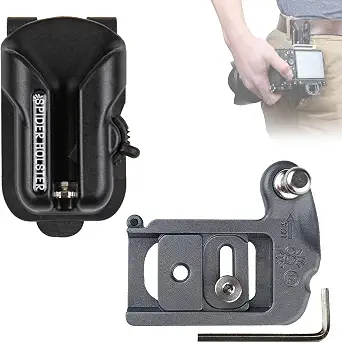 | Best Compact Quick-Draw Holster | System Type: Clip-on single-camera holster | Camera Compatibility: Most mirrorless cameras | Holster Material: Nylon composite | VIEW LATEST PRICE | See Our Full Breakdown |
| Thule VersaClick DSLR Camera Holster, Black |  | Best for Thule VersaClick Users | System Type: Protective camera holster | Required Platform: Thule VersaClick system | External Dimensions: 6 x 4.6 x 7.5 inches | VIEW LATEST PRICE | See Our Full Breakdown |
| camera belt system | System Type | Camera Capacity |
|---|---|---|
| SpiderPro Mirrorless Dual Came | Dual-camera belt and holster system | Two mirrorless cameras |
| Cotton Carrier Slingbelt with | Single-camera sling belt | One camera |
| Spider Holster Clip-on Camera | Clip-on single-camera holster | — |
| Thule VersaClick DSLR Camera H | Protective camera holster | — |
More Details on Our Top Picks
SpiderPro Mirrorless Dual Camera System v2
I rank the SpiderPro Mirrorless Dual Camera System v2 first because it is the only option here built from the outset around two-camera professional work. The package combines a padded belt, two self-locking holsters, two mirrorless plates, a lens-collar plate, and the second-camera pad. That matters at weddings, events, and location shoots where changing lenses can cost more time than moving between two prepared bodies. Compared with the Cotton Carrier and Spider clip-on, this is a more complete load-bearing setup rather than a single mounting point.
The CNC-machined aluminum hardware and self-locking action favor retention and repeated access, while Arca-Swiss compatibility can reduce plate swapping when moving a camera to a compatible tripod head. Those advantages come with more bulk, more pieces to configure, and a listed weight of 0.99 kilograms. A vertical-grip setup also needs an additional accessory. I would choose this over the compact Spider holster when dual-camera speed outweighs minimalism; a casual photographer carrying one small body is paying for capacity and structure that may never be used.
Pros:- Complete belt system supports two cameras
- Self-locking holsters combine secure retention with quick access
- CNC-machined aluminum components suit demanding workloads
- Arca-Swiss compatibility can simplify tripod transfers
Cons:- Heavier and more involved than single-camera alternatives
- Vertical-grip compatibility requires an additional purchase
- Professional configuration may be excessive for occasional use
Best for: Wedding, event, and commercial photographers who regularly carry two mirrorless bodies
Not ideal for: Casual photographers, light packers, or vertical-grip users unwilling to buy another adapter
- System Type:Dual-camera belt and holster system
- Listed Item Weight:0.99 kilograms
- Belt Fit:28–50 inches
- Primary Material:CNC-machined aluminum hardware
- Camera Capacity:Two mirrorless cameras
- Holsters Included:Two self-locking camera holsters
- Plates Included:Two mirrorless plates and one lens-collar plate
- Tripod Compatibility:Arca-Swiss compatible
Our verdict“My first choice for fast two-camera work, provided the added weight and setup match the assignment.”
Cotton Carrier Slingbelt with Tether for One Camera
The Cotton Carrier Slingbelt takes second place by focusing on a different buyer: someone walking trails or traveling with one camera rather than managing a two-body assignment. Its twist-lock connection and safety tether provide two layers of retention, and the hip-mounted position keeps the hands free. Compared with SpiderPro, the Slingbelt offers less capacity but a more focused outdoor setup with fewer camera stations competing for space around the waist.
I prefer this model over the smaller Spider clip-on when active movement and backup security carry more weight than the smallest possible footprint. The tradeoff is that comfort depends on careful belt adjustment, especially with a larger body and lens. The supplied details also omit a formal weight limit, making it harder to judge unusually heavy combinations. Since it carries one camera, it cannot replace SpiderPro for photographers who keep two focal lengths ready. It remains my strongest hiking choice because the included tether addresses the consequences of an accidental release on uneven ground.
Pros:- Twist-lock mount keeps one camera accessible at the hip
- Included tether provides secondary retention
- Hands-free design suits walking and outdoor activity
- Mounting hardware is included
Cons:- Limited to a single camera position
- Comfort relies on correct belt adjustment
- Published description does not state a weight capacity
Best for: Hikers, travelers, and outdoor photographers carrying one camera with an attached lens
Not ideal for: Two-camera event shooters or buyers who need a clearly stated maximum load rating
- System Type:Single-camera sling belt
- Camera Capacity:One camera
- Fabric:100% nylon
- Retention Method:Twist-lock mount
- Secondary Security:Included sling tether
- Belt Adjustment:Adjustable hip fit
- Included Components:Slingbelt, tether, and mounting hardware
Our verdict“My preferred outdoor pick for one-camera mobility, with a useful tether that the simpler holster options lack.”
Spider Holster Clip-on Camera Holster with Durable Stainless Steel Pin
The Spider Holster Clip-on is my third-ranked pick and the best match for a photographer who wants quick access without a full padded rig. It combines a nylon-composite holster, CNC-machined aluminum plate, and stainless steel pin in a compact assembly intended for most mirrorless cameras. The self-locking mechanism can retain the camera automatically, while a quick-release mode supports faster drawing. Its sliding plate is designed to preserve battery-door access, a practical advantage when changing batteries during a long shoot.
Compared with the full SpiderPro system, this option has less bulk and lower setup complexity, but it does not provide the same two-camera capacity or broad load distribution. Cotton Carrier adds a tether and activity-focused belt, making that system more reassuring for rugged trails. The clip-on instead makes sense for urban walks, short sessions, and photographers who already have a suitable belt. Fit may require adjustment, and vertical-grip compatibility costs extra. I would treat it as a minimal single-camera solution, not a substitute for a purpose-built professional belt.
Pros:- Compact format avoids the bulk of a full camera belt
- Self-locking mechanism supports secure quick access
- Sliding plate helps keep the battery door usable
- Metal plate and stainless steel pin reinforce high-stress areas
Cons:- Camera fit may need adjustment
- Vertical-grip support requires another accessory
- Less load distribution than a complete padded belt
Best for: Mirrorless photographers seeking a compact hip holster for walks, travel, or short assignments
Not ideal for: Heavy dual-camera users, vertical-grip owners, or hikers who want an included safety tether
- System Type:Clip-on single-camera holster
- Camera Compatibility:Most mirrorless cameras
- Holster Material:Nylon composite
- Camera Plate:CNC-machined aluminum
- Mounting Pin:Stainless steel
- Locking Mechanism:Self-locking with quick-release option
- Battery Access:Sliding plate designed to avoid door obstruction
- Care:Keep dry and protect from extreme temperatures
Our verdict“My compact pick for one mirrorless camera when drawing speed matters more than belt padding or multi-camera capacity.”
Thule VersaClick DSLR Camera Holster, Black
The Thule VersaClick DSLR Camera Holster ranks fourth, but it serves a role the exposed mounting systems do not: it gives a camera with an attached lens a more protective enclosure. The holster can ride on a compatible VersaClick hip belt for access or move inside a pack when protection matters more. That flexibility suits travel and mixed hiking days when the camera is not needed every minute. Compared with the Cotton Carrier, Thule exchanges the tethered twist-lock mount for coverage around the camera.
Its position at the bottom reflects ecosystem and size restrictions, not a lack of purpose. The holster requires a compatible VersaClick system, and its 6 by 4.6 by 7.5-inch dimensions limit the bodies and lenses it can accept. SpiderPro and the Spider clip-on accommodate equipment through plates, making them less dependent on camera shape. I would pick Thule only when pack integration and protection lead the decision. For rapid professional drawing or broad compatibility, the three higher-ranked choices are easier recommendations.
Pros:- Adds more camera coverage than exposed plate-style holsters
- Moves between a hip belt and the inside of a pack
- Attaches and removes as carrying needs change
- Holds a compatible camera with lens attached
Cons:- Requires a compatible Thule VersaClick system
- Internal fit is restricted by the holster dimensions
- Less immediate than an open quick-draw mount
Best for: Owners of compatible Thule VersaClick packs who want a protected camera at the hip or inside the pack
Not ideal for: Buyers without VersaClick gear or photographers using bodies and lenses beyond the holster dimensions
- System Type:Protective camera holster
- Required Platform:Thule VersaClick system
- External Dimensions:6 x 4.6 x 7.5 inches
- Metric Dimensions:15.3 x 11.7 x 19 centimeters
- Supported Camera Types:Compatible DSLR or mirrorless camera
- Lens Storage:Designed for a camera with lens attached
- Carry Positions:VersaClick hip belt or inside a pack
- Color:Black
Our verdict“My niche recommendation for VersaClick owners who prioritize protection and pack flexibility over universal quick-draw access.”
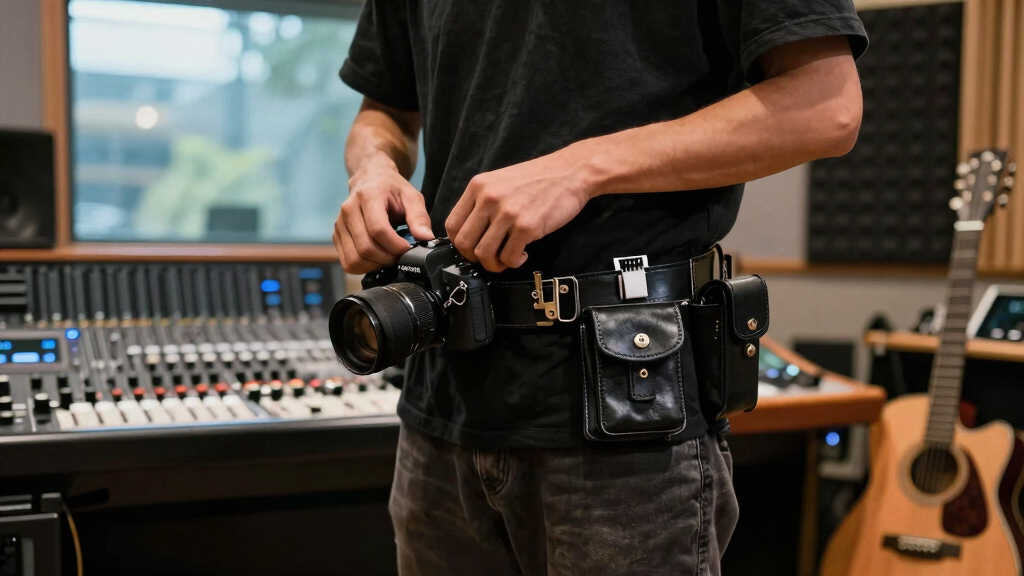
How We Picked
I compared these products specifically as camera belt systems, rather than treating every wearable camera holder as interchangeable. My ranking gives the most weight to retention security, drawing speed, load distribution, camera capacity, and compatibility. I also examined whether each product works as a complete carrying setup or depends on a separate belt, backpack, plate, or adapter.
I placed SpiderPro first because it offers the broadest working system for two-camera assignments. Cotton Carrier follows because it addresses outdoor mobility more directly, while the smaller Spider clip-on earns its place through low bulk and quick access. Thule ranks fourth because its protective holster design has a narrower fit range and requires the VersaClick ecosystem. My comparisons use the supplied specifications and design descriptions; they are editorial evaluations rather than claims of hands-on testing.
| camera belt system | System Type | Camera Capacity |
|---|---|---|
| SpiderPro Mirrorless Dual Came | Dual-camera belt and holster system | Two mirrorless cameras |
| Cotton Carrier Slingbelt with | Single-camera sling belt | One camera |
| Spider Holster Clip-on Camera | Clip-on single-camera holster | — |
| Thule VersaClick DSLR Camera H | Protective camera holster | — |
Factors to Consider When Choosing Best Camera Belt Systems
I would begin with the number of cameras, then narrow the choice through activity level, retention style, and compatibility. Those factors produce clearer decisions than choosing by material alone.Match Capacity to the Assignment
If I needed two cameras ready throughout an event, I would choose a dual-camera belt such as SpiderPro. It spreads the workflow across both hips and avoids repeated lens changes. For hiking or travel with one body, a single-camera system reduces hardware and leaves more belt space for pouches. Extra capacity only helps when it is regularly used; otherwise it becomes added weight.
Choose Between Exposure and Protection
Open plate-and-pin holsters provide the fastest drawing motion, but the camera remains exposed to rain, dust, and impacts. Thule’s enclosed format offers greater physical coverage at the cost of slower access and tighter size limits. I would favor open retention for active shooting and an enclosed holster for transport-heavy days.
Check the Entire Compatibility Chain
I would verify the camera plate, tripod interface, battery door, vertical grip, belt size, and attached lens before buying. A label such as mirrorless compatible does not mean every body configuration fits equally well. SpiderPro’s Arca-Swiss support can simplify tripod use, while Thule’s VersaClick requirement ties the purchase to a specific pack system.
Account for Retention and Comfort
A self-locking holster reduces the chance of forgetting to engage retention, while a tether adds a separate backup connection. For rough ground, I place more value on secondary security. Comfort depends on load position as much as padding: a belt should sit firmly without rotating, and the camera should clear the leg during walking. I would avoid carrying a heavy setup until every mount and belt adjustment is secure.
Frequently Asked Questions
Are camera belt systems safe for heavy cameras?
I would base that decision on the maker’s stated compatibility, the mounting hardware, and the complete body-and-lens weight. Metal plates and locking holsters can support demanding gear, but the supplied information does not give every product a formal load rating. For a heavy professional combination, I favor the structured SpiderPro belt over a small clip-on because it distributes the load across a wider area.
Is a camera belt better than a shoulder strap?
I prefer a belt when the goal is to keep weight away from the neck and place the camera at a repeatable drawing point. A shoulder strap can be simpler when sitting, switching sides, or carrying very light equipment. Belt systems become more persuasive for long shooting periods, though fit and hip clearance matter. The best choice depends on whether load distribution or minimal hardware leads the decision.
Can I use these systems with a tripod plate?
Compatibility varies by system. The SpiderPro Dual Camera System specifically lists Arca-Swiss compatibility, which can reduce the need to remove its plate before mounting on suitable tripod equipment. Other holsters may use proprietary mounting hardware or contain the camera without sharing the tripod connection. I would compare every plate with the exact tripod head before expecting a seamless transfer.
Which camera belt system is best for hiking?
I would choose the Cotton Carrier Slingbelt for most hikers in this group. It carries one camera at the hip, uses a twist-lock connection, and includes a tether as backup retention. Thule is appealing when enclosure and VersaClick pack integration matter more, but its fit is narrower. SpiderPro makes more sense when the hike supports a professional two-camera assignment.
Do I need a dual-camera system?
I would buy a dual system only when two prepared bodies regularly save time, such as at weddings, sports events, or commercial assignments. The SpiderPro dual setup keeps separate lenses immediately available, but its added weight and hardware are unnecessary for many buyers. A single-camera Cotton Carrier or Spider clip-on is the more sensible choice when one body covers the day and lower bulk matters more.
Conclusion
For professional event work, my recommendation is the SpiderPro Mirrorless Dual Camera System v2 because its two holsters and complete belt create the strongest working setup in this group. I would send hikers and active travelers toward the Cotton Carrier Slingbelt for its twist-lock mount and included tether.
Photographers who want the smallest quick-draw arrangement should choose the Spider Holster Clip-on, provided their camera fits and a separate belt meets their needs. I reserve the Thule VersaClick holster for buyers already invested in compatible Thule gear who prefer enclosure and pack integration. The right system is the one whose capacity, retention method, and ecosystem match the way the camera will actually be carried.
Halloween Picks
halloween
As an affiliate, we earn on qualifying purchases.