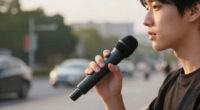
This guide shows content creators how to choose, set up, and operate portable microphones for high-quality recordings outside a studio. It covers selecting the right microphone, proper setup, and troubleshooting common issues, enabling you to produce clear audio in various environments.

Get audio and creator gear delivered free with Prime
- Fast, free delivery on millions of items
- Prime Video, Amazon Music and more included
- Member-only deals all year

Mini Mic Pro Wireless Microphone for iPhone & Android
- ✔ Compatibility: iPhone, Android, tablet, laptop
- ✔ Connection: USB-C, Lightning, plug-and-play
- ✔ Battery Life: Up to 6 hours

Wireless Mini Microphone for iPhone and Android – 2 Pack Lavalier Microphone for Video Recording with Noise Reduction and USB-C/L…
- ✔ Connectivity Technology: Wireless
- ✔ Connector Type: Lightning, USB Type-C
- ✔ Special Features: 1-Touch Recording, Noise Reduction

DJI Mic Mini (2 TX + 1 RX + Charging Case) Wireless Lavalier Microphone
- ✔ Weight: 10 g
- ✔ Sampling Rate: 48kHz
- ✔ Max Transmission Range: 400 m
Difficulty: Intermediate | Time: 30-60 minutes
What You’ll Need
Tools & Materials:
- Portable microphone (lapel, handheld, shotgun, or wireless)
- Smartphone, camera, or recording device
- Audio cables or adapters (if needed)
- Headphones for monitoring
Knowledge:
- Basic understanding of audio recording devices
- Ability to handle small electronic equipment
- Familiarity with your recording device’s inputs and settings
Ensure your recording device has compatible inputs for your microphone. Fully charge or power your devices before use.
Mini Mic Pro Wireless Microphone for iPhone & Android
<p>The <strong>Mini Mic Pro</strong> stands out for its <strong>plug-and-play convenience</strong> across multiple devices, making it an excellent choice for creators who want high-quality sound without fuss. Its <strong>noise cancellation and wind protection</strong> help deliver studio-like audio, even outdoors. Compared with larger, more complex systems, this mic offers <strong>compact portability</strong> and ease of use, though its <strong>limited 6-hour battery life</strong> may require planning for longer shoots. It’s ideal for quick interviews, TikTok videos, and voiceovers, but less suited for extended outdoor sessions without additional accessories.</p>
Pros:
- Easy plug-and-play connectivity with multiple devices
- High-quality sound with noise and wind cancellation
- Compact and lightweight for portability
- Rechargeable battery with long usage time
Cons:
- Limited to 6 hours of battery life per charge
- Requires adapters for some devices
- Additional accessories may be needed for harsh outdoor use
Best for: Content creators who need a portable, high-quality mic for quick shoots and on-the-go recording
Not ideal for: Creators needing all-day battery life or working in extreme outdoor conditions
Bottom line: This pick is perfect for creators seeking a reliable, portable microphone with straightforward setup and excellent sound quality.
“This pick is perfect for creators seeking a reliable, portable microphone with straightforward setup and excellent sound quality.”
Wireless Mini Microphone for iPhone and Android – 2 Pack Lavalier Microphone for Video Recording with Noise Reduction and USB-C/L…
<p>The <strong>Wireless Mini Microphone 2-Pack</strong> offers <strong>exceptional flexibility</strong> with two microphones suitable for multiple devices, making it perfect for vloggers, interviewers, and content creators who switch between platforms. Its <strong>noise reduction</strong> and <strong>real-time monitoring</strong> enhance audio clarity, while its impressive <strong>up to 16 hours of battery life</strong> supports longer recording sessions. However, it relies on batteries, which can add ongoing costs, and setup can be somewhat complex for less tech-savvy users. This set makes sense for creators needing reliable wireless audio for multi-device production, especially in mobile environments.</p>
Pros:
- High-quality broadcast-ready audio with noise reduction
- Wireless convenience with instant setup
- Long-lasting battery life of up to 16 hours
- Includes adapters for multiple devices
Cons:
- Requires batteries (C type), which need replacement
- Limited to specific frequency range (2.4-4.8 GHz)
- Setup can be complex for non-technical users
Best for: Vloggers and podcasters who need versatile, long-lasting wireless microphones for mobile and studio use
Not ideal for: Users seeking a simple plug-and-play mic without managing batteries or complex setup
Bottom line: This set is ideal for creators who prioritize wireless flexibility, long battery life, and multi-device compatibility, though setup complexity and ongoing battery costs are tradeoffs.
“This set is ideal for creators who prioritize wireless flexibility, long battery life, and multi-device compatibility, though setup complexity and ongoing battery costs are tradeoffs.”
DJI Mic Mini (2 TX + 1 RX + Charging Case) Wireless Lavalier Microphone
<p>The <strong>DJI Mic Mini</strong> offers <strong>remarkable audio quality and range</strong> with up to 48 hours of battery life and a <strong>400-meter transmission range</strong>. Its <strong>compact and lightweight design</strong> makes it unobtrusive for on-camera use, while its high sampling rate captures rich, detailed sound. This system is perfect for professional vloggers, streamers, and interviewers who need extended range and durability, but the cost can be prohibitive for casual or budget-conscious creators. Compatibility is also a consideration, as it works best with certain devices or setups.</p>
Pros:
- Long battery life of up to 48 hours
- High-quality, detail-rich audio with noise cancelling
- Extended transmission range of 400 meters
- Lightweight and discreet design
Cons:
- Higher price point
- Requires compatible devices for optimal performance
- May be more than casual creators need
Best for: Professional creators demanding long-range, high-fidelity audio for interviews, streaming, and field recording
Not ideal for: Casual users or those on a tight budget who don’t need extensive range or professional features
Bottom line: The DJI Mic Mini excels for professional-grade, long-range audio recording, but its premium features come with a higher price tag and device compatibility considerations.
“The DJI Mic Mini excels for professional-grade, long-range audio recording, but its premium features come with a higher price tag and device compatibility considerations.”
As an Amazon Associate we earn from qualifying purchases.
Before You Start
Check your environment for background noise and wind. Choose a quiet, stable location to minimize audio disruptions. Confirm all equipment is charged or powered on.
Step-by-Step Instructions
Step 1: Identify your recording environment and select the appropriate microphone
Assess whether you’ll record indoors or outdoors. Choose a microphone suited for your environment: lapel mics for mobility indoors, shotgun mics for outdoor or directional audio, or wireless mics for freedom of movement.
Tip:For outdoor use, consider windshields or dead cats to reduce wind noise.
Check: You have selected a microphone compatible with your environment and recording setup.
Step 2: Connect the microphone to your recording device
Plug the microphone into your device’s input port using the correct cable or adapter. Secure connections to prevent disconnection during recording.
Tip:Use an adapter if your microphone’s connector doesn’t match your device’s input.
Check: The microphone is powered (if active) and connected securely, with no loose connections.
Step 3: Configure your recording device for optimal audio input
Access your device’s audio settings. Select the microphone as the input source. Adjust input gain or volume to avoid distortion or low volume.
Tip:Test the microphone by speaking into it and monitoring the audio levels.
Check: Audio levels are clear, and the microphone is recognized as the input source without clipping.
Step 4: Monitor audio quality during recording
Use headphones to listen as you record. Confirm that sound is clear, without background noise or interference.
Tip:If possible, record a short test clip to evaluate audio quality before starting the main recording.
Check: The audio is clean, clear, and consistent during your test recording.
Step 5: Record and review your audio
Begin recording your content. Afterward, listen to the recording carefully to verify clarity and volume.
Tip:Check for any background noise or issues and note the need for adjustments.
Check: The recorded audio is free of major noise, distortion, and is at an appropriate volume level.
Common Mistakes to Avoid
- Using the wrong microphone type for the environment — Match your microphone to your environment: use lavalier mics indoors, shotgun mics outdoors, and wireless mics for mobility.
- Not testing audio levels before recording — Always perform a test recording and monitor audio levels to prevent clipping or low volume.
- Poor connection or loose cables — Secure all connections firmly and check cables before recording.
- Recording without monitoring audio — Use headphones to listen during recording to catch issues immediately.
Troubleshooting
Problem: No audio is recorded or microphone isn’t recognized
Solution: Check connections, ensure the microphone is powered (if active), and verify device input settings.
Problem: Audio is muffled or unclear
Solution: Adjust the microphone positioning; increase gain if too low, or reduce gain if clipping occurs.
Problem: Background noise is too loud
Solution: Use directional microphones, windshields, or move to a quieter location.
Problem: Audio levels are inconsistent or clipping
Solution: Reduce input gain and re-test, ensuring levels stay within the optimal range.
What Success Looks Like
The final recording features clear, consistent audio with no background noise, distortion, or volume issues. The microphone setup is stable, and monitoring confirms good sound quality throughout.
Next Steps
After successful setup and recording, disconnect the microphone properly, store equipment safely, and review recordings for editing or sharing. Repeat the process as needed for future recordings, and consider upgrading equipment for better quality.
Frequently Asked Questions
What type of microphone is best for outdoor content creation?
Shotgun microphones or wireless lavaliers with windshields are ideal for outdoor recordings, as they focus on sound sources and reduce wind noise.
How do I improve audio quality when recording on a smartphone?
Use a compatible external microphone, connect it properly, and monitor audio levels. Record in quiet environments and use headphones to listen during recording.
Can I use a wireless microphone system with any device?
Most wireless systems require compatible inputs or adapters. Check your device’s inputs and the microphone system specifications before purchasing.
Fall Picks
fall essentials
As an affiliate, we earn on qualifying purchases.