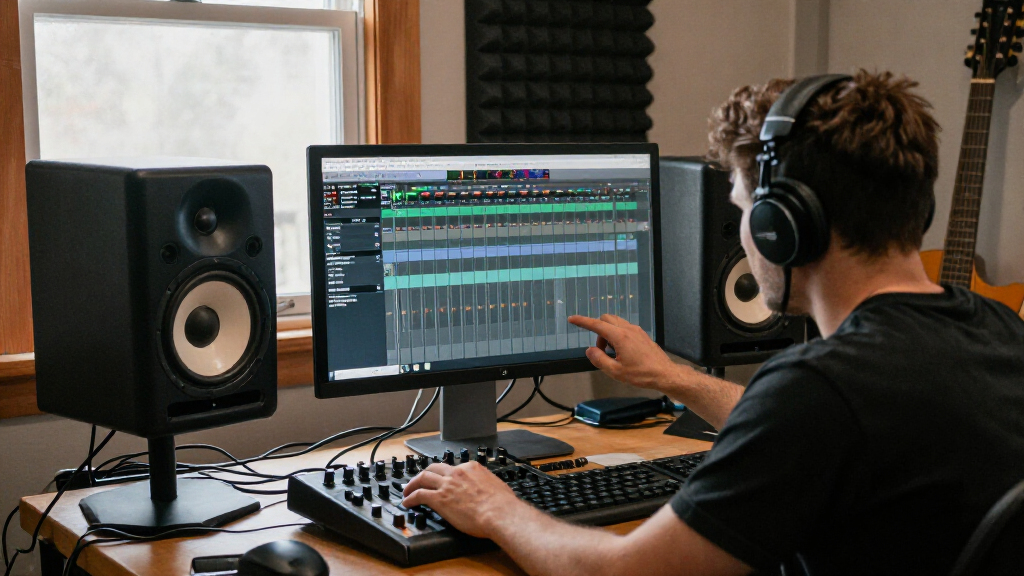
For a balanced all-around desktop setup, I would start with the Edifier MR4.5, while the ADAM Audio D3V stands out for buyers who want a more premium compact monitor and the PreSonus Eris 3.5 for an accessible entry point. These speakers differ in more than sound: desk space, input options, tonal controls, and how much setup flexibility they offer can change which pair makes sense. A compact model may fit neatly beside a screen but give up low-end reach, while a larger cabinet can take over a small workstation. I compare all nine options by their likely fit for close-range listening, practical setup, and value within this category. Read on for the full breakdown and a guide to choosing the right pair for your room and workflow.

Get audio and creator gear delivered free with Prime
- Fast, free delivery on millions of items
- Prime Video, Amazon Music and more included
- Member-only deals all year
Complete the kit


Key Takeaways
- The Edifier MR4.5 earns the all-around lead by combining a more substantial desktop monitor format with bi-amped design and 80W RMS, making it the stronger starting point when space allows.
- The ADAM Audio D3V is the premium compact alternative; it better suits buyers prioritizing a dedicated desktop-monitor design over the simpler, more accessible options.
- PreSonus Eris 3.5 models are practical entry picks for close-range listening, but buyers should compare the two listings for finish and stated specifications rather than assume they are separate designs.
- The Ortizan C7 pair stands apart for Bluetooth 5.3, a convenience advantage for switching between a computer and casual wireless playback; the black and white versions are color variants, not distinct performance choices.
- Desk space and listening distance shape the shortlist: the 3.5-inch options are easier to fit into compact setups, while larger cabinets such as the MR4.5 or Pioneer DJ DM-40D need more room and careful placement.
| Edifier MR4.5 Bi-Amped Studio Monitor Speakers, 80W RMS, Black |  | Best Overall | Power output: 80W RMS total (30W × 2 + 10W × 2) | Woofer: 4.5 inches | Tweeter: 1-inch silk dome | VIEW LATEST PRICE | See Our Full Breakdown |
| Edifier MR4 4-Inch Active Near-Field Studio Monitor Speakers | 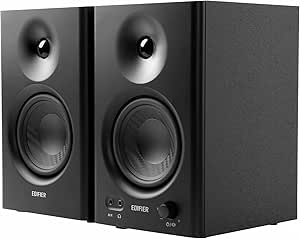 | Best for Wired Studio Basics | Speaker type: Active near-field studio monitors | Maximum output power: 42 watts | Woofer: 4-inch composite | VIEW LATEST PRICE | See Our Full Breakdown |
| Ortizan C7 Powered Studio Monitor Speakers, Pair, Bluetooth 5.3, Black |  | Best Compact Connectivity | Quantity: Stereo pair | Dimensions: 5.11 × 5.9 × 7.67 inches | Woofer: 3.5-inch carbon-fiber | VIEW LATEST PRICE | See Our Full Breakdown |
| PreSonus Eris 3.5 Powered Studio Monitors, Stereo Pair |  | Best for Room-Tunable Near-Field Listening | Configuration: Active stereo pair | Amplification: 50W Class AB | Woofer: 3.5-inch woven composite | VIEW LATEST PRICE | See Our Full Breakdown |
| PreSonus Eris 3.5 Powered Desktop Studio Monitors, Pair, 50W, White |  | Best White Desktop Pair | Quantity: Pair (2 speakers) | Total amplification: 50 watts (25 watts per side) | Woofer: 3.5 inches, woven composite | VIEW LATEST PRICE | See Our Full Breakdown |
| ADAM Audio D3V Active Desktop Studio Monitor Speakers, Black |  | Best for USB-C Desktop Production | Speaker type: Powered stereo monitor pair | Woofer: 3.5-inch aluminum | Tweeter: 1.5-inch D-ART | VIEW LATEST PRICE | See Our Full Breakdown |
| Mackie CR3.5 Powered Studio Monitors, Pair, 3.5-Inch Woofers, Tone Knob, Black | 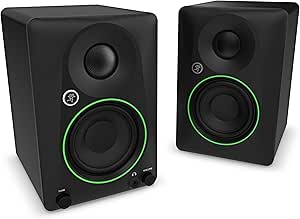 | Best for Flexible Everyday Listening | Quantity: Pair | Woofer: 3.5 inches | Tweeter: 1 inch | VIEW LATEST PRICE | See Our Full Breakdown |
| Pioneer DJ DM-40D 4-Inch Active Desktop Monitor Speakers, Pair, Black |  | Best for DJ and Production Mode Switching | Quantity: 2 speakers | Woofer: 4 inches | Tweeter: 19 mm | VIEW LATEST PRICE | See Our Full Breakdown |
| Ortizan C7 Powered Studio Monitor Speakers, Pair, Bluetooth 5.3, White |  | Best for Broad Device Connectivity | Quantity: Pair | Mid-bass driver: 3.5-inch carbon fiber | Tweeter: 0.75-inch silk dome | VIEW LATEST PRICE | See Our Full Breakdown |
| desktop studio monitor speaker | Tweeter | Woofer | Inputs | Quantity |
|---|---|---|---|---|
| Edifier MR4.5 Bi-Amped Studio | 1-inch silk dome | 4.5 inches | XLR, TRS, RCA, AUX | — |
| Edifier MR4 4-Inch Active Near | 1-inch silk dome | 4-inch composite | Balanced TRS, RCA, AUX | — |
| Ortizan C7 Powered Studio Moni | 0.75-inch silk dome | 3.5-inch carbon-fiber | USB, RCA, 3.5 mm AUX, 6.35 mm balanced TRS | Stereo pair |
| PreSonus Eris 3.5 Powered Stud | 1-inch silk dome | 3.5-inch woven composite | Balanced TRS, RCA, front-panel AUX | — |
| PreSonus Eris 3.5 Powered Desk | 1 inch, silk dome | 3.5 inches, woven composite | Balanced TRS, RCA, front-panel ⅛-inch AUX | Pair (2 speakers) |
| ADAM Audio D3V Active Desktop | 1.5-inch D-ART | 3.5-inch aluminum | USB-C and balanced 1/4-inch TRS | — |
| Mackie CR3.5 Powered Studio Mo | 1 inch | 3.5 inches | — | Pair |
| Pioneer DJ DM-40D 4-Inch Activ | 19 mm | 4 inches | — | 2 speakers |
| Ortizan C7 Powered Studio Moni | 0.75-inch silk dome | — | USB, RCA, 3.5 mm AUX, and 6.35 mm TRS | Pair |
More Details on Our Top Picks
Edifier MR4.5 Bi-Amped Studio Monitor Speakers, 80W RMS, Black
For a desktop setup that needs studio connections and flexible everyday playback, the Edifier MR4.5 offers the broadest feature mix in this group. Its 80W RMS output and 4.5-inch woofers give it more headroom and a larger driver than the Edifier MR4 and the compact PreSonus Eris 3.5, making it a stronger fit when the speakers also serve a small room. Balanced XLR and TRS sit alongside RCA, AUX, and Bluetooth 6.0 with LDAC, while app EQ and room calibration give you more ways to shape sound than the Eris models’ basic tone controls. The tradeoff is that the available details omit cabinet dimensions and weight, so desk fit is harder to judge. Choose it for connectivity and adjustment; skip it if a known compact footprint matters most.
Pros:- 80W RMS total power and 4.5-inch woofers offer more output headroom than the 3.5- and 4-inch alternatives here.
- XLR, TRS, RCA, AUX, and Bluetooth 6.0 with LDAC cover studio and casual listening sources.
- App-based 9-band EQ and room calibration provide finer sound adjustment than the basic tone controls on the other Edifier models.
- Includes a stereo pair with 24-bit/96kHz DSP.
Cons:- The supplied product details do not list dimensions or weight, making desk-fit planning difficult.
- The stated 10-meter Bluetooth range may constrain placement when the source is farther away.
- Its larger woofers may take more desk space than the compact Ortizan C7 or PreSonus Eris 3.5.
Best for: Desktop producers who want balanced studio inputs, wireless listening, and app-based room adjustments in one stereo pair.
Not ideal for: Buyers with very limited desk space who need confirmed cabinet dimensions before choosing speakers.
- Power output:80W RMS total (30W × 2 + 10W × 2)
- Woofer:4.5 inches
- Tweeter:1-inch silk dome
- Frequency response:50Hz–40kHz
- Inputs:XLR, TRS, RCA, AUX
- Wireless:Bluetooth 6.0 with LDAC; stated range 10 meters
- Audio processing:24-bit/96kHz DSP
- Controls:High- and low-tone controls; app-based 9-band EQ and room calibration
Our verdict“Pick the MR4.5 if you want the lineup’s broadest input and tuning options with more driver and power headroom than the smaller desktop pairs.”
Edifier MR4 4-Inch Active Near-Field Studio Monitor Speakers
The Edifier MR4 is the more focused choice for a producer who wants a wired desktop pair without paying for features they may not use. Its 4-inch composite woofers, balanced TRS inputs, and selectable monitor and music modes cover straightforward production work as well as casual listening. Compared with the larger Edifier MR4.5, it gives up Bluetooth, app-based room calibration, and some driver size, but it keeps practical touches such as separate high- and low-frequency controls and a front headphone output. That output is useful when switching to private listening without reaching behind a desk. The 42-watt maximum output is less suited to filling a room than the MR4.5’s 80W RMS, and its wired-only design rules out quick wireless playback. I’d choose it for a compact, source-connected workstation, not an all-purpose wireless setup.
Pros:- Balanced TRS, RCA, and AUX inputs suit common studio and desktop sources.
- Monitor and music modes let one pair serve production and everyday listening.
- Front-panel headphone output makes private listening easy to access.
- Separate high- and low-frequency controls allow basic tonal adjustment.
Cons:- Wired connectivity only; unlike the MR4.5 and Ortizan C7, it has no listed Bluetooth support.
- 42 watts of maximum output offers less headroom than the MR4.5’s 80W RMS.
- The available product details do not provide dimensions for desk-fit planning.
Best for: Home-studio users who connect an audio interface or computer by cable and want monitor and casual-listening modes in one pair.
Not ideal for: Buyers who want Bluetooth playback, app-based room calibration, or greater output headroom for a larger listening area.
- Speaker type:Active near-field studio monitors
- Maximum output power:42 watts
- Woofer:4-inch composite
- Tweeter:1-inch silk dome
- Enclosure:Wood
- Inputs:Balanced TRS, RCA, AUX
- Headphone output:Front panel
- Modes:Monitor and music
- Signal-to-noise ratio:85 dB
Our verdict“Choose the MR4 for a practical wired studio setup with useful front-panel access, but pass if wireless playback or extra output headroom is a priority.”
Ortizan C7 Powered Studio Monitor Speakers, Pair, Bluetooth 5.3, Black
The Ortizan C7 makes the strongest case for a small desk where several devices need to share one speaker pair. At 5.11 × 5.9 × 7.67 inches, it has a clearly stated compact footprint, and its USB, RCA, AUX, balanced TRS, and Bluetooth 5.3 connections span computers, studio gear, and wireless sources. That flexibility is unusual beside the wired-only Edifier MR4, while the built-in 24-bit DAC gives the C7 a direct digital-audio option. Its 3.5-inch woofers are smaller than the MR4.5’s 4.5-inch drivers, so buyers seeking more low-frequency reach or output headroom may prefer the larger Edifier. The compact cabinet also means less room for physical controls and drivers. I’d shortlist it for a crowded desktop shared by a computer, console, or tablet, not for a setup built around fuller low end.
Pros:- Compact listed dimensions make it easier to plan for a crowded desk than the models with no dimensions provided.
- USB, balanced TRS, RCA, AUX, and Bluetooth 5.3 accommodate varied desktop sources.
- Built-in 24-bit DAC supports a direct digital connection.
- Balanced TRS input makes it usable with professional audio equipment.
Cons:- Its 3.5-inch woofers are smaller than the Edifier MR4.5’s 4.5-inch drivers.
- Bluetooth range varies between 10 and 18 meters in the product details.
- No waterproofing is stated, so it is not suited to damp or spill-prone locations.
Best for: Desktop users with limited space who want one compact pair for a computer, console, and wireless devices.
Not ideal for: Producers prioritizing larger woofers and greater low-frequency reach, or buyers who need dependable Bluetooth range details.
- Quantity:Stereo pair
- Dimensions:5.11 × 5.9 × 7.67 inches
- Woofer:3.5-inch carbon-fiber
- Tweeter:0.75-inch silk dome
- Inputs:USB, RCA, 3.5 mm AUX, 6.35 mm balanced TRS
- Wireless:Bluetooth 5.3
- DAC:Built-in 24-bit
- Compatible devices:Desktop, gaming console, home theater, tablet, television
Our verdict“Pick the C7 when compact size and a wide range of source connections matter more than the larger drivers of the Edifier MR4.5.”
PreSonus Eris 3.5 Powered Studio Monitors, Stereo Pair
The PreSonus Eris 3.5 suits a near-field desk setup where speakers sit close to the listener and basic room adjustment is more useful than wireless features. Its 50W Class AB amplification, balanced TRS and RCA inputs, and front AUX and headphone connections make source changes straightforward. High- and low-frequency tuning controls let you adjust the sound to the room, a useful advantage over the wired Edifier MR4’s monitor and music modes, which change listening character rather than offering the same stated acoustic tuning. The Eris 3.5 is also compact at 8.3 inches tall, though its 3.5-inch woofer and listed 80Hz–20kHz response make it a less convincing choice for listeners who want strong low bass. Unlike the Ortizan C7, it has no listed Bluetooth or USB input. Choose it for a tidy, adjustable wired workstation.
Pros:- 50W Class AB amplification is included across a complete stereo pair.
- Balanced TRS, RCA, and front-panel AUX support several wired sources.
- High- and low-frequency tuning controls help adapt playback to the room.
- Front headphone output and volume control are convenient at a desktop.
Cons:- No Bluetooth connectivity is listed, unlike the Ortizan C7 and Edifier MR4.5.
- The stated frequency response begins at 80Hz, limiting expectations for deep bass.
- The 3.5-inch woofers offer less driver area than the Edifier MR4 and MR4.5.
Best for: Near-field listeners and home-studio users who want room-tuning controls, balanced inputs, and easy front-panel headphone access.
Not ideal for: Buyers who need Bluetooth or USB playback, or who expect deep bass without a separate subwoofer.
- Configuration:Active stereo pair
- Amplification:50W Class AB
- Woofer:3.5-inch woven composite
- Tweeter:1-inch silk dome
- Frequency response:80Hz–20kHz
- Inputs:Balanced TRS, RCA, front-panel AUX
- Controls:High- and low-frequency tuning; front-panel volume
- Dimensions:5.5 × 6 × 8.3 inches
- Item weight:6.4 pounds
Our verdict“Choose the Eris 3.5 for a compact, room-adjustable wired desktop pair; look elsewhere if wireless input or fuller bass is central to your setup.”
PreSonus Eris 3.5 Powered Desktop Studio Monitors, Pair, 50W, White
This white version of the PreSonus Eris 3.5 is best understood as a finish and desktop-style alternative, not a different acoustic tier. It retains the 50W pair amplification, 3.5-inch woven-composite woofers, room-tuning controls, and front headphone output found in the black Eris 3.5. That makes it a sensible match for a light-colored workstation where a compact, wired studio pair should also handle games, films, and everyday listening. Its balanced TRS, RCA, and front AUX inputs offer more source flexibility than the wired Edifier MR4 lacks at its front panel, but the Ortizan C7 remains the better fit for Bluetooth or USB connections. The Eris’s 80Hz lower response limit also means it will not deliver deep bass on its own. Choose this version for its white finish and straightforward desktop controls, not for a sound upgrade over the black pair.
Pros:- White finish suits light-colored desks and equipment.
- 50 watts of total amplification is included across a stereo pair.
- Balanced TRS, RCA, and front-panel AUX support studio and everyday sources.
- Room-tuning controls and a front headphone output are useful in a desktop setup.
Cons:- No Bluetooth connectivity is listed, unlike the Ortizan C7.
- The 80Hz lower frequency limit does not provide deep bass on its own.
- Its core specifications match the black PreSonus Eris 3.5, so the distinction is primarily appearance.
Best for: Desktop producers and multimedia listeners with a white or light-colored setup who want compact monitors with room tuning and a front headphone output.
Not ideal for: Buyers who need Bluetooth or USB audio, deeper bass, or a sonic upgrade over the black PreSonus Eris 3.5.
- Quantity:Pair (2 speakers)
- Total amplification:50 watts (25 watts per side)
- Woofer:3.5 inches, woven composite
- Tweeter:1 inch, silk dome
- Frequency response:80Hz–20kHz
- Inputs:Balanced TRS, RCA, front-panel ⅛-inch AUX
- Headphone output:Front-panel ⅛-inch
- Dimensions:6 × 5.5 × 8.3 inches (D × W × H)
- Color:White
Our verdict“Choose the white Eris 3.5 when its finish suits your workspace and you want adjustable, wired desktop monitors rather than extra connectivity or deeper bass.”
ADAM Audio D3V Active Desktop Studio Monitor Speakers, Black
The ADAM Audio D3V is the clearest fit here for a computer-centered setup where direct USB-C playback and balanced studio connections both matter. Its 80-watt amplification, placement adjustment switches, and angled detachable stands give it more setup flexibility than the simpler Mackie CR3.5. The 1.5-inch D-ART tweeters and 3.5-inch woofers pair a compact footprint with a stated low-frequency reach down to 45 Hz, though the small drivers still cannot replace larger monitors when you need substantial bass or high output. A headphone output is handy for quick monitoring, while the included USB-C connection cuts out the need for a separate computer audio interface in many everyday workflows. The tradeoff is a corded-only design and a narrower case for buyers who mainly want casual listening controls.
Pros:- USB-C input supports direct playback from compatible computers and mobile devices.
- Balanced 1/4-inch TRS inputs suit studio gear and audio interfaces.
- Placement switches and angled detachable stands help adapt the speakers to a desk.
- Headphone output offers a convenient option for private monitoring.
Cons:- Compact 3.5-inch woofers limit bass output compared with monitors built around larger drivers.
- Requires corded power, so it is not a portable listening option.
Best for: Desktop producers and editors who want USB-C playback, balanced TRS inputs, and placement adjustments in a compact powered pair.
Not ideal for: Producers who need larger woofers, higher playback levels, or strong low-bass output from their desktop monitors.
- Speaker type:Powered stereo monitor pair
- Woofer:3.5-inch aluminum
- Tweeter:1.5-inch D-ART
- Amplifier power:80 W
- Frequency response:Down to 45 Hz
- Inputs:USB-C and balanced 1/4-inch TRS
- Mounting:Tabletop; 3/8-inch microphone stand thread
- Power source:Corded electric
Our verdict“Choose the D3V for a compact production desk that benefits from USB-C and balanced inputs, but skip it if you need larger-speaker bass.”
Mackie CR3.5 Powered Studio Monitors, Pair, 3.5-Inch Woofers, Tone Knob, Black
The Mackie CR3.5 suits buyers who want a simple desktop pair that can shift between creative work and ordinary listening. Its tone knob allows quick sound changes without reaching for software, and the switchable desktop and bookshelf modes account for a practical difference: speakers placed on a desk do not behave exactly like ones set farther away. Compared with the more production-focused ADAM Audio D3V, the Mackie provides less specified power and no USB-C input, but its included isolation pads and connection cables make setup straightforward. RCA and TRS inputs cover common audio gear, while 3.5-inch woofers keep the footprint modest. The same compact drivers limit suitability for large rooms or bass-heavy work, so this is better for a close listening position than for filling a studio.
Pros:- Tone knob offers quick sound adjustment for different listening needs.
- Desktop and bookshelf modes accommodate two common speaker placements.
- RCA and TRS connections support a range of home and studio sources.
- Includes foam isolation pads, speaker wire, and connection cables.
Cons:- 3.5-inch woofers and small-room positioning are not suited to large spaces or demanding bass work.
- No USB audio input is listed, unlike the ADAM Audio D3V.
Best for: New home-studio owners and desktop listeners who want adjustable sound, flexible placement modes, and basic cables and pads in the box.
Not ideal for: Buyers mixing bass-heavy material or trying to cover a large room, where the compact woofers and desktop-focused design are limiting.
- Quantity:Pair
- Woofer:3.5 inches
- Tweeter:1 inch
- Maximum output power:50 W
- Connectivity:RCA and TRS
- Sound controls:Tone knob; desktop and bookshelf modes
- Mounting:Tabletop
- Included accessories:Cables, speaker wire, and foam isolation pads
Our verdict“Pick the CR3.5 for an adaptable, easy-to-set-up desk pair, but choose a larger monitor if your work depends on low bass or room-filling output.”
Pioneer DJ DM-40D 4-Inch Active Desktop Monitor Speakers, Pair, Black
The Pioneer DJ DM-40D makes the most sense for a desktop that alternates between DJ sessions and music production. Its DJ and Production sound modes let buyers choose a presentation for the task instead of relying on a single tuning approach. The 4-inch woofers also give it a larger driver than the 3.5-inch Mackie CR3.5 and ADAM Audio D3V, which can be useful when a little more speaker area is welcome on a compact desk. RCA and mini-jack inputs keep connections simple, and front-panel level control and a headphone socket are easy to reach. Unlike the D3V, this model does not list USB-C or balanced TRS inputs, so it is less accommodating for some computer-centered or interface-based setups. It is wired only and remains a near-field choice, not a room-filling system.
Pros:- DJ and Production modes adapt playback to different desktop tasks.
- 4-inch woofers are larger than those in the Mackie CR3.5 and ADAM Audio D3V.
- RCA and mini-jack inputs support compatible audio sources.
- Front-panel headphone socket and level control are convenient at a desk.
Cons:- No wireless connectivity is listed.
- Inputs are less suited to USB-C computer playback or balanced TRS studio connections than the ADAM Audio D3V.
Best for: Bedroom DJs and beginner producers who want one desktop pair with separate listening modes for DJ playback and production tasks.
Not ideal for: Computer producers who specifically need USB-C or balanced TRS inputs, or listeners seeking wireless playback.
- Quantity:2 speakers
- Woofer:4 inches
- Tweeter:19 mm
- Sound modes:DJ and Production
- Connectivity:RCA and auxiliary
- Audio output mode:Stereo
- Mounting:Tabletop
- Power source:Corded electric
Our verdict“Choose the DM-40D if you switch between DJing and production at a compact desk and can work with wired RCA or mini-jack connections.”
Ortizan C7 Powered Studio Monitor Speakers, Pair, Bluetooth 5.3, White
The white Ortizan C7 is the most connection-flexible pick in this group: Bluetooth 5.3 sits alongside USB, RCA, 3.5 mm AUX, and 6.35 mm TRS inputs. That mix suits a desk shared by a computer, phone, and studio source, while the built-in 24-bit DAC provides a direct USB audio path. Compared with the ADAM Audio D3V, the C7 adds wireless playback and more listed input types, but the D3V supplies clearer power and frequency-response figures and includes placement adjustment switches. The C7’s 3.5-inch carbon-fiber mid-bass driver keeps it compact; its stated specifications do not include amplifier output or frequency response, making it harder to judge its limits for critical mixing. This is a practical hybrid desktop option, but buyers focused on defined monitoring specifications may prefer the ADAM.
Pros:- Bluetooth 5.3 and multiple wired inputs support varied desktop sources.
- USB input and built-in 24-bit DAC provide a digital audio connection.
- 6.35 mm TRS input accommodates compatible studio equipment.
- Compact pair and front-panel headphone output suit desktop listening.
Cons:- No amplifier power or frequency-response specifications are provided.
- Bluetooth range information is inconsistent in the product description.
- Corded power is required despite the wireless audio option.
Best for: Desktop users who share speakers among a computer, phone, and analog gear and want both Bluetooth and several wired input choices.
Not ideal for: Critical mixers who need published power and frequency-response figures to compare monitoring performance before buying.
- Quantity:Pair
- Mid-bass driver:3.5-inch carbon fiber
- Tweeter:0.75-inch silk dome
- Bluetooth:Version 5.3
- Inputs:USB, RCA, 3.5 mm AUX, and 6.35 mm TRS
- DAC:24-bit
- Audio output:Front-panel headphone output
- Power source:Corded electric
Our verdict“Choose the C7 for a desktop shared across wireless and wired devices, but favor monitors with fuller published specs for critical mix decisions.”
How We Picked
I ranked these desktop studio monitor speakers by how well their listed design and features match close-range desktop use. I weighed cabinet size and driver format against desk footprint, stated power, connectivity, and useful controls, since a capable speaker that crowds the workspace or cannot connect cleanly may be the wrong fit. I also considered whether a model offers a clear reason to choose it, such as Bluetooth for flexible playback, a premium compact design, or a straightforward beginner setup.
The order favors balanced usefulness for a typical desktop before narrower advantages. The MR4.5 takes the lead for its higher stated output and bi-amped design; the MR4, Eris 3.5, and D3V offer different compromises around size, simplicity, and premium positioning. The two Ortizan C7 colors and two Eris 3.5 listings are treated as closely related options, not as wholly different products. Because sound quality depends on placement, room, and source material, I avoid claiming measured performance that is not provided by the listed product details.
Factors to Consider When Choosing Desktop Studio Monitor Speakers
Picking desktop monitors is less about choosing the biggest specification and more about matching the pair to your listening distance, desk, and connections. I would settle those practical questions before focusing on model names.
Match Cabinet Size to Your Desk and Listening Distance
Measure the available width and depth, including space for stands, cables, and access to controls. Monitors placed very close to your ears can sound different from speakers positioned farther away, so a larger cabinet is not automatically an upgrade for a cramped desk. A compact 3.5-inch pair may be easier to position around a display, while models with 4-inch drivers usually call for more breathing room. Avoid pushing rear-ported speakers tight against a wall without checking the manufacturer’s placement guidance. If the speakers must sit under a shelf or beside a laptop, check height and cabinet depth before deciding. Give each speaker a stable surface and aim the pair toward your listening position for a more consistent stereo image.
Decide How Much Low-End You Actually Need
Small desktop monitors can be useful for editing, practice, and everyday listening, but their compact cabinets limit how much deep bass they can reproduce. This matters most when judging kick drums, bass lines, or low-frequency effects; apparent bass balance can shift with desk placement and room boundaries. Do not treat a larger wattage figure as proof of deeper bass or more accurate sound. If your work depends on sub-bass decisions, consider whether a subwoofer-compatible setup is realistic in your room, including the extra space and calibration it requires. For general editing and near-field listening, a well-positioned pair may be more useful than adding bass hardware to a crowded desk. Choose based on the material you need to judge, not on a desire for maximum output.
Check Inputs Against Your Actual Sources
List every device you plan to connect: computer, audio interface, phone, game console, or DJ controller. Then check which connections the exact model supports, since the product names alone do not establish that all inputs are present. Bluetooth, as offered by the Ortizan C7, can simplify casual playback from a phone, but wireless convenience is not a substitute for checking latency, codec support, or whether a wired connection better suits recording work. If you use an audio interface, confirm that its output type can connect directly to the speakers without extra adapters. Also check whether a cable between the left and right speaker is included and long enough for your layout. A clean connection plan can prevent more frustration than an extra feature you rarely use.
Treat Tone Controls as Setup Tools, Not Room Correction
Controls for adjusting tone or speaker response can help compensate for a placement that is less than ideal, but they cannot fix every room problem. A desk can reflect sound toward your ears, and a wall close behind a speaker can exaggerate bass. Start by positioning the speakers symmetrically and keeping them aimed toward your listening spot before changing their controls. Make small adjustments and compare familiar recordings rather than relying on one track. If you are choosing a model with a tone knob, think of it as a practical convenience for changing use from focused listening to casual playback. Do not expect a simple control to replace room treatment or careful placement.
Pay for Features You Will Use
Spending more makes sense when it buys a feature that affects your daily work, such as a more capable compact-monitor design, useful connectivity, or flexibility for changing listening tasks. A premium label alone does not make a speaker a better match for a small desk or a casual setup. Beginners may get more value from a simple active pair that needs no separate amplifier and has an uncomplicated connection path. Buyers who only need wired playback can skip paying extra for wireless functions, while people who routinely switch sources may value that convenience. Compare the cost of the full setup too: cables, stands, an interface, or a subwoofer can change the real commitment. Set priorities before comparing specifications to avoid paying for features that do not solve a problem you have.
Frequently Asked Questions
Can desktop studio monitors connect directly to a laptop?
Many active desktop monitors can connect to a computer, but the right cable depends on the speaker inputs and the laptop output. Check the exact connection types on both devices before ordering; a headphone output may require a different cable from an audio interface’s outputs. A direct laptop connection can work for general listening, while an interface may offer more suitable connections for recording workflows. Bluetooth-enabled models can simplify casual playback, but wired audio is usually the more straightforward choice for monitoring while recording. Confirm whether the pair includes the required cables rather than assuming it does.
Do I need an audio interface to use these speakers?
No, an audio interface is not automatically required for active monitors, but it can make a desktop studio setup easier to connect and control. A computer’s built-in output may be enough for basic playback if it matches the speaker inputs. An interface can provide appropriate outputs for recording equipment and a convenient volume control, which is useful when switching between headphones and speakers. Check the connections for the specific model before deciding, since the nine products do not all have identical listed features. If your main use is casual listening, an interface may add complexity without much benefit.
Are 3.5-inch monitors enough for music production?
They can suit close-range editing, composing, and general production, especially when desk space is limited. Their compact size means low bass may be harder to judge than it is on a larger system, so mixes that rely on sub-bass deserve additional checks on headphones or another playback system. The PreSonus Eris 3.5 and Mackie CR3.5 fit buyers who value a smaller footprint, while the MR4.5 is a more substantial option if the desk can accommodate it. Placement and listening distance affect results, so a small pair set up well can be more useful than larger speakers squeezed into a poor position. Choose around your work and listening space rather than driver size alone.
Should I choose Bluetooth monitors for recording?
Bluetooth can be handy for casual playback, but it is not the feature I would prioritize for recording or timing-sensitive work. Wireless playback can add latency, which can make monitoring performances feel less immediate. The Ortizan C7’s Bluetooth 5.3 support is useful if you often switch between a computer and a phone, but check the available wired connections for your production setup. For recording, a wired connection from an interface is generally easier to control and troubleshoot. You can still use wireless playback when convenience matters and switch to a cable for focused work.
Should I buy the black or white Ortizan C7, or the different Eris 3.5 listing?
The Ortizan C7 black and white listings are color choices, so choose the finish that suits your desk rather than expecting a different sound or feature set. The two Eris 3.5 listings also appear to represent closely related versions, and their titles differ in wording and stated power. Compare the exact listing details, included cables, and finish before buying rather than treating them as separate tiers based on the name alone. If the specifications remain unclear, use the manufacturer’s model information to confirm the precise version. This check is more useful than choosing between near-duplicate listings by title alone.
Conclusion
For most buyers with enough room on the desk, I would choose the Edifier MR4.5 as the best overall because its bi-amped design and 80W RMS give it the broadest all-around case in this group. The PreSonus Eris 3.5 is my best value and beginner pick for a compact, approachable active pair; compare the two listings carefully to confirm the version and included details. For a best premium choice, the ADAM Audio D3V suits buyers focused on a dedicated compact-monitor option. The Ortizan C7 is the best fit for people who want Bluetooth alongside wired use, while the Mackie CR3.5 deserves a look if its tone control matches a flexible desktop listening routine. Choose the Pioneer DJ DM-40D if its desktop-monitor format fits your DJ-focused setup, and favor the smaller models when desk space is the deciding constraint. Match the pair to your sources, listening distance, and available room before treating any single specification as a winner.