
For most video creators, I’d start with the RØDE VideoMic NTG: its flexible controls and camera-friendly design make it a strong all-around choice. The RØDE VideoMicro II suits creators who value a small, simple camera setup, while the Sennheiser MKE 600 is a better fit for more demanding production work. The main tradeoffs are size, power options, handling noise control, and how easily a microphone can move between cameras, phones, and computers. A highly directional mic can help focus on nearby speech, but it cannot replace good mic placement or quiet surroundings. Read on for my full breakdown of all 15 options and the buyer factors that separate them.

Get audio and creator gear delivered free with Prime
- Fast, free delivery on millions of items
- Prime Video, Amazon Music and more included
- Member-only deals all year
Complete the kit

Key Takeaways
- The RØDE VideoMic NTG is my best overall pick because its feature set and camera-mount format serve a wider range of video workflows than the most stripped-down compact models.
- The RØDE VideoMicro II favors portability over controls, making it a sensible match for creators who want a small on-camera mic rather than a more adjustable production tool.
- The Sennheiser MKE 600 options suit more involved setups, but buyers should compare bundle contents and power needs before choosing among the three listings.
- Comica, Movo, Tikysky, and SMALLRIG options emphasize accessible, adaptable setups; check device connections and included accessories against your actual camera or phone before buying.
- A shock mount and wind protection are not minor extras: the right included or compatible accessories can matter more for usable location audio than a longer feature list.
| Comica VM20 Super-Cardioid Shotgun Microphone | 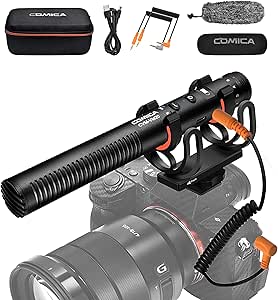 | Best for Adjustable On-Camera Audio | Polar pattern: Super cardioid | Connectivity: 3.5 mm jack | Low-cut filters: 75 Hz and 150 Hz | VIEW LATEST PRICE | See Our Full Breakdown |
| RØDE VideoMicro II Ultra-Compact On-Camera Shotgun Microphone | 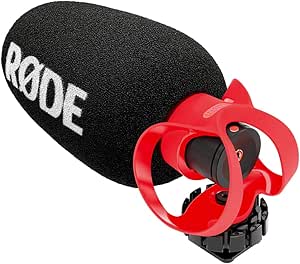 | Best Compact Pick | Microphone type: Shotgun | Polar pattern: Unidirectional | Connection: Wired 3.5 mm jack | VIEW LATEST PRICE | See Our Full Breakdown |
| Sennheiser MKE 600 Shotgun Microphone with Auray Shock Mount and Windshield |  | Best for DSLR and Camcorder XLR Rigs | Microphone type: Shotgun | Directionality: Highly directional | Connector: XLR | VIEW LATEST PRICE | See Our Full Breakdown |
| Sennheiser MKE 600 Professional Shotgun Microphone Kit |  | Best Premium Kit for Camera or Boom Use | Polar pattern: Supercardioid/lobar | Frequency response: 40 Hz–20 kHz | Power: 48 V phantom or one AA battery | VIEW LATEST PRICE | See Our Full Breakdown |
| Comica CVM-V30 LITE Super-Cardioid On-Camera Microphone, Red |  | Best Plug-and-Play Starter Mic | Microphone type: Condenser shotgun | Polar pattern: Super-cardioid | Connectivity: 3.5 mm jack | VIEW LATEST PRICE | See Our Full Breakdown |
| Movo VXR10-PRO Shotgun Microphone with Rycote Lyre Shock Mount |  | Best Value for 3.5 mm Setups | Microphone type: Shotgun | Polar pattern: Unidirectional | Connectivity: 3.5 mm TRS and TRRS | VIEW LATEST PRICE | See Our Full Breakdown |
| RØDE VideoMic NTG Camera-Mount Shotgun Microphone |  | Best for Flexible Camera-to-Computer Workflows | Microphone form factor: Shotgun | Polar pattern: Supercardioid | Connectivity: Auto-sensing 3.5 mm output and USB-C | VIEW LATEST PRICE | See Our Full Breakdown |
| RØDE VideoMic GO II Ultra-Compact On-Camera Shotgun Microphone |  | Best for Beginners | Microphone type: Shotgun | Polar pattern: Supercardioid | Connectivity: 3.5 mm TRS and USB-C | VIEW LATEST PRICE | See Our Full Breakdown |
| Movo X1-Mini Supercardioid Shotgun Microphone for Cameras, Smartphones, and Computers |  | Best for USB-C and Analog Versatility | Microphone type: Supercardioid shotgun | Outputs: 3.5 mm analog and USB-C digital | Digital audio resolution: Up to 24-bit | VIEW LATEST PRICE | See Our Full Breakdown |
| RØDE VideoMic Pro+ On-Camera Shotgun Microphone |  | Best for Flexible Field Power | Microphone form factor: Shotgun | Polar pattern: Unidirectional | Connector: 3.5 mm jack | VIEW LATEST PRICE | See Our Full Breakdown |
| Sennheiser MKE 400 Directional On-Camera Shotgun Microphone |  | Best Overall for Camera-and-Phone Flexibility | Microphone type: Super-cardioid shotgun | Connectivity: Interchangeable 3.5 mm TRS and TRRS | Compatibility: DSLR and mirrorless cameras, mobile devices | VIEW LATEST PRICE | See Our Full Breakdown |
| Tikysky Camera Shotgun Microphone with Windscreen |  | Best Basic Pick for Close Camera Interviews | Model: TML-MIC05 | Connector: 3.5 mm TRS | Pickup pattern: Super-cardioid | VIEW LATEST PRICE | See Our Full Breakdown |
| Movo VXR10 Universal Shotgun Microphone for Cameras and Smartphones |  | Best Accessory Bundle for Traveling Creators | Microphone type: Directional shotgun | Body material: Aluminum | Input requirement: 3.5 mm mic input and plug-in power | VIEW LATEST PRICE | See Our Full Breakdown |
| Sennheiser MKE 600 Shotgun Microphone Bundle |  | Best for XLR Camera Rigs | Microphone form: Shotgun | Polar pattern: Unidirectional | Connectivity: XLR | VIEW LATEST PRICE | See Our Full Breakdown |
| SMALLRIG Shotgun Microphone for Cameras and Smartphones |  | Best Compact No-Battery Pick | Model: 13164-SR | Connectivity: 3.5 mm TRRS | Polar pattern: Unidirectional | VIEW LATEST PRICE | See Our Full Breakdown |
| shotgun microphones for video creator | Polar pattern | Connectivity | Microphone type | Included accessories |
|---|---|---|---|---|
| Comica VM20 Super-Cardioid Sho | Super cardioid | 3.5 mm jack | — | — |
| RØDE VideoMicro II Ultra-Compa | Unidirectional | — | Shotgun | HELIX isolation mount and windshields |
| Sennheiser MKE 600 Shotgun Mic | — | — | Shotgun | Auray universal shock mount and windshield |
| Sennheiser MKE 600 Professiona | Supercardioid/lobar | — | — | MZS 600 shock mount, foam windscreen, furry windshield, KA 600 XLR-female to 3.5 mm TRS adapter cable, padded pouch |
| Comica CVM-V30 LITE Super-Card | Super-cardioid | 3.5 mm jack | Condenser shotgun | — |
| Movo VXR10-PRO Shotgun Microph | Unidirectional | 3.5 mm TRS and TRRS | Shotgun | Rycote Lyre shock mount, foam and furry windscreens, TRS and TRRS adapters, carrying case |
| RØDE VideoMic NTG Camera-Mount | Supercardioid | Auto-sensing 3.5 mm output and USB-C | — | — |
| RØDE VideoMic GO II Ultra-Comp | Supercardioid | 3.5 mm TRS and USB-C | Shotgun | — |
| Movo X1-Mini Supercardioid Sho | — | — | Supercardioid shotgun | Rycote shock mount, foam and furry windscreens, TRS camera cable, TRRS smartphone cable, USB-C output cable, hard-sided carrying case |
| RØDE VideoMic Pro+ On-Camera S | Unidirectional | — | — | — |
| Sennheiser MKE 400 Directional | — | Interchangeable 3.5 mm TRS and TRRS | Super-cardioid shotgun | — |
| Tikysky Camera Shotgun Microph | — | — | — | — |
| Movo VXR10 Universal Shotgun M | — | — | Directional shotgun | Fuzzy windscreen, carrying case, camera cable, smartphone cable, original shock mount, and Rycote shock mount |
| Sennheiser MKE 600 Shotgun Mic | Unidirectional | XLR | — | Shockmount, foam windshield, XLR-to-1/8-inch TRS cable, universal shockmount, 20-foot XLR cable, microfiber cloth |
| SMALLRIG Shotgun Microphone fo | Unidirectional | 3.5 mm TRRS | — | Shock mount, furry windscreen, foam cover |
More Details on Our Top Picks
Comica VM20 Super-Cardioid Shotgun Microphone
The VM20 suits creators who want more control at the microphone than a basic plug-in model offers. Its 10-step gain adjustment helps tailor output to different recording setups, while the 75 Hz and 150 Hz low-cut filters offer options for reducing rumble. An OLED display makes battery status easy to check, and the rechargeable battery can run for up to 60 hours, including while charging. Compared with the battery-free RØDE VideoMicro II, the VM20 adds useful controls but needs charging and weighs more at 84 g. Its included TRS and TRRS cables broaden compatibility with devices that have the right 3.5 mm input. The tradeoff is that it is not an XLR solution, and connection compatibility still depends on the recording device.
Pros:- 10 gain levels and two low-cut filter settings allow more control over capture.
- OLED display shows battery status.
- Up to 60 hours of battery life, with operation possible while charging.
- Includes TRS and TRRS cables for compatible cameras and mobile devices.
Cons:- Requires charging, unlike the battery-free RØDE VideoMicro II.
- No XLR cable or connection is provided.
- Works only with devices that support a suitable 3.5 mm microphone connection.
Best for: Camera and phone video creators who want onboard gain and filter controls, plus a battery display for longer shoots.
Not ideal for: Creators using XLR-only cameras or recorders, or anyone seeking a battery-free microphone with minimal setup.
- Polar pattern:Super cardioid
- Connectivity:3.5 mm jack
- Low-cut filters:75 Hz and 150 Hz
- Gain adjustment:10 levels
- Battery:300 mAh rechargeable lithium battery
- Battery life:Up to 60 hours
- Charging:USB-C; approximately 3 hours
- Weight:84 g
Our verdict“Choose the VM20 if you want adjustable gain, filter choices, and long rechargeable operation in a 3.5 mm shotgun mic.”
RØDE VideoMicro II Ultra-Compact On-Camera Shotgun Microphone
When camera size and setup simplicity matter most, the VideoMicro II is the most travel-friendly choice in this group. At 80 mm long, it adds little bulk to a small camera rig, and its battery-free design means there is no charge level to track before a quick shoot. The HELIX isolation mount and included windshields help limit handling and wind noise—useful when recording handheld clips outdoors. Compared with the control-heavy Comica VM20, this RØDE gives up onboard gain and filter adjustments in exchange for a smaller, lighter setup. Its wired 3.5 mm connection also limits it to compatible inputs, so it is less flexible than an XLR mic such as the Sennheiser MKE 600. The listed weight figures conflict, so buyers should not rely on a single stated weight.
Pros:- Compact 80 mm body suits small camera and smartphone rigs.
- Requires no battery or charging.
- HELIX mount helps isolate handling noise.
- Includes windshields for outdoor recording.
Cons:- Wired 3.5 mm connection requires a compatible input.
- No onboard gain or low-cut filter controls are listed.
- Product information gives conflicting weight figures of 24 g and 39 g.
Best for: Traveling vloggers and compact-camera creators who want directional audio without adding a battery or bulky mount.
Not ideal for: Creators who need XLR connectivity, onboard audio adjustments, or wireless placement away from the camera.
- Microphone type:Shotgun
- Polar pattern:Unidirectional
- Connection:Wired 3.5 mm jack
- Compatible devices:Camera and smartphone
- Length:80 mm
- Listed weight:24 g and 39 g in product data
- Signal-to-noise ratio:78 dB
- Included accessories:HELIX isolation mount and windshields
Our verdict“Pick the VideoMicro II for a small, battery-free camera setup, but choose the Comica VM20 if onboard audio controls matter more.”
Sennheiser MKE 600 Shotgun Microphone with Auray Shock Mount and Windshield
This MKE 600 bundle is aimed at creators building a more deliberate camera or boom setup, rather than those seeking the smallest plug-in mic. Its highly directional pickup is suited to emphasizing a speaker in front of the microphone, while the switchable low-cut filter can help manage low-frequency rumble. Support for phantom or battery power gives it a path into different XLR-based rigs, and the included Auray shock mount and windshield add practical mounting and wind protection. Compared with the 3.5 mm Comica VM20, this Sennheiser is a more appropriate fit for XLR workflows but is less straightforward for a phone or camera with only a mini-jack. The product data does not specify detailed dimensions, battery life, or included cable, so check your rig’s connection and power needs before choosing it.
Pros:- Highly directional pickup is suited to focused dialogue capture.
- Can run on phantom power or a battery.
- Switchable low-cut filter helps address low-frequency rumble.
- Includes an Auray universal shock mount and windshield.
Cons:- XLR connectivity is less direct for cameras and phones with only 3.5 mm inputs.
- Product data does not identify an included connection cable.
- Power, size, and runtime details are less fully specified than for the kit version of the MKE 600.
Best for: DSLR and camcorder creators with XLR inputs who want a directional mic with a shock mount and windshield included.
Not ideal for: Phone-first creators or camera operators whose only microphone input is 3.5 mm and who want a ready-to-connect cable in the box.
- Microphone type:Shotgun
- Directionality:Highly directional
- Connector:XLR
- Compatibility:Camcorders and video DSLRs
- Low-cut filter:Switchable
- Power:Phantom or battery
- Included accessories:Auray universal shock mount and windshield
Our verdict“Choose this MKE 600 bundle for an XLR-equipped camera or boom rig; the VM20 is a simpler match for compatible 3.5 mm devices.”
Sennheiser MKE 600 Professional Shotgun Microphone Kit
The MKE 600 kit is the strongest fit here for creators who need one microphone to move between a camera and a boom setup. Its supercardioid/lobar pattern targets sound in front of the mic, while the switchable 100 Hz low-cut filter can reduce handling or environmental rumble. The package stands apart from the other options with both a furry windshield and foam windscreen, plus a shock mount, pouch, and XLR-to-3.5 mm adapter. Unlike the Comica VM20, it supports phantom power as well as an AA battery, making it more at home in professional audio chains; the VM20 is lighter on setup and offers onboard gain controls. The MKE 600’s 128 g weight and XLR-centered connection make it less suited to tiny phone rigs, and battery operation means keeping an AA cell available.
Pros:- Includes shock mounting, foam and furry wind protection, an adapter, and a pouch.
- Supports 48 V phantom power or one AA battery.
- Switchable 100 Hz low-cut filter can reduce low-frequency rumble.
- Approximately 150-hour runtime on an AA battery.
Cons:- At 128 g, it is heavier than the 24 g figure listed for the RØDE VideoMicro II.
- Direct 3.5 mm camera use depends on the included adapter cable.
- AA battery operation requires replacement rather than recharging in the microphone.
Best for: Video creators moving between XLR camera or boom recording and compatible 3.5 mm camera inputs who need supplied mounting and wind protection.
Not ideal for: Phone vloggers seeking a lightweight, battery-free mic or creators who want onboard gain adjustment without using external gear.
- Polar pattern:Supercardioid/lobar
- Frequency response:40 Hz–20 kHz
- Power:48 V phantom or one AA battery
- Battery runtime:Approximately 150 hours
- Low-cut filter:Switchable 100 Hz
- Dimensions:256 mm long × 20 mm diameter
- Weight:128 g
- Included accessories:MZS 600 shock mount, foam windscreen, furry windshield, KA 600 XLR-female to 3.5 mm TRS adapter cable, padded pouch
Our verdict“Pick this kit if you need a versatile XLR shotgun with substantial included wind and mounting accessories, not the lightest camera-top setup.”
Comica CVM-V30 LITE Super-Cardioid On-Camera Microphone, Red
The CVM-V30 LITE keeps the setup simple: connect it to a compatible 3.5 mm microphone input and it draws plug-in power from the device, so there is no separate battery to charge or replace. Its super-cardioid pickup favors forward-facing sound, while the shock mount helps reduce handling noise when the camera is moving. Compared with the RØDE VideoMicro II, it offers a cold shoe and 1/4-inch thread for mounting flexibility, but the product data does not list included wind protection or the VideoMicro II’s HELIX isolation mount. It can also connect to compatible smartphones, though that depends on having an actual external microphone input and the right connection. Some DSLR models lack that input, making compatibility the key limitation for this straightforward starter option.
Pros:- Runs on device plug-in power, so no separate battery is needed.
- Super-cardioid pickup helps focus on forward-facing sound.
- Shock mount helps reduce handling noise.
- Offers both cold shoe and 1/4-inch thread mounting.
Cons:- Requires a compatible 3.5 mm external microphone input.
- Some DSLR cameras do not have a microphone input.
- Product data does not list included wind protection or XLR connectivity.
Best for: New video creators using a camera, camcorder, recorder, or phone with a 3.5 mm external mic input who want a battery-free camera-top mic.
Not ideal for: Creators with DSLR bodies lacking a microphone input, XLR rigs, or outdoor shoots where included wind protection is a priority.
- Microphone type:Condenser shotgun
- Polar pattern:Super-cardioid
- Connectivity:3.5 mm jack
- Power:Device plug-in power; no battery required
- Mounting:Cold shoe and 1/4-inch thread
- Compatibility:Cameras, camcorders, audio recorders, and phones with a 3.5 mm microphone input
- Color:Red
Our verdict“Choose the CVM-V30 LITE for a simple, battery-free start on a device with a 3.5 mm mic input, but skip it if input compatibility is uncertain.”
Movo VXR10-PRO Shotgun Microphone with Rycote Lyre Shock Mount
The Movo VXR10-PRO is a practical pick for creators who want a directional on-camera mic without adding a battery routine. Its supercardioid pickup favors the subject over surrounding sound, while the included Rycote Lyre mount helps limit camera-handling rumble. The TRS and TRRS adapters, two windscreens, and case make it easier to move between compatible cameras and phones than a basic mic-only package. Compared with the Movo X1-Mini, though, this model lacks USB-C digital output, so it is less flexible for direct computer or newer-phone connections. Its straightforward, device-powered design is appealing, but your camera or device must have a 3.5 mm microphone input; some phones also need a separate adapter. I’d choose it for a simple analog workflow, not a USB-centered setup.
Pros:- Supercardioid pickup helps keep attention on the subject
- Rycote Lyre shock mount helps reduce handling vibrations
- Runs from the connected device without batteries
- Includes TRS and TRRS adapters, foam and furry windscreens, and a carrying case
Cons:- No USB-C output for direct digital connection to computers or compatible phones
- Requires a 3.5 mm external microphone input or a separate device adapter
Best for: Camera and smartphone creators with compatible 3.5 mm inputs who want a battery-free mic and a useful set of mounting and wind accessories.
Not ideal for: Creators recording directly to USB-C computers or phones, or anyone whose device lacks a 3.5 mm microphone input and who does not want to add adapters.
- Microphone type:Shotgun
- Polar pattern:Unidirectional
- Connectivity:3.5 mm TRS and TRRS
- Impedance:200 ohm
- Signal-to-noise ratio:76 dB
- Power:Connected device; no batteries required
- Included accessories:Rycote Lyre shock mount, foam and furry windscreens, TRS and TRRS adapters, carrying case
Our verdict“Choose the VXR10-PRO for an accessory-rich, battery-free analog setup, but pick the Movo X1-Mini if USB-C recording matters.”
RØDE VideoMic NTG Camera-Mount Shotgun Microphone
The RØDE VideoMic NTG earns its place for creators who want more control than a basic camera-mounted mic provides. Its USB mode with headphone monitoring lets it serve as a computer microphone as well as an on-camera option, while variable gain, a high-pass filter, a -20 dB pad, and a safety channel give creators ways to manage changing recording conditions. That makes it more adjustable than the plug-and-play RØDE VideoMic GO II, which keeps operation simpler and requires no battery. The NTG’s extra controls suit shoots where levels and handling need active management, but they also mean more settings to learn. Lightning-equipped iOS devices need a separate SC15 or SC19 cable, so mobile use may require an extra purchase. I’d favor it for creators who switch devices and want monitoring, rather than those seeking the most minimal rig.
Pros:- Works with cameras, mobile devices, and computers
- USB mode supports headphone monitoring
- Variable gain and digital controls provide useful recording adjustments
- Supercardioid pickup and low self-noise suit focused dialogue capture
Cons:- Lightning-equipped iOS devices require a separate SC15 or SC19 cable
- The range of controls adds setup complexity compared with the VideoMic GO II
- Uses a rechargeable battery rather than a battery-free design
Best for: Video creators who record on cameras and computers, want headphone monitoring, and value adjustable gain and onboard safety controls.
Not ideal for: Creators who want a no-battery, minimal-control microphone or need direct Lightning-device connection without an additional cable.
- Microphone form factor:Shotgun
- Polar pattern:Supercardioid
- Connectivity:Auto-sensing 3.5 mm output and USB-C
- Signal-to-noise ratio:79 dB
- Power:USB; one included lithium polymer battery
- Audio controls:High-pass filter, -20 dB pad, high-frequency boost, safety channel, variable gain, peak warning light
- Channels:1
Our verdict“Pick the VideoMic NTG if you need monitoring and adjustable controls across camera and computer recording, not if simplicity is your main priority.”
RØDE VideoMic GO II Ultra-Compact On-Camera Shotgun Microphone
The RØDE VideoMic GO II is the easiest fit here for creators who want a small mic that can move between a camera and USB-C devices without batteries. Its 60 g body, windshield, and HELIX isolation mount make it a manageable add-on for lightweight rigs, while the 3.5 mm and USB-C outputs widen its device options. Compared with the feature-rich RØDE VideoMic NTG, the GO II skips onboard controls and headphone monitoring, which keeps the workflow simpler but leaves fewer adjustments available on the mic. Advanced features require RØDE Central, so it is not entirely free of software considerations. The single-channel design also limits it to mono capture. I’d recommend it to new or mobile-first creators who value quick setup over hands-on audio control.
Pros:- Lightweight 60 g design suits compact camera and phone rigs
- 3.5 mm TRS and USB-C outputs support multiple recording devices
- No battery or complicated onboard controls required
- Includes a windshield and HELIX isolation mount
Cons:- Advanced audio features require RØDE Central
- Single-channel microphone does not provide multichannel capture
- Offers less onboard control than the RØDE VideoMic NTG
Best for: Beginner and mobile video creators who want a lightweight, battery-free microphone for cameras, USB-C phones, tablets, and computers.
Not ideal for: Creators who need onboard gain controls, headphone monitoring, or multichannel recording from a single microphone.
- Microphone type:Shotgun
- Polar pattern:Supercardioid
- Connectivity:3.5 mm TRS and USB-C
- Weight:60 g
- Frequency range:20 Hz–20 kHz
- Signal-to-noise ratio:79 dB
- Included items:HELIX isolation mount, windshield, SC14 cable
Our verdict“Choose the GO II for a light, straightforward camera-to-USB-C setup, but select the VideoMic NTG if you need monitoring and more control.”
Movo X1-Mini Supercardioid Shotgun Microphone for Cameras, Smartphones, and Computers
The Movo X1-Mini stands out for creators who need both analog camera connection and USB-C digital output in one battery-free microphone. Digital mode supports up to 24-bit audio, while the included TRS camera cable, TRRS smartphone cable, USB-C cable, windscreens, and hard-sided case make it ready for a range of recording setups. Compared with the Movo VXR10-PRO, it is the more flexible choice for computers and USB-C devices; the VXR10-PRO, however, also covers analog use and supplies a Rycote Lyre mount. The X1-Mini’s aluminum construction and shock-mount design are useful for mobile filming, though the supplied product information gives no weight or dimensions, making rig-fit planning harder. It suits creators crossing between camera, phone, and computer more than those committed to one simple camera-only setup.
Pros:- Combines 3.5 mm analog and USB-C digital outputs
- Digital mode supports up to 24-bit audio
- Battery-free design with an integrated shock-mount setup
- Includes multiple connection cables, two windscreens, and a hard-sided case
Cons:- No dimensions or weight are provided for planning a compact camera rig
- The VXR10-PRO includes a Rycote Lyre shock mount, while this model’s listed accessories do not specify that mount
Best for: Creators who record across cameras, smartphones, tablets, and computers and want analog and USB-C connections without carrying separate microphones.
Not ideal for: Camera-only creators who do not need USB-C recording, or buyers who need confirmed size and weight before fitting a compact rig.
- Microphone type:Supercardioid shotgun
- Outputs:3.5 mm analog and USB-C digital
- Digital audio resolution:Up to 24-bit
- Power:Battery-free
- Construction:Aluminum
- Compatibility:Cameras, smartphones, computers, tablets, camcorders, audio recorders, and laptops
- Included accessories:Rycote shock mount, foam and furry windscreens, TRS camera cable, TRRS smartphone cable, USB-C output cable, hard-sided carrying case
Our verdict“Choose the X1-Mini if you need one battery-free mic for both analog cameras and USB-C devices; skip it if exact size and weight are a deciding factor.”
RØDE VideoMic Pro+ On-Camera Shotgun Microphone
The RØDE VideoMic Pro+ is the lineup’s strongest fit for video creators who want several ways to keep an on-camera mic powered during a shoot. Its rechargeable battery, two AA batteries, and Micro USB option provide a fallback when one power source is unavailable; automatic power also turns the mic off when disconnected from the camera. The Rycote Lyre suspension and digital switching support camera-mounted recording, while its metal enclosure adds a sturdy feel. Compared with the RØDE VideoMic NTG, the Pro+ favors power flexibility and camera use over USB computer recording and headphone monitoring. Its listed USB connectivity does not make it the clearest choice for a computer-first setup, and the unbalanced output is a limitation for some recording chains. I’d choose it for camera-focused shoots where power options matter more than cross-device convenience.
Pros:- Supports a rechargeable battery, two AA batteries, or Micro USB power
- Automatic power turns the microphone off when disconnected from the camera
- Rycote Lyre suspension helps limit handling and camera vibrations
- Digital switching provides controls for shaping audio at the source
Cons:- Unbalanced output may not suit every recording chain
- More camera-focused than the VideoMic NTG for USB computer recording and headphone monitoring
- Listed frequency range begins at 40 Hz rather than the wider 20 Hz range listed for some alternatives
Best for: Camera and DSLR creators who record away from reliable power and want rechargeable, AA, and Micro USB power options.
Not ideal for: Computer-first creators who need USB microphone operation with headphone monitoring, or buyers who require a balanced output.
- Microphone form factor:Shotgun
- Polar pattern:Unidirectional
- Connector:3.5 mm jack
- Power options:Rechargeable battery, two AA batteries, or Micro USB
- Signal-to-noise ratio:74 dB
- Frequency range:40 Hz–20 kHz
- Weight:4.32 ounces
- Dimensions:4.3 x 6.69 x 2.59 inches
Our verdict“Pick the VideoMic Pro+ for camera shoots where multiple power options matter more than computer monitoring or a balanced output.”
Sennheiser MKE 400 Directional On-Camera Shotgun Microphone
The Sennheiser MKE 400 is my most versatile pick for creators who want directional audio and practical monitoring in one compact camera-mounted setup. Its interchangeable TRS and TRRS connectors make it easier to move between a camera and compatible mobile device than the camera-only Tikysky TML-MIC05. A headphone output with adjustable volume also lets you check incoming sound while recording, a useful safeguard when levels or background noise change during a take. The low-cut filter, sensitivity switch, integrated wind protection, and suspension address common location-recording problems without requiring separate accessories. Its tradeoff is that this is still an on-camera microphone: it is best suited to nearby subjects, not distant dialogue, and creators seeking an XLR workflow should look at the Sennheiser MKE 600 instead.
Pros:- Interchangeable TRS and TRRS connectors support compatible cameras and mobile devices.
- Headphone output with adjustable volume allows monitoring during recording.
- Low-cut filter and three-step sensitivity switch help adapt to changing recording conditions.
- Integrated wind protection and suspension help limit wind and handling noise.
Cons:- The 3.5 mm connections do not suit an XLR-only audio setup.
- On-camera placement is less suited to capturing clear dialogue from distant subjects.
- Its added controls may be unnecessary for creators seeking a basic plug-in microphone.
Best for: Video creators who alternate between a DSLR or mirrorless camera and a compatible mobile device and want to monitor audio while recording.
Not ideal for: Creators using XLR-only rigs or filming subjects from far away; this microphone uses 3.5 mm connections and is designed for on-camera recording.
- Microphone type:Super-cardioid shotgun
- Connectivity:Interchangeable 3.5 mm TRS and TRRS
- Compatibility:DSLR and mirrorless cameras, mobile devices
- Audio controls:Low-cut filter and three-step sensitivity switch
- Monitoring:Headphone output with volume adjustment
- Noise reduction:Integrated wind protection and suspension mount
Our verdict“Choose the MKE 400 if you need a feature-rich on-camera mic that can serve compatible cameras and phones, with monitoring built in.”
Tikysky Camera Shotgun Microphone with Windscreen
The Tikysky TML-MIC05 makes sense for a narrow, straightforward job: recording nearby speech through a camera’s 3.5 mm TRS microphone input. Its super-cardioid pickup is intended to favor sound in front of the mic, and the supplied windscreen and AAA battery let a compatible-camera owner start with fewer separate pieces. Compared with the Sennheiser MKE 400, it offers fewer recording controls and no headphone monitoring, but that simpler setup may suit a creator who only needs a basic mic for close vlogs or interviews. The limits are firm: it does not connect to phones, tablets, computers, USB, or XLR, and the stated pickup range does not make it a good choice for distant dialogue or noisy locations. Check camera compatibility before choosing it.
Pros:- Super-cardioid pickup is designed to favor sound in front of the microphone.
- Supplied windscreen helps with outdoor recording.
- Included AAA battery supports operation without relying on camera power.
- Suitable for close interviews, vlogging, and livestreams on compatible cameras.
Cons:- Does not support phones, tablets, computers, USB, or XLR connections.
- Compatibility varies by camera model, so the input must be checked in advance.
- Close-range use is a poor fit for distant subjects or noisy locations.
Best for: Camera owners with a confirmed 3.5 mm TRS mic input who record close-up interviews, vlogs, or livestreams.
Not ideal for: Mobile-first creators, XLR or USB users, and filmmakers recording at a distance or in loud environments.
- Model:TML-MIC05
- Connector:3.5 mm TRS
- Pickup pattern:Super-cardioid
- Pickup range:0–5 m (15 ft); best results at close range
- Power source:One AAA alkaline battery
- Weight:3.25 oz
- Dimensions:5.4 × 1.1 × 2.4 in
Our verdict“Pick the Tikysky for close speech on a compatible camera when a simple, battery-powered 3.5 mm mic is enough.”
Movo VXR10 Universal Shotgun Microphone for Cameras and Smartphones
The Movo VXR10 stands out for creators who want one compact microphone kit to move between compatible cameras and smartphones. Its aluminum body, built-in shock mount, windscreen, case, and two shock-mount options provide a practical starting point for run-and-gun video. Unlike the Tikysky TML-MIC05, the VXR10 includes a smartphone cable, though phone compatibility may still require a separate Lightning or USB-C adapter. Its recommended 1–5 ft recording distance sets a realistic boundary: it suits nearby dialogue better than distant subjects, regardless of the directional pickup. The tradeoff is a little more setup checking than with the MKE 400, since the connected device needs a 3.5 mm mic input with plug-in power and the correct cable. I’d choose it for portability and included accessories, not for a guaranteed universal connection.
Pros:- Compact aluminum body is suited to travel and camera-mounted use.
- Built-in shock mount helps reduce handling noise.
- Includes a fuzzy windscreen, carrying case, camera cable, and smartphone cable.
- Two shock-mount options provide flexibility for supported setups.
Cons:- Connected devices need a 3.5 mm mic input and plug-in power.
- Some smartphones require a separate Lightning or USB-C adapter.
- Cable choice and recording distance can affect results, and the recommended range is close.
Best for: Traveling vloggers and small-crew creators who record close subjects on compatible cameras and smartphones and value a ready-to-pack accessory kit.
Not ideal for: Creators who need guaranteed direct phone connection, XLR support, or reliable capture of subjects more than a few feet away.
- Microphone type:Directional shotgun
- Body material:Aluminum
- Input requirement:3.5 mm mic input and plug-in power
- Recommended recording distance:1–5 ft
- Included accessories:Fuzzy windscreen, carrying case, camera cable, smartphone cable, original shock mount, and Rycote shock mount
- Noise control:Built-in shock mount
Our verdict“Choose the VXR10 if you want a compact directional mic with useful travel accessories and can confirm your device’s input and adapter needs.”
Sennheiser MKE 600 Shotgun Microphone Bundle
For creators building a more production-oriented rig, the Sennheiser MKE 600 bundle is the lineup’s clearest move beyond simple camera-top 3.5 mm microphones. Its XLR connection suits compatible cameras, camcorders, and audio interfaces, while support for phantom or battery power gives more flexibility across setups. The unidirectional pickup and switchable low-cut filter are useful when focusing on a forward subject and managing wind rumble. Compared with the MKE 400, this bundle favors an XLR workflow over compact camera-and-phone convenience; compared with the VXR10, it includes a broader connection and accessory package for more involved rigs. The cost in practicality is size and setup complexity: its listed dimensions are substantial, and an XLR mic is not a direct fit for every small camera or mobile device. Choose it when your rig supports XLR, not just for casual phone video.
Pros:- XLR connectivity fits compatible cameras, camcorders, and audio interfaces.
- Can run on phantom power or batteries.
- Unidirectional pickup favors sound from the front and attenuates sound from the sides and rear.
- Bundle includes shock mounts, windshields, connection cables, and a cleaning cloth.
Cons:- XLR connection is less convenient than the MKE 400’s 3.5 mm camera-and-mobile options.
- The listed dimensions make it a less compact choice for small camera rigs.
- Requires a compatible XLR setup or suitable cable arrangement rather than a simple phone connection.
Best for: Video crews and camera operators with XLR-compatible cameras, camcorders, or audio interfaces who need a directional mic for a more developed rig.
Not ideal for: Phone-first creators and lightweight camera users without XLR input who want a compact, direct-connect microphone.
- Microphone form:Shotgun
- Polar pattern:Unidirectional
- Connectivity:XLR
- Power:Phantom power or batteries
- Audio feature:Switchable low-cut filter
- Enclosure material:Metal
- Dimensions:13.5 × 6 × 6 in
- Included accessories:Shockmount, foam windshield, XLR-to-1/8-inch TRS cable, universal shockmount, 20-foot XLR cable, microfiber cloth
Our verdict“Choose this MKE 600 bundle when your camera rig supports XLR and you want a directional microphone with flexible power and included mounting accessories.”
SMALLRIG Shotgun Microphone for Cameras and Smartphones
The SMALLRIG 13164-SR is a compact option for creators who want a simple camera-top mic without keeping spare batteries on hand. At 35 g, with no battery required, it is easy to add to a small rig, and its shock mount plus furry and foam windscreens cover common handling and wind concerns. The listed dual-channel stereo recording sets it apart from the Movo VXR10, which is presented as a directional mono-style shotgun, but the SMALLRIG’s 3.5 mm TRRS connection can complicate compatibility across cameras and phones. Check that your device accepts TRRS before buying; the MKE 400 offers interchangeable TRS and TRRS connectors for a more flexible connection approach. This is a lean, low-fuss choice for supported setups, not a dependable one-mic answer for every device in a mixed-kit workflow.
Pros:- Lightweight 35 g design suits compact camera and mobile rigs.
- Runs without batteries.
- Dual-channel stereo recording is distinct from the VXR10’s directional setup.
- Includes a shock mount, furry windscreen, and foam cover.
Cons:- Requires a 3.5 mm TRRS connection, so compatibility may vary across devices.
- The supplied connection type is less flexible than the MKE 400’s interchangeable TRS and TRRS connectors.
- Device input compatibility should be verified before purchase.
Best for: Creators with a confirmed 3.5 mm TRRS-compatible camera, camcorder, or mobile device who want a lightweight mic without battery changes.
Not ideal for: Users with TRS-only camera inputs or uncertain phone compatibility, and creators who need a broadly adaptable connection system.
- Model:13164-SR
- Connectivity:3.5 mm TRRS
- Polar pattern:Unidirectional
- Channels:2
- Frequency response:18 kHz
- Weight:35 g
- Power source:No batteries required
- Mounting:Cold shoe mount or 1/4-inch screw tripod
- Included accessories:Shock mount, furry windscreen, foam cover
Our verdict“Choose the SMALLRIG if your device supports TRRS and you want a lightweight stereo mic that needs no batteries.”

How We Picked
I ranked these shotgun microphones for video creators by how well they match real recording setups: on-camera interviews, run-and-gun filming, lightweight travel rigs, and more deliberate production work. I weighed directional pickup and practical control against size, mounting and handling-noise considerations, power requirements, connection flexibility, and the usefulness of supplied accessories. A microphone’s format matters because a camera-mounted mic is most helpful when the subject stays close to the camera; it is not a substitute for a boom mic placed near a distant speaker.
The ranking gives priority to versatility and clear use-case fit, then to portability, setup simplicity, and package practicality. Models with closely related names or multiple bundle listings are treated as distinct purchase options, but buyers should confirm exactly what each listing includes. I did not rank products by price or customer ratings. Since performance depends on placement, room acoustics, wind, and the recording device, I focus on features and tradeoffs rather than implying that a microphone can solve every audio problem on its own.
| shotgun microphones for video creator | Polar pattern | Microphone type |
|---|---|---|
| Comica VM20 Super-Cardioid Sho | Super cardioid | — |
| RØDE VideoMicro II Ultra-Compa | Unidirectional | Shotgun |
| Sennheiser MKE 600 Shotgun Mic | — | Shotgun |
| Sennheiser MKE 600 Professiona | Supercardioid/lobar | — |
| Comica CVM-V30 LITE Super-Card | Super-cardioid | Condenser shotgun |
| Movo VXR10-PRO Shotgun Microph | Unidirectional | Shotgun |
| RØDE VideoMic NTG Camera-Mount | Supercardioid | — |
| RØDE VideoMic GO II Ultra-Comp | Supercardioid | Shotgun |
| Movo X1-Mini Supercardioid Sho | — | Supercardioid shotgun |
| RØDE VideoMic Pro+ On-Camera S | Unidirectional | — |
| Sennheiser MKE 400 Directional | — | Super-cardioid shotgun |
| Tikysky Camera Shotgun Microph | — | — |
| Movo VXR10 Universal Shotgun M | — | Directional shotgun |
| Sennheiser MKE 600 Shotgun Mic | Unidirectional | — |
| SMALLRIG Shotgun Microphone fo | Unidirectional | — |
Factors to Consider When Choosing Shotgun Microphones For Video Creators
Before choosing a mic, I’d match it to the way you record rather than shopping by pickup-pattern labels alone. These buying factors can help you avoid paying for features your setup cannot use—or choosing a compact mic that leaves you short on control.
Match the microphone to camera distance
A camera-mounted shotgun mic records from wherever the camera is, so distance to the speaker matters more than the word “directional” may suggest. It can help favor sound in front of the lens, but it will still capture room reflections and background noise. For a creator filming arm’s-length pieces to camera, an on-camera model is often practical. For interviews where the camera must sit several feet away, a mic on a boom or just outside the frame can put the capsule closer to the voice. A common mistake is buying a more directional mic instead of planning better placement. I’d choose the recording position first, then decide whether an on-camera mic can reach it effectively.
Check power and connections across your devices
Creators often switch between cameras, phones, and computers, but those devices may not accept the same plug or power arrangement. Before ordering, check the microphone’s output, any supplied cables, and whether the intended device can provide the needed power. A model described as compatible with multiple device types may still require an adapter or a different cable for a particular phone. Battery-powered designs can simplify use with cameras that do not supply plug-in power, while rechargeable or USB-friendly operation may fit a desk-and-camera workflow. Think through the whole signal chain, including whether you monitor audio through the camera or record separately. Matching connections in advance prevents a shoot-day setup problem.
Treat wind protection and shock isolation as separate jobs
Wind protection reduces air movement across the microphone, while a shock mount helps limit bumps and vibration transmitted through the camera. One does not replace the other. A foam cover can help with light airflow, but outdoor filming may call for a more substantial windscreen suited to the conditions. A suspension mount can reduce handling and camera-operation noise, though it cannot remove sounds already present in the room. Check which accessories are included and whether they fit the way you plan to work. If you film outdoors or move the camera while recording, accessory compatibility may matter more than an extra control on the mic.
Decide how much control you need on the mic
Some creators want a straightforward microphone that stays mounted and records with minimal setup; others benefit from onboard controls for changing levels or adapting to different sources. More controls can save time when the camera is hard to reach, but they add setup decisions and can be unnecessary for a fixed, predictable workflow. A simple mic is not automatically limiting if you already manage gain on the camera or recorder. Conversely, onboard adjustment cannot correct a poor recording position or clipped audio after the fact. I’d prioritize reliable level setting and monitoring before seeking extra processing features. Choose controls that solve a recurring problem in your workflow.
Balance compact size against mounting and handling needs
A small microphone can keep a travel camera light and avoid obstructing the frame, but compactness alone does not guarantee low handling noise or comfortable operation. Check how the mount attaches, whether the mic sits securely, and whether it leaves access to the camera’s screen, controls, or viewfinder. A larger mic may offer a more substantial control layout or power options, yet add bulk to a compact rig. For handheld filming, camera movement can reach the microphone through the mount, so handling isolation deserves attention. For a locked-off camera, size may matter less than connection and power convenience. I’d judge the complete rig, not the microphone by itself.
Compare bundles by what you will actually use
Bundle names can obscure whether a listing includes a windshield, shock mount, cable, or other useful accessory. Compare the contents item by item, especially when several versions of the same microphone appear in a roundup. An included accessory only adds practical value if it fits your recording conditions and device. Avoid paying for duplicate mounts or cables that already work with your setup, but do not assume a bare microphone is ready for windy or mobile filming. Also check whether a bundle changes the microphone itself or only adds accessories. A clear inventory of your current kit helps you spend on missing pieces rather than redundant ones.
Frequently Asked Questions
Can an on-camera shotgun microphone record a clear interview from across a room?
It may capture the interview, but a camera-mounted mic is usually limited by how far it sits from the speaker. As distance increases, room sound and other background noise can become more prominent relative to the voice. Moving the microphone closer—on a boom or a stand just outside the frame—often helps more than switching to a more directional on-camera model. If the camera must stay far away, consider a separate mic near the speaker or a wireless system. For sit-down interviews, plan mic placement alongside camera framing rather than treating audio as a camera accessory choice.
Should I choose the RØDE VideoMicro II or a more feature-rich camera mic?
I’d choose the VideoMicro II when a compact, uncomplicated camera setup is the main goal and extensive onboard adjustment is not part of your workflow. A more feature-rich option such as the VideoMic NTG makes more sense if you want additional control or expect to use the mic across varied shooting situations. The tradeoff is that added features and a larger body can make a rig less minimal. Neither choice fixes poor placement, wind, or a noisy room. Decide whether you need a smaller setup or more flexibility before comparing feature lists.
Do I need a battery-powered shotgun microphone for my camera?
That depends on how your camera supplies power and how you plan to record. Some microphones can draw power from compatible equipment, while others use their own power arrangement; a mismatch can leave you unable to record. Check the microphone’s requirements alongside the camera manual and the cable connection, rather than assuming every camera-mounted mic works the same way. If you move between devices, power needs may vary across the setup. A separate power source can add a step, but it may be useful when the camera cannot power the mic.
Are the three Sennheiser MKE 600 listings different microphones?
The roundup includes three MKE 600 listings with different bundle descriptions, so I would compare their included components before choosing. The product names distinguish an option with an Auray shock mount and windshield, a professional microphone kit, and a bundle, but listing contents can vary. Check the exact package inventory, power accessories, mount, and wind protection shown for the version you plan to buy. Do not assume a higher-level bundle name includes the same items as another listing. If you already own compatible accessories, a package with fewer extras may suit your kit better.
Can I use one shotgun microphone with my camera, smartphone, and computer?
Some listed models are presented for multiple device types, but compatibility depends on the output connection, cable, adapter, and power requirements. A camera input, phone port, and computer input may each call for a different connection path. Check the exact device model and operating setup, then confirm whether the required cable or adapter is included or sold separately. Also consider how you will monitor and set recording levels on each device. A microphone that works well across several sources can reduce gear changes, but only if the entire connection chain is supported.
Conclusion
My best overall recommendation is the RØDE VideoMic NTG for creators who want a versatile camera-mounted option rather than the smallest possible mic. For best value, I’d compare the Comica and Movo choices against your device connections and accessory needs, then select the package that fits your setup without redundant extras. The best premium fit is the Sennheiser MKE 600 for creators building a more involved production rig and willing to plan around its power and mounting requirements. Beginners who want a compact, straightforward camera setup should start with the RØDE VideoMicro II. For specific needs, look to the MKE 600 listings when package accessories suit your workflow, or to multi-device options such as the Movo X1-Mini when camera, phone, and computer flexibility matters; check the exact cables and bundle contents before choosing.
Columbus Day / Indigenous Peoples' Day Picks
long weekend sales
As an affiliate, we earn on qualifying purchases.