
The best tripod leveling bases correct an uneven setup without forcing me to repeatedly adjust the tripod legs. My best overall pick is the IFOOTAGE QL-I, whose ±15-degree range and straightforward plate design suit demanding photo and video setups. The Koolehaoda ±5-degree base is the stronger value choice, while the model with a large crosshair bubble offers a more approachable setup for beginners. The main choice is between the speed and wider movement of a half-ball design and the slower, finer control of a three-wheel base. Continue reading for my full breakdown of adjustment range, mounting compatibility, control style, and buyer fit.

Get audio and creator gear delivered free with Prime
- Fast, free delivery on millions of items
- Prime Video, Amazon Music and more included
- Member-only deals all year
Complete the kit


Key Takeaways
- IFOOTAGE QL-I ranks first because its ±15-degree movement offers more slope correction than the ±5-degree three-wheel models while retaining a simple aluminum plate format.
- The 85mm three-legged base offers the most involved control system in this group, making it better for deliberate panoramic alignment than for buyers who value rapid setup.
- Koolehaoda splits its lineup clearly: the ±5-degree model favors affordable fine correction, while its 15-degree half-ball version is better matched to video and frequently changing locations.
- The large crosshair bubble model is the easiest beginner recommendation because the reference is easier to read than the smaller circular levels commonly fitted to compact bases.
- Specialized buyers have clearer choices than general users: CAVIX targets macro positioning, while the three-axis Seestar base directly addresses telescope alignment.
| Diameter 85mm Three-Legged Leveling Base Camera Leveling Machine |  | Best Overall | Platform Diameter: 85mm | Tilt Range: -15° to +15° | Fine Adjustment Range: ±5° | VIEW LATEST PRICE | See Our Full Breakdown |
| CAVIX Camera Leveler Tripod Leveling Base Tri-Wheel Head |  | Best for Heavy Macro Rigs | Material: Aircraft-grade aluminum | Adjustment Range: ±5° | Load Capacity: 44 pounds / 20 kilograms | VIEW LATEST PRICE | See Our Full Breakdown |
| Koolehaoda Tripod Leveling Base, ±5° Adjustment |  | Best for Travel Camera Kits | Adjustment Range: ±5° | Load Capacity: 33 pounds / 15 kilograms | Weight: 0.44 pounds / 200 grams | VIEW LATEST PRICE | See Our Full Breakdown |
| Tripod Leveling Base for Camera, 3-Axis Adjustable Aluminum Head for Seestar S50/S30 |  | Best for Seestar Smart Telescopes | Material: Aircraft-grade aluminum alloy | Adjustment Range: ±5° | Maximum Load: 44 pounds / 20 kilograms | VIEW LATEST PRICE | See Our Full Breakdown |
| Koolehaoda Tripod Leveling Base, Aluminum Half Ball 15° with Bubble Level |  | Best for Fast Video Leveling | Platform Diameter: 62mm | Base Diameter: 56mm | Tilt Range: 15° | VIEW LATEST PRICE | See Our Full Breakdown |
| Tripod Leveling Base with Dual 1/4-Inch and 3/8-Inch Threads |  | Best for Thread Versatility | Top Thread Support: 1/4 inch and 3/8 inch | Bottom Thread Support: 1/4 inch and 3/8 inch | Bubble Level: Large level with crosshair | VIEW LATEST PRICE | See Our Full Breakdown |
| Tripod Leveler Stand with +/-5 Degree Adjustment |  | Best for Standard 3/8-Inch Setups | Adjustment Range: ±5 degrees | Material: Aircraft-grade aluminum | Maximum Load: 15 kg / 33.1 lb | VIEW LATEST PRICE | See Our Full Breakdown |
| IFOOTAGE QL-I Tripod Leveling Base |  | Best for Steep Corrections | Material: Aluminum alloy with anti-oxidation treatment | Maximum Load: 22 lb / 10 kg | Tilt Adjustment: ±15 degrees | VIEW LATEST PRICE | See Our Full Breakdown |
| tripod leveling base | Material | Weight | Maximum Load | Adjustment Range |
|---|---|---|---|---|
| Diameter 85mm Three-Legged Lev | Anodized aluminum alloy | — | — | — |
| CAVIX Camera Leveler Tripod Le | Aircraft-grade aluminum | 0.44 pounds / 0.2 kilogram | — | ±5° |
| Koolehaoda Tripod Leveling Bas | Aluminum alloy | 0.44 pounds / 200 grams | — | ±5° |
| Tripod Leveling Base for Camer | Aircraft-grade aluminum alloy | 0.49 pounds / 225 grams | 44 pounds / 20 kilograms | ±5° |
| Koolehaoda Tripod Leveling Bas | CNC-machined all-metal construction | — | 10 kilograms | — |
| Tripod Leveling Base with Dual | CNC-machined aluminum alloy | 7.23 oz / 205 g | 33 lb / 15 kg | — |
| Tripod Leveler Stand with +/-5 | Aircraft-grade aluminum | 225 g / 0.49 lb | 15 kg / 33.1 lb | ±5 degrees |
| IFOOTAGE QL-I Tripod Leveling | Aluminum alloy with anti-oxidation treatment | — | 22 lb / 10 kg | — |
More Details on Our Top Picks
Diameter 85mm Three-Legged Leveling Base Camera Leveling Machine
I rank the 85mm Three-Legged Leveling Base first because it combines a broad ±15° tilt range with three-wheel fine tuning, three bubble levels, and 360° panning. That gives panorama shooters more control on uneven ground than the CAVIX Camera Leveler, which is limited to ±5°. Its wide 85mm platform also provides a steadier foundation for substantial heads. Compared with the Koolehaoda 62mm Half Ball, this model favors measured, multi-axis alignment over quick half-ball repositioning. The tradeoff is complexity: three wheels and three levels require more attention than a single locking handle, while the tilt range still cannot correct severely angled terrain. I see it as the most versatile precision choice, but beginners seeking fast setup may find it overly involved.
Pros:- Broad ±15° tilt correction handles more uneven ground than ±5° bases
- Three adjustment wheels support controlled multi-axis alignment
- Three bubble levels provide several visual references
- 85mm aluminum platform creates a broad, stable mounting surface
Cons:- Three-wheel operation has a steeper learning curve than a half-ball design
- Slower to adjust when the camera position changes frequently
- Cannot compensate for slopes beyond its ±15° tilt range
Best for: Panorama, architecture, and landscape photographers who need accurate multi-axis leveling on moderately uneven terrain
Not ideal for: Beginners and fast-moving event shooters who want a one-handle leveling mechanism
- Platform Diameter:85mm
- Tilt Range:-15° to +15°
- Fine Adjustment Range:±5°
- Rotation:360°
- Material:Anodized aluminum alloy
- Bubble Levels:3
- Mounting Thread:3/8 inch
- Included Adapters:Three 1/4-to-3/8-inch screw adapters
Our verdict“This is my overall pick for photographers who favor precise panoramic alignment over the fastest possible setup.”
CAVIX Camera Leveler Tripod Leveling Base Tri-Wheel Head
The CAVIX Camera Leveler earns its place through an unusually strong 44-pound load rating in a 0.44-pound body. I would choose it for macro rails, geared heads, or long-lens setups where small framing changes make accurate leveling valuable. It carries more weight than the Koolehaoda ±5° Leveling Base while matching its listed weight, giving CAVIX the better load-to-weight ratio. Three locking dials permit small, controlled corrections, but their ±5° range assumes the tripod legs have already handled the larger slope. Those separate controls can also be slower than the single-handle Koolehaoda Half Ball when subjects or positions change quickly. The 3/8-inch connections suit common support gear, although some camera plates and lighter tripods will require adapters. Its appeal is capacity and precision, not speed or broad-angle correction.
Pros:- 44-pound capacity accommodates heavy camera and macro assemblies
- Excellent load-to-weight ratio at only 0.44 pounds
- Three locking dials allow independent fine corrections
- Aircraft-grade aluminum balances strength with portability
Cons:- ±5° range cannot correct heavily sloped tripod placement
- Three-dial leveling takes longer than adjusting a half-ball base
- Native 3/8-inch fittings may require adapters for 1/4-inch equipment
Best for: Macro photographers using focusing rails, geared heads, long lenses, or other heavy assemblies that need small leveling corrections
Not ideal for: Run-and-gun photographers or users working on steep ground, since three dials and a ±5° range limit adjustment speed and reach
- Material:Aircraft-grade aluminum
- Adjustment Range:±5°
- Load Capacity:44 pounds / 20 kilograms
- Weight:0.44 pounds / 0.2 kilogram
- Top Stud:3/8-inch male
- Bottom Socket:3/8-inch female
Our verdict“I favor the CAVIX for heavy macro rigs that need careful fine leveling without a large weight penalty.”
Koolehaoda Tripod Leveling Base, ±5° Adjustment
I place the Koolehaoda ±5° Leveling Base in the travel-kit role because its 0.44-pound aluminum body adds little bulk while supporting up to 33 pounds. That capacity is ample for most mirrorless or DSLR bodies, conventional heads, and medium telephoto lenses. The CAVIX Camera Leveler supports 11 pounds more at the same listed weight, making CAVIX better for unusually heavy macro hardware; this Koolehaoda remains a sensible match when 33 pounds already provides plenty of margin. Its three locking dials give repeatable horizon corrections, though they are less immediate than the Koolehaoda 62mm Half Ball’s single-action tilt. A ±5° range also means careful tripod-leg placement still matters on rough ground. I would pack it for portable landscape work, but not for steep slopes or oversized cinema assemblies.
Pros:- 0.44-pound construction adds little weight to a travel tripod
- 33-pound rating covers most still-photography setups
- Three locking dials permit controlled horizon correction
- Standard 3/8-inch connection fits many tripod and head combinations
Cons:- Lower load rating than the equally light CAVIX model
- ±5° correction requires reasonably level tripod-leg placement
- Three-dial mechanism is slower than a half-ball for frequent repositioning
Best for: Traveling landscape and portrait photographers carrying mirrorless or DSLR kits below 33 pounds
Not ideal for: Cinema crews with oversized rigs or photographers who need more than ±5° of correction on steep terrain
- Adjustment Range:±5°
- Load Capacity:33 pounds / 15 kilograms
- Weight:0.44 pounds / 200 grams
- Material:Aluminum alloy
- Thread Size:3/8 inch
- Adjustment Controls:Three locking dials
Our verdict“This Koolehaoda makes the most sense for travelers who need precise leveling for a conventional camera kit without much added weight.”
Tripod Leveling Base for Camera, 3-Axis Adjustable Aluminum Head for Seestar S50/S30
The 3-Axis Leveling Base for Seestar S50/S30 is my targeted pick for smart-telescope owners who need a stable platform and clear visual calibration. Its three bubble levels make axis-by-axis alignment easier to read than on the Koolehaoda 62mm Half Ball, which supplies one level. A 44-pound rating also leaves generous capacity for the telescope and attached accessories. Compared with the CAVIX Camera Leveler, it supports the same stated load but weighs slightly more; the benefit is the included 1/4-to-3/8-inch adapter and multi-level layout. The ±5° adjustment is meant for refinement, not rescuing badly placed tripod legs, and no stated quick-release provision means removal may take extra steps. I recommend it as a specialized calibration platform, while general photographers may prefer a wider-tilting or faster half-ball design.
Pros:- Three bubble levels help users read alignment across multiple axes
- 44-pound capacity provides ample headroom for smart-telescope setups
- Included 1/4-to-3/8-inch adapter broadens mounting compatibility
- Aircraft-grade aluminum keeps listed weight below half a pound
Cons:- ±5° adjustment cannot compensate for poor tripod placement on steep surfaces
- Slightly heavier than the CAVIX despite the same stated load capacity
- No stated quick-release system for fast attachment or removal
Best for: Seestar S50 or S30 owners who want three-axis visual references and enough capacity for telescope accessories
Not ideal for: Photographers seeking quick-release convenience or broad correction on sharply sloped ground
- Material:Aircraft-grade aluminum alloy
- Adjustment Range:±5°
- Maximum Load:44 pounds / 20 kilograms
- Weight:0.49 pounds / 225 grams
- Top Screw:3/8 inch
- Bottom Socket:3/8 inch
- Included Adapter:1/4-to-3/8 inch
- Bubble Levels:3
Our verdict“I recommend this base to Seestar owners who value readable three-axis calibration more than wide tilt or quick-release speed.”
Koolehaoda Tripod Leveling Base, Aluminum Half Ball 15° with Bubble Level
The Koolehaoda 62mm Half Ball suits video operators because its single-action 15° tilt can level a head faster than adjusting three separate wheels. Its 360° rotation also supports quick reframing, while 1/4-inch and 3/8-inch mounting options accommodate varied heads, gimbals, and tripods. Compared with the 85mm Three-Legged Leveling Base, this model is smaller and simpler, but it offers only one bubble level and a lower 10kg capacity. That makes the 85mm option better for deliberate multi-axis alignment or heavier support systems. The all-metal build provides a rigid connection, though it adds more carry weight than minimalist travel users may want, and the locking parts require some assembly. I see this as the speed-first alternative for moving between video setups, not the strongest choice for high-capacity precision work.
Pros:- Half-ball mechanism allows faster leveling than a three-dial base
- 15° tilt handles more uneven placement than ±5° models
- 360° rotation supports rapid camera or head orientation
- Dual 1/4-inch and 3/8-inch mounting support fits varied equipment
Cons:- 10kg capacity is lower than the 15kg and 20kg tri-wheel alternatives
- Single bubble level offers less axis-specific feedback than three-level models
- All-metal construction and locking hardware add weight and setup work
Best for: Video shooters and gimbal users who change positions often and want rapid one-handle leveling
Not ideal for: Backpackers minimizing support weight or crews mounting equipment above the 10kg load limit
- Platform Diameter:62mm
- Base Diameter:56mm
- Tilt Range:15°
- Rotation:360°
- Mounting Screw Sizes:1/4 inch and 3/8 inch
- Maximum Load:10 kilograms
- Material:CNC-machined all-metal construction
- Thread Hole:3/8 inch with 1/4-inch adapter
- Level Indicator:Built-in bubble level
Our verdict“I would choose this half-ball base for video work where fast leveling matters more than maximum capacity or multi-axis readouts.”
Tripod Leveling Base with Dual 1/4-Inch and 3/8-Inch Threads
I rank this as the best choice for mixed mounting hardware because both its top and bottom accept 1/4-inch and 3/8-inch connections. That flexibility makes it easier to move between camera, tripod, slider, and accessory setups without stacking adapters. The large crosshair bubble level is also easier to read than the simpler built-in levels on the Tripod Leveler Stand with +/-5 Degree Adjustment, while its enlarged knobs support more deliberate fine-tuning. Its ±6-degree range handles modest corrections, but the IFOOTAGE QL-I offers far more movement at ±15 degrees. I would choose this model for precise leveling on mildly uneven ground, especially when low weight matters. The compromise is that adjustment remains manual, and its 33-pound rating, though useful, leaves little safety margin for unusually heavy cinema rigs.
Pros:- Dual 1/4-inch and 3/8-inch mounting support reduces reliance on separate adapters
- Large crosshair bubble level provides a clear visual reference
- Enlarged locking knobs and fine-adjustment controls support precise positioning
- Compact 7.23-ounce aluminum body adds little weight to a travel kit
Cons:- ±6-degree adjustment range cannot match the IFOOTAGE QL-I on steep or highly uneven surfaces
- 33-pound capacity may provide too little headroom for heavy cinema configurations
- Manual fine-tuning takes longer than a quick half-ball correction
Best for: Photographers and content creators who regularly switch between 1/4-inch and 3/8-inch tripod hardware and need precise corrections on mildly uneven surfaces
Not ideal for: Video crews working on steep terrain or using unusually heavy cinema equipment, because the base allows only ±6 degrees of correction and carries up to 33 pounds
- Top Thread Support:1/4 inch and 3/8 inch
- Bottom Thread Support:1/4 inch and 3/8 inch
- Bubble Level:Large level with crosshair
- Leveling Adjustment:±6 degrees
- Material:CNC-machined aluminum alloy
- Weight:7.23 oz / 205 g
- Maximum Load:33 lb / 15 kg
Our verdict“This is my pick for buyers who value broad thread compatibility and readable fine adjustment more than a wide correction range.”
Tripod Leveler Stand with +/-5 Degree Adjustment
This leveler earns its place through a straightforward 3/8-inch mounting design and a 33.1-pound capacity that suits many DSLR, mirrorless, and video-head combinations. I see it as a focused alternative to the dual-thread Tripod Leveling Base: it gives up that model’s adapter-free flexibility but retains locking dials and built-in bubble references in a sturdy aircraft-grade aluminum body. Its ±5-degree adjustment is enough for small tripod-placement errors, and the 225-gram weight remains manageable outdoors. Compared with the IFOOTAGE QL-I, however, it cannot correct steep slopes or provide the same 360-degree rotating control. The all-3/8-inch interface also narrows compatibility with lighter consumer equipment. I would rank it for buyers who want stable, uncomplicated leveling and already own matching support gear, not those assembling a more adaptable travel system.
Pros:- Locking dials hold small leveling corrections securely
- Aircraft-grade aluminum balances durability with a 225-gram weight
- 33.1-pound load rating accommodates many camera-and-head combinations
- Built-in bubble levels provide an immediate leveling reference
Cons:- 3/8-inch-only top and bottom connections reduce mounting flexibility
- ±5-degree range is the narrowest among these three picks
- Offers less repositioning freedom than the rotating IFOOTAGE QL-I
Best for: Outdoor photographers with 3/8-inch tripods and heads who need small, repeatable horizon corrections without adding much kit weight
Not ideal for: Creators using 1/4-inch consumer supports or shooting on steep terrain, since adapters may be required and adjustment stops at ±5 degrees
- Adjustment Range:±5 degrees
- Material:Aircraft-grade aluminum
- Maximum Load:15 kg / 33.1 lb
- Weight:225 g / 0.49 lb
- Top Thread:3/8 inch
- Bottom Socket:3/8 inch
Our verdict“I recommend this leveler for established 3/8-inch kits that need dependable minor corrections rather than broad mounting or tilt flexibility.”
IFOOTAGE QL-I Tripod Leveling Base
I give the IFOOTAGE QL-I the terrain-focused role because its ±15-degree tilt range is three times wider than the Tripod Leveler Stand’s ±5-degree adjustment. That extra movement can save time when leveling a video head on sloping ground, while the 360-degree rotating head adds positioning freedom for scenery and portrait-oriented video work. A quick-locking mechanism also favors faster setup over repeated fine-knob adjustments. The tradeoff is a lower 22-pound capacity, compared with the 33-pound ratings of the other two models, so heavier cinema rigs have less usable headroom. Its 3/8-inch connection is also less adaptable than the dual-thread Tripod Leveling Base. I would favor the QL-I for mobile video setups and uneven locations, but its specialized movement and mounting requirements may be excessive for casual photographers who only need minor horizon correction.
Pros:- ±15-degree tilt handles much steeper corrections than the other two picks
- 360-degree head rotation provides added positioning freedom
- Quick-locking mechanism supports faster field setup
- Treated aluminum construction resists oxidation
Cons:- 22-pound capacity offers less load headroom than the 33-pound alternatives
- 3/8-inch-only mounting is less flexible than a dual-thread design
- Specialized range and movement may be unnecessary for simple horizon corrections
Best for: Traveling videographers and landscape shooters who need fast leveling corrections on steep or irregular ground with a rig under 22 pounds
Not ideal for: Owners of heavy cinema rigs or 1/4-inch-only tripods, because load capacity is lower and the 3/8-inch interface may require an adapter
- Material:Aluminum alloy with anti-oxidation treatment
- Maximum Load:22 lb / 10 kg
- Tilt Adjustment:±15 degrees
- Thread Size:3/8 inch
- Head Rotation:360 degrees
- Locking System:Quick-lock mechanism
- Compatible Supports:Tripods and monopods
Our verdict“This is my choice for lighter video rigs that need rapid, wide-angle leveling on uneven terrain.”
How We Picked
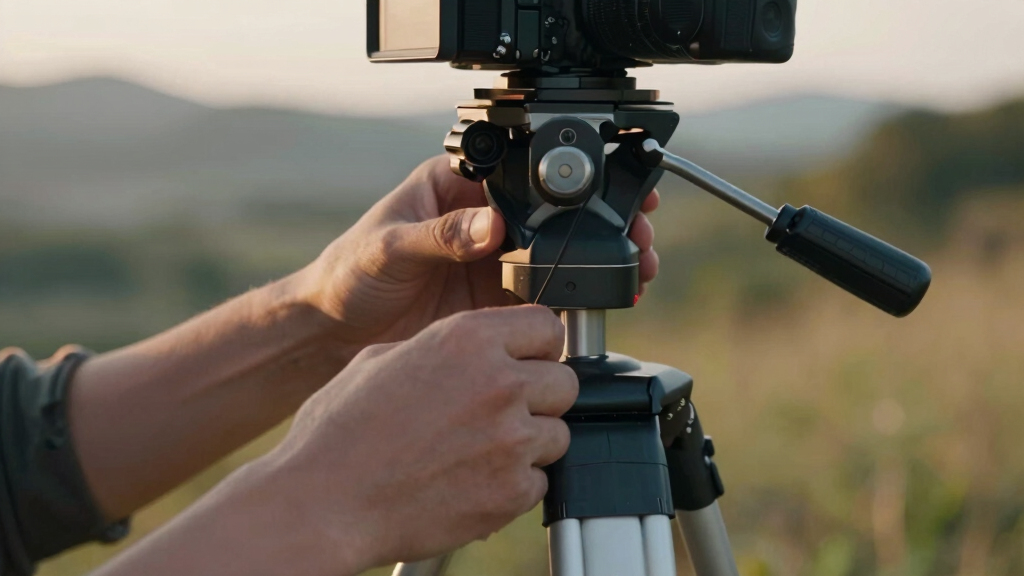
I ranked these bases by how effectively their stated designs address the real reasons for adding a leveler: fast horizon correction, controlled fine adjustment, and less time spent altering tripod-leg length. I compared adjustment range, control layout, plate diameter, bubble-level visibility, and whether the base supports common 1/4-inch or 3/8-inch connections. A wide ±15-degree range received credit for handling rougher ground, but I did not treat range alone as proof of better performance. Three-wheel models gained points for independent axis control, especially for macro and panoramic work. My highest positions went to products offering the strongest balance of versatility, usable range, and uncomplicated operation.
I also weighed aluminum construction, compactness, mounting flexibility, and the likelihood that controls remain accessible beneath a tripod head or camera. A specialized design could rank well for its intended buyer even if it was less flexible elsewhere; that is why the CAVIX macro leveler and Seestar three-axis base retain clear roles. Value reflects useful adjustment and compatible threads rather than the lowest price alone. I placed simpler models below bases with broader range or clearer controls when their listed features did not reveal an equally strong advantage. These rankings rely on published design details and specifications, without implying hands-on testing.
| tripod leveling base | Adjustment Range |
|---|---|
| Diameter 85mm Three-Legged Lev | — |
| CAVIX Camera Leveler Tripod Le | ±5° |
| Koolehaoda Tripod Leveling Bas | ±5° |
| Tripod Leveling Base for Camer | ±5° |
| Koolehaoda Tripod Leveling Bas | — |
| Tripod Leveling Base with Dual | — |
| Tripod Leveler Stand with +/-5 | ±5 degrees |
| IFOOTAGE QL-I Tripod Leveling | — |
Factors to Consider When Choosing Best Tripod Leveling Bases
I would choose a leveling base by matching its mechanism to the way the tripod will be used, rather than buying the model with the longest feature list. Adjustment range, control style, and thread compatibility affect daily use far more than cosmetic differences. The sections below explain where paying more helps and where a simpler base is the smarter fit.
Choose the Right Adjustment Mechanism
I divide these products into half-ball or tilting plates and three-wheel leveling platforms. A half-ball mechanism lets me correct a tilted horizon quickly with one release, which is useful for video, landscapes, and frequent location changes. Three-wheel designs adjust each support point separately, so they are slower but can make tiny corrections without freeing the entire platform. That controlled movement suits macro rails, panoramic heads, and telescope alignment where a small input can alter framing. I would avoid a three-wheel model if speed matters more than incremental control, since moving one wheel may require a compensating adjustment at another. I would skip a loose-feeling half-ball for precision stacking work, where repeatable micro-adjustment matters more than speed.
Match the Tilt Range to the Ground
A ±5-degree range is usually enough when I set up on floors, paved surfaces, or mildly uneven terrain. A ±15-degree base gives me more freedom on trails, slopes, and irregular ground, reducing how often I must shorten or extend a tripod leg. Extra range is not automatically better because a taller or more mobile joint can introduce another point where a heavy setup may flex. For studio macro work, I would favor fine control inside a small range over movement that rarely gets used. For outdoor video or landscape photography, I would pay more readily for broader correction and a fast locking action. If the ground regularly exceeds the base’s range, I would still rough-level the tripod legs before using the leveler for the final horizon correction.
Check Both Mounting Connections
I would verify the top and bottom threads separately, since a product description may highlight only one side. Many tripod heads use a 3/8-inch connection, while cameras and compact accessories often use 1/4-inch mounting points. Included adapters add flexibility, but a removable reducer can loosen or stay behind on another piece of equipment. I also check whether the upper stud is long enough to engage securely without bottoming out inside the head. A base advertised for tripods and monopods may still need an adapter for a particular camera, telescope, or quick-release plate. Choosing native thread compatibility keeps the assembly shorter, reduces extra joints, and makes field changes less troublesome.
Balance Plate Size Against Portability
A wider base gives a large tripod head more support and can make adjustment controls easier for me to reach. The 85mm platform in this roundup is appealing for panoramic heads and broader equipment, but that diameter may feel excessive beneath a travel tripod. Compact bases pack more easily and add less bulk to a monopod, yet their controls can become crowded once a wide head is installed. I would compare the base diameter with the head’s footprint rather than judging compactness in isolation. A mismatch can leave adjustment wheels hidden or create an awkward overhang that makes the complete rig feel less cohesive. The practical target is enough contact area for the equipment without sacrificing the portability that motivated the tripod choice.
Treat the Bubble Level as a Reference
A large crosshair bubble is easier for me to read from above than a tiny circular vial, especially in dim light. Three separate levels can reveal movement across different axes, although reading all of them may slow setup. I would not assume every built-in vial is perfectly calibrated to the mounting surface. Before an important shoot, I would compare the base against the camera’s electronic level or a trusted external reference, rotate the setup 180 degrees, and check whether the reading remains consistent. If the result changes after rotation, the bubble should guide rough setup rather than final alignment. For stitched panoramas and astronomy, I place more value on clear, repeatable readings than on the mere presence of multiple level indicators.
Know When Paying More Makes Sense
I would pay more for smoother locking, accessible controls, and dependable repeatability, not merely for a larger adjustment number. Frequent video work benefits from a base that can be released, leveled, and locked without upsetting the framing. Macro and panoramic users may gain more from finely threaded controls that hold a small correction than from a fast half-ball. Occasional indoor photographers can save money with a basic ±5-degree model because their tripod legs handle most large corrections. I also value replaceable adapters and simple surfaces that can be wiped clean, since exposed wheel threads can collect grit outdoors. The better purchase is the one that removes a repeated setup problem; paying for unused range or specialist controls adds cost and complexity without improving the result.
Frequently Asked Questions
Is a ±5-degree leveling base enough, or should I buy a ±15-degree model?
I would choose ±5 degrees for controlled locations such as studios, interiors, paved viewpoints, and tabletop macro setups. That range handles small tripod errors while giving three-wheel mechanisms room for precise correction. A ±15-degree base makes more sense on trails, slopes, stairs, or video locations where rapid repositioning matters. Wider movement does not replace stable leg placement, particularly with a tall or heavy rig. If my tripod regularly starts far from level, I would correct the legs first and use the base for the last controlled adjustment.
Can I mount a leveling base directly between my tripod and ball head?
Yes, that is the usual arrangement, provided the lower socket matches the tripod and the upper stud matches the head. A 3/8-inch connection is common for full-size tripod systems, while 1/4-inch fittings appear more often on cameras and smaller accessories. I would check both sides of the base because a listing that says it supports one thread may refer only to the upper connection. An adapter can solve a mismatch, but it adds another joint that may loosen under repeated panning. For the cleanest setup, I prefer native connections, full thread engagement, and a firm locking surface.
Is a three-wheel leveler better than a half-ball base for panoramas?
For deliberate panoramic work, I favor a three-wheel leveler because each control can make a small correction while the platform stays supported. This helps separate leveling from composition, which matters when a panoramic head must rotate around a level axis. A half-ball is faster, though, and may be the better choice when I move between viewpoints or shoot under changing light. The tradeoff is that releasing a half-ball can allow movement in several directions at once. I would pick fine independent control for precision and single-action adjustment for speed.
Do I still need a leveling base if my camera has an electronic level?
An electronic level tells me that the camera is tilted, but it does not provide a quick mechanical way to correct the entire head. A leveling base lets me place the panning axis itself level, which a ball head can fail to do even when the camera appears straight in one direction. That distinction matters for panoramas and video pans because an unlevel panning axis can make the horizon rise or fall through the movement. For a single still frame, the camera level and ball head may already be enough. I would add a base when I need repeatable pans, stitched sequences, or faster tripod setup.
Which leveling base style is best for a Seestar telescope or macro camera?
For a Seestar telescope, I would favor the dedicated three-axis adjustable base because its role closely matches precise astronomical leveling. For macro photography, the CAVIX tri-wheel design offers the independent corrections that help when framing changes with very small movements. In either case, I would place fine control ahead of a wide tilt range because the initial tripod setup can handle larger errors. I would also confirm that every thread and adapter matches the telescope or macro rail before buying. A general-purpose half-ball remains faster, but these specialist uses benefit more from measured, repeatable adjustment.
Conclusion
For the strongest all-around balance, I recommend the IFOOTAGE QL-I as the best overall, particularly for photographers and videographers who want ±15-degree correction without a three-wheel setup. Budget-focused buyers should choose the Koolehaoda ±5-degree model, while beginners are better served by the compact base with the large crosshair bubble. I would select the 85mm three-legged base as the premium precision pick for panoramic work and the Koolehaoda 15-degree half-ball for video crews that move often. The CAVIX tri-wheel model is my macro choice, and the dedicated three-axis model is the most direct fit for Seestar S50 or S30 owners. The basic ±5-degree Tripod Leveler Stand suits occasional users who want minimal complexity. My final choice would come down to IFOOTAGE for versatility, Koolehaoda for value, and a specialist three-wheel design whenever exact axis-by-axis correction matters more than speed.
Halloween Picks
halloween
As an affiliate, we earn on qualifying purchases.