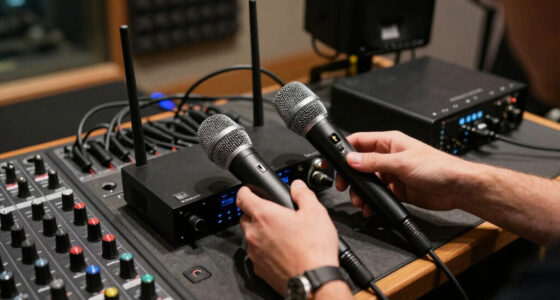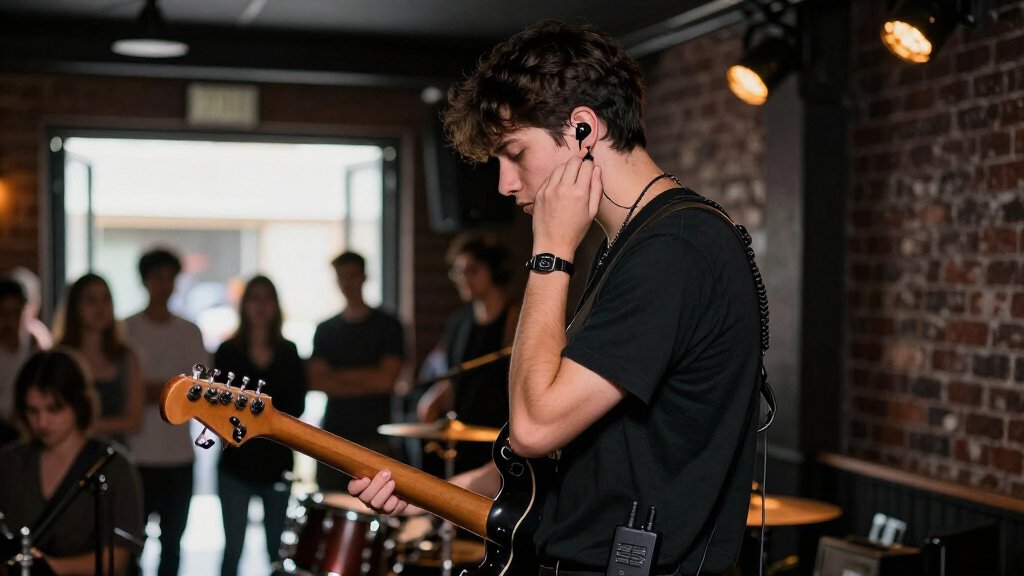

For most musicians seeking wireless in-ear monitors, I would start with the Xvive U45: its 5.8 GHz format and true-diversity versions in this lineup make it a strong option for performers who value a compact setup and wireless stability. The LEKATO MS-20 stands out when two performers need receivers from one transmitter, while the Phenyx Pro PTM-10 is worth comparing for a more traditional UHF rig. Your choice comes down to factors such as band congestion, how many listeners need the same mix, and whether you prefer a pocket-sized system or more extensive stage hardware. Each approach has limits, so I weigh setup, flexibility, and likely stage use rather than treating wireless range alone as decisive. Read on for the full breakdown and a guide to matching a system to your performance setup.

Get audio and creator gear delivered free with Prime
- Fast, free delivery on millions of items
- Prime Video, Amazon Music and more included
- Member-only deals all year
Complete the kit


Key Takeaways
- The Xvive U45 variants lead for compact stage use: the 5.8 GHz family is a clear fit for musicians who want a small transmitter-and-receiver arrangement, though exact versions and features should be checked before purchase.
- The LEKATO MS-20 separates itself through its two-receiver bundle: that can suit a duo sharing one monitor feed, but it does not replace independently mixed monitor channels.
- UHF models offer a different kind of flexibility: the Phenyx Pro PTM-10 and POGOLAB 7-channel system may suit setups that need channel selection, with more frequency planning than a simple plug-in rig.
- Several entries are close variants or repeated models: the two Xvive U4 listings and multiple U45 listings make exact model identification important; do not assume similarly named versions have identical specifications.
- Receiver count and mix control are separate needs: a system that sends one feed to two receivers can help a small group, while musicians needing individual mixes should prioritize a mixer and monitor-routing plan.
| JOYO JW-07 2.4GHz Wireless In-Ear Monitor System |  | Best for Long Rehearsals | Wireless frequency: 2.4 GHz | Audio resolution: 48 kHz/16-bit | Latency: Less than 5 ms | VIEW LATEST PRICE | See Our Full Breakdown |
| Xvive U45 5.8GHz Wireless In-Ear Monitor System |  | Best for Longer-Range Mobility | Wireless technology: 5.8 GHz | Wireless range: Up to 100 ft (30.48 m) | Latency: Less than 5 ms | VIEW LATEST PRICE | See Our Full Breakdown |
| LEKATO MS-20 Wireless In-Ear Monitor System with 1 Transmitter and 2 Receivers |  | Best for Shared Band Monitoring | Wireless frequency: 2.4 GHz | Included receivers: 2 | Receiver support: Up to 10 pairs | VIEW LATEST PRICE | See Our Full Breakdown |
| Xvive U4 Wireless In-Ear Monitor System |  | Best for Straightforward Live Setups | Wireless technology: 2.4 GHz | Working range: Over 90 ft (27 m) | Latency: Less than 5 ms | VIEW LATEST PRICE | See Our Full Breakdown |
| INPARTNER A88T 2.4 GHz Wireless In-Ear Monitor System |  | Best for Low-Latency Solo Monitoring | Wireless frequency: 2.4 GHz | Audio resolution: 48 kHz/16-bit | Latency: Less than 4 ms | VIEW LATEST PRICE | See Our Full Breakdown |
| Xvive U4 Wireless In-Ear Monitor System |  | Best for Simple, Low-Latency Setups | Wireless frequency: 2.4 GHz | Audio resolution: 24-bit/48 kHz | Latency: Less than 5 ms | VIEW LATEST PRICE | See Our Full Breakdown |
| POGOLAB Wireless In-Ear Monitor System with 7-Channel UHF |  | Best for Fast-Response UHF Monitoring | Wireless band: UHF | Selectable channels: 7 | Audio resolution: 48 kHz/24-bit | VIEW LATEST PRICE | See Our Full Breakdown |
| Xvive U45 5.8 GHz True Diversity Wireless In-Ear Monitor System |  | Best for RF Management | Wireless frequency: 5.8 GHz | Audio resolution: 24-bit/48 kHz | Latency: Less than 5 ms | VIEW LATEST PRICE | See Our Full Breakdown |
| LEKATO MS-02 Wireless In-Ear Monitor System |  | Best for Shared Monitoring and Longer Sessions | Wireless frequency: 2.4 GHz | Latency: Under 4.5 ms in mono mode | Audio sampling rate: 24-bit/48 kHz | VIEW LATEST PRICE | See Our Full Breakdown |
| Phenyx Pro PTM-10 UHF Wireless In-Ear Monitor System |  | Best for Adjustable Stereo Monitoring | Frequency band: 900 MHz | Selectable frequencies: 89 | Operating range: Up to 160 ft (50 m) | VIEW LATEST PRICE | See Our Full Breakdown |
| Xvive U45 Wireless In-Ear Monitor System |  | Best for Clearer Wireless Reception | Wireless frequency: 5.8 GHz | Audio resolution: 24-bit/48 kHz | Frequency response: 20 Hz–20 kHz | VIEW LATEST PRICE | See Our Full Breakdown |
| LEKATO MS-1 Wireless In-Ear Monitor System |  | Best for Shared Monitoring | Wireless frequency: 2.4 GHz | Audio transmission: Stereo or mono | Audio resolution: 24-bit/48 kHz | VIEW LATEST PRICE | See Our Full Breakdown |
| wireless in ear monitors for musician | Battery life | Latency | Wireless frequency | Audio resolution |
|---|---|---|---|---|
| JOYO JW-07 2.4GHz Wireless In- | Over 8 hours | Less than 5 ms | 2.4 GHz | 48 kHz/16-bit |
| Xvive U45 5.8GHz Wireless In-E | Up to 5 hours | Less than 5 ms | — | — |
| LEKATO MS-20 Wireless In-Ear M | Up to 30 hours with charging case | — | 2.4 GHz | — |
| Xvive U4 Wireless In-Ear Monit | Up to 5 hours | Less than 5 ms | — | — |
| INPARTNER A88T 2.4 GHz Wireles | Over 8 hours | Less than 4 ms | 2.4 GHz | 48 kHz/16-bit |
| Xvive U4 Wireless In-Ear Monit | Up to 5 hours | Less than 5 ms | 2.4 GHz | 24-bit/48 kHz |
| POGOLAB Wireless In-Ear Monito | Up to 5 hours | 1 ms | — | 48 kHz/24-bit |
| Xvive U45 5.8 GHz True Diversi | 5 hours | Less than 5 ms | 5.8 GHz | 24-bit/48 kHz |
| LEKATO MS-02 Wireless In-Ear M | Up to 6–8 hours | Under 4.5 ms in mono mode | 2.4 GHz | — |
| Phenyx Pro PTM-10 UHF Wireless | — | — | — | — |
| Xvive U45 Wireless In-Ear Moni | Up to 5 hours | — | 5.8 GHz | 24-bit/48 kHz |
| LEKATO MS-1 Wireless In-Ear Mo | More than 5 hours | Less than 12 ms | 2.4 GHz | 24-bit/48 kHz |
More Details on Our Top Picks
JOYO JW-07 2.4GHz Wireless In-Ear Monitor System
The JOYO JW-07 makes the most sense for guitarists who want a straightforward monitor link that can last through extended practice or a performance set. Its over-eight-hour battery life outlasts the Xvive U4 and U45, both rated for up to five hours, while latency under 5 ms keeps the monitor signal responsive. Frequency hopping and 12 channels across four groups offer flexibility when 2.4 GHz traffic is busy. The tradeoff is that its 40–60 ft open-space range is shorter than the stated range for the LEKATO MS-20 or Xvive U45. Also, one transmitter cannot feed multiple receivers, so it is a solo monitoring choice rather than a shared band system. I’d shortlist it for a player who values endurance over group capability or maximum range.
Pros:- Over eight hours of battery life suits extended sessions
- Latency under 5 ms supports responsive playing
- Frequency hopping helps manage interference
- 12 channels across four groups provide channel options
Cons:- One transmitter cannot connect to multiple receivers
- 40–60 ft range is specified for open space and is shorter than several alternatives
- Listed compatibility is focused on guitar
Best for: Guitarists and solo performers who need a low-latency wireless monitor for long practice sessions or sets.
Not ideal for: Bands that want one transmitter to serve multiple musicians, or performers who need a longer stated range than 40–60 feet.
- Wireless frequency:2.4 GHz
- Audio resolution:48 kHz/16-bit
- Latency:Less than 5 ms
- Operating range:40–60 ft in open space
- Battery life:Over 8 hours
- Channels:12 across 4 groups
- Item weight:62 g
- Warranty:One year
Our verdict“Choose the JOYO JW-07 for long solo sessions where battery life matters more than multi-musician sharing or extended range.”
Xvive U45 5.8GHz Wireless In-Ear Monitor System
The Xvive U45 suits performers who need to move farther from the transmitter without stepping up to a more complex system. Its 5.8 GHz link, automatic channel scanning, and stated range of up to 100 ft make it a more range-focused choice than the JOYO JW-07, whose listed open-space range is 40–60 ft. Latency under 5 ms also fits live monitoring, where a delayed signal can feel distracting. The main compromise is endurance: up to five hours is well below the JOYO’s over-eight-hour rating and the LEKATO MS-20’s case-assisted total. Charging also takes five hours, so frequent turnaround may be inconvenient. I’d favor this model for mobile performers with shorter sets who value scanning and reach more than all-day battery capacity.
Pros:- 5.8 GHz wireless technology with automatic channel scanning
- Stated range reaches up to 100 ft
- Latency is less than 5 ms
- Transmitter and receiver have rechargeable batteries
Cons:- Battery life is limited to up to five hours
- Five-hour charge time can make quick turnarounds difficult
- Its range advantage is stated rather than guaranteed for obstructed venues
Best for: Performers who move around a stage or rehearsal space and want automatic channel scanning with a stated range up to 100 feet.
Not ideal for: Musicians playing long sessions without a charging break; its battery is rated for up to five hours.
- Wireless technology:5.8 GHz
- Wireless range:Up to 100 ft (30.48 m)
- Latency:Less than 5 ms
- Battery life:Up to 5 hours
- Battery charge time:5 hours
- Connectivity:3.5 mm headphone jack
- Included items:Transmitter, receiver, USB Type-C charging cable, bag
- Item weight:0.38 kg
Our verdict“Pick the Xvive U45 when stage mobility and automatic scanning matter more than longer battery life.”
LEKATO MS-20 Wireless In-Ear Monitor System with 1 Transmitter and 2 Receivers
The LEKATO MS-20 is the clearest fit here for musicians who want more than one listener on a monitor feed: it includes two receivers and supports up to 10 receiver pairs. That makes it more adaptable for a band than the JOYO JW-07, which cannot connect one transmitter to multiple receivers. Its stated 150-foot open-area range and up to 30 hours of use with the charging case also favor extended, shared sessions over the five-hour Xvive U4. Mono/stereo switching and OTG connectivity add flexibility for different source setups. There are practical caveats: earphones are not included, so buyers must supply their own, and the 150-foot figure applies to open space. I’d choose it for group monitoring, not for someone seeking a ready-to-listen kit.
Pros:- Includes one transmitter and two receivers
- Supports up to 10 receiver pairs
- Charging case provides up to 30 hours of use
- Mono/stereo switching and OTG connectivity broaden setup options
Cons:- Earphones are not included
- 150 ft range is specified for open areas
- The included system is heavier than the JOYO JW-07 at 0.29 kg
Best for: Bands and rehearsal groups that want a single transmitter paired with multiple receivers and already have compatible earphones.
Not ideal for: Musicians who need earphones included or who depend on the stated 150-foot range in obstructed indoor spaces.
- Wireless frequency:2.4 GHz
- Included receivers:2
- Receiver support:Up to 10 pairs
- Maximum range:150 ft in open area
- Battery life:Up to 30 hours with charging case
- Audio:24-bit/48 kHz; 20 Hz–20 kHz; 100 dB SNR
- Modes:Mono and stereo
- Connectivity:OTG; Type-C charging
- Earphones:Not included
Our verdict“Choose the LEKATO MS-20 for shared band monitoring and long sessions, provided you already have earphones.”
Xvive U4 Wireless In-Ear Monitor System
The Xvive U4 is a practical pick for musicians who want a conventional transmitter-and-receiver setup with a useful stage range and minimal complexity. Its over-90-foot working range is a step up from the JOYO JW-07’s stated 40–60 feet, and latency under 5 ms keeps monitoring responsive. Six channels give performers options for coordinating with other wireless systems, while the included 1/4-inch-to-XLR adapter helps connect common audio outputs. Compared with the LEKATO MS-20, though, the U4 is less suited to sharing one feed across a group: the listed package includes one receiver, and its battery lasts up to five hours rather than offering the LEKATO’s case-assisted 30-hour figure. I’d pick it for a simple live rig, but not for long, uninterrupted sessions.
Pros:- Working range is over 90 ft
- Latency is less than 5 ms
- Six channels support channel selection
- Includes a 1/4-inch-to-XLR adapter and carrying bag
Cons:- Battery life is limited to up to five hours
- Package includes one receiver, unlike the LEKATO MS-20’s two
- Not water resistant
Best for: Solo performers who want a simple live monitor link, useful stage range, and an included 1/4-inch-to-XLR adapter.
Not ideal for: Musicians who need a long battery runtime, water resistance, or a multi-receiver package for group monitoring.
- Wireless technology:2.4 GHz
- Working range:Over 90 ft (27 m)
- Latency:Less than 5 ms
- Channels:6
- Battery life:Up to 5 hours
- Connectivity:3.5 mm headphone jack
- Enclosure material:Metal
- Water resistance:Not water resistant
- Included components:1 receiver, 1 transmitter, 1/4-inch-to-XLR adapter, carrying bag
Our verdict“Choose the Xvive U4 for a straightforward solo live setup, but look to the LEKATO MS-20 for shared monitoring or longer runtime.”
INPARTNER A88T 2.4 GHz Wireless In-Ear Monitor System
The INPARTNER A88T stands out for musicians who put tight timing and longer runtime ahead of group features. Its latency under 4 ms is the lowest stated figure in this batch, while over eight hours of battery life is a stronger fit for extended practice than the Xvive U4 or U45, both rated for up to five hours. Frequency hopping and 48 kHz/16-bit audio round out a specification set suited to responsive monitoring. Its open-space range is listed at 100 ft, longer than the JOYO JW-07’s 40–60 ft, though real-world obstructions can reduce reach. The rotating transmitter plug and simultaneous charging cable are useful setup details, but the provided data does not establish multi-receiver support. I’d treat it as a solo-focused alternative, not a shared band system.
Pros:- Latency is rated under 4 ms
- Over eight hours of battery life
- Frequency hopping helps reduce interference
- Charging cable can power transmitter and receiver simultaneously
Cons:- 100 ft range is specified for open space
- Multi-receiver support is not stated in the supplied product data
- The supplied details do not identify included earphones
Best for: Solo musicians who want very low stated latency, over eight hours of battery life, and a transmitter plug that can rotate to fit their setup.
Not ideal for: Bands seeking confirmed multi-receiver support or performers who need a guaranteed 100-foot range through venue obstructions.
- Wireless frequency:2.4 GHz
- Audio resolution:48 kHz/16-bit
- Latency:Less than 4 ms
- Operating range:100 ft (30 m) in open space
- Battery life:Over 8 hours
- Transmitter plug:270-degree rotating
- Charging cable:1-to-2 USB-C and USB-A
Our verdict“Choose the INPARTNER A88T for low-latency solo monitoring and longer sessions, rather than a setup that needs confirmed group sharing.”
Xvive U4 Wireless In-Ear Monitor System
The Xvive U4 is a straightforward choice for a musician who wants a compact wireless link from the mixer to a beltpack without a long setup process. Its under-5 ms latency keeps the monitor feed responsive, while six selectable channels offer some flexibility when sharing a stage. Compared with the Xvive U45, the U4 operates at 2.4 GHz and lacks the listed True Diversity reception and channel-scan features, so it is the more basic option for managing crowded RF conditions. Its metal enclosure is a welcome durability point, but the five-hour battery limit calls for charging between longer rehearsals or performances. Balanced XLR and unbalanced 1/4-inch inputs suit common mixer and instrument-output connections; musicians needing more than a simple personal monitor link may want a system with more receiver or RF-management options.
Pros:- Less than 5 ms latency for responsive live monitoring
- Six channels provide flexibility for small shared setups
- Metal enclosure is suited to regular transport and stage use
- Balanced XLR and unbalanced 1/4-inch TS inputs support common connections
Cons:- Up to five hours of battery life may not cover long sessions
- 2.4 GHz operation may be less appealing where that band is congested
- Lacks the U45’s stated True Diversity reception and channel scan
Best for: Solo performers and small bands who want a simple, low-latency beltpack system for rehearsals or sets that fit within its battery life.
Not ideal for: Musicians playing long events without charging access or working in crowded 2.4 GHz environments who want channel scanning or diversity reception.
- Wireless frequency:2.4 GHz
- Audio resolution:24-bit/48 kHz
- Latency:Less than 5 ms
- Channels:6
- Frequency response:20 Hz–20 kHz
- Battery life:Up to 5 hours
- Inputs:Balanced XLR or unbalanced 1/4-inch TS
- Enclosure material:Metal
Our verdict“Choose the U4 for a durable, uncomplicated monitor link when its five-hour runtime and basic 2.4 GHz feature set fit your gigs.”
POGOLAB Wireless In-Ear Monitor System with 7-Channel UHF
The POGOLAB MWB-1 is the speed-focused pick here: its listed 1 ms latency makes it a compelling fit for performers who are sensitive to delay in their monitor mix. Its seven selectable UHF channels also set it apart from the six-channel Xvive U4, while USB-C charging makes topping up the transmitter and receiver convenient. The tradeoff is that its stated 164-foot range depends on line of sight; stage obstacles can make that figure less useful in practice. Its frequency response is 35 Hz–16.5 kHz, narrower on paper than the U4’s 20 Hz–20 kHz specification. Five hours of operation is another limit for long sessions. This is a focused option for short-to-moderate gigs where low latency and UHF channel choice matter more than extended battery life or an expansive stated response range.
Pros:- Listed 1 ms latency supports responsive monitoring
- Seven selectable UHF channels offer more channel choices than the Xvive U4
- USB-C charging takes approximately two hours
- Balanced XLR and AUX/LINE inputs accommodate common audio sources
Cons:- Up to five hours of operation may require a mid-session recharge
- The stated 164-foot range requires line of sight
- 35 Hz–16.5 kHz listed frequency response is narrower than the Xvive U4’s
Best for: Performers who prioritize very low stated latency and want selectable UHF channels for rehearsal rooms or stages with a clear transmitter path.
Not ideal for: Musicians needing all-day battery runtime, a range that does not depend on line of sight, or a wider listed frequency response.
- Wireless band:UHF
- Selectable channels:7
- Audio resolution:48 kHz/24-bit
- Latency:1 ms
- Range:Up to 164 ft (50 m), line of sight
- Frequency response:35 Hz–16.5 kHz
- Battery life:Up to 5 hours
- Charging:USB-C; approximately 2 hours
Our verdict“Pick the POGOLAB MWB-1 when low stated latency and seven UHF channels outweigh its line-of-sight range and five-hour runtime limits.”
Xvive U45 5.8 GHz True Diversity Wireless In-Ear Monitor System
The Xvive U45 is the most RF-conscious pick in this group. Its 5.8 GHz True Diversity reception uses dual antennas, and the channel-scan feature helps find a usable channel before a performance. That gives it a practical advantage over the simpler Xvive U4, which runs at 2.4 GHz and does not list either feature. The U45 also supplies 24-bit/48 kHz audio, less than 5 ms latency, and a 20 Hz–20 kHz frequency response, making it a well-rounded fit for musicians who want their monitor system to offer more tools for managing reception. The limits are clear: it supports up to six channels, and its stated five-hour battery life is no improvement over the U4. Choose it for its reception features, not for a bigger multi-system setup or longer runtime.
Pros:- True Diversity reception with a dual-antenna receiver
- Channel scan helps locate a suitable RF channel
- 24-bit/48 kHz audio and less than 5 ms latency
- 20 Hz–20 kHz frequency response and 110 dB signal-to-noise ratio
Cons:- Maximum of six channels may constrain larger multi-system setups
- Five-hour listed battery life can limit long performances
- Adds RF-management features rather than extended runtime over the Xvive U4
Best for: Gigging musicians who want channel scanning and dual-antenna True Diversity reception in a personal monitor system.
Not ideal for: Large ensembles that need more than six channels or performers whose sets regularly exceed five hours without a charging break.
- Wireless frequency:5.8 GHz
- Audio resolution:24-bit/48 kHz
- Latency:Less than 5 ms
- Maximum channels:6
- Frequency response:20 Hz–20 kHz
- Signal-to-noise ratio:110 dB
- Battery life:5 hours
- Battery charge time:2 hours
Our verdict“Choose the U45 over the U4 when dual-antenna reception and channel scanning matter more than extra channels or longer battery life.”
LEKATO MS-02 Wireless In-Ear Monitor System
The LEKATO MS-02 suits musicians who want to share one transmitter across several listeners or avoid frequent charging. One transmitter can connect to up to four receiver pairs, and its stated six-to-eight-hour battery life exceeds the five-hour limits listed for the Xvive U4 and POGOLAB MWB-1. Mono and stereo modes add flexibility for different monitor workflows, while latency is listed below 4.5 ms in mono mode. Its 2.4 GHz band and range of up to 100 feet in open areas make placement relevant: walls and other obstacles may reduce the practical reach. Unlike the Phenyx Pro PTM-10, the MS-02 listing does not include earbuds, so musicians need compatible earphones already on hand. It is a strong fit for sharing a feed, but less turnkey for a first-time buyer.
Pros:- One transmitter supports up to four receiver pairs
- Up to 6–8 hours of battery life outlasts the five-hour Xvive U4 listing
- Mono and stereo modes suit different monitoring setups
- Under 4.5 ms latency in mono mode
Cons:- Earbuds are not included
- The stated 100-foot range applies to open areas
- 2.4 GHz operation may be a drawback in congested wireless environments
Best for: Small bands or rehearsal groups who want one transmitter to feed multiple receiver pairs and need more runtime than five-hour systems offer.
Not ideal for: First-time IEM buyers who need earbuds included, or performers who need reliable range through walls and obstacles.
- Wireless frequency:2.4 GHz
- Latency:Under 4.5 ms in mono mode
- Audio sampling rate:24-bit/48 kHz
- Wireless range:Up to 100 feet in open areas
- Battery life:Up to 6–8 hours
- Connection capacity:One transmitter to up to 4 receiver pairs
- Modes:Mono and stereo
- Earbuds:Not included
Our verdict“Choose the MS-02 for a shared monitor feed and longer listed runtime, provided you already have earbuds and can work within its open-area range.”
Phenyx Pro PTM-10 UHF Wireless In-Ear Monitor System
The Phenyx Pro PTM-10 is the most hands-on monitoring option in this batch. It combines stereo and mono modes with EQ, balance, limiter, and lock functions, giving performers more control over their listening setup than the simpler Xvive U4. Its 89 selectable frequencies in the 900 MHz band are intended to support operation of up to five systems, making it appealing for groups coordinating several monitor links. The package also includes earbuds, a rack-mount kit, and a carrying case, so it is more ready to set up as a rack-based rig than the LEKATO MS-02, which requires separately sourced earbuds. The tradeoff is that only one bodypack receiver is included, and the stated range is up to 160 feet. Choose it for adjustment options and included accessories, not for a multi-performer pack of receivers.
Pros:- Stereo and mono monitoring modes
- EQ, balance, limiter, and lock controls give performers mix and operation adjustments
- 89 selectable 900 MHz frequencies support operation of up to five systems
- Includes earbuds, rack-mount kit, and carrying case
Cons:- Only one bodypack receiver is included
- Operating range is listed at up to 160 feet
- The supplied accessories make it more complete, but a multi-receiver band setup requires additional packs
Best for: Performers and small production teams who want adjustable mono or stereo monitoring, rack mounting, and included earbuds in one package.
Not ideal for: Bands needing multiple bodypack receivers in the box or musicians who prioritize a longer stated range than 160 feet.
- Frequency band:900 MHz
- Selectable frequencies:89
- Operating range:Up to 160 ft (50 m)
- Monitoring modes:Stereo and mono
- Inputs:XLR and 6.3 mm hybrid
- Included components:Transmitter, bodypack receiver, earbuds, power adapter, 2 AA batteries, antenna, rack-mount kit, user manual, carrying case
- Warranty:12 months
Our verdict“Choose the PTM-10 for adjustable stereo or mono monitoring and a rack-ready package, but plan for extra receivers if several musicians need separate packs.”
Xvive U45 Wireless In-Ear Monitor System
The Xvive U45 suits musicians who want wireless channel management alongside detailed audio. Its 5.8 GHz true diversity reception and channel scanning can help locate a clearer channel, a useful distinction from the LEKATO MS-1, which favors automatic pairing and support for multiple receivers. The U45’s 24-bit/48 kHz audio and 5 ms latency offer a responsive monitoring feed, while its stated range reaches up to 100 feet. The tradeoff is hands-on setup: after scanning, you must manually match the transmitter channel. Its battery lasts up to five hours, so it may not cover a long event without a recharge. I’d choose it for a performer prioritizing reception tools over the MS-1’s shared-transmitter flexibility.
Pros:- True diversity reception with channel scanning to help find a clear channel
- 24-bit/48 kHz audio with a 110 dB signal-to-noise ratio
- Up to 100 ft (30.5 m) stated wireless range
- USB-C charging and a stated recharge time of two hours
Cons:- Up to five hours of battery life may not cover a long performance
- Requires manually matching the transmitter channel after scanning
Best for: Solo performers and small acts who want channel scanning and true diversity reception for rehearsals or shorter sets.
Not ideal for: Musicians playing long events without charging breaks, or groups that need one transmitter to serve several receivers.
- Wireless frequency:5.8 GHz
- Audio resolution:24-bit/48 kHz
- Frequency response:20 Hz–20 kHz
- Wireless range:Up to 100 ft (30.5 m)
- Audio latency:5 ms
- Signal-to-noise ratio:110 dB
- Battery life:Up to 5 hours
- Charging:USB-C; approximately 2 hours
Our verdict“Choose the U45 if reception tools and low stated latency matter more than automatic pairing or multi-receiver support.”
LEKATO MS-1 Wireless In-Ear Monitor System
The LEKATO MS-1 is the more group-friendly choice here: one transmitter can support up to six receivers, so bandmates can monitor from the same feed without needing a separate transmitter for each person. Automatic pairing and stereo or mono transmission also make it less fiddly to set up than the Xvive U45, which requires manual channel matching after scanning. The MS-1 provides 24-bit/48 kHz audio and more than five hours of stated battery life, giving it a modest runtime advantage over the U45. Its limits matter, though: the 100-foot range is specified for open areas, latency is listed as less than 12 ms rather than the U45’s 5 ms, and stereo requires a stereo source and cable. I’d favor it for shared rehearsal monitoring, not for buyers who need the lowest listed latency.
Pros:- One transmitter supports up to six receivers
- Stereo and mono transmission options
- Automatic pairing simplifies setup
- More than five hours of stated battery life
Cons:- Up to 100 feet of range is specified for open areas
- Latency is listed as less than 12 ms, higher than the Xvive U45’s stated 5 ms
- Stereo operation requires a stereo audio source and cable
Best for: Bands and rehearsal groups that want to feed up to six musicians from one transmitter and value automatic pairing.
Not ideal for: Performers who need the lowest stated latency, or players who cannot provide a stereo source and cable for stereo monitoring.
- Wireless frequency:2.4 GHz
- Audio transmission:Stereo or mono
- Audio resolution:24-bit/48 kHz
- Latency:Less than 12 ms
- Frequency response:20 Hz–20 kHz
- Wireless range:Up to 100 feet in open areas
- Receiver support:Up to 6 receivers per transmitter
- Battery life:More than 5 hours
Our verdict“Pick the MS-1 for a shared band monitoring feed and easy pairing, but choose the Xvive U45 if its lower stated latency is the priority.”
How We Picked
I ranked these systems around the needs that shape a musician’s stage experience: wireless format and channel options, transmitter-to-receiver setup, receiver count, portability, and the practical complexity of setup. I also considered whether a system appears better suited to a simple personal monitor feed or to a more involved band rig. Since wireless performance depends on venue conditions, frequency congestion, and placement, I avoid treating a stated range or frequency band as a guarantee of reliable results in every room.
The order favors systems with a clear role and a plausible fit for common live setups, not a claim that one product will suit every stage. The Xvive U45 earns the lead for its compact 5.8 GHz approach; the LEKATO MS-20 follows for its useful two-receiver bundle; and UHF options rank as alternatives for musicians who value channel selection over the simplest setup. Similar names and duplicate listings are treated cautiously: buyers should verify the precise version, included receivers, connectors, and controls before choosing.
Factors to Consider When Choosing Wireless In Ear Monitors For Musicians
Before choosing a transmitter and receiver, I would map the system to the whole monitor chain: the mix source, the number of people listening, the stage environment, and the way each musician wants to control their sound. These decisions matter as much as the wireless band, and they can prevent buying a system that works technically but does not match the band’s monitoring needs.
Match the Wireless Band to Your Venue
Wireless bands behave differently around other equipment, but neither 2.4 GHz, 5.8 GHz, nor UHF guarantees a clean signal in every venue. Busy rooms, nearby wireless devices, walls, and transmitter placement all affect results. Before a show, scan or test the system in the actual performance space when its controls allow it, and keep the transmitter clear of obstructions. A common mistake is to choose by advertised range alone; a clear signal path and sensible frequency planning can matter more. If you play in different rooms often, favor a setup you can check and adjust quickly. If the system offers limited channel choice, have a backup plan for interference rather than assuming the band will stay clear.
Decide Whether One Shared Mix Is Enough
A transmitter feeding multiple receivers can let two performers hear the same monitor signal, which is useful for a small act or a shared cue feed. It does not automatically give each receiver a separate mix, independent volume from the console, or different instrument balance. Before buying, decide who needs to hear what and ask the sound engineer how many monitor sends the mixer can provide. If every band member wants a personal balance, the limiting factor may be the mixer and its outputs, not the wireless hardware. A shared feed is often a sensible starting point for a duo, but it can frustrate a full band with different vocal and instrument priorities. Count both receivers and mix channels when comparing bundles.
Plan the Full Signal Chain Before the Gig
Wireless in-ear systems carry a signal from a mixer, instrument setup, or other audio source to the receiver; they do not create a monitor mix by themselves. Check what output the transmitter accepts and whether the source is balanced, stereo, or mono. A cable that fits physically may still give the wrong level or channel behavior, so confirm connector type and the source’s output specifications. Musicians who rely on stereo panning should verify that the chosen system supports their intended routing rather than assuming every compact system does. Also plan where the transmitter will sit and how it will receive power during a set. Testing the entire chain at rehearsal is more useful than checking only whether the units pair.
Treat Fit, Isolation, and Hearing Safety as Part of the System
The wireless kit is only one part of what reaches your ears; earphones, ear tips, and fit shape isolation and perceived clarity. A poor seal can make a monitor sound thin and tempt a performer to raise the volume, while excessive isolation can make it harder to hear the room or communicate between songs. Try suitable tips, check that cables or earpieces stay secure during movement, and set a conservative listening level before performance. Do not assume a monitor system includes earphones that fit your ears or meet your needs. If you need ambient awareness, plan for that deliberately rather than relying on a loose fit. Comfort and safe level habits can matter more over a long set than a small feature difference between transmitters.
Choose Between Pocket-Sized Convenience and Rack-Style Control
Compact systems can reduce setup time and make sense for musicians who want a lightweight personal rig. Larger UHF-oriented systems may offer more channel management or suit a fixed stage installation, but they can bring extra setup steps, cabling, and space requirements. Neither form is automatically more reliable; the best match depends on how often you move the rig and how much control you need. For a singer who carries their own monitor kit between rehearsals, portability may outweigh additional controls. A venue-based band with multiple wireless systems may value coordination options more. Compare the entire setup burden, including power, cables, storage, and soundcheck time, not just the transmitter’s size.
Frequently Asked Questions
Can two musicians use the same transmitter and still hear different mixes?
Usually, a transmitter sending one monitor feed gives its receivers the same mix; separate receiver units do not automatically mean separate mixes. The LEKATO MS-20 bundle, for example, is notable for including two receivers, but buyers should confirm how its controls work and what signal each receiver gets. Independent mixes generally require separate mixer outputs or monitor sends and a system that supports those feeds. Ask the sound engineer how many monitor mixes the console can provide before selecting a multi-receiver bundle. If one shared balance is acceptable, a shared feed can simplify a small setup.
Should I choose 2.4 GHz, 5.8 GHz, or UHF for live gigs?
There is no band that is best in every venue because nearby wireless equipment, obstacles, and channel availability affect performance. A 2.4 GHz system may be convenient but can share spectrum with common devices; 5.8 GHz and UHF have their own venue-dependent constraints. UHF options with selectable channels can be useful when frequency planning matters, while compact 5.8 GHz systems may appeal when a straightforward setup is the priority. Check the exact channel features and local operating requirements, then test the system in the rooms where you perform. Avoid choosing on frequency label alone.
Will a wireless in-ear monitor system work without a mixer?
A system still needs an audio source, such as a mixer output, compatible instrument signal, or another source with the right level and connection. The transmitter sends that source to a bodypack receiver; it does not usually build a custom band mix. Direct connection may work for a simple practice or instrument-monitoring arrangement, but it can leave you without control over vocals and other musicians. Check connector compatibility and whether the input expects line, headphone, or another signal level. For live band use, confirm the routing plan with whoever manages the stage sound.
How can I tell whether a system will give me a reliable signal on stage?
Manufacturer range figures are not a dependable promise for every venue, since walls, antenna placement, people, and competing signals change the result. Look for practical channel or frequency controls, and check whether the system’s format suits the other wireless gear in your setup. Keep the transmitter in a clear position, avoid covering antennas, and test while moving through the performance area. Have a wired backup or another fallback for important shows, especially if you cannot scan the venue beforehand. A short rehearsal test in the actual room can reveal problems that a specification sheet cannot.
Are the similarly named Xvive U4 and U45 listings interchangeable?
No; similar product names do not prove that the wireless band, controls, or included parts are identical. This roundup includes multiple U4 and U45 listings, including U45 descriptions that specify true diversity, so compare the exact model identifier and package contents. Check the transmitter and receiver count, connectors, charging or power method, and any channel-selection features on the seller’s listing. Do not rely on a family name or product photo alone when replacing a unit or adding receivers. If you need compatibility with gear you already own, confirm it with the manufacturer’s documentation before ordering.
Conclusion
For a compact all-around choice, I would start with the Xvive U45, while checking the exact version and its features. The LEKATO MS-20 is my best-value fit for musicians who can use one shared feed across two receivers; it is not the answer for independently mixed monitor signals. For a more involved rig where channel selection matters, compare the Phenyx Pro PTM-10 as the premium-style pick, and weigh its added setup needs against your venue routine. Beginners who want a straightforward personal-monitor arrangement may prefer a compact system such as the JOYO JW-07 or an Xvive option, provided its connectors and controls suit their source. For a specific need—two listeners sharing a feed, favor the MS-20; for a channel-selectable UHF setup, examine the POGOLAB or Phenyx Pro; and for the smallest, simplest rig, compare the U45 variants. My final advice is to choose by mix plan and exact package contents first, then by wireless band.
Halloween Picks
halloween
As an affiliate, we earn on qualifying purchases.