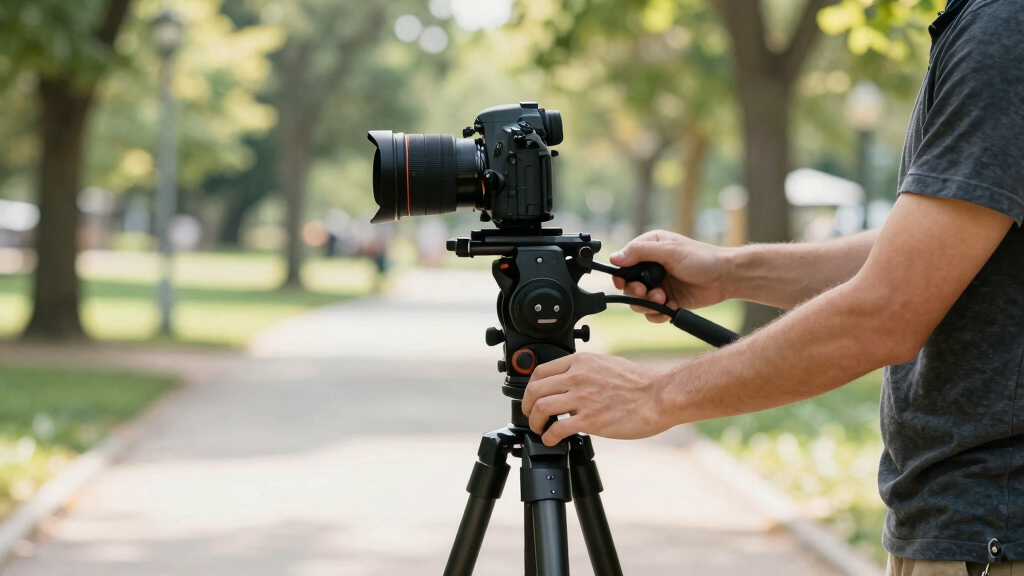
If you’re shopping for the best fluid heads for video tripods, the short answer is the Manfrotto XPRO Fluid Head (MHXPRO-2W) — its fluidity selector gives you two genuinely different drag feels for pans and tilts, which no other head in this lineup offers. Travelers should look at the Manfrotto MVH400AHUS Be Free Live, which packs real fluid damping into a head that disappears into a carry-on, and the SmallRig DH10 stands out as the value pick, supporting rigs up to 22 lbs for far less than comparable video heads. The core tradeoff in this category is weight versus control: heavier heads damp better and carry more, while compact heads travel easily but give up drag adjustments and payload. I compared all seven heads across payload, drag quality, plate systems, and price to sort out which one fits which shooter. Read on for the full ranking, a buying guide, and answers to the questions buyers actually ask.

Get audio and creator gear delivered free with Prime
- Fast, free delivery on millions of items
- Prime Video, Amazon Music and more included
- Member-only deals all year
Complete the kit


Key Takeaways
- The Manfrotto XPRO MHXPRO-2W takes the top spot because its fluidity selector offers two distinct drag settings — every other head here locks you into one fixed resistance feel.
- Manfrotto fills six of the seven slots, and the SmallRig DH10 is the only outside challenger — it wins on payload-per-dollar with a 22 lb rating no Manfrotto in this group matches.
- Travel picks like the Be Free Live and Befree 3-Way Live cut weight by using fixed drag and smaller plates, which suits mirrorless rigs but limits heavier camcorders and long lenses.
- Plate compatibility emerged as a hidden cost: Manfrotto alone uses RC2, 200PL, and 501-style plates across these heads, and none of them interchange, so mixing heads across a kit means re-plating cameras.
- The budget Manfrotto 128RC Micro proves beginners can get usable pans for little money, but its modest payload ceiling caps how far a growing rig can go before an upgrade is forced.
| Manfrotto 502 Video Head with Flat Base |  | Best Overall | Brand: Manfrotto | Model: 502 (flat base) | Maximum capacity: 10 kg (22 lb) | VIEW LATEST PRICE | See Our Full Breakdown |
| Manfrotto MHXPRO-2W XPRO Fluid Head with Fluidity Selector (Black) |  | Best Value Pick | Brand: Manfrotto | Model: MHXPRO-2W XPRO | Color: Black | VIEW LATEST PRICE | See Our Full Breakdown |
| Manfrotto XPRO Fluid Head with Fluidity Selector (MHXPRO-2W) |  | Best for Hybrid Video and Scope Use | Brand: Manfrotto | Model: MHXPRO-2W XPRO | Head type: Fluid video head | VIEW LATEST PRICE | See Our Full Breakdown |
| Manfrotto 128RC Micro Fluid Head with 200PL 14 RC2 Plate |  | Best for Beginners | Brand: Manfrotto | Model: 128RC Micro | Head type: Micro fluid head | VIEW LATEST PRICE | See Our Full Breakdown |
| Manfrotto MVH400AHUS Be Free Live Fluid Video Head |  | Best for Travel | Brand: Manfrotto | Model: MVH400AHUS Be Free Live | Supports weight: 4 kg (8.8 lb) | VIEW LATEST PRICE | See Our Full Breakdown |
| Manfrotto Befree 3-Way Live Camera Tripod Head |  | Best for Hybrid Photo and Video Shooters | Material: Aluminum | Payload capacity: 6 kg (13.2 lbs) | Head type: 3-way with fluid drag system | VIEW LATEST PRICE | See Our Full Breakdown |
| SmallRig DH10 Heavy Duty Tripod Fluid Video Head |  | Best Heavy-Duty Pick on a Budget | Model number: 4165-CF-FBA-US | Maximum load: 22 lbs (10 kg) | Weight: 2.79 lbs | VIEW LATEST PRICE | See Our Full Breakdown |
| fluid heads for video tripod | Brand | Model |
|---|---|---|
| Manfrotto 502 Video Head with | Manfrotto | 502 (flat base) |
| Manfrotto MHXPRO-2W XPRO Fluid | Manfrotto | MHXPRO-2W XPRO |
| Manfrotto XPRO Fluid Head with | Manfrotto | MHXPRO-2W XPRO |
| Manfrotto 128RC Micro Fluid He | Manfrotto | 128RC Micro |
| Manfrotto MVH400AHUS Be Free L | Manfrotto | MVH400AHUS Be Free Live |
| Manfrotto Befree 3-Way Live Ca | — | — |
| SmallRig DH10 Heavy Duty Tripo | — | — |
More Details on Our Top Picks
Manfrotto 502 Video Head with Flat Base
The Manfrotto 502 earns the top spot because it does the most for the most shooters. Its 10kg (22 lb) capacity nearly triples what the Be Free Live handles and more than doubles the XPRO’s 8.8 lb ceiling, so a caged mirrorless rig or a fully kitted DSLR won’t strain it. Variable fluid drag on pan and tilt gives finer control over move resistance than the fixed-feel drag of the 128RC, which matters when you want slow, deliberate pans without stick-slip at the start. The tradeoff is size and weight: compared with the travel-friendly Be Free Live, this head is a shoulder commitment, and the flat base means you may want a leveling adapter on non-bowl tripods. If you shoot one camera in one place most days, that bulk is the price of genuinely professional damping.
Pros:- 10kg payload handles fully rigged cameras the other heads here can’t
- Variable fluid drag on both pan and tilt for precise, repeatable moves
- Flat base mounts on tripods, sliders, and monopods without adapters
- Works across DSLR, mirrorless, and compact video cameras
Cons:- Heavy and bulky — a poor match for lightweight travel tripods
- Flat base is slow to level without a bowl adapter or leveling base
- Costs and weighs more than a lightweight setup justifies
Best for: Videographers running rigged DSLRs or mirrorless cameras who need one head that covers studio, event, and location work without hitting a payload wall
Not ideal for: Travel shooters and vloggers — it’s the heaviest option in this lineup and overkill for a bare mirrorless body
- Brand:Manfrotto
- Model:502 (flat base)
- Maximum capacity:10 kg (22 lb)
- Base type:Flat base
- Fluid system:Variable fluid drag on pan and tilt
- Camera compatibility:DSLR, mirrorless, and compact video cameras
- Build:Robust, professional-grade construction
Our verdict“If you want one fluid head that won’t become the limiting factor as your rig grows, this is the one to buy.”
Manfrotto MHXPRO-2W XPRO Fluid Head with Fluidity Selector (Black)
This listing of the XPRO MHXPRO-2W is the same head as the standard XPRO above, but it ships with two replacement quick release plates — and spare plates are the thing you end up buying anyway, so bundling them is real money saved. Against the 502, you give up the wider capacity (8.8 lb versus 22 lb) and the finer drag tuning, but you keep the adjustable fluidity selector, which lets you firm up or loosen resistance instead of living with one factory feel. That makes it a smarter buy than the 128RC for anyone past the beginner stage: similar money, more control, and a more modern plate system. The catch is the ceiling. Heavier cinema cameras are out, and Manfrotto doesn’t spell out base compatibility here, so double-check your tripod’s fitting before ordering.
Pros:- Fluidity selector lets you tune drag instead of accepting one preset
- Two spare quick release plates included — a genuine cost saving
- Compact 3.9 in. height keeps the setup low and stable
- Doubles for video shooting and spotting scopes
Cons:- 8.8 lb ceiling rules out heavier cinema-style rigs
- Tripod and base compatibility isn’t stated in the listing
- Same hardware as the standard XPRO listing, so price-shop between them
Best for: Budget-conscious shooters stepping up from a first head who want adjustable drag control without paying 502 money
Not ideal for: Anyone running rigs over 8.8 lb — the 502 or SmallRig DH10 are safer picks for heavy setups
- Brand:Manfrotto
- Model:MHXPRO-2W XPRO
- Color:Black
- Load capacity:8.8 lb
- Height:3.9 in.
- Drag control:Adjustable fluidity selector
- Included:Two replacement ZAYKIR quick release plates
- Suited for:Video shooting and spotting scopes
Our verdict“The sweet spot of the lineup — adjustable drag and bundled plates make it the best dollar-for-feature deal here.”
Manfrotto XPRO Fluid Head with Fluidity Selector (MHXPRO-2W)
The XPRO’s fluidity selector is the reason to pick it over the 128RC: instead of a single preset drag, you can dial resistance up for slow, controlled pans or down for quick repositioning. That adjustability also explains its odd double life — it’s rated for video shooting and spotting scopes alike, something neither the 502 nor the Be Free Live claims. For a birder who also films, or a photographer who shoots occasional clips, one head covering both jobs saves real money. Where it loses ground is at the extremes: the 128RC is cheaper and simpler for pure beginners, while the 502 carries far more weight. This listing also arrives with no published price or rating data, so I’d confirm you’re not paying more than the plate-bundled MHXPRO-2W version for the same hardware.
Pros:- Fluidity selector gives real control over pan resistance
- Rated for both video cameras and spotting scopes — rare versatility
- More refined control than the fixed-drag 128RC
- Pro-level stability in a mid-size body
Cons:- No price or customer rating data attached to this listing
- Sparse published specifications make comparison shopping harder
- The plate-bundled MHXPRO-2W version may offer more for the same money
Best for: Hybrid users who split time between filming video and glassing with a spotting scope and want one adjustable head for both
Not ideal for: Buyers who like spec sheets — this listing is thin on published details, and dedicated video shooters get more headroom from the 502
- Brand:Manfrotto
- Model:MHXPRO-2W XPRO
- Head type:Fluid video head
- Drag control:Adjustable fluidity selector
- Load capacity:8.8 lb (per model specification)
- Plate system:200PL quick release
- Recommended use:Video shooting and spotting scopes
Our verdict“Buy this if spotting-scope work is genuinely part of your routine; pure video shooters should look at the 502 or the value XPRO listing instead.”
Manfrotto 128RC Micro Fluid Head with 200PL 14 RC2 Plate
The 128RC Micro is the head I’d hand someone buying their first video setup. There’s no fluidity selector to fiddle with and no counterbalance to set — the quick release plate snaps in, and the drag is what it is, which is exactly what a beginner needs. It’s also reversible for left- or right-handed use, a small thing the XPRO and 502 listings don’t mention, and genuinely helpful for lefties stuck adapting to right-handed gear. Compared with the XPRO, you trade adjustable drag for simplicity and a lower price; compared with the 502, you give up the ability to grow into heavier rigs, since 8 lb is the hard ceiling. Treat it as a starter head with a clear upgrade path, not a forever head, and it makes complete sense.
Pros:- Dead-simple setup — no drag or counterbalance settings to learn
- Quick release plate makes camera swaps fast
- Adjustable for left- or right-handed operation
- Cheapest genuine fluid head in the lineup
Cons:- 8 lb payload ceiling limits future gear upgrades
- No adjustable fluidity — you get one drag feel, take it or leave it
- Requires RC2-compatible plates for mounting
Best for: First-time video shooters with a lightweight DSLR or mirrorless camera who want smooth pans without learning drag settings
Not ideal for: Left-handed… nobody, actually — but anyone planning to add cages, monitors, or long lenses will outgrow the 8 lb limit fast
- Brand:Manfrotto
- Model:128RC Micro
- Head type:Micro fluid head
- Supports weight:Up to 8 lb
- Connector plate:200PL 14 RC2 Rapid Connector
- Handedness:Adjustable for left or right-handed operation
- Use case:Photography and videography
Our verdict“The right first fluid head: simple, affordable, and easy to outgrow gracefully.”
Manfrotto MVH400AHUS Be Free Live Fluid Video Head
Every other head here asks you to carry more than you need on a trip. The Be Free Live is built around the opposite idea: a compact fluid head with a removable pan bar and a sliding 501PL plate, sized to fold into a Be Free tripod and disappear into a carry-on. The Fluid Drag System keeps pans watchable rather than jerky, which is the whole point over a photo ball head for travel vlogging. The compromise is spelled out in the payload: 4 kg is the limit, roughly half what the 128RC accepts, so anything beyond a mirrorless body with a modest lens is pushing it. Against the SmallRig DH10’s 22 lb capacity, this is the light-and-small end of the roundup — buy it for the bag it fits in, not the rig it can hold.
Pros:- Lightweight, compact build made for carry-on travel
- Removable pan bar packs flat in a bag
- Fluid Drag System keeps travel footage smooth
- Sliding 501PL plate speeds up camera balancing
Cons:- 4 kg payload is the lowest in the lineup
- Best compatibility is limited to Be Free family tripods
- Small 40mm base feels less planted with longer lenses
Best for: Travel vloggers and run-and-gun shooters pairing a mirrorless camera with a Be Free tripod who count every gram
Not ideal for: Anyone with long telephoto lenses or accessorized rigs — the 4 kg limit and small base make the 502 a far steadier choice
- Brand:Manfrotto
- Model:MVH400AHUS Be Free Live
- Supports weight:4 kg (8.8 lb)
- Compatibility:Be Free family tripods
- Base disk diameter:40 mm
- Plate:501PL sliding plate
- Mounting screw:1/4 in. with 3/8 in. adapter
- Included:Removable pan bar
Our verdict“The head to buy when portability is the priority and your camera rig stays light.”
Manfrotto Befree 3-Way Live Camera Tripod Head
Most heads in this roundup ask you to pick a side: video or photo. The Befree 3-Way Live is the one I would point hybrid creators toward because it refuses that split. Its three-way design gives you the framing precision stills shooters expect, while the fluid drag system on the pan and tilt axes delivers moves smooth enough for vlogging and B-roll. Compared with the Manfrotto MVH400AHUS Be Free Live, which is video-only with a single handle, this model adds a quick switch to vertical shooting and dual plate compatibility (Arca-Swiss and Manfrotto 501PL). The tradeoff is payload: at 6kg it tops out well below the SmallRig DH10’s 22 lbs, so cinema rigs and long telephoto lenses are off the table. Foldable handles keep it genuinely packable, though you pay for that versatility with a slightly busier control layout than a dedicated video head.
Pros:- Three-way head with fluid drag covers both photography and video work
- Foldable handles make it one of the most packable options in the lineup
- Accepts both Arca-Swiss and Manfrotto 501PL plates
- Quick vertical setup suits social and vlogging content
Cons:- 6kg payload limits it to mirrorless and light DSLR setups
- Three-axis controls are slower to reposition than a dedicated video head
- Some setups need extra accessories to reach full functionality
Best for: Travel creators who shoot both stills and video on one tripod and want precise three-way framing without carrying two heads
Not ideal for: Video-only shooters running rigs over 13 lbs — the payload ceiling and three-way layout make the SmallRig DH10 a better fit
- Material:Aluminum
- Payload capacity:6 kg (13.2 lbs)
- Head type:3-way with fluid drag system
- Plate compatibility:Arca-Swiss and Manfrotto 501PL
- Handles:Foldable for travel
- Leveling:Built-in bubble levels
- Special feature:Quick setup for vertical shooting
Our verdict“The pick for hybrid shooters who want one compact head for photos and smooth video, as long as their rig stays light.”
SmallRig DH10 Heavy Duty Tripod Fluid Video Head
Payload is where the SmallRig DH10 separates itself from everything else on this list. At 22 lbs of supported load, it handles rigs that would overwhelm the Manfrotto Befree 3-Way Live’s 6kg ceiling or the tiny Manfrotto 128RC, yet it costs a fraction of what comparable Manfrotto heads run. The step-less adjustable damping is the real story: instead of fixed drag presets, you dial in exactly the resistance your pan needs, which matters when a lens change shifts your rig’s balance. I also like the telescopic handle that extends from 9 to 14 inches for extra leverage on heavier setups. The compromises are compatibility quirks — it won’t accept SmallRig’s own Manfrotto-type 3912 quick-release plate — and a 2.79 lb body that adds real weight to a travel kit. This model is better suited to a dedicated video tripod than a run-and-gun bag.
Pros:- 22 lb payload handles pro DSLRs and small cinema cameras
- Step-less adjustable damping gives precise, repeatable pan resistance
- Quick-release plate works with Manfrotto and DJI stabilizer ecosystems
- Telescopic removable handle aids leverage and compact storage
Cons:- Incompatible with SmallRig’s Manfrotto-type 3912 quick-release plate
- At 2.79 lbs it is heavy for handheld or travel use
- Flat-base design may need an adapter on some bowl tripods
Best for: Budget-conscious videographers mounting heavier mirrorless, DSLR, or small cinema rigs who want adjustable drag without spending Manfrotto money
Not ideal for: Travel shooters counting ounces, or anyone already invested in SmallRig’s Manfrotto-type 3912 quick-release plates
- Model number:4165-CF-FBA-US
- Maximum load:22 lbs (10 kg)
- Weight:2.79 lbs
- Height:5.51 inches
- Base diameter:2.95 inches (flat base)
- Handle length:9.05–14.17 inches (telescopic, removable)
- Mounting thread:1/4″-20
- Damping:Adjustable step-less fluid damping
Our verdict“The sensible choice when you need serious payload and adjustable fluid drag at a price the Manfrotto options can’t match.”
How We Picked
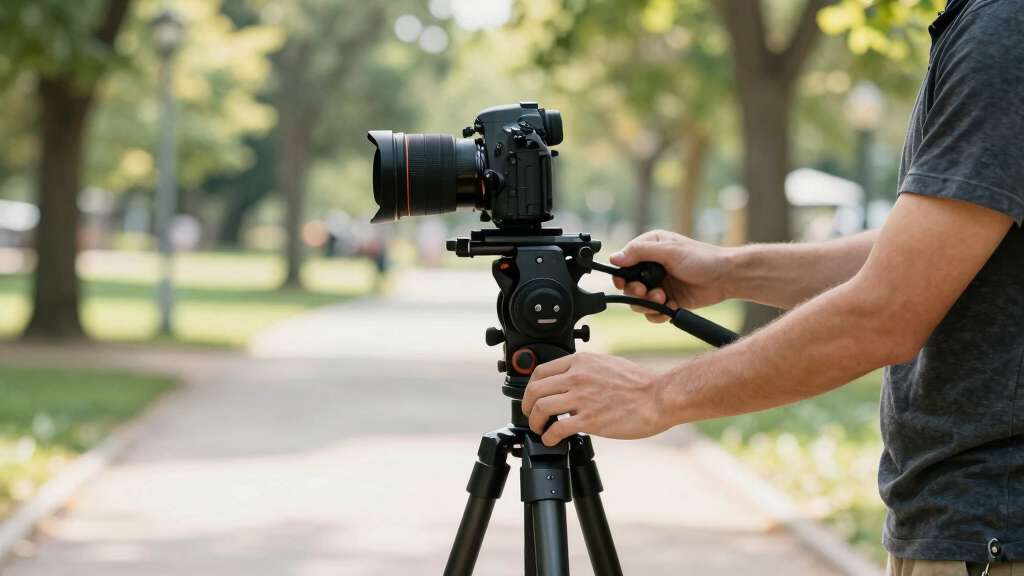
I ranked these seven heads on the factors that decide whether a fluid head actually earns its place on your tripod: payload capacity relative to the rigs each head realistically targets, drag quality and adjustability, build materials, quick-release plate ecosystem, weight and packability, and price. Drag behavior carried the most weight in the ordering, because smooth, repeatable pans are the entire reason to buy a fluid head over a photo head. Payload headroom came second — a head running near its limit pans worse than one working comfortably inside it.
The ranking rewards heads that serve a clearly defined buyer well rather than heads that chase every spec at once. That’s why the Manfrotto XPRO MHXPRO-2W leads: its fluidity selector is the only control in this group that meaningfully changes drag feel, and its payload covers everything from mirrorless hybrids to mid-size camcorders. Budget and travel options are ranked on how little they sacrifice to earn their price or size advantage — not on raw spec totals, which would punish them for doing exactly what they were built to do.
Factors to Consider When Choosing Best Fluid Heads For Video Tripods
Spec sheets on fluid heads only tell half the story. These five factors explain what the numbers mean for your footage, your tripod, and your wallet — including the mistakes buyers most often make in this category and the points where spending more genuinely changes what you can shoot.
Match Payload to Your Whole Rig, Not Just the Camera
Payload ratings describe the total weight the head can damp and hold steady, and everything counts — camera body, lens, cage, microphone, monitor, and rails. A mirrorless body that weighs 1.5 lbs can easily become a 6 lb rig once dressed for video, and a head rated for exactly 6 lbs will feel strained at that ceiling. I recommend keeping your fully dressed rig at 50 to 70 percent of the rated payload so the fluid cartridge has room to work. Running near the limit shows up as stiction at the start of a pan and bounce-back at the end. This is why the SmallRig DH10’s 22 lb rating matters even for lighter setups — the headroom keeps drag consistent across the whole movement. The classic mistake is shopping by camera weight alone and ending up with a head that pans fine on day one and chatters once the rig is fully built out.
Fixed Drag vs Adjustable Drag
Every head in this roundup uses fluid cartridges to resist movement, but they split into two camps: fixed drag and selectable drag. Fixed-drag heads, which include the budget and travel options here, are tuned for a middle-of-the-road resistance that suits most mirrorless rigs, and that’s perfectly acceptable when your shooting style stays consistent. Selectable systems like the XPRO’s fluidity selector let you stiffen resistance for long lenses or loosen it for fast whip pans. Pay for adjustability if you swap between lenses of very different sizes or shoot both slow interviews and quick follow shots in the same week. If your kit and subjects stay stable, fixed drag saves money and weight without costing you footage quality. Buyers often overpay here — adjustable drag is a real feature, but only if your work actually varies enough to use it.
Base Type and Tripod Compatibility
Fluid heads come in flat-base and bowl-mount designs, and buying the wrong one for your legs is the most expensive mistake in this category. Flat-base heads thread onto any standard 3/8-inch tripod stud, including most photo tripods, but you level them by adjusting the legs, which gets old fast on uneven ground. Bowl-mount heads sit in a half-ball and level with a quick twist, which is why run-and-gun shooters prefer them. Every head in this lineup uses a flat base, which makes them friendly to the photo tripod you may already own. Before buying, check your tripod’s mounting stud and its own weight rating — the legs have to carry the head plus the rig. A flat-base fluid head on sturdy photo legs is a smart budget path into video; a head your legs can’t support is money spent on judder.
Plate Systems Are a Long-Term Commitment
The quick-release plate that ships with a head decides how fast you can swap cameras and what other gear your camera can jump to mid-shoot. Manfrotto’s lineup alone spans RC2, 200PL, and 501-style plates, and none of them interchange. If you already own Manfrotto photo heads with RC2 plates, picking a video head that shares the system — like the 128RC Micro — saves you from re-plating every time you switch between stills and video. Third-party options like the SmallRig DH10 lean toward Arca-compatible designs, which opens up a wide market of cages, L-brackets, and accessories. Buy spare plates up front and standardize across your whole kit. A drawer of incompatible plates is a recurring tax on every shoot, and it’s one of the easiest costs to avoid with a little planning before checkout.
When Paying More Actually Pays Off
Price gaps in this category buy three things: damping fluid that stays consistent across temperatures, finer machining that removes play from the pan bar and plate lock, and counterbalance systems that keep a tilted camera from drifting. If you shoot paid work, long-lens wildlife, or anything where a blown take costs money, those upgrades show up directly in footage you don’t have to reshoot. For learning, travel, and hobby work, the sub-$150 heads in this roundup deliver pans an audience can’t tell apart from pricier gear. Spend up when your rig is heavy, your lens is long, or your schedule doesn’t allow second takes. Spend down when your camera is light and your subjects are patient — then put the savings toward spare plates and sturdier legs, where it often does more for your footage than a fancier head would.
Frequently Asked Questions
What payload capacity do I need for a mirrorless camera setup?
Add up the weight of everything that rides on the head: body, lens, cage, microphone, and monitor. A typical dressed mirrorless rig lands between 4 and 7 lbs, which means a head rated for 8 to 12 lbs gives you comfortable working room. Payload ratings are maximums, not sweet spots, and drag quality drops off as you approach the ceiling. If you plan to add a longer lens or more accessories later, buy for the rig you’ll own in two years, not the one on your desk today. Lightweight picks like the Be Free Live suit bare-bones mirrorless setups, while heavier builds belong on something with headroom like the SmallRig DH10. When in doubt, weigh your fully assembled rig on a kitchen scale — guesses run light more often than not.
Can I put a fluid video head on my existing photo tripod?
In most cases, yes. Flat-base fluid heads — which includes every head in this roundup — thread onto the same 3/8-inch stud your photo head uses, so your current legs can double as video legs. Check two things first: the legs’ weight rating should exceed your rig plus the head, and the tripod should be rigid enough that panning torque doesn’t twist the whole setup. Lightweight travel tripods often pass the weight test but flex during pans, which shows up as judder in the footage. If your legs are on the flimsy side, a lighter head like the 128RC Micro or Be Free Live keeps the total load manageable. Upgrading legs later is cheaper than fighting flex in every shot you take.
Is a fluid head better than a ball head for video?
For any shot where the camera moves, yes. Ball heads excel at locking a stills composition quickly, but they offer no controlled resistance, so pans and tilts start with a jerk and end with a wobble. Fluid heads use sealed cartridges to add smooth, even resistance, which is what makes camera movement look intentional rather than accidental. A 3-way hybrid like the Befree 3-Way Live splits the difference, giving you fluid drag on dedicated axes plus a configuration suited to stills. If you shoot mostly photos with occasional locked-off video, a ball head still makes sense. The moment you want the camera to move during a take, fluid wins — and there is no technique that fully fakes it with a ball head.
What’s the real difference between a $100 fluid head and a $300 one?
The gap shows up in consistency and control more than in any single spec line. Pricier heads use damping fluid that behaves the same at the start and end of a long pan, tighter machining that removes play from the plate lock and pan bar, and often some form of drag adjustment or counterbalance. Budget heads pan smoothly inside a narrow weight window and stutter or drift outside it. For static interviews and gentle moves with a light camera, the difference is hard to spot in finished footage. For long lenses, heavy rigs, or fast whip moves, the more expensive head earns its price in takes you don’t have to repeat. Buy for the hardest shot you actually take, not the easiest one.
Do I need counterbalance on a fluid head?
Counterbalance applies a spring or fluid force that opposes gravity when you tilt, so the camera stays where you leave it instead of tipping forward or backward. You need it when your rig is front- or back-heavy — long lenses, battery grips, and external monitors all shift the center of gravity off the tilt axis. Without it, you either fight the tilt constantly or lock the tilt knob between moves, and both habits slow you down on a real shoot. Light mirrorless setups balanced near the axis can live without it, which is why compact travel heads skip the mechanism entirely. If your tilts involve heavy glass, put counterbalance on your must-have list and budget for it, because no amount of careful hand pressure fully replaces it.
Conclusion
With all seven lined up, the decision comes down to matching the head to the shooter. For most buyers, the Manfrotto XPRO MHXPRO-2W is the best overall pick — its fluidity selector, solid payload, and 200PL plate system cover the widest range of rigs without a real weakness. If price leads, the SmallRig DH10 is the value choice, delivering heavy-duty payload and Arca-style convenience for what Manfrotto charges at the entry level. New videographers should start with the Manfrotto 128RC Micro: affordable, forgiving, and compatible with the RC2 plates already common in photo kits. Travelers and vloggers get the most from the Be Free Live, which trades drag adjustability for genuine packability, while hybrid shooters splitting time between stills and video should look at the Befree 3-Way Live. Whichever route you take, buy for the rig you’re building toward, standardize your plates early, and your fluid head will outlast the camera hanging off it.
Halloween Picks
halloween
As an affiliate, we earn on qualifying purchases.