
TL;DR
Prime for Young Adults — start your free trial
Fast free delivery, streaming and member deals for eligible 18–24 year olds.
Try it freeAs an affiliate, we earn on qualifying purchases.
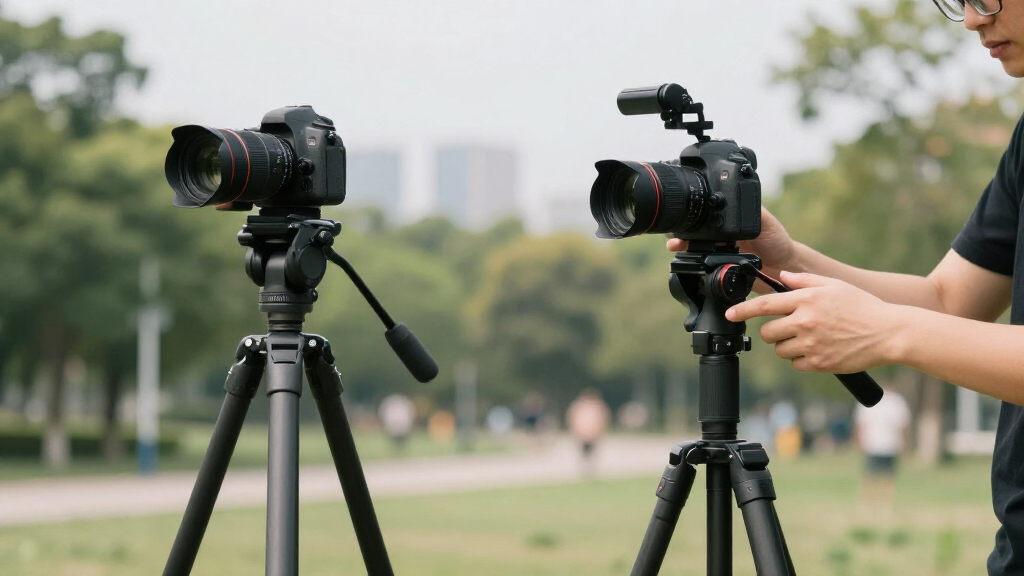
Video tripods vs photo tripods differ mainly at the head: video tripods use fluid heads — a sealed cartridge of viscous fluid that creates adjustable drag, plus a counterbalance spring — for smooth pans and tilts, while photo tripods use ball or 3-way heads built for fast, static framing. Video models add bowl leveling, twin-tube legs with spreaders, and long sliding balance plates; photo models favor compact single-tube legs and Arca-Swiss plates. Hybrid shooters can mount a flat-base fluid head on ordinary photo legs and cover both jobs with one set of legs.
Years ago I tried to pan across a lake at sunrise using my favorite ball-head photo tripod. The footage came back looking like it had been shot mid-earthquake — tiny jerks at the start of the move, a stutter halfway through, a wobble where I stopped. That morning taught me where the real dividing line between video tripods and photo tripods sits, and it has nothing to do with the legs.
In this guide you’ll learn exactly what separates the two tools: how a fluid head produces that buttery movement, why video tripods level in seconds, and which legs, spreaders, and plates actually matter for the way you shoot. I’ll also walk you through the question I hear most from readers — whether one tripod can honestly serve both your stills and your video work.
By the end, you’ll know which features deserve your money and which ones you can skip for the kind of shooting you actually do.
The head — not the legs — defines the tool: fluid drag plus counterbalance is what makes video movement smooth, and no photo ball head can fake it.
Buy legs and a head rated at roughly 2× your actual rig weight, and match the counterbalance range to your full rig (camera, lens, cage, monitor, mic), not jus…
Choose a 75mm bowl for mirrorless-class rigs and 100mm for heavy cinema builds; a flat-base fluid head skips the bowl question and mounts on any photo tripod.
The budget hybrid fix is a compact fluid head ($60–150) on your existing photo legs — check for Arca-compatible plates to keep your photo plates useful.
Gimbals and video tripods solve different problems — movement versus stable framing — so interviews, pans, and long-lens work still belong on a tripod.
Video Tripods vs Photo Tripods: The Real Dividing Line
Strip both tools down and the verdict is blunt: the head — not the legs — defines the tripod. A sealed cartridge of viscous fluid plus a counterbalance spring produces movement no ball head can fake. Here is exactly what separates the two, and what deserves your money.
Industry ratings are optimistic — working operators buy heads and legs rated at roughly 2× their actual rig weight for real stiffness under torsional load.
75mm for mirrorless-class rigs, 100mm for heavy cinema builds — the half-ball bowl is what levels a video head in seconds.
A compact fluid head on your existing photo legs covers both jobs with one set of legs — the budget answer for hybrid shooters.
The Head Decides Almost Everything
A video tripod pairs its legs with a fluid head built for smooth, controlled movement. A photo tripod carries a ball or 3-way head built for fast, static framing. The legs underneath are often nearly identical — the head is the tool.
Adjustable Drag + Counterbalance
A sealed cartridge of viscous fluid shears as you move, creating silky, tunable resistance on pan and tilt. The counterbalance spring holds a tilted camera exactly where you let go.
- Drag dial tunes the “honey” thicker or thinner
- Continuous counterbalance re-balances in seconds when rig weight changes
- Long pan handle for controlled starts and stops
Free Float, One Lock
Loosen one knob and the camera floats; tighten and the composition locks in under a second. Wonderful for stills — but it offers zero resistance while moving.
- Breaks free, surges, stops with a shudder mid-pan
- Every micro-correction lands directly in the footage
- Like expecting a light switch to act as a dimmer
Precision, Still No Drag
Trades the ball head’s speed for precision: an independent lock per axis. Excellent for architecture and product work — but mid-shot moves stay jerky.
- Separate pan, tilt, and roll locks
- Slower to reframe than a ball head
- Camera nose-dives the instant your hand leaves it
Push the handle
Pressure transfers into the sealed fluid cartridge between the moving parts
Fluid shears
Viscous fluid shears inside the cartridge, generating even, consistent drag
Dial the drag
Resistance is adjustable — tune the feel from feather-light to heavy
Counterbalance holds
The spring keeps a tilted camera suspended — no lock, no drift, no sag
One clean line
Starts, speed changes, and stops read as a single unbroken move
The Full Hardware Comparison
Ask ten working shooters and most point to the same handful of differences — here is the complete picture, from heads down to plates.
| Feature | Video Tripod | Photo Tripod |
|---|---|---|
| Head | Fluid head with pan handle and counterbalance spring | Ball head or 3-way pan-tilt head |
| Leveling | Half-ball bowl (75mm or 100mm) — level in seconds ✓ | Flat 3/8″ base — adjust individual leg lengths ~ |
| Movement mid-shot | Adjustable fluid drag for smooth pans and tilts ✓ | No drag — moves come out jerky ✗ |
| Legs | Twin-tube, taller, heavier — built for pan rigidity | Single-tube, compact, independent leg angles for rough terrain |
| Spreader | Mid-level or ground spreader kills torsional wobble at pan start/stop ✓ | Usually none — visible spring in the move under gusts ✗ |
| Quick-release | Long sliding plate (501-style) for fore/aft rig balance | Arca-Swiss plate or L-bracket for instant portrait/landscape swaps |
| Payload logic | Payload + counterbalance range — the range matters, not the maximum | Just needs to hold static weight — a 5kg rating is a 5kg promise |
Payload, Bowls & Where Each Tool Belongs
The 2× Payload Rule — Rig vs Required Rating
Bowl Size Spectrum & the Gimbal Divide
Flat-base shortcutA flat-base fluid head skips the bowl question entirely and mounts on any photo tripod — adapters also bridge 75↔100mm.
Gimbal vs tripodGimbals own movement; tripods still own interviews, pans, locked-off frames, and long-lens work. Different problems, different tools.
The Hybrid Fix — and What Destroys a Fluid Head
Mirrorless cameras now shoot broadcast-quality video, and a wave of compact fluid heads means one set of legs can honestly serve both stills and video — if you buy the right head.
Keep your photo legs
Your existing single-tube legs stay in service — no need to duplicate carbon fiber you already own.
Add a compact flat-base fluid head
Mounts directly on the flat 3/8″ base — no bowl, no adapter. Look for real counterbalance, now available under $150.
Check for Arca-compatible plates
Many new fluid heads accept Arca-compatible or dual-standard plates, so your photo plates stay useful across both setups.
Match counterbalance to the full rig
Camera + lens + cage + monitor + mic — the spring range must cover the whole stack, not just the body.
Compact carbon video kits with fluid heads now dip under ~1.5 kg total, and single-lever fast-deployment legs have trickled down from the high end. Travel video support has never been this cheap.
⚠ Care Warning
Never force a fluid head to move while its pan or tilt locks are engaged. Dragging a locked head across its axis is the classic way to destroy the cartridge — and servicing a true fluid head costs real money. Budget fluid-effect heads are a separate trap: grease friction that feels fine in a warm shop, then grabs and stutters on a frosty morning.
From Camera to Floor, One Rig
Which One Deserves Your Money
Buy a Video Tripod If…You Move the Camera Mid-Shot
- Interviews, pans, tilts, long-lens work are core to what you shoot
- You need to level in seconds — the half-ball bowl is non-negotiable for level pans
- Wind and long exposures of movement demand a spreader-braced, twin-tube stance
- You’ll buy rated at 2× rig weight and match the counterbalance range to the full rig
Stay on a Photo Tripod If…Your Frames Are Static
- Stills dominate — a ball head’s one-knob speed beats everything for composition
- You shoot low angles, uneven terrain, travel light — single-tube legs with independent spread win
- Your video needs are occasional — a $60–150 compact fluid head on your legs covers it
- You want one plate ecosystem — Arca-Swiss runs from camera plates to L-brackets
The Head — Not the Legs — Is What Really Separates Them
Strip video tripods vs photo tripods down to their most important aspects, and the head decides almost everything. A video tripod pairs its legs with a fluid head built for smooth, controlled camera movement. A photo tripod carries a ball head or a 3-way pan-tilt head built for fast, static repositioning. The legs underneath are often nearly identical.
A ball head is a wonderful thing for stills. Loosen one knob and the camera floats freely in your hand; tighten it and you’ve locked your composition in under a second. A 3-way head trades that speed for precision, giving you an independent lock for each axis. Neither design offers any drag — resistance while the camera is moving.
Expecting a ball head to pan smoothly is like expecting a light switch to behave like a dimmer — the part that would make gradual control possible simply isn’t in the box. That missing resistance is why your first pan on a photo head looks so rough. When you nudge a ball head mid-shot, it breaks free, surges, then stops with a shudder — and every micro-correction your hand makes lands directly in the footage. I ruined a perfectly good wedding processional shot this way before I understood what was happening. The fix isn’t a steadier hand. It’s a different head.
You can prove it to yourself in thirty seconds at any camera shop. Mount your camera on a ball head, start recording, and sweep slowly across the store. Play it back and you’ll see the same signature every time — a jump where the ball breaks free, a rush in the middle, a shudder at the stop. Now do the same sweep on even an entry-level fluid head, and the move reads as one clean, unbroken line.
As an affiliate, we earn on qualifying purchases.
Why a Sealed Cartridge of Fluid Makes Your Pans Feel Like Silk
A fluid head is a pan-and-tilt head where a sealed cartridge of viscous fluid sits between the moving parts. When you push the pan handle, that fluid shears inside the cartridge and creates adjustable drag — a silky resistance that smooths every start, stop, and speed change in your move. A dial lets you tune how heavy that resistance feels. If you’ve ever dragged a spoon through a jar of honey, you already know the sensation — thick, even, perfectly consistent. A fluid head gives your camera that same feel, and the drag dial is how you make the ‘honey’ thicker or thinner.
The second half of the system is the counterbalance spring, which holds your camera at a tilted angle without it flopping forward. Picture a well-sprung garage door that stays exactly where you let go of it — that’s what good counterbalance does for a tilted camera. Stepped counterbalance gives you preset clicks; continuous counterbalance lets you dial in any value. Continuous wins when your rig weight changes — swap a lens or add a monitor and you can re-balance in seconds.
Here is what that looks like in practice. On a recent interview I tilted down from the guest’s face to her hands in her lap, let go of the handle mid-tilt, and the camera simply hung there — no lock, no drift, no sag. With continuous counterbalance I had dialed in 2.3 kg for that exact rig, and the head held the angle as if it were locked. Try that on a photo head and the camera nose-dives the instant your hand leaves it.
Budget ‘fluid-effect’ heads skip the cartridge and use grease friction instead. They feel fine in a warm shop, then grab and stutter on a frosty morning as the grease thickens — I lost a dawn shoot to exactly that. Cheap heads also lack true counterbalance, so your tilted camera slowly drifts unless you lock it down.
Care warning: never force a fluid head to move while its pan or tilt locks are engaged. Dragging a locked head across its axis is the classic way people destroy the cartridge, and servicing a true fluid head costs real money.
As an affiliate, we earn on qualifying purchases.
Video Tripods vs Photo Tripods: The Side-by-Side Breakdown
Ask ten working shooters to sum up video tripods vs photo tripods, and most point to the same handful of hardware differences. Here is the full picture, from heads down to plates.
| Feature | Video Tripod | Photo Tripod |
|---|---|---|
| Head | Fluid head with pan handle and counterbalance | Ball head or 3-way pan-tilt head |
| Leveling | Half-ball bowl (75mm or 100mm), level in seconds | Flat 3/8-inch base, adjust leg lengths |
| Movement mid-shot | Adjustable fluid drag for smooth pans and tilts | No drag; moves come out jerky |
| Legs | Twin-tube, taller, heavier | Single-tube, compact, independent leg angles |
| Spreader | Mid-level or ground spreader for pan rigidity | Usually none |
| Quick-release | Long sliding plate (501-style) for fore/aft balance | Arca-Swiss plate or L-bracket |
| Payload logic | Payload plus a counterbalance range | Just needs to hold static weight |
To make one row concrete: at a windswept lakeside ceremony last summer, my spreader-braced video legs held a 90-second pan dead steady while gusts rolled off the water. The same move on single-tube photo legs showed a visible spring at the start and stop of the move — that torsional wobble is exactly what the ‘Spreader’ row is warning you about.
The ‘Payload logic’ row deserves a concrete illustration too. My 2.3 kg mirrorless rig sits happily on a photo head rated for 5 kg, because all the head has to do is hold it still. But a video head rated for 5 kg is useless to me if its counterbalance range starts at 3 kg — the spring can’t engage below that, and the camera will tip forward no matter what the sticker promises. The number that matters is the range, not the maximum.
One twist the table hides: these parts mix and match. You can bolt a flat-base fluid head onto ordinary photo legs with a simple bowl adapter, and many hybrid shooters — me included — run exactly that setup for travel. The categories look rigid on paper, but your kit doesn’t have to be.
As an affiliate, we earn on qualifying purchases.
How to Level Your Camera in Three Seconds Flat
A bowl mount is a half-ball socket — usually 75mm or 100mm — that lets you level the head in about three seconds: loosen the bowl, nudge the head until the bubble sits dead center, lock it down. No leg adjustments, no guesswork. Photo heads, by contrast, sit on a flat 3/8-inch base, so leveling means fiddling with individual leg lengths.
Level isn’t a nicety for video — it’s the foundation. If your head sits off by even two degrees, every pan drifts, and the horizon slides out of frame as you sweep across a room. Think of it like rolling a ball across a tilted table — no matter how straight you push, the slope pulls it off line. I once shot an interview series in a Victorian house with floors sloped enough to roll a marble. With a bowl head, each new setup took seconds; with a photo tripod, I would have lost minutes per room to leg-length gymnastics.
A rooftop shoot last spring drove the point home. Gusting wind kept nudging the tripod between takes, and every reposition meant re-leveling. On the bowl head that was a ten-second fix each time — the photographer next to me, working a flat-base head, was still crouched under his rig threading leg locks when his light disappeared.
Size choice is simple. 75mm dominates mirrorless and DSLR-class rigs; 100mm is the standard for cinema cameras and heavy telephoto work, and adapters exist between the two. A flat-base head skips the question entirely and mounts on any photo tripod’s stud.
As an affiliate, we earn on qualifying purchases.
Legs, Spreaders, and Plates: The Hardware You Live With Daily
Video legs are built to resist twist. Most use twin-tube designs with a mid-level or ground spreader, because a pan puts constant torsional load through the tripod — any flex shows up as a springy wobble at the start and end of your move. Photo legs are single tubes with independent spread angles, tuned for compactness, low-angle shooting, and uneven terrain.
Spreaders carry a real cost. On stairs, rocky ground, or a tight staircase location, a spreader-based tripod fights you — I’ve shortened more than one coastal shoot because the legs simply wouldn’t sit where I needed them. A colleague of mine shoots real-estate walkthroughs on spreaderless video legs for exactly this reason: doorways, landings, and cramped bathrooms leave no room for a ground spreader to open. Spreaderless video legs are a growing compromise category for exactly this reason.
The plate ecosystems differ too. Video uses long sliding plates — the Manfrotto 501-style is the classic — so you can shift the camera fore and aft until the rig balances on the head. On my own rig, mounting a 70-200mm lens means sliding the plate roughly 4 cm rearward before the camera stops tipping forward — that slide is exactly what a short Arca plate can’t give you on a fluid head. Photo has standardized on Arca-Swiss plates and L-brackets, which flip from landscape to portrait orientation in one move.
Whatever style you buy, distrust the payload sticker. A common rule of thumb among camera operators — one PhotoMocha’s guides repeat — is to buy legs and a head rated at roughly 2× your actual rig weight. Stiffness, not the printed number, is what keeps a long pan steady.
Can One Tripod Handle Both Photo and Video? Your Decision Path
So can one tripod honestly cover video tripods vs photo tripods duties? Yes — if you accept small compromises and pick the right configuration for your shooting mix. Work through these four steps.
- Weigh your entire rig — camera, lens, cage, monitor, mic. Choose a fluid head whose counterbalance range covers that number, not merely its maximum payload. My interview rig — mirrorless body, 24-70mm lens, cage, and a small monitor — tips the scale at 2.3 kg, so I run a head with a counterbalance range of roughly 1–4 kg.
- Estimate your real shooting split. If you’re 70% stills, let the photo side drive the purchase and add video capability cheaply on top.
- Pick your configuration: a flat-base fluid head on your existing photo legs, a convertible 2-in-1 head, or two heads sharing one set of legs.
- Check the plate ecosystem. Many newer fluid heads accept Arca-compatible plates, which keeps your L-bracket and photo plates in play.
Step one is where most people stumble. A reader wrote to me after buying a head rated for 8 kg to carry his 3 kg rig, puzzled that the camera still drifted forward on every tilt. The problem: that head’s counterbalance bottomed out at 4 kg, so his rig sat below the range entirely. The big number on the box was fine; the range was wrong. Once he swapped to a head whose range actually covered 3 kg, the drift vanished.
My own travel kit is the third option: carbon legs, a compact fluid head for interviews and pans, and a small ball head that weighs almost nothing in the bag. Swapping heads takes thirty seconds, and I never carry two tripods. For most hybrid shooters, this middle path beats owning two full setups by a wide margin.
Does a Gimbal Make the Video Tripod Obsolete?
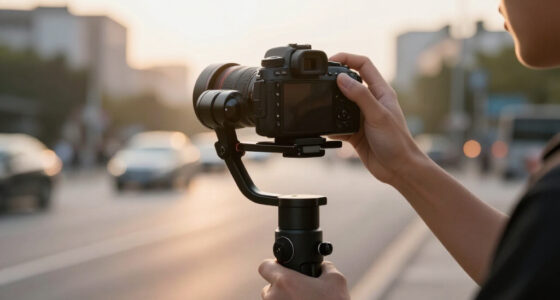
No — a gimbal replaces the moving shots, not the tripod. The two tools solve different problems: a gimbal keeps the camera steady while it travels through space, while a video tripod keeps framing rock-solid while the camera stays put. You often want both.
A video tripod still wins for:
- Locked-off shots and static compositions
- Interviews — nobody can handhold a gimbal through a 40-minute conversation
- Slow, deliberate pans and tilts with a long pan handle
- Long-lens work, where gimbal balancing gets awkward fast
A conference I shot last autumn shows the split plainly. The keynote ran ninety minutes locked off on the video tripod, slow pans following the speaker across the stage — a gimbal would have been dead weight in my arms by minute ten. Between sessions, the gimbal earned its keep on walking shots through the expo floor, where a tripod would have been useless. Same day, same event, two tools that don’t overlap.
On my own shoots the two split the job: interviews and pans happen on the tripod, walking b-roll happens on the gimbal. The encouraging part is cost. Mirrorless cameras now shoot broadcast-quality video, and the market has answered — compact fluid heads with real counterbalance exist under $150, and full carbon video kits with heads weigh under 1.5 kg. Stable video support has never been this affordable.
Frequently Asked Questions
Can I shoot video on my photo tripod?
Yes — for static, locked-off shots it works fine. The problem appears the moment you pan or tilt: ball and 3-way heads have no drag, so your moves come out jerky. The usual fix is a compact fluid head in the $60–150 range mounted on your existing legs.
Can I shoot photos on a video tripod with a fluid head?
You can, and for landscape or other static work it behaves well. The trade-offs are speed and orientation: reframing means unlocking and re-locking axes, and portrait orientation gets awkward without an L-bracket trick. If stills dominate your shooting, a ball head stays far more convenient.
What counterbalance setting does my rig need?
Weigh the complete rig — camera, lens, cage, monitor, mic, everything that rides the head. Then pick a head whose counterbalance range covers that weight, not one whose maximum payload merely exceeds it. An unbalanced rig either tips forward or springs back every time you let go of the handle.
Should I choose a 75mm or 100mm bowl?
Choose 75mm for mirrorless and DSLR-class rigs — it dominates that category. Step up to 100mm for cinema cameras and heavy telephoto setups. Adapters exist between the two sizes, and a flat-base head skips the decision entirely by mounting on any standard 3/8-inch stud.
Is carbon fiber worth it over aluminum?
It depends on where you shoot. Carbon fiber is lighter and damps vibration faster, which matters for travel and run-and-gun work. Aluminum costs less, and its extra mass actually adds stability for studio and interview setups. Buy carbon for the road, aluminum for the room.
Will my Arca-Swiss plates work on a fluid head?
Increasingly, yes — many newer fluid heads accept Arca-compatible plates or ship with dual-standard plates, and quick-release systems are blurring the old divide. Traditional video plates like the 501-style are not Arca-compatible without an adapter, so check the head’s plate standard before you buy.
Conclusion
Here’s the takeaway worth remembering: the legs are just legs — the head defines whether a tripod is a video tool or a photo tool. If you shoot motion, put your money into the best fluid head your budget allows, match its counterbalance range to your real rig weight, and skip the specs that serve a craft you don’t practice.
Next time you watch a sunrise pan glide across a lake without a single stutter, you’ll know exactly what made it possible. It wasn’t luck, and it wasn’t an expensive camera. It was fluid, drag, and a level head.
Flea & tick season Picks
flea and tick prevention
As an affiliate, we earn on qualifying purchases.