TL;DR

Get audio and creator gear delivered free with Prime
- Fast, free delivery on millions of items
- Prime Video, Amazon Music and more included
- Member-only deals all year
Keep prints in a stable, moderately dry room, out of direct sunlight, and separated from glazing by a mat or spacer. UV-filtering glass or acrylic can reduce some risks, but visible light still causes fading, and the right glazing depends on the print’s medium and display conditions.
A print can look unchanged for years, then slowly lose its punch: a blue sky pales, paper turns yellow, or the corners begin to curl. In my photography work, I’ve learned that where you hang a print and how you frame it can matter just as much as how it was made.
This guide walks you through the three everyday threats—humidity, light, and contact with glazing—and explains what you can do at home. You’ll learn how to choose a safer spot, decide between glass and acrylic, and respond when a print looks wavy or damp. There’s no single frame that makes a print indestructible; a few sensible choices can greatly slow avoidable damage.
Keep paper prints in a stable, moderate environment; about 30–50% relative humidity is a broad guide, not a rigid target.
Hang valuable prints away from direct sunlight, even when the frame has UV-filtering glazing.
Choose glass or acrylic based on the print medium, risk of impact, reflections, and UV specifications.
Use a mat or spacer to keep the artwork from touching the glazing, and avoid unknown adhesives.
Don’t try to clean mold or flatten severe rippling yourself; ask a paper conservator for help.
How humidity can warp or weaken your prints
Preserving prints starts with stable, moderate humidity. Paper absorbs and releases moisture as the air changes, so high or fluctuating humidity can encourage mold, distort sheets, and strain adhesives. Very dry air can make some materials brittle, while rapid temperature changes can make paper, backing, and frame parts expand or contract at different rates.
A broad guide often used for paper is 30–50% relative humidity, but treat it as a useful range rather than a magic setting. A steady room at the edge of that range may be kinder to a print than a room that swings from damp to dry every week. Prints can last, or deteriorate surprisingly quickly, depending on their materials and surroundings. The practical point is to avoid conditions that repeatedly load the sheet with moisture and then dry it out: paper changes size as it exchanges moisture, while mounts and adhesives may respond differently. That mismatch can gradually create ripples, loosen attachments, or pull at the edges.
For example, imagine a framed photograph on a bedroom wall that backs onto a cold exterior wall. In winter, condensation can collect behind the frame even when the room feels comfortable; over time, the paper may ripple or develop spots. Move it to an interior wall, away from a radiator or air-conditioning outlet, and check the room with an inexpensive digital hygrometer if dampness is a concern. A hygrometer won’t measure moisture trapped behind the frame, but it can reveal whether the room routinely becomes damp or changes sharply, helping you address the source rather than treating the print as the problem.
Avoid bathrooms, kitchens, damp basements, and hot attics for valuable work. Those rooms bring moisture, heat, or sharp changes that a frame cannot cancel out. If you see active dampness, mold, or severe cockling—pronounced rippling across the sheet—don’t press the print flat or wipe it down; ask a paper conservator to assess it. Flattening without knowing the cause can trap moisture or damage weakened fibers, turning a change that might be treatable into a tear or permanent crease.
Products Worth Considering

Samsung 27 Odyssey OLED G5 (G50SF) QHD Gaming Monitor

LG UltraGear 32GX850A-B 32-inch 4K UHD Glossy OLED Gaming Monitor

LG UltraGear 27GX704A-B 27-inch QHD OLED Gaming Monitor
As an affiliate, we earn on qualifying purchases.
Where to hang a print so sunlight does less harm
Preserving prints means keeping them out of direct sunlight and limiting total light exposure. Light damage builds over time and is generally irreversible: colorants can fade, paper can yellow or weaken, and the image can lose its original balance. Ultraviolet radiation speeds some forms of damage, but visible light can also fade sensitive materials. The cumulative effect matters: a moderate amount of light every day can add up, so neither a brief sunny period nor a dim-looking room tells the whole story. Sensitive pigments and older or fragile paper may change sooner than a modern photographic print.
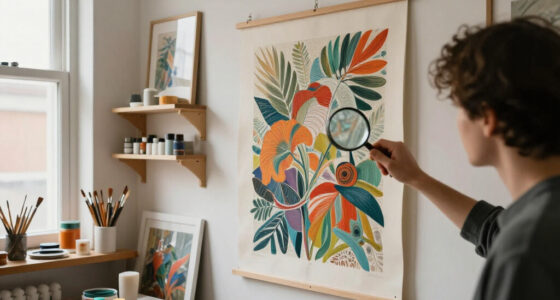
That’s why a UV-filtering pane does not make a sunny wall safe. If a stripe of afternoon sun lands across your print, the bright patch can age faster than the rest, leaving a hard-to-miss band of uneven color. Move the work to a wall with low, indirect light, or close curtains and shades when strong daylight reaches the room. Uneven exposure is especially noticeable because the protected or shaded parts retain more of their original color, making the fade line part of the image’s appearance.
Think about your actual daily routine. A print above a desk may sit in dim morning light, while the same print across the room gets blasted by the west-facing window every afternoon. In a lived-in home, that simple difference can matter more than a small upgrade in glazing. If you love the sunny spot, display a less valuable copy there and keep the original in darker conditions. This is a practical tradeoff: you still enjoy the image in the room you like, while the original avoids exposure that no pane can fully undo.
LED lighting generally gives off less heat and UV than many older lighting types, but brightness and exposure time still count. “Fade-resistant” and “archival” do not mean immune to light damage. You can rotate displayed works and store the others in the dark, which gives each print a break without making the room feel bare. Rotation does not reverse fading, but it reduces each print’s cumulative exposure; it is most useful when you can keep the stored work protected and avoid repeatedly handling the image itself.
Choose glass or acrylic that suits the print and the room
Preserving prints with glazing starts by matching the material to the artwork and its setting. Standard glass, UV-filtering glass, and acrylic can all protect against dust and handling, but they differ in weight, reflection, UV performance, and static. Anti-reflective glazing can make an image easier to see; that feature alone does not tell you whether it filters UV. The choice is therefore a balance: impact risk, viewing conditions, the medium, and the value of the print all matter, and no glazing option solves every problem.
For example, a large framed print above a narrow stair landing may be safer behind lightweight acrylic than heavy glass, especially where a knock could send glass fragments down the stairs. But acrylic scratches more easily, and static can attract or lift loose media such as pastel or charcoal. For a delicate charcoal drawing, static becomes a bigger concern than it would be for a firmly bound photographic print. In other words, reducing the chance of injury from broken glass may justify acrylic in a high-traffic spot, while a powdery drawing may call for professional advice and careful spacing to prevent static-related contact.
UV-filtering glazing reduces much of the UV that reaches an image, but products vary, so check the maker’s specifications rather than relying on a vague label. It will not block all visible light or make direct sunshine harmless. Standard glass usually offers limited UV protection and can produce distracting reflections; anti-reflective options improve viewing, but you still need to check what UV protection they provide. These features solve different problems: lower reflections help you see the artwork, while UV filtering reduces one source of light damage. A clear view is not proof of protection, and UV protection is not a substitute for a low-light location.
| Glazing choice | Useful strengths | Limits to keep in mind |
|---|---|---|
| Standard glass | Creates a physical barrier against dust and handling | Limited UV protection; reflections can obscure the print |
| UV-filtering glass | Reduces much of the UV reaching the artwork | Does not stop visible-light fading or make direct sun safe |
| Acrylic | Lightweight and less likely to shatter; some types filter UV | Can scratch; static can affect loose pastel or charcoal |
For an ordinary photograph in a low-light room, careful placement may be the biggest protection. For a valuable or light-sensitive work, suitable UV-filtering glazing can add a helpful layer. In either case, choose based on the medium and display location, not on the word “premium” printed on a frame label. Consider how you will clean and handle the glazing too: a surface that scratches easily may need gentler care, while a heavier pane needs secure support and a safer location.
Keep the print from touching the glazing
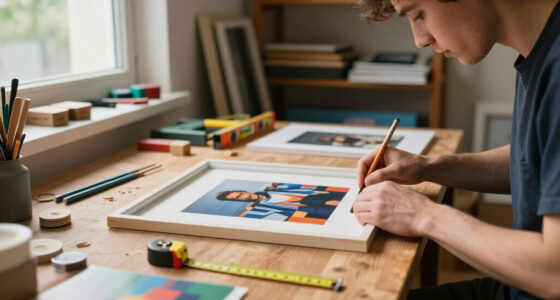
A mat or spacer should usually keep the print surface away from the glass or acrylic. Direct contact can cause the image to stick to glazing, suffer abrasion, or pick up transferred materials. A small gap also reduces the risk of damage if condensation forms inside the frame. The separation matters because the glazing and paper react differently to changes in temperature and moisture; when they touch, even slight movement or moisture can make surfaces adhere or rub.
Picture a print hung in a room that turns chilly overnight. If moisture gathers on the glazing, an image pressed directly against it may adhere as the surfaces dry. Separating them with a mat or spacer gives air a little room and keeps the artwork from rubbing against a hard surface when the frame shifts. The gap is a protective buffer, not a way to control the room’s humidity: persistent condensation or dampness still needs to be addressed, or moisture may continue to affect the paper and other frame materials.
For conservation-minded framing, ask for acid-free matting and backing suited to the object. The goal is to support the work without permanently altering it. Pressure-sensitive tape and unknown adhesives may be hard to remove and can stain or weaken paper over time, so avoid using them casually on a print you value. Materials matter because they remain in contact with the print for long periods; an adhesive that seems harmless at first can become difficult to remove or leave a mark as it ages.
When I’m checking a frame, I look at more than the front pane: I check whether the artwork sits flat, whether the backing feels secure, and whether the frame has been hung away from heat and damp. A neat-looking frame can still hold unsuitable materials or press the print against its glazing. If the print is valuable, fragile, or made with a powdery medium, an experienced conservation framer can recommend spacing and mounting that suit it. That extra advice is particularly useful when a simple spacer might not be enough to protect a delicate surface or accommodate the print’s construction.
Use these five steps to make a safer display
A safer display comes from a few practical steps you can take at home. Start with the room, then check the light, frame construction, and the print’s condition. That order helps you avoid spending time on new glazing while leaving the artwork in a damp corner or a daily sunbeam. Each step deals with a different source of risk, so improving one does not make the others irrelevant.
- Pick a stable room. Avoid bathrooms, kitchens, damp basements, hot attics, and walls that show condensation. If conditions feel uncertain, place a digital hygrometer nearby and watch for persistent dampness or wide swings. This helps you spot an environmental pattern that a single reading might miss.
- Find a low-light wall. Keep the print out of direct sun, including behind UV-filtering glazing. Close shades during strong daylight or hang a less valuable copy in the brightest spot. Location is often the simplest way to lower exposure without changing the frame.
- Match glazing to the medium. Compare standard glass, UV-filtering glass, and acrylic. Check UV specifications, and take extra care with static-sensitive pastel or charcoal. Consider impact risk and reflections too; the safest choice depends on where the print will hang and what it is made of.
- Ask for a gap and suitable materials. Use a mat or spacer so the print does not touch the glazing, and choose suitable backing rather than unknown adhesives. This reduces contact-related damage but does not compensate for damp conditions.
- Check the print occasionally. Look for new ripples, damp spots, fading, or changes in how the sheet sits. A quick check when you dust the frame can catch a problem before it spreads. If you see a change, first consider whether the room, light, or frame could be contributing instead of trying to flatten or clean the print yourself.
Here’s what that looks like in a real room: you want to hang a family photograph beside a sunny window. You move it to an interior wall, choose glazing that fits your needs, and have it mounted with a spacer. If the window remains your favorite place to view it, you rotate a copy onto that wall and keep the original in lower light. The choices work together: the new wall limits exposure, the glazing provides a barrier, and the spacer avoids direct contact.
No single step does all the work. A good frame cannot correct a damp room, and stable humidity cannot reverse fading that has already happened. Treat the print, the frame, and the room as one care plan. Prioritize the conditions that are easiest to change—such as direct sun or a damp location—before investing in features that only reduce one part of the risk.
Store extra prints safely—and know when to ask for help
Store prints away from light, moisture, and pressure, and get expert help for active damage. An unframed print can be just as vulnerable as one on a wall, especially if it sits loose near a window or in a damp cupboard. Keep stored work in clean, archival-quality enclosures, properly supported, and away from pests and temperature extremes. Storage removes light exposure, but it does not protect against dampness, poor-quality materials, or pressure, so the location and enclosure still matter.
For example, if you have several small prints you rotate through a frame, don’t leave them stacked beneath a heavy box in a basement. Keep them supported in a clean, dry place where nothing presses on their surfaces. If you store them flat, avoid piling heavy items above them; pressure can leave dents or bends that are difficult to correct. If the prints are kept together, ensure their surfaces are protected from rubbing and that the stack is not so tight that removing one requires dragging it across another.
If a print looks wavy, don’t assume a book or a heavy sheet of glass will flatten it safely. Moisture, mounting, and the paper itself can all play a part, and a home fix may cause tears, stains, or more distortion. Fading is generally irreversible, while warping and mold need a careful diagnosis before anyone attempts treatment. The visible ripple is a symptom, not necessarily the cause; adding weight may hide the shape temporarily while leaving moisture or a stressed mount unresolved.
Keep framed-glass cleaning cautious: apply cleaner to a cloth rather than spraying toward the frame, and keep liquid away from the edges. If the artwork is unframed, moldy, damp, stained, or shedding loose material, don’t clean it yourself. A paper conservator can assess the materials and suggest a treatment that does not trade one visible problem for a worse one. Seek help promptly for active mold or dampness, since delaying can allow the damage to spread, while avoidable handling can disturb weakened paper or loose media.
Frequently Asked Questions
Will UV-protective glass stop my print from fading?
No. UV-filtering glazing reduces much of the ultraviolet radiation reaching the print, but visible light can still cause fading. Keep the work out of direct sun and limit bright exposure as well.
Is it safe to hang a print in a sunny room if it is behind glass?
A sunny room may be fine if the print sits in low, indirect light, but direct sunlight is risky even behind UV-filtering glazing. Ordinary glass and UV-filtering products do not make a daily sunbeam harmless. Try a different wall or use shades during strong daylight.
What humidity is best for storing prints?
A stable, moderately dry environment matters more than hitting one exact reading. About 30–50% relative humidity is a broad guide often used for paper, but the right conditions depend on the print and setting. Avoid prolonged dampness and sharp humidity changes.
Should a print touch the glass?
Usually not. A mat or spacer helps prevent sticking, abrasion, and transfer between the print and glazing, and it can reduce risks if condensation develops inside the frame. Ask a conservation framer about spacing for fragile or unusual media.
Is acrylic better than glass for framing prints?
It depends on the print and where you’ll hang it. Acrylic is lighter and less likely to shatter, but it scratches more easily and can build static that affects loose pastel or charcoal. Some acrylic provides UV protection, so check the specific product rather than assuming all types perform alike.
Can I flatten a wavy print at home?
Don’t press or wet a print that has severe rippling, dampness, or mold. The cause may involve moisture, mounting materials, or the paper itself, and a home attempt can make the damage worse. Ask a paper conservator to assess significant changes.
Conclusion
Put the print in a stable room, keep direct sun off it, and give it space from the glazing. Those three choices do more lasting work than trusting any single frame feature to protect the image.
Look at the wall where your favorite print hangs today. If the afternoon sun paints a bright stripe across it, move the print before that stripe becomes a permanent part of the picture.