
TL;DR
Get ready for Prime Big Deal Days — try Prime free
Exclusive member deals on October 6–7, plus fast free delivery. Cancel anytime.
Start your free trialAs an affiliate, we earn on qualifying purchases.
Arca-Swiss is the closest thing photography has to a universal quick-release standard: a 38 mm dovetail plate and clamp used by nearly every serious tripod, head, and accessory maker. Screw-knob clamps tolerate mixed brands best, lever clamps are faster but pickier, and newer mini-QR systems like Falcam and Peak Design work best layered on top of an Arca base. Standardize on Arca and your camera will fit almost any support gear you meet.
Two seconds. That is the whole gap between catching a blade of morning light through canyon walls and watching it fade while you spin a tiny screw with numb fingers. Quick-release plates exist because that gap decides shots.
This guide gives you a working photographer’s take on the major release systems compared today — Arca-Swiss, Manfrotto RC2, Peak Design, Falcam, and the plates bridging gimbals and tripods. No lab coats and no affiliate links, just twenty-plus years of clamping cameras onto tripods, monopods, beanbags, and gimbal heads in rain, dust, and the occasional wedding buffet line.
By the end, you will know which system deserves a permanent home on your camera, which clamp style fits your hands, and which two-dollar part keeps a loose plate from becoming a dropped camera. We will also look at where each rival system genuinely earns its keep, because a few alternatives are better than their reputations.
Arca-Swiss’s 38 mm dovetail is the de facto open standard — build your kit on it and your camera will fit nearly any head, rail, or gimbal plate you meet.
Choose a screw-knob clamp for mixed-brand plates; choose a lever clamp only with same-brand plates and a working safety lock.
Plate twist, not clamp strength, is the real failure mode with long lenses — use dedicated anti-twist plates and Arca lens collar feet.
Safety stops are the cheapest insurance in photography: after every new plate-clamp pairing, slide the plate and confirm the stops engage.
Mini-QR systems like Falcam F38 and Peak Design Capture are speed layers on top of Arca — keep the Arca base and respect current load ratings.
Quick-Release Systems Compared: Arca-Swiss & Beyond
Two seconds. That is the whole gap between catching a blade of morning light through canyon walls and watching it fade while you spin a tiny screw with numb fingers. Quick-release plates exist because that gap decides shots — here is the working photographer’s map of the systems fighting for a permanent home on your camera.
Six Ways to Click a Camera Onto a Tripod
Every quick-release system is the same two-part bargain: a plate that lives on your camera, a clamp that lives on your support — shaped to meet in a single blind motion, like a seatbelt buckle. The trade-offs come down to five things: speed, security, weight, cost, and cross-brand compatibility.
Arca-Swiss Dovetail
A 38 mm trapezoidal rail cloned by dozens of makers. Two wedges face each other — the more you tighten, the harder geometry grips. One plate fits nearly every serious head, rail, and gimbal plate on earth.
Manfrotto RC2 (200PL)
The spring-loaded rectangular plate on countless consumer heads. Fast and everywhere — but Manfrotto-only, and the flat plate can twist under long lenses.
Manfrotto 501PL & Video Plates
Long sliding plates built to balance video rigs fore-and-aft. The video world runs on them; many hybrid shooters bolt an Arca dovetail underneath to bridge both worlds.
Peak Design Capture
Clip-and-plate carry beloved by travel and street shooters. Newer PD plates are Arca-compatible in both directions — check which generation you own.
Falcam F38 / F22
Push-button mini quick-release that layers on top of an Arca base. Genuinely fast swaps — keep the Arca foundation and respect current load ratings.
L-Brackets & Dedicated Plates
RRS, Kirk, and SmallRig machine plates per camera body with anti-twist flanges. L-brackets flip to portrait with the center of gravity over the head — the ecosystem’s killer feature.
Arca-Swiss vs. the Field: An Honest Scorecard
Arca-Swiss wins on compatibility, RC2 wins on sheer ubiquity, and the Peak Design and Falcam systems win on raw speed. The right pick depends on what you mount, how often you swap, and whether your bag mixes brands.
| System | Lock Style | Plays Well With Others | Sweet Spot | Watch Out For |
|---|---|---|---|---|
| Arca-SwissDe facto standard | Screw knob or lever clamp | ✓ Excellent — dozens of brands | Tripods, heads, gimbals, macro rails, pano slides | ~ Tolerances vary; lever clamps are picky |
| Manfrotto RC2200PL plate | Spring-loaded lever | ✗ Poor — Manfrotto only | Light-to-medium kits, fast casual work | ✗ Rectangular plate can twist under load |
| Manfrotto 501PLVideo | Sliding plate plus lever | ~ Video heads mostly | Balancing video rigs fore-and-aft | ~ Long plate; add Arca to bridge to stills |
| Peak DesignCapture ecosystem | Clip + Arca-compatible plate | ✓ Good — fits most Arca clamps | Travel, street, strap-and-hip carry | ~ Plate generation matters for full Arca fit |
| Falcam F38 / F22Mini-QR | Push-button release | ✓ Good — Arca base underneath | Rapid swaps layered on an Arca kit | ~ Respect current load ratings, keep the Arca base |
| DJI RS GimbalHybrid bridge | Lever + sliding plate | ~ Gimbal-first; Arca plates bridge over | One camera bouncing tripod ↔ gimbal | ✗ Re-balance after every plate change |
Where Each System Actually Wins
Field-scored from twenty-plus years of clamping cameras onto tripods, monopods, beanbags, and gimbal heads — no lab coats, no affiliate links.
Macro rails, panoramic nodal slides, and replacement lens collar feet are almost exclusively Arca — the ecosystem is the argument.
Plate twist — not clamp strength — is the real failure mode with long lenses. Dedicated anti-twist plates and Arca lens collar feet fix it.
Screw Knob or Lever? Plus the $2 Part That Saves Cameras
“Arca-compatible” does not mean perfectly standardized. Two reputable makers’ plates can differ by nearly half a millimeter across the dovetail — a gap the width of a credit-card edge under a four-thousand-dollar lens.
Screw-Knob Clamp
Threads down onto any dovetail you feed it. Slower by a second or two, but indifferent to which brand machined the plate.
- Tolerates mixed-brand plates and bargain dovetails
- Adjustable jaw absorbs tolerance variance
- The default choice for a multi-brand kit
Lever-Release Clamp
One flick and the camera is free — but the fixed jaw expects the plate it grew up with. A bargain plate can sit loose in a finely machined lever clamp, and that is how cameras meet concrete.
- Same-brand plates only — verify the fit
- Insist on a working secondary safety lock
- Re-test the grip after any plate swap
Build on the 38 mm dovetail. Standardize on Arca and your camera fits nearly any head, rail, or gimbal plate you meet.
Match the clamp to the kit. Screw-knob for mixed brands; lever only with same-brand plates and a working safety lock.
Fight twist, not clamp strength. Long lenses need dedicated anti-twist plates and Arca lens collar feet.
Safety stops are the cheapest insurance in photography. After every new plate-clamp pairing, slide the plate and confirm the stops engage — like the chain guard on a hotel door.
Mini-QR systems are speed layers, not replacements. Falcam F38 and Peak Design Capture work best on top of an Arca base — keep the foundation, respect the load ratings, and enjoy the one-click life.
The Two-Second Chain
What a quick release really earns you: one camera moving freely between every support you own — the way a wedding shooter bounces from ceremony sticks to a monopod on the dance floor without ever reaching for a tool.
Plate on Camera
Dedicated anti-twist Arca plate screws on once and stays for good.
Slide Into Clamp
Dovetail meets clamp in one blind motion — geometry does the gripping.
Stops Engage
Safety-stop screws physically block slide-out from a half-open clamp.
Tripod & Head
Repeatable index marks return your framing shot after shot.
Gimbal & Monopod
The same plate lifts straight onto the gimbal, monopod, or window mount — no tools, no adapters.
The Verdict
Arca-Swiss is the closest thing photography has to a universal standard — what USB-C did to the drawer of proprietary chargers. A Leofoto plate, a Really Right Stuff clamp, a DJI gimbal plate: three brands, three price points, zero adapters, everything interlocking. Standardize on the dovetail, layer speed systems on top, verify your safety stops once — and never miss alpenglow to a spinning coin again.
What a Quick-Release System Actually Buys You
A quick-release system is a two-part mount: a plate that stays screwed to your camera and a clamp that lives on your tripod head. Think of it like a seatbelt buckle — one half lives on you, the other half lives on the seat, and the two are shaped to meet in a single blind motion. Together, a QR system lets photographers attach or lift away a camera from a tripod in about two seconds, instead of threading a 1/4-20 screw every single time.
If you have ever fumbled that little screw with frozen fingers at a blue-hour sunrise, you already know why this matters. I once missed the best ninety seconds of alpenglow in the Dolomites because I was crouched in the snow, spinning a coin against a tripod screw while the light slid from rose to grey. A QR plate would have made it a one-click job.
Speed is only one of the key aspects to weigh. A good system also gives you repeatable positioning — slide the plate back to the same index mark and your framing returns. On a product shoot last winter I photographed thirty near-identical coffee bags against the same backdrop; I marked the plate position once, and every bag landed in exactly the same spot in the frame, so the whole session wrapped in an afternoon instead of dragging into a second day of nudging the tripod left and right. You get security, because a clamped dovetail cannot vibrate loose the way a screw can — a screw-mounted camera rattling on a car-window mount for a week of safari roads will slowly walk itself free, while a clamped plate simply does not. And you get flexibility: one camera moving freely between tripod, monopod, and gimbal, the way a wedding shooter bounces from ceremony sticks to a monopod on the dance floor without ever reaching for a tool.
That, in a sentence, is what a quick release really earns you. The trade-offs between systems come down to five things: speed, security, weight, cost, and cross-brand compatibility. Keep those five in mind — they decide every comparison in this guide.
As an affiliate, we earn on qualifying purchases.
Why Arca-Swiss Beat Every Other Mount
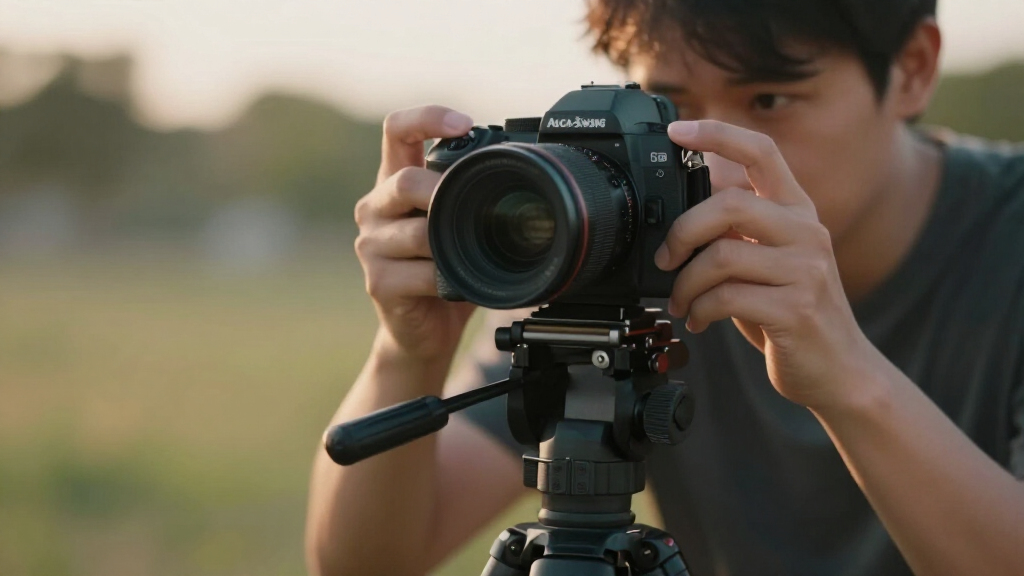
Arca-Swiss became the default quick-release standard because its design was simple and nobody fenced it in. The mount is a trapezoidal dovetail rail, roughly 38 mm (1.5 in) wide, developed for Arca-Swiss ball heads decades ago and cloned ever since by dozens of makers. Picture two wedges facing each other: the plate slides into the clamp lengthwise, and the angled walls pull it down harder the more you tighten. It works exactly like a doorstop — the harder the load pushes, the deeper the wedge seats. Gravity and geometry do the gripping, which is why a clamped dovetail feels like it was welded to the head.
Because the geometry was never locked behind aggressive patents, brands like Really Right Stuff, Kirk, Wimberley, Acratech, Sirui, Benro, Leofoto, and Sunwayfoto all built plates and clamps around it. The effect is what USB-C did to that drawer of proprietary charger cables — one shape, every maker, no adapters. My own travel kit is the proof: a Leofoto plate on the camera, a Really Right Stuff clamp on the ball head, and a DJI plate on the gimbal — three brands, three price points, zero adapters, everything interlocking. Today it is the closest thing photography has to an open standard. Your tripod head, your gimbal plate, your L-bracket, even most macro rails and panoramic nodal slides speak the same 38 mm language.
If you shoot wildlife, you already live in this world. Replacement lens collar feet from RRS, Kirk, or Wimberley put an Arca dovetail directly under your long lens, and Wimberley gimbal heads are Arca-native from the ground up. On a safari years ago I watched a guide swing a 600mm f/4 from a window mount to a Wimberley head in one smooth lift-and-click, never touching a tool, while the elephant decided to wait. The ecosystem is the argument.
One honest caveat: Arca-compatible does not mean perfectly standardized. Plate widths, dovetail angles, and safety-stop screw positions vary slightly between brands — I have measured plates from two reputable makers that differed by nearly half a millimeter across the dovetail. Half a millimeter sounds like nothing until you picture it as a gap the width of a credit card edge under a four-thousand-dollar lens. Most combinations work fine, but a bargain plate can sit loose in a finely machined lever clamp — and that is how cameras meet concrete.
The fix is boring but effective: safety stops. These small screws or pins on the underside of a plate physically block it from sliding out of a half-open clamp — think of the chain guard on a hotel door: irrelevant every night of your stay, priceless the one night the lock fails. Check that yours actually engage with your clamp by loosening it and sliding the plate until it stops moving. On some cheap pairings the screws sit in the wrong spot and stop nothing at all.
As an affiliate, we earn on qualifying purchases.
Arca-Swiss vs. the Field: An Honest Side-by-Side
Arca-Swiss wins on compatibility, Manfrotto RC2 wins on sheer ubiquity, and the Peak Design and Falcam systems win on speed. The right pick depends on what you mount, how often you swap, and whether your bag mixes brands — this table lays out the field.
| System | Lock style | Plays well with others | Sweet spot | Watch out for |
|---|---|---|---|---|
| Arca-Swiss | Screw knob or lever clamp | Excellent — dozens of brands | Tripods, heads, gimbals, rails | Tolerances vary; lever clamps are picky |
| Manfrotto RC2 (200PL) | Spring-loaded lever | Poor — Manfrotto only | Light-to-medium kits, fast casual work | Rectangular plate can twist under load |
| Manfrotto 501PL (video) | Sliding plate plus lever | Video heads mostly | Balancing video rigs | Long plate, slow for stills |
| Peak Design plate / Capture | Clip or Arca clamp | Good — current plates are dual-direction Arca | Travel, street, belt carry | Very tight in some third-party clamps |
| Falcam F38/F50, Ulanzi Claw | Push-button mini-QR over Arca base | The Arca base fits Arca clamps | Fast multi-mount workflows | Proprietary layer; respect load limits |
| DJI RS gimbal plate | Lever clamp, Arca-style | Good with most Arca clamps | Hybrid stills/video shooters | Balance marks matter after swaps |
The RC2’s rectangular 200PL plate deserves a closer look because it sits on countless consumer Manfrotto heads. It snaps in fast and holds fine for a mirrorless body with a kit zoom. But hang a 70-200mm f/2.8 off the front and the plate can twist under load — the frame drifts a few degrees and your horizon goes crooked. A friend shot an entire lakeside sunset series this way and only saw the slow lean in Lightroom the next morning, every horizon a degree off from the last. It also fits nothing except Manfrotto heads, so the day you buy an Arca ball head, every RC2 plate becomes a drawer ornament.
Video shooters solve a different problem: balance. A 501-style plate slides fore and aft so a front-heavy rig centers over the head — picture a long lens and a matte box pulling the rig forward like a kid on the end of a seesaw, and the sliding plate is how you scoot the fulcrum back under the weight. Many hybrid shooters now bolt an Arca rail under the video plate, or buy dual-compatible heads, so one camera moves between sticks and photo head without a screwdriver. A wedding filmmaker I know runs exactly this: the 501 plate stays on the video head for the ceremony, and the Arca rail clamped beneath it drops the same camera straight onto a ball head for reception stills.
One more real-world wrinkle from the table: the Peak Design plate’s tightness is no exaggeration. On one of my third-party screw-knob clamps I have to back the knob fully out before the plate will even slide in, and it still seats with a firm push — fine once you know, alarming the first time at a dark trailhead.
As an affiliate, we earn on qualifying purchases.
Screw Knob or Lever Release: Which Clamp Deserves Your Camera
Arca-Swiss clamps come in two flavors, and the choice is an honest trade between speed and tolerance. The simplest way to picture it: a screw knob is a jar lid, threading down onto whatever it meets; a lever is a ski binding, set for one boot size and snapping shut in a heartbeat. Pick a screw-knob clamp if you mix plate brands; pick a lever-release clamp if you keep plates and clamp in one family and want one-handed swaps.
The screw knob is the quiet workhorse:
- Forgiving fit — a few turns adjust to slightly different plate widths from different makers.
- Honest feedback — you feel the clamp bite, which builds trust in the dark or with gloves on.
- Slower — figure on five to ten seconds per swap instead of two.
The lever is the sprinter:
- Genuinely fast — flip, lift, done; lovely when a bride is walking toward the light.
- Picky about plates — the cam is machined for one width, so off-brand plates can clamp loose.
- Needs a safety lock — a button or pin that stops the lever opening if it gets bumped.
A lever clamp without a secondary safety lock is a shortcut to a dropped camera. If the lever can be knocked open against your hip or inside a bag, one nudge is all it takes.
I watched this nearly happen at a workshop in Utah. A student slid a bargain plate into a premium lever clamp, heard the click, and walked off — then the plate crept sideways until the safety stop screw caught it. A two-dollar part saved a four-figure body. She switched to a screw knob that afternoon and has never looked back.
The glove test is my tie-breaker for anyone still undecided: step outside on a January morning with thin gloves on and swap the camera three times. If your fingers lose the knob or fumble the lever’s lock, that clamp is telling you something no spec sheet will.
Manfrotto RC2 quick release system
As an affiliate, we earn on qualifying purchases.
As an affiliate, we earn on qualifying purchases.
Falcam, Ulanzi, and Peak Design: Speed Layers, Not Replacements
The newest release systems compared in this space — Falcam F38 and F50, Ulanzi Claw, and the Peak Design Capture Clip — take a smarter route than inventing yet another mount. They layer a proprietary push-button mechanism on top of an Arca-compatible base, so you get snap-in speed without leaving the Arca world. Picture it like a quick-disconnect fitting on an air hose: the fancy coupling handles the daily connect-and-release, but the thread underneath is still the same standard size every workshop already uses.
Here is what that looks like on a real shoot. During a week in the Faroe Islands I ran a Capture Clip v3 on my backpack strap for the hikes, with an F38 receiver on the tripod waiting at the cliffs. Camera off the shoulder, one click into the clip; at a viewpoint, one press and it was locked onto the tripod. No plate swaps, no coins, no screws — and the Arca plate underneath still fit every other head in my bag. A vlogger friend takes the idea further: she keeps F38 receivers screwed to her gimbal, her tripod, and her desk arm, and one camera bounces between all three mounts a dozen times a day without a single threaded connection.
Now the candid part. Early Falcam F38 units drew reports of failures under load, and the hardware and ratings have been revised since. The lesson is homework, not fear: check the current revision before you buy, respect the rated load, and keep heavy telephoto rigs on a full-size clamp rather than a mini-QR. A 100-400mm zoom hanging nose-down off a push-button plate on a windy clifftop is exactly the scenario those ratings are written for — even if the mechanism holds, the leverage on that little plate is working against you all day.
Treat these systems as speed layers, not foundations. They shine when one camera moves between strap, tripod, and gimbal all day long. Just let the 38 mm dovetail stay underneath as your universal fallback, and this whole category becomes a joy instead of a gamble.
How to Build a Quick-Release Setup You Will Never Outgrow
The short version: standardize on Arca-Swiss as your base layer, match the clamp to your workflow, and let everything else bolt onto that decision. After twenty years of mounting cameras to everything from beanbags to gimbal heads, this is the order I would follow today.
- Commit to Arca as your base. Nearly every serious head, rail, bracket, and gimbal plate supports it; proprietary-only mounts are a dead end for a growing kit.
- Buy a dedicated plate for your camera body. Model-specific plates from RRS, Kirk, or SmallRig add anti-twist flanges and leave the battery door reachable — generic flat plates often block both.
- Add an L-bracket if you shoot verticals or panoramas. It flips you to portrait orientation with the weight still centered over the head, and keeps the lens axis over the panning pivot for clean stitches.
- Put long lenses on Arca collar feet. A 100-400mm or 600mm belongs mounted by its own foot, not hanging off the camera plate — plate twist is the real-world failure mode, not clamp strength.
- Match lever clamps to same-brand plates. If you want lever speed, keep the clamp and plates in one family and verify the safety lock every time you clip in.
- Layer a mini-QR on top if you need the speed. Falcam or Capture for strap-to-tripod life, with the Arca plate underneath as the fallback that fits everything.
What does this look like as an actual shopping list? A sane starter setup — a model-specific SmallRig plate for around the price of a memory card and a Leofoto or Sunwayfoto screw-knob clamp for the cost of a decent dinner — covers steps one and two for well under a hundred dollars total. Add the L-bracket the day you catch yourself flopping the ball head sideways for a portrait, add the collar foot the day you buy the long lens, and every later piece will still speak the same 38 mm language.
Finish with a habit that costs nothing: the wiggle test. After any new plate-and-clamp pairing, loosen the clamp slightly and slide the plate until the safety stops engage, then try to rock the camera. If anything moves that should not, send it back — returns are cheaper than repairs.
Frequently Asked Questions
Will any Arca plate fit any Arca clamp?
Mostly, yes. Screw-knob clamps adjust to small width differences, so mixed brands usually work fine. Lever clamps are pickier because the cam is set for one plate width — a slightly narrow plate can feel locked yet still slip. Always test the safety stops with any new pairing before trusting it with your camera.
Can I leave the quick-release plate on my camera all the time?
Yes — most working photographers do exactly that. The only real gotcha is battery-door clearance on some camera bodies. Model-specific plates from RRS, Kirk, or SmallRig are shaped to keep the door openable, which is one reason they earn their keep.
Do I really need an L-bracket?
Only if you shoot verticals on a tripod or stitch panoramas. An L-bracket flips you to portrait orientation without flopping the ball head sideways, keeping the weight centered and the lens axis over the panning pivot. If you live in landscape orientation, skip it and save the money.
How much weight can a quick-release system actually hold?
Claimed ratings on budget clamps often read 20 kg or more, but the number that matters is rigidity. The practical failure mode is plate twist and clamp flex under a long lens, not the clamp snapping. Put big glass on an Arca lens foot, use a dedicated anti-twist plate, and a mid-range clamp will handle far more than its spec sheet suggests.
Is the Peak Design plate Arca-compatible?
Current Peak Design plates are Arca-compatible in both directions and also clip into the Capture system. The fit can be very tight in some third-party clamps, so test yours before a shoot. Earlier generations were only one-directional, which matters if you are buying used.
Can one plate work on both my tripod and my DJI gimbal?
Usually, yes. DJI RS-series plates are Arca-style and drop straight into most Arca clamps, so one plate can serve gimbal and tripod. Mark your balance points on the gimbal arms before the first swap — re-balancing from scratch every time gets old fast.
Conclusion
If you remember one thing, make it this: standardize on Arca-Swiss and buy the best clamp you can justify. Plates are cheap, ecosystems are sticky, and the 38 mm dovetail has outlived every proprietary challenger for half a century.
Then go shoot. The best quick-release system is the one you stop thinking about — the soft click at sunrise, the camera locked before the light changes, your hands back on the lens where they belong.
Fall yard work Picks
leaf blowers
As an affiliate, we earn on qualifying purchases.