
TL;DR

Get audio and creator gear delivered free with Prime
- Fast, free delivery on millions of items
- Prime Video, Amazon Music and more included
- Member-only deals all year
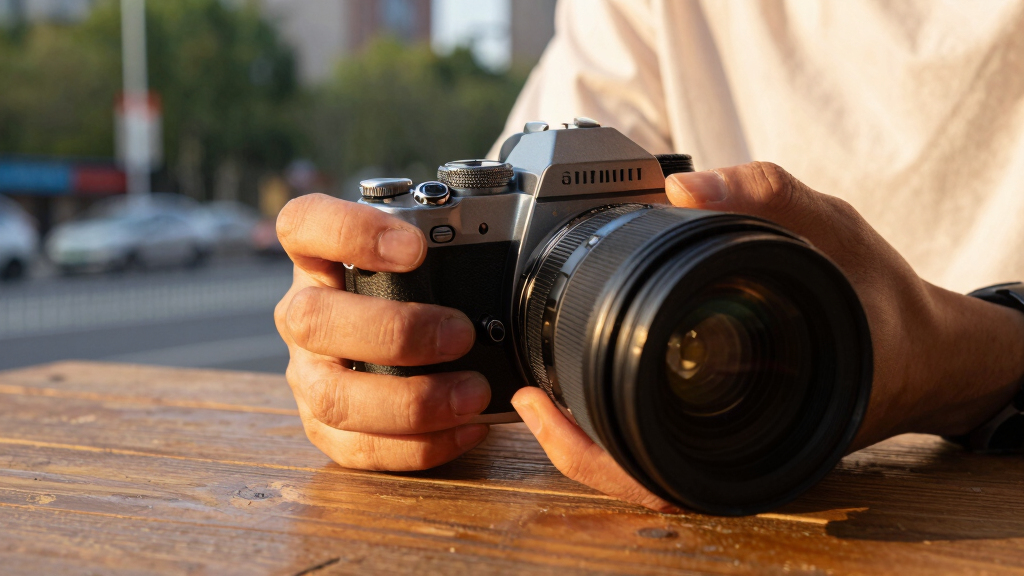
Buying a used camera is safest when you test the body, lens mount, sensor, shutter, autofocus, battery bay, ports, serial number, and seller history before handing over money. Bring your own memory card, shoot fresh files, review them closely, and walk away from corrosion, pressure, hidden serial numbers, or mismatched stories.
A clean camera bag can hide a hard life: beach sand in the dials, a sticky shutter button, or a sensor that only shows dust when you stop down to f/16. I have bought used bodies for paid work and passed on cameras that looked beautiful in photos. The difference usually came down to five minutes of checking.
This guide shows you what I check, in the order I check it, before handing over money. You will learn how to spot damage, test files, judge shutter count, question the seller, and decide when a deal is worth your trust.
Bring your own memory card and make fresh RAW files before paying.
Treat shutter count as a clue, not a guarantee of camera health.
Check the battery bay, lens mount, card door, ports, and serial number before you get excited.
Walk away from corrosion, hidden serial numbers, blocked testing, or pressure to pay quickly.
For online buys, ask for video proof, RAW samples, serial photos, and clear return terms.
Buying a Used Camera: What I Check Before Handing Over Money
TL;DR: buying a used camera is safest when you test the body, lens mount, sensor, shutter, autofocus, battery bay, ports, serial number, and seller history before paying. Bring your own memory card, shoot fresh files, review them closely, and walk away from corrosion, pressure, hidden serial numbers, or mismatched stories.
A clean camera bag can hide a hard life.
Three questions before the body cap comes off
The seller’s answers often expose risk before the camera is even in your hands. Ask who owned it, how it was used, and whether it has had repairs. A weekend travel camera and a press camera that shot rainy football matches can look similar on a table.
Who owned it?
Ask for the original receipt, matching serial number, and whether the seller is the first owner. Calm answers build trust.
How was it used?
Travel, studio, wedding, press, and beach use leave different fingerprints. Salt air and hard weather matter more than a low shutter count.
Any drops or repairs?
Repairs are not always bad, but vague answers are. Ask directly about drops, water exposure, service records, and replaced parts.
The 10-minute check that catches costly damage
Treat the body like a tool that may have been dropped, soaked, or loved hard. Damage at the edges tells the truth first: corners, doors, ports, hot shoe, lens mount, and battery bay reveal the camera’s real life.
Corners
Dents, polished impact points, or cracked seams suggest a fall rather than normal bag rub.
Mount
The lens mount should feel tight, flat, and free of bent shiny spots or loose screws.
Doors
Battery, card, HDMI, USB, and mic covers should open and close cleanly without warping.
Battery bay
Green or white crust means corrosion. That is a hard stop before money changes hands.
The 12-minute sensor, shutter, and focus test
A used camera should be tested by making images, not just scrolling menus. Use your own card, shoot RAW and JPEG, review playback, and keep the files for a closer look at home.
Six frames that reveal trouble
Format your card in the camera, shoot daylight, shoot a plain wall at f/11 or f/16, make a dark frame with the lens cap on, test face and close autofocus, fire a burst, then record 30 seconds of video with sound.
What I watch hardest
Fog, fungus, scratches, and soft frames
A used lens needs its own inspection because glass problems can ruin contrast even when the body works perfectly. Dust is common; haze, fungus, deep scratches, oily blades, and grinding rings are bigger warnings.
Shine a small light
Fine dust looks like pepper specks. Haze looks milky. Fungus looks like branching threads. Deep scratches can flare in sunlight.
Turn every ring
Zoom and focus should move smoothly without scraping, binding, wobble, or a gritty feel that suggests sand or impact.
Test near and far
Autofocus should lock on a close object, a sign, and a face. One sharp table object is not enough proof.
What shutter count tells you and what it cannot promise
Shutter count is useful, but it is only a clue. A clean 120,000-shot studio body can be a better buy than a 12,000-shot travel body that lived in damp sea air. Condition still outranks one number.
Mechanical shutter risk spectrum
Many makers rate mechanical shutters around 100,000 to 300,000 cycles depending on body class. Those ratings are targets, not deadlines, and real-world storage, impact, moisture, and maintenance still matter.
Dealer, private seller, or refurbished?
The buying route changes your risk more than it changes the camera. A dealer may give a return window, a private seller may reveal more history, and a refurbished body may arrive checked and cleaned.
| Buying route | Best for | Main risk | Return safety | What I ask for |
|---|---|---|---|---|
| Private seller | Local inspection and direct questions | No return if you miss a fault | ✗ Often limited | Receipt, serial number, fresh test files |
| Used dealer | Return window and condition grading | Less personal ownership history | ✓ Usually stronger | Warranty terms and real photos |
| Refurbished | Checked gear with cleaner paperwork | Higher price than private sale | ✓ Often best | Refurb source, warranty, accessories list |
| Online marketplace | Hard-to-find models and price comparison | Photos can hide faults | ~ Platform-dependent | Video proof, RAW samples, serial photos |
How a trustworthy camera earns my money
I want the story, the serial, the physical condition, and the fresh files to agree. When those pieces line up, I can judge the deal instead of guessing.
The deal-breakers I do not negotiate with
A good deal still has to be a trustworthy deal. Pressure, corrosion, blocked testing, missing serials, and mismatched stories usually cost more than the discount saves.
Corrosion in the battery bay
Green or white crust suggests moisture or leakage. Even if the camera powers on, internal damage may already be spreading.
Testing is blocked
If you cannot use your own card, shoot fresh files, or check playback, you do not have enough proof to pay confidently.
Hidden or altered serial number
The serial should be visible, readable, and consistent with the seller’s paperwork and photos.
Pressure to pay quickly
A seller who rushes inspection, dodges basic questions, or changes the story is telling you the risk is rising.
Why I Ask Three Questions Before I Touch the Camera
Buying a used camera starts with the story behind it, because the seller’s answers often expose risk before the body cap comes off. Ask who owned it, how it was used, and whether it has had repairs. A clear answer builds trust; a slippery answer tells you to slow down.
I usually ask for the original receipt, the serial number, and the reason for selling. A weekend travel camera and a press camera that shot rainy football matches can look similar on a table. Their lives were very different. For example, a camera carried twice a year on city trips may have bright corners from bag rub, while a wedding body may have a high shutter count but careful maintenance records.
- Good sign: the seller answers calmly and shows matching serial numbers.
- Bad sign: the seller refuses basic questions or says the camera was found.
- Useful question: ask whether the camera has been dropped, repaired, or used near salt water.
As an affiliate, we earn on qualifying purchases.
The 10-Minute Body Check That Catches Costly Damage
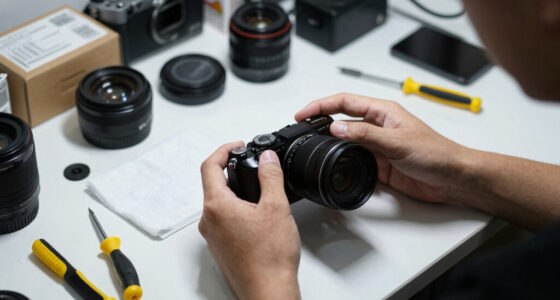
Buying a used camera gets safer when you treat the body like a tool that may have been dropped, soaked, or loved hard. Check the grip, corners, mount, card door, battery bay, ports, and screen before you take a frame. Damage at the edges often tells the truth first.
- Look at the corners: dents suggest impact, even when the camera still powers on.
- Check the lens mount: it should feel tight, flat, and free of shiny bent spots.
- Open every door: battery, card, HDMI, USB, and mic covers should close cleanly.
- Press every button: sticky controls can mean spilled drink, dust, or heavy wear.
- Inspect the battery bay: green or white crust means corrosion. I walk away.
- Check the screen: tilt it, brighten it, and look for flicker or dead areas.
I once saw a mirrorless body with a flawless front plate and a warped card door. The seller called it cosmetic. The door would not seal, and that tiny gap could invite rain, grit, and future trouble. Another easy example is a camera with one polished corner and a slightly loose hot shoe: that combination often suggests a fall, not normal bag wear.
As an affiliate, we earn on qualifying purchases.
The Lens Check That Saves You From Fog, Fungus, and Soft Frames
A used lens needs its own inspection because glass problems can ruin sharpness even when the camera body works perfectly. Shine a small light through the lens, check both ends, turn every ring, and test autofocus. Dust is common; fungus, haze, scratches, and grinding focus rings are bigger warnings.
Hold the lens near a window and look through it at an angle. Fine dust usually looks like tiny pepper specks and rarely matters in real photos. Haze looks milky, fungus looks like fine branching threads, and deep scratches can flare when sunlight hits the front element. Think of it like looking through a clean drinking glass versus a glass with dried soap film: both may pass light, but only one keeps contrast crisp.
- Zoom ring: it should move smoothly without scraping.
- Aperture blades: they should snap cleanly and stay free of oil.
- Autofocus: test near and far subjects, not just one object on the table.
- Mount contacts: gold contacts should look clean, not green or greasy.
digital camera shutter count tester
As an affiliate, we earn on qualifying purchases.
As an affiliate, we earn on qualifying purchases.
The 12-Minute Test I Use for Sensor, Shutter, and Focus
Buying a used camera should include a short shoot, not just a menu scroll, because many faults only show up after you make fresh files. Use your own memory card, shoot RAW and JPEG, and test stills, video, autofocus, and playback. You want proof you can inspect later at home.
- Format your card in the camera, then take a normal daylight frame.
- Shoot a plain wall at f/11 or f/16 to reveal sensor dust.
- Make a dark frame with the lens cap on to check hot pixels and banding.
- Test autofocus on a face, a sign, and a close object.
- Fire a short burst and listen for uneven shutter sounds.
- Record 30 seconds of video and play it back with sound.
In a cafe meet-up, I photograph a white wall, a menu board, and the seller’s camera strap buckle. Those three frames show dust, focus accuracy, and close-detail sharpness without making the seller wait all afternoon. If the wall shot has the same dark spot in the same place across several frames, that is probably sensor dust; if the menu board looks sharp behind the focus point but soft where you aimed, autofocus may need attention.
used DSLR camera with verified serial number
As an affiliate, we earn on qualifying purchases.
As an affiliate, we earn on qualifying purchases.
What Shutter Count Tells You and What It Cannot Promise
Shutter count is a mileage reading, not a verdict, because a camera can fail early or work far past its rating. Manufacturer durability specs commonly place mechanical shutters between 100,000 and 300,000 cycles, depending on body class, and those numbers are targets, not deadlines [2].
Think of it like a used car. The odometer matters, but you still check the tires, brakes, service records, and how it sounds on the road. I would rather buy a clean, honest 120,000-shot camera than a damp, sandy body with a suspiciously low count. A studio camera with 150,000 careful product shots may be a safer tool than a 12,000-shot travel camera that spent two summers in sea spray.
Low shutter count does not erase bad storage, salt air, impact damage, or battery corrosion.
According to CIPA shipment reports, interchangeable-lens camera shipments fell from about 20 million units in 2012 to roughly 6 to 7 million a year in the mid-2020s [1]. Used gear matters because many photographers now keep bodies longer and trade carefully.
Used Dealer, Private Seller, or Refurbished: Pick Your Risk Level
Buying a used camera from a dealer, private seller, or refurbished program changes your risk more than it changes the camera itself. A dealer may give you a return window, a private seller may reveal more history, and a refurbished body may arrive checked and cleaned. Match the route to your confidence.
| Buying route | Best for | Main risk | What I ask for |
|---|---|---|---|
| Private seller | Local inspection and direct questions | No return if you miss a fault | Receipt, serial number, fresh test files |
| Used dealer | Return window and condition grading | Less personal history | Warranty terms and real photos |
| Refurbished | Checked gear with support | Limited stock and fewer bundles | Service details and included accessories |
On platforms like eBay, MPB, KEH, or Facebook Marketplace, I care less about polished wording and more about evidence. Clear photos, return terms, and fast answers beat a dramatic listing every time. For example, I would trust a plain dealer listing with six sharp photos and a 14-day return window more than a private listing that says mint but shows only one soft image of the camera in a dim room.
Red Flags That Tell Me to Walk Away
Red flags are patterns that make the deal feel rushed, hidden, or physically risky. One flaw can be fine; a cracked mount plus a vague repair story is not. Walk away when the seller blocks basic tests, hides the serial number, or pushes you to pay before you inspect files.
- Corrosion in the battery bay or card slot.
- Fungus or haze inside a lens that the seller calls dust.
- Missing serial number, scratched label, or mismatched box.
- Sticky buttons, rough dials, or a shutter that sounds uneven.
- Pressure tactics, like another buyer waiting outside or payment before testing.
A scuffed camera can be honest; a spotless camera can be trouble. I once passed on a body because the seller would not let me insert my own memory card. That single refusal told me more than the clean screen and shiny box. Another common scene is the seller who keeps saying, It worked last time I used it, while the battery door will not latch or the camera freezes during playback.
What to Check When You Cannot Inspect It in Person
Remote buying works best when you ask the seller to create evidence you can verify, not just send pretty photos. Request a short video, fresh test images, serial number photos, and a clear return option. If the seller cannot make those simple files, you have learned something useful.
- Ask for a video showing power-on, menu navigation, shutter firing, autofocus, and playback.
- Request RAW files at low ISO and high ISO, plus a stopped-down wall shot.
- Get serial photos from the body, box, and receipt when available.
- Check return terms before paying, especially for online marketplaces.
- Save messages so the condition claim stays documented.
I ask for one photo of the camera beside a handwritten note with the current date. It is simple, slightly awkward, and effective. A real seller with the camera in hand can usually do it in two minutes. I also ask them to photograph a blank wall at f/16 and a bookshelf or street sign wide open; those two sample scenes can reveal dust spots, decentered softness, and autofocus problems better than a flattering photo of the camera itself.
My Final Handoff Routine Before Money Changes Hands
Before handing over money, I slow the deal down and repeat the checks that would hurt most if I missed them. I confirm serial numbers, test the included battery and charger, save sample files, write down what comes in the box, and keep the message thread.
At the table, I line up the body, lens, caps, battery, charger, strap, and any cards. Then I compare that pile with the listing. If something changed, I ask calmly. The answer matters more than the missing cap. For instance, a forgotten neck strap is minor; a swapped third-party charger or missing original battery changes the value and may explain why the price looked so good.
My final rule is simple: pay for condition, not hope. If the camera feels right, the files look clean, and the seller’s story holds together, you can leave with a tool that already has a life and still has plenty of pictures left in it.
Frequently Asked Questions
How do I know if a used camera is worth buying?
A used camera is worth buying when the condition, test files, seller history, and included accessories all line up. Compare it with similar bodies from reputable dealers, but do not let market value distract you from sensor dust, corrosion, or a weak battery.
Is shutter count a deal breaker?
Shutter count is a useful clue, not a deal breaker by itself. A high-count camera with clean files and honest wear can be a better buy than a low-count body with salt damage, sticky controls, or a vague repair story.
What should I bring when inspecting a used camera?
Bring a known-good memory card, a small flashlight, a charged battery if you own one, and a lens you trust if the body uses your mount. It’s important to bring gear you know, because it removes doubt when testing autofocus, files, and card writing.
Should I buy from a private seller or a used dealer?
Buy from a private seller when you can inspect in person and ask direct questions. Buy from a used dealer when you want grading, return terms, and less personal risk. Neither route is perfect, so let your experience level guide the choice.
What if the seller will not share the serial number?
If the seller will not share the serial number, I usually walk away. You need it to match the camera to receipts, check the body against the box, and reduce the chance of buying stolen or misrepresented gear.
Conclusion
The smartest used-camera purchase is not the one that feels like a steal. It is the one that still looks good after your own tests, your own files, and a few calm questions.
Take your time. A good camera will survive a careful inspection, and a bad deal often falls apart under bright light, a clean memory card, and five quiet minutes at the table.
Evergreen bestsellers Picks
bestsellers
As an affiliate, we earn on qualifying purchases.