For most home studios, I’d start with the JBL 305P MkII: its five-inch woofer and broad listening sweet spot make it a strong all-around fit for mixing and production. The Edifier MR4 is a more accessible choice for a compact desk, while the Yamaha HS7 suits rooms where deeper bass reach matters. The main tradeoffs are speaker size, room and placement demands, connectivity, and how much sound neutrality matters for your work. A larger monitor can reveal more low end, but it may be harder to place well in a small room. Read on for all 15 options and the differences that matter when choosing studio monitor speakers for home studios.

Get audio and creator gear delivered free with Prime
- Fast, free delivery on millions of items
- Prime Video, Amazon Music and more included
- Member-only deals all year
Complete the kit


Key Takeaways
- JBL 305P MkII is the strongest all-around pick in this group for buyers who want a five-inch nearfield monitor and a wide listening area, rather than the smallest or largest speaker here.
- Edifier MR4 offers a studio-focused starting point for a compact setup; the consumer-oriented R1280T and R980T make more sense when everyday listening is a larger part of the job.
- Yamaha HS7 and PreSonus Eris E7 XT favor room and bass headroom over desk-friendly size, so their larger cabinets are a better fit when placement and listening distance allow.
- Small speakers are not interchangeable with full-range mixing systems. Models such as the Mackie CR3.5 and M-Audio BX4 suit limited desk space and entry-level work, but their small woofers offer less low-frequency reach.
- Connection options and bundle details affect setup choice: the Ortizan C7 adds Bluetooth, while the PreSonus E7 XT is listed as a single monitor, so buyers building stereo systems need to plan for a second unit.
| M-Audio BX4 4.5-Inch Wired Studio Monitor Speakers, Pair |  | Best for Flexible Desktop Connections | Configuration: Stereo pair; active and passive speakers | Woofer: 4.5-inch Kevlar | Tweeter: Natural silk dome | VIEW LATEST PRICE | See Our Full Breakdown |
| Edifier MR4 Active Studio Monitor Speakers |  | Best Value for a Monitor-Focused Desk | Configuration: Active stereo pair | Woofer: 4-inch composite | Tweeter: 1-inch silk dome | VIEW LATEST PRICE | See Our Full Breakdown |
| Ortizan C7 Powered Studio Monitors, Pair, Bluetooth 5.3, Black |  | Best for Bluetooth-Equipped Desktop Setups | Configuration: Powered pair | Bluetooth: Version 5.3 | Woofer: 3.5-inch carbon fiber | VIEW LATEST PRICE | See Our Full Breakdown |
| Yamaha HS4 Powered Studio Monitors, Pair, Black |  | Best Compact Monitor for Mixing | Configuration: Powered two-way stereo pair | Woofer: 4.5-inch cone | Tweeter: 1-inch dome | VIEW LATEST PRICE | See Our Full Breakdown |
| JBL 305P MkII 5-Inch 2-Way Powered Studio Reference Monitors (Pair) |  | Best Overall for Home-Studio Mixing | Configuration: Pair of powered two-way monitors | Woofer: 5-inch | Tweeter: 1-inch | VIEW LATEST PRICE | See Our Full Breakdown |
| KRK Classic 7 Powered Two-Way Studio Monitor |  | Best for Flexible Near-Wall Placement | Type: Active two-way studio monitor | Woofer: 7-inch glass aramid | Tweeter: 1-inch textile soft dome | VIEW LATEST PRICE | See Our Full Breakdown |
| Mackie CR3.5 Powered Studio Monitors, Pair, 3.5-Inch Woofers, Black | 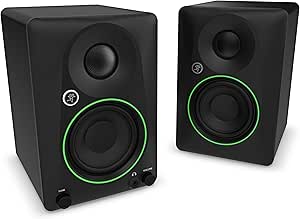 | Best for Beginner Desktop Setups | Speaker type: Powered studio monitors | Quantity: Pair | Woofer: 3.5 inches | VIEW LATEST PRICE | See Our Full Breakdown |
| Edifier R1280T 2.0 Powered Bookshelf Speakers |  | Best for Shared Listening and Simple Editing | Speaker type: Powered bookshelf | Audio output mode: Stereo | Power output: 42 watts RMS | VIEW LATEST PRICE | See Our Full Breakdown |
| PreSonus Eris E4.5 2-Way 4.5-Inch Nearfield Studio Monitors (Pair) |  | Best Compact Mixing Pick | Configuration: 2-way pair | Woofer: 4.5-inch woven-composite | Tweeter: 1-inch silk-dome | VIEW LATEST PRICE | See Our Full Breakdown |
| Yamaha HS7 7-Inch Powered Studio Monitor Pair |  | Best for Detailed Mixing | Configuration: Two-way powered monitor pair | Woofer: 7 inches | Tweeter: 1 inch | VIEW LATEST PRICE | See Our Full Breakdown |
| Edifier MR4.5 Bi-Amped Studio Monitor Speakers, 80W RMS, Black |  | Best for Flexible Home-Desk Setups | Configuration: Active stereo pair | Total power: 80W RMS (30W × 2 + 10W × 2) | Drivers: 4.5-inch mid-bass drivers and 1-inch silk dome tweeters | VIEW LATEST PRICE | See Our Full Breakdown |
| Edifier MR5 2.0 Studio Monitor Bookshelf Speakers, 110W RMS, White |  | Best Feature-Rich Three-Way Pair | Configuration: 2.0 active stereo pair | Amplifier power: 110W RMS | Drivers: 5-inch woofer, 3.75-inch mid driver, 1-inch silk dome tweeter | VIEW LATEST PRICE | See Our Full Breakdown |
| Yamaha HS5 Powered Studio Monitor (Pair) |  | Best for Straightforward Mix Decisions | Configuration: Powered monitor pair | Amplification: Bi-amplified | Total power: 70W (45W LF + 25W HF) | VIEW LATEST PRICE | See Our Full Breakdown |
| PreSonus Eris E7 XT Active Studio Monitor with EBM Waveguide (Single) |  | Best for a Wider Listening Sweet Spot | Configuration: Two-way active monitor; single unit | Woofer: 6.5-inch woven composite | Tweeter: 1.25-inch silk dome | VIEW LATEST PRICE | See Our Full Breakdown |
| Edifier R980T 4-Inch Active Bookshelf Speakers (Pair) |  | Best for Basic Desktop Playback | Configuration: Powered 2.0 stereo pair | Power output: 24 watts | Woofer: 4 inches | VIEW LATEST PRICE | See Our Full Breakdown |
| studio monitor speakers for home studio | Inputs | Configuration | Woofer | Tweeter |
|---|---|---|---|---|
| M-Audio BX4 4.5-Inch Wired Stu | 1/4-inch, 1/8-inch, and RCA | Stereo pair; active and passive speakers | 4.5-inch Kevlar | Natural silk dome |
| Edifier MR4 Active Studio Moni | Balanced TRS, RCA, and AUX | Active stereo pair | 4-inch composite | 1-inch silk dome |
| Ortizan C7 Powered Studio Moni | RCA, 3.5 mm AUX, USB, and 6.35 mm TRS | Powered pair | 3.5-inch carbon fiber | 0.75-inch silk dome |
| Yamaha HS4 Powered Studio Moni | XLR/TRS combo, RCA, and stereo mini | Powered two-way stereo pair | 4.5-inch cone | 1-inch dome |
| JBL 305P MkII 5-Inch 2-Way Pow | Balanced XLR and 1/4-inch TRS | Pair of powered two-way monitors | 5-inch | 1-inch |
| KRK Classic 7 Powered Two-Way | — | — | 7-inch glass aramid | 1-inch textile soft dome |
| Mackie CR3.5 Powered Studio Mo | RCA, TRS | — | 3.5 inches | 1 inch |
| Edifier R1280T 2.0 Powered Boo | 2 AUX inputs; RCA and PC audio | — | 4 inches | 13 mm silk dome |
| PreSonus Eris E4.5 2-Way 4.5-I | ¼-inch TRS balanced, RCA unbalanced, ⅛-inch TRS stereo aux | 2-way pair | 4.5-inch woven-composite | 1-inch silk-dome |
| Yamaha HS7 7-Inch Powered Stud | XLR and TRS phone jack | Two-way powered monitor pair | 7 inches | 1 inch |
| Edifier MR4.5 Bi-Amped Studio | Balanced XLR, balanced TRS, RCA, AUX, front headphone jack | Active stereo pair | — | — |
| Edifier MR5 2.0 Studio Monitor | XLR, TRS, RCA, AUX | 2.0 active stereo pair | — | — |
| Yamaha HS5 Powered Studio Moni | XLR and TRS phone jack, balanced/unbalanced | Powered monitor pair | — | — |
| PreSonus Eris E7 XT Active Stu | — | Two-way active monitor; single unit | 6.5-inch woven composite | 1.25-inch silk dome |
| Edifier R980T 4-Inch Active Bo | Two AUX inputs (RCA and 3.5mm) | Powered 2.0 stereo pair | 4 inches | — |
More Details on Our Top Picks
M-Audio BX4 4.5-Inch Wired Studio Monitor Speakers, Pair
The BX4 suits a home-studio desk where several sources need to connect without extra switching gear. Its 1/4-inch, 1/8-inch, and RCA inputs, plus front-panel aux and headphone connections, make it more convenient for swapping between an interface, computer, and personal listening than the Yamaha HS4. The 4.5-inch Kevlar woofers and rear high- and low-EQ controls give it useful tools for a compact production setup, while included cables and MPC Beats software help newcomers get started.
The tradeoff is a wired, tabletop setup with limited placement freedom, and the supplied specifications do not give a frequency-response figure for judging bass extension. I’d choose the BX4 for connection flexibility; the JBL 305P MkII is the stronger fit when precise imaging and room-adjustment controls matter more than front-panel convenience.
Pros:- Multiple input types accommodate a range of desktop and studio sources.
- Front-panel aux input and headphone output make quick listening changes easy.
- Rear high- and low-frequency EQ controls allow basic sound adjustment.
- Cables and MPC Beats software are included.
Cons:- Wired connections limit placement flexibility.
- No frequency-response specification is provided in the supplied product data.
- The speakers are not water resistant.
Best for: Desktop producers and podcasters who regularly switch between an audio interface, computer, and headphones or aux-connected device.
Not ideal for: Producers who need wireless placement, documented frequency response, or the JBL 305P MkII’s specified room controls and imaging features.
- Configuration:Stereo pair; active and passive speakers
- Woofer:4.5-inch Kevlar
- Tweeter:Natural silk dome
- Power:120 W
- Inputs:1/4-inch, 1/8-inch, and RCA
- Front connections:1/8-inch aux input and headphone output
- Controls:High and low EQ dials; left/right active speaker switch
- Enclosure:Engineered wood
Our verdict“Choose the BX4 if easy access to several wired sources matters more than wireless convenience or detailed acoustic specifications.”
Edifier MR4 Active Studio Monitor Speakers
The Edifier MR4 is a sensible choice for a home-studio desk where balanced connections and straightforward tonal adjustment matter more than extra size or output. Balanced TRS, RCA, and AUX inputs cover common studio and consumer sources, while separate high- and low-frequency controls let you make basic adjustments to the speaker’s presentation. Its switchable monitor and music modes also give it more flexibility for checking mixes and then listening casually than the Yamaha HS4, which is presented more squarely as a production monitor.
The 4-inch composite woofer keeps this a compact near-field option, but buyers seeking stronger low-end reach should compare it with the larger 5-inch JBL 305P MkII. The supplied data lists “20 kHz” as frequency response without a lower limit, so it does not establish bass extension. I’d pick the MR4 for its useful inputs and modes, not on the basis of a complete response specification.
Pros:- Balanced TRS, RCA, and AUX inputs suit varied desktop setups.
- Switchable monitor and music modes support both work and casual listening.
- Separate high- and low-frequency controls offer basic tonal adjustment.
- MDF enclosure is designed to reduce resonance.
Cons:- The 4-inch woofer may be limiting for monitoring deep bass compared with the JBL 305P MkII’s 5-inch woofer.
- The supplied frequency-response figure gives only 20 kHz and no lower limit.
- Maximum output power is listed as 42 watts without further amplifier detail.
Best for: Home-studio beginners and desktop creators who want balanced TRS connectivity, simple tone controls, and a separate casual-listening mode.
Not ideal for: Producers who need a stated bass-extension figure or want a larger woofer for low-frequency monitoring; the JBL 305P MkII is a better comparison.
- Configuration:Active stereo pair
- Woofer:4-inch composite
- Tweeter:1-inch silk dome
- Maximum output power:42 W
- Inputs:Balanced TRS, RCA, and AUX
- Output:Front headphone output
- Listening modes:Monitor and music
- Enclosure:MDF
- Signal-to-noise ratio:85 dB
Our verdict“Pick the MR4 for a compact, adaptable desk setup with balanced inputs and monitor/music modes, but not for clearly specified low-frequency performance.”
Ortizan C7 Powered Studio Monitors, Pair, Bluetooth 5.3, Black
The Ortizan C7 is the most connectivity-oriented pick here for a home studio that also serves as a gaming or everyday desktop setup. Alongside balanced 6.35 mm TRS, RCA, USB, and 3.5 mm AUX, it adds Bluetooth 5.3, so a phone or other wireless source can share the desk without a cable change. That makes it more versatile for casual playback than the studio-focused Yamaha HS4, though the HS4 provides a specified frequency range and room-control features that are more useful for judging mixes.
The C7’s 3.5-inch woofer and compact desktop orientation suit near-field listening, but the supplied data gives neither power output nor frequency response. That leaves less information for judging headroom and low-end coverage than with the JBL 305P MkII. Bluetooth and broad input choice are the draw; buyers prioritizing documented monitoring performance should look elsewhere in this lineup.
Pros:- Bluetooth 5.3 supports convenient wireless playback.
- Wired inputs include balanced 6.35 mm TRS, USB, RCA, and 3.5 mm AUX.
- Compact powered-pair format fits desktop listening.
- A headphone output is included for private monitoring.
Cons:- Power output and frequency response are not specified in the supplied data.
- The 3.5-inch woofer is smaller than the woofers in the Yamaha HS4 and JBL 305P MkII.
- Corded electric power is still required despite Bluetooth playback.
Best for: Desktop creators who want one compact speaker pair for interface monitoring, computer audio, and Bluetooth playback from a phone.
Not ideal for: Mixers who need stated power and frequency-response figures to plan low-frequency work or compare monitoring capability.
- Configuration:Powered pair
- Bluetooth:Version 5.3
- Woofer:3.5-inch carbon fiber
- Tweeter:0.75-inch silk dome
- Inputs:RCA, 3.5 mm AUX, USB, and 6.35 mm TRS
- Output:Headphone output
- Power source:Corded electric
- Enclosure materials:ABS, metal, and wood
Our verdict“Choose the C7 if wireless playback and broad desktop connectivity are priorities, but choose a better-specified monitor for mix decisions.”
Yamaha HS4 Powered Studio Monitors, Pair, Black
The Yamaha HS4 makes the most sense when desk space is tight but the speakers still need to serve editing and production work. Its 4.5-inch woofer and 1-inch dome tweeter are paired with room-control and high-trim response adjustments, giving buyers practical ways to adapt playback to a small workspace. Compared with the Edifier MR4, the HS4 specifies a full 60 Hz–22 kHz response range, which gives a clearer basis for understanding its stated frequency coverage; the MR4 instead offers monitor and music modes.
The compact design does involve limits: the HS4 lists 26 W output power, and its 60 Hz lower response limit means it is not a substitute for dedicated sub-bass monitoring. It also has fewer listed consumer connections than the BX4, which adds front-panel aux and headphone access. I’d favor the HS4 for focused production in a constrained setup, not for buyers seeking broad connectivity or heavy low-end playback.
Pros:- Compact pair suits limited-space workstations.
- Room control and high-trim response controls help adapt playback.
- XLR/TRS combo, RCA, and stereo mini inputs cover several source types.
- Frequency response is specified from 60 Hz to 22 kHz.
Cons:- Listed output power is 26 W.
- The stated 60 Hz lower response limit does not cover deep sub-bass.
- No front-panel headphone output is listed.
Best for: Music producers and video editors working at a small desk who want a compact pair with room and high-frequency adjustment controls.
Not ideal for: Bass-focused producers who need to judge deep sub-bass, or desktop users who want the BX4’s front-panel aux and headphone connections.
- Configuration:Powered two-way stereo pair
- Woofer:4.5-inch cone
- Tweeter:1-inch dome
- Frequency response:60 Hz–22 kHz (-10 dB)
- Output power:26 W
- Inputs:XLR/TRS combo, RCA, and stereo mini
- Controls:Room control and high trim response
- Mounting type:Tabletop
Our verdict“Pick the HS4 for compact production and editing with useful room adjustments, but not for deep-bass monitoring or front-panel convenience.”
JBL 305P MkII 5-Inch 2-Way Powered Studio Reference Monitors (Pair)
The JBL 305P MkII earns the lead for home-studio mixing because it pairs a 5-inch woofer with an Image Control Waveguide designed to support precise imaging and a wide listening sweet spot. That can make it easier to judge stereo placement from a seated position without being locked to one exact head position. Its Boundary EQ and HF Trim also offer more room-adaptation options than the BX4’s basic high- and low-EQ dials, while balanced XLR and TRS inputs suit interface-based setups.
This is a larger, more studio-directed choice than the compact Yamaha HS4, and its 5-inch woofer offers a step up in driver size without proving deep-bass coverage; no frequency-response figure is supplied here. The JBL’s dimensions also differ between the product description and product information, so desk-fit checks need care. I’d choose it for mixing and imaging, not for wireless playback or a small, cable-light setup.
Pros:- Image Control Waveguide is designed for precise imaging and a wide listening sweet spot.
- Boundary EQ and HF Trim offer room and tonal adjustment.
- Balanced XLR and 1/4-inch TRS inputs fit common studio interfaces.
- Dual 41-watt Class-D amplifiers and a 5-inch woofer suit a more substantial setup than the compact HS4.
Cons:- Dimensions differ between the product description and product information.
- No frequency-response specification is supplied for judging low-frequency extension.
- Balanced studio inputs do not provide the Bluetooth or front-panel aux convenience of the Ortizan C7 or M-Audio BX4.
Best for: Home-studio mixers with an audio interface who value stereo imaging, a broad listening sweet spot, and room-adjustment controls.
Not ideal for: Bluetooth-first desktop users or anyone who needs a clearly verified cabinet size before fitting monitors into a tight workstation.
- Configuration:Pair of powered two-way monitors
- Woofer:5-inch
- Tweeter:1-inch
- Amplifiers:Dual 41-watt Class-D
- Inputs:Balanced XLR and 1/4-inch TRS
- Room controls:Boundary EQ and HF Trim
- Peak SPL:108 dB
- Enclosure:15 mm MDF with ABS baffle
- Warranty:5 years
Our verdict“Choose the 305P MkII for a more mixing-focused home studio where imaging and room adjustments matter more than wireless features or compact size.”
KRK Classic 7 Powered Two-Way Studio Monitor
The KRK Classic 7 suits a home studio that needs a 7-inch woofer and room to adjust its tonal balance. Its front-firing port can make placement near a wall easier than with a rear-ported design, while dedicated low- and high-frequency controls give you ways to adapt the sound to the room. Compared with the compact PreSonus Eris E4.5, the larger woofer and 73-watt bi-amped system are a better fit for listeners who want more scale from their monitors. The tradeoff is its plastic enclosure and larger footprint, so it may feel like too much speaker for a crowded desk or small room. I’d choose it for a setup where placement flexibility matters more than a compact cabinet.
Pros:- Front-firing port can suit placement close to a wall
- Low- and high-frequency adjustments help tailor sound to the room
- 73-watt bi-amped active design needs no external amplifier
- 7-inch woofer offers a larger format than compact models such as the Eris E4.5
Cons:- Plastic enclosure feels less substantial than a more solid cabinet
- Large 18 × 12 × 14-inch dimensions can crowd a desktop
- Requires a corded power connection
Best for: Home-studio owners who need 7-inch monitors near a wall and want basic room-tuning controls.
Not ideal for: Desk-based producers with limited space or buyers seeking a compact, premium-finish cabinet.
- Type:Active two-way studio monitor
- Woofer:7-inch glass aramid
- Tweeter:1-inch textile soft dome
- Amplifier:Bi-amped Class A/B
- Total power:73 watts
- Port:Front-firing
- Frequency controls:Dedicated low- and high-frequency level adjustments
- Dimensions:18 × 12 × 14 inches
- Weight:8.4 kg
Our verdict“Choose the KRK Classic 7 if you need a larger active monitor with front-port placement flexibility and room-tuning controls.”
Mackie CR3.5 Powered Studio Monitors, Pair, 3.5-Inch Woofers, Black
The Mackie CR3.5 is a straightforward entry point for a desktop home studio, especially if the speakers will also handle everyday listening. Its location switch adapts bass response for desktop or bookshelf use, and the tone knob offers a simple way to shape playback without digging through software menus. Unlike the more production-focused PreSonus Eris E4.5, the CR3.5 emphasizes easy placement and included setup accessories: isolation pads and several cables are in the box. The 3.5-inch woofers, though, limit low-end reach compared with the Eris E4.5’s 4.5-inch drivers or larger options such as the KRK Classic 7. That makes the Mackie less suitable for judging deep bass in a mix. I’d pick it for a first, compact setup rather than a bass-critical production room.
Pros:- Location switch helps adapt bass response to desktop or bookshelf placement
- Tone control provides quick sound adjustment
- Includes isolation pads and multiple cables
- Compact pair works well for desktop listening and production
Cons:- 3.5-inch woofers offer limited low-frequency reach compared with larger monitors
- One-year warranty is shorter than the KRK Classic 7’s listed three years
- Corded power requires an outlet
Best for: New producers building a small desktop setup who want simple controls, flexible placement, and included connection accessories.
Not ideal for: Mixers who need to judge deep bass or want a larger woofer for fuller low-frequency monitoring.
- Speaker type:Powered studio monitors
- Quantity:Pair
- Woofer:3.5 inches
- Tweeter:1 inch
- Maximum output power:50 watts
- Inputs:RCA, TRS
- Dimensions:7.1 × 5.5 × 8.1 inches
- Included accessories:Isolation pads, 1/8-inch to 1/8-inch cable, 1/8-inch to RCA cable, speaker wire
Our verdict“Pick the CR3.5 for an accessible desktop setup where easy placement and included accessories matter more than deep bass extension.”
Edifier R1280T 2.0 Powered Bookshelf Speakers
The Edifier R1280T is the most living-room-friendly choice here: it pairs a wood-effect MDF cabinet with a remote and side-panel bass and treble controls. Two AUX inputs let you keep separate devices connected, which is handy when a home studio doubles as a general listening space. Compared with the Mackie CR3.5, its 4-inch woofer and 42 watts RMS make it a larger, more conventional bookshelf option, while the Mackie offers a location switch and bundled isolation pads aimed at desktop use. The Edifier’s consumer-style controls are convenient, but the supplied details don’t list balanced inputs or room-tuning features for production work. Its wired AUX connections also keep it simple rather than flexible. I’d use it for editing and casual playback, not as my first pick for critical mix decisions.
Pros:- Two AUX inputs allow two devices to stay connected
- Remote control is convenient when speakers are placed on a shelf
- Bass and treble controls provide straightforward sound adjustment
- MDF cabinet with wood-effect finish suits shared living spaces
Cons:- Wired AUX inputs offer less studio-oriented connectivity than the Eris E4.5’s balanced TRS input
- No listed room-tuning controls for adapting response to a studio
- AC adapter and wired connections limit placement flexibility
Best for: Home creators who want one pair of speakers for basic editing, computer audio, and casual listening from multiple wired devices.
Not ideal for: Producers who need balanced studio connections, dedicated room tuning, or monitors focused on critical mixing.
- Speaker type:Powered bookshelf
- Audio output mode:Stereo
- Power output:42 watts RMS
- Woofer:4 inches
- Tweeter:13 mm silk dome
- Inputs:2 AUX inputs; RCA and PC audio
- Controls:Remote control; side-panel volume, bass, and treble
- Enclosure:MDF wood with wood-effect vinyl
- Warranty:2-year manufacturer warranty
Our verdict“Choose the R1280T for a shared home setup where remote operation and multiple wired sources matter more than dedicated mixing features.”
PreSonus Eris E4.5 2-Way 4.5-Inch Nearfield Studio Monitors (Pair)
The Eris E4.5 earns its place as a compact nearfield monitor pair with more studio-focused connections and controls than the consumer-oriented Edifier R1280T. Balanced TRS, RCA, and front-panel aux inputs make it easier to connect an interface, a computer, or another playback source, while high- and low-frequency tuning helps adapt the monitors to a desk or room. Its 4.5-inch woven-composite woofer is a useful middle ground: more substantial than the Mackie CR3.5’s 3.5-inch drivers, but less imposing than the 7-inch KRK Classic 7 or Yamaha HS7. That compact size comes with a real limit: extra low-frequency output calls for an optional subwoofer. I’d favor this pair for a small room and nearfield mixing, but not for producers who need to judge deep bass without adding another speaker.
Pros:- Balanced TRS, RCA, and stereo aux inputs suit varied studio sources
- High- and low-frequency controls help adapt the sound to the room
- Front-panel headphone output is convenient at a desk
- 4.5-inch woofer offers a step up in driver size from the Mackie CR3.5
Cons:- An optional subwoofer is needed for additional low-frequency output
- Smaller woofers provide less bass scale than the KRK Classic 7 or Yamaha HS7
Best for: Producers in small home studios who need balanced inputs, nearfield monitoring, and room-tuning controls in a compact pair.
Not ideal for: Bass-focused mixers who need strong low-frequency monitoring without adding a subwoofer.
- Configuration:2-way pair
- Woofer:4.5-inch woven-composite
- Tweeter:1-inch silk-dome
- Amplification:50 W Class AB total (25 W per side)
- Inputs:¼-inch TRS balanced, RCA unbalanced, ⅛-inch TRS stereo aux
- Headphone output:Front-panel output with built-in amplifier
- Room tuning:High- and low-frequency controls
- Power-saving mode:Activates after 40 minutes idle
Our verdict“Choose the Eris E4.5 for compact nearfield mixing with flexible connections and room controls, provided its bass limits fit your work.”
Yamaha HS7 7-Inch Powered Studio Monitor Pair
The Yamaha HS7 is the strongest fit in this group for a home-studio buyer prioritizing clear, accurate monitoring over convenient extras. Its 7-inch woofer and 95-watt bi-amplified system give it a larger, more powerful format than the compact PreSonus Eris E4.5, while XLR and TRS inputs support balanced or unbalanced sources from a studio interface or other gear. Compared with the KRK Classic 7, the HS7 is presented as a monitor for accurate, transparent sound, while the KRK offers a front-firing port and dedicated low- and high-frequency adjustments. The Yamaha’s supplied details don’t list those room controls, so placement and room acoustics matter. It is also a substantial pair at 20.9 kg. I’d reserve it for a dedicated mixing desk with space to position both speakers properly.
Pros:- 7-inch woofer suits a larger home-studio monitoring setup
- 95-watt bi-amplification divides power between low and high frequencies
- XLR and TRS inputs accept balanced or unbalanced signals
- Designed for clear, accurate sound during recording and mixing
Cons:- 20.9 kg pair weight makes positioning less convenient than compact options such as the Eris E4.5
- Supplied specifications do not list room-tuning controls
- The provided product information notes uncertainty around dimensions and water-resistance details
Best for: Home-studio mixers who have room for full-size monitors and want a 7-inch pair with balanced XLR or TRS connections.
Not ideal for: Producers with a small desktop, limited placement options, or a need for listed room-tuning controls.
- Configuration:Two-way powered monitor pair
- Woofer:7 inches
- Tweeter:1 inch
- Frequency response:43 Hz–30 kHz
- Amplification:95 W bi-amplified (60 W LF + 35 W HF)
- Inputs:XLR and TRS phone jack
- Enclosure materials:Plastic, metal, and cloth
- Pair weight:20.9 kg
Our verdict“Choose the HS7 pair if you have a dedicated space and want larger, accuracy-focused monitors with balanced inputs.”
Edifier MR4.5 Bi-Amped Studio Monitor Speakers, 80W RMS, Black
The Edifier MR4.5 suits a home studio that also serves as a listening desk: balanced XLR and TRS inputs support studio gear, while Bluetooth 6.0 with LDAC and multipoint pairing makes casual playback simple. Its 4.5-inch drivers and 80W RMS put it between smaller desk-focused options such as the Edifier MR4 and larger speakers like the PreSonus Eris E7 XT, making it a practical near-field size for many compact rooms. App-based room compensation and a 9-band EQ give you more ways to adjust its sound than the Yamaha HS5’s listed controls. The tradeoff is that EQ flexibility does not replace careful placement or a room treatment plan, and the 4.5-inch woofer offers less low-end reach than a larger monitor. Choose it for connectivity and adaptability, not maximum bass extension.
Pros:- Balanced XLR and TRS plus RCA and AUX inputs suit a mix of studio and consumer gear.
- Bluetooth 6.0 with LDAC and multipoint pairing supports convenient wireless playback.
- App-based room compensation and 9-band EQ allow sound adjustments for different desk and room setups.
- Compact 4.5-inch format is easier to place near a workstation than the larger Eris E7 XT.
Cons:- The 4.5-inch woofer has less low-frequency reach than larger monitors such as the PreSonus Eris E7 XT.
- Multiple playback features and EQ controls may be unnecessary for buyers seeking a simple mixing-only monitor.
- Room EQ cannot correct poor speaker placement or substitute for acoustic treatment.
Best for: Home-studio owners who switch between balanced recording gear and wireless everyday listening, and want app-based EQ for a desk setup.
Not ideal for: Mixers who need stronger low-frequency extension for bass-heavy work or prefer a monitor with fewer playback features and a more narrowly studio-focused setup.
- Configuration:Active stereo pair
- Total power:80W RMS (30W × 2 + 10W × 2)
- Drivers:4.5-inch mid-bass drivers and 1-inch silk dome tweeters
- Frequency response:50Hz–40kHz
- Inputs:Balanced XLR, balanced TRS, RCA, AUX, front headphone jack
- Bluetooth:Version 6.0 with LDAC and multipoint pairing
- DSP and EQ:24-bit/96kHz DSP; 9-band app EQ and independent high/low controls
- Dimensions:8.19 × 5.51 × 9.61 inches (D × W × H)
Our verdict“Pick the MR4.5 if your home studio needs flexible wired and wireless connections in a compact monitor, but skip it if deep bass is your priority.”
Edifier MR5 2.0 Studio Monitor Bookshelf Speakers, 110W RMS, White
The Edifier MR5 is the most feature-rich stereo pair here for a home studio that also fills a shared room. Its three-way design assigns separate drivers to bass, midrange, and treble, while 110W RMS and a stated 101dB peak SPL give it more output headroom than the smaller Edifier MR4.5. The 5-inch woofer and 46Hz lower response figure also point to more low-end reach, though they still do not make it a substitute for a subwoofer when checking the deepest bass. XLR and TRS inputs, Bluetooth with LDAC, physical tone controls, and app-based room compensation cover a wider range of workflows than the Yamaha HS5’s simpler listed feature set. The tradeoff is a larger, heavier pair that needs more desk or stand space, and its tuning options can add complexity for buyers who want a straightforward reference setup.
Pros:- Three-way crossover separates woofer, midrange, and tweeter duties.
- 110W RMS and 101dB peak SPL offer more output headroom than the Edifier MR4.5.
- XLR, TRS, RCA, AUX, and Bluetooth with LDAC support varied studio and listening sources.
- Physical tone controls and app-based room compensation provide multiple ways to adapt playback.
Cons:- Larger and heavier than compact near-field pairs, requiring more desk or stand space.
- The stated 46Hz low-frequency limit still leaves the deepest bass outside its full-range reach.
- Extensive connectivity and tuning features may be more than a minimal mixing setup needs.
Best for: Home producers who want a three-way stereo pair with room-tuning controls, wireless playback, and enough output for near-field work in a mid-sized room.
Not ideal for: Owners of very small desks, buyers seeking the simplest possible monitoring chain, or engineers who need more extended sub-bass monitoring.
- Configuration:2.0 active stereo pair
- Amplifier power:110W RMS
- Drivers:5-inch woofer, 3.75-inch mid driver, 1-inch silk dome tweeter
- Frequency response:46Hz–40kHz
- Peak SPL:101dB
- Inputs:XLR, TRS, RCA, AUX
- Wireless audio:Bluetooth 6.0 with LDAC and multipoint connection
- Room tuning:Rear high/low controls and app-based room compensation
- Dimensions:11 × 6.3 × 10.4 inches (D × W × H)
Our verdict“Choose the MR5 for a flexible, higher-output three-way setup in a mid-sized home studio, but look to a smaller pair if desk space is tight.”
Yamaha HS5 Powered Studio Monitor (Pair)
The Yamaha HS5 is the focused choice for producers who want a compact pair aimed at revealing mix imbalances rather than doubling as a wireless listening system. Its bi-amplified 70W design sends separate power to the 5-inch woofer and 1-inch tweeter, and the stated 54Hz–30kHz response covers a useful range for near-field editing and mixing. Compared with the Edifier MR4.5, the HS5 gives up Bluetooth and app-based EQ in favor of a simpler, studio-oriented feature set. Compared with the larger PreSonus Eris E7 XT, its smaller woofer is easier to fit on a desk but offers less low-frequency reach and output potential. That makes the HS5 a sensible fit for close listening in a treated or carefully arranged workspace, though bass-heavy production may call for a subwoofer or a larger monitor.
Pros:- Bi-amplified design gives the woofer and tweeter dedicated amplification.
- Compact 5-inch form suits near-field placement on many home-studio desks.
- Balanced XLR and TRS connections accommodate common studio outputs.
- Stated 54Hz–30kHz response covers a broad range for close-range mixing.
Cons:- Limited bass extension compared with the larger PreSonus Eris E7 XT.
- No Bluetooth or app-based room compensation is listed.
- A compact woofer may leave bass-heavy producers wanting a subwoofer or larger monitors.
Best for: Home-studio mixers who work close to their speakers, value a focused monitoring setup, and can check deep bass on another system or with a subwoofer.
Not ideal for: Producers who need strong bass extension from the monitors alone, wireless playback, or a wider room-filling sweet spot.
- Configuration:Powered monitor pair
- Amplification:Bi-amplified
- Total power:70W (45W LF + 25W HF)
- Drivers:5-inch woofer and 1-inch dome tweeter
- Frequency response:54Hz–30kHz
- Inputs:XLR and TRS phone jack, balanced/unbalanced
- Weight:5.3 kg
Our verdict“Choose the HS5 for a no-frills near-field mixing pair, but plan another way to check the lowest bass in your productions.”
PreSonus Eris E7 XT Active Studio Monitor with EBM Waveguide (Single)
The PreSonus Eris E7 XT suits a home studio where more than one person needs a useful listening position, or where the engineer moves around during editing. Its 100° × 60° EBM waveguide is designed to spread sound across a wider area, while acoustic tuning controls help adapt the monitor to the room. The 6.5-inch woofer and ported enclosure offer a larger-driver alternative to the Yamaha HS5, whose smaller format is easier to place close on a crowded desk but is less suited to stronger bass output. XLR, TRS, and RCA inputs also make the Eris easy to connect to varied gear. The main buying catch is that this listing is for one monitor, not a stereo pair, so budget and setup planning must account for a second unit. Its size can also overwhelm a shallow desk.
Pros:- EBM waveguide provides a stated 100° horizontal by 60° vertical dispersion.
- Acoustic tuning controls help adapt the monitor to room conditions.
- RCA, TRS, and XLR inputs offer compatibility with varied studio sources.
- 6.5-inch woofer and ported enclosure provide a larger-format alternative to the Yamaha HS5.
Cons:- Sold as a single monitor, so a stereo setup requires purchasing a second unit.
- Larger cabinet can take up too much space on a shallow or crowded desk.
- Not water resistant, so it is unsuitable for damp environments.
Best for: Home-studio owners who need a wider listening area, have room for 6.5-inch monitors, and are prepared to buy two units for stereo monitoring.
Not ideal for: Buyers who need a complete stereo pair in one box, have limited desk depth, or want compact monitors for very close listening.
- Configuration:Two-way active monitor; single unit
- Woofer:6.5-inch woven composite
- Tweeter:1.25-inch silk dome
- Waveguide dispersion:100° horizontal × 60° vertical
- Maximum sound level:104dB
- Connectivity:RCA, TRS, XLR
- Enclosure:Ported
Our verdict“Pick the Eris E7 XT if a wider listening sweet spot and larger driver matter more than compact placement, and remember that this is a single speaker.”
Edifier R980T 4-Inch Active Bookshelf Speakers (Pair)
The Edifier R980T is the simplest and least studio-focused choice in this group: a powered bookshelf pair for basic computer playback, reference listening, and light home-studio tasks. Its 24-watt output, 4-inch woofers, and two AUX inputs make it easy to connect everyday sources, while the included cables reduce setup fuss. Compared with the Edifier MR4.5, it lacks balanced XLR and TRS inputs and the monitoring-oriented EQ features that better suit a production chain. It is also a much more modest proposition than the Yamaha HS5 for mix decisions. The R980T makes sense when straightforward stereo sound is the main goal and studio connections are not required. Its limited connectivity and compact driver size make it a poor fit for serious mixing or bass-dependent work.
Pros:- Two AUX inputs allow two wired sources to remain connected.
- Includes RCA and 3.5mm cables plus speaker wire for a straightforward setup.
- Wooden enclosures are designed to reduce acoustic resonance.
- Powered stereo pair avoids the need for a separate amplifier.
Cons:- No balanced XLR or TRS inputs, unlike the Edifier MR4.5 and Yamaha HS5.
- 24 watts of total output is modest for louder or larger-room monitoring.
- 4-inch woofers provide limited low-frequency reach for bass-heavy production.
Best for: Beginners building a simple computer-based workspace who want powered stereo speakers for casual listening and occasional audio editing.
Not ideal for: Producers who need balanced studio inputs, room-tuning tools, greater output, or dependable low-frequency monitoring for mix decisions.
- Configuration:Powered 2.0 stereo pair
- Power output:24 watts
- Woofer:4 inches
- Enclosure material:Wood
- Inputs:Two AUX inputs (RCA and 3.5mm)
- Signal-to-noise ratio:85dB
- Dimensions:11.5 × 7.5 × 17 inches
- Weight:7.8 pounds
- Warranty:2 years
Our verdict“Choose the R980T for uncomplicated desktop playback and light editing, not as a substitute for purpose-built studio monitors.”

How We Picked
I compared these speakers as tools for home-studio work, not just as ways to make music sound enjoyable. The ranking weighs monitoring suitability, driver size and likely low-frequency reach, practical fit for a desk or small room, and useful setup features such as connection options and room-position controls where specified. I also considered whether each model is sold as a pair or a single speaker, since that changes what a buyer needs for a stereo setup.
The order favors speakers that balance useful monitoring capability with realistic home-studio placement. Smaller and more accessible models rank well when their limits are clear and their compact format serves a real need; larger monitors rise when their extra scale makes sense for a suitable room. Bookshelf-oriented Edifier models remain valid choices for mixed listening, but they rank below more explicitly studio-oriented options for buyers whose main goal is mix decisions. Product names and published specifications inform this comparison; I do not present it as hands-on testing.
Factors to Consider When Choosing Studio Monitor Speakers For Home Studios
Choosing a home-studio monitor is less about finding the biggest speaker and more about matching its reach and setup demands to your room and work. These broader checks can prevent common mismatches that a feature list alone will not reveal.
Match Woofer Size to Room and Listening Distance
A larger woofer can reproduce more of the low end, but it does not automatically make a mix more accurate. In a compact, untreated room, bass reflections and room modes can exaggerate or cancel frequencies, making extra low-frequency output difficult to judge. Nearfield listening at a desk often favors monitors that can be positioned close to you without overwhelming the room. Measure the available space, including clearance behind the cabinets, before moving up in size. If your work depends on deep bass, headphones or a subwoofer can provide a useful second reference rather than forcing oversized monitors into a poor room.
Treat Placement as Part of the Speaker Choice
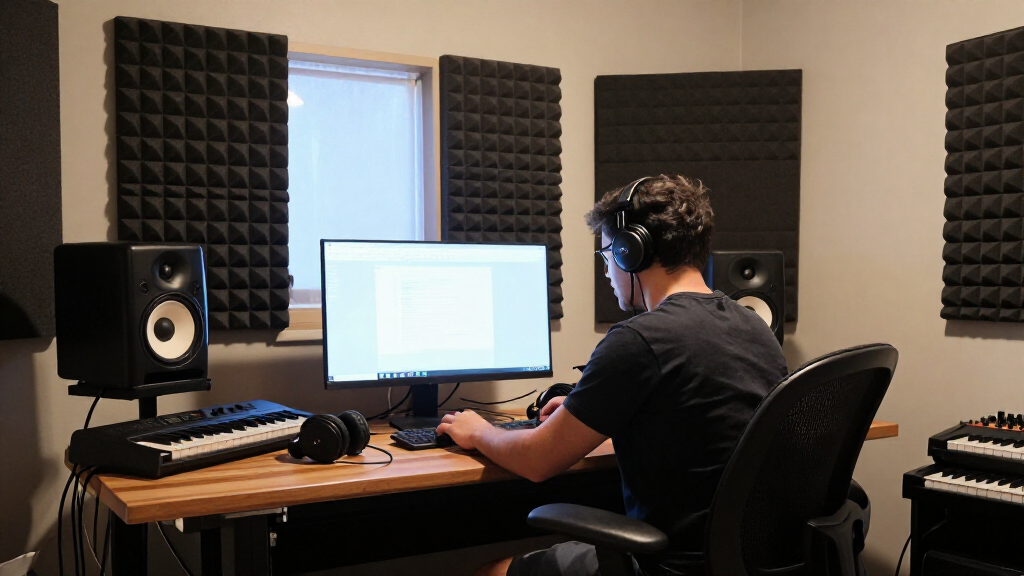
Monitors need space and symmetry to give a stable stereo image. Aim for an even triangle between the speakers and your listening position, with the tweeters near ear height, and avoid placing one speaker close to a wall while the other sits in open space. Rear ports and boundary controls can affect how forgiving a monitor is near a wall, but they cannot correct every room problem. Stands or isolation pads can reduce desk vibration and make positioning easier. A speaker that fits your room’s layout may serve you better than a more capable model that cannot be placed properly.
Decide How Neutral Your Main Listening Reference Needs to Be
Mix-focused monitors aim to help expose balances and tonal problems, while many bookshelf speakers are voiced to make everyday music listening pleasant. Neither goal is inherently wrong, but using a speaker with a strong tonal character as your only reference can lead you to compensate in the opposite direction. If you produce or mix regularly, prioritize a dependable studio-monitoring setup and check finished work on headphones or familiar playback systems. If music production is occasional and streaming or gaming is equally important, a more versatile speaker may be the better fit. Avoid judging studio suitability by loudness or perceived bass alone.
Plan Connections Before You Buy
Check how your audio interface, computer, or other source connects to the speakers. Balanced inputs can help reduce noise on longer runs, while consumer connections may suit a short, simple desk setup; Bluetooth is convenient for casual playback but should not replace a low-latency wired connection for production. Confirm whether the listing is for a pair or one monitor and whether the inputs match your existing cables. Some powered pairs place controls or inputs on one speaker, so cable routing may affect which side works best. Budget time and space for stands, cables, and any interface you still need.
Know When a Subwoofer Helps—and When It Adds Problems
A subwoofer can extend the system’s low-frequency range, which is useful for bass-heavy music, film sound, and checking kick and sub-bass relationships. It also adds another crossover and another speaker whose output interacts with the room, so setup becomes more demanding. Adding a sub to small monitors without calibration can create a bass-heavy system rather than a more reliable one. First learn what your main monitors and room can reproduce, then decide whether missing low end limits your decisions. Headphones can be a simpler low-frequency check for a small or untreated space.
Spend on the Limitation You Actually Have
Paying more makes sense when a specific constraint is holding back your work: you need greater low-frequency reach, a wider listening sweet spot, or a larger monitor for a room that can support it. It is less useful when the speakers will sit too close to walls, your source cannot connect cleanly, or the room masks the differences you are paying for. Beginners often gain more from correct placement, a reliable interface, and learning to cross-check mixes than from moving straight to large monitors. Choose upgrades around the decisions you need to make, not wattage or cabinet size in isolation.
Frequently Asked Questions
Can I use bookshelf speakers instead of studio monitors for a home studio?
Yes, especially if production is a hobby and you also want speakers for general listening. The Edifier R1280T and R980T are bookshelf-oriented options in this roundup, while the MR4 is positioned more directly for studio use. A pleasant listening balance can make music enjoyable but may hide tonal issues you need to catch in a mix. If you choose bookshelf speakers, compare your work on headphones and other familiar playback systems. For regular mixing, make neutral monitoring a priority.
Should I buy five-inch or seven-inch monitors for a small room?
For many small rooms, a five-inch monitor is easier to position and less likely to produce more bass than the room can handle. A seven-inch model can offer greater low-frequency reach, but that advantage is useful only if you have enough space and can manage room reflections. The Yamaha HS7 is a larger option than the JBL 305P MkII, so the choice is about room fit as much as output. Measure desk depth and the distance from each speaker to the walls before choosing. If possible, prioritize correct placement over woofer size.
Do I need an audio interface to connect powered studio monitors?
Not always: powered monitors can work with compatible outputs from a computer or other source, depending on their inputs and your cables. An audio interface is useful for connecting recording gear, managing levels, and providing suitable outputs for studio monitors. Check the exact input types on both the speakers and your source before buying cables. A monitor with Bluetooth may simplify casual playback, but a wired connection is generally the more practical choice for production. Factor the interface and cables into your setup plan, not just the speaker selection.
Is one monitor enough for mixing, or do I need a pair?
A single monitor can help with mono checks, but it cannot give you the stereo image needed to judge panning and left-right balance. For ordinary music production and mixing, plan on a matched pair. The PreSonus Eris E7 XT in this roundup is listed as a single unit, so a stereo setup requires a second speaker. Confirm package contents before purchase, since other listings here specify a pair. A single monitor is most appropriate when you already own its match or have a dedicated mono-check setup.
Are small monitors enough for mixing bass-heavy music?
Small monitors can help with arrangement, mids, and many balance decisions, but their limited low-frequency reach makes deep bass judgments harder. The M-Audio BX4 and Mackie CR3.5 are compact choices, not substitutes for a system that reproduces the lowest octaves clearly. Cross-check bass using headphones or another known reference before relying on a small pair alone. A subwoofer can extend the system, but only if you can set it up and integrate it carefully in the room. Choose a larger monitor when your space can support it and low-end decisions are central to your work.
Conclusion
For a single all-around recommendation, I’d choose the JBL 305P MkII for its five-inch format and broad listening sweet spot. Buyers seeking best value for studio-focused use should look at the Edifier MR4, while the Yamaha HS7 is the premium-sized pick for a room that can handle its greater reach. For beginners with limited desk space, the Mackie CR3.5 or M-Audio BX4 keeps the setup compact, with less low-end authority than larger monitors. If casual listening and Bluetooth matter most, the Ortizan C7 offers a different kind of versatility; for a small-room mix reference, the Yamaha HS5 is another focused option. Match the speaker to your room, workflow, and connection needs, then reserve room in the setup for good placement and cross-checking.
Fall Picks
fall essentials
As an affiliate, we earn on qualifying purchases.