TL;DR

Get audio and creator gear delivered free with Prime
- Fast, free delivery on millions of items
- Prime Video, Amazon Music and more included
- Member-only deals all year
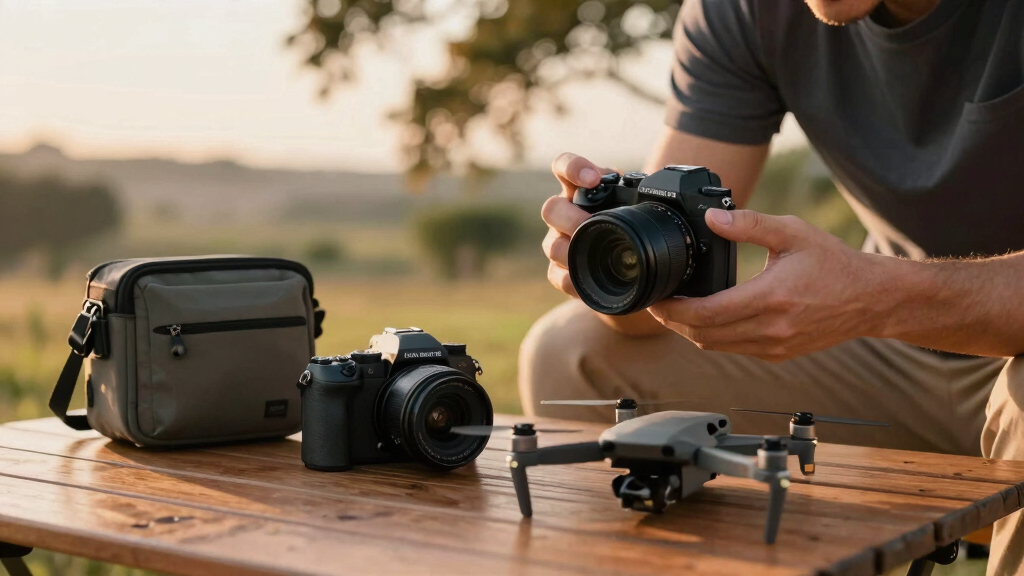
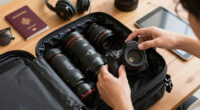
How much camera gear to bring on a trip is usually less than you think: one camera body, one flexible lens, two batteries, three memory cards, a charger, and your phone cover most travel days. Add a second lens, tripod, flash, or drone only when a specific planned shot needs it.
Your heaviest lens is often the one you never take out of the bag. I have seen photographers carry a small studio through airports, alleys, and hot train platforms, then shoot the whole trip on one camera and one familiar lens.
This guide helps you decide what to pack, what to leave home, and when extra gear earns its space. You will get a practical system for travel, not a fantasy packing list built for imaginary perfect light.
Most non-work trips need one camera body, one versatile lens, two batteries, three memory cards, a charger, and a cloth.
Add a second lens only when you can name the first real photo it will make on the trip.
Use the five-minute carry test before flying; if the bag hurts at home, it will punish you on day three.
Pack spare lithium batteries in carry-on baggage and protect the terminals for flights.
Bring a drone only when the location, law, timing, and shot all support it.
How Much Camera Gear to Bring on a Trip
Less than you think: one camera body, one flexible lens, two batteries, three memory cards, a charger, and your phone cover most travel days. Add the specialty gear only when a specific planned shot earns the weight.
Your camera bag is not a trophy case. It is a promise your shoulders have to keep.
Enough for most non-work trips.
A flexible zoom or familiar prime.
Spare power without bulk.
Redundancy for full or failed cards.
If you cannot name the shot, leave it.
Let the Trip Decide the Kit
A city weekend, a family beach week, and a dawn-to-dark landscape mission ask for different tools. None asks for every lens you own.
One Camera, One Zoom
Handles streets, cafes, interiors, quick portraits, and blue-hour storefronts without constant lens changes.
Small Prime or Compact Zoom
Keeps the camera ready while leaving your hands free for bags, snacks, tickets, and the rest of real travel.
Add the Purpose Lens
A telephoto for wildlife or a wide zoom for landscapes earns space when it matches the reason you booked the trip.
Name the Trip
City, family, landscape, wildlife, or paid work.
Write Shots
Markets, portraits, interiors, food, dawn, birds, or night scenes.
Pick Main Lens
Choose the lens you will use after lunch when your feet hurt.
Justify Extras
Each item needs a named first photo.
Cut Maybes
Boring bags get carried all day.
The Five-Minute Carry Test
Pack the full bag exactly as planned, including cards, filters, batteries, charger, cloth, and water. Walk outside or climb stairs for five minutes. If the strap bites at home, day three will be worse.
Fatigue Rises Faster Than Image Quality
Extra gear looks useful on the shelf. It becomes expensive when it makes you stop shooting, skip walks, or leave the camera in the hotel.
Walk Before Flying
Test the bag outside or on stairs, not across a bedroom.
Name Three Day-One Items
Keep what you know you will use immediately.
Remove One Maybe
If it has no first real photo, it has no seat in the bag.
Which Gear Earns Space?
Think of the main lens as walking shoes and the second lens as a specialty tool. You bring the specialty tool only when the trip has a real job for it.
| Trip Style | Lean Kit | Second Lens? | Tripod? | Drone? | Why It Works |
|---|---|---|---|---|---|
| City break | Body + standard zoom | ~ | × | × | Covers streets, cafes, interiors, and quick portraits. |
| Family vacation | Body + small prime | × | × | × | Keeps the camera ready without making you the baggage cart. |
| Landscape weekend | Body + wide zoom | ✓ | ✓ | ~ | Useful for sunrise, coastlines, waterfalls, and low light. |
| Wildlife trip | Telephoto + normal lens | ✓ | ~ | × | The long lens earns its space because distance is the subject. |
| Paid work | Brief-matched kit | ✓ | ~ | ~ | Backup body, duplicate cards, and redundancy are part of the job. |
Use Your Phone to Remove Weight
Modern phones handle travel notes, menus, signs, tickets, casual video, location scouting, and quick memory photos. Save the camera for the frame you may print.
Quality Need Spectrum
The more the image needs low light, reach, depth of field, or editing latitude, the more the dedicated camera matters.
Accessory Value Ranking
Small rescue items beat bulky gadgets on most trips because they prevent common failures without changing how you move.
Flight Rule That Matters
Spare lithium camera batteries and power banks belong in carry-on baggage, with terminals protected. Most lithium-ion batteries are limited to 100 Wh per battery unless airline approval covers larger 101-160 Wh spares.
Power and Storage
Charger, cable, two batteries, three memory cards, and a compact power bank keep the day moving.
Clean and Dry
A microfiber cloth, blower, and tiny rain cover solve more real problems than another rarely used lens.
Tripod, Flash, Drone
Bring them only when the location, law, timing, and planned shot all support the decision.
The Packing Chain
Bring One Camera, One Main Lens, and a Reason for Every Extra
How Much Camera Gear to Bring on a Trip (Less Than You Think) comes down to one rule: pack the kit you will carry after lunch, in bad light, when your feet hurt. For most travel, that means one camera body, one versatile lens, and only the accessories that keep you shooting.
A camera bag is a menu, not a museum. On a city weekend, a mirrorless body with a 24-70mm equivalent zoom can handle hotel windows, street portraits, plates of noodles, and blue-hour storefronts. The shutter goes click, the zipper goes zip-zip, and you keep walking.
Your camera bag is not a trophy case. It is a promise your shoulders have to keep.
As an affiliate, we earn on qualifying purchases.
Let Your Trip Decide the Kit, Not Your Gear Shelf
How Much Camera Gear to Bring on a Trip (Less Than You Think) gets easier when you decide what the trip is really for before you pack. A city weekend, a family beach week, and a dawn-to-dark landscape mission ask for different tools, but none asks for every lens you own.
Make a tiny shot list before you open the cabinet. If your list says markets, portraits, interiors, and food, a fast normal lens plus a phone may beat three specialty lenses. If it says birds at sunrise, then yes, the telephoto finally has a job.
For example, a weekend in Lisbon might mean one small camera and a standard zoom for tram windows, tiled storefronts, dinner tables, and evening streets. A week in Yellowstone is different: the long lens has a real purpose because the elk will not stroll politely into portrait range.
- Casual travel: one camera, one zoom, phone, charger, cloth.
- Family trip: one camera, one small fast lens, extra battery, no bulky tripod.
- Landscape trip: one body, wide zoom, light tripod, filters only if you use them.
- Client or paid work: backup body, duplicate cards, and gear matched to the brief.
As an affiliate, we earn on qualifying purchases.
Use the Five-Minute Carry Test Before You Pack
How Much Camera Gear to Bring on a Trip (Less Than You Think) becomes obvious after a five-minute walk with the packed bag. If the strap bites, the zipper groans, or your shoulders tense before you reach the corner, remove weight before the airport makes that choice for you.
- Pack the full camera bag exactly as planned, including batteries, cards, filters, and water.
- Walk for five minutes outside or up and down stairs, not just across your bedroom.
- Stop and name three items you know you will use on day one.
- Remove one maybe item if you cannot name its first real photo.
- Repeat until the bag feels boring, because boring bags get carried.
Picture the test like a dress rehearsal for day three. If you would not want that extra lens while climbing station stairs in Rome, waiting in a rental car line in Phoenix, or chasing sunset across a windy pier, it probably should not win space in the bag.
I like this test because it catches fantasy gear fast. That heavy flash sounds brilliant at home, but on wet cobblestones after dinner, you may lose the last warm strip of light and your patience while digging for it.
camera batteries and memory cards set
As an affiliate, we earn on qualifying purchases.
As an affiliate, we earn on qualifying purchases.
Pick the Lens Setup That Matches Your Actual Trip
The best lens setup is the one that covers your real scenes with the fewest swaps. Lens changes sound harmless until sand blows across a beach, rain dots the rear element, or a street musician turns away while you are fumbling with caps.
| Trip style | Lean kit | Why it works |
|---|---|---|
| City break | One standard zoom | Covers streets, cafes, interiors, and quick portraits. |
| Family vacation | Small prime or compact zoom | Keeps the camera ready without making you the baggage cart. |
| Landscape weekend | Wide zoom plus light tripod | Useful for sunrise, coastlines, waterfalls, and low light. |
| Wildlife trip | Telephoto plus normal lens | The long lens earns its space because distance is the subject. |
Think of the main lens as your walking shoes and the second lens as the specialty tool. You wear the walking shoes every day; you bring the specialty tool only if the trip has a real job for it, like a wide lens for canyon overlooks or a telephoto for puffins on a cliff.
A two-lens limit works beautifully for many enthusiasts: one lens for most scenes and one lens for the reason you booked the trip. Anything beyond that should solve a named problem, not soothe packing nerves.
As an affiliate, we earn on qualifying purchases.
Let Your Phone Handle the Photos That Do Not Need a Camera
Your smartphone can replace extra gear when the photo needs speed, memory, or convenience more than big-sensor quality. Modern phones handle travel notes, meal shots, signs, location snaps, and quick videos well enough that a second dedicated camera often stays buried.
I still bring a real camera when I want clean low-light files, shallow depth of field, longer lenses, or strong editing latitude. But for a museum label, a train platform, or your friend laughing over coffee, the phone saves weight and keeps the moment loose.
On a food tour, for instance, use the phone for the menu, the street sign, and the quick bowl of soup before it cools. Save the camera for the portrait of the cook in window light or the night market frame you may actually want to print.
- Use the phone for: maps, tickets, menus, casual video, location scouting.
- Use the camera for: prints, portraits, night scenes, wildlife, fast action.
- Use both when needed: phone for behind-the-scenes, camera for the frame you came to make.
Pack Accessories That Save the Shoot, Not Ones That Add Clutter
The best travel accessories are small items that prevent common failures: dead power, full cards, dust, rain, and shaky long exposures. A charger, two batteries, three memory cards, a microfiber cloth, and a tiny rain cover help more trips than a bag full of gadgets.
Think in rescue scenarios. A spare battery saves the sunset walk when your first battery dies at 12 percent. A clean cloth saves the frame after sea spray hits the lens. A third memory card saves you from deleting breakfast photos in a panic while the best light is happening in front of you.
According to FAA PackSafe, spare lithium camera batteries and power banks must travel in carry-on baggage only, terminals need protection, and most lithium-ion batteries are limited to 100 Wh per battery unless airline approval covers larger 101-160 Wh spares [1]. That rule matters when you pack camera batteries for flights.
- Always useful: charger, cable, blower, cloth, spare cards, spare battery.
- Sometimes useful: light tripod, circular polarizer, small LED, remote release.
- Often dead weight: bulky flash kits, unused filter stacks, duplicate chargers, novelty grips.
Sources: [1] FAA PackSafe Lithium Batteries: https://www.faa.gov/hazmat/packsafe/lithium-batteries. [2] FAA Recreational Flyers: https://www.faa.gov/uas/recreational_flyers. [3] National Park Service uncrewed aircraft guidance: https://www.nps.gov/articles/uncrewed-aircraft-in-the-national-parks.htm.
Skip the Drone Unless the Place and Plan Both Say Yes
A drone belongs in your bag only when you have legal airspace, real time to fly, and a shot that cannot be made from the ground. Without those three things, it becomes a fragile box of batteries that steals space from gear you will use every day.
According to FAA recreational flyer guidance, U.S. recreational drone pilots must take TRUST, keep the drone within visual line of sight, and register drones that weigh 250 grams or more [2]. The National Park Service also says launching, landing, or operating uncrewed aircraft is often prohibited on NPS lands, with violations treated as misdemeanors [3].
A drone makes sense for a rented lakeside cabin where flying is allowed, the weather is calm, and you have a specific overhead shoreline shot in mind. It makes much less sense for a museum-heavy city trip, a national park itinerary, or a family day where everyone is waiting while you check maps, batteries, wind, and rules.
If your dream shot is a cliff road at sunrise, check rules before you pack the propellers. If you cannot fly legally from the place you will stand, leave the drone home and spend that weight on water, a warmer layer, or nothing at all.
Protect a Smaller Kit Better Than a Big Kit Badly
A smaller kit is easier to protect because you can keep it close, padded, and quiet-looking. A packed camera backpack draws attention in crowded stations, while one body and one lens in a plain shoulder bag lets you move through a market without flashing your whole setup.
Use one padded insert, keep cards separate from the camera, and back up files every night if the trip matters. In a hotel room, I like the simple routine: battery on charger, cards in case, lens wiped clean, bag zipped before sleep.
For example, after a long day in Kyoto or New York, do the same quiet reset before you sit on the bed and scatter things everywhere: card into case, files copied, battery charging, camera back in the bag. It is the photography version of putting your passport in the same pocket every time.
Less gear does not mean careless gear. It means you give fewer pieces better attention.
Frequently Asked Questions
How many lenses should I bring for travel photography?
Bring one lens for most casual trips and two lenses for trips with a clear photo goal. A standard zoom handles streets, food, people, and interiors, while a second lens should earn its spot through a specific need like wildlife, portraits, or wide landscapes.
Can I travel with only a smartphone camera?
Yes, you can travel with only a smartphone if your goal is memories, sharing, notes, and casual video. Bring a dedicated camera when you want better low-light files, longer focal lengths, cleaner prints, or more control over depth of field.
Should I bring a tripod on a trip?
Bring a tripod only if you plan to shoot sunrise landscapes, night scenes, long exposures, or self-portraits with real control. For family trips and city walks, a tripod often becomes awkward weight unless you have scheduled time to use it.
How should I pack camera batteries for a flight?
Pack spare lithium camera batteries in carry-on baggage, not checked luggage, and protect the contacts with a case, pouch, or tape. FAA guidance lists 100 Wh as the usual lithium-ion battery limit per spare battery, with airline approval needed for certain larger 101-160 Wh batteries [1].
Is it safer to bring backup camera gear?
Backup gear makes sense for paid work, once-in-a-lifetime assignments, or remote trips where failure would ruin the purpose of the shoot. For normal vacations, smart redundancy means extra cards, extra power, and a phone backup, not a second full camera system.
Conclusion
The crisp rule is simple: bring the gear you will actually carry when the day gets long. Your best travel kit should feel ready, quiet, and easy to reach, not like a rolling apology for every lens left behind.
Pack lighter, walk farther, and let the trip give you pictures instead of shoulder ache. The camera should be in your hand when the light turns gold, not buried under things you packed out of fear.
Fall Picks
fall essentials
As an affiliate, we earn on qualifying purchases.