TL;DR

Get audio and creator gear delivered free with Prime
- Fast, free delivery on millions of items
- Prime Video, Amazon Music and more included
- Member-only deals all year
Everyday Carry for Photographers is a small, dependable kit built around one camera, one lens, spare power, spare storage, cleaning basics, and a bag you actually enjoy carrying. The goal is simple: stay ready for real photographs without hauling a studio on your shoulder.
The best camera bag I own is the one I forget I am carrying. When your kit feels light, quiet, and familiar, you notice good light, small gestures, and clean backgrounds instead of thinking about shoulder pain.
This guide helps you build everyday carry for photographers around the gear you use, not the gear you feel guilty leaving behind. You will learn how to pick one camera, one lens, and the small accessories that keep a normal day from turning into a missed frame.
Build your minimal kit around one trusted camera, one useful lens, spare power, spare storage, cleaning basics, and light weather protection.
A 35mm-equivalent prime favors speed and intimacy, while a 24-70mm-equivalent zoom favors flexibility during travel or mixed scenes.
A 3-6 liter sling is enough for many daily photo walks; a 10-15 liter daypack works better when you need water, layers, or travel items.
Use a five-minute post-shoot review to remove unused gear and keep the items that solved real problems.
Minimal does not mean risky; add backup gear when a paid job, remote location, or bad weather raises the cost of failure.
Building a Minimal Kit That Keeps You Ready
Everyday Carry for Photographers is a small, dependable setup built around one camera, one lens, spare power, spare storage, cleaning basics, and a bag you actually enjoy carrying. The goal is simple: stay ready for real photographs without hauling a studio on your shoulder.
The best camera bag is the one you forget you are carrying.
Carry Less So You Shoot More
A useful photo EDC is a repeatable kit, not a guilt-driven pile of options. Every extra lens, strap, pouch, and backup body asks for attention before the photograph does. A smaller kit turns the first seconds of a scene into looking, moving, and framing.
Start With One Camera
Pick the body that wakes quickly, exposes predictably, focuses where you expect, and lets your fingers find the main controls without a menu expedition.
Pick One Lens
A 35mm-equivalent prime favors speed and intimacy. A 24-70mm-equivalent zoom favors flexibility across travel, events, and mixed scenes.
Add Tiny Savers
One battery, two cards, a microfiber cloth, a mini blower, and a thin weather sleeve solve more real problems than bulky accessories.
A Repeatable Kit Process
Build the bag around the scenes you actually photograph. The order matters: camera first, lens second, then only the accessories that prevent missed frames.
Choose Body
Fast wake, clean handling, reliable focus.
Choose Lens
Match your natural distance from subjects.
Add Power
One spare battery with covered contacts.
Add Cards
One loaded, one clean, always in place.
Clean Glass
Blower first, cloth second, contrast saved.
Review
Remove unused gear after the walk.
Choose the Lens That Matches Your Eye
Your everyday lens should match the distance you naturally keep from people and scenes. A prime makes you commit; a zoom gives you range; a phone camera keeps visual notes close at hand.
| Lens Choice | What It Gives You | Best Real-World Use | Tradeoff | Minimal Fit |
|---|---|---|---|---|
| 35mm-equivalent prime | Light weight, wide aperture, natural perspective | Cafes, street walks, family moments indoors | You move your feet for framing | ✓ Best for speed |
| 24-70mm-equivalent zoom | Wide, normal, and short telephoto coverage | Travel days, events, changing scenes | Usually larger and slower than a prime | ~ Best for variety |
| Phone camera | Instant access and strong computational processing | Notes, scouting, casual daily images | Less physical control and smaller files | ✓ Best backup |
| Second specialty lens | Macro, ultra-wide, or long reach | Paid work, remote locations, specific subjects | More weight and more decisions | ✗ Skip for normal days |
How Much Bag Is Enough?
Access matters as much as padding. The bag should hold the kit tight, open with one hand, and disappear against your body while you move.
Carry Capacity by Day Type
Risk Scale
Minimal is not reckless. Add backup gear when the cost of failure rises: client work, remote locations, cold weather, heavy rain, or a trip you cannot repeat.
The Small Things That Save the Day
These items look boring because they are doing serious work quietly. They protect the weak links in a small kit: power, storage, clean glass, and weather.
Spare Battery
Keep it in the same pocket every time, contacts covered, so a swap can happen by feel.
Two Cards
One card in the camera, one clean spare. A V30 card is rated for 30 MB/s sustained write speed.
Cloth + Blower
Blow grit off glass before wiping, especially after beaches, trails, rain, or city dust.
Thin Sleeve
A folded rain cover can save a shoot when drizzle sneaks in sideways.
The Minimal Kit Test
If the bag feels light, quiet, and familiar, you notice good light, small gestures, and clean backgrounds instead of thinking about shoulder pain. Keep the tools that solved real problems. Remove the rest.
Carry Less So You Shoot More
Everyday Carry for Photographers is the small, repeatable kit you can grab on a normal day without thinking. It should cover your usual scenes, protect your gear, and stay light enough that you still want to walk one more block. Minimal means ready, not stripped bare.
The point is not to prove you can suffer with less equipment. The point is to remove the tiny decisions that slow you down: which lens, which pouch, which strap, which backup body. Every extra option asks for attention before the photograph does. A smaller kit turns the first few seconds of a scene into looking, moving, and framing instead of rummaging.
I learned this the plain way, after carrying two bodies and four lenses through a wet market morning and using only a 35mm lens. The bag felt like a brick, and the best frame came from a vendor’s red apron glowing under a torn blue awning. Less gear gave me more attention.
minimal camera bag for photographers
As an affiliate, we earn on qualifying purchases.
As an affiliate, we earn on qualifying purchases.
Start With One Camera You Trust
Everyday Carry for Photographers starts with one camera you trust, because missed shots usually come from hesitation, not from lacking gear. Your best body may be a compact mirrorless camera, a high-end compact, or your phone. The test is simple: can you work fast when the light changes?
Trust has practical parts. The camera should wake quickly, expose predictably, focus where you expect, and let your fingers find the main controls without a small menu expedition. A camera with perfect image quality but clumsy handling can make you late to the moment. A slightly humbler camera that is always with you often makes better photographs because it is present when the scene opens.
According to the Camera & Imaging Products Association, CIPA battery figures come from a standardized still-photo test [1]. I treat that number as a baseline, then pack a spare when I know I will use the rear screen, shoot video clips, or work in cold weather. Real bags meet real weather.
If you photograph your commute, your kids at breakfast, or quiet street corners at dusk, choose the camera that wakes quickly and feels good in your hand. For example, a parent at the table needs silent startup and reliable autofocus more than another stop of dynamic range. A street photographer stepping from shade into hard sun needs an exposure dial they can change by feel. The right camera should feel like a familiar pen.
compact camera kit for everyday carry
As an affiliate, we earn on qualifying purchases.
As an affiliate, we earn on qualifying purchases.
Pick One Lens That Matches Your Eye
Your everyday lens should match the distance you naturally keep from people and scenes. A 35mm-equivalent prime feels personal and loose, while a 24-70mm-equivalent zoom gives you quick framing without changing lenses. Choose the lens that helps you make the picture you already see, not the one a forum told you to chase.
| Lens Choice | What It Gives You | Best Real-World Use | Tradeoff |
|---|---|---|---|
| 35mm-equivalent prime | Light weight, wide aperture, natural perspective | Cafes, street walks, family moments indoors | You move your feet for framing |
| 24-70mm-equivalent zoom | Wide, normal, and short telephoto coverage | Travel days, events, changing scenes | Usually larger and slower than a prime |
| Phone camera | Instant access and strong computational processing | Notes, scouting, casual daily images | Less physical control and smaller files |
The tradeoff is really about rhythm. A prime lens makes you commit: you step closer, back up, or accept the frame. That can make your pictures more consistent because your body learns the angle of view. A zoom buys flexibility, but it can also tempt you to solve every problem by twisting the barrel instead of changing your position or waiting for cleaner layers.
For a weekend in Lisbon, I would take a small zoom if I expected viewpoints, alleys, and portraits in the same afternoon. At a miradouro, I could go wide for tiled rooftops, then tighten up for a friend against the river without changing lenses in the wind. For a local coffee walk, I would take a 35mm prime and enjoy the constraint. One lens can act like a good editor: it says yes and no for you.
As an affiliate, we earn on qualifying purchases.
Pack the Tiny Things That Save the Day
The right accessories are small, boring, and powerful. They do not make your bag look impressive, but they keep you shooting when a battery fades, a card fills, or sea spray freckles the front element. I would rather carry two useful ounces than a chunky gadget I touch once a year.
- One spare battery: Keep it in the same pocket every time, contacts covered, so you can swap it by feel.
- Two memory cards: One in the camera, one clean spare. According to the SD Association, a V30 card is rated for a sustained 30 MB/s write speed [2].
- Microfiber cloth: Use it for fingerprints, mist, and the little smudges that steal contrast.
- Mini blower: Blow grit off glass before wiping, especially after beaches, trails, or city dust.
- Thin weather sleeve: A folded plastic rain cover can save a shoot when drizzle sneaks in sideways.
These items matter because they protect the weakest links in a small kit. You can forgive a missing second lens, but an empty battery ends the walk. You can crop around a weaker composition, but you cannot recover a file you never wrote to a card. Cleaning gear also protects image quality in quiet ways: a thumbprint can turn strong backlight into mush, and grit dragged across glass is a bad trade for saving ten seconds.
On one harbor shoot, a gull dropped saltwater across my filter just as the sun broke through low clouds. The cloth and blower took 20 seconds, and the next frame had clean orange light on black pilings. Tiny tools earn their place when the weather gets cheeky.
As an affiliate, we earn on qualifying purchases.
Choose a Bag That Stays Out of Your Way
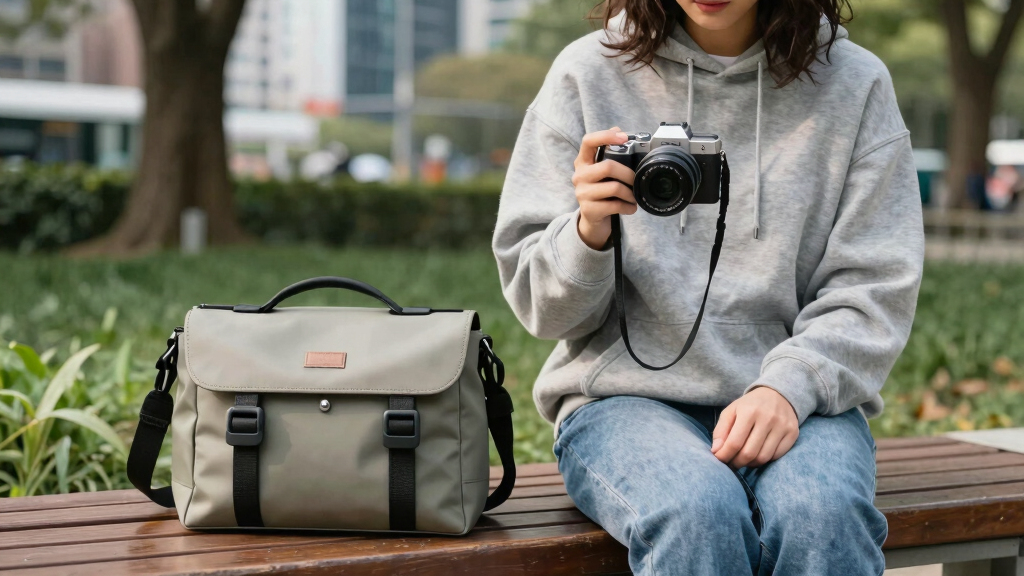
A minimal camera bag should hold the kit tight, open with one hand, and disappear against your body while you move. For most city days, I like a 3-6 liter sling; for travel, a 10-15 liter daypack leaves room for water and a light layer.
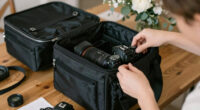
The best bag layout is simple: camera in the center, battery and card in a small pocket, cloth where your fingers find it. If you have to dig under a scarf, snack, and tangled cable, your bag is working against you. Access matters as much as padding.
Think about the bag as part of your shooting speed, not just storage. A deep, padded cube may protect gear well in a trunk, but it can make street photography feel like unpacking a lunchbox every time light hits a wall. A sling that rotates forward cleanly lets you shoot, tuck the camera away, and keep walking. The tradeoff is capacity: once you add a bottle, jacket, and headphones, a sling may become cramped and awkward.
Try the kitchen-table test before leaving. Load your bag, close it, set a timer for 10 seconds, and pull out your camera with the lens cap off. If the zipper fights you or the strap slips, fix that at home before the street does it for you.
Build Your Minimal Kit in 6 Moves
Everyday Carry for Photographers becomes useful when you build it as a repeatable process, not a shopping list. I use the same six moves before a walk, a family day, or a small assignment. The routine keeps your bag calm, like a clean bench before the first print.
- Name the day: Street walk, family visit, scouting trip, or paid job.
- Pick one camera: Choose the body you can operate without hunting through menus.
- Pick one lens: Match it to your likely distance from the subject.
- Add power and storage: Pack one spare battery and at least one clean card.
- Add cleaning and weather basics: Cloth, blower, and a thin cover beat wishful thinking.
- Remove one thing: If you packed it from anxiety, leave it out unless the day truly calls for it.
The last step is the one that makes the kit minimal instead of merely small. Removing one anxious item forces you to name the actual risk. If the day is a casual walk, the second portrait lens may be dead weight. If the day is a paid session, the same lens may be responsible preparation. Minimal carry works only when the gear matches the consequence.
Before a portrait scouting walk, my kit may be a small mirrorless body, 35mm lens, spare battery, two cards, cloth, and phone. That is enough to test window light, background texture, and walking distance without turning the trip into a gear haul. Before a family picnic, I might swap the prime for a small zoom because kids move from blanket to trees to swings faster than my feet can keep up.
Know When Minimal Is Too Minimal
Minimal is too minimal when the kit removes backup, safety, or the tool your assignment plainly needs. A paid wedding, a stormy hike, or a remote trip changes the math. You still travel light, but you add redundancy where failure would cost you the picture.
Carry the backup when losing the shot would hurt more than carrying the extra weight.
This is the difference between discipline and denial. Leaving a telephoto at home for a neighborhood walk may sharpen your eye. Leaving a backup body at home for a once-in-a-lifetime paid event may just transfer your stress onto the client. The lighter kit should reduce friction, not remove the margin that lets you keep working when something breaks.
For paid work, I bring a second body or at least a realistic backup plan. For a casual museum afternoon, I may use only a compact camera and a wrist strap. Minimalism should serve the photograph, not your pride.
Weather also changes the rules. A dry city walk asks for little; a coastal trail asks for rain cover, lens cloths, and a sealed pouch for wet items. Picture two walks with the same camera: one through a sunny downtown grid, one along a cliff path in sideways rain. The camera did not change, but the risk did. Your bag should listen to the forecast before it brags about being tiny.
Keep the Kit Honest After Every Shoot
Review your kit after each shoot by removing anything you did not touch and flagging anything you wished you had. The habit takes five minutes. It keeps your everyday carry honest, and it stops your bag from collecting little metal and plastic excuses.
I keep a small note on my phone with three lines: used, missed, remove. After a week of city walks, the pattern usually gets loud. If the mini tripod never leaves the pocket, it stays home; if the cloth saves three frames, it becomes permanent.
The review matters because memory is generous to gear. You remember the one time a tool might have helped and forget the ten walks when it simply made the bag heavier. A simple note turns that feeling into evidence. After a month, your kit starts reflecting your actual photographs instead of your imagined emergencies.
This is where the whole kit loops back to the first idea: the bag you forget you are carrying. When your gear earns its place, your attention returns to gesture, color, and light. That is where the photographs live.
Frequently Asked Questions
What is everyday carry for photographers?
Everyday carry for photographers is the small photo kit you keep ready for normal days, short trips, and unexpected scenes. It usually includes one camera, one lens, spare power, spare storage, and basic cleaning gear.
Can a phone be part of a serious minimal photo kit?
Yes, a phone can be a serious part of a minimal photo kit, especially for scouting, notes, quick images, and video clips. A dedicated camera still gives you more physical control, larger files, and better lens choice when the work demands it.
Is a prime lens or zoom lens better for everyday carry?
A prime lens is better when you want a lighter kit, wider aperture, and a consistent way of seeing. A zoom lens is better when your distance changes quickly, such as travel days, family events, or street scenes with limited room to move.
How much camera bag space do you need for a minimal kit?
Most daily kits fit in a 3-6 liter sling if you carry one camera, one lens, and small accessories. Choose a 10-15 liter daypack when you also need water, a jacket, snacks, or travel documents.
What should you remove first when your kit feels too heavy?
Remove the item you carry from anxiety but rarely use. For many photographers, that means the extra lens, the small tripod, or duplicate accessories; keep the spare battery, extra card, and cleaning cloth because they solve common problems.
Conclusion
A minimal photographer’s kit should make you faster, calmer, and more willing to carry a camera into ordinary life. Start with one camera, one lens, and small safeguards that solve problems you actually meet.
When the bag gets quiet, the world gets louder: rain on pavement, yellow light in a diner window, a hand reaching across a table. Pack so you can hear it.
Halloween Picks
halloween
As an affiliate, we earn on qualifying purchases.