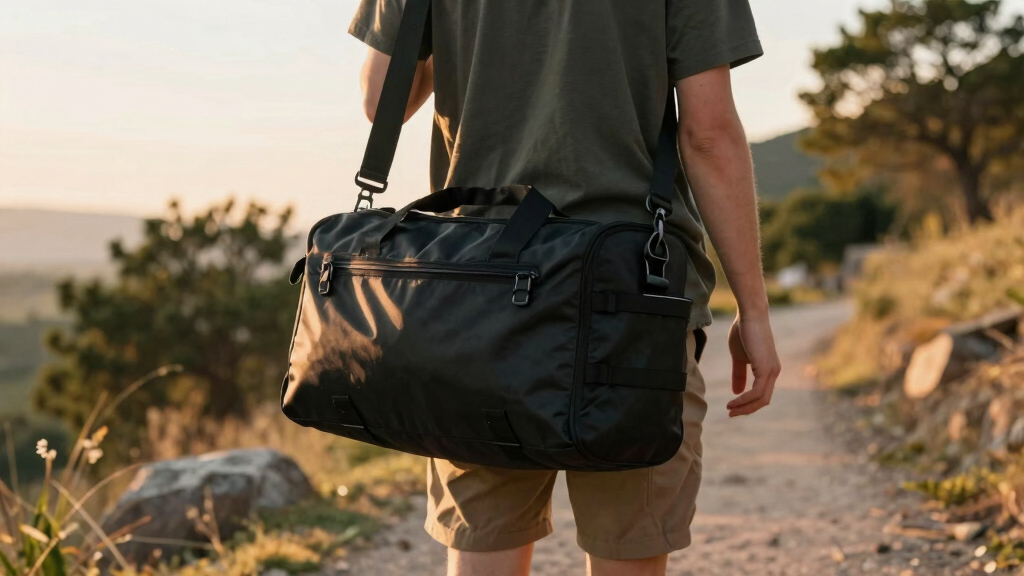
The Manfrotto MB MBAG75PN is my pick among the best travel tripod bags because its padded 75 cm format offers the strongest balance of protection, manageable bulk, and everyday portability. The Manfrotto Pro Light Tripod Bag 80 is the premium alternative for buyers willing to pay more for a protection-focused design, while the HEMMOTOP 31.5-inch Tripod Case provides better value for less demanding travel. Choosing well comes down to matching folded tripod length and head width without buying more bag than a trip requires. Longer cases hold larger support systems but become harder to pack, carry, and store. Continue reading for the full breakdown of which model fits each buyer and where every option gives something up.
Listen free for 30 days with Audible
Thousands of audiobooks and originals — cancel anytime.
Start your free trialAs an affiliate, we earn on qualifying purchases.
Complete the kit


Key Takeaways
- The Manfrotto MB MBAG75PN leads the ranking because its 75 cm size is easier to travel with than the 90 cm and 120 cm Manfrotto cases while retaining meaningful padding.
- The Manfrotto Pro Light Tripod Bag 80 is the premium pick, but its higher-tier positioning makes the most sense for expensive gear rather than occasional use.
- HEMMOTOP offers the strongest value balance, while the smaller VidPro TC-27 is the simpler beginner choice for compact tripods.
- Long-tripod buyers have three distinct paths: YOREPEK for a 40.5-inch middle ground, MagicLine for added pocket storage, and the MBAG120PN for maximum 120 cm capacity.
- Bigger did not automatically rank higher. The 90 cm, 40.5-inch, 47.2-inch, and 120 cm bags serve narrower needs because unused length adds movement, packing difficulty, and carrying bulk.
| Manfrotto MB MBAG75PN Tripod Bag, Padded, 75cm (Black) |  | Best Dedicated Manfrotto Fit | Bag length: 75 cm | Color: Black | Protection: Padded | VIEW LATEST PRICE | See Our Full Breakdown |
| Manfrotto MB MBAG90PN Padded 90 cm Tripod Bag |  | Best 90 cm Tripod Fit | Product type: Padded tripod bag | Tripod capacity: 90 cm | Protection: Padded | VIEW LATEST PRICE | See Our Full Breakdown |
| VidPro TC-27 Padded Tripod Bag for 27-Inch Tripods |  | Best Compact Travel Pick | Exterior height: 4.5 inches | Exterior width: 4.5 inches | Exterior length: 27 inches | VIEW LATEST PRICE | See Our Full Breakdown |
| MagicLine Tripod Carrying Case Bag 47.2×7.9×7.9 inches with Pockets and Padded Interior |  | Best Overall | Outer dimensions: 47.2 x 7.9 x 7.9 inches | Outer pocket count: 2 | Outer pocket dimensions: 12.2 x 6.3 x 1.6 inches each | VIEW LATEST PRICE | See Our Full Breakdown |
| HEMMOTOP Tripod Case, 31.5×7 in Heavy Duty Tripod Bag with Shoulder Strap and Handle |  | Best for Padded Protection | Bag size: 31.5 x 7 inches | Maximum equipment length: Up to 31 inches | Material: Heavy-duty nylon | VIEW LATEST PRICE | See Our Full Breakdown |
| YOREPEK 40.5-inch Tripod Carrying Case Bag |  | Best for Mixed Equipment Kits | Length: 40.5 inches | Material: Heavy-duty nylon | Weather protection: Waterproof | VIEW LATEST PRICE | See Our Full Breakdown |
| Manfrotto Pro Light Tripod Bag 80 |  | Best Premium Short-Tripod Bag | Maximum tripod length: 80 cm | Maximum tripod length: 31.5 inches | Padding: Reinforced padded protection | VIEW LATEST PRICE | See Our Full Breakdown |
| Manfrotto MB MBAG120PN Padded 120cm Tripod Bag |  | Best for Extra-Long Tripods | Maximum tripod length: 120 cm | Approximate length: 47.2 inches | Padding: Thermoform padding | VIEW LATEST PRICE | See Our Full Breakdown |
| travel tripod bag | Padding |
|---|---|
| Manfrotto MB MBAG75PN Tripod B | — |
| Manfrotto MB MBAG90PN Padded 9 | — |
| VidPro TC-27 Padded Tripod Bag | — |
| MagicLine Tripod Carrying Case | — |
| HEMMOTOP Tripod Case | Thick cushioning on all sides |
| YOREPEK 40.5-inch Tripod Carry | Fully padded |
| Manfrotto Pro Light Tripod Bag | Reinforced padded protection |
| Manfrotto MB MBAG120PN Padded | Thermoform padding |
More Details on Our Top Picks
Manfrotto MB MBAG75PN Tripod Bag, Padded, 75cm (Black)
I rank the Manfrotto MB MBAG75PN as the best dedicated choice for owners of a 190go! or 290-series tripod. Its 75 cm padded construction offers more tailored protection than the general-purpose VidPro TC-27, while remaining far less cumbersome than the 47.2-inch MagicLine case. That combination suits photographers who want a tidy travel setup without carrying unused space. The catch is its narrow compatibility focus: buyers with larger tripods should move to the MB MBAG90PN or MB MBAG120PN, and travelers carrying plates, tools, or spare parts get no separate accessory compartment. I place it below the MagicLine overall because it lacks storage flexibility, but above basic sleeves when fit and cushioning matter more than capacity.
Pros:- Padded construction protects a tripod from routine travel knocks
- Purpose-designed fit for Manfrotto 190go! and 290-series models
- 75 cm length is easier to manage than large multi-stand cases
- Durable materials support frequent transport
Cons:- Compatibility is less flexible than a general-purpose tripod case
- No separate compartments for plates, tools, or other accessories
- Too short for larger tripod systems
Best for: Owners of Manfrotto 190go! or 290-series tripods who want a fitted, padded bag for streamlined travel
Not ideal for: Photographers with oversized tripods or several small accessories, since the 75 cm format and compartment-free design limit flexibility
- Bag length:75 cm
- Color:Black
- Protection:Padded
- Primary compatibility:Manfrotto 190go! tripods
- Series compatibility:Manfrotto 290-series tripods
- Construction:High-quality durable materials
- Accessory compartments:None
Our verdict“I recommend this bag to Manfrotto 190go! and 290-series owners who favor a close fit over extra storage.”
Manfrotto MB MBAG90PN Padded 90 cm Tripod Bag
The Manfrotto MB MBAG90PN takes the dedicated 90 cm slot because it balances a longer carrying capacity with padding and a water-repellent exterior. Compared with the shorter MB MBAG75PN, it gives folded tripods and attached heads another 15 cm of room, making it the more practical choice for medium-to-large Manfrotto setups. It is also easier to handle than the oversized MagicLine case when only one tripod needs transporting. I rank it behind that case because the available product data identifies no pockets or divided storage, so accessory organization remains uncertain. Its sparse published specifications also make pre-purchase fit checks harder than with the precisely measured HEMMOTOP. I would choose it for straightforward tripod protection, but not for carrying a mixed lighting kit.
Pros:- 90 cm format accommodates longer folded tripod configurations
- Padded construction reduces damage from bumps during transport
- Water-repellent material adds protection in damp conditions
- Easy-access design supports quick setup and packing
Cons:- Published specifications do not provide full internal dimensions
- Storage pockets or internal dividers are not identified
- The 90 cm format may be excessive for compact travel tripods
Best for: Photographers carrying a single padded tripod setup that needs roughly 90 cm of internal length and some resistance to wet weather
Not ideal for: Buyers who need verified internal measurements or organized accessory storage, since detailed sizing and pocket information are not supplied
- Product type:Padded tripod bag
- Tripod capacity:90 cm
- Protection:Padded
- Weather treatment:Water-repellent
- Access design:Easy access
- Portability:Designed for easy carrying
Our verdict“I favor this model for a single 90 cm tripod when weather resistance and simple access outweigh detailed organization.”
VidPro TC-27 Padded Tripod Bag for 27-Inch Tripods
I give the VidPro TC-27 the compact-travel role because its slim 27-inch body avoids the bulk of the HEMMOTOP and MagicLine bags. The Cordura-webbed nylon, full zip closure, handles, and shoulder strap form a practical package for short tripods carried through airports or between local shoots. An exterior pocket also gives it an organizational advantage over the Manfrotto MB MBAG75PN. Its limits are equally clear: tripods with a head must remain within 27 inches, and the supplied data does not state padding thickness. That makes the HEMMOTOP a more reassuring choice for impact protection and the MagicLine better for several stands. I rank this model as the most portable option, not the toughest one, and would favor it when compact dimensions matter more than generous capacity.
Pros:- Compact 27-inch format is manageable for travel
- Cordura-webbed nylon resists routine wear and weather exposure
- Exterior pocket separates small accessories from the tripod
- Handles and a shoulder strap provide two carrying methods
Cons:- Cannot accommodate tripod-and-head combinations longer than 27 inches
- Padding thickness is not stated
- Narrow 4.5-inch dimensions may exclude bulky heads or feet
Best for: Air travelers and mobile photographers carrying a tripod with head measuring no more than 27 inches
Not ideal for: Owners of long tripods or fragile high-value supports who need documented thick cushioning
- Exterior height:4.5 inches
- Exterior width:4.5 inches
- Exterior length:27 inches
- Material:Cordura-webbed nylon
- Maximum equipment fit:Tripod with head up to 27 inches
- Closure:Zippered
- Accessory storage:Exterior pocket
- Carry options:Handles and shoulder strap
Our verdict“I recommend the TC-27 for compact tripod kits whose owners value easy carrying and a small accessory pocket.”
MagicLine Tripod Carrying Case Bag 47.2×7.9×7.9 inches with Pockets and Padded Interior
I rank the MagicLine Tripod Carrying Case first because it handles more than a single tripod: three inner compartments and multiple pockets can organize tripods, monopods, light stands, and accessories in one case. Its 0.4-inch padding and water-repellent, shockproof fabric give it a stronger protection-and-storage balance than the thinner, smaller VidPro TC-27. It also offers far more room than either Manfrotto 75 cm or 90 cm bag. That versatility comes with a genuine travel penalty. At 47.2 inches long and 7.9 inches wide, it can be awkward in crowded transport, and loading every compartment may create a heavy shoulder carry. The best all-kit option is not the best minimalist option; I would pick HEMMOTOP instead for one shorter stand and VidPro for compact flights.
Pros:- Three inner compartments organize multiple pieces of support equipment
- Two outer pockets and one inner pocket provide ample accessory storage
- 0.4-inch padding protects gear from knocks during transport
- Water-repellent, shockproof fabric suits demanding travel
Cons:- Large dimensions are cumbersome for compact kits and crowded transport
- A fully loaded case may be uncomfortable to shoulder-carry
- The supplied product data lists no alternative color choices
Best for: Traveling photographers and small production crews who want one organized case for several stands and related accessories
Not ideal for: Minimalist travelers with one compact tripod, since the 47.2-inch case adds bulk and can become heavy when filled
- Outer dimensions:47.2 x 7.9 x 7.9 inches
- Outer pocket count:2
- Outer pocket dimensions:12.2 x 6.3 x 1.6 inches each
- Inner pocket dimensions:12.2 x 4.3 inches
- Inner compartments:3
- Padding thickness:0.4 inch
- Material properties:Water-repellent and shockproof
- Carry options:Handle and adjustable shoulder strap
- Compatible equipment:Tripods, monopods, light stands, and accessories
Our verdict“I place MagicLine first for buyers who need one protective, organized travel case for a full support kit.”
HEMMOTOP Tripod Case, 31.5×7 in Heavy Duty Tripod Bag with Shoulder Strap and Handle
The HEMMOTOP Tripod Case earns my protection-focused pick through thick cushioning on every side, heavy-duty nylon, and dependable SBS zippers. Compared with the VidPro TC-27, its 31-inch equipment capacity accepts longer supports and its multiple pockets provide more room for small gear. It is also much less unwieldy than the 47.2-inch MagicLine, making it a better single-stand choice for car trips and location work. MagicLine stays ahead overall because its divided interior supports a broader equipment load, while HEMMOTOP concentrates on one shorter setup. The case arrives folded, so buyers may need to let shipping creases relax before use, and equipment beyond 31 inches will not fit. I rank its all-around cushioning above its packability: this is for protective transport, not the smallest possible luggage footprint.
Pros:- Thick cushioning covers all sides for stronger impact protection
- Heavy-duty nylon construction suits frequent transport
- Multiple pockets keep smaller accessories separated
- SBS zippers and dual carry methods support practical daily use
Cons:- Equipment longer than 31 inches will not fit
- Folded shipping can leave creases and temporarily flatten the bag
- Thick padding adds more bulk than a lightweight sleeve
Best for: Location photographers, musicians, and creators carrying one tripod, mic stand, or similar item up to 31 inches
Not ideal for: Travelers with equipment longer than 31 inches or buyers who need a rigid case that arrives ready to hold its shape
- Bag size:31.5 x 7 inches
- Maximum equipment length:Up to 31 inches
- Material:Heavy-duty nylon
- Padding:Thick cushioning on all sides
- Carry options:Handle and shoulder strap
- Zippers:SBS zippers
- Accessory storage:Multiple pockets
- Compatible equipment:Tripods, mic stands, and similar gear
Our verdict“I would choose HEMMOTOP for a single sub-31-inch setup when thick protection matters more than minimal bulk.”
YOREPEK 40.5-inch Tripod Carrying Case Bag
I place the YOREPEK 40.5-inch Tripod Carrying Case in the mixed-kit slot because its 40.5-inch body, padded compartments, and waterproof heavy-duty nylon suit travelers carrying light stands or audio gear alongside a tripod. Compared with the HEMMOTOP 31.5-inch case, it provides about nine extra inches of length and broader equipment flexibility; compared with the MagicLine 47.2-inch bag, it is less unwieldy for mid-size kits. The detachable shoulder strap and padded handles give me two practical carry modes when moving between a car, airport, and location. I rank it below the more specialized leaders because that versatility adds bulk around compact travel tripods, while the supplied data offers little choice in color. Still, fully padded protection makes this the strongest fit here for mixed photo and sound kits exposed to wet weather.
Pros:- Waterproof heavy-duty nylon suits outdoor travel
- Fully padded construction protects long equipment
- Fits tripods, light stands, and audio equipment
- Adjustable detachable strap and padded handles provide flexible carrying
Cons:- Oversized for compact travel tripods
- Limited color choice
- Long profile may be awkward in crowded transport
Best for: Traveling photographers and audio crews carrying a mid-size tripod, light stands, or similarly long equipment in wet conditions
Not ideal for: Minimalist travelers with compact tripods, since the 40.5-inch case may add unnecessary bulk
- Length:40.5 inches
- Material:Heavy-duty nylon
- Weather protection:Waterproof
- Padding:Fully padded
- Shoulder strap:Adjustable and detachable
- Handles:Padded
- Compatible equipment:Tripods, light stands, and photo or audio gear
Our verdict“Choose the YOREPEK when weather protection and room for a mixed equipment kit matter more than compact packing.”
Manfrotto Pro Light Tripod Bag 80
The Manfrotto Pro Light Tripod Bag 80 earns my premium short-tripod role because it pairs reinforced padding and an abrasion-resistant base with a clever work-basket mode. That conversion gives location photographers faster access to clamps or accessories once the tripod comes out, a benefit neither the HEMMOTOP 31.5-inch case nor Manfrotto MB MBAG75PN advertises. Its removable shoulder strap and dual handles also make handoffs between shoulder carry and vehicle loading straightforward. I place it ahead of basic 80 cm bags for on-set utility, but below longer travel cases for flexibility: the 31.5-inch ceiling excludes many folded video tripods, and the product data makes no waterproof claim. Fully loaded, the structured protection may also feel bulky. This is a polished professional choice, but its versatility pays off only when the tripod fits and the basket function will see real use.
Pros:- Reinforced padding and an abrasion-resistant base protect professional gear
- Converts into a work basket for easier on-set access
- Removable shoulder strap and dual handles support different carrying styles
- Compact 80 cm format suits shorter tripod systems
Cons:- Cannot accommodate tripods longer than 80 cm
- No waterproof or water-repellent claim is provided
- Structured design may feel bulky when fully loaded
Best for: Location photographers with a tripod under 80 cm who want protective travel storage that doubles as an on-set work basket
Not ideal for: Owners of long video tripods or travelers expecting heavy rain, due to the 80 cm limit and lack of a stated waterproof rating
- Maximum tripod length:80 cm
- Maximum tripod length:31.5 inches
- Padding:Reinforced padded protection
- Shoulder strap:Removable
- Handles:Dual handles
- Secondary function:Converts into a work basket
- Base:Abrasion-resistant
- Design:Minimalist Italian styling
Our verdict“Pick the Pro Light Bag 80 for a short professional tripod when on-set organization justifies its size limitations.”
Manfrotto MB MBAG120PN Padded 120cm Tripod Bag
The Manfrotto MB MBAG120PN is my long-tripod pick because its 120 cm capacity accommodates folded supports that will not fit the 80 cm Pro Light Bag 80 or the 40.5-inch YOREPEK. Thermoform padding gives vulnerable tripod heads a more structured buffer than a thin sleeve, while the full-length zipper reduces the awkwardness of feeding a large rig through a narrow end opening. Its protection is not the most travel-ready in every respect: the fabric is water-repellent rather than explicitly waterproof like the YOREPEK, and no accessory compartments are listed, unlike the pocketed MagicLine case. A bag this long will also be cumbersome in tight public transport or luggage areas. I reserve this lower-ranked, specialist oversized option for photographers whose tripod length rules out the smaller, easier-to-carry choices.
Pros:- Accommodates tripods up to 120 cm long
- Thermoform padding provides structured impact protection
- Full-length zipper simplifies loading a large tripod
- Water-repellent material handles light moisture
Cons:- Long profile is cumbersome on public transport and in luggage areas
- No additional compartments are specified
- Water-repellent fabric offers less weather assurance than a waterproof case
Best for: Photographers and video crews traveling with folded tripods approaching 120 cm in length
Not ideal for: Air travelers with compact tripods or many loose accessories, since the long bag lacks listed organizational compartments
- Maximum tripod length:120 cm
- Approximate length:47.2 inches
- Padding:Thermoform padding
- Closure:Full-length zippered closure
- Water protection:Water-repellent
- Additional compartments:None specified
Our verdict“Choose the MBAG120PN only when a long tripod demands its 120 cm capacity and outweighs the inconvenience of traveling with an oversized bag.”
How We Picked
I compared each bag using usable size, padding, carrying design, access, build, and price positioning. Fit received the most weight because even a well-made case fails if the tripod presses against the ends or slides through excess interior space. I also weighed whether a bag could carry a tripod with its head attached, how manageable the case would be around stations and airports, and whether pockets or adjustable straps added practical utility. Since these products cover lengths from 27 inches to 120 cm, I judged each against its intended equipment class rather than treating capacity alone as an advantage.
My order favors the models that serve the widest range of travelers with the fewest compromises. The MBAG75PN ranks first for its balance, followed by the Pro Light Tripod Bag 80 for premium protection and HEMMOTOP for value. VidPro follows as the compact beginner pick, while YOREPEK, MBAG90PN, MagicLine, and MBAG120PN move progressively toward longer or more specialized loads. Those lower placements reflect reduced travel versatility, not an assumption that every shorter bag is better made than every longer one.
| travel tripod bag | Padding |
|---|---|
| Manfrotto MB MBAG75PN Tripod B | — |
| Manfrotto MB MBAG90PN Padded 9 | — |
| VidPro TC-27 Padded Tripod Bag | — |
| MagicLine Tripod Carrying Case | — |
| HEMMOTOP Tripod Case | Thick cushioning on all sides |
| YOREPEK 40.5-inch Tripod Carry | Fully padded |
| Manfrotto Pro Light Tripod Bag | Reinforced padded protection |
| Manfrotto MB MBAG120PN Padded | Thermoform padding |
Factors to Consider When Choosing Best Travel Tripod Bags
The best bag is not always the one with the most padding or the greatest capacity. I would match the case to the tripod’s packed dimensions, the attached accessories, and the way it will travel. These factors help separate a portable everyday case from a bulky bag that spends most of its time at home.
Match the Interior to the Tripod, Not the Model Name
I start with the tripod’s actual folded length, including the head, quick-release plate, feet, and any lever that extends beyond the legs. A case labeled 75 cm may not provide 75 cm of unobstructed interior room once padding and end shaping are included. I prefer a modest clearance of roughly 2 to 5 cm rather than a tight fit that strains the zipper. Too much spare length is also undesirable because the tripod can build momentum and strike the ends while the bag moves. Buyers with wide video heads should measure the broadest point, since diameter can rule out a bag even when its length looks right. Measuring the packed setup before ordering prevents the most common sizing mistake.
Balance Padding Against Packing Bulk
Thicker padding softens everyday knocks, but it also consumes luggage space and makes a case harder to flatten when empty. I would prioritize heavier protection for carbon-fiber legs, geared heads, video systems, or any setup that would be costly to repair. A lighter padded case can be the better choice for an aluminum travel tripod carried inside a suitcase or car. None of these soft bags should be treated like a rigid shipping case when baggage handlers control the load. For flights, a padded bag works best inside another protective shell or as cabin baggage when airline limits permit it. Paying for extra padding makes sense only when the travel method and gear value justify the added weight.
Judge Carrying Comfort Over More Than a Few Steps
A handle may be adequate from a car to a location, but an adjustable shoulder strap matters more across terminals or city streets. I look for strap attachment points that keep the bag level rather than allowing the tripod head to pull one end downward. Wide straps spread pressure better, while narrow straps become uncomfortable when a heavy head remains attached. The case itself adds weight before any equipment goes inside, so empty bag weight deserves attention on flights with strict allowances. Backpack compatibility can matter more than a shoulder strap for travelers already carrying a camera pack. The right carrying system depends on whether the bag covers short transfers or sustained walking.
Choose an Opening and Shape That Fit the Setup
Full-length zipper access makes loading a tripod with a bulky head easier than feeding it through a narrow end opening. A tapered or asymmetrical shape can reduce wasted space around the legs while leaving room near the head. Straight rectangular cases are often easier to stack, but they may allow more internal movement. I would also check whether zipper pulls can be operated with gloves and whether the opening exposes enough of the tripod to remove it without snagging controls. An attached head saves setup time, yet it places more pressure on the bag’s widest section and may demand a larger head compartment. Buyers who routinely remove the head can choose a slimmer case and pack that component separately for better weight distribution.
Pay for Features That Match the Trip
External pockets are useful for plates, tools, spikes, and straps, but they can encourage overpacking small items against the tripod. I prefer padded separation for anything hard enough to scratch the legs or press into a control knob. Weather-resistant fabric helps during brief exposure, though zippers and seams may still admit water unless the maker states a clear protection rating. Dark interiors can hide loose screws, so a removable pouch or small organizer makes maintenance items easier to track. Frequent travelers may benefit from stronger stitching and replaceable strap hardware, while occasional users can direct more of the budget toward fit and padding. Value comes from relevant durability, not the highest feature count.
Frequently Asked Questions
How Much Extra Length Should a Travel Tripod Bag Have?
I would usually allow about 2 to 5 cm beyond the packed tripod length. That space reduces pressure on the zipper and padded ends without letting the tripod slide excessively. Measure with the head, plate, feet, and protruding controls in their travel positions. If the bag has tapered ends, ask the seller for internal dimensions rather than relying on the size in the product name. A larger allowance may be useful when adding a padded wrap, but loose space should be filled with a soft divider rather than hard accessories.
Can I Check a Padded Tripod Bag as Airline Baggage?
I would not rely on a soft padded bag alone for routine checked baggage. Padding can reduce minor impacts, but it cannot stop crushing from heavy suitcases or protect exposed controls as well as a hard-sided case. If checking is unavoidable, remove the head, secure all leg locks, pad empty spaces, and place the tripod bag inside a rigid outer case when possible. Airline size and weight rules vary, so compare the packed dimensions with the carrier’s current limits before departure. For valuable equipment, cabin carriage or a hard case offers the safer path.
Should I Buy a 75 cm or 90 cm Tripod Bag?
I would choose 75 cm when the complete folded setup fits with a small clearance because the shorter case is easier to pack and carry. A 90 cm bag makes sense for longer legs, a raised center column, or a head that cannot be removed conveniently. Buying 90 cm merely for future flexibility can leave the current tripod sliding inside. That movement can be reduced with dividers, but the bag will still occupy more luggage space. The smallest safe fit is usually the better travel choice.
Is It Better to Travel With the Tripod Head Attached?
Keeping the head attached speeds up setup and avoids repeated threading, but it creates a heavier and wider package. A large ball or video head can concentrate force at one end of the bag if it is dropped. I would detach expensive or bulky heads for flights and pack them in a padded camera compartment. For local trips, leaving a compact head attached is reasonable when the bag supports it without stretching. The decision should follow head value, bag shape, and handling risk rather than convenience alone.
When Is a Premium Tripod Bag Worth the Higher Price?
A premium bag makes the most sense when it protects expensive support equipment that travels frequently. Better padding, structured shaping, stronger hardware, and more stable carrying can repay the difference through easier handling and reduced wear. I would spend less for an inexpensive tripod that moves mainly between a closet and a car. Fit still matters more than branding, since a costly oversized case can protect poorly if the contents slide. In this lineup, the Manfrotto Pro Light Tripod Bag 80 suits protection-focused buyers, while HEMMOTOP offers a more economical balance.
Conclusion
For most travelers, I recommend the Manfrotto MB MBAG75PN as the best overall because it combines useful padding with a size that remains manageable. Buyers protecting costly equipment should step up to the Manfrotto Pro Light Tripod Bag 80, my premium choice, while value-focused shoppers should start with the HEMMOTOP 31.5-inch case. The VidPro TC-27 is the best beginner option for smaller tripods and simpler carrying needs. For longer equipment, I would choose YOREPEK for a 40.5-inch middle ground, MBAG90PN for a 90 cm professional setup, or MagicLine when pockets and broad capacity matter. The MBAG120PN belongs with buyers who specifically need 120 cm capacity; its size is harder to justify for ordinary travel. Measuring the complete folded setup will narrow this list faster than price or brand alone.
Back to school Picks
back to school
As an affiliate, we earn on qualifying purchases.