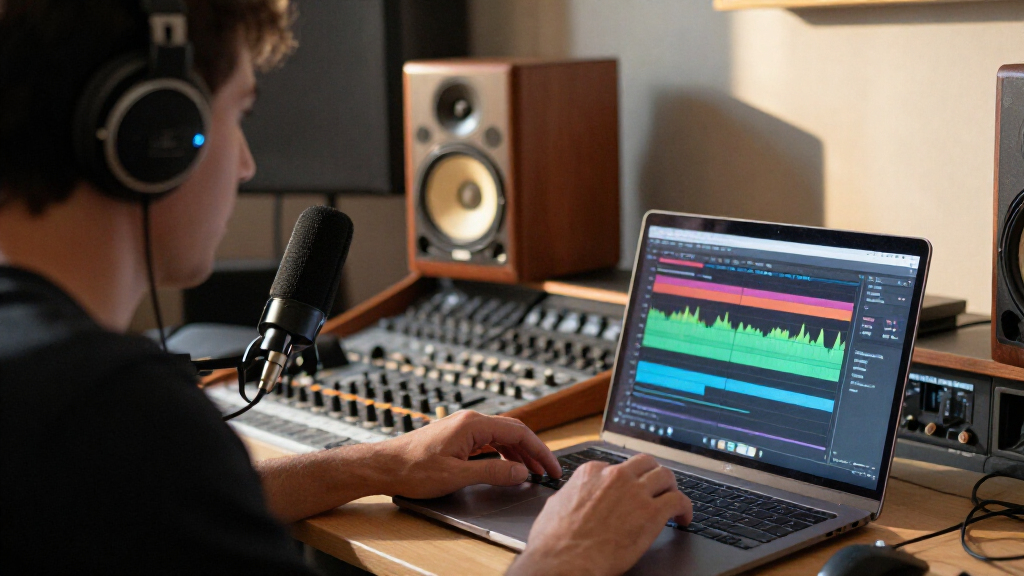

The Audio-Technica ATH-M50xBT2 is my best overall pick among wireless headphones for music production, balancing a familiar studio-monitor design with Bluetooth convenience and a wired listening option. For a more affordable entry point, the ATH-M20xBT keeps the feature set simpler, while the Sennheiser HDB 630 is the premium choice for listeners who want a more elaborate wireless setup. The main tradeoff is that Bluetooth convenience can add latency and does not replace a dependable wired reference when recording or making timing-sensitive edits. Fit, sound consistency, and the ability to monitor without wireless delay matter as much as portability. Read on for the full breakdown and guidance on matching a pair to your workflow.

Get audio and creator gear delivered free with Prime
- Fast, free delivery on millions of items
- Prime Video, Amazon Music and more included
- Member-only deals all year
Complete the kit


Key Takeaways
- The ATH-M50xBT2 leads this lineup because it combines wireless flexibility with a wired option, making it the most adaptable pick for moving between casual listening and studio tasks.
- Wireless does not mean latency-free. Bluetooth models are useful for playback and review, but timing-sensitive recording and editing call for a wired connection or a dedicated low-latency system.
- The ATH-M20xBT is the simpler starting point for buyers who want wireless convenience without paying for a more feature-rich model; the tradeoff is fewer studio-oriented refinements.
- The Sennheiser HDB 630 is the premium listening pick, while the MDR-7506 and ATH-M50x remain wired studio references rather than wireless headphones.
- OneOdio A70 serves a different value-minded role: it offers Bluetooth flexibility, but buyers should weigh its general-purpose design against the more established studio-monitor choices.
| Audio-Technica ATH-M50x Professional Studio Monitor Headphones, Black | 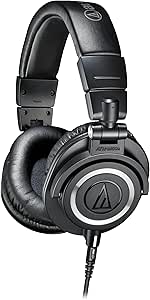 | Best for Wired Studio Monitoring | Driver size: 45 mm | Driver type: Dynamic | Frequency response: 20 Hz–28,000 Hz | VIEW LATEST PRICE | See Our Full Breakdown |
| Audio-Technica ATH-M20xBT Wireless Over-Ear Headphones with Mic, White |  | Best for Long Wireless Work Sessions | Driver size: 40 mm | Battery life: Up to 60 hours | Rapid charging: Up to 3 hours of use from a 10-minute charge | VIEW LATEST PRICE | See Our Full Breakdown |
| OneOdio A70 Bluetooth Over-Ear Headphones, Black |  | Best for Flexible Studio Connections | Driver size: 40 mm | Wireless battery life: Up to 72 hours | Wired connections: 3.5 mm and 6.35 mm | VIEW LATEST PRICE | See Our Full Breakdown |
| Sony MDR-7506 Professional Studio Headphones | 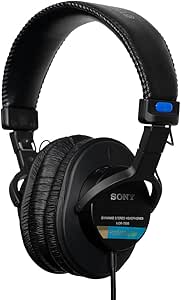 | Best for Traditional Wired Monitoring | Driver size: 40 mm | Frequency response: 10 Hz–20 kHz | Connectivity: Wired | VIEW LATEST PRICE | See Our Full Breakdown |
| Audio-Technica ATH-M50xBT2 Wireless Over-Ear Headphones, Black |  | Best Wireless Feature Set for Producers | Driver size: 45 mm | Battery life: Up to 50 hours | Rapid charging: Up to 3 hours of use from a 10-minute charge | VIEW LATEST PRICE | See Our Full Breakdown |
| Sennheiser HDB 630 Wireless Over-Ear Headphones with BTD 700 Bluetooth Adapter, Lunar Silver |  | Best Premium Wireless Sound | Driver size: 42 mm | Driver type: Dynamic | Wireless codecs: aptX HD, aptX Adaptive | VIEW LATEST PRICE | See Our Full Breakdown |
| wireless headphones for music production | Driver size | Battery life | Weight |
|---|---|---|---|
| Audio-Technica ATH-M50x Profes | 45 mm | — | — |
| Audio-Technica ATH-M20xBT Wire | 40 mm | Up to 60 hours | 261 g |
| OneOdio A70 Bluetooth Over-Ear | 40 mm | — | 8.96 oz |
| Sony MDR-7506 Professional Stu | 40 mm | — | — |
| Audio-Technica ATH-M50xBT2 Wir | 45 mm | Up to 50 hours | — |
| Sennheiser HDB 630 Wireless Ov | 42 mm | Up to 60 hours | 0.2 kg |
More Details on Our Top Picks
Audio-Technica ATH-M50x Professional Studio Monitor Headphones, Black
The ATH-M50x is the clearest fit here for producers who value a direct, wired monitoring path over wireless convenience. Its 45 mm drivers, sound-isolating earcups, and 90-degree swiveling cups suit tracking and one-ear cue checks. Unlike the wireless ATH-M50xBT2, this model avoids relying on Bluetooth for studio playback, but it also gives up wireless listening altogether. The detachable cable is a practical advantage over the Sony MDR-7506, whose long cord is fixed, making cable replacement easier if it gets damaged. The tradeoff is that this is still a consumer-facing monitor headphone rather than a guarantee of perfectly neutral translation, so I would check mixes on other systems. Its full-size fit also won’t suit buyers seeking a compact option.
Pros:- Sound-isolating circumaural earcups help reduce nearby noise during tracking
- 90-degree swiveling earcups support one-ear monitoring
- Detachable cable is easier to replace than the Sony MDR-7506’s fixed cord
- 45 mm dynamic drivers and a broad listed frequency response suit detailed listening
Cons:- No wireless mode for listening away from a wired audio source
- Over-ear construction is bulky compared with compact in-ear headphones
- Not water resistant
Best for: Producers who want closed-back wired headphones for tracking, cue monitoring, and one-ear listening at a desk or studio setup
Not ideal for: Buyers who need wireless playback during sessions or a compact in-ear option for commuting
- Driver size:45 mm
- Driver type:Dynamic
- Frequency response:20 Hz–28,000 Hz
- Impedance:38 ohm
- Sensitivity:99 dB
- Fit:Over-ear, circumaural
- Cable:Detachable
- Earcup swivel:90 degrees
Our verdict“Choose the ATH-M50x if your priority is wired, closed-back studio monitoring with swiveling cups rather than Bluetooth convenience.”
Audio-Technica ATH-M20xBT Wireless Over-Ear Headphones with Mic, White
The ATH-M20xBT suits producers who want long stretches of wireless listening without frequent charging, with up to 60 hours of battery life and multipoint pairing for two devices. Its 40 mm drivers are tuned with enhanced bass, so I’d treat it as a convenient reference for casual playback rather than assume it gives the same monitoring perspective as wired studio headphones. Compared with the more feature-rich ATH-M50xBT2, this model offers fewer listed sound-customization tools and smaller drivers, but it still includes a low-latency mode and an optional wired cable. The cable gives you a fallback when Bluetooth isn’t appropriate, though the product details do not specify a dedicated production-focused wired connection setup. Its 261 g weight and over-ear shape may also feel cumbersome for portable use.
Pros:- Up to 60 hours of listed battery life supports long listening stretches
- Multipoint Bluetooth pairing connects two devices
- Low-latency mode can help keep audio and video in sync
- Included 1.2 m cable allows optional wired listening
Cons:- Enhanced-bass tuning may be less suitable as the sole reference for judging mix balance
- The listed feature set is less adjustable than the ATH-M50xBT2, which supports app-based EQ
- Over-ear design may feel bulky for portable use
Best for: Home producers who want extended wireless listening, multipoint phone-and-computer pairing, and a wired fallback for occasional sessions
Not ideal for: Mix engineers seeking the more adjustable feature set of the ATH-M50xBT2 or a compact headphone for travel
- Driver size:40 mm
- Battery life:Up to 60 hours
- Rapid charging:Up to 3 hours of use from a 10-minute charge
- Charging connection:USB-C
- Connectivity:Bluetooth with multipoint pairing for two devices
- Low-latency mode:Yes
- Weight:261 g
- Included cable:1.2 m cable for optional wired connection
Our verdict“Pick the ATH-M20xBT for long wireless listening and device switching, not as a single, neutral reference for finishing mixes.”
OneOdio A70 Bluetooth Over-Ear Headphones, Black
The OneOdio A70 earns its place through connection flexibility: it works wirelessly, then can connect by cable with either 3.5 mm or 6.35 mm plugs supplied. That makes it easier to move between a phone and audio gear with a quarter-inch output than the ATH-M20xBT, which lists only a 1.2 m optional cable. Up to 72 hours of wireless battery life is another advantage for extended listening, while its foldable design makes storage less awkward than the full-size ATH-M50x. Still, the supplied details don’t specify a low-latency mode or active noise cancellation, and I wouldn’t treat its wireless mode as a substitute for a dependable wired production signal path. The A70 is a practical, adaptable pick, but buyers focused on monitoring features may prefer the ATH-M50x’s swiveling cups.
Pros:- Includes both 3.5 mm-to-3.5 mm and 3.5 mm-to-6.35 mm cables
- Up to 72 hours of wireless battery life
- Foldable, rotatable design is easier to store than the ATH-M50x
- Memory foam padding and a built-in microphone support general listening and calls
Cons:- Product details do not specify active noise cancellation or a low-latency mode
- Wireless battery-life figure does not apply when listening by cable
- No listed swiveling earcup feature for one-ear monitoring like the ATH-M50x
Best for: Bedroom producers and hobbyists who need one headphone for wireless listening and wired connections to both 3.5 mm and 6.35 mm gear
Not ideal for: Producers who need documented low-latency wireless performance, active noise cancellation, or one-ear monitoring controls
- Driver size:40 mm
- Wireless battery life:Up to 72 hours
- Wired connections:3.5 mm and 6.35 mm
- Included cables:3.5 mm to 6.35 mm; 3.5 mm to 3.5 mm
- Microphone:Built-in HD microphone with noise reduction
- Design:Rotatable and foldable
- Earpad materials:Memory foam and protein leather
- Weight:8.96 oz
Our verdict“Choose the A70 if you want a versatile wired-and-wireless pair with included connectors for common studio outputs.”
Sony MDR-7506 Professional Studio Headphones
The Sony MDR-7506 is the straightforward wired choice for producers who want closed-ear monitoring and don’t need Bluetooth. Its 40 mm drivers, folding design, and included 1/4-inch adapter make it easy to pack and connect to a range of studio equipment. Compared with the ATH-M50x, the Sony has a fixed 9.8-foot cord rather than a detachable one, which provides reach at a desk but is harder to replace if damaged. It also lacks the Audio-Technica’s listed 90-degree swiveling cups, so one-ear monitoring is less clearly supported. The wired connection avoids wireless latency concerns during production, but this model cannot double as a wireless listening pair like the ATH-M50xBT2. It makes the most sense as a practical studio tool, not an all-purpose travel headphone.
Pros:- Closed-ear design helps reduce external noise
- Foldable construction and included soft case aid storage and travel
- Included 1/4-inch adapter supports connection to studio equipment
- Wired operation avoids the wireless latency tradeoff of Bluetooth models
Cons:- The 9.8-foot cord is fixed and cannot be detached
- No wireless mode for listening away from studio connections
- Does not list swiveling earcups like the ATH-M50x
Best for: Producers who want a foldable, closed-back wired pair with a long cord and 1/4-inch adapter for studio use
Not ideal for: Buyers who want Bluetooth listening, a detachable cable, or swiveling cups for one-ear monitoring
- Driver size:40 mm
- Frequency response:10 Hz–20 kHz
- Connectivity:Wired
- Ear placement:Over-ear
- Design:Closed-ear, foldable
- Cord length:9.8 ft
- Cord:Non-detachable OFC cord
- Included accessories:Soft case and 1/4-inch adapter
Our verdict“Choose the MDR-7506 if you want a simple wired studio headphone and can live with its fixed long cord.”
Audio-Technica ATH-M50xBT2 Wireless Over-Ear Headphones, Black
The ATH-M50xBT2 is the strongest fit in this group for producers who want wireless convenience without giving up a wired option. Its 45 mm drivers, dedicated amplifier, and customizable EQ make it more adaptable than the simpler ATH-M20xBT, while multipoint pairing and up to 50 hours of battery life suit long sessions across a computer and phone. The included 1.2 m audio cable also provides a wired alternative; for latency-sensitive recording, I would use that rather than assume Bluetooth is suitable. The listed features don’t make it equivalent to a purpose-built wired monitoring setup such as the Sony MDR-7506, and EQ changes require the A-T Connect app. A full charge takes 3.5 hours, so rapid charging helps in a pinch but does not remove the need to plan ahead.
Pros:- 45 mm drivers and a dedicated amplifier are designed for clear sound and deep bass
- Customizable EQ offers more tuning flexibility than the ATH-M20xBT’s listed features
- Multipoint Bluetooth pairing connects two devices at once
- Includes a 1.2 m audio cable for wired listening
Cons:- A full battery charge takes 3.5 hours
- EQ adjustment requires the A-T Connect app
- Bluetooth should not be assumed to suit latency-sensitive production work
Best for: Producers who want wireless listening, app-based EQ, multipoint pairing, and an included cable for wired sessions
Not ideal for: Engineers who need only a wired monitoring tool or buyers who prefer to adjust EQ without using a companion app
- Driver size:45 mm
- Battery life:Up to 50 hours
- Rapid charging:Up to 3 hours of use from a 10-minute charge
- Bluetooth pairing:Multipoint; connects to two devices at once
- Microphones:Dual microphones with beamforming
- Charging connection:USB-C
- Battery charge time:3.5 hours
- Included accessories:USB charging cable, 1.2 m audio cable, pouch
Our verdict“Choose the ATH-M50xBT2 if wireless convenience and adjustable sound matter, while keeping its included cable available for production sessions.”
Sennheiser HDB 630 Wireless Over-Ear Headphones with BTD 700 Bluetooth Adapter, Lunar Silver
The HDB 630 is the most feature-rich wireless choice here for producers who want a detailed listening check without staying tethered to a computer. Its 42 mm transducers are tuned for neutral sound and a wide soundstage, while aptX HD, aptX Adaptive, and USB-C playback up to 24-bit/96 kHz give it more high-resolution listening options than the ATH-M50xBT2. The included BTD 700 adapter adds another route for compatible Bluetooth setups. A parametric EQ can help tailor playback, though it also takes time to configure, and any EQ changes should not replace checking a mix on neutral reference gear.
Compared with the wired MDR-7506, the HDB 630 offers ANC, transparency, and up to 60 hours of battery life, but its listed 470-ohm impedance makes wired compatibility worth checking. I’d choose it for flexible listening and production reviews, not as a substitute for a dedicated wired studio-monitor pair.
Pros:- 42 mm transducers are tuned for detailed mids and a wide soundstage.
- Supports aptX HD, aptX Adaptive, and USB-C playback up to 24-bit/96 kHz.
- Parametric EQ offers detailed sound customization.
- Adaptive ANC, Transparency Mode, and up to 60 hours of battery life suit varied listening settings.
Cons:- The listed 470-ohm impedance may require checking compatibility for wired use.
- Parametric EQ controls can take time to configure.
- Wireless features and processing make it less direct as a wired-only studio reference than the Sony MDR-7506.
Best for: Producers who want premium wireless listening for editing, reference checks, and commuting, plus USB-C lossless playback at a desk.
Not ideal for: Buyers seeking a straightforward, wired-first studio monitor or anyone unable to verify compatibility with the listed 470-ohm impedance for wired use.
- Driver size:42 mm
- Driver type:Dynamic
- Wireless codecs:aptX HD, aptX Adaptive
- USB-C playback:Lossless playback up to 24-bit/96 kHz
- Noise control:Adaptive ANC and Transparency Mode
- Battery life:Up to 60 hours
- Audio latency:30 milliseconds
- Weight:0.2 kg
- Included accessory:BTD 700 Bluetooth adapter
Our verdict“Choose the HDB 630 if you want high-resolution wireless listening and adaptable noise control, but keep a wired reference option for production decisions.”
How We Picked
I ranked these headphones around the needs of music production rather than wireless listening alone. The main criteria were whether a model can connect by cable for lower-latency work, how practical it is for monitoring and long sessions, how clearly its design suits studio use, and how much versatility it offers beyond the desk. I also separated products that are genuinely wireless from wired studio headphones, since a familiar studio reputation does not make a wired model a wireless option.
The ATH-M50xBT2 takes the top spot for combining wireless use and wired flexibility. The HDB 630 earns the premium position for buyers prioritizing a more advanced wireless listening setup, while the ATH-M20xBT and OneOdio A70 offer simpler routes into wireless monitoring. The ATH-M50x and Sony MDR-7506 remain relevant studio tools, but rank lower for this specific brief because they do not provide wireless operation.
| wireless headphones for music production | Battery life |
|---|---|
| Audio-Technica ATH-M50x Profes | — |
| Audio-Technica ATH-M20xBT Wire | Up to 60 hours |
| OneOdio A70 Bluetooth Over-Ear | — |
| Sony MDR-7506 Professional Stu | — |
| Audio-Technica ATH-M50xBT2 Wir | Up to 50 hours |
| Sennheiser HDB 630 Wireless Ov | Up to 60 hours |
Factors to Consider When Choosing Wireless Headphones For Music Production
Before choosing a pair, decide which parts of production you want wireless headphones to handle. The right choice depends less on a single feature and more on how you record, edit, check mixes, and listen away from your desk.
Choose Wireless for the Right Part of the Workflow
Bluetooth is convenient for listening to references, checking a mix from across the room, or working away from a desk. It can also introduce delay, which makes it a poor fit for tracking vocals or playing an instrument against software monitoring. A common mistake is assuming that a wireless connection will behave like a wired studio feed. Check whether the headphones support wired listening and make that connection your default for timing-sensitive work. Think of wireless as an additional mode, not a substitute for every studio connection.
Treat Headphones as One Reference, Not the Final Judge
Headphones can reveal edits, panning, and small details, but they present sound differently from speakers in a room. Closed-back designs help limit sound leaking into a microphone, yet they can make low-frequency balance and stereo placement feel different from monitors. Avoid making every mix decision from one pair alone, especially if the headphones emphasize or soften parts of the spectrum. Check important balances on speakers, earbuds, or another familiar playback system. This matters more than choosing a model marketed as professional.
Prioritize Fit for Long Sessions
A headphone that sounds useful for a short audition may become distracting during a long editing session. Clamping force, earcup depth, headband pressure, and heat all affect whether you can focus. Product names and studio labels do not tell you how a particular shape will fit, so check return terms and try the headphones with the glasses, hairstyle, or accessories you normally wear. A comfortable model is more likely to stay in use through detailed work. Do not trade fit for a feature you rarely need.
Separate Monitoring Needs From Wireless Extras
Microphones, Bluetooth controls, and phone-friendly features can be useful when a pair also serves for calls or commuting. They do not automatically improve monitoring for music production. If your headphones will stay at a studio desk, put more weight on wired operation, secure fit, and straightforward controls than on call features. If you move between a laptop, phone, and studio, a broader feature set may justify extra complexity. The best purchase is the one whose conveniences match your actual routine.
Know When a Wired Pair Is the Better Purchase
Buyers searching for wireless headphones may still get more studio utility from a wired model if low-latency monitoring is the priority. The MDR-7506 and ATH-M50x are examples in this roundup: both are established studio-style options, but neither is a wireless model. They may suit a fixed setup where a cable is no inconvenience, while a Bluetooth model makes more sense for switching between production and everyday listening. Avoid paying for wireless capability if you will never use it. Conversely, do not choose a wired-only pair when freedom of movement is central to your needs.
Pay More Only for Features That Change Your Use
A premium wireless setup can be worthwhile when it improves the way you listen across devices or adds functions you will use regularly. It is less valuable if your main task is recording with a cable and you already have a dependable monitoring chain. Compare the practical difference between a basic wireless model and a premium one against your working habits, not against a longer feature list. Beginners often benefit more from learning their headphones’ sound and checking mixes across multiple playback systems than from buying the most elaborate option. Spend extra when it solves a specific workflow problem.
Frequently Asked Questions
Can I record vocals while monitoring over Bluetooth?
Bluetooth delay can make your voice feel out of sync with the recording, so it is usually a poor choice for live vocal monitoring. Use a wired connection or your audio interface’s headphone output for tracking. A wireless mode can still be handy for listening back to takes after recording. Check whether a model allows wired playback before buying if you want both uses from one pair. Keep the microphone isolated from headphone spill as well, particularly when recording quietly.
Are the ATH-M50x and Sony MDR-7506 wireless?
No. The ATH-M50x and MDR-7506 in this roundup are wired headphones, so they do not meet a strict requirement for wireless operation. They may still suit a studio setup where a cable is acceptable and monitoring reliability matters more than moving around. Audio-Technica also offers the ATH-M50xBT2, which is the wireless counterpart in this list and supports wired use too. Check the exact model name before ordering, since similar names can refer to different connectivity options.
Should beginners choose the ATH-M20xBT or the ATH-M50xBT2?
The ATH-M20xBT is the more straightforward starting point if you mainly want wireless listening and basic production use. The ATH-M50xBT2 makes more sense if you expect to move between Bluetooth convenience and wired studio work, or want a more versatile single pair. Neither removes the need to learn how your headphones translate to speakers and other playback devices. Beginners should also check fit and return options, since comfort can matter more over time than a longer feature list. Choose based on your actual workflow rather than the assumption that the more advanced model will automatically improve your mixes.
Is the Sennheiser HDB 630 a better production choice than the ATH-M50xBT2?
That depends on whether your priority is premium wireless listening or a flexible studio-oriented pair. The HDB 630 stands out as the premium wireless option in this roundup, while the ATH-M50xBT2 is the stronger all-around fit for buyers who want both wireless convenience and wired use in a production workflow. For recording and timing-sensitive editing, a wired connection remains the safer choice with either model. Compare connectivity, fit, and the functions you will use rather than treating premium status as proof of better mix translation. Neither should be your only reference for final mix decisions.
Is the OneOdio A70 suitable as my only production headphone?
The A70 can make sense as a flexible wireless listening option, but choosing it as your only production reference depends on how you work. If you record or edit to live software monitoring, confirm that its wired connection fits your setup and use a cable when latency matters. For final balances, compare your work on speakers or another familiar playback device instead of relying on one headphone model. Buyers seeking a more studio-focused option can compare it with the ATH-M50xBT2, while those who value a simpler wireless entry point can look at the ATH-M20xBT. Fit and workflow compatibility should settle the choice.
Conclusion
For the best overall blend of wireless use and studio flexibility, I recommend the Audio-Technica ATH-M50xBT2. The ATH-M20xBT is my best value and beginner choice for buyers who want a simpler wireless starting point, while the Sennheiser HDB 630 is the best premium pick for a more feature-rich wireless listening setup. Choose the OneOdio A70 if you want a general-purpose Bluetooth option, and the ATH-M50x or Sony MDR-7506 if your specific need is a wired studio pair rather than wireless operation. If you record live sources, favor a wired monitoring path regardless of which model you buy.