TL;DR

Get audio and creator gear delivered free with Prime
- Fast, free delivery on millions of items
- Prime Video, Amazon Music and more included
- Member-only deals all year
Building a Print Portfolio That Wins Clients means showing 6–10 relevant case studies, explaining your decisions, and presenting finished objects with production details and honest results. Pair a tactile physical book with a concise digital version, then tailor the sequence to each prospect so your strongest evidence answers the needs already on the table.
A client can forget twenty polished images and still remember the weight of one beautiful cover, the dry whisper of uncoated paper, or the flash of foil when a page catches the light. That is the quiet power of a physical print portfolio: it turns your judgment into something another person can hold, examine, and discuss.
Yet attractive printing alone will not win the assignment. A strong print portfolio is more than a collection of attractive work; it is evidence that you can understand a brief, make disciplined choices, handle production limits, and deliver a finished result. The book itself becomes a sample of your editing, sequencing, color control, typography, and care.
When printed pieces are photographed, small details often carry the loudest message. A clean fold, faithful skin tone, readable caption, or carefully lit emboss can make the work feel resolved, while a scuffed sleeve or muddy reproduction quietly drains confidence. This guide shows you how to choose 6–10 convincing projects, build clear case studies, combine physical and digital formats, and present the work as a useful client conversation rather than a silent parade of images.
Edit the portfolio to 6–10 substantial projects that resemble the assignments you want, and remove weaker examples that repeat the same skill.
Structure every case study around the audience, problem, your exact role, key decisions, physical production, and a supportable result.
Show actual objects, prototypes, proofs, and close-up photographs whenever paper, binding, finishing, scale, or construction affects the work.
Use the physical book for tactile persuasion, a website for discovery, a concise PDF for forwarding, and a tested link for follow-up.
Reorder the portfolio before each major meeting, rehearse a two-minute explanation for every project, and verify permissions, claims, links, and physical condi…
Portfolio Strategy / Print Design
Building a Print Portfolio That Wins Clients
Show fewer, stronger projects. Explain the decisions behind them. Put real production evidence in the client’s hands. The goal is not a parade of polished images—it is a convincing demonstration of judgment, craft, and reliable delivery.
Enough depth to establish authority without burying your strongest evidence.
Move clearly from objective and constraint to decision, execution, and result.
Rehearse a concise explanation for every project before the conversation begins.
01 / Curate with intent
Edit for the work you want next.
A focused portfolio communicates more authority than a large archive. Score each candidate for relevance, craft, strategic thinking, and finished evidence. When two projects prove the same skill, keep the stronger one.
The four-part selection test
Use a simple weighted review before deciding what earns a place in the final sequence.
Open with immediate relevance
Lead with work that resembles the prospect’s sector, audience, or production challenge.
Vary the middle
Alternate editorial density, tactile systems, packaging, and compact projects to maintain rhythm.
Finish with memory
Close on a striking object, meaningful result, or story that invites another question.
02 / Six narrative moves
Make every case study easy to follow.
A client should never have to hunt for meaning. Build a clean path from the brief to the result, then keep deeper samples ready for the details that spark discussion.
Name the audience and objective
Identify the client, intended user, business setting, and purpose in one precise sentence.
Define the real constraint
Show what made the assignment difficult: structure, budget, deadline, shelf impact, or scale.
State your exact role
Separate your contribution from photography, copy, illustration, production, and team direction.
Reveal the pivotal decision
Explain the choice that improved recognition, usability, production, or communication.
Document physical production
Record stock, weight, ink, binding, folds, finishes, proofing, and relevant limits.
Close with a supportable result
Use verified outcomes, continued use, repeat orders, feedback, coverage, or system expansion.
03 / Concept meets craft
Let the object prove you can deliver.
Print clients need confidence that an idea will survive ink, pressure, trimming, folding, packing, and use. Photograph the finished object first, then move closer to the production details that make it convincing.
Show the complete object
Establish form, scale, construction, and context before presenting isolated details.
Reveal tactile evidence
Capture paper texture, folds, edge paint, embossing, foil, binding, and surface changes.
Use selective prototypes
One annotated proof can explain a decisive revision better than ten decorative sketches.
Place the work in context
Show a package on shelf, a publication in hand, or a system working across formats.
04 / One story, three formats
Give each medium a clear job.
The physical portfolio creates tactile persuasion. The website supports discovery. A concise PDF makes forwarding easy. Keep the story consistent while adapting its depth and pace to the format.
| Format | Primary job | Best content | Critical check |
|---|---|---|---|
| Physical book | Tactile persuasion in meetings | ✓ Finished pieces, stocks, proofs, folds, and close details | Clean condition, accurate color, easy handling |
| Website | Discovery and deeper browsing | ✓ Complete cases, current work, testimonials, and motion | Fast pages, mobile clarity, current links |
| Concise PDF | Forwarding and internal review | ✓ Short narratives, selected images, role, result, and contact | Small file, readable type, tested export |
| Follow-up link | Continue the conversation | ✓ Relevant case study, credentials, and direct contact path | Correct destination, permissions, no dead pages |
Practical rule: elaborate construction should never make the portfolio difficult to update, transport, open, or review. The work remains the subject; the container demonstrates restraint.
05 / Tailor the evidence
Turn the portfolio into a client conversation.
Research the prospect, identify the needs already on the table, and reorder the work so your strongest evidence answers those needs early. Tailoring changes the sequence—not your integrity.
Research
Sector, audience, offer, channels, budget signals
Select
Choose the closest problems and strongest proof
Sequence
Open relevant, vary the middle, finish memorably
Rehearse
Prepare a clear two-minute story per project
Follow up
Send the most useful case, not the entire archive
Permissions are confirmed
Commissioned, collaborative, personal, and speculative work are labeled honestly.
Claims can be supported
Metrics, testimonials, awards, print runs, and outcomes are accurate and attributable.
Every link has been tested
The website, PDF, QR destination, social profile, and contact details all work.
The physical book is immaculate
No scuffed sleeves, loose pages, muddy reproductions, or awkward presentation moments.
Make the evidence feel inevitable.
A winning portfolio shows that you understand the brief, make disciplined choices, control production, and deliver a finished result. The tactile object earns attention; the case-study logic earns trust.
Choose 6–10 Projects That Point Toward Your Next Client
Building a Print Portfolio That Wins Clients starts with a firm edit: choose 6–10 substantial projects that resemble the assignments you want next. Each project should add fresh evidence, while the full sequence should make your specialty clear within the first few minutes of review. According to PhotoMocha’s portfolio guidance, relevance and depth beat volume [1].
Think of the edit like packing one camera bag for a specific shoot. You would not carry every lens you own to photograph a quiet restaurant interior; you would take the tools that fit the room, the light, and the brief. Your portfolio works the same way. A publishing prospect needs to see editorial pacing, typography, covers, and spreads, while a consumer brand will care more about packaging, campaign consistency, retail use, and production reliability.
Start by spreading thumbnails of every candidate project across a table. Mark each one for relevance, craft, strategic thinking, and finished evidence. If two projects prove the same skill, keep the stronger one; for example, retain the annual report with confident information hierarchy and remove the second report that merely repeats the visual language.
- Open with immediate relevance: If you are meeting a food brand, begin with packaging or point-of-sale work rather than an unrelated arts poster.
- Vary the middle: Follow a dense editorial project with a tactile identity system or compact packaging case so the rhythm does not become flat.
- Finish with memory: End on a project with a strong object, result, or story that gives the client an easy reason to keep talking.
A common misconception says range requires showing everything. In reality, range comes from varied problems, not scattered styles. A slim book containing a menu system, a folding mailer, a carton, and a publication can feel broad because each project solves a different challenge, while thirty disconnected pieces can make your direction feel foggy.
As an affiliate, we earn on qualifying purchases.
Build Every Case Study in Six Moves Clients Can Follow
A persuasive case study moves from brief to constraint, decision, execution, and result without making the client hunt for meaning. Give each project a clean narrative that can be understood in about three minutes, then keep deeper samples ready when a detail catches the viewer’s attention.
- Name the client, audience, and objective. A label such as “launch packaging for a regional coffee roaster entering grocery stores” gives more direction than “branding project.” If the work is personal, collaborative, or speculative, say so plainly.
- Define the real problem. Perhaps twelve coffee varieties had to remain distinct on a crowded shelf while using one carton structure. A concrete constraint turns a pretty label into evidence of judgment.
- State your role. Identify whether you handled photography, art direction, layout, illustration, retouching, prepress, or production management. On a campaign created by six people, honest boundaries build more trust than claiming the whole machine.
- Show the decision that changed the outcome. You might explain that a color-coded side panel helped staff identify varieties while stacked boxes hid the front label. One annotated prototype can communicate this better than ten decorative sketches.
- Describe the physical execution. Record the stock, weight, ink system, binding, fold, finish, proofing method, and production limit. For example, shifting a large solid area away from a fold may prevent cracking on a digitally printed cover.
- Close with supportable evidence. Use confirmed sales, inquiries, attendance, waste reduction, press coverage, repeat orders, or client feedback. When numbers are private, a statement such as “the system expanded across four seasonal releases” remains specific without exposing confidential figures.
When photographing a case study, treat the wide shot as the front door and the details as rooms beyond it. The first image shows the complete object; later frames reveal paper texture, edge paint, binding, folds, and scale. That sequence helps a client understand both the idea and the physical discipline behind it.
Never invent a result. A modest, verifiable outcome carries more weight than a dramatic percentage nobody can support.
Keep captions brief enough to read during a conversation. Your portfolio should act like a well-marked trail, not a wall of instructions. If a client pauses at a structural prototype, you can expand on testing, revisions, or printer conversations without forcing every visitor through the entire production diary.
As an affiliate, we earn on qualifying purchases.
Let Paper, Color, and Finishing Prove You Can Deliver
Your physical portfolio should prove that you can control materials, color, construction, and handling, not merely create attractive screen images. Show the finished object beside selective close-ups and production notes, because clients hiring for print need confidence that your ideas can survive ink, pressure, trimming, folding, packing, and use.
A screen can make every surface look equally smooth. In your hands, a soft cotton stock drinks light, coated paper snaps with contrast, and a blind emboss casts a shallow shadow that changes as the page moves. These details benefit from carefully angled light because texture and finish need shape; flat frontal light can make foil, varnish, and relief disappear.
Include production information when it explains a decision. A book might use 120 gsm uncoated text pages for comfortable turning and a heavier cover for protection. A package may use one spot color rather than a wide color mix because the shorter press setup supported a limited run. The number matters less than showing that you connected creative intent with manufacturing reality.
- Color: Show a controlled reproduction and mention spot inks, process color, proofing, or deliberate gamut choices when relevant.
- Structure: Include a flat view, folded view, and in-use photograph when construction shapes the experience.
- Finish: Photograph foil, embossing, varnish, letterpress, or die cuts from an angle that makes the surface readable.
- Constraints: Explain choices tied to deadline, print quantity, budget, accessibility, shipping, or material waste.
Mockups have a supporting role, especially when an original package is unavailable, but they should not wear a costume of false certainty. Label conceptual work and pair it with a prototype, proof, dieline, or honest production note whenever you can. A hand-cut white carton with a precisely applied label often proves more practical thinking than a glossy rendering floating in impossible light.
The portfolio object deserves the same discipline. Use consistent margins, readable captions, durable pages, and secure binding, then inspect it under neutral light before a meeting. Fingerprints on a black cover, curled corners, or chipped ink feel small until the client wonders whether their own job will receive the same level of care.
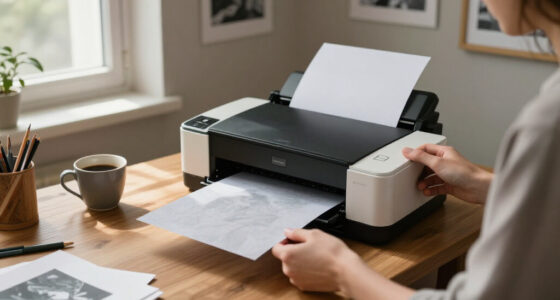
high quality portfolio presentation prints
As an affiliate, we earn on qualifying purchases.
As an affiliate, we earn on qualifying purchases.
Use Physical and Digital Portfolios for Different Jobs
Building a Print Portfolio That Wins Clients works best as a physical-and-digital pair. The printed version communicates material judgment and creates a memorable meeting, while a website or concise PDF supports discovery, sharing, remote review, and follow-up. PhotoMocha identifies this hybrid approach as a defining part of current portfolio practice [2].
| Format | What it proves best | Where it works | Main weakness |
|---|---|---|---|
| Physical portfolio | Paper, scale, finish, binding, construction, and care | Interviews, pitches, studio visits, and print-focused meetings | Harder to update, duplicate, carry, and share |
| Website | Current range, easy discovery, motion, links, and broad access | Search, referrals, email follow-up, and remote review | Cannot reproduce weight, texture, or true physical scale |
| Concise PDF | Tailored sequencing in a portable file | Introductions, applications, procurement, and internal forwarding | Can become oversized, outdated, or detached from context |
| Leave-behind | Point of view, relevance, and contact recall | After meetings, events, and introductions | Must be useful enough to avoid becoming clutter |
The physical book is the handshake; the digital portfolio is the address someone saves afterward. For example, a creative director may appreciate handling a stitched publication during your meeting, then forward your eight-page PDF to a producer and revisit the complete case study online two days later. No single format handles all three moments equally well.
Hybrid features can connect the formats, but keep them quiet. A tested QR code might open a video of a folding package, a motion identity, or a current project page. Print the readable URL nearby, use a stable destination you control, and test the code on more than one phone before every major meeting.
Short-run digital printing makes smaller, frequently revised editions more practical than a permanent showpiece [2]. That flexibility matters because a compact portfolio that changes easily can follow your career, while an elaborate case may trap yesterday’s work behind expensive construction. Let the work supply the drama; the container should make viewing comfortable.
As an affiliate, we earn on qualifying purchases.
Tailor the Sequence So Each Client Sees Their Needs First
A tailored portfolio puts the prospect’s sector, audience, likely deliverables, and production pressures at the front of the conversation. Keep a strong general edit for discovery, then reorder or replace several projects before a serious meeting so the first examples answer questions the client already has.
Suppose a hotel group needs menus, room collateral, signage, and seasonal campaign pieces. Opening with an experimental poster may show taste, but opening with a hospitality identity across menus, wayfinding, print photography, and guest touchpoints shows immediate usefulness. You can bring the poster later if it adds a different kind of energy.
Research the business without mimicking its current look. Read recent press releases, study locations, note customer groups, and inspect how printed pieces appear in use. Your goal is to connect your skills to their operation, not return with a visual echo of their website. A good tailor measures the person before cutting cloth; your edit should fit the client’s problem while retaining your own point of view.
- For publishers: Lead with covers, long-form typography, image sequencing, grids, and production across multiple page counts.
- For consumer brands: Show packaging families, retail visibility, campaign consistency, and practical structures.
- For cultural clients: Emphasize posters, programs, exhibition graphics, accessible information, and deadline-sensitive production.
- For sustainability-led teams: Use verified details about recycled or certified stock, local production, responsible inks, recyclable packaging, and waste reduction.
Rehearse a two-minute version of every case study and a deeper version for follow-up questions. Start with the client problem, explain two or three decisions, state the result, and pause. When someone leans toward a sample and rubs the cover between two fingers, follow that interest rather than racing through a memorized speech.
Bring practical answers as well as beautiful work. A serious conversation may move quickly into timelines, revision rounds, licensing, accessibility, quantities, production partners, and deliverables. Your calm command of those details can win more trust than one extra dramatic image.
Run This Final Check Before Your Portfolio Reaches the Table
Building a Print Portfolio That Wins Clients requires one final edit for credibility, usability, and physical condition. Review the book as a busy client would: quickly, under ordinary light, with no private knowledge of the projects. Anything confusing, damaged, unsupported, or hard to read should be repaired, replaced, or removed.
Begin with a cold review. Leave the portfolio alone overnight, then open it at a table where someone would actually handle it. Read every caption, turn every page, scan every code, and check whether the first 30 seconds reveal what you do. A beautiful spread fails its job if the type is so small that a client must lift the book toward their face.
- Remove repetition: Cut the weaker project when two examples prove the same ability.
- Label ownership: Separate your photography, design, art direction, copy, illustration, and production duties from the team’s work.
- Check permissions: Do not show confidential, unreleased, or unlicensed material without approval.
- Inspect the object: Clean fingerprints, flatten warped pages, replace damaged sleeves, and check trimming and binding.
- Verify every claim: Match results to records, approved testimonials, or public outcomes.
- Test contact routes: Include your name, specialty, location or service area, website, email, and a working link.
Pay special attention to speculative work. A self-initiated package can be powerful when it solves a believable brief with real dimensions, a defined audience, a print quantity, material limits, and a functioning structure. Label it honestly. The contrast is sharp: a credible prototype shows initiative, while an unlabeled fantasy mockup can make a reviewer question what else has been dressed up.
If generative tools contributed materially to imagery or concepts, state their role and confirm that final assets are cleared for the intended commercial use. The same honesty applies to collaborations and outcomes. Transparency strengthens authority because clients need reliable partners, not mysterious perfection.
Finish by handing the book to another person without explaining it. Watch where they hesitate, what they skip, and which project prompts a question. That observation is like checking a contact sheet after a shoot: the frames you loved while making them may not be the ones that communicate most clearly.
Source notes: [1] PhotoMocha guidance on portfolio editing, case-study depth, contribution, and evidence. [2] PhotoMocha guidance on physical-digital portfolios, short-run production, sustainability, accessibility, hybrid links, and AI transparency.
Frequently Asked Questions
How many projects should a print portfolio contain?
A print portfolio usually works best with 6–10 well-developed projects. Six detailed case studies can fill a focused 30-minute meeting, while ten may suit a broader practice if each one adds a distinct problem, format, or production skill. Remove any project that repeats stronger evidence without adding useful context.
Do I need both a physical and digital portfolio?
Most print-focused creatives benefit from both formats. A physical portfolio proves paper choice, scale, binding, finish, and construction, while a current website or PDF makes your work easy to find, share, and revisit. If a meeting moves online, photograph every object with wide views, close details, and something that communicates scale.
Can personal or speculative work win real clients?
Yes, when the project uses credible constraints and honest labels. An early-career photographer or designer could create a small restaurant identity with a defined audience, fixed menu size, accessible type, realistic print quantity, and tested folding method. The rigor proves capability even when no paying client commissioned the work.
Should I include original printed pieces or photographs of them?
Include original pieces when texture, weight, finish, scale, binding, or packaging construction carries part of the idea. Protect fragile samples and bring strong photographs as backup, including a complete view, close details, and an in-use frame. For a large poster, a folded proof plus a room photograph may communicate the work better than an awkward full-size sheet.
How much process should each case study show?
Show the process that explains meaningful decisions: research, structural tests, selected concepts, prototypes, proofs, and the revision that improved the result. Skip pages of nearly identical rejected sketches. A carton prototype that exposed a weak locking tab tells a stronger story than twenty unexplained thumbnail drawings.
How often should I update my print portfolio?
Review it every few months and before each high-value meeting. Replace work when a newer project offers stronger relevance, craft, evidence, or production depth, and retest links whenever you change a digital destination. Short-run printing and modular binding can make those updates less wasteful and easier to manage.
Conclusion
Your clearest next move is simple: place every candidate project on one table and keep only the work that proves something a desired client needs. Build each survivor into a compact story with real constraints, visible craft, honest ownership, and supportable results, then test the finished sequence in another person’s hands.
The portfolio does not need to be the loudest object in the room. It needs to make your judgment feel dependable. When the final page closes, aim for one clear impression: you can take an idea through ink, paper, pressure, and production until it becomes an object worth keeping.
Halloween Picks
halloween
As an affiliate, we earn on qualifying purchases.