
TL;DR

Get audio and creator gear delivered free with Prime
- Fast, free delivery on millions of items
- Prime Video, Amazon Music and more included
- Member-only deals all year
A giclée is a high-quality inkjet print, typically produced from a digital file using professional printers, pigment-based inks, and archival paper or canvas. Printmaker Jack Duganne coined the term around 1991 from the French verb gicler (‘to spray’). Because no law or standard defines the word, quality depends entirely on the ink, substrate, printer, and color management behind the specific print — not the label itself.
The first time a gallery owner told me she sold “giclées,” I nodded along like I knew what she meant. I didn’t. It sounded French, expensive, and vaguely like something you’d hang over a fireplace. Turns out I was one-third right.
Here’s the honest answer: giclée describes a high-quality inkjet print, typically produced from a digital file using professional printers, pigment inks, and fine-art paper or canvas. That’s it. The word is French-ish, the process is digital, and the quality — well, that depends entirely on who made the print and how.
In this guide, I’ll walk you through where the word came from, what actually makes a print a giclée, how to tell a good one from a lazy one, and what to ask before you spend money. I’ve printed my own photography for years, and I’ve seen the same word stuck on prints worth framing forever and prints that’ll fade in a sunny hallway by next spring.
Giclée is an unregulated marketing term coined around 1991 by printmaker Jack Duganne — the print’s actual quality depends on pigment inks, archival substrates…
Every giclée is an inkjet print; the difference lies in professional workflow: 8–12 pigment inks, custom ICC profiling, archival paper or canvas, and human pro…
Longevity claims like ‘100 years’ are lab estimates — placement matters as much as materials, so keep prints out of direct sunlight and use conservation framin…
A limited-edition number like 12/100 doesn’t indicate printing order or guarantee value; demand, provenance, and the artist’s reputation drive worth.
Ask sellers seven specific questions — ink type, paper brand, printer, edition details, authorization, framing advice, and print status — before buying.
Fine-Art Printing · Buyer’s Guide
Giclée Explained: What the Fancy Word Actually Means
A giclée is a high-quality inkjet print made from a digital file with professional printers, pigment-based inks, and archival paper or canvas. But the word itself guarantees nothing — quality depends entirely on who made the print and how.
“The word was invented to sell, not to certify. Judge the print, not the label.”
Key Insight — No Legal Standard Exists01 — Etymology
Where the Word Comes From (and Why It Sounds So Fancy)
Giclée is a marketing word, born from a practical problem. Imagine trying to sell a $600 print in 1991 by saying “it came out of an inkjet.” Nobody would have bought it. The name stuck because it worked.
The Problem
Fine-art prints made on early inkjet printers needed a name that didn’t scream “office machine.”
The Coinage
Printmaker JACK DUGANNE borrows the French verb GICLER — “to spray” — literally what an inkjet head does.
The Pedigree
“Giclée” gave digital printing a pedigree it hadn’t yet earned. Early prints were rough compared to today.
The Reality
No giclée board, no inspection stamp, no legal definition. A seller can call almost any inkjet print a giclée — and some do.
Knowing the history makes you a sharper buyer: the label is marketing, not certification.
02 — The Real Definition
What Actually Makes a Print a Giclée — 6 Things That Matter
There’s no enforced definition, but reputable producers share the same core ingredients. If a seller can’t describe most of these, the label is doing all the work.
High-Resolution File or Scan
Roughly 300 PPI at final print size is a common target, though viewing distance and image type shift that number.
Professional Wide-Format Printer
8 to 12 ink colors instead of four — smoother skin tones, neutral grays, and deeper shadows than office machines.
Pigment-Based Inks
Not the cheaper dye inks that fade faster. Pigment wins decisively for fade resistance over time.
Archival Paper or Canvas
Conservation-grade materials — usually acid-free, sometimes cotton rag — chosen for long-term stability.
Calibration & Profiling
Custom ICC profiles so the print matches the original or the artist’s intent — not the printer’s mood.
Proofing & Inspection
Someone actually looks at the output before it ships. Material choices shape the image as much as the capture does.
03 — Head to Head
Giclée vs. Your Regular Inkjet Print
Every giclée is an inkjet print, but not every inkjet print deserves to be called one. The difference lives in the materials and the workflow — not in any official test. The line is customs, not law.
| Factor | Typical Home / Office Inkjet | Professionally Made Giclée |
|---|---|---|
| Inks | Dye-based, faster fading | Pigment-based, better longevity |
| Paper | Generic bright office paper | Archival cotton rag or canvas |
| Color Management | Default driver settings | Custom ICC profiles, calibrated workflow |
| Ink Colors | Usually 4 | Often 8–12, for smoother gradients |
| Consistency | Varies print to print | Matches between print runs |
Rule of thumb: if a seller names the ink type, paper brand, and printer model without hesitation, you’re in good hands. If they just repeat “giclée” louder — walk away.
04 — Longevity
Are Giclée Prints Archival? What “100 Years” Really Means
“Archival” means materials were chosen for long-term stability — not that the print will last forever. Longevity claims like “100 or 200 years” come from accelerated aging tests under lab assumptions. Treat them as estimates, not guarantees. Placement is half of preservation, and it’s the half you control.
Pigment vs. Dye Inks
Pigment wins for fade resistance — this is the single biggest material factor.
Paper Chemistry
Acid-free, cotton-based papers age far better than wood-pulp papers with optical brighteners.
Light Exposure
Direct sunlight and UV are the biggest killers of any print, regardless of materials.
Environment
Humidity swings, heat, air pollution, and oily fingers all take a cumulative toll.
Framing & Coating
Conservation glazing for paper; a compatible protective coating for canvas.
05 — Substrate Choice
Paper or Canvas? How to Choose Without Guessing
Neither material is inherently better — the right choice depends on the image, the room, and the look you want. But they behave very differently, and picking wrong can flatten an image that deserved better.
Crispest Detail
The standard for serious photography and reproductions
- Widest range of textures and finishes
- Matte papers kill glare and feel luxurious in the hand
- Glossier surfaces boost apparent contrast and color punch
- Cotton rag offers substantial weight and conservation properties
Painterly Presence
Echoes the traditional presentation of a painting
- Stretches over a frame — no glass required
- Suits bold, painterly images
- May be coated, stretched, and framed after printing
- Texture can swallow fine detail — match it to the image
06 — Before You Buy
Seven Questions to Ask Any Seller
Don’t rely on the label alone. Ask for material and production details — a reputable seller will answer all seven without hesitation.
What ink type? Pigment or dye — and which manufacturer’s set?
What paper brand? Ask for the exact substrate and its archival rating.
Which printer? The model reveals ink count and print technology.
Edition details? A number like 12/100 doesn’t indicate order or guarantee value — demand, provenance, and the artist’s reputation drive worth.
Authorized by the artist? A giclée reproduction is still a reproduction — even signed and numbered. Digitally created work printed as intended is the exception.
Framing advice? Do they recommend conservation glazing or protective coating?
Is it the final print? Hand-embellished giclées should never be presented as hand-painted originals.
07 — Key Takeaways
The Honest Summary
Unregulated term. Coined around 1991 by Jack Duganne as marketing — the print’s actual quality depends on pigment inks, archival substrates, and professional workflow.
Workflow is the difference. 8–12 pigment inks, custom ICC profiling, archival paper or canvas, and human proofing separate giclées from home prints.
Longevity is conditional. “100 years” is a lab estimate — keep prints out of direct sunlight and use conservation framing.
Ask before buying. Ink type, paper brand, printer, edition details, authorization, framing advice, and print status — seven questions, no exceptions.
Where the Word Comes From (and Why It Sounds So Fancy)
Giclée is a marketing word, born from a practical problem. Around 1991, printmaker Jack Duganne needed a name for fine-art prints made on early inkjet printers — one that didn’t scream “office machine.” He borrowed from the French verb gicler, meaning “to spray” or “to squirt,” which is literally what an inkjet print head does. Pronounce it “zhee-CLAY.”
Imagine trying to sell a $600 print in 1991 by saying “it came out of an inkjet.” Nobody would have bought it. “Giclée” gave digital printing a pedigree it hadn’t yet earned — and honestly, the prints back then were rough compared to today. The name stuck because it worked.
The lesson worth remembering: the word was invented to sell, not to certify. There’s no giclée board, no inspection stamp, no legal definition. A seller can call almost any inkjet print a giclée, and some do. That’s not cynicism — it’s just the history of the term, and knowing it makes you a sharper buyer.
The word “giclée” was coined as marketing, not as a standard. Judge the print, not the label.
As an affiliate, we earn on qualifying purchases.
What Actually Makes a Print a Giclée — 6 Things That Matter
A real giclée comes from a professional workflow, and while there’s no enforced definition, reputable producers share the same core ingredients. If a seller can’t describe most of these, the label is doing all the work.
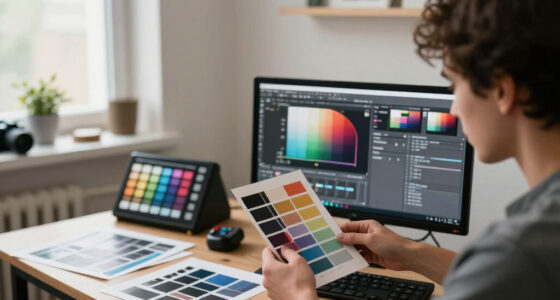
- A high-resolution source file or scan — roughly 300 pixels per inch at final print size is a common target, though viewing distance and image type shift that number.
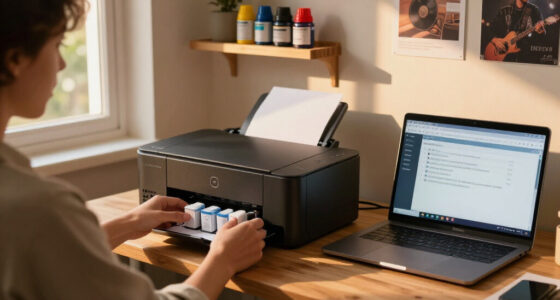
- A professional wide-format inkjet printer — often using 8 to 12 ink colors instead of the four in an office printer, which means smoother skin tones, neutral grays, and deeper shadows.
- Pigment-based inks, not the cheaper dye inks that fade faster.
- Archival, conservation-grade paper or canvas — usually acid-free, sometimes cotton rag.
- Color calibration and profiling, so the print matches the original or the artist’s intent rather than the printer’s mood.
- Proofing and inspection by someone who actually looks at the output before it ships.
Here’s a scenario from my own workflow: I once reprinted a landscape image on two papers from the same file — a smooth baryta and a textured cotton rag. Same printer, same inks. The cotton rag softened the mist in the background beautifully; the baryta made the foreground rocks punchier. Neither was “wrong.” That’s why profiling and proofing matter more than any buzzword — the material choices shape the final image as much as the capture does.
As an affiliate, we earn on qualifying purchases.
Giclée vs. Your Regular Inkjet Print: The Real Differences
Every giclée is an inkjet print, but not every inkjet print deserves to be called one. The difference lives in the materials and the workflow — a home print on cheap dye inks and bright office paper is a different object than a pigment-ink print on cotton rag, even though both came from ink nozzles.
| Factor | Typical home/office inkjet | Professionally made giclée |
|---|---|---|
| Inks | Dye-based, faster fading | Pigment-based, better longevity |
| Paper | Generic bright office paper | Archival cotton rag or canvas |
| Color management | Default driver settings | Custom ICC profiles, calibrated workflow |
| Ink colors | Usually 4 | Often 8–12, for smoother gradients |
| Consistency | Varies print to print | Matches between print runs |
The catch — and there’s always a catch — is that no official test turns an inkjet print into a giclée. The line is customs, not law. My rule of thumb after years behind printers: if a seller can tell you the ink type, the paper brand, and the printer model without hesitation, you’re probably in good hands. If they just repeat the word “giclée” louder, walk away.
As an affiliate, we earn on qualifying purchases.
Are Giclée Prints Archival? What “100 Years” Really Means
Archival means the materials were chosen for long-term stability — it does not mean the print will last forever. Longevity depends on the inks, the substrate, and, more than anything, how you display and store the piece.
What actually affects how long your print survives:
- Pigment vs. dye inks — pigment wins for fade resistance.
- Paper chemistry — acid-free, cotton-based papers age far better than wood-pulp papers with optical brighteners.
- Light exposure — direct sunlight and UV are the biggest killers.
- Environment — humidity swings, heat, air pollution, and oily fingers all take a toll.
- Framing and coating — conservation glazing for paper; a compatible protective coating for canvas.
You’ll see claims like “lasts 100 or 200 years.” Those numbers come from accelerated aging tests under lab assumptions — treat them as estimates, not guarantees. I have a pigment print from my early days hanging in a north-facing room, out of direct sun, and a decade later it looks identical. The same print in a south-facing window would be a different story by now. Placement is half of preservation, and it’s the half you control.
As an affiliate, we earn on qualifying purchases.
Paper or Canvas? How to Choose Without Guessing
Neither material is inherently better — the right choice depends on the image, the room, and the look you want. But they behave very differently, and picking wrong can flatten an image that deserved better.
Fine-art paper delivers the crispest detail and the widest range of textures and finishes. Matte papers kill glare and feel luxurious in the hand; glossier surfaces boost apparent contrast and color punch. Cotton rag papers, with their substantial weight and conservation properties, are the standard for serious photography and reproductions.
Canvas echoes the traditional presentation of a painting, stretches over a frame without glass, and suits bold, painterly images. But its texture can swallow fine detail — delicate line work or subtle gradients sometimes get lost in the weave. Canvas also generally needs a protective coating against abrasion, moisture, and airborne gunk.
A practical example: a fine black-and-white portrait with soft tonal transitions belongs on smooth matte paper, where the paper’s surface tells the story. A saturated abstract with heavy texture often sings on coated canvas. When a client asks me which is “best,” I ask what wall it’s going on. Bright room with windows? Matte paper handles glare. Big open space, no glass wanted? Canvas. The image makes half the decision for you.
Limited Editions and Signatures: What Actually Creates Value
Giclée identifies a printing method, not an edition type — and a limited edition is not automatically rare or valuable. I’ve seen editions of 50 sit unsold and open-edition prints from the right artist command serious prices. Scarcity only matters when demand exists.
A giclée can be an open edition with no fixed limit, a limited edition with a declared quantity, an artist’s proof, signed or unsigned, artist-produced or publisher-produced. The notation 12/100 means the twelfth numbered impression in an edition of 100 — it does not mean it was printed twelfth, and lower numbers aren’t inherently worth more, whatever a salesperson implies.
What genuinely drives value: the artist’s reputation, edition size, provenance, condition, demand, and whether the artist actually approved the print. One more distinction worth knowing — a hand-embellished giclée, where the artist adds paint or varnish over the print, is a legitimate and often beautiful hybrid, but it’s not a hand-painted original, and it shouldn’t be sold as one. Ask whether any proofs or additional sizes exist outside the numbered edition; that’s where “limited” sometimes gets elastic.
How to Spot a Good Giclée Before You Buy: 7 Questions That Cut Through the Hype
The fastest way to judge a giclée is to ask specific questions and watch how the seller answers. Vague replies tell you everything. Here’s the checklist I’d use — the same one I apply when printing my own work for clients.
- What printer and ink system was used?
- Are the inks pigment-based?
- What paper or canvas brand and type — and is it acid-free or conservation-grade?
- What’s the edition size, and were any proofs or other sizes produced?
- Is there an artist certificate of authenticity or documented authorization?
- What are the recommended framing and display conditions?
- Is this a reproduction of an original, or a digitally created work printed as its final form?
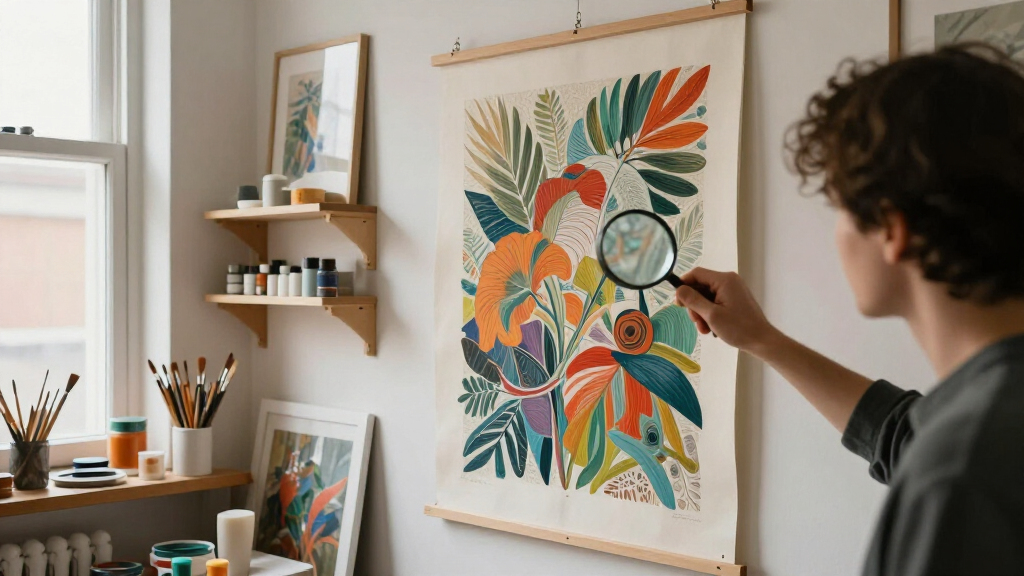
Then inspect the print itself. Look for accurate color, smooth gradients without banding, neutral grays that don’t drift green or magenta, and clean detail at normal viewing distance. You shouldn’t see obvious printer dots or pixelation — microscopic droplets are part of the process, but they shouldn’t announce themselves from across the room.
One honest caveat: a giclée can’t reproduce everything. Thick impasto brushwork, metallic leaf, iridescence, and fluorescent pigments often lose their magic in translation, because flat ink can’t mimic how light plays off physical paint. A great reproduction is still a reproduction — know which one you’re buying.
Frequently Asked Questions
Is giclée just a fancy word for inkjet?
Essentially, yes — but it usually implies a professional fine-art inkjet workflow: pigment inks, archival paper or canvas, and color management. Because the term is unregulated, verify the ink, substrate, and production standards rather than trusting the label alone.
How do you pronounce giclée?
“Zhee-CLAY” is the standard English pronunciation. It comes from the French verb gicler, meaning “to spray” or “to squirt” — a reference to how inkjet printers deposit tiny droplets of ink.
Are giclée prints worth buying?
They can be an affordable, visually convincing way to own an artist’s work. Their financial value depends on authorship, authenticity, scarcity, demand, condition, and provenance — not on being giclée prints. A beautifully made reproduction is still a reproduction, so buy it because you love it.
Do giclée prints fade?
All displayed artwork changes over time. High-quality pigment inks on archival materials resist fading far better than inexpensive dye inks, especially when protected from strong light, heat, moisture, and pollutants. Display-life numbers are lab estimates, not guarantees.
Is a signed giclée an original?
A signature suggests the artist’s approval, but it doesn’t turn a reproduction into an original painting. The exception is artwork created digitally, where the print can be the intended original physical form — though that status should be clearly described by the seller.
Can artists make giclée prints at home?
Yes, with a suitable printer, pigment inks, quality media, calibrated equipment, and the skill to prepare and proof files. Professional studios remain more practical for large formats, custom profiling, consistent editions, or expensive originals needing specialized capture.
Conclusion
Here’s the one thing to carry with you: giclée is a method, not a promise. The word tells you a print came from an inkjet process; only the inks, the materials, and the care behind it tell you whether it’s worth your wall and your money. Ask the specific questions, look at the print up close, and let the answers — not the accent on the label — make the decision.
The next time someone drops the word giclée at a gallery, you can ask about pigment inks and edition sizes while they blink. That’s not a fancy word doing the work anymore. That’s you.
Halloween Picks
halloween
As an affiliate, we earn on qualifying purchases.