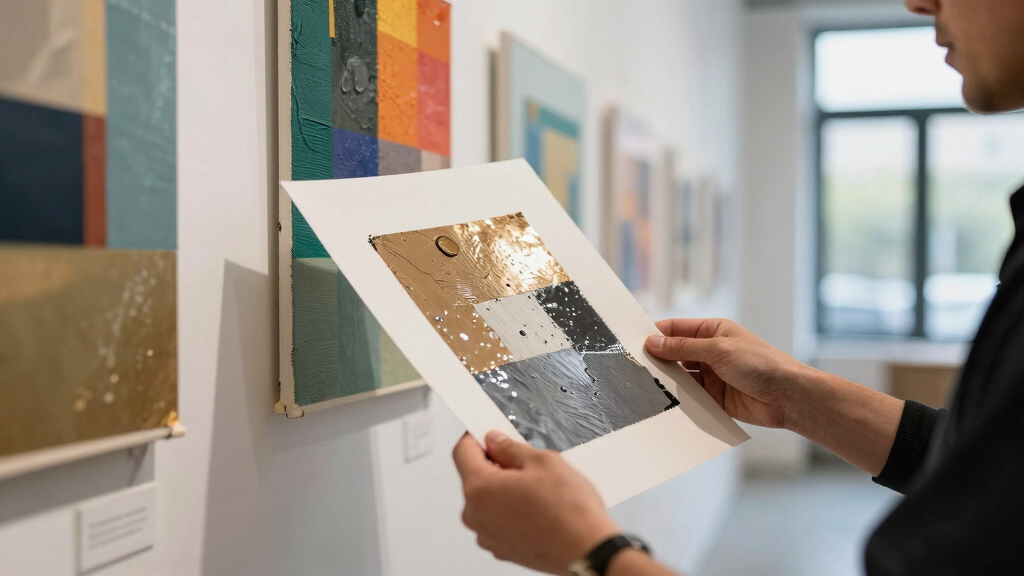

TL;DR
Open a free Amazon Business account
Business pricing, bulk buying and tax-exempt orders.
Create a free accountAs an affiliate, we earn on qualifying purchases.
Canvas gives photographs a soft, textured, traditional character; metal delivers crisp color with a slim modern profile; acrylic creates the deepest, glossiest presentation but reflects the most room light. Choose by matching the image and viewing conditions first, then weigh durability, care, mounting, and relative cost.
A beautiful photograph can feel completely different after you change the surface beneath it. The same blue-hour cityscape may look quiet and painterly on canvas, clean and electric on metal, or almost illuminated from within behind acrylic. The material becomes part of the photograph, whether you planned for that effect or not.
I have learned to make this decision by looking past the exciting sample hanging under perfect showroom lights. You need to think about your actual room, the direction of its windows, the distance from which you will view the image, and how often hands, dust, or moisture will reach it. A glossy surface that sparkles in one space can become a mirror full of window reflections in another.
This guide gives you an honest canvas vs metal vs acrylic prints comparison without treating one material as the winner for every photograph. You will see what each construction changes, which images benefit from those changes, and where maintenance or mounting can catch you by surprise. By the end, you should be able to choose a surface based on visible, practical differences, not a vague promise that one format looks more premium.
Choose canvas when you want woven texture, softer fine detail, low-key reflections, and a traditional wall-art presence.
Choose metal when crisp lines, vivid color, a slim profile, easier cleaning, or a demanding room matters most.
Choose acrylic when controlled lighting can support its glossy depth, strong clarity, and luminous presentation.
Test reflection behavior at the planned wall during both daylight and evening hours before ordering a glossy finish.
Confirm the exact construction, coating, mounting system, care instructions, and outdoor rating because the material name alone does not define durability.
One photograph.
Three very different impressions.
Canvas softens a photograph into textured wall art. Metal keeps edges crisp and the profile slim. Acrylic creates the deepest, glossiest presentation—but reflects the most room light. The best choice begins with the image and the wall, not the prestige of the material.
What you actually get
The surface beneath—or in front of—the image changes texture, apparent sharpness, color and physical depth. Exact coatings and manufacturing methods matter, so a material name is only the beginning of the specification.
Canvas
Cotton, polyester or blended fabric stretched around a wooden frame. Its weave scatters light and gently interrupts very fine detail.
- Soft, painterly visual character
- Deep wrapped-edge profile
- Usually the most affordable
Metal
An image presented on coated aluminum or aluminum composite. Matte and gloss finishes can make the same panel feel remarkably different.
- Crisp lines and vivid color
- Thin, floating silhouette
- Moisture-resistant and easy to clean
Acrylic
Either printed directly or face-mounted behind clear acrylic. Face-mounted construction often produces greater visual depth and luminous blacks.
- Glass-like polish and clarity
- Strongest sense of dimensionality
- Usually the highest price
The visible differences
These are useful tendencies, not guarantees. A matte metal panel can look calmer than coated canvas, while anti-reflective acrylic still does not mean reflection-free acrylic.
| Feature | Canvas | Metal | Acrylic |
|---|---|---|---|
| Surface character | Visible woven texture | Smooth and rigid | Glass-like visual depth |
| Fine detail | ~ Slightly softened | ✓ Crisp and clean | ✓ Very crisp |
| Color character | Gentle and painterly | Vivid or restrained by finish | Rich, glossy and luminous |
| Reflection risk | ✓ Low–moderate | ~ Low–high | ✗ Usually highest |
| Cleaning | Gentle dry dusting | ✓ Soft damp cloth | Careful non-abrasive cloth |
| Physical profile | Deep wrapped edge | Thin floating panel | Substantial polished face |
| Relative cost | $ Lowest | $$ Middle | $$$ Highest |
Gloss can become a mirror
A glossy sample may sparkle under showroom lighting and struggle opposite a broad window. Test the planned wall during daylight and after dark, then walk from side to side to expose reflections.
Interpretation: These bars express typical relative behavior, not laboratory measurements. Finish, coating, construction, image size and lighting can shift the result substantially.
Support the photograph’s strongest trait
The fashionable surface can still be the wrong visual choice. Start with what should be noticed first: mood, geometry, color energy, black depth or luminous separation.
Canvas subjects
Portraits, misty landscapes, paintings and quiet documentary images. The weave can make skin and fine background detail feel warmer and less forensic.
Metal subjects
Architecture, motorsport, aerial views and graphic compositions. Straight lines, small structures and saturated colors retain their visual snap.
Acrylic subjects
Night scenes, underwater work, polished products and luminous landscapes. Deep blacks and bright highlights gain a dimensional presence.
Decision trace · follow the wall before the material
Avoid glare, weak mounts and cleaning damage
Durability depends on the complete product—not merely “canvas,” “metal” or “acrylic.” Confirm coatings, backing, frame construction, hanging hardware and environmental ratings before ordering.
Five checks before checkout
- Request the exact printing and construction method.
- Check whether the finish is matte, satin, gloss or anti-reflective.
- Confirm the mounting system is rated for the finished size and weight.
- Ask for approved cleaning products and UV or moisture limitations.
- Require a specific outdoor rating before exposing any print to weather.
What You Actually Get With Each Print Material
Canvas vs Metal vs Acrylic Prints is a material choice that changes texture, sharpness, reflectivity, and physical depth. Canvas wraps a woven print around a wooden stretcher, metal places the image on a rigid aluminum-based panel, and acrylic presents it beneath or directly on a clear plastic sheet. Each construction changes what your eyes notice first.
Canvas prints commonly use cotton, polyester, or a blended woven fabric stretched over a wooden frame. The tiny hills and valleys in that weave catch light from several directions, giving highlights a softer edge and reducing the hard shine you see on polished surfaces. From across a living room, a portrait can feel less like a photograph on paper and more like a finished piece of wall art.
Metal prints usually use coated aluminum or an aluminum composite panel. Depending on the printing method and finish, the result can range from restrained matte color to glossy, saturated color with crisp edges. Imagine a photograph of a red tram against wet black pavement: on metal, the slim panel and clean surface can reinforce the photograph’s graphic lines.
Acrylic prints are either printed directly on acrylic or made by mounting a photographic print behind a clear acrylic face. Those constructions do not look identical, so ask the lab which one it sells. A well-made face-mounted print can give water, glass, chrome, and bright skies a luminous sense of depth, rather like viewing the image through a perfectly still sheet of ice.
According to PhotoMocha’s material guidance [1], canvas favors a textured, traditional presentation, while metal and acrylic favor stronger clarity and contemporary styling. That broad distinction is useful, but finish and manufacturing method still matter. A matte metal print can look calmer than glossy acrylic, and a heavily coated canvas can reflect more light than you expect.

Personalized Custom Canvas Prints: Photo On Canvas (Framed 11X14) Transform Your Photos into Stunning Framed Wall Art Digitally Printed Photo To Canvas Ideal for Home Decor Gifts Keepsakes
- Hand-Stretched Over Durable Frame: Carefully crafted with smooth edges
- Rich Color and Clear Detail: Vivid printing for stunning visuals
- Personalized with Photos or Messages: Create meaningful, custom wall art
As an affiliate, we earn on qualifying purchases.
As an affiliate, we earn on qualifying purchases.
See the Differences That Will Be Visible in Your Room
Canvas vs Metal vs Acrylic Prints differs most visibly in surface texture, apparent sharpness, color punch, glare, and edge profile. Canvas gives you the softest rendering and lowest-key presence, metal balances crisp detail with a thin silhouette, and acrylic supplies the strongest depth and shine. Your room lighting decides how flattering those traits become.
| Feature | Canvas | Metal | Acrylic |
|---|---|---|---|
| Surface character | Visible woven texture | Smooth and rigid | Glass-like visual depth |
| Fine detail | Slightly softened | Crisp and clean | Very crisp when well made |
| Color appearance | Gentle and painterly | Vivid or restrained, based on finish | Rich, glossy, and luminous |
| Reflections | Usually low to moderate | Low to high, based on finish | Usually the most visible |
| Physical profile | Deep wrapped edge | Thin floating panel | Substantial polished face |
| Relative cost | Usually lowest | Usually middle | Usually highest |
The table gives you a useful overview of the visible differences, but the finish can move a material away from its usual character. Glossy metal can reflect lamps sharply, while matte metal can mute those reflections and soften color. Acrylic may also use an anti-reflective treatment, though you should view a physical sample because reduced glare is not the same as no glare.
Suppose you hang a 24 × 36-inch coastal photograph opposite a broad south-facing window. Canvas will usually keep the waves readable through more of the day, while glossy acrylic may show the bright rectangle of the window across the sea. After sunset, however, carefully lit acrylic can make the water look deep enough to reach into.
The room is part of the print. Judge a surface under lighting similar to the place where you will hang it, not only beneath a retailer’s bright display lamps.
Order a small material sample or test print when color and glare carry real weight. A sample cannot show the full physical impact of a large piece, but it will reveal surface texture, black depth, and reflection behavior. Hold it near the planned wall, step back, and move from side to side as you would when walking through the room.

DROLLX Custom Metal Photo Prints Wall Art Decor Personalized Aluminum Prints with Your Photos customized picture gifts
- Easy Customization: Select size, upload photo, and order
- Premium Material: High-definition print on aluminum
- Ready to Hang: Mounted with hooks for easy display
As an affiliate, we earn on qualifying purchases.
As an affiliate, we earn on qualifying purchases.
Match the Surface to the Photograph, Not the Trend
Canvas vs Metal vs Acrylic Prints works best when the material supports the photograph’s strongest visual trait. Choose canvas for mood and texture, metal for clean geometry and energetic color, and acrylic for depth, polished detail, and bright tonal separation. The fashionable choice can still be the wrong visual choice.
Canvas often suits portraits, landscapes, paintings, and quiet documentary photographs. Its weave gently interrupts pores, individual hairs, and tiny background objects, which can help a family portrait feel warm rather than forensic. A misty woodland scene is a good example: the softened detail lets pale trunks and gray fog blend like layers of brushed pigment.
Metal tends to reward architecture, motorsport, aerial work, and bold graphic compositions. Straight lines stay clear, saturated colors hold their energy, and the thin edge feels natural beside steel, concrete, or simple furniture. If your photograph depends on tiny windows in a skyline or the sharp white edge of a racing car, metal usually preserves that quick visual snap better than canvas.
Acrylic is especially persuasive with night scenes, underwater photographs, polished products, and luminous landscapes. Deep blacks sit behind a glossy face while bright signs, stars, or sunlit water appear closer to the viewer. Place a blue-hour skyline under controlled spotlights and the clear face can act like a window into the scene, adding depth without changing the original composition.
There are exceptions. A rough, weathered industrial portrait can look excellent on metal because the clean panel contrasts with rust and peeling paint; a minimalist seascape can look elegant on canvas because the weave breaks up an otherwise empty sky. I ask one practical question: Should the surface echo the photograph or challenge it? Either answer can work when it is deliberate.
View the file at its intended print size before ordering. Canvas can forgive modest fine-detail limits, but acrylic exposes sharpening halos, dust spots, and heavy noise with little mercy. At a normal viewing distance of several feet, those flaws may fade, yet a polished surface invites people closer, where careless editing becomes easier to see.

Acrylic Photo Wall Art – Picture Printed on Glass, Acrylic Photo Gift, Portrait Photo, Home Decoration, Gifts for Wedding, Art Frame, Custom Print, Personalized Gifts
- Reusable with Dry Erase Marker: Write and erase repeatedly for planning
- Durable Acrylic Material: Resistant to breakage and scratches
- Fade-Resistant UV Printing: Writings won't peel off or fade
As an affiliate, we earn on qualifying purchases.
As an affiliate, we earn on qualifying purchases.
Choose a Print That Can Handle the Room You Have
The right print for your room depends on moisture, sunlight, traffic, temperature swings, and the chance of accidental contact. Metal generally handles demanding spaces best, acrylic works well when securely mounted and carefully cleaned, and canvas prefers a stable indoor wall. No material survives every setting without the right inks, coating, and hardware.
In a busy hallway, a slim metal print avoids protruding canvas corners and usually tolerates light cleaning well. That makes it a practical match for offices, cafés, entryways, and family spaces where coats, bags, or curious fingers pass nearby. Scratch resistance varies by finish, though, so do not treat an aluminum panel like an indestructible road sign.
Canvas needs a gentler location because the fabric can dent, scuff, collect dust, or react to damp conditions. A staircase landing with clean, dry air can be ideal; a bathroom where hot showers leave the mirror dripping is much less friendly. The wooden stretcher can also respond to changing humidity, making stable indoor conditions a safer choice.
Acrylic resists moisture better than exposed fabric, but its polished face shows fingerprints, fine scratches, and dust under raking light. It can crack, chip, or suffer damaged corners if dropped, even though acrylic is generally more impact-resistant than glass. Above a sofa, that solid mounting feels reassuring; beside a narrow doorway, careful placement and secure hardware matter far more.
For outdoor display, metal is usually the leading candidate, but only when the printer rates the complete product for outdoor use. The coating, ink, rear mount, adhesive, and sealing all face heat, rain, condensation, and ultraviolet light. A standard indoor metal print placed on a sunny balcony may fade or lose its mount even if the aluminum itself remains sound.
PhotoMocha notes that newer inks, UV coatings, protective layers, and hybrid constructions can improve longevity across all three formats [2]. Those advances help, but manufacturer care instructions still outrank broad material claims. Ask for the stated indoor or outdoor suitability before placing a large print near a stove, fireplace, shower, or exposed terrace.

Chromaluxe 4-Way French Cleat Hanging System for Metal Photo Prints, Single Kit, 10" x 18" with 10" Leveling Cleat, for 16" x 24" Prints
- Kit Includes Mounting Bars and Cleat: 10×18 inch French Cleat Mounting Kit
- Easy Mounting with 3M Tape: Includes adhesive-backed mounting hardware
- Built-in Level for Precise Alignment: Level integrated into mounting cleat
As an affiliate, we earn on qualifying purchases.
As an affiliate, we earn on qualifying purchases.
Avoid Glare, Weak Mounts, and Cleaning Damage
Good display choices protect image quality by controlling reflections, spreading the print’s weight, and keeping harsh cleaners away from the surface. Canvas needs gentle dusting, metal usually accepts a soft damp cloth, and acrylic demands the most careful cleaning. Mounting instructions from the print maker should guide every installation.
Start with light. A glossy acrylic print facing a window can turn into a dark mirror at midday, while a ceiling spotlight placed at a steep angle can produce a hard white flare. Move the print to a side wall or aim the light from roughly 30 to 45 degrees; the scene becomes visible again, and the highlights regain their sparkle.
Canvas is often forgiving under mixed household lighting, yet strong light brushing across its surface can exaggerate every thread. That can be lovely on an expressive landscape and distracting on a smooth studio portrait. Before drilling, ask someone to hold the print against the wall while you check it from your sofa, doorway, and normal walking path.
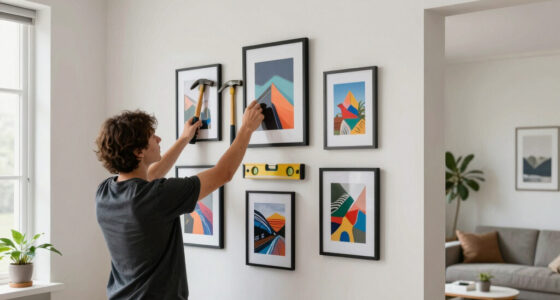
Use the supplied cleat, rail, or mounting system for metal and acrylic. Large panels can feel surprisingly light in your hands but still place leverage on weak drywall anchors, especially when the mount holds the print away from the wall. A properly fixed French cleat spreads the load and helps keep long edges level.
- Dust first with a clean microfiber cloth so loose grit cannot drag across the face.
- Dampen the cloth lightly with water when the maker permits it; never flood an edge or rear mount.
- Wipe with gentle straight passes rather than pressing hard in tight circles.
- Skip abrasive pads, paper towels, and strong solvents, which can scratch acrylic or damage coatings.
- Support the print with both hands whenever you remove it for cleaning.
A common mishap begins with a harmless-looking spray bottle. Household glass cleaner can contain ingredients that leave haze or attack certain acrylic surfaces, while an old kitchen cloth may carry invisible grit. Use the printer’s approved cleaning method; if no guidance came with the print, begin with a fresh microfiber cloth and the least moisture possible.
Use This Five-Step Test Before You Place an Order
You can choose confidently in five steps: define the room, identify the image’s main strength, check reflections, confirm construction details, and compare samples. This process keeps surface excitement from overpowering practical needs. A few minutes beside the intended wall can prevent years of distracting glare or a style mismatch.
- Read the room. Note direct sun, windows opposite the wall, humidity, traffic, and the normal viewing distance. A calm bedroom gives you more freedom than a bright kitchen passage.
- Name the photograph’s strongest quality. Decide whether you want to emphasize soft atmosphere, crisp geometry, rich color, or luminous depth. That answer points toward canvas, metal, or acrylic more reliably than décor trends.
- Test reflections. Hold a glossy book cover or dark tablet screen near the wall at the time of day when you use the room most. Strong reflected windows warn you that glossy acrylic may need another location.
- Ask what is being made. Confirm the canvas fabric, edge treatment, metal finish, acrylic construction, panel thickness, rear mount, coating, and outdoor rating where relevant. The material name alone does not describe the finished product.
- Compare physical samples. Place them near the wall, view them from several angles, and inspect both daylight and evening light. Let your eyes choose after your practical needs have narrowed the field.
Here is a real-world scenario. You want to print a wide mountain panorama for a room with pale plaster walls, oak furniture, and a window facing the display area. Canvas could soften the distant ridges and stay readable in daylight; matte metal could preserve every snowy edge without becoming overly glossy; acrylic could look spectacular after dark but reflect the window during breakfast.
Size changes the decision too. On a small desk print, acrylic’s polished edge and depth can feel jewel-like; across a very large wall, the same glossy face may collect broad reflections and demand stronger mounting. Canvas becomes physically deeper as the stretcher grows, while a large metal panel may need extra support to stay flat. Ask for size-specific construction details, not only a generic product description.
Relative cost usually rises from canvas to metal to acrylic, but buying the least expensive surface is not always the best value. A canvas hidden by glare-free room lighting can outperform a costlier acrylic placed opposite a bright window. Spend according to the result you can actually see, and keep room in your plan for reliable hanging hardware.
Choose the photograph and wall as a pair. A surface earns its place when it supports the image during the hours you truly live with it.
Frequently Asked Questions
Which print type is best for a bright room?
Canvas or matte metal usually works best in a bright room because both can control reflections better than glossy acrylic. Check the wall at the brightest time of day, since a window opposite the print can overwhelm even a beautiful image. A physical finish sample gives you a much better answer than an online preview.
Can I hang a metal print outdoors?
You can hang an outdoor-rated metal print outside, but aluminum alone does not make the whole product weatherproof. The ink, protective coating, rear mount, adhesive, and edges must all tolerate moisture, heat, and ultraviolet light. Ask the printer for a clear outdoor-use statement before installation.
Do acrylic prints shatter like glass?
Acrylic is generally more impact-resistant than glass, but it is not immune to damage. A hard drop can crack the sheet, chip a corner, or damage the printed layer and mount. Carry a large acrylic print with two hands and protected edges, then use the supplied mounting system.
Which material hides a lower-resolution file best?
Canvas usually hides modest fine-detail limits better because its woven texture softens tiny edges. Acrylic and smooth metal reveal sharpening halos, noise, and weak detail more readily, especially when viewers stand close. Print a small crop at the intended scale before ordering a large polished piece.
Are canvas prints always cheaper than metal or acrylic?
Canvas is usually the lowest-cost option, followed by metal, while acrylic commonly sits at the highest level because of its layered construction and finishing work. Size, frame choice, coating, mounting hardware, and shipping can change that order. Compare the complete finished piece, not only the base material.
Which print type looks most like traditional art?
Canvas has the strongest traditional art character because its visible weave resembles a painted surface and its wrapped frame gives it physical depth. Portraits, soft landscapes, and art reproductions often benefit from that character. Metal or acrylic will feel more photographic when you want crisp edges and a modern finish.
Conclusion
Match the surface to both the photograph and the room. If you want gentle texture and a familiar art-object feel, start with canvas. If you need clean detail and practical durability, examine metal. If your lighting is controlled and the photograph lives on depth, polish, and glowing color, acrylic can give it a commanding presence.
Before ordering, stand at the intended wall with a material sample during the hours when you use the room. Watch what the windows, lamps, and viewing angle do to it. The best print will not merely impress you for five minutes; it will let the photograph speak clearly every morning, every evening, and every time you walk through the door.
Back to school Picks
back to school
As an affiliate, we earn on qualifying purchases.