
TL;DR

Get audio and creator gear delivered free with Prime
- Fast, free delivery on millions of items
- Prime Video, Amazon Music and more included
- Member-only deals all year
Zack de la Rocha described Turnstile as a “bridge” through which young fans may discover earlier punk and hardcore bands, including Bad Brains, Minor Threat and The Clash. He made the remarks in an interview with Spanish music website Binaural at a Barcelona exhibit of photographer Glen E. Friedman’s work.
Rage Against the Machine singer Zack de la Rocha said Turnstile can act as a “bridge” for young fans discovering the punk and hardcore bands that influenced the genre, including Bad Brains, Minor Threat and The Clash. In remarks to Spanish music website Binaural at a Barcelona exhibit of photographer Glen E. Friedman’s work, de la Rocha said new listeners may find those earlier acts after encountering Turnstile.
Asked whether Turnstile was taking the baton from Rage Against the Machine, de la Rocha said the style was resurging and that many young listeners were experiencing it through bands such as Turnstile. He said he did not know whether the renewed interest would have the same impact as an earlier wave, but hoped fans would look back to the original groups.
De la Rocha also credited Friedman with helping Bad Brains reach a wider audience. He said Turnstile could not exist without the influence of Bad Brains and argued that Friedman’s persistence in promoting the older band helped people discover its music. Friedman, who was with de la Rocha at the exhibit, also spoke about musicians using their work to voice political concerns.
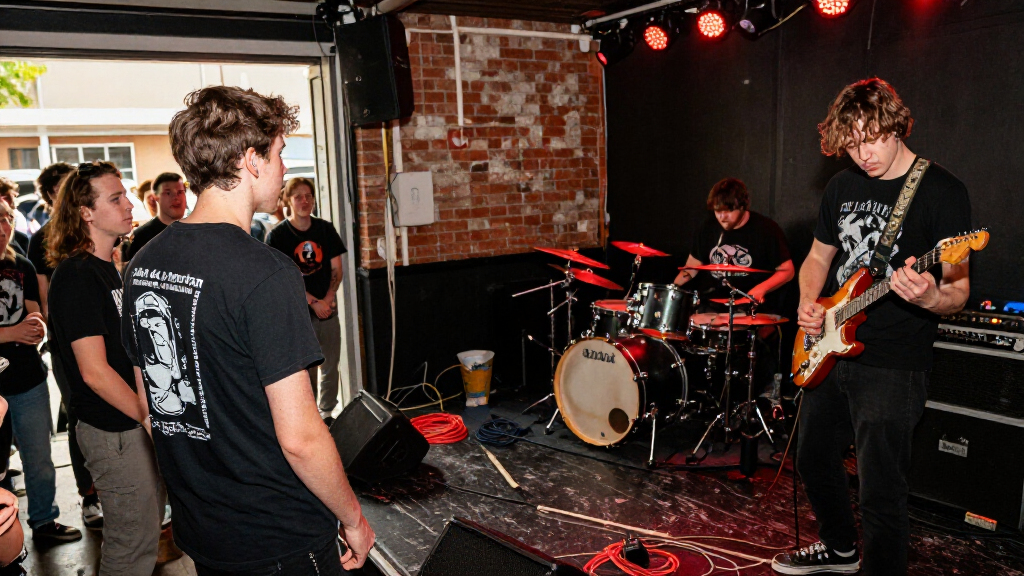
The comments followed Turnstile’s recent performance at the Washington Monument, which the report said drew 60,000 fans and supported humanitarian aid for Palestine, Sudan and Lebanon. The source did not provide further details about how the aid was organized or distributed.
How Turnstile Connects Punk Generations
De la Rocha’s comments frame Turnstile’s reach as a possible route into punk history: younger listeners may discover a current band first, then seek out the artists whose work shaped the sound. That pathway matters to the earlier acts’ continuing visibility and to how musical influence is passed between generations.
His remarks also link that history to the role of photography and documentation. By crediting Friedman’s advocacy for Bad Brains, de la Rocha points to the work beyond performance that can help a band find an audience. The comments are his perspective, not evidence that every Turnstile fan will go on to listen to those earlier groups.
Products Worth Considering

DJI Osmo Pocket 3 Vlogging Camera with 1-Inch CMOS Sensor and 4K Video

Amazon Kindle Paperwhite Signature Edition (12th Generation, 2024), 32 GB, Metallic Black

Anker SOLIX S2000 Portable Power Station, 2,010Wh, 1,500W
As an affiliate, we earn on qualifying purchases.
The Bands Behind the Comparison
Turnstile is a Baltimore hardcore band. De la Rocha’s examples—Bad Brains, Minor Threat, Negative Approach and The Clash—span influential punk and hardcore acts whose music predates Turnstile. He described the connection as a bridge between a new audience and those earlier groups, rather than claiming that the bands have identical sounds or politics.
Friedman is a photographer associated with punk and hardcore music. The interview took place during an exhibit of his work in Barcelona, where he and de la Rocha were approached by Binaural. The report also notes de la Rocha’s history of political activism as the vocalist for Rage Against the Machine, but the central news is his assessment of Turnstile’s role in introducing listeners to earlier music.
What the Report Does Not Establish
De la Rocha offered an opinion about Turnstile’s influence and the possibility that fans will discover older bands; the report provides no audience research showing how often that happens. He also said he could not predict whether the current resurgence would have the same impact as previous periods.
The report gives no additional details about the Washington Monument event’s aid partners, the funds raised or how support will reach the named communities. It also does not specify whether de la Rocha or Turnstile has announced any further joint projects or appearances.
Further Details on the Interview
The interview’s remarks and the reported performance are the latest developments covered by the source; no follow-up announcement is included. Readers seeking more information about the exhibit, the event’s humanitarian aid arrangements or any future Turnstile activity will need updates from the organizers, the band or the interview outlet.
The report also points to footage of Turnstile’s Washington Monument performance and Rage Against the Machine playing at the 2000 Democratic National Convention in Los Angeles. No release schedule or additional details about that footage are provided.
Key Questions
What did Zack de la Rocha say about Turnstile?
He said Turnstile could be a “bridge” through which young listeners discover earlier punk and hardcore bands.
Which bands did he name?
De la Rocha named Bad Brains, Minor Threat, Negative Approach and The Clash as groups listeners might find after encountering Turnstile.
Where did de la Rocha make the comments?
He spoke to Spanish music website Binaural at an exhibit in Barcelona featuring photographer Glen E. Friedman’s work.
What was notable about Turnstile’s recent Washington Monument show?
The report said 60,000 fans attended and that the performance supported humanitarian aid for Palestine, Sudan and Lebanon. It did not provide details on funds raised or distribution.
Did de la Rocha say Turnstile will have the same impact as earlier punk bands?
No. He said he did not know whether the current resurgence would have the same impact, while expressing hope that new listeners would explore the original groups.
Source: consequence.net