TL;DR

Get audio and creator gear delivered free with Prime
- Fast, free delivery on millions of items
- Prime Video, Amazon Music and more included
- Member-only deals all year
Traveling With a Drone requires three layers of preparation: checking the laws at your destination, carrying lithium batteries correctly, and packing the aircraft against impact. Verify official airspace information before every flight, keep spare batteries in your cabin bag with protected terminals, and carry registration or permit records offline.
A drone can cross an ocean in ten hours, then spend your whole trip trapped inside its case because of one overlooked permit. I have learned to treat a flying camera differently from an ordinary lens: it needs legal preparation, battery planning, and a safe patch of ground before it can make a single frame.
This guide gives you a practical system for traveling with a drone, from checking registration rules to protecting loose propellers in a crowded cabin bag. You will learn why the familiar 250-gram threshold helps in some places but does not grant universal freedom, what the common 100Wh battery limit means, and which documents should live on your phone as well as on paper.
The goal is not to make drone travel feel intimidating. It is to help you arrive ready, open the case without a tangle of cables, and know whether the quiet beach in front of you is actually a legal launch point. When the preparation works, the aircraft becomes what it should be: a precise photographic tool, not a source of whispered arguments at airport security.
Check import permission, operator registration, ground access, and airspace rules as four separate questions before departure.
Carry spare lithium batteries in cabin baggage, protect each battery from short circuits, and verify its watt-hour rating against every airline’s current rules.
Treat 250 grams as a regulatory threshold rather than a universal exemption; cameras, location, and intended use can add requirements.
Secure the gimbal, controller sticks, propellers, and metal tools so no hard part can move inside the bag.
Plan a ground-based photograph for every aerial shot so weather, wildlife, crowds, or local restrictions never leave you without an image.
Field Guide / Air Travel / Flying Cameras
Traveling With a Drone: Rules and Packing for Flying Cameras
A flying camera needs legal preparation, battery planning, and impact protection before it can make a single frame. Check the destination, carry lithium batteries correctly, and keep every document available offline.
Often changes registration or operating requirements
Above this, airline approval is commonly required
Typical ceiling in uncontrolled airspace
Common open-category maximum height
Check four permissions—not one
Legal import does not create a legal flight. Treat entry, operator status, ground access, and airspace as a connected chain. One missing link can invalidate an otherwise careful plan.
Under 250 grams is a threshold, not a passport
A lighter aircraft often faces fewer requirements, but camera use, operating location, accessories, intended use, privacy law, and site restrictions can still add obligations.
In some jurisdictions, a camera capable of capturing personal data may trigger operator registration even when the aircraft weighs less than 250 grams.
| Question | Under 250g | 250g or heavier |
|---|---|---|
| Registration | ~ Sometimes reduced or waived | ✓ Commonly required |
| Camera-related duties | ~ May still trigger registration | ✓ Usually covered by broader rules |
| Training or tests | ~ Often lighter; location dependent | ✓ More likely to apply |
| Site restrictions | ✗ No exemption | ✗ No exemption |
| Airline battery rules | ✗ Based on battery Wh | ✗ Based on battery Wh |
Check flying weight: propeller guards, lights, payloads, and other accessories can change the aircraft’s operating mass or permitted conditions.
Pack lithium batteries so security says yes
Spare lithium batteries generally belong in cabin baggage, not checked baggage. Protect every terminal against short circuits and confirm the watt-hour rating against the current rules of each airline on the itinerary.
When the label shows milliamp-hours, divide by 1,000 before multiplying by voltage.
Keep spares with you
Carry spare batteries in the cabin bag where damage, heat, or smoke can be noticed quickly.
Stop short circuits
Use terminal covers, individual battery sleeves, or nonconductive tape. Never leave loose batteries beside metal tools.
Reject damaged packs
Do not travel with swollen, punctured, leaking, overheated, or otherwise compromised batteries.
Nothing hard should move inside the bag
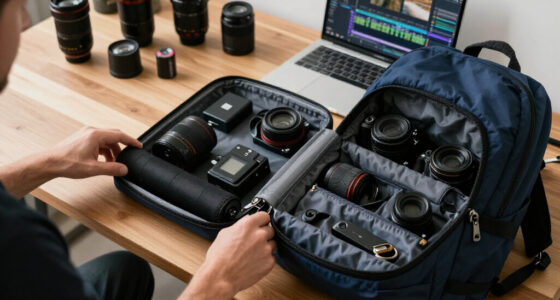
Pack the aircraft as a precision camera system. Immobilize vulnerable parts, separate rigid accessories, and make the security inspection easy to understand.
Lock the gimbal
Fit the gimbal guard, fold the arms correctly, and place the body in a fitted padded compartment.
Protect the sticks
Remove or cover controller sticks so pressure from neighboring gear cannot bend the mechanisms.
Keep blades flat
Use a sleeve or rigid pocket for spare propellers. Do not force them beneath chargers or lenses.
Separate metal
Place screwdrivers and metal accessories away from batteries, displays, propellers, and the aircraft shell.
Build an offline folder
Save registration, permits, insurance, airline policy, identification, and recent airspace references on your phone.
Pack a ground shot
Plan a tripod, elevated viewpoint, panorama, or long-lens alternative for every essential aerial frame.
From trip idea to legal image
Keep decisions traceable. The final frame should connect back to a legal entry, a compliant operator, an approved launch point, a current airspace check, and a safe flight plan.
Separate the legal questions. Import, operator status, ground access, and airspace permission are different layers.
Carry spare batteries in the cabin. Protect terminals and verify watt-hours against every airline’s current rules.
Do not rely on 250 grams alone. Cameras, location, project type, and accessories can change the obligations.
Immobilize the kit. Secure the gimbal, sticks, propellers, batteries, tools, and every other hard component.
Always plan a ground alternative. Weather, wildlife, crowds, weak signal, or local restrictions can cancel the flight.
Check again before takeoff. Saved records prove preparation, but temporary restrictions require the freshest official information available.
Check These Four Rules Before You Pack a Propeller
Traveling With a Drone starts with checking four separate permissions: whether you may bring the aircraft into the country, whether you must register, where you may launch, and where you may fly. A legal import does not create a legal flight, and an empty beach is not automatically open airspace. Treating these permissions as a chain matters because one missing link can invalidate an otherwise careful plan: customs may admit the aircraft while a park authority prohibits takeoff, or a landowner may welcome you while controlled airspace requires authorization.
- Import rules: Check customs restrictions and any temporary import declaration. This determines whether the aircraft can enter without seizure, duty, or questions about resale.
- Operator requirements: Look for registration, training, identification labels, and remote-identification rules. These obligations usually attach to the person responsible for the flight, so borrowing or renting a compliant drone may not make you compliant.
- Ground permission: Confirm that the landowner or site manager allows takeoff and landing. Aviation maps often cannot show rules imposed by parks, monuments, resorts, or private estates.
- Airspace permission: Check controlled airspace, temporary restrictions, altitude limits, and protected sites. This layer governs the volume of sky you intend to use, not merely the point where you stand.
Imagine that you find a stone overlook above a harbor at sunrise. The airspace map appears clear, yet a sign at the gate bans launching remotely piloted aircraft from the property. You may be allowed to fly over parts of the area, but you still lack permission to launch from that ground; those are two different questions. Moving outside the boundary might solve the ground-access problem, but only if the new position preserves visual line of sight and does not create a riskier route over roads or people. Legal alternatives can therefore carry operational tradeoffs.
According to the US Federal Aviation Administration, recreational pilots generally must keep the aircraft within visual line of sight, follow airspace restrictions, and remain at or below 400 feet in uncontrolled airspace [1]. European open-category operations commonly use a ceiling of 120 meters. Those numbers are close, but you should follow the rule written for your exact location rather than converting one into the other. A ceiling is also a maximum, not a recommended working altitude; staying lower can improve visual awareness, shorten the return journey, and reduce exposure to stronger winds.
I save the aviation authority page, registration record, permit, insurance details, and airspace screenshot in an offline trip folder. Mountain valleys and remote coastlines often have weak reception—the screen goes blank just when the light turns gold. A dated screenshot does not replace a live preflight check because temporary restrictions and emergency activity can appear after you save it, but it gives you proof of preparation and a useful reference when mobile service disappears. The practical compromise is to update the folder shortly before departure, then perform the freshest official check available near takeoff.
drone travel case with impact protection
As an affiliate, we earn on qualifying purchases.
As an affiliate, we earn on qualifying purchases.
Know What Your Drone’s Weight Changes at the Border
Traveling With a Drone becomes easier when the aircraft weighs under 250 grams, but that number is a regulatory threshold, not a worldwide pass. Registration, camera use, commercial work, pilot training, and local site restrictions can still apply, even when the drone feels as light as a folded map. Lower weight often reduces the potential energy involved in a collision, which is why regulators may allow lighter requirements, but it does not remove risks to privacy, aircraft, wildlife, or people below.
| Question | Under 250g | 250g or heavier |
|---|---|---|
| Registration | Sometimes reduced or waived | Commonly required |
| Camera-related rules | May still trigger operator registration | Usually covered by broader drone rules |
| Training or tests | Often lighter, but location dependent | More likely to apply |
| Site restrictions | Still apply | Still apply |
| Airline battery rules | Based on battery watt-hours, not aircraft weight | Based on battery watt-hours, not aircraft weight |
Here is the trap: you buy a 249-gram camera drone for a European holiday after reading that small drones face fewer restrictions. The low weight may place the flight in a less demanding category, yet a camera that can record personal data may still trigger operator-registration requirements. The label on the box answers only one part of the legal question. Accessories can complicate the calculation too: propeller guards, lights, or another payload may increase the operating mass or change which conditions apply, so check the aircraft as you will actually fly it.
Your intended use matters too. A quiet personal landscape flight and paid footage for a hotel campaign may fall under different rules, even when you use the same aircraft from the same field. Carry a plain-language note describing the project, the client if one exists, and the locations; commercial filming permits often come from local authorities rather than the national aviation regulator. The tradeoff is not simply recreational versus paid: a permit may add cost and lead time, but it can also clarify access, crowd control, insurance, and exactly where the crew may operate.
Weight changes the rulebook, but it does not close it. Check the aircraft, the operator, the purpose, the ground, and the airspace as five separate layers.
I also photograph the weight label, serial number, and identification markings before departure. If a customs officer asks what you are carrying, a clear record saves you from digging through a tightly packed case while a line forms behind you. That small habit turns a tense, sharp silence into a short factual conversation. It also helps distinguish personal equipment from goods intended for sale and gives an insurer a contemporaneous record if the aircraft is lost or stolen.
As an affiliate, we earn on qualifying purchases.
Pack Lithium Batteries So Airport Security Says Yes
Traveling With a Drone by air usually means carrying spare lithium batteries in your cabin baggage, protecting every terminal from a short circuit, and checking each pack’s watt-hour rating. Most consumer drone packs fall below 100Wh, while larger packs may need airline approval or face tighter limits. The distinction matters because lithium cells can release intense heat if damaged or shorted; in the cabin, smoke or fire is more likely to be noticed and addressed quickly than inside a cargo hold.
- Read the Wh marking printed on every battery before leaving home. Security staff need a clear capacity figure to determine which limit applies.
- Place each spare in an individual battery sleeve or clear plastic bag. Separation prevents one damaged pack or loose conductive object from affecting the others.
- Cover exposed terminals with nonconductive tape when the design leaves them accessible. Tape is secondary protection, not a substitute for a sleeve that prevents crushing and movement.
- Keep batteries away from keys, loose tools, coins, and metal camera plates. A small metal object can bridge contacts even when the battery otherwise looks secure.
- Check both the airline’s baggage page and the rules for every connecting carrier. The strictest carrier or airport interpretation can determine whether the battery completes the route.
- Carry a screenshot of the battery specification in your offline documents. A manufacturer specification can resolve a faded or unusually formatted label, though it may not replace required markings on the pack.
According to International Air Transport Association passenger-baggage guidance, spare lithium batteries belong in carry-on baggage, and batteries from 101Wh to 160Wh generally need airline approval; the usual passenger allowance is no more than two approved spares in that range [2]. Airlines and national authorities may impose tighter conditions, so the carrier’s current instructions decide what reaches the gate. Approval is not merely a formality: a larger pack stores more energy, and the airline may need advance notice to control the number carried aboard.
You can calculate an unmarked pack with volts × amp-hours = watt-hours. A battery marked 15.4V and 3.85Ah equals about 59.3Wh. If the label lists milliamp-hours, divide that number by 1,000 first; 3,850mAh becomes 3.85Ah. This calculation helps you understand the pack, but an airline may still reject a battery whose identity, condition, or rating cannot be verified, so replace badly damaged labels before the trip rather than planning an argument at the checkpoint.
At security, I want the bag to open like a well-organized tool drawer. Batteries sit together in sleeves, while the charger, cables, and aircraft occupy separate padded spaces. Loose packs rolling beside an aluminum tripod plate are like matches rattling in a tin—small contact points can create serious heat. Keeping the batteries accessible also makes inspection easier, but accessibility must not mean leaving them unprotected in an outer pocket where the bag can crush them.
If a battery looks swollen, punctured, unusually hot, or chemically sweet-smelling, do not fly with it or charge it. Isolate it away from flammable material and follow local hazardous-waste guidance; never pierce or crush a damaged lithium pack. Losing one battery is cheaper than accepting a thermal risk in an aircraft cabin, hotel room, or rental car.
drone registration and permit holder
As an affiliate, we earn on qualifying purchases.
As an affiliate, we earn on qualifying purchases.
Make Your Drone Survive Baggage Belts and Packed Trains
Your drone survives travel when its camera and gimbal cannot move, its propellers cannot bend, and no hard accessory can strike the airframe. A fitted padded bag works for cabin travel, while a rigid case adds protection when rough handling, wet decks, or dusty vehicle transfers enter the plan. The right case is therefore a route decision rather than a simple question of maximum protection: more armor reduces impact and water risk, but adds bulk, weight, and conspicuousness.
Start by installing the manufacturer’s gimbal cover and folding or removing the propellers as designed. Do not improvise pressure against delicate camera arms with a rolled sock; the gimbal is more like a watch mechanism than a solid camera body. Store spare propellers flat so their thin leading edges do not develop a subtle bend. A propeller can look intact yet introduce vibration, reduce efficiency, or degrade image sharpness, so shape matters as much as visible cracks.
- Aircraft: Secure the gimbal, close arm locks, and remove the flight battery when the design permits. This protects delicate movement points and prevents accidental activation.
- Controller: Protect sticks with a molded guard or remove them and place them in their fitted recess. Bent controls can make precise input difficult even if the controller still powers on.
- Propellers: Separate matched sets and mark them without covering balance or identification details. Keeping sets together makes replacement predictable and helps you trace a vibration problem.
- Tools: Keep screwdrivers and metal parts in a closed pouch away from batteries. The pouch prevents both scratches and electrical contact.
- Weather protection: Add a reusable rain cover and a few dry cloths rather than relying on thin shopping bags. A cover buys time in a shower, but it does not make the electronics waterproof or justify packing them while damp.
Consider a train transfer where your backpack slides from a luggage rack and lands on its side. A tightly fitted divider stops the controller from becoming a hammer aimed at the drone’s shell. I test my packing by closing the bag and gently turning it through several angles; if I hear a plastic click or metal tap, something still needs restraint. The test should be gentle because the goal is to detect movement, not to prove that fragile gear can survive deliberate abuse.
Hard cases protect well but consume space and announce that valuable equipment may be inside. A compact padded backpack moves more quietly through stations and narrow streets, though it offers less resistance to crushing and heavy rain. Choose around the roughest part of your route, not the comfortable airport lounge at the start. If only one transfer is severe, a protective insert inside an ordinary bag may offer a useful middle ground without committing the entire trip to a large rigid case.
Add your name and a contact method inside the bag, then photograph the packed layout. That image helps with insurance records and shows you where every part belongs during a hurried dawn departure. It also exposes missing items—the empty propeller pocket stands out like a black square in fresh snow. Put contact details inside rather than displaying your full home address outside, where they can reveal both identity and the possibility that your house is unattended.
compact drone accessories organizer
As an affiliate, we earn on qualifying purchases.
As an affiliate, we earn on qualifying purchases.
Turn a Legal Launch Spot Into a Safe Flight
A legal launch becomes a safe flight only after you check people, weather, obstacles, satellite status, and a landing escape route. Airspace permission does not make strong wind harmless, and obstacle avoidance cannot reliably read every cable, bare branch, reflective surface, or dark stretch of water. These checks matter together: a marginal wind that is manageable over an empty field may become unacceptable above water when there is no safe place to land.
- Walk the area and identify people, animals, wires, antennas, and moving vehicles. Seeing the site from the ground reveals thin obstacles and activity that a map cannot show.
- Check official airspace information and any temporary flight restrictions. Conditions may have changed since you planned the shot.
- Compare wind at ground level with the forecast at your planned altitude. Sheltered launch points can conceal stronger winds above ridges, trees, and buildings.
- Inspect propellers, battery seating, gimbal movement, storage capacity, and controller charge. A small fault on the ground becomes a shrinking set of choices after takeoff.
- Set a sensible return-to-home altitude above known obstacles but within legal limits. Too low risks a collision; unnecessarily high settings consume time and battery while exposing the drone to stronger wind.
- Choose a clear emergency landing area before takeoff. Deciding early is faster and calmer than searching after a warning appears.
- Launch, hover briefly, and listen for unusual vibration before flying away. The hover is a final systems check while the aircraft remains close enough to land immediately.
Suppose you stand in a sheltered cove where the grass barely moves. At 80 meters, wind spilling over the cliff can push the aircraft away from you while the battery percentage drops with alarming speed. Fly the outward leg into the wind when conditions allow, preserve a generous return reserve, and turn back before the display starts making decisions for you. A large percentage on the screen is not a fixed amount of usable range: cold, wind, climbing, and an aging battery can consume it faster than the calm outbound flight suggests.
Fog and low cloud create another seductive mistake. The landscape softens into pale layers, and the muted light feels almost blue to the ear, but moisture can settle on motors and sensors while visibility collapses. If you cannot maintain clear visual contact, keep the drone grounded and make photographs from the trail. The tradeoff is easy to resent in the moment, yet atmospheric conditions that weaken aerial safety often produce excellent ground-level images with depth, silhouette, and soft contrast.
Modern return-to-home, geofencing, and obstacle-sensing systems reduce some risks, yet none of them transfers responsibility away from you. Map data can lag behind a temporary restriction, thin branches can vanish against a busy hillside, and a compass can react badly near reinforced concrete. Use automation as a safety net, not as permission to stop watching. Learn what your aircraft does when the control link fails, when satellite positioning weakens, and when the battery reaches each warning threshold, because an automatic response that is safe in open terrain may be dangerous beneath trees or near a cliff.
Bring Less Gear and Come Home With Better Footage
You get better travel footage by packing a small, repeatable camera kit and planning shots before launching. Spare propellers, enough approved batteries, charging cables, storage cards, and a cleaning cloth matter more than a pouch stuffed with seldom-used accessories. Every extra gram follows you up the hill. More gear also creates more decisions at the location, and time spent choosing among accessories can consume the short window when light, weather, and an empty scene align.
My practical core kit includes the aircraft, controller, approved batteries, charger, two matched propeller sets, a small manufacturer-approved screwdriver, memory cards, lens cloth, documentation, and any filters the light genuinely calls for. Neutral-density filters help maintain a chosen shutter speed for video, but they also reduce light; forgetting one on the lens at dusk can produce muddy shadows and unnecessary noise. The benefit is controlled motion blur in bright conditions, not universally better image quality, so each filter should solve a specific exposure problem.
Imagine reaching a volcanic viewpoint after a 45-minute climb. You have six filters, three charging bricks, and a tablet, but the correct controller cable stayed in the hotel. A simple packing card attached inside the bag would have saved the flight, while half the accessories merely made the climb hotter. Redundancy is valuable when it covers a single point of failure—a spare cable or card earns its weight more often than several tools that perform the same optional task.
- Night before: Charge, format cards after backing them up, check firmware status, and review the weather. This creates time to solve failures without sacrificing the departure window.
- Before leaving: Count batteries, propeller sets, cards, cables, and permits. Counting is more reliable than glancing into a familiar-looking bag.
- After flying: Copy footage to two places when possible and label the location. Two copies protect against a failed card or lost bag, but they should remain separate rather than traveling together.
- Before repacking: Brush away sand, inspect propeller edges, and let damp equipment dry. Packing moisture or grit tightly against moving parts turns a temporary field condition into longer-term damage.
Should you update firmware on the road? Usually, no—the best time is at home, several days before departure, where you can test the aircraft in a familiar legal area. Update during the trip only when a known issue, local requirement, or necessary compatibility change calls for it. A surprise login request beside a silent alpine lake can turn golden light into a bright, useless countdown. Delaying an update means temporarily giving up a new feature or fix, but installing one without time to test can introduce compatibility, calibration, or account problems when you have the fewest recovery options.
Protect People’s Privacy Without Losing the Photograph
You protect privacy by keeping identifiable people out of the frame unless you have clear permission, avoiding windows and private gatherings, and checking local recording rules alongside aviation law. A flight can satisfy the aviation authority and still create a privacy, property, or cultural problem on the ground. The camera’s distance can make a scene feel anonymous to the pilot while its resolution preserves faces, routines, and private details for later viewing, so intention alone does not determine the impact.
Say you want a wide reveal of a quiet coastal village. From altitude, the camera may record residents on balconies, children in a courtyard, and license plates along the road even though your real subject is the harbor. Change the angle toward open water, fly when the area is empty, or frame tightly enough that people become unidentifiable visual scale rather than the subject. Each choice has a visual cost—you may lose part of the village pattern or the liveliness of the scene—but it can preserve the photograph’s essential idea without turning bystanders into involuntary subjects.
Conversation often works better than stealth. If a landowner, guide, or nearby resident asks what you are doing, explain the shot, show the planned direction, and offer to wait until they leave the area. The low mechanical buzz of a drone can feel invasive even when your intentions are harmless; respect begins before takeoff. Permission also needs limits: agreement to one short flight does not necessarily cover close passes, repeated launches, publication in advertising, or recording other people who were not part of the conversation.
Wildlife deserves the same restraint. If birds circle, alarm-call, dive toward the aircraft, or leave a nest, increase your distance and land. Seasonal closures and protected-species rules may create larger buffers than ordinary aviation rules, and no photograph justifies disturbing an animal during nesting or feeding. Waiting for obvious distress is a poor threshold because disruption may begin before you recognize it; local guidance, generous distance, and a ground-based alternative provide a safer margin.
Legal does not always mean considerate. If your flight changes how people or animals behave, the camera has already become part of the scene, and landing is often the better photographer’s choice.
I plan an alternate ground-level composition for every aerial idea. When a festival fills the square or nesting birds occupy the cliff, a long lens from a permitted path can still catch layered rooftops and warm evening haze. A grounded drone is not a failed trip; it is evidence that judgment outranked the shot. That backup plan also removes the pressure to rationalize a marginal launch simply because the journey was long or the light is brief.
Frequently Asked Questions
Can I take a camera drone on a passenger plane?
Yes, most passenger airlines accept consumer camera drones, but you must follow their baggage and battery rules. Carry spare lithium batteries in your cabin bag, protect their terminals, and check the airline’s limits before departure. The aircraft may travel in a cabin bag or checked case when permitted, though I prefer keeping fragile camera gear close.
Do I need to register a drone that weighs less than 250 grams?
It depends on the country, the camera, and how you plan to fly. Some authorities waive registration for certain recreational drones under 250 grams, while other systems still require operator registration when the aircraft carries a camera capable of recording personal data. Check the destination’s official aviation authority rather than relying on the package label.
Can drone batteries go in checked luggage?
Spare lithium batteries generally belong in carry-on baggage, not checked luggage, under airline safety guidance [2]. A battery installed in equipment may receive different treatment, but airline rules vary. Protect every terminal and place each spare in an individual sleeve or bag.
Is a drone airspace app enough to prove that I can fly?
No. An app may show controlled airspace and temporary restrictions, but it may not cover landowner rules, local filming permits, privacy law, wildlife closures, or customs requirements. Check an official aviation map close to takeoff time and confirm that you may use the ground beneath your feet.
What documents should I carry when traveling internationally with a drone?
Carry your registration record, pilot certificate or test record, permits, insurance details, serial number, battery specifications, and customs paperwork when applicable. Save copies offline and bring a small paper set if you will visit remote areas. A translated summary of your registration can also make an airport or police check much smoother.
What should I do if flying is legal but people nearby seem uncomfortable?
Pause and speak with them before launching. Explain your flight path, keep identifiable people outside the frame, and move or wait when a reasonable change solves the problem. If the drone would disturb a private gathering, wildlife, or the quiet character of the place, keep it grounded and use your handheld camera.
Conclusion
Do the legal and battery work before you travel, then make the final flight decision at the location. Registration records, protected terminals, a secure gimbal, and an offline airspace plan remove the avoidable problems, while weather and people on the ground still get the final vote.
The habit worth keeping is simple: pause before opening the case and ask whether the flight is legal, safe, and considerate. If all three answers are yes, launch with a clear shot list and bring the aircraft home early. The best ending is not a warning on the controller—it is the soft click of a packed case after you captured the frame you came for.
Halloween Picks
halloween
As an affiliate, we earn on qualifying purchases.