Supporting a telephoto lens takes more than choosing a tripod with a tall maximum height. I prioritize load capacity, resistance to vibration, head design, and usable working height, since a long lens magnifies small movements that may go unnoticed with wider glass. My top choice, the SIRUI AM-324S+G1, pairs a 44-pound rating with carbon-fiber legs and a low-profile ball head, giving heavy photography kits the widest stability margin in this group.
For video, I favor the SmallRig AD-01 because its 75mm bowl and damped fluid head are better suited to following wildlife or field sports. The Neewer 74-inch video tripod ranks as my value pick, offering similar 17.6-pound support and broad quick-release compatibility. The main choice is between rigidity and carrying weight: the strongest photography option costs more, while the affordable video models are bulky. Buyers using lighter lenses may prefer the VICTIV, but its 9.5-pound limit leaves far less room for a large lens, camera, head, and accessories.
Complete the kit


Key Takeaways
- The SIRUI ranks first because its 44-pound load rating provides a much larger safety margin than every other model here.
- The SmallRig AD-01 is my preferred video choice because its 75mm bowl and damped fluid head support smoother tracking.
- Neewer‘s 74-inch model offers the strongest value balance, especially for buyers switching between cameras and DJI RS gimbals.
- The 79-inch Neewer is the tallest pick, but its unspecified total weight makes transport harder to judge.
- The VICTIV suits entry-level telephoto kits, not large professional lenses that approach its 9.5-pound capacity.
| SIRUI Heavy-Duty Carbon Fiber Tripod with Low Center of Gravity Ball Head (AM-324S+G1) |  | Best Overall for Heavy Telephoto Photography | Maximum Load: 44 lb | Maximum Height: 57 inches | Tripod Weight: 3.75 lb | VIEW LATEST PRICE | See Our Full Breakdown |
| SmallRig AD-01 Video Tripod |  | Best for Telephoto Video | Load Capacity: 8 kg / 17 lb | Maximum Height: 186 cm / 73 inches | Minimum Height: 85 cm / 33 inches | VIEW LATEST PRICE | See Our Full Breakdown |
| Neewer 74-Inch Video Tripod with Fluid Head |  | Best Value Heavy-Duty Video Tripod | Maximum Load: 17.6 lb / 8 kg | Maximum Height: 74 inches | Minimum Height: 35 inches | VIEW LATEST PRICE | See Our Full Breakdown |
| Neewer 79-Inch Aluminum Tripod with Fluid Head | 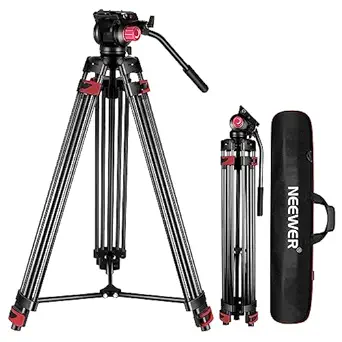 | Best Extra-Tall Option | Load Capacity: 17.6 lb / 8 kg | Maximum Height: 78.7 inches / 200 cm | Minimum Height: 34.6 inches / 88 cm | VIEW LATEST PRICE | See Our Full Breakdown |
| VICTIV 74-Inch Camera Tripod for Camera and Phone |  | Best for Beginners with Lighter Telephoto Kits | Maximum Load: 9.5 lb | Maximum Height: 74 inches | Minimum Height: 19 inches | VIEW LATEST PRICE | See Our Full Breakdown |
| heavy duty tripods for telephoto lense | Maximum Height | Material | Head Type | Minimum Height |
|---|---|---|---|---|
| SIRUI Heavy-Duty Carbon Fiber | 57 inches | Corrosion-resistant carbon fiber | Low-center-of-gravity ball head | — |
| SmallRig AD-01 Video Tripod | 186 cm / 73 inches | Aluminum alloy | 360-degree fluid head with damping and balance system | 85 cm / 33 inches |
| Neewer 74-Inch Video Tripod wi | 74 inches | Aluminum alloy | Fluid drag pan head | 35 inches |
| Neewer 79-Inch Aluminum Tripod | 78.7 inches / 200 cm | Aluminum alloy | 360-degree fluid drag head | 34.6 inches / 88 cm |
| VICTIV 74-Inch Camera Tripod f | 74 inches | Aluminum | Three-way pan head | 19 inches |
More Details on Our Top Picks
SIRUI Heavy-Duty Carbon Fiber Tripod with Low Center of Gravity Ball Head (AM-324S+G1)
The SIRUI AM-324S+G1 takes my top position because its 44-pound rating is far beyond the 17- to 17.6-pound limits of the SmallRig and Neewer video models. That extra reserve matters with a large telephoto lens: it reduces the chance that the complete setup will operate near the tripod’s stated ceiling. Its low-center ball head also keeps weight close to the platform, making this the strongest still-photography choice for wildlife, aviation, and distant landscapes.
Carbon fiber gives the SIRUI another advantage over the aluminum alternatives. At 3.75 pounds, it weighs only a little more than the lightly built VICTIV while supporting more than four times the load. Six accessory ports also suit field monitors, microphones, or support arms. The tradeoff is a 57-inch maximum height, well below the 73- to 79-inch competitors, and the premium construction is likely to cost more.
I would choose this over the SmallRig when static stability and heavy-lens support matter more than controlled video pans. Buyers who mainly record moving subjects should choose a fluid-head model instead, while backpackers carrying smaller lenses may find the SIRUI more tripod than they need.
Pros:- 44-pound capacity leaves substantial support reserve for heavy lenses
- Carbon-fiber construction combines rigidity with a 3.75-pound weight
- Low-center ball head favors stable still-photo composition
- Six mounting ports accommodate field accessories
Cons:- 57-inch maximum height is the shortest among these five tripods
- Ball head is less suitable than a fluid head for controlled video tracking
- Professional construction may exceed a casual buyer’s budget
Best for: Wildlife, aviation, and outdoor photographers supporting large telephoto lenses or accessory-heavy camera bodies
Not ideal for: Videographers who need fluid panning or tall photographers who want a 70-inch-plus working height
- Maximum Load:44 lb
- Maximum Height:57 inches
- Tripod Weight:3.75 lb
- Material:Corrosion-resistant carbon fiber
- Head Type:Low-center-of-gravity ball head
- Accessory Ports:6
- Warranty:2 years
- Model:AM-324S+G1
Our verdict“The SIRUI is my first choice for serious telephoto photography because it delivers the largest load reserve without the bulk expected from a 44-pound-rated support.”
SmallRig AD-01 Video Tripod
The SmallRig AD-01 ranks second by combining a 17-pound capacity with the movement controls needed for long-lens video. Its 75mm leveling bowl makes horizon correction faster on uneven ground, while the damped 360-degree fluid head supports smoother pans than the SIRUI ball head. That distinction makes it my preferred option for filming wildlife, sports, and outdoor events.
Its 33- to 73-inch range is generous, and the included handle and bag help manage transport. Compared with the 74-inch Neewer, however, the SmallRig offers nearly identical capacity and height while asking beginners to learn a more involved setup. Its advantage lies in the balancing system and bowl-based video platform, not raw load support.
The AD-01 remains a large aluminum tripod, so it is less appealing for long hikes than the 3.75-pound carbon-fiber SIRUI. I would also leave a sensible margin below its 17-pound ceiling when mounting a large lens. For video buyers who need controlled movement more than compact dimensions, those compromises are reasonable.
Pros:- Damped fluid head supports smooth telephoto tracking
- 75mm bowl simplifies leveling on uneven surfaces
- 73-inch maximum height accommodates elevated shooting positions
- Carrying handle and storage bag are included
Cons:- More involved setup than a basic photo tripod
- Bulky aluminum build is poorly suited to extended hiking
- 17-pound rating provides less reserve than the SIRUI
Best for: Wildlife and sports videographers who need smooth panning, quick leveling, and a tall working position
Not ideal for: Backpackers, first-time tripod users, or owners of rigs approaching the 17-pound load limit
- Load Capacity:8 kg / 17 lb
- Maximum Height:186 cm / 73 inches
- Minimum Height:85 cm / 33 inches
- Material:Aluminum alloy
- Bowl Size:75 mm
- Head Type:360-degree fluid head with damping and balance system
- Plate Compatibility:DJI RS 2, RS3, and RS3 Pro
- Included Accessories:Carrying bag, screws, and user manual
Our verdict“The SmallRig AD-01 is my leading telephoto video pick, offering better tracking control than the photography-focused SIRUI and a more specialized platform than the value-oriented Neewer.”
Neewer 74-Inch Video Tripod with Fluid Head
I rank the Neewer 74-inch video tripod as the best value because it matches the SmallRig’s general class of capacity and height while offering unusually broad plate compatibility. Support for Manfrotto 501PL and 504PL plates, plus DJI RS2 and RS3 systems, can reduce plate changes when moving between a camera and gimbal.
The fluid drag head provides 360-degree rotation, translating the sturdy aluminum legs into a practical platform for following distant action. Its 35-inch minimum height is slightly higher than the SmallRig’s 33 inches, so low shooting positions are limited. It also lacks the SIRUI’s huge load reserve, but its 17.6-pound capacity fits many DSLR or mirrorless bodies paired with midweight telephoto lenses.
The main drawback is bulk: the tripod folds to 36 inches and becomes cumbersome when fully extended. Tension adjustments on the flip locks require tools, which is less convenient than quick field adjustment. I would select this model over the SmallRig when plate flexibility and value lead the decision; I would pay for the SmallRig when its 75mm bowl and balancing system better match the assignment.
Pros:- 17.6-pound capacity supports many midweight telephoto combinations
- Fluid drag head provides controlled 360-degree panning
- Broad quick-release compatibility reduces equipment changes
- 35- to 74-inch height range serves varied standing positions
Cons:- 36-inch folded length is awkward for travel
- Flip-lock tension adjustments require tools
- 35-inch minimum height restricts low-angle work
Best for: Value-focused videographers switching among DSLR, mirrorless, Manfrotto-style plates, and DJI RS gimbals
Not ideal for: Hikers, low-angle photographers, or professionals carrying equipment close to 17.6 pounds
- Maximum Load:17.6 lb / 8 kg
- Maximum Height:74 inches
- Minimum Height:35 inches
- Folded Length:36 inches / 91 cm
- Material:Aluminum alloy
- Head Type:Fluid drag pan head
- Mounting Threads:1/4-inch and 3/8-inch
- Level:Bubble level
- Plate Compatibility:DJI RS2, RS3, RS3 Pro, Manfrotto 501PL, and 504PL
Our verdict“This Neewer is my value recommendation for telephoto video, especially when flexible quick-release support matters more than the SmallRig’s more specialized bowl system.”
Neewer 79-Inch Aluminum Tripod with Fluid Head
The defining reason to choose the Neewer 79-inch tripod is reach. Its 78.7-inch maximum exceeds the SmallRig by nearly six inches and the SIRUI by more than 21 inches. That added elevation can help when filming over barriers, working on sloped ground, or placing a telephoto camera above a standing crowd.
It shares the other Neewer’s 17.6-pound capacity and fluid-head movement, but uses a 70mm bowl rather than emphasizing wide quick-release compatibility. Non-slip feet and a bubble level aid setup, while standard 1/4-inch and 3/8-inch connections cover common camera hardware. Compared with the 74-inch Neewer, this model makes more sense when height beats plate flexibility.
I rank it fourth because the manufacturer information supplied here does not state the tripod’s weight. A 35.8-inch folded length already indicates a large transport footprint, and the missing weight makes pack planning uncertain. The towering center of mass may also increase sensitivity to wind when fully raised, so telephoto users should extend only as far as the shot requires.
Pros:- 78.7-inch maximum height is the tallest in this comparison
- 17.6-pound rating accommodates many telephoto camera kits
- Fluid head supports smooth panning and tilting
- 70mm bowl, bubble level, and rubber feet aid stable setup
Cons:- Tripod weight is not specified
- 35.8-inch folded length requires substantial carrying space
- Full-height use may be more vulnerable to vibration and wind
Best for: Tall operators, event shooters, and videographers who need to position a telephoto camera above obstacles
Not ideal for: Travelers who need a known carrying weight or photographers who rarely require extreme height
- Load Capacity:17.6 lb / 8 kg
- Maximum Height:78.7 inches / 200 cm
- Minimum Height:34.6 inches / 88 cm
- Folded Length:35.8 inches / 91 cm
- Material:Aluminum alloy
- Bowl Base:70 mm
- Head Type:360-degree fluid drag head
- Screw Compatibility:1/4-inch and 3/8-inch
- Tripod Weight:Not specified
Our verdict“The 79-inch Neewer earns its place for exceptional working height, but the 74-inch version is the more balanced value unless those extra inches solve a real shooting problem.”
VICTIV 74-Inch Camera Tripod for Camera and Phone
The VICTIV 74-inch tripod fills a narrower role than the four models above it. Its 3.14-pound weight, 19-inch minimum height, phone support, and three-way pan head make it approachable for beginners who alternate between a camera, smartphone, and spotting scope. It is also much easier to carry than the full-size Neewer and SmallRig video systems.
That convenience comes with the comparison’s most restrictive figure: a 9.5-pound maximum load. While that can support a lightweight camera and modest zoom, it leaves little reserve for a heavy super-telephoto lens. Its 1/4-inch mount and conventional three-way head are also less specialized than the SIRUI ball head or the damped fluid heads offered by the video tripods.
I would choose the VICTIV only when low weight, broad device compatibility, and price outweigh professional rigidity. Buyers using a 70-300mm-class setup may find it adequate, provided the complete equipment weight stays comfortably below the limit. For large 400mm, 500mm, or 600mm lenses, the SIRUI is the safer match, while the SmallRig is better for video.
Pros:- 3.14-pound weight is the lightest stated weight in the lineup
- 19- to 74-inch range supports low and standing positions
- Works with cameras, phones, and spotting scopes
- Carrying bag and phone support broaden its beginner appeal
Cons:- 9.5-pound load limit leaves little reserve for heavy lenses
- Three-way head is less refined for moving-subject video
- Single 1/4-inch mount offers less rigging flexibility
Best for: Beginners using lightweight telephoto zooms, phones, compact cameras, or spotting scopes
Not ideal for: Owners of large professional telephoto lenses or videographers needing a true damped fluid head
- Maximum Load:9.5 lb
- Maximum Height:74 inches
- Minimum Height:19 inches
- Tripod Weight:3.14 lb
- Material:Aluminum
- Head Type:Three-way pan head
- Mount:1/4-inch screw
- Included Accessory:Carrying bag
Our verdict“The VICTIV is a sensible entry pick for light telephoto equipment, but its 9.5-pound ceiling keeps it below the genuinely heavy-duty choices.”
How We Picked
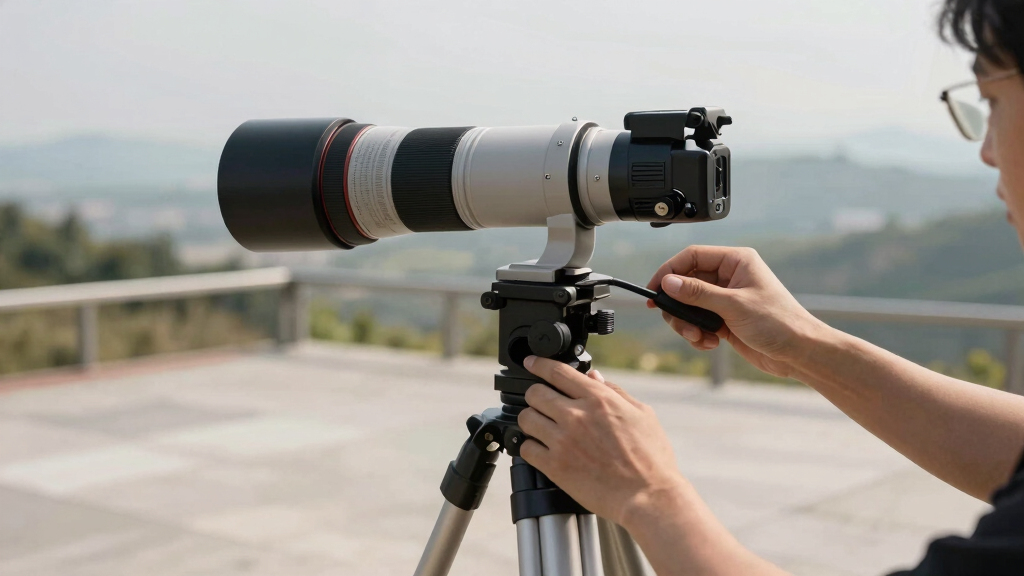
I ranked these tripods around the demands of long, front-heavy lenses, rather than treating maximum height as the main measure of quality. Load rating came first, but I also looked at material, head geometry, bowl design, leg structure, minimum height, and the amount of capacity left after adding a camera body and accessories. A tripod rated just above the kit’s total weight offers less confidence than one with a generous reserve.
I then separated photography needs from video needs. A low-center ball head makes rapid still-photo composition easier, while a fluid head and leveling bowl are more useful when tracking moving subjects. Portability affected the order as well: carbon fiber earns the SIRUI an advantage, whereas the three full-size video tripods trade compactness for working height and planted legs.
My final ranking reflects clear buyer roles. The SIRUI leads on support and construction, the SmallRig on video control, and the 74-inch Neewer on price-to-capability balance. The taller Neewer serves photographers and videographers who need extra elevation. I placed the VICTIV fifth because its lower rating makes it suitable only for modest telephoto combinations, despite its appealing weight and height range.
| heavy duty tripods for telephoto lense | Material |
|---|---|
| SIRUI Heavy-Duty Carbon Fiber | Corrosion-resistant carbon fiber |
| SmallRig AD-01 Video Tripod | Aluminum alloy |
| Neewer 74-Inch Video Tripod wi | Aluminum alloy |
| Neewer 79-Inch Aluminum Tripod | Aluminum alloy |
| VICTIV 74-Inch Camera Tripod f | Aluminum |
Factors to Consider When Choosing Best Heavy Duty Tripods For Telephoto Lenses
I choose a telephoto tripod as a complete support system, matching the legs, head, height, and carrying weight to the subject rather than relying on one headline specification.Leave Room Above the Stated Load
I add the weight of the lens, camera, head, plate, battery grip, and accessories before comparing load ratings. I prefer a meaningful reserve because a long lens places leverage on the head and responds visibly to small vibrations. The SIRUI’s 44-pound rating offers the broadest margin here. The 17-pound-class video models suit many midweight combinations, while the VICTIV belongs with lighter kits.
Match the Head to Stills or Video
For wildlife stills, I favor a low-profile ball head when quick framing and a compact center of gravity matter. Video requires a different kind of control: the SmallRig and Neewer fluid heads resist sudden movement and support steadier pans. A leveling bowl is especially useful outdoors because I can level the head without repeatedly changing leg lengths.
Treat Maximum Height as a Compromise
Extra height helps when shooting over spectators or working downhill, but fully extended legs can amplify movement. I would not raise the 79-inch Neewer to its limit merely because the height is available. A lower, wider setup usually gives a telephoto lens a calmer base. The SIRUI sacrifices reach for a shorter structure, while the tall aluminum models prioritize standing and event coverage.
Account for Transport and Weather
A support that stays at home has little value, so I compare tripod weight and folded length with the distance I expect to walk. Carbon fiber helps the SIRUI combine high capacity with manageable weight and corrosion resistance. The aluminum video tripods are better suited to vehicles, venues, and short approaches. I also use a lens collar when available, keep the center of gravity over the head, and avoid extending the narrowest leg sections in strong wind.
Frequently Asked Questions
How much tripod load capacity do I need for a telephoto lens?
I start with the complete mounted weight, not the lens weight alone, then choose a rating with substantial unused capacity. A camera, lens, head, plate, battery grip, and monitor can add up quickly. For a genuinely heavy professional lens, the SIRUI’s 44-pound rating offers far more breathing room than the 17-pound Neewer and SmallRig models. I reserve the 9.5-pound VICTIV for light combinations.
Is carbon fiber better than aluminum for telephoto photography?
I favor carbon fiber for carrying efficiency, vibration behavior, and resistance to corrosion, which is why the SIRUI leads my ranking. Aluminum remains a practical choice when cost and full-size video stability matter more than pack weight. The SmallRig and Neewer models are bulky, yet their aluminum construction supports tall working positions without pushing into premium carbon-fiber pricing.
Should I choose a ball head or fluid head for a long lens?
I choose according to the subject and output. A ball head suits still photography because it allows rapid reframing in several directions, while a fluid head suits video by adding resistance that smooths pans and tilts. The SIRUI is the stronger still-photo option in this group. The SmallRig offers the best video-oriented control, with both damping and a leveling bowl.
Can these tripods support a 600mm lens?
Lens focal length alone does not answer the question; total weight and weight distribution matter more. A compact 600mm zoom may fit within a 17-pound system’s practical range, while a large-aperture professional 600mm prime calls for much more support. I would favor the 44-pound-rated SIRUI for the latter and attach the lens by its collar. The VICTIV is not my choice for a heavy 600mm setup.
Why is the tallest tripod not ranked first?
I treat height as one part of the decision, not proof of better support. The 79-inch Neewer helps when shooting above barriers, but greater extension can increase vibration, and its total weight is unspecified. The shorter SIRUI ranks first because its 44-pound capacity, carbon-fiber construction, and low-center head address heavy telephoto stability more directly. I would buy the tallest model only when extra elevation has a defined purpose.
Conclusion
For a heavy telephoto stills setup, I recommend the SIRUI AM-324S+G1; its 44-pound rating and carbon-fiber build create the best mix of support and portability. My choice for wildlife or sports video is the SmallRig AD-01, whose bowl and damped fluid head favor controlled tracking. Value-focused videographers should choose the 74-inch Neewer, while buyers needing maximum elevation should select the 79-inch version. I reserve the VICTIV for beginners and lightweight lenses, since its lower capacity does not match the demands of large professional telephotos.