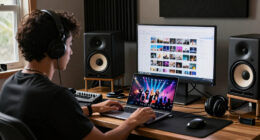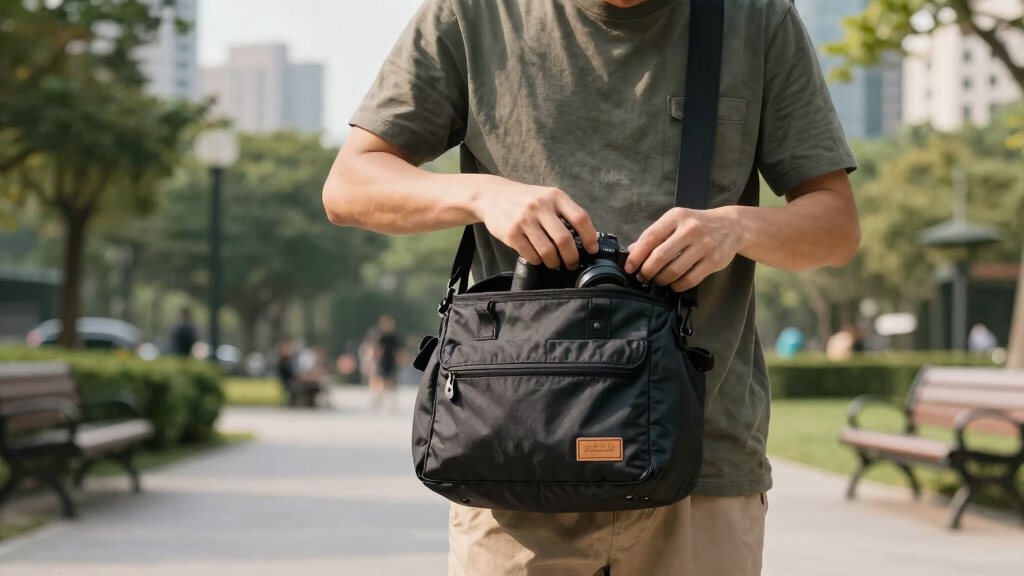
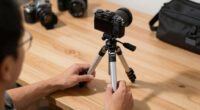
The best camera bag for hybrid photo and video shooters is the Lowepro Fast Pack BP250AW III because its quick-access, mixed-use layout suits frequent switches between stills, video, and everyday gear. The K&F CONCEPT 25L Camera Backpack is my value pick for shooters who need more capacity, a laptop compartment, and rain protection without paying premium-brand pricing. For heavier professional kits, the Lowepro ProTactic BP 450 AW III offers stronger protection and more modular organization, though it costs more and carries like a dedicated gear pack. The main choice is between fast access and maximum protection, while capacity, carrying comfort, and room for audio or stabilization equipment also shape the ranking. Continue reading for my full breakdown of which bag fits each type of hybrid setup.

Get audio and creator gear delivered free with Prime
- Fast, free delivery on millions of items
- Prime Video, Amazon Music and more included
- Member-only deals all year
Complete the kit


Key Takeaways
- The Lowepro Fast Pack BP250AW III ranks first because its accessible mixed-use layout better supports active photo-video workflows than the larger, more gear-focused backpacks.
- The Lowepro ProTactic BP 450 AW III is the premium pick, trading a higher price and bulkier profile for stronger protection, modular organization, and better support for demanding kits.
- The K&F CONCEPT 25L Backpack offers the strongest value balance by combining useful capacity, laptop storage, tripod carrying, and a rain cover without moving into premium pricing.
- Hard-shell designs favor protection over flexibility: the K&F CONCEPT Hard Shell and MOSISO models suit crowded travel, but their rigid shapes are less forgiving when packing irregular video accessories.
- Tripod straps and rain covers appear across much of the lineup, so divider flexibility, access speed, laptop fit, and carrying comfort do more to separate the best hybrid options.
| CADeN D6 Camera Backpack |  | Best Budget-Friendly Capacity | Dimensions: 11 x 5.9 x 15 inches | Weight: 1.74 pounds | Camera Capacity: 1 camera body | VIEW LATEST PRICE | See Our Full Breakdown |
| Rainsmore Waterproof Tactical Camera Backpack |  | Best Outdoor Organization | Dimensions: 17.7 x 7.87 x 12.79 inches | Weight: 1.65 kilograms | Storage Volume: 28 liters | VIEW LATEST PRICE | See Our Full Breakdown |
| K&F CONCEPT Lightweight Camera Backpack |  | Best Compact Pick | Capacity: 15 liters | Dimensions: 15.2 x 5.1 x 15.2 inches | Weight: 0.89 kilograms | VIEW LATEST PRICE | See Our Full Breakdown |
| K&F CONCEPT Hard Shell Camera Backpack |  | Best Rigid Protection | Height: 17.3 inches | Width: 11 inches | Depth: 7 inches | VIEW LATEST PRICE | See Our Full Breakdown |
| MOSISO Waterproof Hard Shell Camera Backpack |  | Best for Laptop-Heavy Travel | Dimensions: 17.32 x 11.8 x 7.5 inches | Weight: 3.2 pounds | Storage Volume: 35 liters | VIEW LATEST PRICE | See Our Full Breakdown |
| Large Waterproof and Pressure-Proof Camera Bag |  | Best for Large Video Kits | Interior dimensions: 19.68 x 9.44 x 11 inches | Padded dividers: 11 removable pieces | Material: High-density polyester with PVC coating | VIEW LATEST PRICE | See Our Full Breakdown |
| Lowepro ProTactic BP 450 AW III Camera Backpack |  | Best Premium Pick | Volume: 28 liters | Laptop capacity: Up to 16 inches | Recycled material content: 86% recycled fabric | VIEW LATEST PRICE | See Our Full Breakdown |
| K&F CONCEPT 25L Camera Backpack with Raincover |  | Best Value for Travel | Exterior dimensions: 17.3 x 11.8 x 9.4 inches | Capacity: 25 liters | Laptop capacity: Up to 15.6 inches | VIEW LATEST PRICE | See Our Full Breakdown |
| Lowepro Fast Pack BP250AW III Backpack |  | Best for Everyday Hybrid Carry | Laptop capacity: Up to 15 inches | Fabric type: Plastic | Zipper: #10 zipper | VIEW LATEST PRICE | See Our Full Breakdown |
More Details on Our Top Picks
CADeN D6 Camera Backpack
I rank the CADeN D6 as the affordable choice for hybrid shooters carrying a camera, several lenses, a flash, and a compact drone. Its 1.74-pound build is much easier to carry than the 3.2-pound MOSISO, while the tripod holder and tablet space support a basic photo-and-video kit. It also offers more gear room than the 15-liter K&F CONCEPT Lightweight Backpack. That advantage comes with less structural protection: the soft, customizable interior may need extra padding around heavier lenses or delicate video accessories. The bag can also feel oversized when loaded with only one body and a small lens. I would choose it for capacity at a modest carrying weight, but not when rigid impact protection or a full-size laptop compartment matters most.
Pros:- Low 1.74-pound weight for its stated gear capacity
- Holds a camera body, four lenses, a flash, an iPad, and a tripod
- Scratch-resistant, waterproof fabric suits travel and outdoor work
- Reinforced shoulder belts support fuller loads
Cons:- Soft construction offers less impact resistance than a hard-shell backpack
- Interior padding may need adjustment or reinforcement for delicate equipment
- No full-size laptop compartment listed
Best for: Budget-minded hybrid shooters carrying multiple lenses, a flash, a tablet, and a travel tripod
Not ideal for: Minimalist creators or owners of fragile cinema accessories who need a compact bag with rigid protection
- Dimensions:11 x 5.9 x 15 inches
- Weight:1.74 pounds
- Camera Capacity:1 camera body
- Lens Capacity:Up to 4 lenses
- Tablet Storage:Fits an iPad
- Material:Scratch-resistant, waterproof fabric
- Tripod Storage:Dedicated tripod holder
- External Storage:Hidden zipper pocket and mesh side pocket
Our verdict“This is my value pick for carrying a broad hybrid kit without starting with a heavy backpack.”
Rainsmore Waterproof Tactical Camera Backpack
The Rainsmore Camera Backpack earns its place through weather readiness and compartment control. Its 28-liter interior, eight compartments, and seven pockets let me separate camera gear, batteries, filters, audio equipment, and small video tools more methodically than in the two-compartment MOSISO. A quick-access design and included rain cover also make it better suited to outdoor assignments than the lighter CADeN D6. The cost is carrying burden: at about 3.64 pounds before equipment, it is the heaviest option in this batch, and its tall body may feel awkward on crowded commutes. The tactical layout also gives minimalists more storage divisions than they need. I rank it behind lighter choices for walking-heavy trips, but its 28-liter organization makes a strong case for weather-exposed shoots with mixed equipment.
Pros:- Eight compartments and seven pockets support detailed gear separation
- Includes a rain cover for added protection in poor weather
- Quick-access openings reduce delays when changing equipment
- Fits laptops up to 15.6 inches and carries a tripod
Cons:- 1.65-kilogram empty weight is demanding during extended carry
- Large dimensions can be cumbersome on public transport
- Complex organization may be excessive for a small mirrorless kit
Best for: Outdoor hybrid shooters who need separated storage for camera, audio, power, and support accessories
Not ideal for: Long-distance hikers and daily commuters who place low bag weight and a slim profile ahead of compartment count
- Dimensions:17.7 x 7.87 x 12.79 inches
- Weight:1.65 kilograms
- Storage Volume:28 liters
- Material:Polyester
- Laptop Compatibility:Up to 15.6 inches
- Compartments:8
- Pockets:7
- Weather Protection:Waterproof construction with included rain cover
- Travel Features:Tripod holder and luggage strap
Our verdict“I would pick the Rainsmore for organized outdoor production, provided its high empty weight is acceptable.”
K&F CONCEPT Lightweight Camera Backpack
I place the K&F CONCEPT Lightweight Camera Backpack highest for creators who alternate between shooting and ordinary city use. Its 15-liter capacity and 1.96-pound weight keep the profile tidier than the 28-liter Rainsmore or 35-liter MOSISO, while removable dividers let the interior adapt to a compact camera, lenses, and video accessories. The 14-inch laptop limit is less accommodating than the 15.6-inch compartment in the K&F CONCEPT Hard Shell Backpack, and the smaller interior will not handle an extensive lens or audio collection. Splash-proof fabric also relies on the included cover when rain becomes heavier. Those limits are part of its appeal: I see this as a short-outing and city-shoot bag, not a mobile production locker. It favors manageable carry over expansion room.
Pros:- Compact 15-liter format suits city trips and short outings
- Low 1.96-pound weight reduces the burden of all-day carry
- Customizable dividers allow photo gear to be removed for everyday use
- Included rain cover adds protection beyond the splash-proof fabric
Cons:- Limited space for large lenses, multiple bodies, or substantial video equipment
- Laptop compartment stops at 14 inches
- Divider layout may require extra setup when switching between kits
Best for: City-based mirrorless shooters carrying a compact hybrid kit and a laptop no larger than 14 inches
Not ideal for: Production crews or multi-body photographers who need room for large lenses, extensive audio gear, or a 15.6-inch laptop
- Capacity:15 liters
- Dimensions:15.2 x 5.1 x 15.2 inches
- Weight:0.89 kilograms
- Laptop Compatibility:Up to 14 inches
- Compartments:6
- Closure:Zipper
- Straps:Adjustable shoulder and side straps
- Weather Protection:Splash-proof fabric with included rain cover
Our verdict“This is my compact choice for light hybrid kits that need to blend into everyday city travel.”
K&F CONCEPT Hard Shell Camera Backpack
The K&F CONCEPT Hard Shell Camera Backpack is my protection-first choice for hybrid equipment that travels through busy stations, vehicle trunks, or crowded venues. Its EVA hard shell resists crushing forces better than the fabric CADeN D6, while the 22-liter interior offers more working room than K&F CONCEPT’s 15-liter Lightweight Backpack. A 15.6-inch laptop compartment also suits editors who need a larger mobile workstation. Rigid construction brings compromises: the 17.3-inch-tall shell is less forgiving in tight spaces, cannot compress when partly empty, and may feel excessive for a single mirrorless body. It also gives the MOSISO’s larger 35-liter model an advantage when capacity matters more than a moderate footprint. I rank this bag for balanced protection and midrange volume, especially when delicate lenses share space with video accessories.
Pros:- EVA hard shell offers stronger crush protection than fabric-only bags
- 22-liter capacity balances equipment room with travel practicality
- Customizable interior supports changing photo and video layouts
- Dedicated holders accommodate both a tripod and water bottle
Cons:- Rigid exterior remains bulky even when the bag is lightly packed
- Hard-shell format is less flexible for irregularly shaped accessories
- Smaller capacity than the 35-liter MOSISO
Best for: Traveling hybrid creators who carry delicate lenses, a 15.6-inch laptop, and a moderate equipment load
Not ideal for: Minimalist street shooters who need a flexible bag that compresses easily or fits into tight spaces
- Height:17.3 inches
- Width:11 inches
- Depth:7 inches
- Capacity:22 liters
- Laptop Compatibility:Up to 15.6 inches
- Shell Material:EVA hard shell
Our verdict“I recommend this model when protecting a moderate hybrid kit matters more than having a soft, collapsible backpack.”
MOSISO Waterproof Hard Shell Camera Backpack
I see the MOSISO Hard Shell Camera Backpack as the strongest match for hybrid shooters traveling with a large laptop and a broad supporting kit. Its 35-liter volume and 16-inch laptop compartment exceed both the 22-liter K&F CONCEPT Hard Shell Backpack and the 28-liter Rainsmore, leaving more room for camera gear, video accessories, and personal items. Nine pockets, a tripod holder, an anti-theft pocket, and a trolley belt also favor airport movement. Yet bigger is not automatically better: the 3.2-pound bag becomes demanding once fully loaded, and its 17.32-by-11.8-inch body is cumbersome for routine street work. The interior lists only two main compartments, so the Rainsmore provides more granular separation. I rank the MOSISO for maximum travel utility, while compact-kit owners should choose a lighter option.
Pros:- 35-liter capacity accommodates a large mixed photo and video load
- Fits laptops up to 16 inches
- Waterproof hard shell adds weather and impact protection
- Trolley belt, tripod holder, and anti-theft pocket support travel
Cons:- 3.2-pound empty weight becomes tiring with a full equipment load
- Large exterior is cumbersome for everyday shooting
- Two main compartments provide less detailed separation than the Rainsmore
Best for: Traveling hybrid shooters who carry a 16-inch laptop, tripod, camera system, and a large set of accessories
Not ideal for: Street photographers, hikers, and small-kit creators who would be burdened by a 35-liter bag weighing 3.2 pounds empty
- Dimensions:17.32 x 11.8 x 7.5 inches
- Weight:3.2 pounds
- Storage Volume:35 liters
- Laptop Compatibility:Up to 16 inches
- Materials:Faux leather and polyester
- Pockets:9
- Compartments:2
- Shoulder Strap Length:17.72 to 39.4 inches
- Travel Features:Tripod holder and back trolley belt
Our verdict“The MOSISO is my choice for high-capacity air travel with a large laptop, not for light everyday carry.”
Large Waterproof and Pressure-Proof Camera Bag
I rank this bag for shooters carrying multiple bodies, long lenses, and video accessories rather than a compact hybrid setup. Its 19.68-inch interior and 11 padded dividers offer more equipment flexibility than the Lowepro Fast Pack BP250AW III, while the thick PVC-coated polyester provides strong weather and impact protection. The broad compatibility also suits larger camcorders that would overwhelm most photography backpacks. That capacity comes with a clear penalty: this is a transport case more than an everyday bag, and a full 44-pound load can become tiring without the harness support of the Lowepro ProTactic BP 450 AW III. I would choose it for moving a substantial kit between controlled locations, but skip it for walking shoots, air travel, or frequent lens changes on the move.
Pros:- Extra-large interior accommodates several cameras, lenses, and video accessories
- Eleven removable dividers support highly customized equipment layouts
- Thick PVC-coated polyester protects gear from moisture, pressure, and impacts
- Supports loads up to 20 kg for demanding production kits
Cons:- Oversized format is cumbersome for daily shooting and crowded locations
- Can become extremely heavy when loaded near its stated capacity
- Lacks the included modular accessories and advanced harness found on the Lowepro ProTactic
Best for: Videographers transporting multiple cameras, large camcorders, lenses, audio equipment, and support accessories between studios or shoot locations
Not ideal for: Run-and-gun creators and commuters who need a compact backpack with comfortable hands-free carrying
- Interior dimensions:19.68 x 9.44 x 11 inches
- Padded dividers:11 removable pieces
- Material:High-density polyester with PVC coating
- Padding thickness:1.7 cm
- Weight capacity:20 kg (44 lbs)
- Protection:Waterproof, pressure-resistant, and shock-resistant construction
- Compatible equipment:Sony HXR-MC1500C/HXR-MC2500C, JVC JY-HM85/95, Panasonic MDH2GK, and ARRI Super
Our verdict“This is the practical pick for transporting a large hybrid production kit, provided portability matters less than capacity and protection.”
Lowepro ProTactic BP 450 AW III Camera Backpack
The Lowepro ProTactic BP 450 AW III earns my premium slot because its four access points, molded interior, and modular attachments support fast-moving hybrid productions better than simpler backpacks. Compared with the K&F CONCEPT 25L Camera Backpack, its larger 28-liter volume, 16-inch laptop fit, and ActivZone harness make it better suited to heavier professional loads and longer assignments. Side, top, and rear openings also reduce the need to unpack everything when switching from stills to video. The tradeoff is cost, bulk, and a more involved divider system that may feel excessive for a one-body kit. Its included utility pouches and Quick Straps add real flexibility, though buyers seeking straightforward organization will find the Lowepro Fast Pack BP250AW III easier to live with. I rank this highest for modularity and carrying support, not simplicity.
Pros:- Four access points make cameras and lenses reachable from several positions
- ActivZone harness and padded waistbelt distribute heavier production loads
- Modular pouches and Quick Straps adapt to changing photo and video kits
- Uses 86% recycled fabric without giving up weather-focused protection
Cons:- Premium price is difficult to justify for occasional use
- Bulky 28-liter build can be awkward in crowded urban spaces
- Complex layout requires more setup than simpler split-compartment bags
Best for: Working hybrid shooters carrying two bodies, several lenses, a 16-inch laptop, and modular production accessories on demanding assignments
Not ideal for: Casual photographers with small kits who would pay for organization and carrying capacity they are unlikely to use
- Volume:28 liters
- Laptop capacity:Up to 16 inches
- Recycled material content:86% recycled fabric
- Access points:Four: two side doors, top opening, and full rear opening
- Carrying system:ActivZone harness, padded waistbelt, and multiple grab handles
- Divider system:Customizable MaxFit dividers
- Interior protection:Molded interior structure
- Included accessories:Rain cover, utility pouches, and Quick Straps
- Weather protection:Weather-resistant fabric with separate rain cover
Our verdict“Buy this when professional-grade access, modular expansion, and load support justify the extra cost and bulk.”
K&F CONCEPT 25L Camera Backpack with Raincover
I see the K&F CONCEPT 25L Camera Backpack as the value-minded travel choice for creators mixing a camera, lenses, drone gear, and a laptop. Its three-tier layout separates equipment more deliberately than the open interior of the Large Waterproof and Pressure-Proof Camera Bag, while side access helps a shooter retrieve a body without exposing the whole kit. Compared with the Lowepro ProTactic BP 450 AW III, it gives up some harness sophistication and modular expansion but retains useful 25-liter capacity at a more approachable level. The included rain cover also makes outdoor assignments less risky. Its main weakness is support: the missing chest strap can allow a heavy load to shift, especially during hikes. At 17.3 inches tall, it is also far from discreet. I favor it for organized travel on a sensible budget, not strenuous backcountry work.
Pros:- Three-tier organization separates camera, video, and personal equipment
- Quick side opening provides fast access without removing the entire load
- 25-liter capacity accommodates a varied hybrid travel kit
- Included rain cover adds protection during outdoor shoots
Cons:- No chest strap, reducing stability with a heavy or uneven load
- Bulky dimensions may be inconvenient on crowded transport
- Carrying system is less advanced than the Lowepro ProTactic harness
Best for: Traveling hybrid creators who carry a camera, several lenses, a compact drone, accessories, and a 15.6-inch laptop
Not ideal for: Hikers carrying heavy loads over long distances because the backpack lacks a stabilizing chest strap
- Exterior dimensions:17.3 x 11.8 x 9.4 inches
- Capacity:25 liters
- Laptop capacity:Up to 15.6 inches
- Compartment layout:Three-tier customizable system
- Camera access:Quick side opening
- Rain cover:Included
- Carrying features:Padded shoulder straps and back panel
- Chest strap:Not included
Our verdict“This is the balanced travel pick for buyers who want generous organization and rain protection without paying for a premium modular system.”
Lowepro Fast Pack BP250AW III Backpack
The Lowepro Fast Pack BP250AW III is my everyday recommendation for a hybrid shooter who wants camera access, laptop storage, and weather protection without the elaborate layout of a production backpack. Its quick-access design is better suited to spontaneous shooting than the transport-focused Large Waterproof and Pressure-Proof Camera Bag, and the 15-inch laptop compartment supports a practical edit-on-the-go setup. Against the Lowepro ProTactic BP 450 AW III, the Fast Pack favors simpler organization and easier daily use over four-way access, modular pouches, and support for larger computers. That restraint also limits expansion for audio gear, large lenses, or a second video body. A fully packed load may still feel heavy, while hand-wash-only care makes cleanup less convenient after muddy locations. I would pick it for commuting, city shoots, and short trips, but not a full commercial rig.
Pros:- Quick-access layout supports spontaneous photo and video capture
- Padded 15-inch laptop compartment suits mobile editing workflows
- All-weather cover protects gear during changing conditions
- Simpler organization is easier to manage than the ProTactic system
Cons:- Offers less expansion and modularity than the Lowepro ProTactic BP 450 AW III
- Can become uncomfortable when packed with dense camera and computer gear
- Hand-wash-only care complicates cleaning after outdoor assignments
Best for: Commuting creators carrying one mirrorless or DSLR body, a few lenses, daily accessories, and a 15-inch editing laptop
Not ideal for: Production crews needing space for multiple bodies, extensive audio equipment, large lenses, or a 16-inch workstation
- Laptop capacity:Up to 15 inches
- Fabric type:Plastic
- Zipper:#10 zipper
- Weather protection:All-weather cover
- Care instructions:Hand wash only
- Origin:Imported
- Camera compatibility:Mirrorless and DSLR camera systems
Our verdict“Choose this for a streamlined daily hybrid kit when fast access and laptop carry matter more than maximum production capacity.”
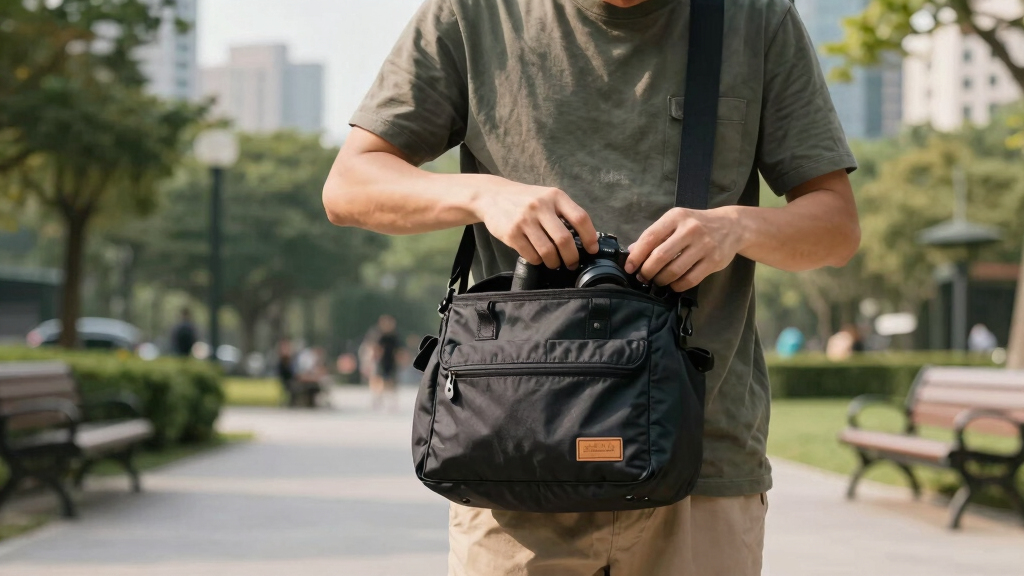
How We Picked
I ranked these bags around the demands that separate a hybrid photo-video kit from a simpler stills setup. My evaluation prioritized access speed, divider flexibility, and usable capacity for camera bodies, lenses, microphones, batteries, filters, and compact stabilization gear. I also weighed carrying comfort, laptop storage, tripod attachment, weather protection, and how easily each design separates delicate equipment from personal items. A bag earned a higher position when its layout supported gear changes without forcing the shooter to unpack an entire compartment. Price mattered, but I favored workflow value over raw storage volume.
The Lowepro Fast Pack BP250AW III leads because it strikes the most convincing balance between access, organization, and everyday usability. The ProTactic BP 450 AW III moves ahead on protection and modularity but falls behind on price and portability, while the K&F CONCEPT 25L earns the value position through capacity and practical included features. Compact and entry-level bags rank lower when their smaller harnesses or simpler layouts become limiting with video accessories. Hard-shell models receive extra credit for impact resistance, though I account for the added bulk and reduced packing flexibility that come with rigid panels.
Factors to Consider When Choosing Best Camera Bags For Hybrid Photo And Video Shooters
Choosing among the best camera bags for hybrid photo and video shooters starts with the way a complete kit moves through a working day. I would plan around the largest realistic load rather than the smallest setup or a future collection that may never leave home. A useful bag should make frequently changed gear easy to reach while keeping less-used accessories out of the way. The factors below help separate genuine workflow benefits from features that sound useful but add little once the bag is packed.
Match Capacity to a Complete Shooting Setup
Bag capacity should reflect a complete working configuration, including audio, batteries, filters, cables, and support hardware rather than camera bodies and lenses alone. Video accessories are often awkwardly shaped, so a claimed capacity can feel smaller once a microphone, monitor, or compact gimbal enters the layout. I recommend arranging a likely kit on a table and grouping items by how often they are needed before choosing a bag size. Leaving one flexible divider bay is more useful than filling every slot tightly because it provides room for a jacket, second body, or rented lens. Buying too large can encourage overpacking and turn a mobile kit into a burden. For most solo hybrid shooters, 20 to 25 liters offers a practical middle ground, while larger packs make more sense for multiple bodies or substantial lighting and audio equipment.
Choose Access Style Around Shooting Pace
Rear-opening bags favor security and broad visibility, but they usually need to be removed and laid down before gear can be reached. Side or split-panel access is faster when a shoot alternates between stills and short video clips, especially when lens changes happen repeatedly. I place quick access high in this roundup because missed moments matter more than a perfectly symmetrical divider layout. Large front panels remain useful for controlled studio, interview, and landscape work where the bag can stay open beside the camera. A common mistake is choosing maximum access through multiple openings without checking whether those openings reduce structure or create more zippers to manage in rain. The better choice is the access system that keeps your most-used body and lens reachable without exposing every other item.
Look Beyond Divider Count
More dividers do not automatically create better organization because divider depth and attachment points determine whether video accessories stay secure. Shallow sections work for lenses but can allow stacked batteries, wireless transmitters, and audio adapters to move during travel. I favor layouts that let one compartment become a larger open bay while keeping smaller items in zippered pockets. Bright interior fabric can also save time when finding black memory cards, cables, and lens caps in low light. Thin dividers increase capacity, while thicker padding provides better separation for fragile equipment at the cost of internal space. A mixed kit benefits most from reconfigurable zones rather than many narrow cells.
Account for Carrying Comfort With External Gear Attached
A backpack that feels manageable indoors may carry very differently once a tripod and full water bottle are attached to the outside. Side-mounted tripods can pull the load off balance, while centrally mounted systems may block access panels. I would check for a supportive waist belt or stable sternum strap when the packed weight approaches the level of a professional two-body kit. Wide shoulder straps help, but harness shape and ventilation have a greater effect during long walks. Compact bags often save weight by using simpler padding, which works for short outings but becomes less comfortable with dense lenses and video batteries. Buyers planning travel, events, or location interviews should give load stability and harness adjustment more weight than decorative webbing or extra attachment loops.
Pay for Protection Where It Solves a Real Risk
Hard shells, reinforced bases, and rain covers address different problems, so more protection is not always better protection. A hard front panel helps in crowded transit or packed vehicles, but it adds weight and cannot expand around unusual equipment. A rain cover handles sustained wet weather better than relying only on water-resistant fabric, though it can restrict access while fitted. Reinforced padding matters most around the base and corners, where bags are frequently set down or bumped. I would pay extra for stronger construction and dependable zippers when carrying expensive bodies, fast lenses, or field monitors. For lighter beginner kits used mainly indoors or around town, a simpler padded bag can offer better value than a rigid travel-focused design.
Frequently Asked Questions
How much bag capacity does a hybrid photo and video shooter usually need?
For one mirrorless or DSLR body, two or three lenses, audio accessories, batteries, and a compact tripod, roughly 20 to 25 liters is usually the most adaptable range. Smaller bags work when the video kit is limited to an on-camera microphone and spare batteries. Multiple bodies, a monitor, a drone, or a gimbal can push the requirement beyond 25 liters quickly. I would avoid sizing the bag from camera gear alone because cables, chargers, filters, and mounting hardware consume more space than expected. Leave a small amount of unused room so the bag remains easy to organize rather than packed like a storage case.
Is a hard-shell camera backpack better for air travel?
A hard-shell backpack offers better resistance to pressure and bumps in overhead bins, trains, and crowded terminals. It is not automatically the better travel choice because the rigid exterior adds bulk and cannot compress into a tight luggage space. Soft backpacks often fit beneath seats more easily and adapt better to irregular accessories. I would choose a hard shell when impact protection is the main concern and a soft structured bag when packing flexibility and lower weight matter more. Airline size and weight limits vary, so compare the packed bag with the carrier’s current cabin allowance before departure.
Should I prioritize quick access or rear-panel security?
Quick side or split access makes more sense for events, documentary work, and travel shooting where the camera moves in and out of the bag repeatedly. Rear-panel access is better suited to crowded locations because the main opening stays against your back while the pack is worn. It also provides a broad view of the full kit when the bag is laid down. I favor quick access for a general hybrid workflow, but photographers carrying expensive equipment through busy cities may prefer the security tradeoff. Some designs combine both approaches, though extra openings can add weight and complexity.
Can one camera backpack carry a laptop, gimbal, and two camera bodies?
It can, but the bag needs a deep main compartment and genuinely flexible dividers rather than many small lens cells. A compact folding gimbal may fit inside a 25-liter pack, while larger stabilizers often need an open bay or external carrying solution. Two bodies also increase weight quickly, making the harness just as relevant as the internal volume. A dedicated laptop sleeve prevents the computer from pressing directly against camera equipment, but thick laptops may reduce usable gear space. I would choose a larger structured model for this load and avoid assuming that a high pocket count equals sufficient capacity.
The premium is easier to justify when the bag will carry heavy gear frequently or work in demanding locations. Lowepro’s higher-ranked options focus more strongly on access, harness support, protection, and long-term professional organization. The K&F CONCEPT 25L remains the better value for many enthusiasts because it covers the main hybrid requirements at a lower price. CADeN makes more sense for beginners with lighter kits who do not need a complex carrying system. I would spend more when comfort, repeated access, and equipment protection affect paid work, not simply for a familiar logo.
Conclusion
For most hybrid shooters, my best overall recommendation is the Lowepro Fast Pack BP250AW III because its accessible mixed-use design balances camera storage with day-to-day practicality. The K&F CONCEPT 25L Backpack is the best value for buyers who want generous capacity, laptop space, and weather protection without premium pricing. Beginners with a modest body-and-lens kit should start with the CADeN Camera Backpack, while photographers prioritizing low weight should choose the K&F CONCEPT Lightweight Camera Backpack. These options make more sense than a large professional pack when portability matters more than expansion.
For demanding assignments, the Lowepro ProTactic BP 450 AW III is my premium pick because its protection and modular layout better suit heavier working kits. The K&F CONCEPT Hard Shell Backpack is the stronger choice for rigid impact protection, while the MOSISO Hard Shell Backpack suits buyers carrying a laptop up to 16 inches. Rainsmore fits outdoor shooters who value tactical organization, a rain cover, and tripod carrying, while the Large Camera Bag is aimed at bulky setups where capacity and pressure resistance outweigh compactness. The final choice should follow your actual load: Fast Pack for balanced everyday work, K&F 25L for value, and ProTactic for professional protection.
Halloween Picks
halloween
As an affiliate, we earn on qualifying purchases.