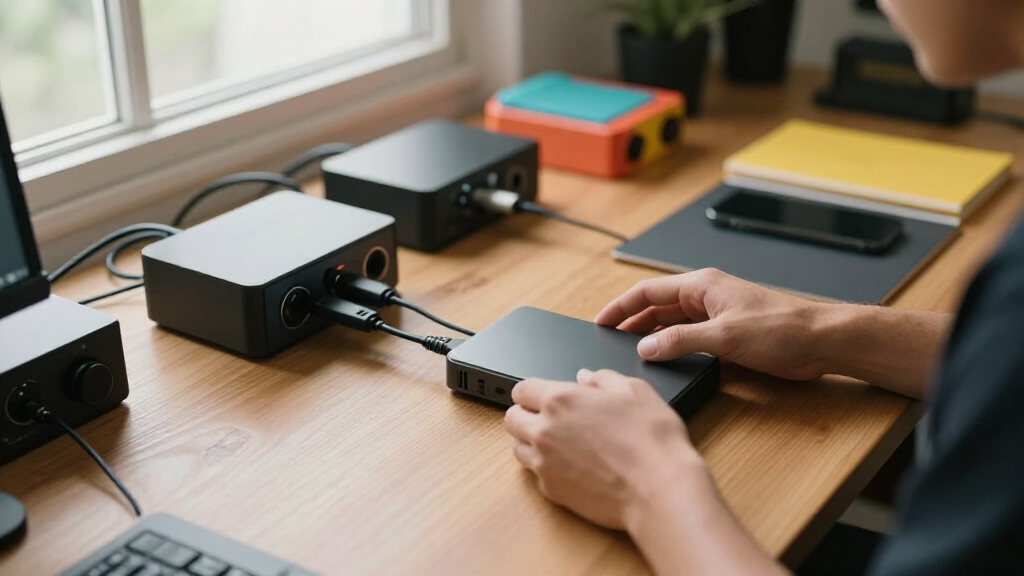
Finding the best hard drive docking station in 2026 means balancing speed, compatibility, and convenience. The top pick, the Sabrent USB 3.0 Dual Bay Hard Drive Docking Station & Cloner, stands out for its reliable performance and built-in cloning features. For those prioritizing USB-C connectivity, the SABRENT Dual-Bay USB-C Hard Drive Docking Station & Cloner offers faster data transfer and future-proofing. Meanwhile, budget-conscious users may lean toward simpler models like the Sabrent USB 3.0 to SATA Hard Drive Docking Station for 2.5in/3.5in Drives. The main challenge lies in choosing between features like offline cloning, transfer speed, and build quality. Continue reading for a detailed breakdown of each option and how to pick the best docking station for your needs.

Get audio and creator gear delivered free with Prime
- Fast, free delivery on millions of items
- Prime Video, Amazon Music and more included
- Member-only deals all year
Complete the kit


Key Takeaways
- The top-performing models combine fast transfer speeds with reliable offline cloning features.
- USB-C connectivity generally offers quicker data transfer but often at a higher price point.
- Build quality and cooling matter more for frequent or intensive use, especially with larger drives.
- Affordable options can handle basic tasks but may lack future-proofing or advanced features.
- Choosing a docking station tailored to your drive sizes and intended use can significantly improve your experience.
| Sabrent USB 3.0 Dual Bay Hard Drive Docking Station & Cloner |  | Best Overall for Versatile Cloning and Large Drives | Supported Drive Sizes: 2.5″ and 3.5″ SATA HDD/SSD | Maximum Drive Capacity: 10TB | Connectivity: USB 3.0 | VIEW LATEST PRICE | See Our Full Breakdown |
| FIDECO Dual-Bay External Hard Drive Docking Station for 2.5″/3.5″ SATA HDD/SSD with USB 3.0, Offline Clone, and UASP |  | Best for Broad OS Compatibility and Dual Drive Management | Drive Compatibility: 2.5″/3.5″ SATA HDD/SSD | Bays: 2 | Interface: USB 3.0, UASP | VIEW LATEST PRICE | See Our Full Breakdown |
| RSHTECH USB-C/USB 3.0 to SATA Dual Bay Hard Drive Docking Station, Aluminum |  | Best for High-Capacity and Heat Dissipation | Supported Drives: 2.5″/3.5″ SATA SSD/HDD up to 22TB | Transfer Speed: Up to 6Gbps with UASP | Cable: Detachable USB-A/USB-C | VIEW LATEST PRICE | See Our Full Breakdown |
| SABRENT Dual-Bay USB-C Hard Drive Docking Station & Cloner (EC-CH2B) |  | Best for Hot-Swappable Drive Access and Ease of Use | Drive Compatibility: 2.5″/3.5″ SATA HDD/SSD | Interface: USB-C | Offline Cloning Speed: Up to 60MBps | VIEW LATEST PRICE | See Our Full Breakdown |
| WAVLINK USB 3.0/USB-C Dual-Bay SATA HDD/SSD Docking Station with Offline Clone |  | Best for Multi-Interface and Compatibility | Supported Drives: SATA HDD/SSD up to 16TB | Transfer Speed: Up to 6Gbps with UASP | Interface: USB 3.0/USB-C | VIEW LATEST PRICE | See Our Full Breakdown |
| Inateck RGB SATA to USB 3.0 Dual-Bay Hard Drive Docking Station with Offline Clone |  | Best Overall with Cloning and Visual Feedback | Model: SA02003 | Drive Bays: 2 | Compatible Drives: 2.5-inch and 3.5-inch SATA HDDs and SSDs | VIEW LATEST PRICE | See Our Full Breakdown |
| UGREEN Dual-Bay Hard Drive Docking Station for 2.5 & 3.5 SSD HDD Up to 48TB |  | Best for Large Capacity and Heat Dissipation | Supported Drive Sizes: 2.5-inch and 3.5-inch SATA | Maximum Capacity: 48TB | Transfer Speed: 5Gbps | VIEW LATEST PRICE | See Our Full Breakdown |
| Sabrent USB 3.0 to SATA Hard Drive Docking Station for 2.5in/3.5in Drives (EC-DFLT) |  | Best for Simple, No-Fuss Drive Access | Compatible Drives: 2.5in & 3.5in SATA HDDs and SSDs | Not Compatible With: IDE/PATA, M.2 NVMe, M.2 SATA, SAS | Interface: USB 3.0 Type-A | VIEW LATEST PRICE | See Our Full Breakdown |
| hard drive docking station | Interface | Transfer Speed |
|---|---|---|
| Sabrent USB 3.0 Dual Bay Hard | — | Up to 5Gbps |
| FIDECO Dual-Bay External Hard | USB 3.0, UASP | — |
| RSHTECH USB-C/USB 3.0 to SATA | — | Up to 6Gbps with UASP |
| SABRENT Dual-Bay USB-C Hard Dr | USB-C | — |
| WAVLINK USB 3.0/USB-C Dual-Bay | USB 3.0/USB-C | Up to 6Gbps with UASP |
| Inateck RGB SATA to USB 3.0 Du | USB 3.0 | — |
| UGREEN Dual-Bay Hard Drive Doc | — | 5Gbps |
| Sabrent USB 3.0 to SATA Hard D | USB 3.0 Type-A | — |
More Details on Our Top Picks
Sabrent USB 3.0 Dual Bay Hard Drive Docking Station & Cloner
This docking station stands out for its straightforward plug-and-play setup combined with offline cloning capabilities, making it ideal for users who frequently clone drives without connecting to a computer. Compared with the FIDECO model, this Sabrent offers a slightly lower maximum transfer speed of 5Gbps but provides a solid cloning feature that’s easy to use. Its support for drives up to 10TB makes it suitable for most typical storage needs, but the cloning speed can be a bottleneck, limited to about 60MBps. The simplicity and reliability of this model make it a strong choice for those who prioritize ease of use and large capacity support over ultra-fast transfer speeds.
Pros:- Supports drives up to 10TB, accommodating large data sets
- Plug-and-play operation with no driver installation required
- Includes offline cloning feature for quick drive duplication
Cons:- Cloning speed limited to approximately 60MBps, which can slow down large transfers
- Requires a USB 3.0 port for optimal performance; performance drops on USB 2.0
Best for: Users who need reliable offline cloning and support for large capacity drives up to 10TB.
Not ideal for: Enthusiasts seeking the fastest data transfer speeds or support for drives beyond 10TB.
- Supported Drive Sizes:2.5″ and 3.5″ SATA HDD/SSD
- Maximum Drive Capacity:10TB
- Connectivity:USB 3.0
- Transfer Speed:Up to 5Gbps
- Offline Cloning:Yes
Our verdict“This pick is best for users who want dependable offline cloning with large drive support without fuss.”
FIDECO Dual-Bay External Hard Drive Docking Station for 2.5″/3.5″ SATA HDD/SSD with USB 3.0, Offline Clone, and UASP
The FIDECO docking station excels at handling two drives simultaneously, supporting both 2.5″ and 3.5″ SATA drives with a broad range of operating systems—from Windows to Linux—making it ideal for mixed environments. Its dual bays and offline cloning feature outperform the Sabrent by offering true dual-drive management without the need for a computer connection during cloning. However, it’s limited strictly to SATA drives, excluding IDE or NVMe options, and drives must be initialized before use. Its USB 3.0 interface supports up to 5Gbps with UASP, providing efficient data transfers for most users.
Pros:- Supports offline cloning without a computer connection
- Dual bays for managing two drives simultaneously
- Broad OS compatibility including Windows, Mac, and Linux
- Fast transfer speeds with UASP support
Cons:- Limited to SATA drives, excludes IDE and NVMe
- New drives require initialization before use, adding setup time
Best for: Tech professionals managing multiple SATA drives across different OS platforms who need quick offline cloning.
Not ideal for: Users seeking support for IDE or NVMe drives, or those with non-SATA drives needing cloning features.
- Drive Compatibility:2.5″/3.5″ SATA HDD/SSD
- Bays:2
- Interface:USB 3.0, UASP
- Max Capacity per Drive:22TB
- Offline Cloning:Yes
- OS Compatibility:Windows, Mac OS, Linux
Our verdict“Ideal for multi-OS environments needing efficient dual-drive management and offline cloning for SATA drives.”
RSHTECH USB-C/USB 3.0 to SATA Dual Bay Hard Drive Docking Station, Aluminum
The RSHTECH model distinguishes itself with support for drives up to 22TB per bay and an aluminum housing that aids in heat dissipation, making it suitable for intensive data tasks. Its compatibility with USB-A, USB-C, and Thunderbolt hosts offers broad flexibility compared to the WAVLINK that includes both USB-C and USB-A connections, but the UASP transfer speeds are limited to 6Gbps depending on host support. Offline cloning is available, and the power adapter ensures stable operation for large drives. The semi-open aluminum design helps prevent overheating during prolonged use, but the external power supply adds to the desk clutter.
Pros:- Supports high-capacity drives up to 22TB per bay
- Aluminum housing improves heat dissipation
- Broad compatibility with USB-A, USB-C, and Thunderbolt hosts
- Offline cloning without needing a computer connection
Cons:- Requires external power supply, increasing setup complexity
- UASP speeds depend on host device support and may not reach full 6Gbps
Best for: Power users handling high-capacity drives up to 22TB who want efficient heat management and broad host compatibility.
Not ideal for: Users seeking a bus-powered solution or those with limited space for external power adapters.
- Supported Drives:2.5″/3.5″ SATA SSD/HDD up to 22TB
- Transfer Speed:Up to 6Gbps with UASP
- Cable:Detachable USB-A/USB-C
- Power Adapter:36W
- Material:Aluminum housing
Our verdict“Best for high-capacity drive management with effective heat dissipation and versatile host compatibility.”
SABRENT Dual-Bay USB-C Hard Drive Docking Station & Cloner (EC-CH2B)
The SABRENT EC-CH2B offers a compact, hot-swappable solution for users who need quick access to two drives simultaneously over USB-C. Its offline cloning feature at up to 60MBps simplifies data duplication without a computer, ideal for backup routines. While it doesn’t support IDE, M.2, or NVMe drives, its tool-free, plug-and-play design makes it convenient for daily use. Compared to the WAVLINK model, this device provides slightly slower cloning speeds but excels in ease of swapping drives quickly and safely, thanks to the LED indicators and straightforward interface.
Pros:- Supports offline cloning without a PC connection
- Hot-swappable drives for quick access
- Supports both 2.5″ and 3.5″ SATA HDDs and SSDs
- Plug-and-play with Windows and Mac
Cons:- Slower offline cloning speed compared to some competitors
- Limited to SATA drives, no NVMe or IDE support
Best for: Home users or small business owners who frequently swap drives and need quick offline cloning without additional software.
Not ideal for: Power users requiring support for non-SATA drives or faster cloning speeds beyond 60MBps.
- Drive Compatibility:2.5″/3.5″ SATA HDD/SSD
- Interface:USB-C
- Offline Cloning Speed:Up to 60MBps
- Supported Drive Types:SATA HDD/SSD
- Compatibility:Windows, Mac
Our verdict“Ideal for users needing rapid drive swapping and simple offline cloning for SATA drives in a compact form factor.”
WAVLINK USB 3.0/USB-C Dual-Bay SATA HDD/SSD Docking Station with Offline Clone
The WAVLINK docking station offers excellent flexibility with support for both USB 3.0 and USB-C connections, making it suitable for a wide range of devices including M1/M2 Macs, PCs, and Linux systems. Its support for drives up to 16TB per bay makes it suitable for most personal and professional storage needs. The offline cloning feature and automatic sleep mode help streamline workflows, but its maximum transfer speed of 6Gbps depends heavily on host support. Compared to the RSHTECH, it may lack some heat dissipation features but benefits from broader compatibility and dual connection options.
Pros:- Supports both USB 3.0 and USB-C connections
- Compatible with M1/M2 Macs, Windows, and Linux
- Supports drives up to 16TB per bay
- Offline cloning and automatic sleep mode
Cons:- Transfer speeds capped at 6Gbps, subject to host support
- No special heat dissipation features, potential for overheating during prolonged use
Best for: Users requiring versatile connectivity options and support for drives up to 16TB, especially in mixed device environments.
Not ideal for: High-performance users needing maximum speed or those with drives exceeding 16TB capacity.
- Supported Drives:SATA HDD/SSD up to 16TB
- Transfer Speed:Up to 6Gbps with UASP
- Interface:USB 3.0/USB-C
- Offline Clone:Yes
- Compatibility:Windows, Mac, Linux
Our verdict“Best for users seeking flexible connectivity and broad OS support for drives up to 16TB in capacity.”
Inateck RGB SATA to USB 3.0 Dual-Bay Hard Drive Docking Station with Offline Clone
This Inateck model stands out for its dual drive support and built-in offline cloning feature, making it a versatile choice for users who frequently duplicate drives without a PC. Compared to the Sabrent EC-DFLT, it adds the convenience of drive cloning directly, but the RGB lighting might be distracting for some. Its USB 3.0 interface with UASP ensures fast data transfers, while the RGB indicators provide clear drive activity status, reducing uncertainty during use. The tradeoff is the RGB lighting’s potential to be distracting in quiet or professional environments. It’s best suited for users who want both drive management and visual feedback, especially those who clone drives often and prefer a stylish setup. However, those seeking a simple, no-frills dock might find the lighting unnecessary.
Pros:- Supports drive cloning without a computer, saving time
- Supports two 2.5-inch or 3.5-inch SATA drives simultaneously
- Fast USB 3.0 transfers with UASP support
- RGB lighting for clear activity indication
Cons:- RGB lighting may be distracting or unnecessary in some environments
- Limited to SATA drives, no support for other formats
Best for: Power users who need quick drive duplication and enjoy visual drive status indicators
Not ideal for: Quiet office environments or minimalist setups where distracting lights are unwelcome
- Model:SA02003
- Drive Bays:2
- Compatible Drives:2.5-inch and 3.5-inch SATA HDDs and SSDs
- Interface:USB 3.0
- Transfer Protocol:UASP
- Offline Cloning:Supported
- Power Adapter:12V/3A
- Color:Black
- Package Contents:Docking station, instruction manual, 12V/3A power adapter, USB 3.0 data cable
Our verdict“This docking station offers a blend of convenience, style, and speed, ideal for users who clone drives regularly and appreciate visual feedback.”
UGREEN Dual-Bay Hard Drive Docking Station for 2.5 & 3.5 SSD HDD Up to 48TB
The UGREEN docking station makes a compelling case for users managing extensive data, supporting drives up to 48TB and providing reliable offline cloning. Compared with the Sabrent EC-DFLT, it excels in handling large capacity drives and offers superior cooling with 360° cooling fans, reducing overheating risks during prolonged use. Its USB 3.0 interface delivers consistent 5Gbps speeds, and compatibility across Windows, Mac, and Linux broadens its appeal. However, the cloning capacity is limited by maximum drive size rather than number of drives, and some users may find its setup process less straightforward. This model is well suited for data professionals or enthusiasts working with large drives who need reliable cooling and capacity support. Those with simpler or smaller drive needs may find it overkill or more complex to operate.
Pros:- Supports drives up to 48TB, ideal for large data sets
- Excellent heat dissipation with 360° cooling design
- Fast transfer speeds at 5Gbps with USB 3.0
- Compatible across multiple OS platforms
Cons:- Setup and drive configuration can be somewhat complex
- Cloning capacity limited by maximum drive size rather than drive count
Best for: Data professionals or power users managing large drives up to 48TB with high reliability needs
Not ideal for: Casual users with small or infrequent drive swapping, or those seeking plug-and-play simplicity
- Supported Drive Sizes:2.5-inch and 3.5-inch SATA
- Maximum Capacity:48TB
- Transfer Speed:5Gbps
- Connectivity:USB 3.0
- Compatibility:Windows XP to Windows 10, Mac OS 10.4 to 10.11, Linux
- Additional Features:Offline cloning, 360° cooling
Our verdict“This dock is perfect for users needing large capacity support and effective cooling, especially those working with high-volume data storage.”
Sabrent USB 3.0 to SATA Hard Drive Docking Station for 2.5in/3.5in Drives (EC-DFLT)
The Sabrent EC-DFLT earns its place for users who prioritize ease of use and compatibility. Its tool-free, hot-swappable design allows for quick drive insertion and removal, making it ideal for quick data access or backups. Unlike the other two options, it’s straightforward with plug-and-play operation across Windows, macOS, and Linux, and offers decent transfer speeds of 100-160 MB/s thanks to UASP support. However, it lacks advanced features like drive cloning or capacity beyond standard SATA drives, limiting its appeal to those who need more than basic access. Its USB Type-A interface might also be inconvenient for users with newer USB-C setups unless a separate adapter is used. This dock suits casual users or those who want reliable, simple drive connectivity without extra features.
Pros:- Tool-free, hot-swappable for quick drive changes
- Plug-and-play on multiple OS platforms, no drivers needed
- Supports UASP for faster transfer speeds
- Includes a 12V/2A power adapter for 3.5-inch drives
Cons:- Limited to SATA drives, no support for other formats
- USB Type-A connection may be less convenient for some users
- No drive cloning or capacity expansion features
Best for: Casual users or IT professionals needing quick, reliable access to SATA drives without extra features
Not ideal for: Power users needing drive cloning or working with drives larger than typical SATA capacities
- Compatible Drives:2.5in & 3.5in SATA HDDs and SSDs
- Not Compatible With:IDE/PATA, M.2 NVMe, M.2 SATA, SAS
- Interface:USB 3.0 Type-A
- Power Adapter:12V/2A
- Supported OS:Windows 10/11, macOS, Linux
- Features:Tool-free, hot-swap, plug-and-play, LED indicator
Our verdict“A straightforward, reliable dock ideal for quick drive swaps and basic data access, especially for casual or professional setups that don’t require advanced features.”
How We Picked
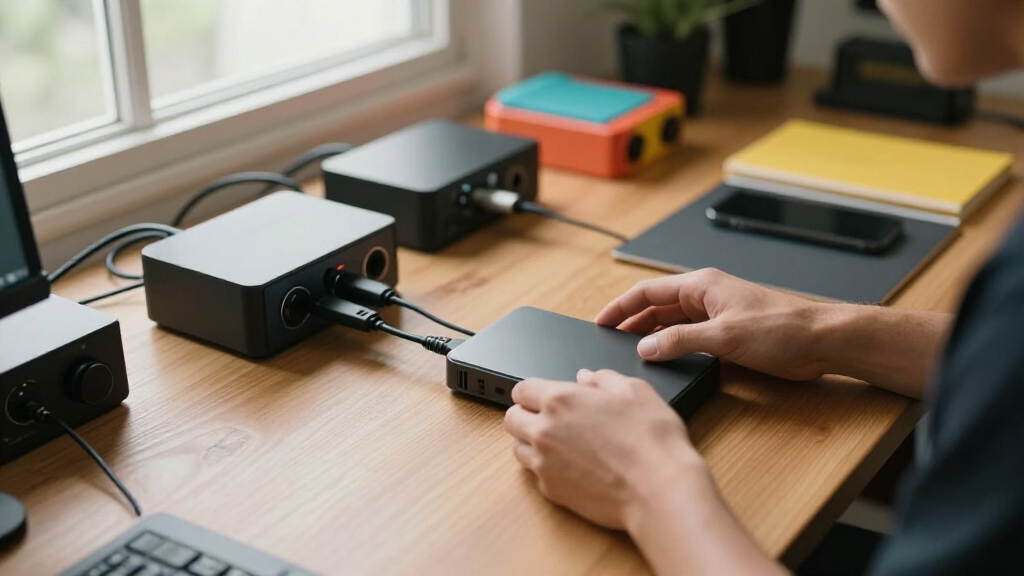
These products were evaluated based on performance benchmarks, build quality, ease of use, and feature sets like offline cloning and connectivity options. Price was also a key factor, with an eye toward offering options across different budgets. Compatibility with both 2.5″ and 3.5″ drives was essential, as was support for large storage capacities. The ranking reflects a balance between feature richness and value, prioritizing models that deliver reliable, fast, and user-friendly experiences for a range of users—from casual users to professional editors.| hard drive docking station | Interface |
|---|---|
| Sabrent USB 3.0 Dual Bay Hard | — |
| FIDECO Dual-Bay External Hard | USB 3.0, UASP |
| RSHTECH USB-C/USB 3.0 to SATA | — |
| SABRENT Dual-Bay USB-C Hard Dr | USB-C |
| WAVLINK USB 3.0/USB-C Dual-Bay | USB 3.0/USB-C |
| Inateck RGB SATA to USB 3.0 Du | USB 3.0 |
| UGREEN Dual-Bay Hard Drive Doc | — |
| Sabrent USB 3.0 to SATA Hard D | USB 3.0 Type-A |
Factors to Consider When Choosing Best Hard Drive Docking Stations
When selecting the best hard drive docking station, it’s important to consider several factors that impact usability, speed, and long-term value. Making the right choice depends on your specific needs, whether it’s frequent data transfer, drive cloning, or compatibility with different drive sizes. Understanding these factors helps prevent common mistakes like overspending on unnecessary features or choosing a model that doesn’t support your drives.
Connectivity Options
Look for models with USB 3.0 or USB-C interfaces. USB-C offers faster data transfer and better future compatibility, but may come at a premium. If you plan to work with multiple computers or newer devices, prioritizing USB-C makes sense. However, if you only need a basic setup, USB 3.0 models are often sufficient and more affordable.
Drive Compatibility and Capacity
Ensure the station supports both 2.5″ and 3.5″ drives if you use different sizes, especially for larger HDDs. Also, check the maximum supported storage capacity—some models handle drives up to 48TB or more, which is vital for professional users. Compatibility issues can cause frustration, so confirming drive support before buying is crucial.
Features Like Cloning and Cooling
Offline cloning capabilities can save time and reduce the need for additional hardware, making models with this feature ideal for frequent backups. Additionally, consider the cooling design—ventilated or aluminum enclosures help prevent overheating during prolonged use, which can improve drive longevity and performance.
Build Quality and Ease of Use
Durable construction, especially for frequent use, is worth paying for. Look for models with straightforward plug-and-play design, clear indicators, and easy drive insertion. A well-designed docking station reduces setup time and minimizes accidental damage to drives.
Price and Future-Proofing
Balance your budget with the features you need. More expensive models often include faster interfaces, larger capacity support, and additional features like cloning. Consider whether investing in a more capable unit now will save you money and hassle later, especially if you handle large volumes of data regularly.
Frequently Asked Questions
Can I use a hard drive docking station with both SSDs and HDDs?
Yes, most modern docking stations support both SSDs and HDDs, particularly models designed for 2.5″ and 3.5″ drives. Always check the product specifications to ensure compatibility with your drive types and sizes. Using an appropriate docking station prevents potential damage and ensures optimal performance for both drive types.
Is USB-C significantly better than USB 3.0 for docking stations?
USB-C generally offers higher data transfer speeds and more versatility, including power delivery and daisy-chaining capabilities. If your workflow involves large file transfers or multiple devices, USB-C can significantly reduce transfer times and increase convenience. However, for casual use or smaller data volumes, USB 3.0 still provides ample performance at a lower cost.
Do I need a docking station with offline cloning if I only back up occasionally?
Offline cloning features are most beneficial for users performing regular backups or bulk drive duplication. If your backup needs are sporadic, a basic docking station without cloning might suffice. Keep in mind that cloning features add convenience but also typically increase the price, so consider your backup frequency before choosing.
Will a docking station support drives larger than 4TB?
Most current models support drives larger than 4TB, often up to 48TB or more. However, always verify the maximum capacity supported by the specific docking station to avoid compatibility issues. Using drives beyond the supported limit could lead to detection problems or performance drops.
Is build quality more important than features like cloning or speed?
Build quality is fundamental for durability and consistent performance, especially if you handle drives frequently. While features like cloning and fast transfer speeds add convenience, they are secondary if the device is unreliable or poorly constructed. Prioritize a sturdy, well-designed model that offers the features you need without sacrificing quality.
Halloween Picks
halloween
As an affiliate, we earn on qualifying purchases.