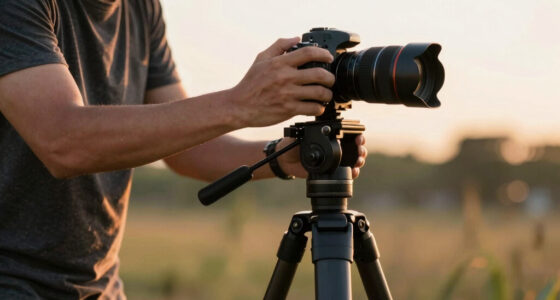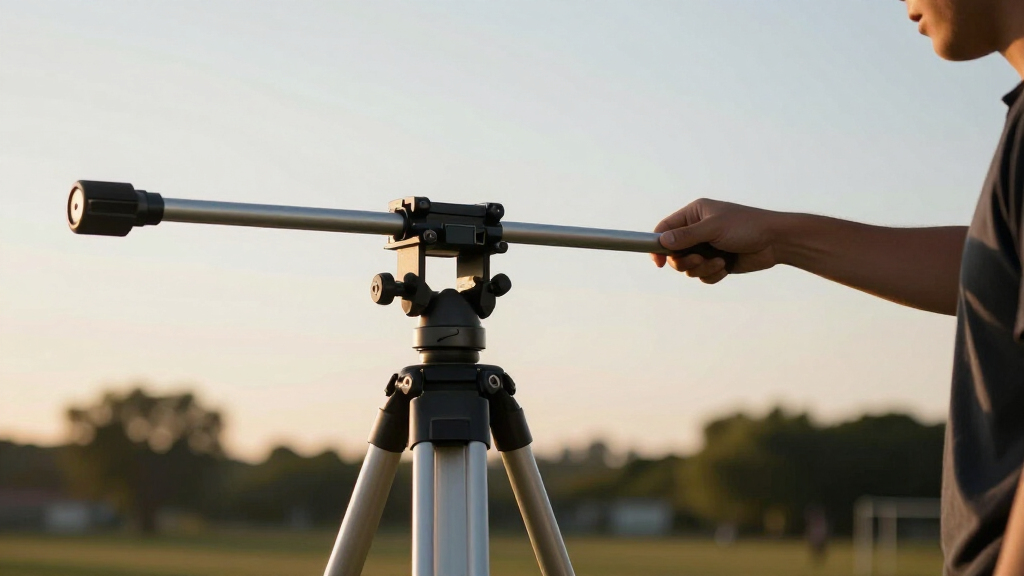

The best horizontal center column arms for tripods turn a standard support into a more flexible platform for overhead, macro, product, and flat-lay photography. I rank the Neewer 30-inch Horizontal Tripod Center Axis as the best overall because its 360-degree rotation, 180-degree adjustment, and practical reach create the strongest balance of control and versatility. The Koolehaoda 33-inch Extension Arm is my value pick for buyers who want extra working distance, while the AMBITFUL 42-inch Boom Arm suits heavier or wider setups that benefit from an included sandbag. The main tradeoffs are reach versus stability, compactness versus positioning freedom, and low purchase price versus the cost of adding clamps, heads, or counterweights. Continue reading for the full breakdown of which arm best matches each type of tripod and shooting setup.
Prime for Young Adults — start your free trial
Fast free delivery, streaming and member deals for eligible 18–24 year olds.
Try it freeAs an affiliate, we earn on qualifying purchases.
Complete the kit


Key Takeaways
- Neewer’s 30-inch arm ranks first because its rotational and vertical adjustment provide more positioning control than the simpler long-arm options without pushing reach to an unwieldy extreme.
- Koolehaoda offers the strongest value balance: its 33-inch span gives more working room than either K&F Concept model while avoiding the bulk of the 41- and 42-inch arms.
- AMBITFUL is the better heavy-duty package because the supplied sandbag directly addresses the counterbalance problem created by its 42-inch reach.
- The K&F Concept 16.1-inch arm is the beginner-friendly choice; its shorter lever places less strain on a tripod than the 30- to 42-inch alternatives, though it provides less clearance for wide overhead scenes.
- Longer is not automatically better: the 41-inch retractable arm favors maximum workspace, while the K&F Concept 32-inch detachable model favors modularity and easier packing.
| 41-inch Aluminum Tripod Extension Arm |  | Best for Heavy Camera Rigs | Material: High-density aluminum alloy | Length: 41 inches (104 cm) | Load Capacity: 33 lbs (15 kg) | VIEW LATEST PRICE | See Our Full Breakdown |
| Koolehaoda 33-inch Tripod Extension Arm |  | Best Accessory Bundle | Material: Aluminum alloy | Length Range: 16.5-33 inches | Load Capacity: 22 lbs | VIEW LATEST PRICE | See Our Full Breakdown |
| Neewer 30-inch Horizontal Tripod Center Axis |  | Best for Multi-Device Setups | Material: Aluminum alloy | Length: 30 inches (76 cm) | Load Capacity: 11 lbs (5 kg) | VIEW LATEST PRICE | See Our Full Breakdown |
| AMBITFUL 42-inch Heavy Duty Aluminum Tripod Boom Arm | 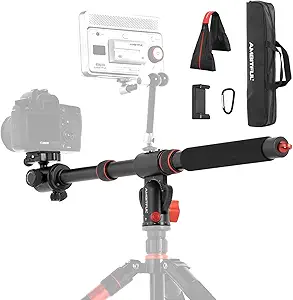 | Best Overall | Material: High-density aluminum alloy | Minimum Length: 18.9 inches (48 cm) | Maximum Length: 42 inches (106 cm) | VIEW LATEST PRICE | See Our Full Breakdown |
| K&F CONCEPT 32-inch Horizontal Tripod Extension Arm |  | Best Portable Pick | Material: Aluminum alloy | Length Range: 16.5-31.9 inches | Weight: 1.04 lbs | VIEW LATEST PRICE | See Our Full Breakdown |
| K&F Concept 16.1″ Horizontal Tripod Center Column Arm |  | Best Compact Pick | Material: Aluminum alloy | Arm length: 16.1 inches | Weight: 0.8 lbs | VIEW LATEST PRICE | See Our Full Breakdown |
| horizontal center column arms for tripod | Material | Load Capacity | Horizontal Rotation |
|---|---|---|---|
| 41-inch Aluminum Tripod Extens | High-density aluminum alloy | 33 lbs (15 kg) | 360° |
| Koolehaoda 33-inch Tripod Exte | Aluminum alloy | 22 lbs | 360° |
| Neewer 30-inch Horizontal Trip | Aluminum alloy | 11 lbs (5 kg) | 360° |
| AMBITFUL 42-inch Heavy Duty Al | High-density aluminum alloy | 22 lbs (10 kg) | — |
| K&F CONCEPT 32-inch Horizontal | Aluminum alloy | — | 360° |
| K&F Concept 16.1" Horizontal T | Aluminum alloy | 11 lbs | — |
More Details on Our Top Picks
41-inch Aluminum Tripod Extension Arm
I rank this arm first for buyers whose priority is high stated load capacity. Its 33-pound rating exceeds the 22-pound limits of the Koolehaoda and AMBITFUL arms, while the 41-inch reach provides ample clearance for overhead sets. The 32 mm aluminum column should also resist flex better than slimmer options when supporting a camera away from the tripod. Its 360-degree rotation and 180-degree vertical adjustment cover both flat lays and angled compositions. That strength comes with a less complete package: unlike the Koolehaoda, it includes no ball head, and users may find the instructions vague. I would also add a counterweight rather than treating the load rating as permission to extend a heavy rig carelessly. This is the heavy-equipment specialist, but not the easiest kit to assemble.
Pros:- Class-leading stated 33-pound load capacity
- Long 41-inch reach suits wide overhead compositions
- 32 mm aluminum column offers a sturdy support platform
- Horizontal and vertical rotation supports varied camera positions
Cons:- Ball head and tripod are not included
- A long, heavily loaded extension still requires careful counterbalancing
- Setup guidance may be unclear for inexperienced users
Best for: Studio photographers mounting heavier DSLR, lens, monitor, or lighting combinations over large tabletop sets
Not ideal for: Beginners seeking a ready-to-shoot package, since the tripod and ball head must be supplied separately
- Material:High-density aluminum alloy
- Length:41 inches (104 cm)
- Load Capacity:33 lbs (15 kg)
- Column Diameter:32 mm
- Horizontal Rotation:360°
- Vertical Rotation:180°
- Thread Sizes:1/4 inch and 3/8 inch
Our verdict“This is my pick for heavier camera setups when maximum reach and capacity matter more than an all-inclusive package.”
Koolehaoda 33-inch Tripod Extension Arm
The Koolehaoda earns its place by supplying more mounting hardware in the box than the other arms here. Its panorama tilt head, mini ball head, and adapters reduce the number of separate purchases needed for overhead or macro work. By comparison, the 41-inch arm and Neewer center axis omit a ball head entirely. The telescoping 16.5-to-33-inch range also lets me favor a shorter, steadier setup before extending it for a wider flat lay. Its 22-pound stated capacity sits below the 41-inch model’s 33-pound rating but doubles the capacity of the Neewer and K&F CONCEPT arms. The compromise is complexity: extra joints and accessories create more setup decisions, and a tripod remains necessary. I rank it as the most complete adaptable kit, rather than the simplest or longest-reaching choice.
Pros:- Includes a panorama tilt head, mini ball head, and mounting accessories
- Telescoping length adapts to compact and wide overhead setups
- 22-pound stated capacity accommodates many professional camera combinations
- Supports both horizontal rotation and vertical positioning
Cons:- More components make initial setup less intuitive
- Tripod is not included
- Shorter maximum reach than the 41-inch and AMBITFUL arms
Best for: Product photographers and content creators who want an adjustable arm plus useful heads and mounting accessories in one package
Not ideal for: Shooters who need rapid, repeatable deployment and prefer a minimal arm with fewer joints to configure
- Material:Aluminum alloy
- Length Range:16.5-33 inches
- Load Capacity:22 lbs
- Column Diameter:28 mm
- Horizontal Rotation:360°
- Vertical Adjustment:180°
- Mount Compatibility:1/4 inch and 3/8 inch threaded mounts
- Included Heads:Panorama tilt head and mini ball head
Our verdict“I recommend the Koolehaoda to buyers who value an adaptable, accessory-rich package over the fastest setup.”
Neewer 30-inch Horizontal Tripod Center Axis
I place the Neewer in the lineup for its emphasis on mounting several devices around one working position. A camera, monitor, or flash can be arranged for macro and overhead work, while 360-degree rotation and 180-degree vertical movement make repositioning less restrictive. Its 30-inch length is easier to manage than the 42-inch AMBITFUL in a tight studio, yet it offers more reach than the K&F Concept 16.1-inch arm. The tradeoff is a modest 11-pound load ceiling, only half the rating of the Koolehaoda, so every added accessory consumes part of the available capacity. The package is also sparse: buyers must add a tripod, ball head, camera mounts, and possibly adapters for 1/4-inch equipment. I see this as the modular rig-builder’s choice, not a complete beginner bundle.
Pros:- Designed to accommodate multiple devices in a configurable setup
- 30-inch reach balances working space with manageable size
- Full horizontal rotation and broad vertical adjustment
- Aluminum construction is lightweight and rust resistant
Cons:- 11-pound capacity limits heavier multi-device rigs
- Only the crossed arm is supplied
- The 3/8-inch mount may require adapters for some cameras and accessories
Best for: Macro and tabletop photographers building a modular station with a camera, monitor, flash, or other lightweight accessories
Not ideal for: Owners of heavy camera-and-lens combinations or buyers who do not already own compatible heads and adapters
- Material:Aluminum alloy
- Length:30 inches (76 cm)
- Load Capacity:11 lbs (5 kg)
- Horizontal Rotation:360°
- Vertical Adjustment:180°
- Mounting Screw:3/8 inch
- Included Components:Horizontal crossed arm only
Our verdict“The Neewer makes the most sense for photographers who want a flexible multi-device foundation and already own supporting hardware.”
AMBITFUL 42-inch Heavy Duty Aluminum Tripod Boom Arm
I give the AMBITFUL the overall spot because it combines the longest reach in this group, a solid 22-pound rating, and accessories that directly address transport and balance. Its 18.9-to-42-inch adjustment works for compact tabletop framing as well as large overhead scenes, while the included sandbag helps counter the leverage created at full extension. The carry bag also makes it more travel-friendly than the bare 41-inch arm. That competing model still wins for maximum stated capacity at 33 pounds, and the Koolehaoda provides more camera-mounting hardware. AMBITFUL includes no ball head, so it is not fully ready for precise camera positioning out of the box. Even so, I find its reach-to-capacity balance and included counterweight support the strongest match for mixed photography, video, and streaming work.
Pros:- 42-inch maximum length provides the widest reach in the reviewed group
- Adjustable design shortens to 18.9 inches for tighter setups
- Included sandbag helps manage balance at longer extensions
- Carry bag improves storage and transport
Cons:- Ball head is not included
- Long extension increases leverage and demands a stable tripod
- Lower stated capacity than the 33-pound 41-inch arm
Best for: Hybrid creators who alternate between overhead photography, video, and live streaming and need long adjustable reach
Not ideal for: Travelers prioritizing the smallest possible kit or buyers who expect a camera ball head in the package
- Material:High-density aluminum alloy
- Minimum Length:18.9 inches (48 cm)
- Maximum Length:42 inches (106 cm)
- Load Capacity:22 lbs (10 kg)
- Rotation:360°
- Mounting Compatibility:1/4 inch and 3/8 inch screws
- Included Balance Accessory:Sandbag
- Included Storage:Carry bag
Our verdict“I would choose the AMBITFUL for the best blend of long reach, useful capacity, and practical balancing accessories.”
K&F CONCEPT 32-inch Horizontal Tripod Extension Arm
At just 1.04 pounds, this K&F CONCEPT arm is my choice for photographers who need portable overhead support without giving up a useful working span. Its detachable two-section design extends from 16.5 to 31.9 inches, and the scale markings help recreate positions between shoots. Compared with the fixed 30-inch Neewer arm, it packs more flexibly and supports both 1/4-inch and 3/8-inch connections. The D-shaped tube is intended to resist unwanted rotation, but the 11-pound maximum load trails the Koolehaoda and AMBITFUL by half. Stability also becomes more sensitive once the arm extends beyond 15.7 inches, making careful balancing part of the setup. Assembly may feel involved for a new photographer. I rank it as the best travel-oriented compromise, while the shorter K&F Concept 16.1-inch arm remains easier to fit into very small bags.
Pros:- Light 1.04-pound construction is easy to carry
- Detachable two-section design offers adjustable reach and compact storage
- D-shaped aluminum tube helps resist rotation
- Scale markings support repeatable positioning
Cons:- 11-pound load limit is lower than the larger heavy-duty options
- Extended setups require careful balancing beyond 15.7 inches
- Multi-part assembly can be confusing for beginners
Best for: Traveling macro and product photographers carrying mirrorless or lightweight DSLR kits who want adjustable reach
Not ideal for: Photographers using heavy telephoto lenses or anyone unwilling to balance the rig carefully at longer extensions
- Material:Aluminum alloy
- Length Range:16.5-31.9 inches
- Weight:1.04 lbs
- Maximum Load:11 lbs
- Horizontal Rotation:360°
- Tilt Range:180°
- Mount Compatibility:3/8 inch and 1/4 inch screws
- Column Design:Two-section detachable D-shaped tube
Our verdict“I favor this K&F CONCEPT arm for lightweight travel kits that need more reach than a compact fixed column can provide.”
K&F Concept 16.1″ Horizontal Tripod Center Column Arm
I rank the K&F Concept 16.1-inch Center Column Arm as the compact choice for photographers who value portability over maximum reach. At just 0.8 pounds, it is easier to pack and balance than the K&F CONCEPT 32-inch Extension Arm or AMBITFUL 42-inch Boom Arm. Its 360-degree rotation and 180-degree tilt support overhead food shots, product work, and low-angle macro compositions without demanding much setup space. The aluminum construction and anti-twist design also make it a more camera-focused option than a basic extension pole. The compromise is limited working distance: 16.1 inches may leave tripod legs inside wider overhead frames. Its 11-pound load ceiling suits most mirrorless and DSLR combinations, but heavier lenses, large cages, and counterweighted rigs call for the sturdier AMBITFUL arm.
Pros:- Compact 16.1-inch length fits more easily into travel and location kits
- Low 0.8-pound weight places less strain on the supporting tripod
- 360-degree rotation and 180-degree tilt provide broad framing control
- Aluminum alloy body and anti-twist design improve rigidity during angled positioning
Cons:- Shorter reach than the 30-inch, 32-inch, 33-inch, and 42-inch alternatives in the lineup
- An 11-pound capacity rules out heavier cinema-style or extensively rigged camera setups
- Requires a tripod or stand with a compatible 3/8-inch screw connection
Best for: Traveling macro, food, and product photographers using mirrorless or moderate-weight DSLR kits in confined shooting spaces
Not ideal for: Studio photographers needing long overhead reach or supporting camera rigs above 11 pounds
- Material:Aluminum alloy
- Arm length:16.1 inches
- Weight:0.8 lbs
- Load capacity:11 lbs
- Tilt range:180 degrees
- Rotation range:360 degrees
- Tripod connection:3/8-inch screw compatible
- Camera compatibility:DSLR and mirrorless cameras
Our verdict“I recommend this arm for mobile photographers who want flexible overhead positioning without carrying a long, heavy boom.”
How We Picked
I ranked these arms by how well they solve the central problem of horizontal tripod work: placing a camera away from the tripod legs without making the whole setup difficult to balance. My highest weighting went to usable reach, angle control, stability at extension, and compatibility with common tripod and head connections. I treated maximum length as a benefit only when the design offered a practical way to manage the added leverage. That approach places the Neewer first for its broad adjustment range and the Koolehaoda next for its appealing mix of reach and simplicity.
I also compared build material, portability, modular construction, stated load support, counterweight provisions, and likely accessory needs. The AMBITFUL earns its premium role because its sandbag makes the long boom more complete, while the shorter K&F Concept model ranks highly for buyers who value manageable setup over maximum span. The retractable 41-inch arm and detachable 32-inch K&F Concept serve more specialized buyers, so their value depends heavily on whether reach or packability matters most. My order reflects all-around usefulness first, followed by value and focused strengths rather than raw dimensions alone.
| horizontal center column arms for tripod | Material |
|---|---|
| 41-inch Aluminum Tripod Extens | High-density aluminum alloy |
| Koolehaoda 33-inch Tripod Exte | Aluminum alloy |
| Neewer 30-inch Horizontal Trip | Aluminum alloy |
| AMBITFUL 42-inch Heavy Duty Al | High-density aluminum alloy |
| K&F CONCEPT 32-inch Horizontal | Aluminum alloy |
| K&F Concept 16.1" Horizontal T | Aluminum alloy |
Factors to Consider When Choosing Best Horizontal Center Column Arms For Tripods
A horizontal arm changes the forces acting on a tripod, so choosing one requires more than matching a desired length. I would start with the camera position the shot demands, then work backward through balance, tripod strength, mounting hardware, and transport needs. The sections below explain where buyers commonly overspend, where saving money can create extra accessory costs, and when a shorter arm is the smarter choice.
Choose Usable Reach, Not the Longest Number
A long arm creates more clearance between the camera and tripod legs, which helps with large flat lays, copy work, and straight-down views of broad surfaces. It also behaves like a longer lever, placing more twisting force on the center column and tripod shoulder. A 16-inch model may be enough for macro subjects or small products, while 30 to 33 inches gives a more flexible middle ground for general overhead work. Arms around 41 or 42 inches make sense when the frame must cover a table, artwork, or a larger production area. I would avoid paying for maximum reach if most subjects fit beside the tripod, because the extra length adds weight, vibration, and counterbalance demands. The most useful measurement is the distance from the support point to the camera mount at the position where the system still feels secure, not the arm’s full physical length.
Account for Leverage Before Trusting the Load Rating
A published load limit does not tell the whole story because camera weight and extension distance work together. A body and lens positioned close to the tripod create far less torque than the same kit placed at the end of an extended arm. I would add the weights of the camera, lens, head, plate, monitor, and any light mounted on the arm before judging capacity. Buyers using long lenses should also account for the lens shifting the center of gravity farther outward. Leaving a generous stability margin reduces sag and makes fine framing easier. If the tripod legs or center-column lock flex under modest pressure, a higher-rated arm will not fix the weakness below it.
Plan the Counterweight and Footprint Together
Counterweights help balance an offset camera, but they do not automatically prevent a tripod from tipping. The tripod legs need a wide, correctly oriented footprint, with one leg positioned beneath or toward the loaded side when the design allows it. A sandbag hanging low can lower the system’s center of gravity, while a weight attached to the rear of the arm can offset the camera more directly. These two methods solve related but different problems, and some setups benefit from both. I would avoid hanging a loose bag where it can swing, since movement can travel through the tripod during an exposure. For long arms, budget for controlled counterbalance from the start rather than treating it as an optional later purchase.
Check Every Connection in the Mounting Chain
Tripod accessories often mix 3/8-inch and 1/4-inch threads, removable studs, clamps, and proprietary center-column fittings. A compatible thread at the camera end does not prove that the arm can attach to the tripod without another adapter. I would map the full chain from tripod to arm, arm to head, and head to camera before buying. Check whether the arm needs a clamp, whether that clamp fits the tripod column diameter, and whether the chosen head can tilt downward without colliding with the arm. Adapters are inexpensive, but several small connections can introduce flex and loosen during repeated repositioning. A shorter, rigid mounting chain usually provides better resistance to vibration than a stack of reducers and extension pieces.
Match Movement and Modularity to the Shooting Routine
Rotation and tilt controls matter most when the camera moves repeatedly between overhead, angled, and side-on compositions. For a permanent copy stand, a simpler arm may offer enough adjustment with fewer joints that can loosen. Event detail photographers, food creators, and small studios gain more from fast multi-angle positioning because framing changes throughout a session. A detachable or telescoping column is easier to pack and can serve more than one role, though extra sections may introduce another locking point. I would pay more for modularity only when those configurations will be used regularly. Buyers who travel should prioritize collapsed length and total kit weight, while fixed-studio buyers can favor rigidity and longer reach.
Frequently Asked Questions
Will a horizontal center column arm fit any tripod?
No, these arms are not universally compatible even when they use familiar camera threads. I would check the tripod-side attachment method, center-column diameter, thread size, and whether a separate clamp is required. The camera end may accept a 3/8-inch head while the tripod end relies on a collar or platform that does not match every model. An adapter can solve a thread mismatch, but it cannot safely correct an undersized clamp or weak tripod shoulder. Confirm the entire mounting path rather than relying on the camera screw specification alone.
How much load capacity do I need for overhead photography?
I would total the weight of every item beyond the pivot, including the camera, lens, ball head, plate, cables, and monitor. Then I would select an arm and tripod with capacity left over rather than matching that total exactly. Horizontal extension creates greater leverage than a camera mounted directly above the tripod, so a stated rating may feel less reassuring at full reach. Heavy lenses and geared heads make this effect more pronounced because they add both mass and distance. A wide safety margin produces steadier framing and places less stress on locks and joints.
Do I need a counterweight for a horizontal tripod arm?
A counterweight is strongly advisable when the camera moves far beyond the tripod’s center, especially with 30- to 42-inch arms. Short extensions with lightweight cameras may remain stable without one, but the tripod footprint still needs careful placement. A rear-mounted weight balances the boom, while a low sandbag helps resist the whole tripod tipping; these approaches are not interchangeable in every setup. I would begin with the camera close to the pivot, add weight gradually, and extend the arm only after the system is balanced. Never let the counterweight exceed the tripod’s capacity or swing freely from the center column.
Is a longer arm always better for flat-lay photography?
No, additional length helps only when the scene needs more clearance than a shorter arm can provide. Longer arms increase torque, vibration, and setup space, which can make small products slower to frame. A compact arm is often easier for tabletop food, jewelry, or document work where the camera stays near the support point. Wide clothing layouts or large artwork may justify a 41- or 42-inch arm and a heavier counterbalance system. I would choose the shortest arm that clears the intended frame with room for modest repositioning.
Should I use a ball head or a geared head on the arm?
A ball head is lighter and faster, making it a sensible match for portable kits and compositions that change often. A geared head provides finer alignment for copy work, architecture details, focus stacking, and flat lays where level framing matters. Its added weight counts against the arm’s capacity and increases leverage, particularly at full extension. Some articulated arms already provide broad angle adjustment, so adding a heavy head may duplicate movement without improving the setup. I would choose a compact ball head for speed and a geared head for repeatable precision, provided the tripod and arm have enough capacity.
Conclusion
For most buyers, I recommend the Neewer 30-inch Horizontal Tripod Center Axis as the best overall choice because it combines useful reach with 360-degree rotation and 180-degree vertical adjustment. The Koolehaoda 33-inch Extension Arm is my best-value pick for photographers who want generous working distance without moving into the longest, heaviest class. Buyers building a more substantial studio setup should choose the AMBITFUL 42-inch Boom Arm as the premium option, especially when its included sandbag fills an otherwise separate counterweight need. For beginners and compact tabletop work, the K&F Concept 16.1-inch arm is easier to balance and carries a stated load of up to 11 pounds, though its short reach limits wide scenes. The K&F Concept 32-inch detachable arm makes more sense for modular kits and frequent transport, while the retractable 41-inch Aluminum Extension Arm is the focused choice for buyers who place maximum horizontal workspace above portability. My final choice would follow the subject size: short for control, mid-length for everyday versatility, and 41 to 42 inches only when the composition genuinely needs that span.
NFL season / tailgating Picks
team gear
As an affiliate, we earn on qualifying purchases.