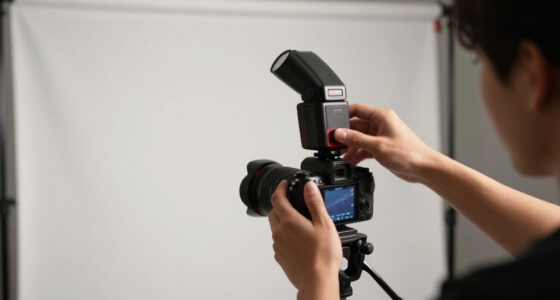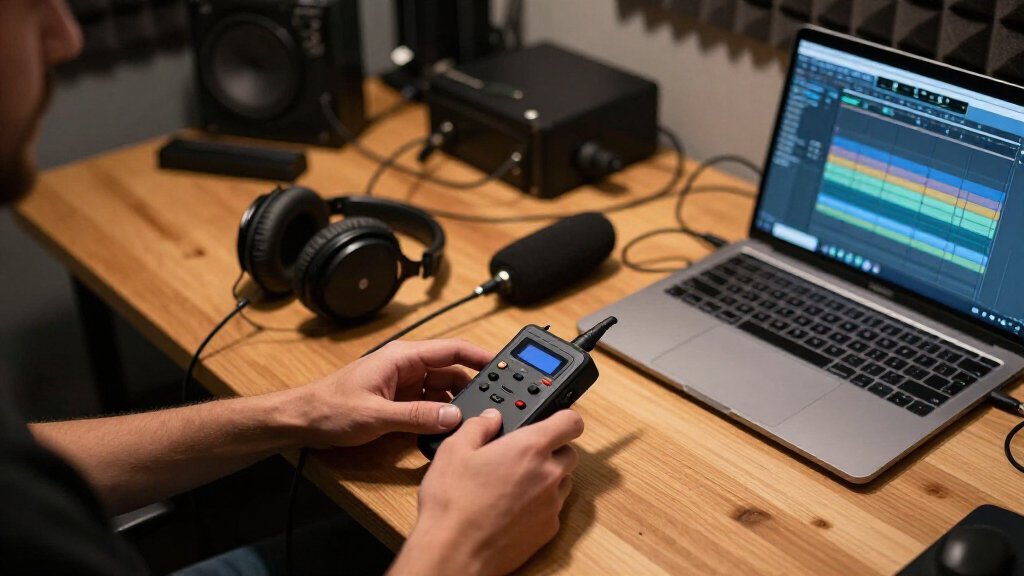

The best portable audio recorder for most creators is the Zoom H1 XLR because its 32-bit float recording and locking XLR/TRS inputs support everything from interviews to small video productions. I rank the Zoom H4 Essential as the premium choice for creators who need four-track recording, while the Zoom H1 Essential offers stronger value for simple stereo capture. The main choice is between creator-focused models with flexible inputs and inexpensive voice recorders built mainly for speech. Higher storage capacities and noise-reduction labels can sound appealing, but microphone quality, input options, and workflow usually matter more for publishable audio. Continue reading for the full breakdown of which recorder fits each creator, budget, and recording setup.
Complete the kit


Key Takeaways
- The Zoom H1 XLR ranks first because it combines 32-bit float recording with locking XLR/TRS inputs, giving creators more room to change microphones and production styles.
- The Zoom H4 Essential earns the premium position through four-track flexibility, but its added capability is unnecessary for creators who only record one person or a stereo ambience.
- The Zoom H1 Essential offers the strongest creator-focused value; most cheaper models prioritize lectures, meetings, and voice notes rather than polished podcast or video sound.
- Storage claims ranging from 8GB to 160GB create large headline differences, yet storage alone does not improve microphone detail, dynamic range, or editing flexibility.
- Voice activation, magnetic mounting, and long battery life serve specific workflows, but automatic recording can miss opening syllables and aggressive noise processing can make voices sound less natural.
| Zoom H1 XLR 2-Channel Recorder |  | Best Compact XLR Recorder | Recording Resolution: 32-bit / 96kHz | Recording Channels: 2-channel stereo | Main Inputs: 2 locking XLR/TRS combo inputs | VIEW LATEST PRICE | See Our Full Breakdown |
| 72GB Digital Voice Recorder with USB-C |  | Best for Beginners | Storage Capacity: 72GB | Microphone: 360° omnidirectional | Noise Processing: DSP noise reduction | VIEW LATEST PRICE | See Our Full Breakdown |
| 76GB Voice Activated Recorder with DSP 6.0 |  | Best for Lecture Capture | Storage Capacity: 76GB | Maximum Recording Capacity: Up to 10,860 hours | Noise Reduction: DSP 6.0 | VIEW LATEST PRICE | See Our Full Breakdown |
| 16GB Digital Voice Recorder with Playback |  | Best Budget Pick | Storage Capacity: 16GB | Recording Time: Over 30 hours | Playback Time: Up to 7 hours | VIEW LATEST PRICE | See Our Full Breakdown |
| Zoom H4 Essential Handheld Recorder |  | Best Overall | Number of Tracks: 4 | Main Inputs: 2 XLR/TRS inputs | Built-in Microphones: Stereo | VIEW LATEST PRICE | See Our Full Breakdown |
| Tonfarb 64GB Digital Voice Recorder |  | Best Budget Feature Set | Storage Capacity: 64GB | Battery Life: Up to 48 hours | Recording Formats: WAV, MP3 | VIEW LATEST PRICE | See Our Full Breakdown |
| Nanezan 128GB Magnetic Voice Activated Recorder |  | Best for Discreet Placement | Storage Capacity: 128GB | Maximum Recording Time: Up to 1600 hours | Battery Life: Up to 70 hours | VIEW LATEST PRICE | See Our Full Breakdown |
| Tonfarb 136GB Digital Voice Recorder |  | Best for Long-Form Archives | Storage Capacity: 136GB total | Internal Storage: 8GB | Expansion: 128GB TF card | VIEW LATEST PRICE | See Our Full Breakdown |
| 160GB Digital Voice Recorder with HD Stereo Audio |  | Best High-Capacity Stereo Pick | Storage Capacity: 160GB | Battery Life: 68+ hours | Recording Quality: Up to 1536Kbps HD stereo | VIEW LATEST PRICE | See Our Full Breakdown |
| Zoom H1 Essential Recorder |  | Best Overall for Creators | Track Count: 2 tracks | Bit Depth: 32-bit float | Microphone Type: X/Y stereo microphones | VIEW LATEST PRICE | See Our Full Breakdown |
| 72GB Magnetic Voice Activated Recording Device – Digital Voice Recorder with AI Noise Reduction |  | Best for Long, Unattended Recording | Storage Capacity: 72GB | Battery Capacity: 500mAh | Recording Time: Up to 70 hours per charge | VIEW LATEST PRICE | See Our Full Breakdown |
| 64GB Digital Voice Recorder, 4-in-1 Noise Reduction Hi-Fi Sound, 3072Kbps Audio Activated for Lectures and Meetings |  | Best High-Bitrate Pocket Pick | Storage Capacity: 64GB | Maximum Audio Bitrate: 3072Kbps | Noise Reduction: DSP 3.0 | VIEW LATEST PRICE | See Our Full Breakdown |
| Digital Voice Recorder with 8GB Storage, Voice Activation, and MP3 Player |  | Best for Playback and Transcript Review | Storage Capacity: 8GB | Battery: Rechargeable 3.6V 300mAh lithium battery | Recording Time: Up to 128 hours at 192 kbps | VIEW LATEST PRICE | See Our Full Breakdown |
| portable audio recorders for creator | Storage Capacity |
|---|---|
| Zoom H1 XLR 2-Channel Recorder | — |
| 72GB Digital Voice Recorder wi | 72GB |
| 76GB Voice Activated Recorder | 76GB |
| 16GB Digital Voice Recorder wi | 16GB |
| Zoom H4 Essential Handheld Rec | — |
| Tonfarb 64GB Digital Voice Rec | 64GB |
| Nanezan 128GB Magnetic Voice A | 128GB |
| Tonfarb 136GB Digital Voice Re | 136GB total |
| 160GB Digital Voice Recorder w | 160GB |
| Zoom H1 Essential Recorder | — |
| 72GB Magnetic Voice Activated | 72GB |
| 64GB Digital Voice Recorder | 64GB |
| Digital Voice Recorder with 8G | 8GB |
More Details on Our Top Picks
Zoom H1 XLR 2-Channel Recorder
I rank the Zoom H1 XLR as the strongest compact choice for creators who already own microphones and want a simple two-source field setup. Its 32-bit/96kHz recording provides extra headroom when interview volume changes unexpectedly, while locking XLR/TRS inputs reduce the risk of disconnected cables. Compared with the Zoom H4 Essential, it is more focused and easier to pack, but the H4’s four-track layout is better for layered music or larger podcast setups. The H1 XLR also lacks built-in stereo microphones, making it less ready for spontaneous ambient recording. Its OLED waveform display and 1TB SDXC support suit long shoots, yet beginners may find the input options less approachable than the 72GB Digital Voice Recorder. I place it below the H4 because two-channel recording limits expansion, not because its audio capture is weaker.
Pros:- 32-bit/96kHz capture provides generous headroom for unpredictable source levels
- Two locking XLR/TRS inputs support professional microphones and instruments
- OLED waveform display makes recording activity easy to monitor
- SDXC support up to 1TB accommodates long production days
Cons:- Two-channel ceiling restricts multi-person and layered recording setups
- No built-in stereo microphones for immediate handheld capture
- Professional connections and monitoring controls may overwhelm beginners
Best for: Filmmakers, mobile podcasters, and interview creators who carry two XLR microphones and want compact 32-bit recording
Not ideal for: Creators who need built-in microphones or more than two simultaneous recording channels
- Recording Resolution:32-bit / 96kHz
- Recording Channels:2-channel stereo
- Main Inputs:2 locking XLR/TRS combo inputs
- Auxiliary Input:3.5mm stereo mic/line input
- Monitoring Output:3.5mm headphone output
- Display:OLED waveform display
- Storage Support:SDXC cards up to 1TB
Our verdict“I recommend the Zoom H1 XLR to creators who need two professional inputs in a travel-friendly recorder and can accept its limited channel count.”
72GB Digital Voice Recorder with USB-C
I give the 72GB Digital Voice Recorder the beginner role because one-touch capture, voice activation, and timestamped files remove much of the setup friction around interviews and spoken notes. The 360-degree microphone is better suited to a meeting table than the directional, cable-based workflow of the Zoom H1 XLR. USB-C transfer also makes routine file handling less awkward than the older USB connection on the 16GB Digital Voice Recorder. This is still a voice-first device, not a production recorder: it offers no XLR inputs, multitrack control, or stated high-resolution format for polished music and film work. The claimed 35-hour battery and 72GB capacity support long sessions, though real runtime can change with recording mode. I rank it above the other basic dictaphones for ease and storage balance, while placing it behind both Zoom models for creator-grade control.
Pros:- One-touch operation minimizes the chance of missing an interview or idea
- 72GB capacity provides ample room for spoken-word projects
- USB-C offers convenient transfers to compatible devices
- Voice activation and timestamped files simplify long-session organization
Cons:- No XLR or instrument inputs for production microphones
- Audio resolution and supported recording formats are not specified
- Omnidirectional capture may collect unwanted room sound in noisy locations
Best for: New podcasters, student creators, and solo interviewers who prioritize quick spoken-word capture over production controls
Not ideal for: Musicians and filmmakers who need external microphone inputs, multitrack recording, or a stated high-resolution audio format
- Storage Capacity:72GB
- Microphone:360° omnidirectional
- Noise Processing:DSP noise reduction
- Battery Life:Up to 35 hours
- File Transfer:USB-C
- Recording Control:One-touch recording
- Voice Activation:Supported
- File Organization:Timestamped recordings
Our verdict“I would choose this recorder for straightforward interviews and notes, but not as the main audio system for polished creator productions.”
76GB Voice Activated Recorder with DSP 6.0
I assign the 76GB Voice Activated Recorder to lecture capture because its quoted 10,860-hour capacity, compact body, and OTG transfer support favor creators who collect large volumes of spoken research. Compared with the 72GB Digital Voice Recorder, it offers slightly more storage and direct phone or tablet transfer, which can shorten the path from recording to transcription or editing. DSP 6.0 noise reduction may help speech remain intelligible in busy rooms, but it cannot replace close microphone placement. The default WAV format preserves a broadly editable source file, though users wanting MP3 must connect the recorder to a computer for conversion. It also lacks the XLR inputs and channel control of the Zoom H1 XLR, so I would not choose it for narrative film or music. Its place here rests on high-volume spoken capture, not production versatility.
Pros:- 76GB capacity supports a very large spoken-word archive
- OTG connectivity enables transfer to compatible phones and tablets
- DSP 6.0 noise reduction targets speech clarity in active rooms
- Compact design suits frequent lecture and meeting capture
Cons:- MP3 conversion requires a computer
- No stated external microphone or professional input support
- Extremely long recording-hour claims likely depend on compressed quality settings
Best for: Education creators, researchers, and journalists who archive long lectures or meetings and transfer recordings to mobile devices
Not ideal for: Creators who need immediate MP3 delivery, external production microphones, or multitrack audio
- Storage Capacity:76GB
- Maximum Recording Capacity:Up to 10,860 hours
- Noise Reduction:DSP 6.0
- Connectivity:OTG
- Default Recording Format:WAV
- Voice Activation:Supported
- MP3 Conversion:Requires computer connection
Our verdict“I recommend this model for creators building large spoken-word archives who value mobile transfer more than production-level inputs.”
16GB Digital Voice Recorder with Playback
I select the 16GB Digital Voice Recorder as the budget pick for creators who need a dedicated capture button without paying for professional inputs. Its one-button operation is more approachable than the Zoom H1 XLR, and onboard playback lets a student podcaster or interviewer check a file without another device. Compared with the 72GB Digital Voice Recorder, however, its 16GB capacity and older USB connection make it a weaker choice for heavy recording schedules. More than 30 hours of recording time is useful for occasional assignments, but playback is rated at only seven hours. Voice activation and noise reduction add convenience for lectures, while the music-player and storage functions give the device a second use. I keep it below the larger dictaphones because its limited capacity and basic feature set create more file-management work for frequent creators. Its appeal is low-complexity capture.
Pros:- One-button recording supports fast, uncomplicated capture
- Onboard playback allows immediate file checks
- Voice activation can reduce silence during lectures and meetings
- Also functions as a music player and portable data store
Cons:- 16GB storage is restrictive for frequent or higher-quality recording
- Basic USB connectivity is less convenient than USB-C
- Seven-hour playback rating limits extended listening sessions
Best for: Budget-conscious students and occasional interview creators who want simple recording with onboard playback
Not ideal for: Frequent creators who generate large audio libraries or need USB-C, wireless transfer, or external microphones
- Storage Capacity:16GB
- Recording Time:Over 30 hours
- Playback Time:Up to 7 hours
- Microphone:Sensitive microphone
- Noise Reduction:Supported
- Connectivity:USB
- Voice Activation:Supported
- Additional Functions:Music player and data storage
Our verdict“I would buy this model for occasional low-cost voice capture, while regular creators should pay more for greater storage and connectivity.”
Zoom H4 Essential Handheld Recorder
I rank the Zoom H4 Essential first because its four-track architecture, built-in stereo microphones, and dual XLR/TRS inputs cover the widest range of creator work. A musician can capture room sound alongside two instruments, while a podcaster or filmmaker can connect external microphones without giving up immediate handheld recording. Compared with the Zoom H1 XLR, the H4 is more flexible without extra microphones and provides two additional tracks, making it better for projects that may grow. USB-C recording and streaming also extend its value beyond field capture. That flexibility brings a steeper learning curve than the one-touch 72GB Digital Voice Recorder, and the handheld design is less suited to a fixed studio installation. SD-card storage also adds a required purchase if none is included. Even with those drawbacks, I place it first for its strongest balance of portability and expansion.
Pros:- Four-track recording accommodates more complex creator setups
- Built-in stereo microphones allow immediate ambient and performance capture
- Two XLR/TRS inputs support external microphones and instruments
- USB-C enables computer recording and streaming workflows
Cons:- Broader controls can be difficult for first-time recorder users
- Handheld format is less convenient for permanent studio integration
- Recording requires separate SD-card storage
Best for: Musicians, podcasters, and filmmakers who need built-in microphones, external inputs, and four-track recording in one portable device
Not ideal for: Creators seeking one-button voice-note capture or a recorder intended to remain permanently installed in a studio rack
- Number of Tracks:4
- Main Inputs:2 XLR/TRS inputs
- Built-in Microphones:Stereo
- Computer Connectivity:USB-C
- USB Functions:Recording and streaming
- Storage:SD card
- Recorder Format:Handheld
Our verdict“I consider the Zoom H4 Essential the best all-around choice for creators who need portable recording now and room for more ambitious setups later.”
Tonfarb 64GB Digital Voice Recorder
I place the Tonfarb 64GB Digital Voice Recorder here as the affordable utility pick for creators recording interviews, research calls, or spoken notes. Its one-click control and voice activation reduce setup friction, while scheduled recording, file segmentation, and A-B repeat offer more flexibility than a basic dictaphone. Compared with the Nanezan 128GB recorder, Tonfarb provides a screen and broader playback controls, but it is larger and has less storage. It also trails the Zoom H1 Essential for stereo ambience and music capture. The 48-hour battery suits long reporting trips, though environmental noise will still influence clarity despite the reduction system. I would choose it for function and affordability, not polished production audio; the busy feature set also demands more menu learning than simpler one-switch models.
Pros:- 64GB capacity supports lengthy interviews and lecture archives
- One-click and voice-activated recording simplify quick capture
- Scheduled recording, A-B repeat, and file segmentation add practical flexibility
- Up to 48 hours of battery life suits extended assignments
Cons:- Larger body is less discreet and pocket-friendly than magnetic mini recorders
- Numerous functions create a steeper learning curve
- Noise reduction cannot compensate for every difficult recording environment
Best for: Budget-conscious journalists, students, and video creators who need long spoken-word recordings plus on-device playback controls
Not ideal for: Musicians and sound designers who need detailed stereo imaging or cleaner production-ready audio
- Storage Capacity:64GB
- Battery Life:Up to 48 hours
- Recording Formats:WAV, MP3
- Recording Control:One-click and voice-activated
- Display:1.44-inch screen
- Noise Processing:Noise reduction
- Security:Password protection
- Playback Tools:A-B repeat and MP3 playback
Our verdict“I recommend this Tonfarb model to spoken-word creators who value useful controls and endurance more than refined stereo sound.”
Nanezan 128GB Magnetic Voice Activated Recorder
The Nanezan 128GB Magnetic Recorder earns its place through positioning freedom rather than extensive menus. Its magnetic zinc-alloy body can attach to a suitable metal surface, helping interviewers or documentary creators place the recorder closer to a speaker without occupying table space. At one ounce, it is far lighter than the 160GB stereo recorder, and its 70-hour battery exceeds the Tonfarb 64GB model’s 48-hour rating. The tradeoff is limited feedback: unlike the screened Tonfarb recorders, its one-touch design gives creators fewer visible controls and less information about recording settings. Published product data also says little about microphone configuration or recording resolution, making sound-quality expectations harder to judge. I rank it as a placement specialist for speech, with 1600 hours of stated capacity offering ample room for long projects.
Pros:- Magnetic body supports flexible placement on compatible metal surfaces
- One-ounce weight makes it highly portable
- 70-hour battery rating exceeds several larger recorders
- 128GB capacity provides substantial room for spoken-word archives
Cons:- Limited published detail about recording resolution and microphone performance
- Minimal controls provide less recording feedback than models with screens
- Magnetic mounting only works on suitable metal surfaces
Best for: Documentary researchers and interviewers who need a tiny recorder that can mount to metal near a speaker
Not ideal for: Music creators who need confirmed recording resolution, stereo microphone details, or visible level monitoring
- Storage Capacity:128GB
- Maximum Recording Time:Up to 1600 hours
- Battery Life:Up to 70 hours
- Weight:1 oz
- Material:Zinc alloy
- Mounting:Magnetic attachment
- Recording Control:One-touch operation
- Connectivity:USB-C
Our verdict“I would pick the Nanezan for unobtrusive, long-duration speech capture when placement and portability matter more than production controls.”
Tonfarb 136GB Digital Voice Recorder
I rank the Tonfarb 136GB Digital Voice Recorder above the 64GB Tonfarb for creators who routinely build large interview or lecture archives. Its dual noise-reduction microphones and PCM recording promise a stronger spoken-word setup, while up to 68 hours of battery life gives it more field endurance than the Zoom H1 Essential. Storage is less straightforward than the headline suggests: only 8GB is built in, with the remaining capacity supplied by a 128GB TF card. That dependence creates another item to manage and potentially purchase. Compared with the generic 160GB stereo recorder, this model is lighter at 97 grams but has a lower maximum capacity. I see its USB-C transfer and one-touch capture as useful workflow advantages, although the MP3/WAV-only format support offers less production flexibility than a creator-focused Zoom recorder.
Pros:- Dual noise-reduction microphones are geared toward clearer speech capture
- Up to 68 hours of battery life supports multi-day recording work
- Expandable 136GB configuration accommodates very large archives
- USB-C transfer and one-touch recording streamline routine use
Cons:- Full 136GB capacity depends on a 128GB TF card
- Recording formats are limited to MP3 and WAV
- Battery duration can vary with recording settings and usage
Best for: Researchers, educators, and interview-led creators who need long battery life and a large searchable recording archive
Not ideal for: Creators who want all advertised storage built in or need broader professional audio-format and input options
- Storage Capacity:136GB total
- Internal Storage:8GB
- Expansion:128GB TF card
- Maximum Recording Time:Up to 9000 hours
- Battery:1100mAh rechargeable lithium
- Battery Life:Up to 68 hours
- Microphones:Dual noise-reduction microphones
- Connectivity:USB-C
- Weight:97 grams
Our verdict“I favor this Tonfarb for high-volume spoken-word work where storage and runtime carry more weight than advanced production connectivity.”
160GB Digital Voice Recorder with HD Stereo Audio
The 160GB Digital Voice Recorder targets creators who want more storage and stronger stated audio specifications in one portable unit. Its dual microphones record stereo at up to 1536Kbps, giving it a better basis for performances and room ambience than the speech-focused Nanezan recorder. It also combines 68-plus-hour battery life with voice activation, scheduling, and password protection, so it can cover long assignments without frequent charging. Yet I place it below the Zoom H1 Essential for audio-first creators because Zoom’s 32-bit float workflow offers more protection against level mistakes. Full capacity also requires a microSD card, and the feature-heavy interface may slow beginners. The zinc-alloy and acrylic construction adds durability but makes this model heavier than smaller recorders. I see the large stereo archive capacity as its defining advantage, not simplicity.
Pros:- 1536Kbps stereo recording is better suited to ambience and performances than mono-style speech capture
- 160GB maximum capacity accommodates extensive project archives
- More than 68 hours of stated battery life supports long assignments
- Password protection and scheduled recording broaden its field utility
Cons:- Full storage capacity requires a microSD card
- Multiple modes may overwhelm first-time recorder users
- Heavier construction reduces pocket comfort compared with mini recorders
Best for: Event documentarians and prolific content creators who need long stereo recordings stored on one portable device
Not ideal for: Beginners seeking simple controls or audio professionals who prioritize 32-bit float capture and established production workflows
- Storage Capacity:160GB
- Battery Life:68+ hours
- Recording Quality:Up to 1536Kbps HD stereo
- Microphones:Dual microphones
- Supported Formats:WAV, MP3
- Construction:Zinc alloy and acrylic
- Recording Modes:Voice-activated and scheduled recording
- Security:Password protection
Our verdict“I recommend this model when maximum stereo storage and long runtime matter more than beginner simplicity or 32-bit float recording.”
Zoom H1 Essential Recorder
I give the Zoom H1 Essential the strongest creator-focused role because its 32-bit float recording reduces the risk of a take being spoiled by levels set too high or low. The X/Y microphones capture a coherent stereo image, making this recorder better suited to music, ambience, podcasts, and video sound than the Tonfarb 64GB model. Its USB microphone mode also extends its value to streaming and calls rather than limiting it to field recording. The compromises are clear: its 10-hour battery rating falls far short of the 68-hour Tonfarb 136GB, and two-track recording cannot match the input flexibility of the Zoom H4 Essential or H1 XLR. Beginners may also need time to learn an audio-oriented workflow. For creators prioritizing recording quality over archive capacity, I find its 32-bit float safety margin the most persuasive advantage here.
Pros:- 32-bit float capture provides greater recovery room for unpredictable recording levels
- X/Y microphones create focused stereo recordings for music and ambience
- USB microphone mode supports streaming, calls, and desktop production
- Compact two-track design suits mobile creator kits
Cons:- 10-hour battery life is much shorter than the high-capacity voice recorders
- Two-track design cannot handle multi-microphone productions
- Audio-focused operation may require more learning than one-touch recorders
Best for: Musicians, podcasters, filmmakers, and video creators who want portable stereo capture with protection against level-setting mistakes
Not ideal for: Creators recording unattended sessions for days or productions requiring several microphones and four or more tracks
- Track Count:2 tracks
- Bit Depth:32-bit float
- Microphone Type:X/Y stereo microphones
- Battery Life:Up to 10 hours
- Connectivity:USB-C
- Computer Mode:USB microphone
- Recording Configuration:Stereo
Our verdict“I would choose the Zoom H1 Essential for serious portable content creation when dependable stereo capture matters more than extreme battery life or multiple inputs.”
72GB Magnetic Voice Activated Recording Device – Digital Voice Recorder with AI Noise Reduction
I give the 72GB Magnetic Voice Activated Recording Device this role because its 70-hour battery, voice activation, and timer mode suit creators who need set-and-forget speech capture. The magnetic body can sit discreetly on a metal surface during interviews, production meetings, or behind-the-scenes sessions. Compared with the 128GB Nanezan Magnetic Recorder, it offers the same stated 70-hour battery life but less storage, making it harder to justify for buyers who archive everything. Its 45dB activation threshold may also miss quiet openings or softly spoken subjects. The bigger creative limitation is the lack of a screen: I cannot recommend it when visible levels, file confirmation, or real-time monitoring matter. It makes sense as a lightweight secondary recorder, but not as the primary source for polished podcasts or video sound.
Pros:- 70-hour recording time supports long interviews and multi-day production sessions
- 72GB storage reduces the need for frequent file transfers
- Magnetic one-ounce body can attach discreetly to suitable metal surfaces
- AI noise reduction, voice activation, and timer modes support automated speech capture
Cons:- No screen for checking levels, settings, battery status, or active files
- Fixed 45dB activation threshold may fail to capture quiet speech
- Advanced recording modes require manual setup before a session
Best for: Interviewers, documentary creators, and production teams needing a tiny magnetic recorder for long, unattended speech capture
Not ideal for: Podcasters and filmmakers who need visible audio meters, live monitoring, or confirmation that the correct file is recording
- Storage Capacity:72GB
- Battery Capacity:500mAh
- Recording Time:Up to 70 hours per charge
- Maximum Recording Capacity:Up to 9,800 hours
- Thickness:0.4 inches
- Weight:1 ounce
- Connectivity:USB Type-C
- Recording Modes:Voice-activated and timer recording
Our verdict“I would choose this as a discreet backup for lengthy spoken-word sessions, not as a creator’s main monitored recorder.”
64GB Digital Voice Recorder, 4-in-1 Noise Reduction Hi-Fi Sound, 3072Kbps Audio Activated for Lectures and Meetings
I rank the 64GB Digital Voice Recorder as the high-bitrate pocket pick because its stated 3072Kbps recording and seven adjustable DSP levels give creators more control over speech clarity in changing environments. Its metal body and wristband, lanyard, and magnetic mounting choices also make it more adaptable than the Digital Voice Recorder with 8GB Storage. That model offers stronger playback tools and a stated 128-hour recording time, while this recorder provides eight times the storage and support for MP3, WAV, APE, FLAC, and WMA. The catch is missing battery-life information, which makes production-day planning uncertain. Interface details are equally thin, and some controls depend on wired headphones. I see it as a flexible lecture, meeting, or reference-audio recorder rather than a confidently documented choice for deadline-sensitive shoots.
Pros:- Stated 3072Kbps recording provides a high-bitrate option for detailed speech capture
- DSP 3.0 noise reduction offers seven adjustable levels for different surroundings
- 64GB storage accommodates more recordings than basic 8GB models
- Metal construction and wristband, lanyard, and magnetic options suit mobile use
Cons:- Unspecified battery type and runtime make session planning difficult
- Limited interface information leaves recording status and navigation unclear
- Some control functions require wired headphones
Best for: Mobile journalists, students, and solo creators who prioritize high-bitrate speech recording, adjustable noise reduction, and flexible carrying options
Not ideal for: Creators planning long shoots away from power, since the supplied data does not establish battery capacity or recording duration
- Storage Capacity:64GB
- Maximum Audio Bitrate:3072Kbps
- Noise Reduction:DSP 3.0
- Noise Reduction Levels:Adjustable from 1 to 7
- Supported Formats:MP3, WAV, APE, FLAC, WMA
- Construction:Metal
- Recording Mode:Voice-activated
- Carrying Options:Wristband, lanyard, and magnetic attachment
Our verdict“I favor this for creators seeking portable, adjustable high-bitrate capture who can accept uncertainty around battery life and controls.”
Digital Voice Recorder with 8GB Storage, Voice Activation, and MP3 Player
I chose the Digital Voice Recorder with 8GB Storage for creators who spend as much time reviewing speech as capturing it. A-B repeat, variable playback speed, file protection, and MP3 playback make interview review and transcription easier than on the screenless 72GB Magnetic Voice Activated Recording Device. Its stated 128-hour recording time at 192 kbps is generous, but the eight-hour playback limit matters when reviewing several long sessions away from a charger. Storage is the sharper compromise: 8GB and a 199-file ceiling can become restrictive for journalists, researchers, or video teams recording daily. The basic three-button layout may also take practice because several functions share limited controls. I would pick it for organized spoken-word work and language content, while creators building large archives should favor one of the 64GB or 72GB alternatives.
Pros:- A-B repeat and variable playback speed support transcription and detailed dialogue review
- Up to 128 hours of stated recording time at 192 kbps suits extended spoken-word sessions
- High-sensitivity microphone includes noise reduction and voice activation
- File protection and MP3-player functionality add useful review and organization tools
Cons:- 8GB storage is small beside the 64GB and 72GB alternatives
- Maximum capacity of 199 files can hinder frequent recording workflows
- Playback lasts only up to eight hours, and the three-button interface may require practice
Best for: Interview-based creators, transcription-focused journalists, and language educators who need repeat playback and adjustable listening speed
Not ideal for: High-volume production teams that retain hundreds of recordings, because 8GB storage and the 199-file limit restrict larger archives
- Storage Capacity:8GB
- Battery:Rechargeable 3.6V 300mAh lithium battery
- Recording Time:Up to 128 hours at 192 kbps
- Playback Time:Up to 8 hours
- Supported Formats:MP3 and WAV
- File Capacity:Up to 199 files
- Microphone:High-sensitivity microphone with noise reduction
- Playback Features:A-B repeat and variable playback speed
Our verdict“I recommend this for creators who value controlled playback and transcript review more than large storage or streamlined controls.”
How We Picked
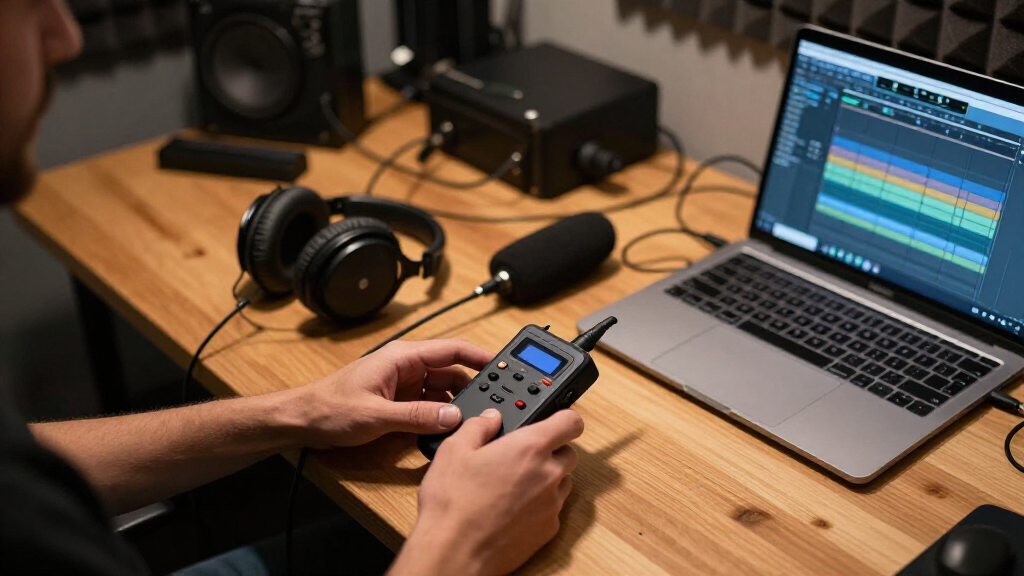
I ranked these portable audio recorders around the needs of podcasters, filmmakers, musicians, interviewers, and other creators. My main criteria were recording flexibility, input selection, resistance to clipping, track count, microphone suitability, physical controls, portability, and file-transfer workflow. I gave more weight to features that improve the finished production than to oversized storage figures or broad noise-reduction claims. That approach places the Zoom H1 XLR, Zoom H4 Essential, and Zoom H1 Essential above devices designed mainly for lectures and meeting notes.
Value also depended on how much of each recorder a creator could realistically use. I favored simple models when they reduced cost without closing off common creative tasks, but I ranked limited-input voice recorders lower when they restricted microphone choice or manual control. Battery life, mounting style, playback, one-touch operation, and voice activation helped separate products intended for quick capture. The final order reflects publishable audio potential, workflow versatility, and the size of each model’s compromises rather than storage capacity alone.
Factors to Consider When Choosing Portable Audio Recorders For Creators
Choosing among portable audio recorders starts with the production job, not the largest number printed on the listing. I would identify the microphones, number of speakers, recording location, and editing workflow before comparing storage or bundled functions. A recorder for narrated video production needs different connections from one used for quick spoken reminders. The following factors explain where paying more changes the result and where a simpler device is enough.
Match the Inputs to Your Microphones
I treat the input layout as the first dividing line between a creative tool and a basic voice recorder. XLR/TRS inputs let creators connect interview microphones, wireless receivers, mixers, and music gear, while a 3.5mm input is better suited to compact consumer microphones. Locking connectors add security when a cable may be pulled during handheld or camera work. A recorder with only built-in microphones can still handle ideas, room sound, or close speech, but it leaves little room for upgrading the signal chain. Creators recording several people should also check whether inputs receive separate editable tracks rather than being combined into one file. I would pay more for flexible inputs when the recorder will support client work, changing microphones, or more than one production format.
Choose Track Count Before Storage Capacity
Track count determines how much control remains after recording. Two independent channels can capture a host and guest separately, making level adjustments and noise cleanup easier during editing. Four-track recording becomes useful when a production combines multiple microphones, a mixer feed, or stereo ambience. It also creates more files and a more involved setup, so extra tracks are not automatically better for solo narration. By comparison, a large memory figure only extends recording time and cannot separate voices that were mixed together at capture. I would prioritize the right number of isolated channels before paying for 128GB or 160GB of internal storage.
Understand 32-Bit Float and Noise Reduction
32-bit float recording gives creators far more room to recover audio that was captured unexpectedly loud or quiet, which is valuable during interviews, performances, and fast-moving shoots. It does not repair wind noise, microphone handling, room echo, or poor microphone placement. Digital noise reduction tackles a different problem by suppressing steady background sound, but strong processing can thin voices or create watery artifacts. For content that will be edited, I prefer a cleaner original recording over permanently processed audio. Automatic DSP makes more sense for searchable notes and meeting playback than for natural-sounding music or dialogue. Buyers should separate clipping protection from background-noise processing because the two features solve different failures.
Plan for Real Recording Sessions
Battery and storage needs should be based on session length, not the largest advertised capacity. Uncompressed creator formats use more space than compressed speech files, yet even modest storage can cover many short interviews when files are transferred regularly. Long battery life is more valuable for conferences, documentary days, and unattended ambience than for desk-based podcast sessions. USB-C can simplify charging and file transfer, but buyers should check whether the port also supports audio-interface operation or only basic data access. Removable media provides a quick backup path and makes capacity easier to expand, while internal-only storage creates a single point of failure. I would choose reliable power and a clear backup routine over excess memory that may never be used.
Balance Speed, Control, and Portability
One-touch recording is valuable when an idea or interview moment cannot wait for menu setup. Voice activation can extend battery life and reduce silent files, but it may start late when a speaker begins softly. Physical level controls, clear meters, and visible recording indicators support more deliberate production work, while tiny screenless designs favor discreet portability. Magnetic mounting can help with fixed placement, though it does not replace a shock mount when vibration or handling noise is present. I see compact voice recorders as useful secondary tools for notes, research, and backup capture rather than direct substitutes for input-rich creator models. The best interface is the one that gives the buyer enough control without slowing the recording.
Frequently Asked Questions
Do I Need XLR Inputs for Podcasts and Video Interviews?
I recommend XLR inputs when a creator expects to use professional interview microphones, long cable runs, or multiple microphone types. The connection is more secure than a basic 3.5mm jack, and it creates a clearer upgrade path for paid production work. A built-in stereo microphone or 3.5mm input can be enough for solo videos, travel recording, and short-form content. The Zoom H1 XLR is the better fit for an expandable setup, while the Zoom H1 Essential makes more sense when compact stereo capture is the main job. Paying for XLR offers little benefit if no external microphone will ever be connected.
Does 32-Bit Float Mean I Can Ignore Recording Levels?
32-bit float greatly reduces the risk of losing a take because the recorded level was too high or too low. I still would not ignore microphone position, input routing, wind protection, or headphone monitoring. A microphone capsule can overload before the digital file is created, and distant placement will still capture excess room sound. The format is most useful when levels change unpredictably or the creator cannot adjust controls during a take. It provides recovery room, not a replacement for good recording technique.
Can an Inexpensive Voice Recorder Produce Podcast-Ready Audio?
An inexpensive voice recorder can produce usable speech in a quiet room when it sits close to the speaker. I would expect less control over microphone choice, channel separation, processing, and monitoring than a creator-focused Zoom model provides. Voice-activated devices may also trim quiet openings, while built-in noise reduction can alter vocal tone. These recorders make more sense for research interviews, notes, transcripts, and backup capture than polished primary audio. A buyer planning regular publication will usually get more lasting value from the Zoom H1 Essential or Zoom H1 XLR.
How Much Recorder Storage Does a Creator Actually Need?
The answer depends on file format, sample rate, track count, and how often recordings move to a computer. I would not choose a 160GB model solely because its number is larger than 64GB or 72GB. Multitrack uncompressed projects consume space faster than compressed meeting files, but a disciplined transfer and backup routine reduces the need for huge internal capacity. High-capacity models are most useful for long unattended sessions, travel without a laptop, or users who archive many recordings on the device. For routine content production, microphone quality and input flexibility have a greater effect on the finished work.
When Does a Magnetic Voice-Activated Recorder Make Sense?
A magnetic recorder suits fixed-position speech capture where fast placement and long battery life matter more than manual audio control. The Nanezan 128GB model stands out for this role because its magnetic format and stated 70-hour battery target meetings, interviews, and extended note-taking. I would skip this style for music, moving camera work, or dialogue that needs isolated microphones and precise monitoring. Voice activation can omit soft beginnings, and contact with a vibrating metal surface may introduce unwanted noise. Buyers should also obtain permission and follow the recording rules that apply wherever the device is used.
Conclusion
For most creators, I recommend the Zoom H1 XLR as the best overall pick because its 32-bit float format and locking XLR/TRS inputs offer the strongest balance of portability and production flexibility. The Zoom H1 Essential is my best-value choice for creators who want capable stereo recording without paying for an XLR-based setup. Beginners focused on lectures, ideas, and simple spoken notes should start with the 72GB one-touch digital voice recorder, while buyers seeking an inexpensive compact option can choose the 16GB model. The Zoom H4 Essential is the best premium recorder for musicians, podcasters, and filmmakers who will use its four-track workflow. For specific needs, I would choose the 160GB recorder for maximum internal storage, the Nanezan 128GB magnetic recorder for long fixed-position sessions, and the 8GB model for basic voice notes on the smallest budget. The right choice depends less on headline memory and more on whether the recorder’s inputs, tracks, and controls match the content being produced.