For most photographers, I’d start with the Godox X2T-C: its Canon TTL support and Godox 2.4GHz system make it a versatile choice for compatible gear. The Godox X3-C is a compact Canon option, while the Godox CT-16 kits suit photographers who need simple manual triggering with multiple receivers. The main tradeoff is between straightforward, budget-focused triggers and more capable systems with TTL, broader control, and camera-specific compatibility. Check your camera and flash models before choosing, since similar product names can still mean different versions. Read on for the full breakdown and a guide to picking the right trigger for your setup.

Get audio and creator gear delivered free with Prime
- Fast, free delivery on millions of items
- Prime Video, Amazon Music and more included
- Member-only deals all year
Complete the kit


Key Takeaways
- The lineup splits into two clear groups: CT-16 and RT-16 models focus on basic manual triggering, while Godox X-system options add features such as TTL on compatible setups.
- Receiver count changes the practical value of a kit. The CT-16 options include different receiver configurations, so match the bundle to the number of studio flashes you need to fire.
- Camera compatibility is not interchangeable. Canon-specific X3-C, X2T-C, XPro-C, and X3 Pro S models are not universal choices; verify the exact camera version before buying.
- Compactness and control pull in different directions. The Ulanzi LA10 prioritizes a small, simple setup, while larger Godox X-system transmitters are better suited to photographers who want more on-camera control.
- Transceiver designs can suit mixed gear. The Zeniko T1 and AODELAN E7G offer a different approach from transmitter-and-receiver kits, but compatibility with the specific flash system still needs checking.
| Godox CT-16 Wireless Flash Trigger Kit with Transmitter and 2 Receivers |  | Best Value for a Two-Light Setup | Transmit frequency: 433 MHz | Maximum sync speed: Up to 1/250 second, depending on camera | Transmitter battery: Included 23A 12V battery | VIEW LATEST PRICE | See Our Full Breakdown |
| NEEWER RT-16 16-Channel Wireless Studio Flash Trigger |  | Best for Simple Studio Strobes | Channels: 16 | Radio frequency: 433 MHz | Maximum working distance: Up to 30 m in open areas without interference | VIEW LATEST PRICE | See Our Full Breakdown |
| Godox CT-16 433MHz Flash Trigger Kit with 1 Transmitter and 3 Receivers |  | Best for Three-Light Setups | Wireless frequency: 433 MHz | Channels: 16 | Kit contents: One transmitter and three receivers | VIEW LATEST PRICE | See Our Full Breakdown |
| Godox X3-C TTL Wireless Flash Trigger for Canon |  | Best Overall for Canon TTL and HSS | Compatible cameras: Canon | Wireless technology: 2.4G Godox X system | Mount type: Hot shoe | VIEW LATEST PRICE | See Our Full Breakdown |
| Godox X3C TTL Wireless Flash Trigger for Canon |  | Best Compact Canon Control | Compatible cameras: Canon E-TTL/E-TTL II cameras | Wireless system: 2.4 GHz Godox Wireless X | Screen: Full-color OLED touchscreen | VIEW LATEST PRICE | See Our Full Breakdown |
| Godox X3 Pro S TTL Flash Trigger for Sony Cameras |  | Best for Complex Sony Lighting Setups | Compatible cameras: Select Sony cameras | Wireless system: Godox 2.4GHz X system | Wireless channels and IDs: 32 channels; 99 ID settings | VIEW LATEST PRICE | See Our Full Breakdown |
| Zeniko T1 2.4 GHz Wireless Flash Trigger Transceiver | 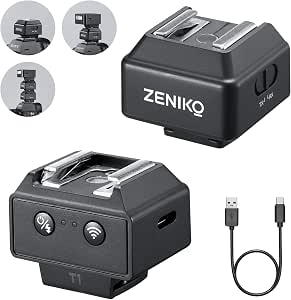 | Best Compact Transceiver | Wireless frequency: 2.4 GHz | Wireless range: Up to 50 m | Modes: Transmitter and receiver | VIEW LATEST PRICE | See Our Full Breakdown |
| Godox CT-16 Wireless Flash Trigger Kit with 3 Receivers |  | Best Multi-Flash Value | Wireless frequency: 433 MHz | Channels: 16 | Maximum synchronization speed: 1/250 s in manual mode | VIEW LATEST PRICE | See Our Full Breakdown |
| AODELAN FT-8 Wireless Flash Trigger Transmitter and Receiver Set |  | Best for Long-Range Manual Triggering | Wireless frequency: 2.4 GHz | Channels: 8 | Maximum range: Up to 200 m (650 ft) | VIEW LATEST PRICE | See Our Full Breakdown |
| Godox X2T-C TTL Wireless Flash Trigger for Canon, 2.4G X System |  | Best Canon TTL Pick | Camera compatibility: Canon EOS cameras | Wireless system: Godox 2.4G X system | Channels and IDs: 32 channels; 99 IDs | VIEW LATEST PRICE | See Our Full Breakdown |
| Ulanzi LA10 Mini Wireless Flash Trigger and Hot Shoe Riser |  | Best Compact Outdoor Pick | Wireless frequency: 2.4 GHz | Wireless range: 8 m | Modes: Transmitter and receiver | VIEW LATEST PRICE | See Our Full Breakdown |
| AODELAN E7G Wireless Flash Trigger Transceiver for Godox and Flashpoint |  | Best Long-Range Manual Transceiver | Wireless system: 2.4 GHz Godox X System and Flashpoint R2 | Maximum range: 200 m (656 ft) | Channels and wireless IDs: 32 channels; 99 IDs | VIEW LATEST PRICE | See Our Full Breakdown |
| Godox XPro-C TTL Wireless Flash Trigger for Canon |  | Best for Canon TTL and HSS Control | Compatible cameras: Canon EOS cameras with E-TTL/E-TTL II and cameras with a PC sync socket | Wireless technology: 2.4 GHz RF | Flash modes: TTL autoflash and manual flash | VIEW LATEST PRICE | See Our Full Breakdown |
More Details on Our Top Picks
Godox CT-16 Wireless Flash Trigger Kit with Transmitter and 2 Receivers
I’d choose this CT-16 kit when the goal is to trigger two compatible flashes without adding a more advanced control system. Its two included receivers, sync cables, and conversion adapters make it more ready for a small studio setup than the single-receiver NEEWER RT-16. The 433 MHz connection is a straightforward way to fire compatible studio or camera flashes, and the stated sync speed reaches 1/250 second when the camera supports it. The tradeoff is that this is a basic trigger kit: the transmitter and receivers need matching channels, and the receivers each need two AAA batteries that aren’t included. I’d pick the three-receiver CT-16 kit instead if you need to trigger more lights from the outset.
Pros:- Includes two receivers for triggering two compatible flashes
- Sync cables and conversion adapters support different flash connections
- 433 MHz wireless triggering works with compatible studio and camera flashes
- Transmitter battery is included
Cons:- Each receiver needs two AAA batteries, which are not included
- Transmitter and receivers must be set to the same channel
- Maximum sync speed depends on the camera
Best for: Photographers building a budget-conscious two-light studio setup who have compatible flashes and can supply AAA batteries.
Not ideal for: Photographers who need TTL or high-speed sync control, or who want to trigger three or more lights without buying additional receivers.
- Transmit frequency:433 MHz
- Maximum sync speed:Up to 1/250 second, depending on camera
- Transmitter battery:Included 23A 12V battery
- Receiver batteries:Two AAA 1.5V alkaline batteries per receiver; not included
- Package contents:One transmitter, two receivers, two sync cables, two conversion adapters, one cleaning cloth
- Item weight:8.4 ounces
- Model:CT-16 flash trigger kit
Our verdict“Choose this kit for a simple two-flash setup; pick the three-receiver CT-16 kit if you need more lights.”
NEEWER RT-16 16-Channel Wireless Studio Flash Trigger
The RT-16 makes sense when I need a basic camera-to-strobe connection and value clear setup feedback over multi-light kit extras. Its 16 channels give photographers options when nearby setups share the 433 MHz band, while the receiver’s on/off switch and trigger LED make it easier to tell whether it is powered and receiving a signal. The stated range is up to 30 m in open areas without interference, though walls and other interference can reduce it. Compared with the Godox CT-16 kit with two receivers, this package is more focused on a compatible studio light and includes just one receiver; its sync speed also tops out at 1/200 second. I’d skip it for outdoor work in wet conditions, since it is not water resistant.
Pros:- Offers 16 channels to help find a usable channel in shared radio environments
- Stated working distance reaches up to 30 m in open areas without interference
- Receiver includes an on/off switch and trigger indicator LED
- Includes a PC sync cable and 3.5 mm to 6.35 mm adapter
Cons:- Maximum flash sync speed is 1/200 second
- Range can fall with obstacles or interference
- Not water resistant
Best for: Studio photographers using a compatible strobe who want channel choices, a receiver status light, and a simple wired connection.
Not ideal for: Photographers needing multiple included receivers, a faster sync ceiling than 1/200 second, or weather-resistant equipment.
- Channels:16
- Radio frequency:433 MHz
- Maximum working distance:Up to 30 m in open areas without interference
- Flash sync speed:Up to 1/200 second
- Receiver plug:3.5 mm
- Included connections:PC sync cable and 3.5 mm to 6.35 mm adapter
- Mount type:Hot shoe
- Compatible devices:NEEWER S101-300W, S101-400W, S101-300W PRO, S101-400W PRO, and other studio lights
Our verdict“Pick the RT-16 for straightforward studio triggering and receiver status feedback, rather than a multi-receiver kit.”
Godox CT-16 433MHz Flash Trigger Kit with 1 Transmitter and 3 Receivers
Among these basic radio kits, this CT-16’s strongest distinction is its three included receivers. That makes it a better starting point than the two-receiver Godox CT-16 kit for photographers who want to fire three compatible flashes without sourcing another receiver. The system offers 16 channels and can trigger compatible speedlights and studio strobes; a PC sync cord is included for cameras without a hot shoe. Its stated sync ceiling is 1/200 second, lower than the other CT-16 kit’s listed 1/250 second, so camera and shutter requirements matter. There is another setup catch: no 3.5 mm or 6.35 mm strobe sync cord is included. I’d choose it for receiver quantity, not for advanced exposure control or a complete set of strobe cables.
Pros:- Includes three receivers for a multi-light setup
- Provides 16 wireless channels
- Can trigger compatible speedlights and studio strobes
- Includes a PC sync cord for cameras without a hot shoe
Cons:- Does not include a 3.5 mm or 6.35 mm studio-strobe sync cord
- Maximum sync speed is 1/200 second
- Not water resistant
Best for: Photographers with three compatible flashes or strobes who want a basic 433 MHz trigger system and a PC sync option for the camera.
Not ideal for: Photographers who need included studio-strobe sync cables, water resistance, or a higher listed sync speed.
- Wireless frequency:433 MHz
- Channels:16
- Kit contents:One transmitter and three receivers
- Flash sync speed:Up to 1/200 second
- Mount type:Hot shoe
- Connectivity:RF and PC sync
- Exposure control:TTL and manual
- Compatible devices:Select Canon, Nikon, Pentax, and Olympus flashes; studio strobes and speedlights
- Warranty:1 year
Our verdict“Choose this CT-16 kit when three receivers matter more than included strobe cables or a faster sync specification.”
Godox X3-C TTL Wireless Flash Trigger for Canon
For a Canon photographer who wants camera-side exposure control rather than a simple firing signal, the X3-C is the clearest step up from the CT-16 kits. It supports TTL, manual, multi-flash, and high-speed sync, with a listed sync speed of up to 1/8000 second. That gives it a broader role for changing light or using wider apertures outdoors, while the CT-16 options suit simpler setups with compatible flashes. The 2.4G Godox X system and channel scanning offer a more modern route to managing interference, and the color OLED touchscreen keeps controls on the compact hot-shoe unit. The tradeoffs are strict: it is Canon-compatible only, and the built-in battery needs charging. It is also not water resistant, so I wouldn’t choose it for exposed weather work.
Pros:- Supports TTL, manual, multi-flash, and high-speed sync modes
- Listed sync speed reaches 1/8000 second
- Channel scanning helps find a clearer wireless channel
- Rechargeable battery charges through USB-C
Cons:- Compatible with Canon cameras only
- Not water resistant
- Built-in battery requires charging rather than a quick battery swap
Best for: Canon photographers using compatible Godox X-system flashes who need TTL, high-speed sync, and on-trigger adjustments.
Not ideal for: Photographers using other camera brands, basic legacy flash setups outside the Godox X system, or equipment in wet conditions.
- Compatible cameras:Canon
- Wireless technology:2.4G Godox X system
- Mount type:Hot shoe
- Battery:Built-in 3.7V 850mAh rechargeable lithium battery
- Charging interface:USB-C
- Charging time:About 2 hours
- Screen:1.6-inch color OLED touchscreen
- Flash sync speed:Up to 1/8000 second
- Shooting modes:TTL Auto, Manual, Multi Flash, High Speed Sync, Front Curtain Sync, Rear Curtain Sync
Our verdict“Choose the X3-C for Canon-based Godox X setups that need TTL and high-speed sync, not for basic cross-brand triggering.”
Godox X3C TTL Wireless Flash Trigger for Canon
This X3C suits Canon E-TTL/E-TTL II users who want touchscreen control in a compact hot-shoe trigger. Its 2.4 GHz Godox Wireless X connection, channel scanning, and TTL-to-manual conversion put it in the same advanced category as the other Godox X3-C, rather than the simpler CT-16 kits. The listed 1/8000-second sync speed supports high-speed sync setups, while direct touchscreen adjustment can make on-camera changes more convenient than a basic transmitter. The product data lists a seven-day average battery life, but does not specify charging details here; the other X3-C entry does list USB-C charging and a 1.6-inch screen. I’d compare the exact included features before choosing between them. Like its counterpart, this model is Canon-specific and not water resistant.
Pros:- Full-color OLED touchscreen allows direct parameter adjustments
- Supports conversion between TTL and manual modes
- Channel scanning helps reduce interference
- Listed sync speed reaches 1/8000 second
Cons:- Compatible with Canon E-TTL/E-TTL II cameras only
- Not water resistant
- Charging interface and charging time are not specified in the provided product data
Best for: Canon E-TTL/E-TTL II photographers who want a compact touchscreen trigger with TTL-to-manual conversion and Godox X-system flashes.
Not ideal for: Photographers using non-Canon cameras, those who prefer a trigger with clearly specified charging details, or anyone working in wet conditions.
- Compatible cameras:Canon E-TTL/E-TTL II cameras
- Wireless system:2.4 GHz Godox Wireless X
- Screen:Full-color OLED touchscreen
- Flash sync speed:Up to 1/8000 second
- Exposure control:TTL, with TTL-to-manual conversion
- Mount:Hot shoe
- Battery:One included rechargeable lithium-ion battery
- Average battery life:7 days
- Water resistance:Not water resistant
Our verdict“Choose this X3C for compact Canon TTL control, but compare its documented battery and screen details with the other X3-C listing.”
Godox X3 Pro S TTL Flash Trigger for Sony Cameras
I’d choose the Godox X3 Pro S when a Sony photographer needs hands-on control of a larger off-camera lighting setup. Its touchscreen can adjust up to 16 groups individually, giving it more room for layered studio or location work than the five-group Godox X2T-C. TTL, manual control, modeling-lamp settings, and HSS up to 1/8000s make it useful across changing ambient light and flash arrangements. Channel scanning, 32 channels, and 99 ID settings also help manage interference. The tradeoff is a system-specific fit: it works with select Sony cameras and Godox X-system lighting, not every flash. It is also not water resistant, so the touch interface and electronics need protection outdoors. For photographers who only need simple triggering, this much group control may be more than they need.
Pros:- Controls up to 16 groups with individual TTL, manual, zoom, and modeling-lamp settings.
- HSS support up to 1/8000s helps retain flash use with wide apertures in bright conditions.
- Channel scanning, 32 channels, and 99 ID settings offer options for crowded radio environments.
- USB-C charging and Bluetooth app control add flexibility for portable setups.
Cons:- Compatibility is limited to select Sony cameras and Godox X-system lighting.
- Not water resistant, so it needs protection from rain and wet working conditions.
- Its extensive group controls may be unnecessary for photographers running only one or two flashes.
Best for: Sony photographers using compatible Godox X-system flashes who regularly adjust several groups or mix TTL and manual lighting.
Not ideal for: Photographers with non-Sony cameras, non-Godox lighting, or outdoor assignments where a non-water-resistant trigger is a poor fit.
- Compatible cameras:Select Sony cameras
- Wireless system:Godox 2.4GHz X system
- Wireless channels and IDs:32 channels; 99 ID settings
- Maximum lighting groups:16
- Screen:2.4-inch OLED touchscreen
- High-speed sync:Up to 1/8000s
- Connectivity:Wireless RF, Bluetooth, USB-C
- Recharge time:About 2 hours
Our verdict“Choose the X3 Pro S if you shoot with a compatible Sony body and need detailed control across a multi-group Godox setup.”
Zeniko T1 2.4 GHz Wireless Flash Trigger Transceiver
The Zeniko T1 is the simplest pick here for photographers who value a small, adaptable trigger over advanced flash automation. Its one-touch TX/RX switch lets the same unit act as a transmitter or receiver, which can make a spare trigger useful in more than one position. That is a different proposition from the Godox X2T-C, which offers Canon TTL and high-speed sync but is built around a dedicated camera-trigger role. The T1 instead uses a single-contact hot shoe, so buyers should not expect the extra camera-to-flash communication of a TTL system. Its 2.4 GHz link is rated for up to 50 m, and USB-C charging is handy, though RX battery life is shorter than TX life. The raised shoe is optimized for select Zeniko and Godox flashes, not every flash shape.
Pros:- Transmitter and receiver modes in one unit expand its use across simple setups.
- One-touch TX/RX switching makes changing roles straightforward.
- USB-C charging and auto-sleep support portable use.
- Rated wireless range of up to 50 m suits many small studio and location setups.
Cons:- Single-contact operation may not support camera-specific flash functions such as TTL.
- The 15° raised shoe is optimized for select Zeniko and Godox flash units.
- Battery life is listed as up to 8 hours in receiver mode, much less than its TX-mode runtime.
Best for: Photographers with compatible single-contact cameras and flashes who want a lightweight trigger that can also serve as a receiver.
Not ideal for: TTL or HSS users, or photographers whose flash requires extra hot-shoe contacts or does not fit the raised shoe design.
- Wireless frequency:2.4 GHz
- Wireless range:Up to 50 m
- Modes:Transmitter and receiver
- Battery life:Up to 40 hours in TX mode; 8 hours in RX mode
- Charging:USB-C
- Hot shoe:Single-contact; 15° elevated design
- Compatibility:DSLR and mirrorless cameras with a single-contact hot shoe
- Weight:2.88 ounces
Our verdict“Pick the T1 for compact, basic triggering across compatible single-contact gear, not for TTL-dependent or advanced lighting workflows.”
Godox CT-16 Wireless Flash Trigger Kit with 3 Receivers
The Godox CT-16 kit is the practical choice when the main goal is to trigger several compatible flashes or studio strobes without paying for TTL control. With three receivers included, it can connect multiple lights out of the box, while 16 channels give the transmitter and receivers room to match a working setup. By comparison, the AODELAN FT-8 offers a longer stated range, but this CT-16 package is more immediately useful for photographers building a multi-light arrangement with sync connections. Its straightforward manual triggering keeps the workflow simple, yet the 1/250 s maximum sync speed is a real limit for bright-day work or wide-aperture flash photography. Check the camera hot shoe before buying: it needs an electrical contact, so it is not suitable for some contact-free shoes. The 433 MHz system also lacks the advanced control of Godox’s X-series triggers.
Pros:- Three included receivers make it ready to trigger several lights.
- Sixteen channels provide options for coordinating the transmitter and receivers.
- Adapters and sync cables support connection to compatible flashes and studio strobes.
- Works with a range of hot-shoe camera brands when the shoe has an electrical contact.
Cons:- Manual sync is limited to a maximum of 1/250 s, with no TTL or HSS listed.
- Requires an electrical contact on the camera hot shoe, excluding some camera models.
- Transmitter and receivers must be set to the same channel.
Best for: Manual-flash photographers building a multi-light kit with compatible hot-shoe flashes or studio strobes and electrical-contact camera shoes.
Not ideal for: Photographers who need TTL, HSS, a longer wireless reach, or a camera hot shoe without an electrical contact.
- Wireless frequency:433 MHz
- Channels:16
- Maximum synchronization speed:1/250 s in manual mode
- Transmission distance:Up to 30 m
- Compatibility:Hot-shoe cameras with electrical contacts, including Canon, Nikon, Sony, Pentax, and Olympus
- Included kit:1 transmitter, 3 receivers, 3 sync cables, 4 conversion adapters
- Connections:3.5 mm and 6.35 mm adapters; sync cord
- Transmitter battery:12V/23A lithium battery included
Our verdict“Choose this CT-16 kit for straightforward multi-light manual triggering, provided your camera has an electrical-contact hot shoe.”
AODELAN FT-8 Wireless Flash Trigger Transmitter and Receiver Set
The AODELAN FT-8 suits photographers who need a trigger link across a large set or a more distant shooting position. Its stated range of up to 200 m is substantially longer than the Godox CT-16’s 30 m rating, though it has only eight channels versus the CT-16’s 16. Both are manual-oriented options with sync speeds up to 1/250 s, so neither is the right route for TTL or HSS shooting. The FT-8 adds wired and wireless shutter release functions, which can help when a camera needs to be triggered remotely as well as a flash. That extra capability comes with compatibility checks: the flash must have a universal hot shoe, Sony flashes are excluded, and camera shutter release requires a 3.5 mm port. Its included cable and PC adapter broaden connection options, but do not remove those limits.
Pros:- Stated range of up to 200 m suits distant camera or lighting positions.
- Supports both wired and wireless shutter release.
- Tilting transmitter can be mounted vertically or horizontally.
- Includes a sync cable and 3.5 mm-to-PC plug adapter.
Cons:- Sony flashes are not compatible.
- Camera shutter release requires a 3.5 mm port.
- Eight channels offer fewer channel choices than the 16-channel Godox CT-16.
Best for: Manual-flash photographers working across larger spaces who also want remote shutter-release options on cameras with a 3.5 mm port.
Not ideal for: Sony flash owners, TTL or HSS users, and photographers whose cameras lack a 3.5 mm shutter-release port.
- Wireless frequency:2.4 GHz
- Channels:8
- Maximum range:Up to 200 m (650 ft)
- Maximum flash sync speed:1/250 s
- Flash compatibility:Most speedlights with a universal hot shoe, except Sony flashes
- Shutter release:Wired and wireless; camera requires a 3.5 mm port
- Included connections:3.5 mm-to-3.5 mm sync cable and 3.5 mm-to-PC plug adapter
- Weight:9.9 ounces
Our verdict“Pick the FT-8 when long-range manual triggering and remote shutter release matter more than TTL, HSS, or broad Sony-flash compatibility.”
Godox X2T-C TTL Wireless Flash Trigger for Canon, 2.4G X System
For Canon photographers already using Godox X-system lights, the Godox X2T-C offers a more direct route to TTL and HSS than the manual CT-16 or AODELAN FT-8. It supports TTL, five flash groups, and HSS up to 1/8000s, so exposure and group adjustments can keep pace with changing light or moving subjects. Bluetooth app control adds remote setting changes, while 32 channels and 99 IDs help separate the setup from nearby radio systems. Compared with the Sony-specific X3 Pro S, the X2T-C has fewer groups and a small LCD rather than a touchscreen, but it is tailored to Canon and uses a familiar button layout. One practical compromise is power: it needs two AA batteries rather than USB-C charging. The LCD may also be harder to read in bright conditions.
Pros:- TTL and HSS up to 1/8000s support automatic exposure and fast-shutter flash work.
- Five group buttons make adjustments across a multi-light setup accessible.
- Bluetooth app control allows remote changes from a phone or tablet.
- Thirty-two channels and 99 IDs offer options for reducing radio conflicts.
Cons:- Requires two AA batteries rather than offering USB-C charging.
- Limited to compatible Canon cameras and Godox X-system lighting.
- Small LCD can be difficult to read in bright light.
Best for: Canon EOS photographers with Godox X-system flashes who want TTL, HSS, and app-based control in a dedicated transmitter.
Not ideal for: Sony or other non-Canon users, photographers seeking a rechargeable touchscreen trigger, or anyone using flash systems outside Godox X.
- Camera compatibility:Canon EOS cameras
- Wireless system:Godox 2.4G X system
- Channels and IDs:32 channels; 99 IDs
- Flash groups:5
- Flash sync speed:Up to 1/8000s
- Control:TTL; flash mode, power, and modeling-light control
- Connectivity:Radio frequency and Bluetooth
- Power:2 AA batteries required
Our verdict“Choose the X2T-C for Canon-based Godox lighting when TTL and HSS matter more than a touchscreen or rechargeable battery.”
Ulanzi LA10 Mini Wireless Flash Trigger and Hot Shoe Riser
The LA10 suits photographers who want a small trigger that can move between transmitter and receiver duty without a complicated setup. Its auto-pairing and one-key mode switch make it more straightforward to reconfigure than the group-focused Godox XPro-C, while 1-to-many connections let one camera trigger multiple compatible flashes. The built-in hot shoe riser adds utility when mounting accessories is part of the setup. At just 1.6 ounces, it is easier to pack than the AODELAN E7G, and its IP55 water resistance gives it an advantage for outdoor work. The tradeoff is reach: its listed 8 m range is far shorter than the E7G’s 200 m. Buyers also need to check camera and flash compatibility before relying on it for a mixed-brand kit.
Pros:- Transmitter and receiver modes with one-key switching simplify changing roles.
- Can connect one trigger to multiple compatible flashes.
- IP55 water resistance suits outdoor sessions.
- Compact 1.6-ounce body combines a wireless trigger with a hot shoe riser.
Cons:- The listed 8 m range limits placement flexibility compared with the AODELAN E7G.
- Compatibility depends on the camera and flash systems being used.
- The supplied specs do not list TTL or high-speed sync support.
Best for: Photographers using compatible Canon, Sony, Nikon, Fujifilm, or Olympus gear who want a lightweight trigger for close-range outdoor flash setups.
Not ideal for: Photographers who need long-distance triggering, advanced group controls, or a system-specific TTL and HSS workflow.
- Wireless frequency:2.4 GHz
- Wireless range:8 m
- Modes:Transmitter and receiver
- Connections:1-to-1 and 1-to-many
- Water resistance:IP55
- Charging:USB Type-C
- Compatible systems:Canon, Sony, Nikon, Fujifilm, Olympus
- Dimensions and weight:1.25 × 1.11 × 1.03 in; 1.6 oz
Our verdict“Choose the LA10 for compact, weather-resistant, close-range triggering, but pick the AODELAN E7G when you need substantially greater wireless range.”
AODELAN E7G Wireless Flash Trigger Transceiver for Godox and Flashpoint
The E7G is the specialist pick for photographers with Godox X System or Flashpoint R2 flashes who want extensive manual control and room to place lights far from the camera. Its 200 m maximum range, 32 channels, 99 wireless IDs, and five groups offer more separation and group organization than the compact Ulanzi LA10. The 1.3-inch OLED screen helps show settings on the trigger, and it can also serve as a remote shutter release. It doubles as a receiver for legacy flashes, though that use requires at least two E7G units. The key compromise is that it is non-TTL and non-HSS, unlike the Canon-specific Godox XPro-C, which supports both. Single-contact camera support also varies, so buyers should verify their camera connection before choosing it.
Pros:- Up to 200 m range supports widely spaced lights.
- Five groups, 32 channels, and 99 wireless IDs provide extensive manual organization.
- Transmitter and receiver functions support compatible flash workflows.
- OLED display, remote shutter function, and USB-C external power add flexibility.
Cons:- Does not provide TTL or high-speed sync, unlike the Godox XPro-C.
- Receiver use with legacy flashes requires two or more E7G units.
- Two AAA batteries are not included, and single-contact triggering is not supported by every camera.
Best for: Photographers with Godox X System or Flashpoint R2 equipment who need long-range manual lighting control across several groups.
Not ideal for: Canon shooters who rely on TTL metering or HSS, or photographers whose camera cannot trigger through a single-contact hot shoe.
- Wireless system:2.4 GHz Godox X System and Flashpoint R2
- Maximum range:200 m (656 ft)
- Channels and wireless IDs:32 channels; 99 IDs
- Groups:5 (A–E)
- Display:1.3-inch OLED
- Functions:Flash transmitter and receiver; remote shutter release
- Flash modes:Non-TTL, non-HSS
- Power:Two AAA batteries or USB-C external power
Our verdict“Choose the E7G for long-range manual control of compatible Godox or Flashpoint flashes, not for TTL or HSS shooting.”
Godox XPro-C TTL Wireless Flash Trigger for Canon
For compatible Canon cameras and Godox flashes, the XPro-C is the strongest choice here for retaining automatic exposure features while controlling off-camera lights. It supports E-TTL/E-TTL II, manual flash, and HSS up to 1/8000s, giving it a wider exposure toolkit than the manual-only AODELAN E7G. Its 16 groups and 32 channels suit multi-light setups, and the TCM button converts a TTL result into manual power settings—a useful bridge when moving from automatic exposure to repeatable output. The 3.5-inch LCD gives it a larger control surface than the E7G’s OLED. That capability comes with tighter system limits: it is built for compatible Canon equipment, needs two AA batteries, and has no water resistance. Outdoor shooters may prefer the Ulanzi LA10’s weather protection, though it lacks the XPro-C’s listed TTL and HSS features.
Pros:- Supports Canon E-TTL/E-TTL II, manual flash, and HSS up to 1/8000s.
- Controls multiple flash groups with 16 groups and 32 channels.
- TCM button converts TTL flash values to manual power settings.
- Can also function as a wireless shutter release trigger.
Cons:- Designed for compatible Canon cameras and flashes, limiting cross-brand use.
- Not water resistant, unlike the Ulanzi LA10.
- Requires two AA batteries.
Best for: Canon EOS photographers using compatible E-TTL/E-TTL II cameras and Godox flashes who need TTL, manual group control, and HSS.
Not ideal for: Photographers using other camera brands, working in wet conditions, or seeking a compact cross-system transmitter.
- Compatible cameras:Canon EOS cameras with E-TTL/E-TTL II and cameras with a PC sync socket
- Wireless technology:2.4 GHz RF
- Flash modes:TTL autoflash and manual flash
- Maximum sync speed:Up to 1/8000s
- Groups and channels:16 groups; 32 channels
- Display:3.5-inch LCD
- Power:Two AA batteries
- Mount and connectivity:Hot shoe; wired connection and 2.5 mm sync cord jack
Our verdict“Choose the XPro-C when Canon TTL and HSS matter more than weather protection or compatibility with other camera systems.”
How We Picked
I ranked these camera flash triggers for photographers by how well their capabilities match common shooting needs, not by feature count alone. The main criteria were camera and flash compatibility, TTL or manual operation, wireless system and channel options, receiver configuration, ease of use, and how much flexibility each setup offers as a kit grows. I also weighed whether a model’s form factor and controls make sense for its intended role, from compact on-camera use to multi-light studio work.
The ranking favors triggers that give a broad range of compatible users a useful balance of control and flexibility. Simpler manual kits rank well for photographers who need dependable basic firing without paying for features they will not use, but they sit below more adaptable systems for mixed or evolving setups. Camera-specific products are judged on their intended platform, and I do not treat similarly named versions as interchangeable. Buyers should confirm compatibility with their camera, flash, and any existing wireless system before purchase.
Factors to Consider When Choosing Camera Flash Triggers For Photographers
Choosing a trigger is less about finding the most feature-rich transmitter and more about avoiding a mismatch with your camera, flashes, and shooting style. I’d settle compatibility and workflow questions before comparing kit size or controls.
Match the Trigger to Your Camera and Flash System
Start with the exact camera model and hot-shoe standard, then check which flash units the trigger can control. A Canon-labeled transmitter is not a safe choice for a Sony camera just because both use wireless flash. Compatibility can also vary between firing a flash manually and controlling its TTL or other settings remotely. If you own flashes from more than one system, check whether the trigger supports each model or only fires them through a basic connection. A small mismatch may mean losing automation rather than losing all flash function, so read the manufacturer’s compatibility details carefully. This check matters more than a long feature list because a trigger cannot improve a setup it cannot communicate with.
Choose TTL or Manual Control for Your Shooting
TTL can help when subject distance changes quickly, such as at events or during run-and-gun portraits, because the camera and flash adjust exposure together. Manual control is often a better fit when lighting stays fixed and you want repeatable output from frame to frame. A common mistake is paying for TTL while planning to lock every light at a fixed power, or choosing a basic manual trigger for work where distance changes constantly. Think about how often you need to alter flash power from the camera position, not just whether the feature sounds useful. If your flash system supports remote group control, that can save time when balancing several lights. Confirm that the camera, trigger, and flash all support the specific control mode you expect.
Plan for the Number of Lights You Will Fire
Count the flashes you need to trigger at once, including any studio lights that require separate receivers. A transmitter-and-receiver bundle may appear ready for multiple lights, but the included receiver count can determine how much additional hardware you need. Check whether your flashes already contain a compatible receiver; built-in radio support can reduce extra accessories. For a single off-camera flash, a multi-receiver kit may add little value, while a portrait setup with several lights can benefit from matching units. Also look at how the system handles groups, since firing multiple lights together is not the same as adjusting each group independently. Buying around your likely setup can prevent both unnecessary kit pieces and an early second purchase.
Compare Wireless Systems, Channels, and Shooting Conditions
Triggers in this roundup use different wireless approaches, so do not assume that products from separate systems will pair simply because they share a frequency band. Channel options help reduce interference when other photographers are working nearby, but they do not make incompatible transmitters and receivers communicate. For a studio, compatibility with existing lights may matter more than the nominal number of channels. For location work, consider how you will manage radio range, obstacles, and the risk of a blocked or crowded signal path. Keep the transmitter and receivers within the system’s stated operating conditions, and test the setup before a paid shoot. When expanding later, choosing one compatible system is usually simpler than assembling unrelated triggers.
Prioritize Controls You Can Operate from the Camera
On-camera controls matter when lights are placed across a room or mounted in positions that are awkward to reach. A trigger that lets you adjust supported groups remotely can speed up lighting changes and reduce interruptions during a session. A basic transmitter may be easier to understand, but it can require walking to each flash when you want to change output. Compact designs can suit travel and minimalist kits, though a smaller body may offer less room for buttons or a readable display. Consider whether you change settings often enough for those controls to earn their place on the camera. Before buying, check how the interface handles group selection and whether it shows the settings you use most.
Decide When Paying for More Features Makes Sense
Extra features are useful only when they address a real limitation in your current workflow. If you shoot in a fixed studio with manual flashes, a straightforward trigger can be a better fit than a camera-specific TTL model. If you move between environments, change subject distance, or expect to add compatible lights, a more capable system may reduce workarounds later. Avoid choosing by product name alone: closely named versions can differ by camera mount or wireless system. Also account for the accessories a setup needs, such as extra receivers, batteries, and compatible flashes, rather than judging the transmitter by itself. I’d pay for added control when it saves repeated setup time or supports gear you already own.
Frequently Asked Questions
Can I use a Canon-labeled Godox trigger with a Sony camera?
Do not assume so. Models such as the Godox X2T-C and XPro-C are Canon-specific versions, while the listed X3 Pro S is designed for Sony cameras. A trigger may still fire some flashes through a limited manual connection in certain setups, but that does not mean the camera-specific functions will work. Check the exact camera version and the flash system’s compatibility list before buying. If you use more than one camera brand, confirm each body’s supported features rather than relying on the shared Godox name.
Will a manual CT-16 or RT-16 trigger give me TTL flash exposure?
The CT-16 and RT-16 options in this roundup are positioned as simple wireless studio triggers, not TTL-focused camera systems. They can suit photographers who set flash power directly and want the camera to fire remote lights. TTL requires compatible communication among the camera, transmitter, and flash; a radio firing signal alone does not provide it. If automatic exposure adjustment matters for changing distances or fast-moving work, compare the camera-specific Godox X-system models instead. If your lighting is fixed, manual control may be all you need.
How many receivers should I buy for a multi-light setup?
Count each flash that needs its own receiver, then check whether any of your lights already include a compatible radio receiver. The CT-16 kits listed here come in different receiver configurations, so the right bundle depends on your existing equipment and how many separate lights you plan to fire. Do not count a transmitter as a receiver or assume that receivers from another wireless system will pair. If you expect to add lights later, confirm that matching receivers remain available and work with the same trigger. A simple compatibility check can prevent buying a kit that leaves one light out.
Can I mix Godox, Flashpoint, and third-party flashes with one trigger?
Sometimes, but brand names alone do not confirm compatibility. The AODELAN E7G is described for Godox and Flashpoint systems, while other triggers in this list target specific wireless families or camera mounts. A third-party flash may fire manually without supporting remote power changes, TTL, or group control. Check the exact flash model and the functions supported by both ends of the connection. If you plan a mixed-brand setup, test the full combination before relying on it for a job.
Is a compact trigger a good choice for off-camera flash work?
It can be, especially when your setup uses one flash and you value a small camera kit. The tradeoff is that compact models may offer fewer on-camera controls than larger transmitters designed for adjusting several groups. Before choosing a small trigger, decide whether you need to change flash power from the camera or are comfortable setting it directly on the light. Also check whether its hot-shoe design and any included riser fit your camera and accessories. For multi-light work, a larger system with clearer group controls may save more time than a smaller footprint.
Conclusion
For the broadest balance among the listed options, I’d choose the Godox X2T-C if I shoot with a compatible Canon camera and Godox X-system flashes. For best value in basic manual triggering, the CT-16 kit that matches the number of lights I own makes more sense than paying for TTL I will not use. Beginners working with a compatible Canon setup can start with the Godox X3-C for a compact, more approachable system, while the Godox XPro-C is a better fit for photographers who want a more control-focused Canon transmitter. For a premium step-up, the Godox X3 Pro S is the pick for compatible Sony users; for a minimal setup, consider the Ulanzi LA10. I’d choose the AODELAN E7G only when its Godox and Flashpoint compatibility matches the gear already in my bag. The best choice is the one that fits the camera, flash system, and control style I actually use.