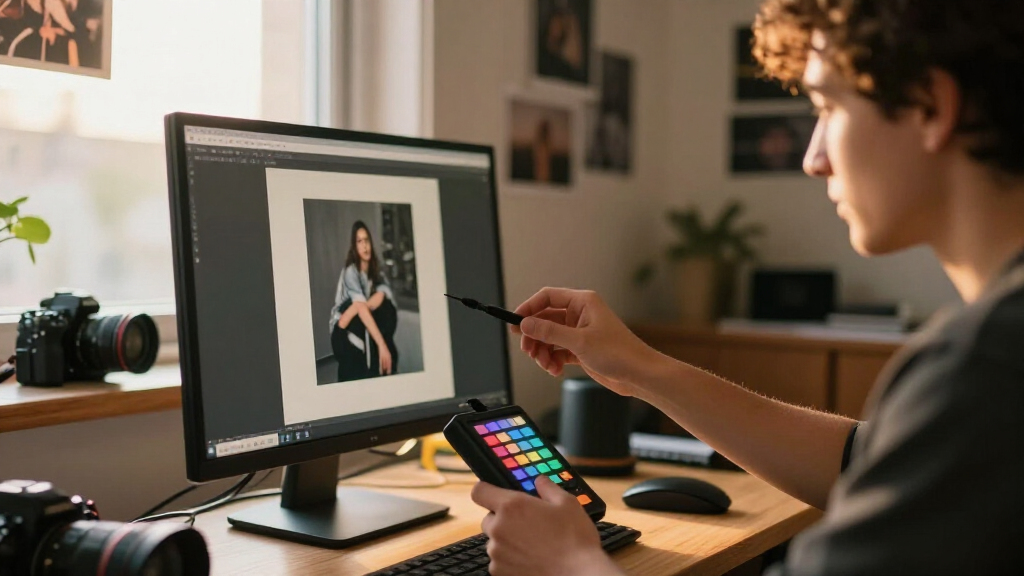
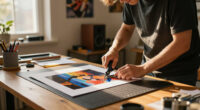
Achieving accurate colors for photo printing starts with a reliable monitor calibrator. The Calibrite Creator Kit stands out as the best overall, offering precise color measurement and versatile tools. The Datacolor Spyder X Pro is a popular choice for those seeking professional results at a reasonable price, while the Calibrite Display Pro HL excels with compatibility across high-end displays. The main tradeoffs involve balancing calibration accuracy, ease of use, and budget. Continue reading to see how these options compare and which one fits your specific needs.

Get audio and creator gear delivered free with Prime
- Fast, free delivery on millions of items
- Prime Video, Amazon Music and more included
- Member-only deals all year
Complete the kit


Key Takeaways
- Top calibrators excel in color accuracy for photo printing, with the Calibrite Creator Kit leading due to its comprehensive features.
- Ease of use varies; simpler tools like Spyder3Express are suitable for beginners, while professional-grade options require more setup.
- Compatibility across different display types (LCD, OLED, Mini LED) is a key factor, with some models supporting a broader range.
- Price often correlates with features; premium calibrators offer advanced calibration options but come at a higher cost.
- Consistent calibration results depend on regular re-calibration and proper workflow, regardless of the model chosen.
| Calibrite Creator Kit with Display 123 Colorimeter and ColorChecker Passport Video 2 |  | Best for Professional Content Creators Needing Multi-Device Consistency | Includes: Display 123 colorimeter, ColorChecker Passport Video 2 | Purpose: Monitor calibration, video and photo capture control | Suitable For: Photography, filmmaking, video production | VIEW LATEST PRICE | See Our Full Breakdown |
| Datacolor Spyder X Pro Monitor Calibrator |  | Best for Quick, Accurate Calibration with Multi-Display Support | Color Engine: Lens-based | Calibration Targets: 12 predefined | Monitor Compatibility: Multiple displays including laptops and desktops | VIEW LATEST PRICE | See Our Full Breakdown |
| Calibrite Display Pro HL Monitor Calibration Colorimeter for LCD, Mini LED, and OLED Displays |  | Best for High-Brightness, Modern Display Calibration | Measurement Range: up to 3000 nits | Display Compatibility: LCD, Mini LED, OLED, projectors | Software: Calibrite PROFILER for Mac and Windows | VIEW LATEST PRICE | See Our Full Breakdown |
| ASUS ProArt CaliContrO MCA02 3-in-1 Colorimeter – Professional Color Calibrator with Hardware/Software Calibration |  | Best for HDR-Ready Calibration and Versatile Display Support | Functionality: Colorimeter, Display OSD control, ASUS Dial | Calibration: Hardware and software | Max Nits: 10000 nits | VIEW LATEST PRICE | See Our Full Breakdown |
| Datacolor Spyder Celebration Kit – Monitor Calibrator & Color Checker |  | Best for Comprehensive Color and White Balance Control | Includes: Spyder Cube, Spyder Checkr 24, 2024 Spyder calibrator | Compatibility: OLED, mini-LED, XDR Retina Display | Color Targets: Spectrally engineered | VIEW LATEST PRICE | See Our Full Breakdown |
| Datacolor SpyderPro Monitor Calibrator & Screen Color Calibration Tool |  | Best Overall for Professional Color Accuracy | Compatibility: Windows 10/11, macOS 10.14-14 | Device Support: Unlimited displays, USB-C connectivity | Features: Gamma, whitepoint, brightness adjustments, projector calibration, display analysis, automatic room light switching | VIEW LATEST PRICE | See Our Full Breakdown |
| Calibrite Photo Kit with Display Pro HL Monitor Calibration Colorimeter and ColorChecker Passport Photo 2 |  | Best for RAW Workflow and Camera Profiling | Includes: Display Pro HL colorimeter, ColorChecker Passport Photo 2, Calibrite PROFILER software | Supports: Custom camera profiles, calibration for mini LED OLED and Apple XDR | Features: White balance, exposure reference, preset and customizable targets | VIEW LATEST PRICE | See Our Full Breakdown |
| Spyder3Express Display Calibration Tool |  | Best Budget-Friendly for Basic Color Accuracy | Calibration Type: Display | Software: Included | Optics: Patented | VIEW LATEST PRICE | See Our Full Breakdown |
| Datacolor Spyder X2 Elite Monitor Color Calibrator for Photography and Video |  | Best for Professional Photography and Video | Calibration Features: Video & Cinema targets, Advanced display mapping, Soft proofing | Connectivity: USB-C with USB-A adapter | Intended Use: Photographic and video work | VIEW LATEST PRICE | See Our Full Breakdown |
| Calibrite Display 123 Monitor Calibration Colorimeter for Photo Editing and Color Accurate Viewing |  | Best Compact for Single or Dual Monitors | Connection: USB C | Body Dimensions: 34mm tall x 37mm diameter | Supports: 2 displays | VIEW LATEST PRICE | See Our Full Breakdown |
| monitor calibrators for photo printing | Features |
|---|---|
| Calibrite Creator Kit with Dis | — |
| Datacolor Spyder X Pro Monitor | Room-light monitoring, automatic profile changing, display evaluation |
| Calibrite Display Pro HL Monit | — |
| ASUS ProArt CaliContrO MCA02 3 | — |
| Datacolor Spyder Celebration K | — |
| Datacolor SpyderPro Monitor Ca | Gamma, whitepoint, brightness adjustments, projector calibration, display analysis, automatic room light switching |
| Calibrite Photo Kit with Displ | White balance, exposure reference, preset and customizable targets |
| Spyder3Express Display Calibra | Before & After Viewing, Easy Wizard |
| Datacolor Spyder X2 Elite Moni | — |
| Calibrite Display 123 Monitor | Before and after check, adjustable counterweight |
More Details on Our Top Picks
Calibrite Creator Kit with Display 123 Colorimeter and ColorChecker Passport Video 2
The Calibrite Creator Kit stands out for its comprehensive approach, combining a reliable monitor calibration tool with a versatile camera and video workflow assistant. Unlike the simpler ColorChecker Passport Video 2, which focuses mainly on exposure and white balance, this kit offers a cohesive solution for professionals who need consistent color across screens and cameras. Its strength lies in streamlining multi-camera setups, reducing guesswork, and maintaining color integrity throughout editing and production. The main tradeoff is the higher price point and some technical setup required, making it less suitable for casual photographers. Compared to standalone calibrators, this kit delivers more value for those blending photography and video work, though it demands a more involved workflow.
Pros:- Ensures consistent on-screen color for both photo and video projects
- Helps match multiple cameras and verify exposure accurately
- Reduces trial-and-error calibration, saving time
Cons:- Requires some technical knowledge to operate effectively
- Price may be prohibitive for casual or hobbyist users
Best for: Professional photographers and videographers who need integrated color control across devices
Not ideal for: Casual users or hobbyists seeking simple calibration without camera workflow tools
- Includes:Display 123 colorimeter, ColorChecker Passport Video 2
- Purpose:Monitor calibration, video and photo capture control
- Suitable For:Photography, filmmaking, video production
Our verdict“This kit is best suited for professionals requiring a comprehensive color management system across multiple devices and workflows.”
Datacolor Spyder X Pro Monitor Calibrator
The Spyder X Pro offers a straightforward calibration process that appeals to users who value speed and ease of use, especially compared to the more complex Calibrite Display Pro HL. Its lens-based color engine provides high-precision results, and the support for multiple monitors makes it ideal for multi-screen setups common among photographers. The automatic room-light monitoring feature helps maintain consistent calibration amid changing ambient light, a plus over simpler models. However, it might be overwhelming for complete beginners due to its array of features, and learning the software takes some time. For those who want fast, reliable color calibration without fuss, it strikes a good balance.
Pros:- High-precision color calibration with lens-based technology
- Supports multiple displays including laptops and desktops
- Easy single-click calibration with before-and-after comparison
Cons:- May be complex for users new to calibration tools
- Requires learning to utilize all features effectively
Best for: Photographers and designers who need quick, reliable calibration across multiple screens
Not ideal for: Beginners or users seeking advanced high-brightness display calibration for HDR content
- Color Engine:Lens-based
- Calibration Targets:12 predefined
- Monitor Compatibility:Multiple displays including laptops and desktops
- Features:Room-light monitoring, automatic profile changing, display evaluation
Our verdict“Ideal for creative professionals who want fast, accurate calibration across multiple screens with minimal setup time.”
Calibrite Display Pro HL Monitor Calibration Colorimeter for LCD, Mini LED, and OLED Displays
The Display Pro HL excels at calibrating high-brightness screens like OLED, Mini LED, and Apple XDR, making it the go-to choice for professionals working with cutting-edge displays. Its measurement range up to 3000 nits delivers accurate profiling for the latest high-end monitors, surpassing standard calibrators like the Spyder X Pro which are limited to lower brightness levels. The inclusion of validation tools and custom profiling options offers detailed control, but this complexity can be intimidating for casual users unfamiliar with advanced calibration processes. Compared to simpler tools, it provides a more thorough understanding of display performance, at the expense of setup time.
Pros:- Accurate calibration for displays up to 3000 nits brightness
- Supports OLED, Mini LED, and projectors
- Includes validation and uniformity testing tools
Cons:- Requires installation of calibration software on Mac or Windows
- May be too complex for casual calibration needs
Best for: Photographers and videographers using modern high-brightness or OLED monitors who need precise, detailed calibration
Not ideal for: Beginners or casual users with standard LCD screens who do not require high luminance calibration
- Measurement Range:up to 3000 nits
- Display Compatibility:LCD, Mini LED, OLED, projectors
- Software:Calibrite PROFILER for Mac and Windows
- Connection:USB C with USB A adapter
- Additional Features:Validation tools, multi-display workflow, custom profiling
Our verdict“Best suited for professionals working with high-brightness, modern displays demanding detailed calibration and validation.”
ASUS ProArt CaliContrO MCA02 3-in-1 Colorimeter – Professional Color Calibrator with Hardware/Software Calibration
The ASUS ProArt CaliContrO MCA02 stands out for its ability to handle professional-grade HDR calibration up to 10,000 nits, making it ideal for high-end content creators working with HDR workflows. Its 3-in-1 design combines hardware and software calibration, offering long-term color stability. While this provides exceptional control, the device’s price and reliance on ASUS-specific software might deter casual users. Its support for various display types, including OLED and Mini-LED, makes it versatile, yet the learning curve for the software and calibration process can be steep. This pick makes the most sense for users prioritizing HDR accuracy and long-term calibration stability over simplicity.
Pros:- Calibrates HDR displays up to 10,000 nits with high precision
- Combines hardware and software calibration for stability
- Supports various display types including OLED and Mini-LED
Cons:- Expensive compared to basic calibrators
- Requires ASUS software, which may have a learning curve
Best for: HDR content creators and professionals needing precise long-term calibration with a versatile device
Not ideal for: Hobbyists or casual users who do not require HDR calibration or long-term color stability
- Functionality:Colorimeter, Display OSD control, ASUS Dial
- Calibration:Hardware and software
- Max Nits:10000 nits
- Compatibility:LED, OLED, Mini-LED displays
- Connectivity:USB-C
Our verdict“Best for professionals who need long-term, high-accuracy HDR calibration for advanced display setups.”
Datacolor Spyder Celebration Kit – Monitor Calibrator & Color Checker
The Spyder Celebration Kit offers a broad set of tools for achieving accurate color and white balance, making it suitable for users who want a complete color management setup. Its inclusion of the Spyder Cube and Checkr 24 provides versatile targets for both monitor calibration and photography workflow, outperforming basic calibrators like the SpyderX Pro in terms of color range and control. This kit is especially valuable for photographers who want consistent color from capture to display across different monitor technologies. The main drawback is that, for optimal results, some technical knowledge is needed, and it can be more costly than simple calibrators. Its strength lies in comprehensive color tools, but it may be overkill for basic calibration needs.
Pros:- Ensures consistent, accurate color across devices
- Includes advanced tools like Spyder Cube and Checkr 24
- Compatible with latest monitor technologies including OLED and mini-LED
Cons:- Requires some technical expertise for best results
- Higher cost compared to basic calibration tools
Best for: Photographers and videographers seeking detailed color accuracy and white balance control across multiple devices
Not ideal for: Users who only need quick, straightforward monitor calibration without color targets or white balance tools
- Includes:Spyder Cube, Spyder Checkr 24, 2024 Spyder calibrator
- Compatibility:OLED, mini-LED, XDR Retina Display
- Color Targets:Spectrally engineered
- Design:3D design for white balance and neutral grey
Our verdict“Ideal for professionals requiring a comprehensive color management kit that covers both monitor calibration and photographic workflows.”
Datacolor SpyderPro Monitor Calibrator & Screen Color Calibration Tool
The Datacolor SpyderPro stands out as the most comprehensive calibration solution for professionals who need precise, reliable color management across multiple displays. Its support for unlimited screens and broad compatibility with Windows and macOS makes it ideal for creative workflows involving several devices. Compared to the Spyder3Express, it offers more advanced features like projector calibration and automatic room light switching, which can significantly improve color consistency in complex environments. The main tradeoff is its complexity; casual users might find its setup and feature set overwhelming, and the price is higher than simpler tools. This pick makes the most sense for serious photographers, designers, or video editors who require robust, ongoing calibration.
Pros:- Supports unlimited displays and multiple operating systems
- Offers advanced calibration features including projector and room light adjustments
- User-friendly interface with multilingual support
Cons:- May be too complex for casual or infrequent users
- Requires software installation and proper setup
Best for: Professional photographers and designers managing multiple monitors and demanding color accuracy
Not ideal for: Casual users or hobbyists seeking a straightforward, budget-friendly calibration tool
- Compatibility:Windows 10/11, macOS 10.14-14
- Device Support:Unlimited displays, USB-C connectivity
- Features:Gamma, whitepoint, brightness adjustments, projector calibration, display analysis, automatic room light switching
Our verdict“This is the best choice for professionals who need extensive, flexible calibration capabilities across multiple displays.”
Calibrite Photo Kit with Display Pro HL Monitor Calibration Colorimeter and ColorChecker Passport Photo 2
The Calibrite Photo Kit is tailored for photographers working with RAW files who want both monitor calibration and camera profiling in one package. Its support for custom camera profiles and advanced calibration software make it ideal for ensuring color accuracy from capture to display, especially on high-end screens like OLED and Apple XDR. Compared to the SpyderX2 Elite, it emphasizes camera workflow integration, which is crucial for professional photographers. The main consideration is that it demands a higher level of technical understanding to maximize its features, and its price may be prohibitive for casual users. This kit makes the most sense for serious photographers seeking consistent color across their entire capture and editing pipeline.
Pros:- Supports custom camera profiles for RAW workflows
- Includes comprehensive software for color management
- Compatible with modern displays like OLED and XDR
Cons:- Requires some technical knowledge for setup
- Higher price point may deter casual users
Best for: Photographers working with RAW workflows and high-end display technology
Not ideal for: Beginners or hobbyists who only need basic calibration and minimal camera profiling
- Includes:Display Pro HL colorimeter, ColorChecker Passport Photo 2, Calibrite PROFILER software
- Supports:Custom camera profiles, calibration for mini LED OLED and Apple XDR
- Features:White balance, exposure reference, preset and customizable targets
Our verdict“Ideal for professional photographers who need precise, integrated camera and monitor calibration, especially with high-end displays.”
Spyder3Express Display Calibration Tool
The Spyder3Express offers a straightforward, affordable way to achieve reliable color calibration for everyday use. Its simple software wizard guides users through calibration, making it accessible for beginners who want improved color consistency without complex setup. Unlike the more feature-rich SpyderX2 Elite, the Spyder3Express is focused solely on display calibration and lacks advanced options like video support or multi-monitor management. While it provides dependable results, setup can take some time, and its basic functionality might not satisfy users with more demanding calibration needs. This makes it a solid choice for casual photographers or those new to color management.
Pros:- Easy-to-use software wizard
- Provides consistent, accurate color calibration
- Affordable price for basic needs
Cons:- Limited to display calibration only
- Requires some setup time
Best for: Beginners or hobbyists seeking an easy, affordable calibration tool
Not ideal for: Professionals or users managing multiple high-end displays requiring advanced features
- Calibration Type:Display
- Software:Included
- Optics:Patented
- Features:Before & After Viewing, Easy Wizard
Our verdict“Best suited for casual users who want dependable color correction without the complexity or cost of professional tools.”
Datacolor Spyder X2 Elite Monitor Color Calibrator for Photography and Video
The Spyder X2 Elite elevates calibration with advanced features tailored to both photographers and videographers. Its support for video and cinema targets, along with customizable calibration options, makes it suitable for professionals who need precise color matching across different media. Compared with the SpyderPro, the X2 Elite offers more specialized tools for video workflows and studio matching, which can be essential for color-critical productions. The main drawback is that its extensive feature set can be overwhelming for beginners and may come at a higher cost than simpler calibrators. This product is best for those working in multi-media environments where color fidelity is paramount.
Pros:- Supports video and cinema calibration targets
- Advanced display mapping and soft proofing
- Supports multiple calibration profiles and studio matching
Cons:- Complex interface may intimidate beginners
- Premium price may be too high for casual users
Best for: Photographers and videographers demanding precise, customizable calibration for different media types
Not ideal for: Casual users or those only needing basic monitor calibration
- Calibration Features:Video & Cinema targets, Advanced display mapping, Soft proofing
- Connectivity:USB-C with USB-A adapter
- Intended Use:Photographic and video work
- UI:Remastered software with a clean interface
Our verdict“Designed for professionals who require high-level, multi-profile calibration for multimedia workflows.”
Calibrite Display 123 Monitor Calibration Colorimeter for Photo Editing and Color Accurate Viewing
The Calibrite Display 123 is a compact, easy-to-use calibration device ideal for photographers and creators managing up to two displays. Its streamlined 1-2-3 software workflow simplifies calibration, making it accessible for users who want quick, reliable results without fuss. Compared to the larger, more complex SpyderPro, it sacrifices extensive features in favor of simplicity and portability, though it can still deliver accurate, consistent color. Its support for two screens makes it perfect for dual monitor setups, but it’s less suitable for larger multi-monitor arrays or professional environments needing more advanced calibration options. This device is best for small studios or individual creators with limited display needs.
Pros:- Simple, guided 1-2-3 calibration process
- Supports calibration of two displays
- Built-in before and after comparison for easy verification
Cons:- Limited to two displays; not suitable for extensive setups
- Size may require careful handling during setup
Best for: Photographers and content creators with dual monitor setups who prioritize simplicity
Not ideal for: Professionals managing multiple displays or with complex calibration requirements
- Connection:USB C
- Body Dimensions:34mm tall x 37mm diameter
- Supports:2 displays
- Brightness Target:Native or Photo
- Features:Before and after check, adjustable counterweight
Our verdict“A practical choice for creators needing quick, reliable calibration on a small scale.”

How We Picked
These products were selected based on their calibration precision, ease of use, compatibility with various display types, and overall value for photo printing. We prioritized tools that deliver consistent, color-accurate results, especially for photographers and printmakers. Additional factors such as software stability, hardware build quality, and customer support influenced the rankings, ensuring each pick serves a specific user profile. Our goal was to identify options that balance professional performance with user-friendly features, helping buyers make informed decisions based on their skill level and needs.| monitor calibrators for photo printing | Features |
|---|---|
| Calibrite Creator Kit with Dis | — |
| Datacolor Spyder X Pro Monitor | Room-light monitoring, automatic profile changing, display evaluation |
| Calibrite Display Pro HL Monit | — |
| ASUS ProArt CaliContrO MCA02 3 | — |
| Datacolor Spyder Celebration K | — |
| Datacolor SpyderPro Monitor Ca | Gamma, whitepoint, brightness adjustments, projector calibration, display analysis, automatic room light switching |
| Calibrite Photo Kit with Displ | White balance, exposure reference, preset and customizable targets |
| Spyder3Express Display Calibra | Before & After Viewing, Easy Wizard |
| Datacolor Spyder X2 Elite Moni | — |
| Calibrite Display 123 Monitor | Before and after check, adjustable counterweight |
Factors to Consider When Choosing Best Monitor Calibrators For Photo Printing
Choosing the right monitor calibrator involves several considerations that go beyond basic features. The calibration accuracy must meet the demands of photo printing, where even small color discrepancies can affect print quality. Ease of use is important, especially for those new to calibration, but professionals may prioritize advanced controls and software integration. Compatibility with different screen technologies ensures your calibrator remains useful as hardware evolves. Price can vary widely, so understanding the tradeoffs between cost and features helps you select a model that offers real value. Finally, regular calibration routines are vital to maintain color consistency over time, making user-friendliness and reliability key factors.Calibration Accuracy and Color Fidelity
The primary reason for investing in a monitor calibrator is to achieve precise color reproduction, especially for photo printing. Look for devices with high-quality sensors and software that support advanced calibration profiles. Inaccurate calibration can lead to prints that are dull or overly saturated, compromising your work’s integrity. While high-end models tend to deliver better accuracy, some mid-range options still provide excellent results for most photographers. Remember, calibration is an ongoing process; regular re-calibration ensures your monitor’s colors stay true over time.
Ease of Use and Software Reliability
Ease of use varies significantly among calibrators, with some offering guided workflows for beginners and others providing complex controls for professionals. Reliable software that integrates smoothly with your operating system can save time and reduce frustration. Look for tools that provide clear calibration reports and easy adjustments. Calibration should be straightforward enough to perform regularly without requiring advanced technical skills, especially for hobbyists. Conversely, if you prefer deep customization, opt for models that offer detailed profiling options.
Compatibility and Display Support
Not all calibrators work equally well across different display technologies. Some models are optimized for LCD screens, while others support OLED, Mini LED, and high-end professional monitors. Ensuring your calibrator supports your specific display type prevents inaccurate results. Additionally, consider if the device supports multi-display setups if you work across several screens. Compatibility issues can lead to inconsistent calibration, which is particularly problematic for photographers needing consistent color management across all devices.
Price and Value for Money
Price ranges widely in this category, reflecting differences in sensor quality, software features, and build. While premium calibrators offer the most accurate results and advanced profiling tools, they also come at a higher cost. For most photographers focused on print accuracy, mid-range options often strike a good balance. Be wary of very cheap tools, which may compromise calibration precision or software stability. Investing in a slightly more expensive model can provide better long-term value through durability and consistent performance.
Maintenance and Calibration Routine
To keep color accuracy sharp, regular re-calibration is essential. Consider how easy the device makes this process—quick setup, automatic reminders, and durable sensors all contribute to a smoother routine. Some calibrators require calibration of the sensor itself after extended use, adding an extra layer of maintenance. Choosing a tool with user-friendly software that simplifies these tasks reduces the risk of neglecting calibration, which can cause color drift over time. A dependable calibrator should support your workflow without becoming a burden or source of frustration.
Frequently Asked Questions
How often should I calibrate my monitor for photo printing?
For most photographers, calibrating the monitor once every two weeks to a month offers a good balance between accuracy and convenience, especially if you work in color-critical environments. If you notice color shifts or your workflow demands high precision, more frequent calibration may be necessary. Consistent calibration ensures that your screen’s colors remain true, which directly impacts the quality of your prints. Using software reminders or automatic calibration schedules can help maintain this routine without hassle.
Can a budget calibrator provide accurate results for photo printing?
Budget calibrators can deliver decent results for casual or non-professional use, but they often lack the precision and advanced features needed for high-quality photo printing. Cheaper models might produce inconsistent profiles or struggle with complex display technologies like OLED or Mini LED. If your goal is professional-grade prints, investing in a mid-range or premium device is advisable. Remember, the difference in calibration accuracy can significantly affect your print outcomes, especially when color matching is critical.
Are software updates necessary for monitor calibrators?
Yes, keeping your calibrator’s software up to date is important for maintaining compatibility with your operating system and ensuring optimal performance. Updates often include bug fixes, improved calibration algorithms, and new features that enhance accuracy. Manufacturers may also improve support for newer display types through software updates. Regularly checking for updates helps prevent calibration issues caused by outdated software, which can compromise your color accuracy over time.
Is hardware calibration better than software calibration?
Hardware calibration, which involves dedicated sensors and sometimes internal adjustments, generally provides more consistent and accurate results compared to software-only solutions. It measures the actual display output directly, reducing guesswork. Software calibration alone often relies on software profiles and may be less precise, especially on screens with complex characteristics. For precise photo printing, hardware calibration offers a more reliable foundation for maintaining color fidelity, though it may come at a higher cost.
What should I consider if I want to calibrate multiple monitors?
When calibrating multiple monitors, look for a calibrator that supports multi-display profiling and consistent calibration across screens. Some devices can save profiles for different displays, making it easier to maintain uniformity. Also, ensure your software allows you to calibrate each monitor individually while maintaining color consistency. Regularly re-calibrating all displays ensures your workflow remains accurate from screen to print, especially if the displays have different technologies or ages.
Conclusion
The best overall monitor calibrator for photo printing is the Calibrite Creator Kit, thanks to its comprehensive features and high accuracy, making it ideal for professionals. For those on a budget or just starting out, the Spyder3Express offers a user-friendly, affordable option. The Datacolor Spyder X2 Elite provides a good middle ground with advanced profiling for serious hobbyists and semi-professionals. If you’re a beginner or casual user, focus on ease of use; professionals should consider premium models with extensive calibration controls. Ultimately, selecting the right tool depends on your budget, display setup, and the level of color precision you require for your photo prints.
Columbus Day / Indigenous Peoples' Day Picks
long weekend sales
As an affiliate, we earn on qualifying purchases.