
TL;DR
Listen free for 30 days with Audible
Thousands of audiobooks and originals — cancel anytime.
Start your free trialAs an affiliate, we earn on qualifying purchases.
The most useful camera bag security combines rear-panel access, lockable zipper pulls, a discreet exterior, a reinforced strap, an anchor point, and a hidden tracker. These layers deter casual attention, delay opportunistic theft, and give you a recovery option if the bag still disappears.
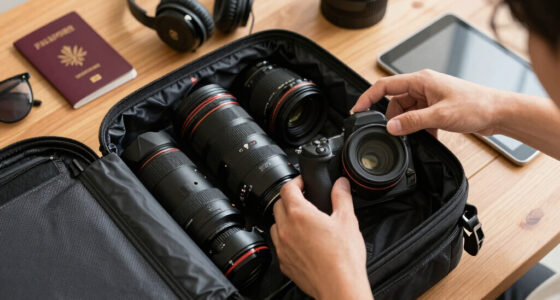
Your camera bag can hold more value than the car parked beside it, yet a thief may need only three quiet seconds to open an exposed zipper. Photographers frequently carry $2,000 to $10,000 or more in bodies, lenses, cards, and batteries, all packed into a tidy bundle with a shoulder strap. Among theft-prone personal property, camera gear is compact, recognizable, and easy to resell.
I have worked in crowded streets, railway stations, airports, festivals, and dim event venues where a bag receives more bumps than a pinball. The close contact feels harmless until you notice a zipper has moved. You need security features that work while your attention stays on the photograph, not features that demand a complicated ritual every time you change a lens.
This guide shows you which defenses deserve space and weight in your bag. You will learn how to judge rear access, zipper locks, cut-resistant materials, anchor cables, discreet styling, and tracker pockets without getting distracted by vague anti-theft claims. The goal is not an imaginary fortress; it is a practical bag that makes your equipment harder to notice, slower to steal, and easier to trace.
Prioritize rear-panel access and securable zipper pulls because they block quiet access while you wear the bag.
Use layered protection: a discreet exterior deters attention, reinforced construction adds delay, and a hidden tracker supports recovery.
Treat slash-resistant fabrics as time-buying materials, not a guarantee against a determined thief with tools.
Anchor your bag to a solid object in cafés, trains, airports, and hotel rooms rather than relying on visual supervision alone.
Upgrade a sound existing bag with zipper clips, a hidden tracker, a cable, serial-number records, and front-carry habits.
Anti-Theft Features Worth Having in a Camera Bag
The best defense is layered: make your gear harder to notice, slower to access, and easier to recover. Rear-panel access, securable zipper pulls, discreet styling, reinforced construction, an anchor point, and a hidden tracker protect without turning every lens change into a ritual.
The Three Layers That Stop Most Bag Theft
Each layer solves a different failure. A discreet exterior cannot lock a zipper, and a tracker cannot stop someone lifting an open bag from the back of a chair.
Deter
Choose quiet colors, modest proportions, minimal branding, and a shape that does not advertise professional equipment.
Reduce target signalsDelay
Use rear access, joined zipper pulls, reinforced straps, strong attachment seams, concealed buckles, and a cable anchor.
Add time + effortRecover
Hide a tracker, record every serial number, photograph the kit, retain receipts, and maintain suitable camera insurance.
Create a recovery trailWhat Deserves Space, Weight, and Budget?
Prioritize passive features that keep working while you frame a photograph, read a departure board, or move through a crowd.
| Feature | Primary threat | Priority | Buying test |
|---|---|---|---|
| Rear-panel access | Unnoticed opening while worn | Main opening stays against your body | |
| Lockable zipper pulls | Quiet unzipping in crowds | Operates by touch; awkward for a stranger | |
| Hidden tracker pocket | Post-theft location loss | Not visible during a quick compartment search | |
| Anchor point + cable | Whole-bag grab | Attaches to the bag structure, not a weak loop | |
| Slash resistance | Strap or panel cutting | Material and reinforcement are specified | |
| RFID pocket | Contactless-card skimming | Treat as a bonus, not core bag security |
Slash Resistance Buys Time—not Invincibility
Cut-resistant fibers, embedded mesh, reinforced seams, and steel-cable straps turn one quiet slice into several awkward attempts. Construction quality remains decisive.
Inspect the connection, not just the fabric.
A reinforced strap offers little protection if it joins the bag through a thin plastic loop or a narrow patch of stitching. Look for broad, bar-tacked seams and reinforced load points.
The purpose is resistance you can feel: a snag, tug, sound, or extra second that exposes the attempt.
Upgrade the Bag You Already Own in Five Moves
A sound existing bag can gain meaningful protection without replacement. Focus on simple improvements you will use every day.
Join the pulls
Add low-profile zipper clips or small locking connectors to the main compartment.
Hide a tracker
Place an AirTag- or Tile-style tracker behind padding or inside a discreet sleeve.
Add a cable
Carry a compact tether for cafés, trains, airports, hotel rooms, and luggage racks.
Quiet the branding
Cover prominent logos and avoid attachments that advertise specialist camera gear.
Record the kit
Store serial numbers, receipts, gear photos, and insurance details away from the bag.
Wear openings inward
Move a sling to the chest and keep the main zipper within sight or against your body.
Anchor before relaxing
Secure the bag to a solid fixture instead of relying on peripheral vision alone.
Use cable + tracker
Combine physical delay with a concealed recovery signal during long unattended moments.
Remove or conceal
A locked car is not secure storage. Take the bag or keep it invisible before arrival.
From Lower Visibility to a Better Recovery Chance
The strongest setup connects prevention, delay, evidence, and financial protection rather than expecting one clever feature to do everything.
Discreet exterior
Reduces the signal that valuable specialist equipment is inside.
Blocked access
Rear entry and joined pulls frustrate fast, unnoticed opening.
Hidden signal
A concealed tracker preserves a location trail after the bag disappears.
Documented gear
Serial records and insurance support identification, reporting, and replacement.
The Three Layers That Stop Most Bag Theft
The anti-theft features worth having in a camera bag cover three jobs: deter attention, delay access, and support recovery. A plain exterior discourages interest, rear access and locks slow a thief, and a concealed tracker leaves a trail after a loss. You need all three because each solves a different failure.
- Deter: Choose quiet colors, modest proportions, and minimal branding.
- Delay: Use rear access, securable zipper pulls, reinforced straps, and anchor points.
- Recover: Hide a tracker, record serial numbers, and maintain suitable insurance.
Think of these layers like protecting a house. Curtains hide what you own, a deadbolt slows entry, and a marked serial number helps identify stolen property. A curtain cannot replace a lock, just as a tracker cannot stop someone from lifting an open messenger bag from the back of your chair.
This framework matches the way most camera-bag theft happens. Opportunistic theft outnumbers violent robbery, particularly in crowds where a thief can unzip, grab, and blend into moving bodies [1]. Passive defenses suit that risk because they keep working while you read a departure board, frame a street portrait, or help a client adjust a jacket.
For example, imagine boarding a packed tram with a black backpack. The bag looks ordinary, its main opening rests against your back, and the zipper pulls clip together beneath a small fabric flap. That combination gives the person behind you no obvious target and no quick opening, which often sends an opportunist toward an easier bag.
No camera bag is theft-proof. A useful bag changes the thief’s calculation by adding uncertainty, noise, time, and effort.
As an affiliate, we earn on qualifying purchases.
Why Rear Access and Locking Pulls Earn First Priority
Anti-Theft Features Worth Having in a Camera Bag start with rear-panel access and securable zipper pulls. Rear access places the main opening against your body, while joined pulls stop a hand from quietly walking the zipper open. Together, they block the easiest form of crowded-street theft without adding much weight.
Rear-panel access means the camera compartment opens from the padded side touching your back. It is a practical design choice, not a marketing mood. When you stand shoulder to shoulder on a metro platform, the main zipper remains pressed between your jacket and the bag, where another person cannot reach it cleanly.
Lockable pulls also need close inspection. Look for metal loops, interlocking tabs, or pulls that clip into a fixed hook. A tiny padlock can help during a long train ride, but a quick clip works better when you change lenses often; if the lock takes 30 seconds every time, you will soon stop using it.
I prefer a zipper connection that I can operate by touch while wearing gloves. On a winter street assignment, that small detail lets you secure the bag after a lens change without setting it on wet pavement. The mechanism should feel simple for you and awkward for an unfamiliar hand, rather like a gate latch you have opened a hundred times.
Test the opening before you buy. Load the bag with a camera and two lenses, put it on, and ask whether a side zipper exposes the equipment while worn. Some bags advertise rear access yet include a large, unprotected side door; that door can become the easiest route into the compartment.
As an affiliate, we earn on qualifying purchases.
Which Materials Buy You Time Against a Slash-and-Grab
The materials that help most are cut-resistant fibers, embedded mesh, reinforced seams, and steel-cable straps. They do not make a camera bag cut-proof. Their real job is to turn one silent slice into several awkward attempts, buying you time to feel movement, hear a struggle, or step away.
| Feature | What it resists | Tradeoff | Best use |
|---|---|---|---|
| Embedded wire mesh | Panel slashing | Adds weight and stiffness | Transit and crowded markets |
| UHMWPE or Dyneema-type fibers | Cuts and tearing | Construction quality varies | Light travel bags |
| Steel-cable strap | Fast strap cutting | May feel firm on the shoulder | Cross-body urban carry |
| Reinforced seams | Pulling and panel separation | Hard to judge from photos | Heavy camera kits |
A slash-resistant panel works like a seat belt. You hope it never receives a serious load, but its hidden structure changes what happens when force arrives. The stitching matters as much as the fiber; strong fabric attached with weak seams can still peel away when someone yanks the bag.
Inspect the strap attachment points closely. A reinforced strap offers little help if it joins the bag through a thin plastic loop or a narrow patch of stitching. With a loaded mirrorless body, a 70–200mm lens, and two primes, the bag may already weigh 7 to 10 kilograms, so broad bar-tacked seams also improve everyday durability.
Imagine someone trying to cut a cross-body strap as you leave a busy night market. A cable-reinforced strap may snag the blade instead of falling free, creating a sharp tug you can feel. That brief resistance is the purpose: delay and attention, not invincibility.
Cut-resistant does not mean cut-proof. Treat any claim of complete protection with suspicion unless the maker provides exact material and construction details.
As an affiliate, we earn on qualifying purchases.
Choose a Shape That Keeps Expensive Gear Quiet
A secure camera bag should look ordinary, stay close to your body, and keep its openings visible. Plain fabrics and small logos reduce unwanted attention, while a sling worn across your chest gives you direct control in dense crowds. The safest shape depends on your kit and where you shoot.
A camera bag does not need to resemble a padded black equipment cube. That familiar silhouette can announce what sits inside, especially when camera gear is carried visibly by tourists near landmarks. A muted blue, olive, brown, or charcoal exterior often blends with commuter bags while still giving you the dividers and padding your equipment needs.
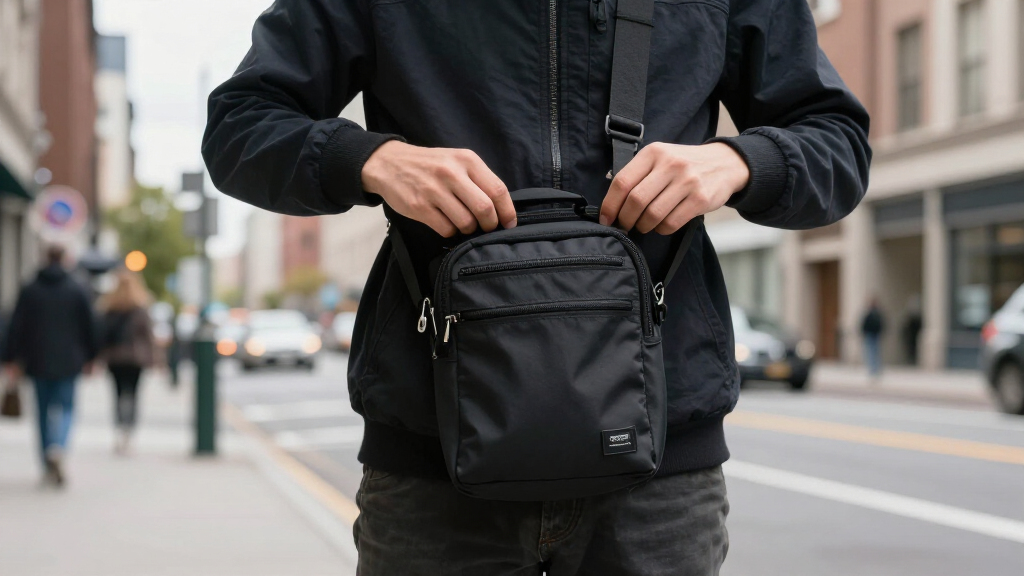
For a compact body and one spare lens, I like a sling that rotates from your back to your chest without coming off. On a packed station escalator, you can move it forward and rest one hand across the zipper. The position works like bringing your wallet from a rear pocket to a front pocket: access becomes easier for you and harder for anyone behind you.
A rear-opening backpack suits a larger kit because it carries weight across both shoulders and hides the main door. A messenger offers fast lens changes, but it becomes vulnerable when it slides behind your hip. If you use one, keep the flap facing inward, secure its buckle, and move the bag to the front of your body in crowds.
Discretion has limits. A low-profile bag will not hide the full-size tripod strapped outside or the long white telephoto lens in your hand. During an event exit, when sidewalks tighten and everyone moves at once, your handling matters as much as the fabric: shorten the strap, close every pocket, and keep the bag within your natural line of sight.
As an affiliate, we earn on qualifying purchases.
Give a Stolen Bag a Trail Home
Anti-Theft Features Worth Having in a Camera Bag include a hidden tracker pocket, an anchor point, and recorded gear details. A tracker supports location after a theft, while a cable anchor prevents a quick lift in cafés, trains, and hotel rooms. Serial records then help you identify each item accurately.
Purpose-built tracker sleeves have become common since Bluetooth trackers entered everyday use [2]. The pocket should sit deep inside the padding or beneath a divider, not behind an obvious exterior zipper. A visible tracker is easy to discard; a concealed one may keep reporting while the thief concentrates on leaving the area.
Trackers have limits. Bluetooth models rely on nearby devices, batteries run down, and location updates can lag. They are recovery aids, not permission to confront anyone; share location information with police, venue security, or your insurer rather than following a stolen bag into an unfamiliar building.
An anchor point handles a different problem. At a café, pass a thin security cable through the bag’s reinforced loop and around a solid table frame, then keep the bag between your feet. The cable is like a parking brake rather than a concrete wall: it prevents the effortless roll-away theft that happens when you turn toward the counter.
Make recovery records before your trip. Photograph every body and lens, capture the serial numbers, save purchase records, and store a copy away from the bag. Memory cards deserve special attention because unbacked-up images can be worth more than the hardware; rotate used cards into a concealed wallet on your body whenever the assignment allows.
Skip the Gimmicks and Pay for the Details That Matter
The best buying decision gives priority to rear access, strong zipper hardware, reinforced construction, and a usable anchor. RFID lining, movement alarms, and charging panels can help in narrow situations, but they should not replace basic physical security. Judge each feature by the specific theft method it addresses.
RFID blocking shields compatible cards and passports from nearby radio scans, yet real-world RFID theft remains relatively rare compared with someone taking the wallet or bag itself [1]. Treat the lining as a welcome extra. Do not choose a poorly built bag merely because its product page repeats RFID in large letters.
Anti-theft buckles can add useful friction when they require a concealed press or two separate movements. Try them with cold fingers and one hand. During a rainy shoot, a clever buckle that traps your fingers feels like a puzzle box hanging from your shoulder, and you may leave it open rather than fight it again.
Movement alarms can warn you when a bag leaves a set range, though busy wireless areas and phone settings may cause delayed alerts. Solar panels add surface area and wiring while giving limited power under weak indoor light. For most photographers, a replaceable tracker battery and a small power bank create a simpler setup.
The label anti-theft has no widely shared construction standard, so inspect the parts behind the claim. Look for the zipper type, strap reinforcement, mesh coverage, seam design, and exact access layout. If the description gives you only dramatic phrases and no physical details, you are paying for a promise you cannot examine.
Upgrade the Bag You Already Own in Five Moves
You can make an existing camera bag safer with joined zipper pulls, a concealed tracker, a security cable, quieter branding, and better carrying habits. These changes work best when the bag already has strong seams and dependable straps. Start with the opening a stranger could reach most easily while you wear it.
- Map every opening. Load the bag, wear it normally, and note which zipper pulls sit outside your view.
- Join exposed pulls. Add small locking clips, split rings, or a compact luggage lock that fits without straining the zipper.
- Hide a tracker. Place it beneath a removable divider or inside a discreet internal sleeve, leaving enough access for battery changes.
- Add an anchor cable. Use a reinforced loop or handle base rather than a decorative fabric tab.
- Practice front carry. Move a sling or messenger across your chest before entering a station, queue, festival, or market.
Run a simple home test after the upgrade. Put on a coat, fill the bag with your normal kit, and try to open every secured compartment without looking. If a clip scratches the camera, catches the rain cover, or takes both hands every time, adjust it now rather than discovering the problem beside a noisy boarding gate.
Suppose you own a plain backpack with a strong top handle but ordinary double zippers. A pair of low-profile zipper clips, a tracker hidden below the base divider, and a cable looped through the handle can address crowd access, recovery, and stationary theft without replacing the bag. That is layered security in a very practical form.
Your habits finish the job. Do not hang the bag over a chair where someone can lift it while passing, and never leave it visible in a parked vehicle. In a hotel room, cable it to a fixed structure or use the room safe for smaller items; vehicle and room break-ins bypass wearable defenses entirely.
Frequently Asked Questions
Do anti-theft camera bags actually work?
Anti-theft bags deter and delay opportunistic theft, which includes quiet unzipping, grab-and-run attempts, and lifting an unattended bag. They cannot stop a determined thief with enough time and tools, so combine the bag with good carrying habits, documentation, and insurance.
Is rear access better than side access?
Rear access is safer while the bag is on your back because your body covers the main opening. Side access can make lens changes faster, but you should choose a bag with a lockable or concealed side zipper if you regularly shoot in crowds.
Is RFID blocking necessary in a camera bag?
RFID blocking is a bonus rather than a primary buying reason. Physical theft of the card, passport, or whole bag poses a more direct risk, so put your budget and attention toward secure openings, strong straps, and hidden pockets first.
Is a backpack, sling, or messenger safest in crowds?
A sling worn across your chest gives you the best control with a small kit, while a rear-opening backpack protects larger loads and carries them comfortably. A messenger becomes less secure when it slides behind your hip, so keep it forward and close its flap and buckle.
Can I add anti-theft features to my current camera bag?
Yes. You can add zipper clips, a small lock, a hidden tracker, and a security cable to many well-built bags. Test every addition with your normal kit so metal hardware does not rub against a lens, restrict emergency access, or overload a weak fabric loop.
Should a camera bag tracker be hidden?
Hide the tracker inside padding or beneath a divider while keeping it accessible for battery replacement. A thief can remove a visible tracker within seconds, while a concealed device may continue reporting long enough for you to give useful location information to police or venue security.
Does camera insurance make anti-theft protection unnecessary?
No. Insurance covers qualifying financial loss, while security features reduce the chance of losing equipment, time, and unbacked-up photographs. Check the policy wording for travel, unattended vehicles, deductibles, and professional use, then keep serial numbers and receipts away from the bag.
Conclusion
Choose a camera bag by the theft methods it blocks, not by the size of the anti-theft label on its tag. Start with rear access and lockable pulls, then add a reinforced strap, an anchor point, discreet styling, and a hidden tracker. Those features form a quiet system that works while you concentrate on making photographs.
Before your next trip, load your real kit and spend five minutes checking every opening, strap, and attachment point. Secure the weak zipper, record the serial numbers, and practice moving the bag to your chest. When the train doors open into a river of coats and rolling luggage, your camera should feel close, closed, and boring to everyone but you.
Fall yard work Picks
leaf blowers
As an affiliate, we earn on qualifying purchases.