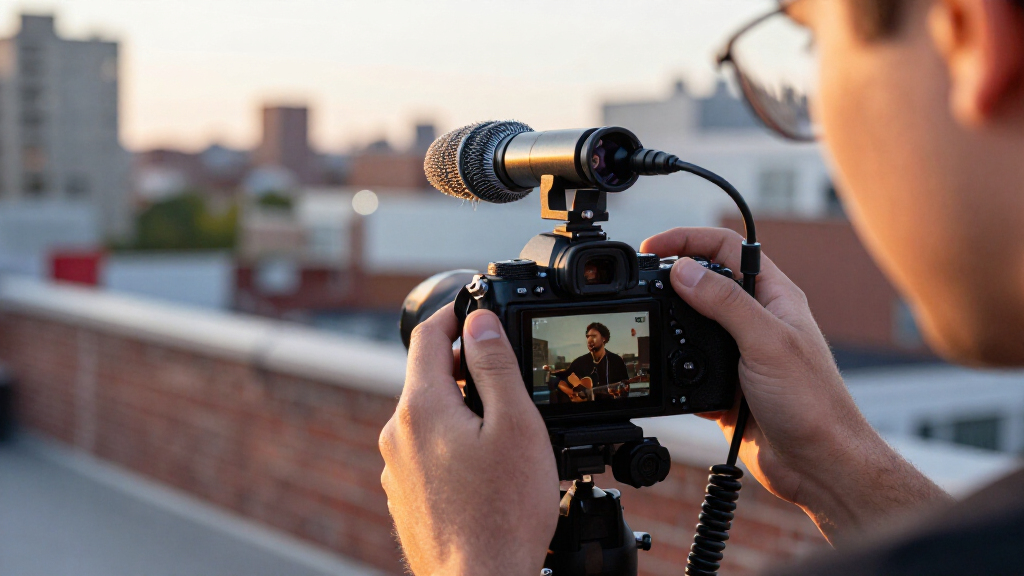

Choosing the right mirrorless camera on camera microphones can make or break your audio quality. The RØDE VideoMic Pro+ stands out as the best overall pick due to its exceptional noise floor and versatile power options, while the Sennheiser MKE 200 offers a compact, high-fidelity alternative for creators who prioritize portability. The main tradeoffs involve balancing size, battery life, and connectivity complexity against raw audio fidelity. This guide breaks down the top contenders to help you identify which model aligns with your specific shooting environment and technical needs.

Get audio and creator gear delivered free with Prime
- Fast, free delivery on millions of items
- Prime Video, Amazon Music and more included
- Member-only deals all year
Complete the kit


Key Takeaways
- Wireless lavalier systems like the DJI Mic Mini are increasingly replacing traditional shotgun mics for run-and-gun vlogging due to superior voice isolation.
- The RØDE VideoMic Pro+ remains the benchmark for pro-grade on-camera audio, offering unique features like automatic power-on and safety channels that cheaper competitors lack.
- Compact supercardioid mics like the Sennheiser MKE 200 provide a significant upgrade over built-in camera mics without adding substantial bulk to small mirrorless bodies.
- Battery type matters more than many buyers realize; models with internal rechargeable batteries offer convenience, while those using AA batteries provide longer runtime for remote shoots.
- Plug-and-play compatibility is inconsistent across brands; always verify that the microphone’s 3.5mm TRS connection matches your specific mirrorless camera’s input requirements.
| RØDE VideoMicro Compact On-Camera Microphone with Rycote Lyre Shock Mount |  | Best Ultra-Compact Starter | Connectivity: 3.5 mm jack | Polar Pattern: Unidirectional | Frequency Response: 100 Hz–20 kHz | VIEW LATEST PRICE | See Our Full Breakdown |
| Movo VXR10 Universal Shotgun Microphone |  | Best Value for Hybrid Shooters | Connectivity: 3.5 mm jack | Polar Pattern: Unidirectional | Frequency Response: 100–20,000 Hz | VIEW LATEST PRICE | See Our Full Breakdown |
| Sennheiser MKE 200 Directional On-Camera Microphone |  | Best for Noise Reduction | Microphone Type: Directional on-camera | Connectors: 3.5 mm TRS and TRRS | Compatibility: DSLRs, mirrorless, mobile devices | VIEW LATEST PRICE | See Our Full Breakdown |
| Comica VM20 Super-Cardioid Shotgun Microphone for Cameras and Smartphones | 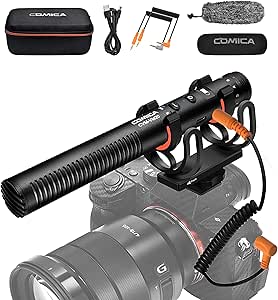 | Best for Control and Versatility | Microphone Type: Shotgun | Polar Pattern: Super cardioid | Connectivity: 3.5 mm jack | VIEW LATEST PRICE | See Our Full Breakdown |
| RØDE VideoMic GO II Compact On-Camera Shotgun Microphone |  | Best Modern Connectivity | Connectivity: 3.5 mm TRS and USB-C | Microphone Type: Shotgun | Polar Pattern: Supercardioid | VIEW LATEST PRICE | See Our Full Breakdown |
| Sennheiser MKE 400 Directional On-Camera Shotgun Microphone |  | Best for Audio Monitoring | Polar Pattern: Supercardioid | Connectivity: 3.5 mm TRS and TRRS | Power Source: AAA Batteries (Included) | VIEW LATEST PRICE | See Our Full Breakdown |
| RØDE VideoMicro II Ultra-Compact On-Camera Shotgun Microphone | 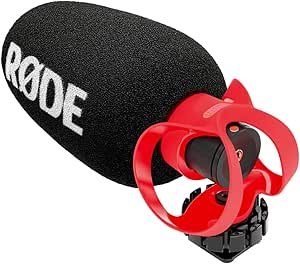 | Best Ultra-Compact Option | Weight: 39 g | Power Source: Camera Powered (No Batteries) | Polar Pattern: Unidirectional | VIEW LATEST PRICE | See Our Full Breakdown |
| RØDE VideoMic Pro+ On-Camera Shotgun Microphone |  | Best Premium Performance | Power Options: LB-1 Rechargeable, AA, or Micro USB | Features: High-Pass Filter, 20 dB Pad, Auto On/Off | Suspension: Rycote Lyre System | VIEW LATEST PRICE | See Our Full Breakdown |
| Audio-Technica ATV-SG1 On-Camera Shotgun Microphone |  | Best for Detailed Audio Clarity | Diaphragm Size: 14 mm | Battery Type: Lithium-ion (Included) | Mounting: Rotating Hot Shoe Mount | VIEW LATEST PRICE | See Our Full Breakdown |
| Movo Wireless Mini Camera Microphone |  | Best Wireless Entry-Level Option | Wireless Range: 164 ft | Battery Life: 10 Hours | Polar Pattern: Omnidirectional | VIEW LATEST PRICE | See Our Full Breakdown |
| DJI Mic Mini Wireless Microphone (2 Transmitters, 1 Receiver, Charging Case) | 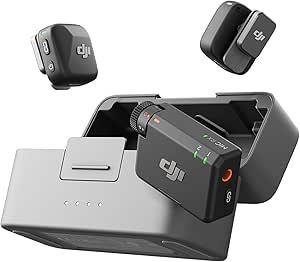 | Best for Solo Creators & Multi-Person Interviews | Transmitter Weight: 10 g | Transmission Range: 400 m | Battery Life: Up to 48 hours (with case) | VIEW LATEST PRICE | See Our Full Breakdown |
| NEEWER VM10 Plug-and-Play Vlog Microphone |  | Best Budget Wired Option for Beginners | Polar Pattern: Supercardioid | Connectivity: 3.5 mm TRS, USB-C, Lightning | Power Source: Corded (No Battery) | VIEW LATEST PRICE | See Our Full Breakdown |
| Movo X1-Mini Supercardioid Shotgun Microphone with USB-C and 3.5 mm Outputs |  | Best Hybrid Connectivity for Modern Cameras | Microphone Type: Shotgun | Connectivity: 3.5 mm and USB-C | Audio Resolution: Up to 24-bit (Digital Mode) | VIEW LATEST PRICE | See Our Full Breakdown |
| COMICA VM20 Shotgun Microphone |  | Best for Manual Control & Outdoor Durability | Polar Pattern: Super Cardioid | Gain Adjustment: Stepless (-43 dB to -23 dB) | Low-Cut Filters: 75 Hz, 150 Hz | VIEW LATEST PRICE | See Our Full Breakdown |
| Movo VXR10-PRO Shotgun Video Microphone with Rycote Lyre Shock Mount |  | Best Value Wired Microphone with Premium Mount | Microphone Type: Shotgun | Polar Pattern: Supercardioid | Connectivity: 3.5 mm TRS and TRRS | VIEW LATEST PRICE | See Our Full Breakdown |
| mirrorless camera on camera microphone | Connectivity | Polar Pattern | Weight | Power Source |
|---|---|---|---|---|
| RØDE VideoMicro Compact On-Cam | 3.5 mm jack | Unidirectional | 1.44 ounces (42 g) | — |
| Movo VXR10 Universal Shotgun M | 3.5 mm jack | Unidirectional | 51 g | No battery required |
| Sennheiser MKE 200 Directional | — | — | — | Plug-in power |
| Comica VM20 Super-Cardioid Sho | 3.5 mm jack | Super cardioid | — | — |
| RØDE VideoMic GO II Compact On | 3.5 mm TRS and USB-C | Supercardioid | 60 g | Corded electric; no battery |
| Sennheiser MKE 400 Directional | 3.5 mm TRS and TRRS | Supercardioid | 344 g | AAA Batteries (Included) |
| RØDE VideoMicro II Ultra-Compa | 3.5 mm TRS/TRRS | Unidirectional | 39 g | Camera Powered (No Batteries) |
| RØDE VideoMic Pro+ On-Camera S | — | — | 4.32 oz | — |
| Audio-Technica ATV-SG1 On-Came | — | — | 13.8 ounces | — |
| Movo Wireless Mini Camera Micr | 2.4 GHz / 3.5 mm Jack | Omnidirectional | — | — |
| DJI Mic Mini Wireless Micropho | USB-C, DJI OsmoAudio | — | — | — |
| NEEWER VM10 Plug-and-Play Vlog | 3.5 mm TRS, USB-C, Lightning | Supercardioid | 5.46 ounces | Corded (No Battery) |
| Movo X1-Mini Supercardioid Sho | 3.5 mm and USB-C | — | — | Plug-in Power |
| COMICA VM20 Shotgun Microphone | — | Super Cardioid | — | — |
| Movo VXR10-PRO Shotgun Video M | 3.5 mm TRS and TRRS | Supercardioid | — | Device Powered |
More Details on Our Top Picks
RØDE VideoMicro Compact On-Camera Microphone with Rycote Lyre Shock Mount
This microphone stands out for extreme portability and zero-battery operation, making it ideal for creators who refuse to carry extra gear. Unlike the Comica VM20, which offers adjustable gain and filters, the VideoMicro is purely plug-and-play, relying entirely on your camera’s plug-in power. This simplicity is a double-edged sword: while it eliminates dead battery anxiety, it also removes any control over audio levels or frequency response. The Rycote Lyre shock mount included here provides superior isolation compared to basic foam mounts found on cheaper rivals, protecting your audio from camera vibrations. However, if your camera does not supply at least 3V of power, this mic becomes useless, a limitation the battery-powered Comica VM20 avoids entirely.
Pros:- Ultra-compact metal body weighs only 42g
- Includes high-quality Rycote Lyre shock mount
- No battery or charging required
- Plug-and-play simplicity with included accessories
Cons:- Requires camera to supply minimum 3V plug-in power
- No adjustable gain or low-cut filters
- Fixed polar pattern limits flexibility in noisy scenes
Best for: Vloggers using mirrorless cameras with reliable plug-in power who prioritize minimal weight and zero setup time.
Not ideal for: Users with older cameras lacking plug-in power or those needing adjustable gain controls for varying environments.
- Connectivity:3.5 mm jack
- Polar Pattern:Unidirectional
- Frequency Response:100 Hz–20 kHz
- Signal-to-Noise Ratio:75 dB
- Power:Camera plug-in power (min 3 V)
- Weight:1.44 ounces (42 g)
- Body Material:Metal
- Included Accessories:Shoe mount, windscreen, SC2 cable
Our verdict“Choose this if you want the simplest, lightest audio upgrade possible and trust your camera’s power output.”
Movo VXR10 Universal Shotgun Microphone
The Movo VXR10 offers a compelling all-in-one kit that bridges the gap between camera and smartphone recording, a feature the RØDE VideoMicro lacks in its standard configuration. It includes both camera and smartphone cables, along with two different shock mounts, providing flexibility that single-cable competitors do not. While it shares the battery-free operation model with the VideoMicro, the VXR10’s integrated shock mount and aluminum body feel slightly more robust for travel. However, its 200 ohm impedance means audio quality can vary significantly depending on the preamp in your device, potentially requiring adapters for modern phones. It is a solid middle-ground option for those who switch between devices frequently but do not want to manage batteries.
Pros:- Includes cables for both cameras and smartphones
- Two shock mount options included in the box
- Compact aluminum body resists wear
- Battery-free operation simplifies workflow
Cons:- May require adapters for newer smartphones
- Performance varies based on device preamp quality
- No onboard controls for gain or filtering
Best for: Hybrid creators who switch between mirrorless cameras and smartphones and need a comprehensive accessory kit.
Not ideal for: Users with modern smartphones lacking 3.5mm jacks who do not want to carry additional adapters.
- Connectivity:3.5 mm jack
- Polar Pattern:Unidirectional
- Frequency Response:100–20,000 Hz
- Impedance:200 ohm
- Weight:51 g
- Power Source:No battery required
- Included Accessories:Windscreen, case, cables, 2 shock mounts
- Compatibility:Cameras, smartphones, tablets
Our verdict“This kit is best for creators who need versatile connectivity options without the hassle of charging batteries.”
Sennheiser MKE 200 Directional On-Camera Microphone
Sennheiser’s MKE 200 distinguishes itself with integrated wind protection and an internal suspension mount, offering a cleaner baseline audio profile than the bare-bones RØDE VideoMicro. The interchangeable connectors allow you to swap between cameras and mobile devices without needing separate cables, a convenience the Movo VXR10 achieves only by including multiple cords. This design reduces the risk of losing accessories, though it limits customization options. The directional pickup is tuned specifically for speech, making it highly effective for interviews and vlogs where voice clarity is paramount. However, unlike the Comica VM20, it offers no user-adjustable settings, meaning you are locked into Sennheiser’s preset processing, which may not suit all acoustic environments perfectly.
Pros:- Integrated wind protection eliminates need for furry windscreens
- Internal suspension reduces handling noise effectively
- Interchangeable connectors for camera and mobile use
- Compact and streamlined design
Cons:- No user-adjustable gain or frequency controls
- Fixed processing may not suit all environments
- Higher price point than basic plug-in-power mics
Best for: Interviewers and vloggers who prioritize clean speech capture and want built-in wind protection without external foam.
Not ideal for: Users who need adjustable gain or low-cut filters to handle highly variable or noisy environments.
- Microphone Type:Directional on-camera
- Connectors:3.5 mm TRS and TRRS
- Compatibility:DSLRs, mirrorless, mobile devices
- Mount:Standard cold shoe
- Noise Reduction:Integrated wind and suspension
- Power Source:Plug-in power
- Design Feature:Interchangeable connectors
Our verdict“Select this for its refined out-of-the-box performance and superior handling noise isolation in speech-focused scenarios.”
Comica VM20 Super-Cardioid Shotgun Microphone for Cameras and Smartphones
The Comica VM20 is the most technically equipped option here, offering adjustable gain and low-cut filters that the RØDE VideoMicro and Sennheiser MKE 200 completely lack. Its rechargeable battery decouples the microphone from your camera’s power supply, ensuring consistent performance regardless of your device’s plug-in power capabilities. The OLED display provides real-time feedback on battery and power status, a significant advantage for long shoots where battery anxiety is a concern. While it is heavier than the Movo VXR10, the trade-off yields professional-level audio shaping capabilities directly on the mic. The inclusion of USB-C charging and the ability to use the mic while charging further cements its role as a high-control utility for demanding creators.
Pros:- Adjustable gain and two low-cut filter modes
- OLED display for battery and power status
- USB-C charging with use-while-charging capability
- Includes both TRS and TRRS cables
Cons:- Heavier than battery-free alternatives
- Requires charging management
- No XLR output for professional audio recorders
Best for: Serious videographers who need manual control over gain and frequency response and reliable battery life.
Not ideal for: Minimalists who prefer zero-setup, battery-free operation and do not need adjustable audio parameters.
- Microphone Type:Shotgun
- Polar Pattern:Super cardioid
- Connectivity:3.5 mm jack
- Low-Cut Filters:75 Hz and 150 Hz
- Gain Adjustment:10-level adjustable
- Battery Life:Up to 60 hours standby
- Charging:USB-C
- Display:OLED battery/power display
Our verdict“This is the best choice for creators who want manual audio control and independence from camera power.”
RØDE VideoMic GO II Compact On-Camera Shotgun Microphone
The RØDE VideoMic GO II updates the classic plug-and-play formula with USB-C connectivity alongside the traditional 3.5mm jack, catering to modern mirrorless cameras and computers that lack analog inputs. Unlike the Comica VM20, it remains battery-free, drawing power directly from the connected device, which simplifies the workflow for users who dislike charging cycles. The HELIX isolation mount offers superior vibration damping compared to the basic shock mounts on the Movo VXR10, resulting in cleaner audio during handheld shooting. While it lacks the onboard physical controls of the Comica, it allows for deeper customization via RØDE Central software, bridging the gap between simple hardware and software-driven audio shaping. It is the logical evolution for creators moving toward digital-first camera systems.
Pros:- Dual connectivity with USB-C and 3.5mm TRS
- HELIX isolation mount reduces impact noise
- No battery required for operation
- Software-based customization via RØDE Central
Cons:- Advanced features require software setup
- No physical buttons for quick adjustments
- Dependent on device power output stability
Best for: Users with modern cameras or computers featuring USB-C audio inputs who want a battery-free, high-isolation solution.
Not ideal for: Creators who need immediate physical access to gain controls and filters without using software.
- Connectivity:3.5 mm TRS and USB-C
- Microphone Type:Shotgun
- Polar Pattern:Supercardioid
- Weight:60 g
- Frequency Range:20 Hz–20 kHz
- Power Source:Corded electric; no battery
- Included Accessories:HELIX mount, windshield, SC14 cable
- Software:RØDE Central compatible
Our verdict“Pick this for seamless integration with modern digital devices and excellent vibration isolation without battery maintenance.”
Sennheiser MKE 400 Directional On-Camera Shotgun Microphone
This model stands out because it includes a headphone output, a feature rarely found in this price bracket. While the RØDE VideoMicro II is simpler and lighter, the Sennheiser allows you to listen to your recording in real time, catching wind noise or interference before you lose a take. The supercardioid pattern offers tighter focus than standard cardioid mics, reducing side noise effectively. However, it relies on AAA batteries, which means you need to carry spares for long shoots. The included windshield and shock absorption help, but the unit is bulkier than ultra-compact competitors. If you value audio certainty over minimal weight, this trade-off is worth it.
Pros:- Integrated headphone jack allows for real-time audio monitoring
- Supercardioid pattern rejects side noise more effectively than standard cardioid mics
- Includes both TRS and TRRS cables for broad device compatibility
Cons:- Requires AAA batteries, adding maintenance overhead
- Single-channel output limits stereo recording capabilities
- Bulkier than ultra-compact alternatives like the RØDE VideoMicro II
Best for: Content creators who need to monitor audio levels directly on their camera to prevent ruined takes.
Not ideal for: Travel vloggers prioritizing the smallest possible footprint, as this mic is larger than the VideoMicro series.
- Polar Pattern:Supercardioid
- Connectivity:3.5 mm TRS and TRRS
- Power Source:AAA Batteries (Included)
- Weight:344 g
- Dimensions:9.45 x 4.53 x 2.76 inches
- Monitoring:Headphone Output Included
Our verdict“Choose this if you prioritize audio confidence through monitoring over absolute portability.”
RØDE VideoMicro II Ultra-Compact On-Camera Shotgun Microphone
The VideoMicro II is designed for creators who refuse to add bulk to their rig. At just 39 grams, it is significantly lighter than the Sennheiser MKE 400, making it ideal for small mirrorless bodies or gimbals where balance is critical. It requires no batteries, drawing power from the camera, which eliminates a common point of failure. The new HELIX isolation mount improves upon the previous Lyre design by reducing handling noise more efficiently. However, it lacks the advanced controls and monitoring features of larger rivals. You get a simple, plug-and-play solution that sounds surprisingly good for its size, but you cannot adjust sensitivity or monitor levels directly.
Pros:- Extremely lightweight and compact for gimbal or small camera use
- No batteries required; powered directly by the camera
- HELIX mount provides superior handling noise reduction
Cons:- No headphone monitoring or adjustable controls
- Plastic construction feels less durable than metal-bodied competitors
- Fixed sensitivity may require camera pre-amp adjustments
Best for: Vloggers and travel creators who need a lightweight, battery-free mic that doesn’t clutter their camera setup.
Not ideal for: Audio purists who need adjustable sensitivity or headphone monitoring, as this model is fixed-parameter.
- Weight:39 g
- Power Source:Camera Powered (No Batteries)
- Polar Pattern:Unidirectional
- Mounting:HELIX Isolation Mount
- Connectivity:3.5 mm TRS/TRRS
- Dimensions:3.14 × 0.85 × 0.85 in
Our verdict“This is the go-to choice for minimalists who want better sound without extra weight or batteries.”
RØDE VideoMic Pro+ On-Camera Shotgun Microphone
This microphone is built for professionals who demand versatility and control. Unlike the simpler VideoMicro II, the Pro+ offers a high-pass filter and a 20 dB pad, allowing you to manage loud environments or deep bass rumble directly on the mic. The Rycote Lyre suspension is industry-standard for vibration isolation, outperforming the basic mounts found on budget options. Power options are flexible: use the included rechargeable LB-1 battery, AAs, or USB. The automatic power on/off feature is a genuine workflow saver, ensuring you never drain batteries by forgetting to switch it off. It is heavier and more expensive, but the audio flexibility justifies the cost for serious shooters.
Pros:- Multiple power sources (Rechargeable, AA, USB) offer maximum flexibility
- On-board high-pass filter and pad for audio control at the source
- Automatic power on/off prevents battery drain and user error
Cons:- Heavier and larger than compact alternatives
- Higher price point reflects professional-grade features
- Requires battery management or charging routines
Best for: Professional videographers and documentary shooters who need on-mic controls and robust vibration isolation.
Not ideal for: Casual users or beginners who find extra switches and battery management unnecessary complexity.
- Power Options:LB-1 Rechargeable, AA, or Micro USB
- Features:High-Pass Filter, 20 dB Pad, Auto On/Off
- Suspension:Rycote Lyre System
- Weight:4.32 oz
- Frequency Range:40 Hz–20 kHz
- Warranty:10 Years
Our verdict“Invest here if you need professional audio controls and reliability for high-stakes video production.”
Audio-Technica ATV-SG1 On-Camera Shotgun Microphone
The ATV-SG1 distinguishes itself with a 14 mm diaphragm, larger than many competitors, which captures a fuller, more natural audio profile. Compared to the RØDE VideoMic Pro+, it offers a slightly different sonic character, often described as more transparent in high frequencies. The integrated shock mount is effective, though it lacks the modular versatility of the Rycote system. It uses a single lithium-ion battery, which is convenient but adds another charging cable to your kit. This mic is strictly for camera mounting, lacking the handheld flexibility of some hybrids. It is a strong choice for those who prioritize tonal fidelity over feature sets like pads or filters.
Pros:- Large 14 mm diaphragm provides detailed and natural audio reproduction
- Integrated shock mount reduces handling noise without external attachments
- Rotating shoe mount allows for flexible positioning on the camera
Cons:- Limited to camera-mounted use; not designed for handheld rigging
- Requires specific lithium-ion battery charging
- Fewer on-board controls compared to premium shotgun mics
Best for: Audiophiles and filmmakers who prioritize natural vocal tone and high-frequency detail over extra controls.
Not ideal for: Users who need a versatile mount for handheld or boom pole use, as it is designed primarily for hot shoes.
- Diaphragm Size:14 mm
- Battery Type:Lithium-ion (Included)
- Mounting:Rotating Hot Shoe Mount
- Weight:13.8 ounces
- Acoustic Tube Length:100 mm
- Dimensions:5.04 x 1.42 x 3.23 inches
Our verdict“Select this if you want a streamlined mic that delivers superior tonal quality without complex adjustments.”
Movo Wireless Mini Camera Microphone
While the other options here are wired shotguns, the Movo Wireless Mini solves a different problem: distance and mobility. If you are filming interviews where the subject cannot wear a bulky pack, this clip-on system is far more practical than a shotgun mic like the Sennheiser MKE 400. It offers a 164-foot range and 10-hour battery life, which is competitive with mid-range wireless kits. However, it is a single-channel system, meaning you cannot record two people simultaneously without buying a second unit. The sound is decent for social media, but it lacks the directional rejection of a shotgun mic, picking up more room noise. It is a utility player, not an audio perfectionist’s dream.
Pros:- Wireless freedom with up to 164 feet of range
- Long 10-hour battery life supports all-day shooting
- Compact clip-on design is discreet on-camera
Cons:- Omnidirectional pattern picks up more ambient room noise than shotguns
- Single-channel limitation prevents dual-person recording
- Plastic construction feels less premium than metal-bodied mics
Best for: Solo creators or interviewers who need to record subjects at a distance without running cables.
Not ideal for: Filmmakers needing stereo audio or two-person interviews, as this is a single-channel system.
- Wireless Range:164 ft
- Battery Life:10 Hours
- Polar Pattern:Omnidirectional
- Channels:1
- Connectivity:2.4 GHz / 3.5 mm Jack
- Features:Noise Reduction, Mute Button
Our verdict“Buy this if you need wireless convenience for solo subjects and can tolerate some room noise.”
DJI Mic Mini Wireless Microphone (2 Transmitters, 1 Receiver, Charging Case)
This kit stands out because it solves the cable clutter problem that plagues options like the NEEWER VM10. The 10g transmitters are nearly invisible on clothing, offering a discreet profile that wired shotgun mics cannot match. With a 400m range and 48-hour battery life via the charging case, it supports long shoots without swapping batteries. The automatic limiting protects audio from clipping during loud moments, a feature often missing in budget wired alternatives. However, unlike the COMICA VM20, which offers manual gain control, the DJI relies on automatic processing, which limits creative control for audio purists. It is ideal for vloggers who prioritize mobility and simplicity over technical tweaking.Pros:- Ultra-lightweight 10g transmitters are barely noticeable on subjects
- Extended 48-hour battery life with the included charging case
- Automatic audio limiting prevents distortion from sudden loud sounds
Cons:- Lacks manual gain control for precise audio shaping
- Not waterproof, limiting use in heavy rain or wet environments
Best for: Vloggers and interviewers who need wireless freedom and dual-channel recording without carrying cables.
Not ideal for: Audio professionals who require manual gain control and XLR connectivity for studio-grade mixing.
- Transmitter Weight:10 g
- Transmission Range:400 m
- Battery Life:Up to 48 hours (with case)
- Noise Cancellation:Two levels (Basic/Strong)
- Connectivity:USB-C, DJI OsmoAudio
- Audio Sampling:48 kHz
Our verdict“Choose this if you value wireless convenience and long battery life over manual audio control.”
NEEWER VM10 Plug-and-Play Vlog Microphone
The NEEWER VM10 is a solid entry point for those who find wireless kits like the DJI Mic Mini too complex or expensive. It uses a supercardioid pattern to focus on the subject, reducing room echo better than omnidirectional lavaliers. The plug-and-play design works instantly with cameras and phones via included adapters, removing the need for batteries or drivers. However, compared to the Movo X1-Mini, the VM10’s build feels less robust, and the integrated cable can be awkward to manage when moving around. It lacks the advanced filtering features of the COMICA VM20, making it less suitable for windy outdoor environments unless you rely heavily on the included foam windscreen.Pros:- No batteries or drivers required for immediate use
- Includes both USB-C and Lightning adapters for broad compatibility
- Supercardioid pattern minimizes background noise effectively
Cons:- Fixed cable can be cumbersome during dynamic shooting
- Camera input levels often need manual adjustment to avoid clipping
Best for: Beginner vloggers and streamers who want simple, wired audio without battery management.
Not ideal for: Users who move frequently between cameras, as the fixed cable length can become restrictive.
- Polar Pattern:Supercardioid
- Connectivity:3.5 mm TRS, USB-C, Lightning
- Power Source:Corded (No Battery)
- Weight:5.46 ounces
- Included Accessories:Shock mount, windscreens, OTG cables
- Frequency Response:20 Hz–20 kHz
Our verdict“A reliable, no-fuss wired microphone that gets you recording immediately with minimal setup.”
Movo X1-Mini Supercardioid Shotgun Microphone with USB-C and 3.5 mm Outputs
The Movo X1-Mini bridges the gap between legacy 3.5mm cameras and modern USB-C devices, a versatility the NEEWER VM10 handles with adapters but the Movo VXR10-PRO lacks in native USB-C support. Its aluminum body and integrated Rycote shock mount provide superior durability and vibration isolation compared to plastic-bodied competitors. The 24-bit digital mode offers cleaner audio when connected via USB-C, surpassing the analog-only output of the COMICA VM20 in specific digital workflows. While it requires a device with plug-in power, the battery-free design eliminates the risk of dead batteries mid-shoot, making it a dependable choice for hybrid creators who switch between older DSLRs and new mirrorless bodies.Pros:- Native USB-C and 3.5mm outputs for broad device compatibility
- Rugged aluminum construction with integrated shock mount
- Battery-free operation eliminates downtime from charging
Cons:- Single-channel output limits multi-person recording
- Dependent on camera providing plug-in power
Best for: Creators switching between older 3.5mm cameras and newer USB-C devices who want one mic for both.
Not ideal for: Users whose cameras lack plug-in power support, as this mic requires power from the camera.
- Microphone Type:Shotgun
- Connectivity:3.5 mm and USB-C
- Audio Resolution:Up to 24-bit (Digital Mode)
- Power Source:Plug-in Power
- Material:Aluminum
- Included Accessories:Shock mount, windscreens, cables, case
Our verdict“The most versatile wired mic for creators who need to connect to both legacy and modern recording devices.”
COMICA VM20 Shotgun Microphone
This microphone appeals to users who want hands-on control, offering stepless gain adjustment and dual low-cut filters that the Movo X1-Mini and NEEWER VM10 lack. The full-metal construction feels substantial and durable, better suited for rough field use than the lighter plastic bodies found in budget options. The OLED display provides real-time battery and setting feedback, reducing guesswork during shoots. However, the 60-hour standby time is less practical for active recording than the DJI Mic Mini’s 48-hour total life, as the VM20 drains faster when actively recording. It requires separate adapters for some modern phones, adding a layer of friction compared to the native USB-C support of the Movo X1-Mini.Pros:- Stepless gain control allows precise audio level management
- Dual low-cut filters effectively reduce wind and background rumble
- Rugged metal build withstands harsh field conditions
Cons:- Requires separate adapters for USB-C only smartphones
- Battery management is necessary during long shoots
Best for: Outdoor shooters and vloggers who need to manually adjust gain and filter out wind rumble.
Not ideal for: Minimalists who prefer automatic settings and do not want to manage battery levels.
- Polar Pattern:Super Cardioid
- Gain Adjustment:Stepless (-43 dB to -23 dB)
- Low-Cut Filters:75 Hz, 150 Hz
- Battery Capacity:3.7V/300mAh
- Display:OLED Power Display
- Material:Metal, Plastic
Our verdict“Ideal for creators who prioritize manual audio control and rugged durability over plug-and-play simplicity.”
Movo VXR10-PRO Shotgun Video Microphone with Rycote Lyre Shock Mount
The Movo VXR10-PRO offers exceptional value by including a Rycote Lyre shock mount, a feature that often costs extra on competitors like the NEEWER VM10. This mount significantly reduces handling noise, a common issue with cheaper shotgun mics. It is a direct upgrade path from the standard Movo VXR10, offering better build quality and accessories. However, it lacks the USB-C connectivity of the Movo X1-Mini, meaning iPhone users need a separate adapter. Compared to the wireless DJI Mic Mini, it is tethered, but it provides a more consistent audio signal without wireless interference risks. It is the best choice for those who want a professional-grade shock mount without paying professional-grade prices.Pros:- Includes premium Rycote Lyre shock mount for vibration isolation
- Battery-free design ensures it is always ready to record
- Comprehensive accessory kit with windscreens and carrying case
Cons:- No native USB-C support requires adapters for modern phones
- Single-channel output limits recording two people simultaneously
Best for: Budget-conscious creators who want a high-quality shock mount and reliable wired audio.
Not ideal for: Users with cameras lacking a 3.5mm mic input or those who need wireless mobility.
- Microphone Type:Shotgun
- Polar Pattern:Supercardioid
- Connectivity:3.5 mm TRS and TRRS
- Power Source:Device Powered
- Shock Mount:Rycote Lyre
- Included Accessories:Adapters, windscreens, case
Our verdict“A cost-effective wired microphone that delivers professional shock isolation and essential accessories.”
How We Picked
I evaluated these microphones based on three core pillars: audio fidelity, ease of integration, and build durability. Audio fidelity was judged by the signal-to-noise ratio and the microphone’s ability to reject ambient noise in typical shooting environments. Ease of integration looked at how quickly a user could mount the mic, connect it, and start recording without complex setup menus or external power sources. Build durability considered the materials used, particularly for the shock mounts and casing, as these items often suffer from wear and tear during travel.
The ranking logic prioritizes versatility for the average content creator. Products that offer a balance of good sound quality and simple operation rank higher than niche tools that require extensive post-production editing or complex rigging. Premium options are ranked based on their ability to deliver broadcast-quality sound with minimal user intervention, while budget options are judged on how much they improve upon the camera’s internal microphone.
| mirrorless camera on camera microphone | Polar Pattern |
|---|---|
| RØDE VideoMicro Compact On-Cam | Unidirectional |
| Movo VXR10 Universal Shotgun M | Unidirectional |
| Sennheiser MKE 200 Directional | — |
| Comica VM20 Super-Cardioid Sho | Super cardioid |
| RØDE VideoMic GO II Compact On | Supercardioid |
| Sennheiser MKE 400 Directional | Supercardioid |
| RØDE VideoMicro II Ultra-Compa | Unidirectional |
| RØDE VideoMic Pro+ On-Camera S | — |
| Audio-Technica ATV-SG1 On-Came | — |
| Movo Wireless Mini Camera Micr | Omnidirectional |
| DJI Mic Mini Wireless Micropho | — |
| NEEWER VM10 Plug-and-Play Vlog | Supercardioid |
| Movo X1-Mini Supercardioid Sho | — |
| COMICA VM20 Shotgun Microphone | Super Cardioid |
| Movo VXR10-PRO Shotgun Video M | Supercardioid |
Factors to Consider When Choosing Mirrorless Camera On Camera Microphones
Selecting the right audio gear requires understanding how your shooting style interacts with microphone technology. Here are the critical factors to weigh before making a purchase.Directionality and Noise Rejection
Most on-camera microphones use a supercardioid or shotgun pattern to focus on the subject while rejecting side noise. This is vital for outdoor shoots where wind and traffic are constant. However, shotgun mics can suffer from ‘phase cancellation’ if the source is off-axis, leading to muffled audio. For indoor or controlled environments, a cardioid pattern might offer a more natural sound. Consider your primary shooting location when choosing the polar pattern.
Connectivity and Compatibility
Not all 3.5mm jacks are created equal. Mirrorless cameras typically use a TRS (Tip-Ring-Sleeve) connection, but some microphones are designed for smartphones with TRRS (Tip-Ring-Ring-Sleeve) connectors. Using the wrong cable results in mono audio or no signal at all. Always check if the microphone includes the correct cables or if you need to purchase an adapter. Some newer models offer USB-C or Lightning outputs, which simplify connection but may bypass the camera’s gain controls.
Power Source and Runtime
Power management dictates how long you can shoot without interruptions. Internal rechargeable batteries are convenient and reduce waste, but they can fail in extreme temperatures and take time to charge. AA battery models offer longer runtimes and are easier to replace in the field. Some high-end mics, like the RØDE VideoMic Pro+, offer a hybrid approach or automatic power-on features that sync with the camera. Choose based on whether you prioritize convenience or maximum uptime.
Shock Mounting and Vibration Isolation
Mirrorless cameras often use in-body image stabilization (IBIS), which can introduce mechanical noise into the audio track. A quality shock mount is essential to decouple the microphone from the camera body. Rycote Lyre mounts are the industry standard for their effectiveness and durability. Cheaper mics often use generic plastic mounts that transfer more vibration. If you shoot handheld, investing in a mic with a superior mount is more important than having the highest sensitivity.
Frequently Asked Questions
Do I need a windscreen for my on-camera microphone?
Yes, a windscreen is highly recommended for almost any outdoor recording. Even a light breeze can cause severe rumble in a shotgun microphone’s audio track. Foam windscreens are cheap and effective for light wind, while furry ‘dead cats’ are necessary for stronger gusts. Most of the mics in this roundup include a basic foam cover, but you should budget for a furry windshield if you plan to shoot outside. This accessory often makes the difference between usable audio and unusable noise.
Why is my microphone making a buzzing noise when connected to my camera?
This is often caused by a ground loop or electrical interference from the camera’s internal electronics. Try using a ground loop isolator or ensuring that your camera and microphone are not sharing a power source if using external recorders. Sometimes, the issue stems from a faulty cable; swapping the 3.5mm cable can resolve it. If the noise persists, check your camera’s audio input settings to ensure it is set to ‘Microphone’ rather than ‘Plug-in Power’ if your mic doesn’t require it.
Can I use a smartphone microphone with my mirrorless camera?
Technically, yes, but with limitations. Most smartphone mics use a TRRS connector, while cameras use TRS. You will need a specific adapter to split the signal correctly, otherwise, you may get mono audio or no sound. Additionally, smartphone mics often lack the rugged build quality and shock mounting options of dedicated camera mics. While they can work in a pinch, they are rarely reliable enough for professional or high-quality content creation.
Is a wireless lavalier better than an on-camera shotgun mic for vlogging?
For vlogging where you are moving and talking to the camera, a wireless lavalier is generally superior. It captures clear voice audio regardless of distance or angle, whereas a shotgun mic requires you to point it directly at your mouth. However, wireless systems require charging two devices and managing pairing connections. If you shoot static interviews or landscapes, a shotgun mic is simpler and less prone to signal dropouts.
How do I adjust the audio levels on my mirrorless camera?
Most mirrorless cameras allow manual audio level control in the menu system. You should aim for peaks between -12dB and -6dB to avoid distortion (clipping). Use the camera’s headphone jack to monitor audio in real-time. If your microphone has a gain switch (e.g., -10dB, 0dB, +20dB), set it to match your environment. Start with a lower gain setting and increase it only if the audio is too quiet, as boosting quiet audio also boosts background noise.
Conclusion
Choosing the best mirrorless camera on camera microphones depends largely on your shooting style and technical comfort level. For the best overall performance, the RØDE VideoMic Pro+ offers unmatched versatility and pro features. If you need a compact, budget-friendly upgrade from your camera’s internal mic, the Sennheiser MKE 200 is an excellent choice for its size-to-quality ratio. For beginners who want simplicity, the NEEWER VM10 provides a hassle-free plug-and-play experience. Finally, for run-and-gun vloggers, the DJI Mic Mini wireless system is the superior option for capturing clear voice audio in dynamic environments.