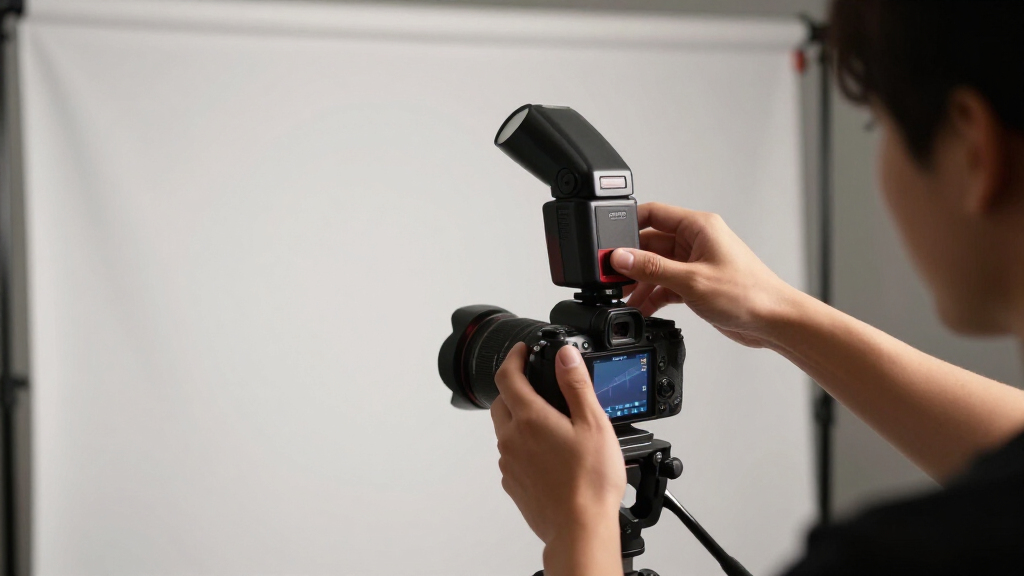

A good first speedlight should be cheap enough to experiment with, powerful enough to bounce off a ceiling, and simple enough that you’re learning light instead of fighting menus. After comparing the nine contenders in this roundup, the Godox TT600 is my pick for best overall speedlight for beginners: fully manual, a built-in 2.4G wireless receiver, and a price that undercuts the brand names by half or more. If you’d rather have the camera handle exposure, the Godox TT685II-C brings full E-TTL automation for Canon shooters, while the NEEWER TT560 is the standout for the tightest budgets. The core tradeoff in this category is simple: manual flashes cost far less and teach you more, while TTL flashes cost more and do the thinking for you. Brand fit matters too, since the two TTL picks only shine on Canon and Nikon bodies respectively. Keep reading for the full ranking of all nine, ordered by who each one actually suits.

Get audio and creator gear delivered free with Prime
- Fast, free delivery on millions of items
- Prime Video, Amazon Music and more included
- Member-only deals all year
Complete the kit


Key Takeaways
- Godox dominates this category at the budget end — four of the nine picks are Godox units, and the TT600 alone appears in three different bundles, because its built-in 2.4G receiver is the feature beginners end up needing most.
- Manual-only design is what makes the cheap picks cheap: the TT600, YONGNUO YN560 IV, NEEWER TT560, and Photoolex FK300 all skip TTL metering, which keeps them in the $40–$75 range instead of $200-plus.
- TTL automation appears in only two of nine products — the Godox TT685II-C for Canon and the Nikon SB-700 for Nikon — and both lock their best features to a single camera brand.
- The SB-700 costs three to four times a TT600, and the premium buys CLS wireless integration, warranty service, and TTL reliability — not extra light output on paper.
- Wireless readiness separated the rankings more than power did: flashes with a built-in radio receiver or a bundled trigger (TT600, Godox 433MHz kit) outrank GN-matched rivals like the TT560 that rely on optical slave modes.
| Godox TT600 Speedlite Flash with Built-in Trigger System for DSLR Cameras |  | Best Overall for Beginners | Guide Number: GN60 (ISO 100) | Compatibility: Canon, Nikon, Pentax, Olympus, Fujifilm, Panasonic, and other hot shoe cameras | Wireless: Optical and 2.4G radio transmission | VIEW LATEST PRICE | See Our Full Breakdown |
| Photoolex Camera Flash Speedlite FK300, GN33, Manual S1/S2 Wireless, Universal Hot Shoe |  | Best Budget Pick | Guide Number: GN33 | Power Range: 1/128 to 1/1 (8 levels) | Modes: Manual, S1, S2 | VIEW LATEST PRICE | See Our Full Breakdown |
| Godox TT600 Wireless Flash Speedlite for Canon, Nikon, Pentax, Olympus, Fujifilm, Panasonic |  | Best for Building a Multi-Flash Setup | Guide Number: GN60 (m, ISO 100) | Wireless System: 2.4G Godox X system | Groups / Channels: 5 groups, 32 channels | VIEW LATEST PRICE | See Our Full Breakdown |
| Godox TT600 2.4G Wireless Camera Flash Speedlite with Diffuser for Canon, Nikon, Fujifilm, Olympus |  | Best Starter Bundle for Portraits | Guide Number: GN60 | Wireless: 2.4G Godox X system | Compatibility: Canon, Nikon, Fujifilm, Olympus, Panasonic (not Sony) | VIEW LATEST PRICE | See Our Full Breakdown |
| Nikon SB-700 AF Speedlight Flash for Nikon Digital SLR Cameras |  | Best Premium Pick for Nikon Shooters | Compatibility: Nikon digital SLR cameras | Flash Control: i-TTL automatic metering | Wireless: Wireless flash control and remote operation | VIEW LATEST PRICE | See Our Full Breakdown |
| NEEWER TT560 Camera Flash Speedlite for DSLR and Mirrorless Cameras |  | Best Budget Pick | Guide Number: 38 (ISO 100) | Color Temperature: 5600K ±200K | Recycling Time: 0.1-5 seconds | VIEW LATEST PRICE | See Our Full Breakdown |
| Godox Wireless 433MHz GN33 Camera Flash Speedlite with Built-in Receiver and RT Transmitter for DSLR Cameras |  | Best Budget Wireless Kit | Guide Number: 33 (ISO 100) | Wireless System: 433MHz with built-in receiver and RT transmitter | Channels: 16 | VIEW LATEST PRICE | See Our Full Breakdown |
| YONGNUO YN560 IV Universal Flash Speedlite, GN58, 2.4G Hot Shoe Mount, Wireless Master/Slave Flash for Canon, Nikon, Pentax, Olympus, Fuji |  | Best for Learning Off-Camera Lighting | Guide Number: 58 (ISO 100, 105mm) | Wireless System: 2.4G built-in | Trigger Modes: Master and Slave | VIEW LATEST PRICE | See Our Full Breakdown |
| Godox TT685II-C E-TTL Flash for Canon Cameras | 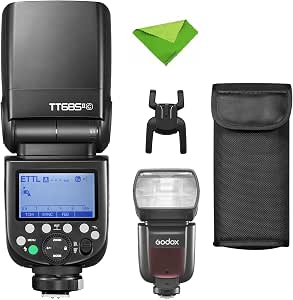 | Best Premium Pick for Canon | Guide Number: 60 (ISO 100) | Wireless System: Godox 2.4G Wireless X System | Exposure Modes: E-TTL with TCM instant manual conversion | VIEW LATEST PRICE | See Our Full Breakdown |
| speedlight flashes for beginner | Compatibility | Guide Number |
|---|---|---|
| Godox TT600 Speedlite Flash wi | Canon, Nikon, Pentax, Olympus, Fujifilm, Panasonic, and other hot shoe cameras | GN60 (ISO 100) |
| Photoolex Camera Flash Speedli | Canon, Nikon, Sony, Fujifilm, Olympus, Panasonic, Pentax, Leica | GN33 |
| Godox TT600 Wireless Flash Spe | Canon, Nikon, Pentax, Olympus, Fujifilm, Panasonic | GN60 (m, ISO 100) |
| Godox TT600 2.4G Wireless Came | Canon, Nikon, Fujifilm, Olympus, Panasonic (not Sony) | GN60 |
| Nikon SB-700 AF Speedlight Fla | Nikon digital SLR cameras | — |
| NEEWER TT560 Camera Flash Spee | Canon, Nikon, Sony, Fuji, Panasonic, Olympus, Pentax and more | 38 (ISO 100) |
| Godox Wireless 433MHz GN33 Cam | Major DSLR brands | 33 (ISO 100) |
| YONGNUO YN560 IV Universal Fla | Canon, Nikon, Pentax, Olympus, Fuji | 58 (ISO 100, 105mm) |
| Godox TT685II-C E-TTL Flash fo | Canon 5D Mark IV, 6D Mark II, 7D, 90D, 250D, R5, 850D | 60 (ISO 100) |
More Details on Our Top Picks
Godox TT600 Speedlite Flash with Built-in Trigger System for DSLR Cameras
Of the five flashes here, this is the one I’d hand to a beginner who wants room to grow. The Godox TT600 pairs a GN60 guide number — nearly double the Photoolex FK300’s GN33 — with both optical and 2.4G radio triggering, so off-camera setups stay reliable even outdoors where simple optical slaves like the FK300’s S1/S2 modes struggle. The 0.1–2.6 second recycle time means you won’t miss frames waiting for the flash to recover. The tradeoff is that it’s a manual-only flash: there’s no TTL metering, so you set power yourself, which is honestly a good way to learn. High-speed sync works only through a separate Godox trigger, not on the hot shoe. Compared with the Nikon SB-700, you give up automatic exposure but save a meaningful amount of money.
Pros:- GN60 output lights large rooms and groups where budget flashes fall short
- Built-in 2.4G radio works as both master and slave in the Godox X system
- Fast 0.1–2.6s recycle keeps pace with events and portraits
- Cross-brand hot shoe fits Canon, Nikon, Fujifilm, and more
Cons:- No TTL metering — every power change is a manual decision
- High-speed sync requires buying a separate Godox trigger
- Battery life sags if you fire frequently at full power
Best for: Beginners who want one affordable flash that works across camera brands and can grow into an off-camera radio setup
Not ideal for: Shoot-first-ask-later photographers who rely on automatic TTL exposure and don’t want to dial in power manually
- Guide Number:GN60 (ISO 100)
- Compatibility:Canon, Nikon, Pentax, Olympus, Fujifilm, Panasonic, and other hot shoe cameras
- Wireless:Optical and 2.4G radio transmission
- Recycle Time:0.1–2.6 seconds
- Color Temperature:5600±200K
- Flashes Per Charge:About 230
- Power Source:2500mA Ni-MH battery
- Max Sync Speed:Up to 1/8000s with compatible triggers
Our verdict“The most balanced starting point for a beginner: strong output, real wireless, and a price that leaves money for a trigger later.”
Photoolex Camera Flash Speedlite FK300, GN33, Manual S1/S2 Wireless, Universal Hot Shoe
If the goal is to learn flash basics for the least money possible, the Photoolex FK300 is where I’d start. It covers the fundamentals — 1/128 to 1/1 power adjustment, S1/S2 optical slave modes, a universal hot shoe — and throws in a stand, pouch, and 12 color filters so a beginner can experiment with gels on day one. The catch shows up next to the Godox TT600: at GN33 it has roughly half the reach, so bouncing light off ceilings or filling a large room pushes it to full power fast. There’s also no radio trigger built in, only optical slaving, which misfires in bright sun. And with just 8 power levels, fine-tuning exposure is coarser than on pricier units. As a low-risk first flash, though, it teaches the same manual skills.
Pros:- Cheapest entry into off-camera flash in this lineup
- Bundled stand, pouch, and 12 color filters add creative options out of the box
- Universal hot shoe fits nearly every major camera brand
- 24-month warranty is generous at this price
Cons:- GN33 output is about half the Godox TT600’s reach
- S1/S2 optical slave only — no radio, so outdoor triggering is unreliable
- No TTL and only 8 power steps limit fine exposure control
Best for: Total beginners on a tight budget who want to learn manual flash and play with color gels without a big spend
Not ideal for: Anyone shooting events or large spaces — the GN33 output and optical-only triggering run out of reach quickly
- Guide Number:GN33
- Power Range:1/128 to 1/1 (8 levels)
- Modes:Manual, S1, S2
- Color Temperature:5600K
- Compatibility:Canon, Nikon, Sony, Fujifilm, Olympus, Panasonic, Pentax, Leica
- Included:Speedlite, pouch, stand, 12 color filters
- Warranty:24 months
Our verdict“A smart ultra-budget teacher for learning manual flash, as long as you accept its modest power and indoor-leaning slave modes.”
Godox TT600 Wireless Flash Speedlite for Canon, Nikon, Pentax, Olympus, Fujifilm, Panasonic
This is the same core TT600 flash as our top pick, but this listing makes the most sense for a beginner planning beyond a single unit. The built-in Godox 2.4G X system supports 5 groups and 32 channels with a stated range up to 100 meters, so two or three of these can be triggered together and controlled separately — something the Photoolex FK300’s optical slave can’t do reliably. The large LCD panel lowers the learning curve when you’re juggling group settings. Versus the TT600 bundle with the diffuser (also in this roundup), you’re buying the bare flash here, which keeps the cost per unit down when purchasing multiples. Shared weaknesses apply: no TTL, AA batteries not included, and HSS needs a separate trigger. For one flash, buy the bundle; for two or more, buy these.
Pros:- 100m radio range with 5 groups and 32 channels scales to multi-light rigs
- Same flash can serve as master or slave as the kit grows
- Large LCD panel makes group and channel settings beginner-friendly
- GN60 output with quick 0.1–2.6s recycling
Cons:- 4 AA batteries not included, adding to the real cost of each unit
- No on-camera HSS — requires a separate Godox TTL trigger
- Manual-only exposure control
Best for: Beginners who already know they want a two- or three-light home studio on the Godox X system
Not ideal for: Casual shooters who only need a single on-camera flash — the extra wireless capability would go unused
- Guide Number:GN60 (m, ISO 100)
- Wireless System:2.4G Godox X system
- Groups / Channels:5 groups, 32 channels
- Range:Up to 100 meters
- Recycle Time:0.1–2.6 seconds
- Flash Duration:Short; up to 1/8000s sync with TTL trigger
- Compatibility:Canon, Nikon, Pentax, Olympus, Fujifilm, Panasonic
- Power Source:4 AA batteries (not included)
- Display:Large LCD panel
Our verdict“The right TT600 listing to choose when you’re buying more than one flash and building a wireless lighting kit over time.”
Godox TT600 2.4G Wireless Camera Flash Speedlite with Diffuser for Canon, Nikon, Fujifilm, Olympus
For a beginner whose main interest is people photography, I’d pick this TT600 listing over the standalone version. The hardware is identical — GN60 power, 2.4G X wireless, 0.1–2.6s recycling — but the included diffuser softens the harsh direct flash look that gives beginner portraits away, without a separate purchase. Compared with the Nikon SB-700, you get far more raw power for far less money, though the SB-700’s i-TTL automation is friendlier if you never want to touch power settings. Two cautions: this bundle explicitly excludes Sony cameras, and like every TT600 it can’t do high-speed sync on the hot shoe — you need a Godox trigger for 1/8000s work. It also runs on 4 AA batteries you’ll supply yourself. Portrait shooters on Canon, Nikon, Fujifilm, or Olympus bodies are the clear audience here.
Pros:- Included diffuser tames harsh direct flash for more flattering portraits
- GN60 output reaches across venues and handles group shots
- Full Godox 2.4G X wireless with multiple groups and channels
- HSS up to 1/8000s available with a compatible off-camera trigger
Cons:- Not compatible with Sony cameras
- HSS works only off-camera with a separate trigger, never on the hot shoe
- Requires 4 AA batteries that aren’t included
Best for: Beginner portrait, wedding, and event shooters on Canon, Nikon, Fujifilm, or Olympus who want softer light without buying extra modifiers
Not ideal for: Sony camera owners — this listing explicitly doesn’t support Sony bodies
- Guide Number:GN60
- Wireless:2.4G Godox X system
- Compatibility:Canon, Nikon, Fujifilm, Olympus, Panasonic (not Sony)
- Recycle Time:0.1–2.6 seconds
- Shutter Speed:Up to 1/8000s with trigger
- Color Temperature:5600K
- Mount:Hot shoe
- Power Source:4 AA batteries (required)
- Dimensions:2.5″D x 3″W x 7.5″H
Our verdict“The TT600 to buy if portraits are the plan — the bundled diffuser makes beginner results look noticeably more polished.”
Nikon SB-700 AF Speedlight Flash for Nikon Digital SLR Cameras
Every other flash in this roundup asks you to set power manually; the Nikon SB-700 is the one that does the math for you. Its i-TTL flash control meters through the lens and sets output automatically, which makes it the gentlest on-ramp for a beginner who finds manual power intimidating — and it’s why it costs considerably more than any Godox TT600 here. The head tilts and swivels for bounce work, and Nikon’s wireless system lets it act as a commander or remote unit. The tradeoffs are real, though: it works only with Nikon DSLRs, so switching systems later strands the investment, and Nikon doesn’t publish recycle-time figures the way Godox does. Against the TT600, you’re paying a premium for automation and native integration rather than raw guide number.
Pros:- i-TTL metering delivers correct exposure without manual power adjustments
- Flexible tilting and swiveling head for bounce flash techniques
- Works as a wireless commander or remote within Nikon’s system
- Native Nikon integration means full menu control from the camera
Cons:- Nikon-only — useless if you later switch to Canon, Sony, or Fujifilm
- Costs far more than the manual flashes in this roundup
- Battery life and recycle times aren’t specified by the manufacturer
Best for: Nikon DSLR owners who want automatic, reliable exposure from their first flash and prefer staying inside the Nikon ecosystem
Not ideal for: Budget buyers or multi-brand shooters — it costs several times a Godox TT600 and only works with Nikon bodies
- Compatibility:Nikon digital SLR cameras
- Flash Control:i-TTL automatic metering
- Wireless:Wireless flash control and remote operation
- Mount:Hot shoe
- Head Movement:Tilting and swiveling bounce head
- Form Factor:Portable speedlight design
Our verdict“The low-friction choice for committed Nikon shooters who’d rather pay for automation than learn manual flash right away.”
NEEWER TT560 Camera Flash Speedlite for DSLR and Mirrorless Cameras
The NEEWER TT560 is the flash I’d hand to a beginner who wants to spend as little as possible while genuinely learning how light works. With no TTL, no HSS, and no automation of any kind, every frame forces a manual power decision — and that limitation is quietly its biggest teaching strength. The tilting, rotating head (0-90° tilt, 0-270° swivel) makes bounce flash possible at zero extra cost, which is the single biggest quality jump a new shooter can make. Compared with the Godox TT520II, the TT560 is cheaper and slightly stronger at GN38 versus GN33, but it ships with no wireless trigger, so off-camera work means extra purchases. Against the YONGNUO YN560 IV it gives up a lot of reach and every wireless master function. Batteries aren’t included, and the all-manual workflow slows down fast-moving shoots, but as a first flash it removes cost as an excuse.
Pros:- Cheapest entry point in the lineup while still offering a fully tilting, swiveling bounce head
- Manual-only design forces good exposure habits instead of hiding behind automation
- GN38 output slightly edges the pricier Godox TT520II’s GN33
- Works with nearly any camera brand via hot shoe, optical slave, or PC sync
Cons:- No TTL or HSS, so changing light means constant manual readjustment
- No built-in wireless system — off-camera setups require buying triggers separately
- Batteries not included, adding a small hidden cost to the low sticker price
Best for: Total beginners on a tight budget who want to learn manual flash fundamentals, including mirrorless shooters locked out of DSLR-only options
Not ideal for: Anyone shooting weddings, events, or fast-moving subjects — the lack of TTL means constant manual power tweaks as conditions change
- Guide Number:38 (ISO 100)
- Color Temperature:5600K ±200K
- Recycling Time:0.1-5 seconds
- Flash Duration:1/300-1/20000 seconds
- Power Source:4 AA batteries (not included)
- Head Movement:0-90° tilt, 0-270° rotation
- Modes:Manual, S1/S2 optical slave, PC sync
- Compatibility:Canon, Nikon, Sony, Fuji, Panasonic, Olympus, Pentax and more
Our verdict“The right first flash for a budget-conscious beginner who wants to learn lighting the manual way.”
Godox Wireless 433MHz GN33 Camera Flash Speedlite with Built-in Receiver and RT Transmitter for DSLR Cameras
This Godox kit earns its place because it solves the beginner’s second problem — getting the flash off the camera — in a single box. The bundled RT transmitter and built-in 433MHz receiver with 16 channels mean a new shooter can experiment with side lighting the day it arrives, something the cheaper NEEWER TT560 simply can’t do without extra gear. The tradeoff is raw output: at GN33 it’s the weakest flash in this lineup, and large rooms or high ceilings will expose that limit fast. I’d point out that its S1/S2 slave modes, bundled diffuser, and filters soften the learning curve in a way the menu-driven YONGNUO YN560 IV doesn’t bother with. Heavy shooters will want an external power pack for long sessions, and mirrorless owners should look elsewhere in this roundup. For a first off-camera setup on a strict budget, the value case is strong.
Pros:- Transmitter included in the box, so wireless off-camera shooting works from day one
- 16 channels help avoid misfires when shooting near other flash users
- Comes with a diffuser, color filters, mini stand, and bag — a real starter kit
- Output adjustable down to 1/128 for fine control in close or low-light work
Cons:- GN33 is the weakest output in this roundup, limiting bounce and large-room use
- Aimed at DSLRs; mirrorless and smartphone shooters are left out
- Extended sessions demand an external power pack, which costs extra
Best for: DSLR beginners who want to try off-camera lighting immediately without buying a separate trigger system
Not ideal for: Mirrorless camera owners and anyone lighting large venues — the GN33 output runs out of power quickly in big spaces
- Guide Number:33 (ISO 100)
- Wireless System:433MHz with built-in receiver and RT transmitter
- Channels:16
- Flash Duration:1/300s-1/20000s
- Flash Modes:M, S1, S2
- Flash Output:1/128 to full power
- Included Accessories:Diffuser, filters, protection bag, mini stand, manual
- Compatibility:Major DSLR brands
Our verdict“The easiest low-cost way for a DSLR beginner to start learning off-camera flash on day one.”
YONGNUO YN560 IV Universal Flash Speedlite, GN58, 2.4G Hot Shoe Mount, Wireless Master/Slave Flash for Canon, Nikon, Pentax, Olympus, Fuji
Among the manual flashes here, the YN560 IV is the one I see as a genuine system rather than a single unit. Its built-in 2.4G master mode controls three groups of remote flashes — adjusting power and zoom from the camera position — a capability neither the NEEWER TT560 nor the Godox TT520II offers anywhere in this price range. At GN58 it nearly doubles the usable reach of the TT520II’s GN33, and that extra power translates directly into bounced light across bigger rooms. The catch is that everything is manual, and the master/slave menu logic has a steeper learning curve than the plug-and-play Godox kit, so a first-day beginner will find the TT520II friendlier out of the box. Recycling stays quick with an external power pack, but that’s yet another purchase. For a beginner who already knows multi-light setups are the goal, this is the smarter long-term buy.
Pros:- GN58 is the strongest output among the manual picks here, reaching across large rooms
- Built-in 2.4G master mode remotely controls mode, output, and zoom across three groups
- External power port supports fast recycling for event and portrait sessions
- Broad compatibility across Canon, Nikon, Pentax, Olympus, and Fuji bodies
Cons:- Master/slave menu system is fiddly and can overwhelm a true first-timer
- Manual only — no TTL safety net when the light changes quickly
- Getting the best recycle times effectively requires an external power supply
Best for: Ambitious beginners planning to grow into two- or three-light setups who want one flash that can command the rest
Not ideal for: Casual shooters who just want occasional fill flash — the manual-only controls and group menus are more flash than they need
- Guide Number:58 (ISO 100, 105mm)
- Wireless System:2.4G built-in
- Trigger Modes:Master and Slave
- Control Groups:3
- Power Supply:External power supply supported
- Recycling Time:Ultra-fast with external power
- Compatibility:Canon, Nikon, Pentax, Olympus, Fuji
Our verdict“The best choice for a beginner who wants a flash that grows into a full multi-light system.”
Godox TT685II-C E-TTL Flash for Canon Cameras
Every other flash in this batch asks the beginner to set power manually; the TT685II-C is where I’d send a Canon shooter who’d rather have the camera handle exposure while they focus on composition. Its E-TTL metering and 1/8000s high-speed sync make bright-daylight fill flash possible — something the YONGNUO YN560 IV and NEEWER TT560 simply can’t do — and GN60 with a 20-200mm zoom covers everything from group shots to telephoto portraits. The TCM button converts a TTL reading into a manual setting instantly, which makes it a surprisingly good bridge into manual control once confidence grows. Compared with the Nikon SB-700 elsewhere in this roundup, it brings similar automation to Canon bodies at a friendlier price. The downsides are real: it’s Canon-only, costs two to three times the manual picks, and the dense feature set rewards reading the manual cover to cover. Non-Canon shooters should skip it entirely.
Pros:- Full E-TTL automation plus HSS up to 1/8000s for bright-light and action work
- GN60 output with a 20-200mm zoom range adapts to nearly any lens
- TCM instant conversion turns TTL readings into manual settings for learning
- Built into the Godox 2.4G X system, so adding triggers and lights later is easy
Cons:- Canon-only — useless to anyone on another camera system
- Costs two to three times more than the manual options in this roundup
- Deeper menus and feature set can overwhelm a first-time flash user
Best for: Canon beginners who shoot events, portraits, or fast-changing light and want automatic exposure with room to grow
Not ideal for: Nikon, Sony, or Fuji shooters, and budget buyers who only need occasional bounce flash — a manual pick covers that for far less
- Guide Number:60 (ISO 100)
- Wireless System:Godox 2.4G Wireless X System
- Exposure Modes:E-TTL with TCM instant manual conversion
- Sync Speed:High-speed sync up to 1/8000s
- Zoom Range:20-200mm
- Mount:Quick-release lock
- Compatibility:Canon 5D Mark IV, 6D Mark II, 7D, 90D, 250D, R5, 850D
Our verdict“The flash a Canon beginner should buy once and grow with for years.”
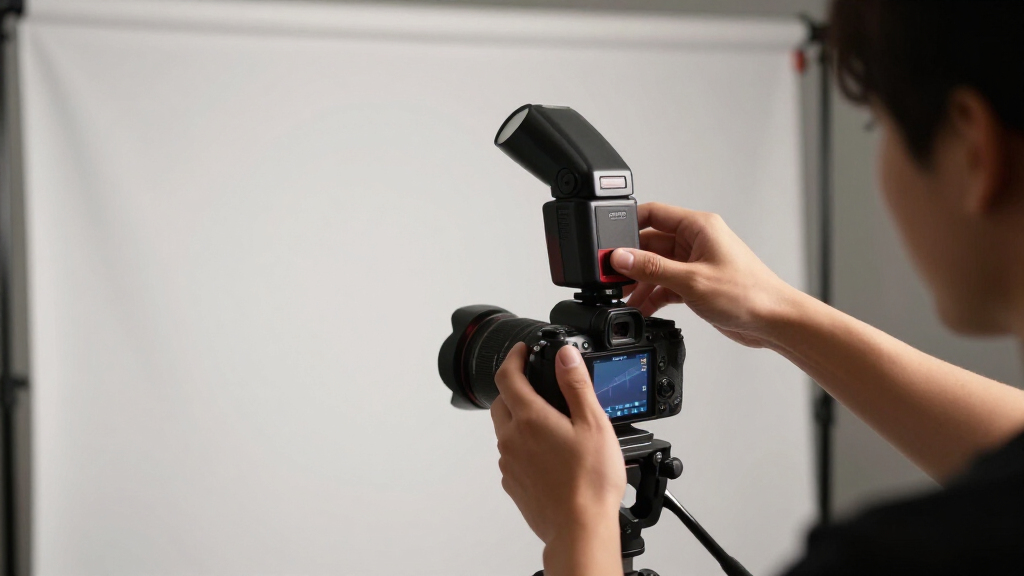
How We Picked
I evaluated each flash on the things that actually trip up first-time buyers: ease of use (clear controls, forgiving behavior), light output (guide number at realistic zoom settings), wireless capability (can it go off-camera without extra purchases), exposure automation (TTL versus manual-only), build quality, and price. Because this roundup is for beginners, I weighted learning value and total cost of ownership more heavily than pro features like high-speed sync — a flash that teaches you lighting and stays useful as you grow beats a spec sheet you’ll never touch.
That weighting explains the order. The Godox TT600 sits on top because its built-in 2.4G receiver pairs with inexpensive Godox triggers, so a beginner’s first flash never becomes a dead end. The YONGNUO YN560 IV and NEEWER TT560 rank high on value per dollar, the Godox 433MHz kit earns its spot by bundling a trigger in the box, and the brand-locked TTL options — the TT685II-C and SB-700 — rank where their automation justifies the price premium. Flashes that were cheap but offered no upgrade path placed lower, since a dead-end purchase is the most expensive mistake a beginner can make.
Factors to Consider When Choosing Best Speedlight Flashes For Beginners
The product reviews above cover what each flash does. This guide covers the decisions around them — the stuff that determines whether your first speedlight still makes sense a year from now.Manual vs TTL: The Decision That Shapes Everything Else
Every flash in this roundup falls into one of two camps. Manual flashes like the TT600, YN560 IV, and TT560 fire at whatever power you dial in, full stop — the camera tells them nothing about exposure. TTL flashes like the TT685II-C and SB-700 meter through the lens and set their own output automatically, which is a genuine advantage at weddings, parties, and any situation where subjects change distance faster than you can adjust settings. The counterintuitive truth is that manual flash is often the better teacher: because you set power, aperture, and distance yourself, you learn how light actually behaves instead of letting automation hide the relationship. The mistake that trips up beginners most often is paying for TTL on a flash that will spend its life off-camera, where budget TTL systems are unreliable anyway. A reasonable rule: if you plan to shoot events on-camera, TTL earns its premium; if you plan to learn lighting, manual is the smarter buy.
Guide Numbers: Read Them With Suspicion
Guide numbers are the headline spec on every flash in this list, and they are also the easiest number to game. Manufacturers quote them at different zoom head positions and sometimes different ISO bases, so a GN58 flash and a GN60 flash are often effectively the same power in real use. What the numbers do tell you reliably is class: the GN33 flashes here (Photoolex FK300, NEEWER TT560, Godox 433MHz) put out roughly half the light of the GN58–GN60 units like the YN560 IV and TT685II-C. Half the light is one stop, which matters when you’re bouncing off a high ceiling or shooting through a softbox, and matters far less for direct fill at arm’s length. The practical takeaway: buy for how you’ll shoot, not for the biggest number on the box. A beginner doing portraits at home will rarely feel the difference, while someone photographing groups in large rooms will feel it constantly.
Wireless Triggers and the Off-Camera Leap
Nearly every dramatic flash photo a beginner admires was lit off-camera, which makes wireless capability the most future-proof feature on this list. There are three tiers here. At the bottom, S1/S2 optical slave modes — found on the Photoolex FK300 and NEEWER TT560 — fire the flash when they see another flash pop, which works indoors but gives you no remote power control and real reliability problems in daylight. In the middle, the Godox 433MHz kit and the TT600’s built-in 2.4G receiver give you radio triggering with remote power adjustment, the feature that makes off-camera practice genuinely enjoyable instead of a walk-back-and-forth chore. At the top, Nikon’s CLS system on the SB-700 integrates with compatible Nikon bodies for full wireless TTL. The cheapest flash is rarely the cheapest system: a $40 flash plus a $60 trigger can cost more than a flash with the receiver already inside.
Hot Shoe Fit and Brand Lock-In
Most flashes in this roundup use a universal single-pin hot shoe, which fires on almost any DSLR or mirrorless body with a standard shoe — Canon, Nikon, Pentax, Olympus, Fujifilm, Panasonic. Universal means the flash triggers, nothing more: no TTL, no high-speed sync, no menu communication with the camera. TTL models are the opposite bargain, delivering their full feature set only on the brand they’re built for — the TT685II-C on Canon, the SB-700 on Nikon. Sony shooters need a hot shoe adapter for nearly everything here, which is worth knowing before checkout rather than after. The buying mistake to avoid is choosing a brand-locked TTL flash while planning to switch camera systems, or choosing a universal manual flash and then wondering why your camera’s flash menu stays grayed out. Match the flash to the system you’ll still be shooting in two years, not the body you bought last month.
When Paying More Actually Pays Off
Price gaps in this category are dramatic — the Nikon SB-700 costs three to four times what a Godox TT600 does — and it’s fair to ask what that money buys. The honest answer is consistency, support, and integration, not raw power. Brand-name flashes recycle more predictably across a long event, hold their color temperature better as the capacitor ages, and come with warranty service that a $45 import simply doesn’t. For a hobbyist learning at home, those benefits are nearly invisible, which is why the budget picks rank so high in this roundup. For a beginner who has already booked paid event work, the calculus flips: a misfiring flash during a first dance costs more than the SB-700 ever would. Spend more when reliability is being paid for by someone else — a client, an employer, a publication. Until then, let the cheap flash absorb the learning curve.
Frequently Asked Questions
Is a manual flash or a TTL flash better for a complete beginner?
For most beginners, a manual flash like the Godox TT600 is the better first purchase, and it isn’t close. Manual mode forces you to set power deliberately, which builds an intuition for flash exposure that TTL users often never develop. TTL also adds $100 or more to the price, and on budget flashes the automation is inconsistent enough that you’ll end up overriding it anyway. The exception is a beginner who knows they’ll shoot fast-moving on-camera events — a friend’s wedding, a school function — within the first few months. That shooter should buy TTL from the start, because re-learning under pressure is worse than paying the premium. Everyone else should learn manual first and add TTL later, when the upgrade will actually be appreciated.
Will these speedlights work with my camera brand?
Almost every flash in this roundup will at least fire on almost any camera with a standard hot shoe, but ‘fire’ and ‘fully work’ are different promises. Universal models like the TT600, YN560 IV, TT560, and FK300 use a single center pin that triggers the flash on Canon, Nikon, Pentax, Olympus, Fujifilm, and Panasonic bodies — all exposure control happens on the flash itself. TTL models are brand-specific: the Godox TT685II-C delivers full automation only on Canon, and the Nikon SB-700 only on Nikon. Sony owners face an extra hurdle, since Sony’s multi-interface shoe needs a cheap adapter for any of these flashes. Before buying, check two things: whether your camera has a standard center-pin shoe, and whether you’re buying a TTL flash that matches your brand.
Do I need to buy a separate trigger to use a flash off-camera?
It depends on the flash, and this is where the lineup quietly splits. The Godox TT600 has a 2.4G receiver built in, but it still needs a Godox transmitter like the X2T or XPro on your camera — budget an extra $50–$60 unless you buy a bundle that includes one. The Godox 433MHz kit sidesteps this by shipping with its RT transmitter in the box, making it the cheapest true off-camera setup here. Flashes with S1/S2 optical slave modes, like the NEEWER TT560 and Photoolex FK300, can fire off-camera using your camera’s pop-up flash as the trigger, with no extra purchase at all. The catch is that optical slave gives you no remote power control, so every adjustment means walking to the flash. For most beginners, the TT600 plus a basic Godox trigger is the best long-term path, since the same trigger runs every Godox flash you might add later.
Is the Godox TT600 worth the extra money over the NEEWER TT560?
Yes for most buyers, and the price gap is smaller than it looks — usually around $20–$25. Both are fully manual flashes with similar build quality, so the difference comes down to two things. The TT600 carries a built-in 2.4G wireless receiver that connects to Godox’s entire trigger ecosystem, while the TT560 relies on basic optical slave modes. The TT600 also zooms its flash head to 200mm against the TT560’s more limited range, which gives you more usable light at a distance. If you are certain you’ll only ever shoot on-camera, the TT560 does the same job for less and the savings are real. But the moment off-camera lighting enters the picture — and for most beginners it does within months — the TT600’s receiver saves you from replacing the flash entirely.
When should a beginner buy the Nikon SB-700 instead of a cheaper third-party flash?
The SB-700 makes sense for a narrow but real slice of beginners: committed Nikon shooters who need reliable TTL and CLS wireless for event work. If you’re photographing a family wedding on a Nikon body next month, the SB-700’s through-the-lens metering and integration with Nikon’s Creative Lighting System will save shots that a manual flash would miss. It also carries Nikon’s warranty and service network, which matters when the flash is a working tool rather than a learning toy. What it doesn’t offer is more light for the money — on paper, several flashes here match its output for a quarter of the price. A hobbyist learning portraits at home will get more educational value from a TT600 and a trigger at a third of the cost. Buy the SB-700 when Nikon-specific automation is the job requirement, not the aspiration.
Conclusion
If I had to compress this entire roundup into one recommendation, it’s this: most beginners should buy the Godox TT600, add a Godox trigger when they’re ready to go off-camera, and spend the savings on a light stand and a cheap umbrella. It earns Best Overall because nothing else at its price combines a built-in wireless receiver, a 200mm zoom head, and an ecosystem that grows with you. Buyers on the tightest budget should grab the NEEWER TT560 — my Best Value pick — and accept that optical slave is a stepping stone, not a destination. Canon shooters who know they want automation should go straight to the Godox TT685II-C for full E-TTL, while Nikon shooters with paid event work on the calendar are the one group I’d point toward the premium Nikon SB-700. And if your real goal is to master manual lighting from day one, the YONGNUO YN560 IV remains the classic learning tool for a reason. Whatever you choose, buy for the photographer you’ll be in a year — the right first flash is the one you don’t outgrow in a month.
Halloween Picks

12.2 ft Halloween Inflatable Outdoor Decoration – Giant Pumpkin

Vexalify 11-Inch Halloween Pumpkin Fog Machine with Bluetooth Speaker and 12-Color LED Lights

Star Wars Yoda and R2-D2 Inflatable Halloween Decor, 6 ft with LEDs, Indoor/Outdoor
As an affiliate, we earn on qualifying purchases.