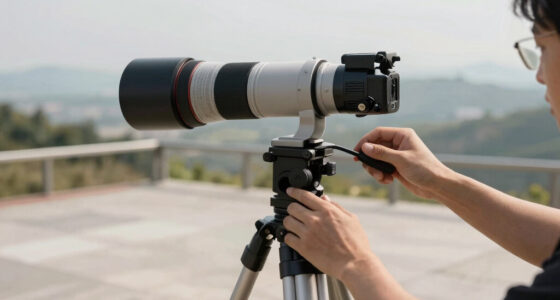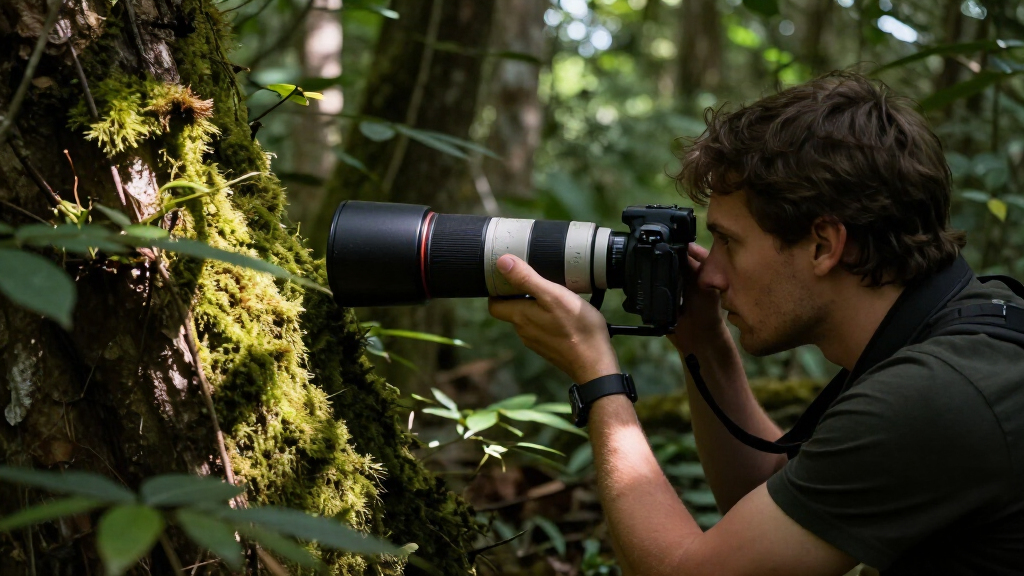

For wildlife enthusiasts, selecting the right telephoto zoom lens can make or break your shots. The best options offer impressive reach and sharpness, but often come with tradeoffs in weight, cost, or autofocus speed. The Canon RF 100-500mm f/4.5-7.1L IS USM stands out as the overall best due to its versatile range and image stabilization, while the Sony FE 200-600mm offers excellent reach at a more affordable price. High-power options like the 420-1600mm provide extreme zoom, but are bulkier and more manual-focused. Keep reading for a detailed comparison to find the best fit for your wildlife photography needs.

Get audio and creator gear delivered free with Prime
- Fast, free delivery on millions of items
- Prime Video, Amazon Music and more included
- Member-only deals all year
Complete the kit


Key Takeaways
- The top picks balance zoom range, image quality, and ease of handling, with no one-size-fits-all solution.
- More affordable lenses tend to compromise on aperture size and autofocus speed, impacting wildlife action shots.
- Manual focus options often offer extreme zooms but require patience and skill, not ideal for fast-moving subjects.
- In-body stabilization and fast autofocus are critical for sharp wildlife images, especially at longer focal lengths.
- Price often correlates with build quality and lens versatility, but premium models deliver noticeable improvements in image clarity.
| Canon RF 100-500mm f/4.5-7.1L IS USM Telephoto Zoom Lens Bundle |  | Best Overall for Versatile Wildlife Photography | Focal Length: 100-500mm | Maximum Aperture: f/4.5-7.1 | Image Stabilization: Yes | VIEW LATEST PRICE | See Our Full Breakdown |
| Sony FE 200-600mm f/5.6-6.3 G OSS Lens with Accessories |  | Best for Professional Wildlife and Sports Shooters | Mounting type: Sony E | Focal length: 200-600mm | Aperture range: f/5.6-6.3 | VIEW LATEST PRICE | See Our Full Breakdown |
| High-Power 420-1600mm f/8.3 HD Manual Telephoto Zoom Lens for Canon EOS Cameras |  | Best for Extreme Distant Wildlife Capture | Focal Length: 420mm-1600mm | Aperture: f/8.3 | Filter Thread: 62mm | VIEW LATEST PRICE | See Our Full Breakdown |
| Sony FE 200-600mm f/5.6-6.3 G OSS Super Telephoto Zoom Lens |  | Best for Sharpness and Autofocus in Wildlife | Focal Length: 200-600mm | Maximum Aperture: f/5.6-6.3 | Lens Type: Super Telephoto Zoom | VIEW LATEST PRICE | See Our Full Breakdown |
| Canon RF 100-400mm F5.6-8 IS USM Telephoto Lens for EOS R Series |  | Best for Compact, Lightweight Wildlife Photography | Focal Length: 100-400mm | Maximum Aperture: F5.6-8 | Image Stabilization: Yes | VIEW LATEST PRICE | See Our Full Breakdown |
| JINTU 420-800mm f/8.3 Manual Telephoto Zoom Lens for Canon EOS Cameras |  | Best Budget Telephoto for Distant Subjects | Focal Length: 420-800mm | Maximum Aperture: f/8.3 | Lens Type: Telephoto Zoom | VIEW LATEST PRICE | See Our Full Breakdown |
| Tamron SP 150-600mm F/5-6.3 Di VC USD for Nikon DSLR Cameras |  | Best Versatile Zoom with Stabilization | Focal Length: 150-600mm | Maximum Aperture: F/5-6.3 | VC (Vibration Compensation): Yes | VIEW LATEST PRICE | See Our Full Breakdown |
| Canon RF 200-800mm f/6.3-9 IS USM Lens Bundle |  | Best Lightweight, High-Zoom Range for Active Wildlife Photography | Focal Length: 200-800mm | Maximum Aperture: f/6.3-9 | Image Stabilization: Yes | VIEW LATEST PRICE | See Our Full Breakdown |
| telephoto zoom lenses for wildlife | Focal Length | Maximum Aperture | Image Stabilization | Autofocus |
|---|---|---|---|---|
| Canon RF 100-500mm f/4.5-7.1L | 100-500mm | f/4.5-7.1 | Yes | Dual Nano USM motors |
| Sony FE 200-600mm f/5.6-6.3 G | 200-600mm | — | — | — |
| High-Power 420-1600mm f/8.3 HD | 420mm-1600mm | — | — | — |
| Sony FE 200-600mm f/5.6-6.3 G | 200-600mm | f/5.6-6.3 | Yes | Yes |
| Canon RF 100-400mm F5.6-8 IS U | 100-400mm | F5.6-8 | Yes | Nano USM |
| JINTU 420-800mm f/8.3 Manual T | 420-800mm | f/8.3 | — | — |
| Tamron SP 150-600mm F/5-6.3 Di | 150-600mm | F/5-6.3 | — | — |
| Canon RF 200-800mm f/6.3-9 IS | 200-800mm | f/6.3-9 | Yes | USM |
More Details on Our Top Picks
Canon RF 100-500mm f/4.5-7.1L IS USM Telephoto Zoom Lens Bundle
This Canon RF 100-500mm f/4.5-7.1L IS USM lens stands out for its exceptional zoom range that covers most wildlife and outdoor scenarios, making it a flexible choice compared to the narrower focus of the Canon RF 100-400mm. Its effective image stabilization allows for sharp handheld shots, even at maximum telephoto lengths, while weather sealing enhances durability in tough conditions. The main tradeoff is its relatively bulky size and weight, which can challenge portability during extended outdoor shoots. The aperture range, while versatile, may limit low-light performance compared to prime lenses or those with wider apertures. Overall, this lens is well-suited for serious wildlife shooters who need flexibility but don’t mind extra bulk.
Pros:- Excellent zoom range for diverse wildlife subjects
- Effective image stabilization for handheld shooting
- Weather-sealed for outdoor reliability
Cons:- Bulky and heavy, less portable for hikes
- Aperture range may limit low-light performance
Best for: Wildlife photographers who want a comprehensive zoom with weather resistance and don’t mind carrying a heavier lens.
Not ideal for: Travelers or casual shooters who prioritize portability and lightweight gear.
- Focal Length:100-500mm
- Maximum Aperture:f/4.5-7.1
- Image Stabilization:Yes
- Autofocus:Dual Nano USM motors
- Weather Resistance:Dust- and moisture-resistant
- Weight:Approx. 4.8 lbs
Our verdict“Best suited for wildlife enthusiasts seeking a versatile, durable lens despite its size and weight.”
Sony FE 200-600mm f/5.6-6.3 G OSS Lens with Accessories
This Sony FE 200-600mm lens is a robust option for those who need a versatile zoom range combined with professional features like optical stabilization and weather resistance, outperforming the Canon RF 100-500mm in terms of build quality and accessory integration. Its f/5.6-6.3 aperture may limit low-light performance compared to faster lenses, but the included accessories—such as filters and maintenance tools—add significant value for serious outdoor use. Its size and weight, however, make it less ideal for casual photographers or those who prefer lightweight gear. Compared to the Sony FE 200-600mm, the Canon RF 100-500mm offers a wider aperture at the wide end but less weather sealing and a shorter zoom range. This lens is an excellent choice for professionals who prioritize durability and accessories.
Pros:- Versatile 200-600mm zoom for distant subjects
- Weather-resistant construction enhances durability
- Includes useful accessories for outdoor shooting
Cons:- Aperture range limits low-light capability
- Heavy and somewhat bulky for extended handheld use
Best for: Experienced wildlife and sports photographers who need a rugged, well-equipped lens for outdoor conditions.
Not ideal for: Beginners or casual shooters who prefer lightweight, simpler gear for occasional wildlife photography.
- Mounting type:Sony E
- Focal length:200-600mm
- Aperture range:f/5.6-6.3
- Optical zoom:3.0x
- Minimum focusing distance:7.9 feet
- Weather resistance:Dust and moisture-resistant
Our verdict“Ideal for professional wildlife shooters seeking a durable, accessory-rich lens despite its size and aperture limitations.”
High-Power 420-1600mm f/8.3 HD Manual Telephoto Zoom Lens for Canon EOS Cameras
This high-power telephoto lens offers an extraordinarily long zoom range of 420-1600mm, surpassing others like the Sony FE 200-600mm in reach, making it ideal for capturing wildlife from extreme distances. Its manual focus may be challenging for fast-moving subjects, unlike the autofocus systems of the Sony or Canon RF lenses. The inclusion of a 2x teleconverter extends focal length further, but the fixed f/8.3 aperture limits low-light performance and depth of field control. Its size and weight are substantial, reducing portability for hikers or casual users. Compared to the Sony FE 200-600mm, this lens offers a much longer maximum focal length but sacrifices autofocus convenience and low-light ability. It’s best suited for experienced users who can handle manual focus and heavy gear.
Pros:- Extensive zoom range for distant wildlife shots
- Includes 2x teleconverter for increased reach
- Compatible with Canon EOS DSLR cameras
Cons:- Manual focus challenging for fast-moving subjects
- Heavy and less portable for fieldwork
- Limited low-light performance with fixed f/8.3 aperture
Best for: Advanced wildlife photographers needing extreme zoom capability with manual focus control.
Not ideal for: Beginners or those shooting in low-light conditions, due to manual focus and f/8.3 aperture.
- Focal Length:420mm-1600mm
- Aperture:f/8.3
- Filter Thread:62mm
- Compatibility:Canon EOS EF-Mount
- Teleconverter:2x
- Weight:Approx. 6.4 lbs
Our verdict“Best for seasoned wildlife photographers who prioritize extreme reach and manual focus over ease of use and low-light capabilities.”
Sony FE 200-600mm f/5.6-6.3 G OSS Super Telephoto Zoom Lens
This Sony FE 200-600mm lens emphasizes high resolution and sharpness across its zoom range, with ED glass elements and coatings that minimize flare, outperforming many budget options like the Canon RF 100-500mm in optical quality. Its fast, quiet autofocus with Direct Drive SSM ensures quick tracking of moving wildlife, a key advantage over manual or slower focus systems. The main tradeoff is its weight and size, which can be cumbersome for handheld shooting over long periods. While the aperture narrows at longer focal lengths, its optical performance remains impressive. Compared with the Canon RF 100-500mm, it offers more zoom at the expense of increased bulk and cost, making it best suited for serious hobbyists and professionals who need superior autofocus and image quality.
Pros:- High resolution across the entire zoom range
- Effective flare and ghosting reduction
- Fast, quiet autofocus for moving subjects
Cons:- Aperture narrows at long focal lengths
- Heavy and bulky for handheld use
Best for: Wildlife shooters prioritizing high-resolution images and fast autofocus, especially on Sony E-mount bodies.
Not ideal for: Casual photographers or those seeking lightweight gear for casual wildlife outings.
- Focal Length:200-600mm
- Maximum Aperture:f/5.6-6.3
- Lens Type:Super Telephoto Zoom
- Image Stabilization:Yes
- Autofocus:Yes
- Weight:Approx. 4.4 lbs
Our verdict“Perfect for wildlife photographers demanding top image quality and autofocus performance despite size and weight considerations.”
Canon RF 100-400mm F5.6-8 IS USM Telephoto Lens for EOS R Series
This Canon RF 100-400mm F5.6-8 IS USM lens combines portability with decent optical quality, making it ideal for casual wildlife shooters or those who prefer light gear, especially when compared to bulkier options like the Sony FE 200-600mm. Its effective optical stabilization ensures sharper images at longer focal lengths, and the fast, quiet autofocus suits both stills and video. The main limitation is its narrower aperture range, which can hinder low-light shooting or achieving shallow depth of field. The maximum magnification of 0.41x also limits macro capabilities. This lens makes the most sense for hobbyists or travelers who want an easy-to-carry telephoto option that still provides good image quality.
Pros:- Compact and lightweight design
- Effective optical image stabilization
- Fast, quiet autofocus
Cons:- Aperture range F5.6-8 limits low-light performance
- Maximum magnification of 0.41x may restrict macro shooting
Best for: Beginners or travelers needing a lightweight, versatile lens for wildlife and outdoor photography.
Not ideal for: Serious professionals or those shooting frequently in low-light conditions who require wider apertures.
- Focal Length:100-400mm
- Maximum Aperture:F5.6-8
- Image Stabilization:Yes
- Minimum Focus Distance:2.89 feet at 200mm
- Maximum Magnification:0.41x
- Autofocus:Nano USM
Our verdict“Ideal for casual wildlife photography where portability and ease of use are priorities over extreme low-light performance.”
JINTU 420-800mm f/8.3 Manual Telephoto Zoom Lens for Canon EOS Cameras
This manual-focus lens stands out for its impressive 420-800mm zoom range, making it a compelling choice for wildlife photographers on a budget who prioritize reach over autofocus. Compared with the Canon RF 200-800mm, it lacks autofocus but compensates with a lighter, more portable full-metal body. Its high-definition, multi-coated glass ensures sharp images, even at maximum telephoto lengths. The tradeoff is clearly the manual focus only, which can be a challenge in dynamic wildlife scenarios, and it requires switching to MF mode on your camera, potentially slowing down shooting. Still, for those comfortable with manual focus or shooting in controlled environments, this lens offers excellent value and exceptional reach.
Pros:- High-definition image quality with multi-coated low-dispersion glass
- Lightweight and portable design for easy handling in the field
- Compatible with a wide range of Canon EOS DSLR models
Cons:- Manual focus only, no autofocus capability
- Requires switching to MF mode on the camera, which can slow shooting
Best for: Budget-conscious wildlife photographers who are comfortable with manual focus and want maximum reach.
Not ideal for: Wildlife shooters who need fast autofocus or shoot in unpredictable, fast-moving conditions.
- Focal Length:420-800mm
- Maximum Aperture:f/8.3
- Lens Type:Telephoto Zoom
- Body Material:Full metal
- Size:10.6 x 3.5 x 3.5 inches
- Weight:700g (1.8 lbs)
- Compatibility:Canon EOS Rebel T1i, T2i, T3, T3i, T4i, T5, T5i, T6, T7, T6i, T6s, T7i, SL1, SL2, 60D, 70D, 77D, 80D, 50D, 40D, 30D, 5D, 1D, 5D III, 5D IV, 5Ds, 6D, 7D, 7D Mark II
Our verdict“This lens suits experienced wildlife photographers seeking an affordable, lightweight telephoto with extreme reach, despite its manual focus limitation.”
Tamron SP 150-600mm F/5-6.3 Di VC USD for Nikon DSLR Cameras
This lens offers a practical range from 150mm to 600mm, making it a flexible choice for wildlife and sports photography. Its vibration compensation (VC) provides steadiness, especially useful when handheld at longer focal lengths. Compared to the Canon RF 200-800mm, it’s generally bulkier and heavier, which can be tiring during extended shoots, but it compensates with a broader zoom range and moisture-resistant build for outdoor durability. The main tradeoff is its narrower aperture range, limiting low-light performance and background blur control. While focusing can be slower depending on the camera body, its optical quality and weather sealing make it a reliable all-weather option for serious wildlife enthusiasts willing to carry the extra weight.
Pros:- Excellent zoom range suitable for diverse wildlife scenarios
- Vibration Compensation for sharper handheld shots
- Moisture-resistant construction enhances durability outdoors
Cons:- Aperture range limits performance in low-light conditions
- Heavy and bulky design may cause fatigue
- Focusing speed varies with camera body
Best for: Wildlife and sports photographers looking for a broad zoom range with weather resistance that can handle outdoor conditions.
Not ideal for: Travel photographers or casual shooters who prefer lightweight gear or need quick autofocus for unpredictable subjects.
- Focal Length:150-600mm
- Maximum Aperture:F/5-6.3
- VC (Vibration Compensation):Yes
- Minimum Focus Distance:2.7m (106.3in)
- Magnification Ratio:1:5
- Format Compatibility:Full-frame and APS-C
Our verdict“This lens is ideal for dedicated wildlife shooters seeking a versatile, weather-sealed zoom, accepting some weight and size tradeoffs.”
Canon RF 200-800mm f/6.3-9 IS USM Lens Bundle
This Canon RF lens offers a broad 200-800mm zoom range, tailored for wildlife, birding, and sport photography on the EOS R system. Its built-in image stabilization and USM autofocus ensure sharp images and quiet operation, even at maximum zoom. Compared with the Tamron 150-600mm, it provides a longer reach, though at a higher price point, which may be a stretch for casual shooters. The aperture variation from f/6.3 to f/9 means less light intake at the long end, limiting low-light performance and background separation, but the lens’s lightweight design makes it a practical choice for handheld shooting in the field. The included bundle with a 64GB SDXC card adds value for those ready to shoot right away.
Pros:- Excellent zoom range covering wildlife, sports, and birding
- Built-in image stabilization for shake-free images
- Fast, quiet autofocus with USM technology
- Lightweight and portable for field use
Cons:- Aperture range narrows at the long end, reducing low-light capabilities
- Large zoom range may necessitate tripod for maximum sharpness
- Price may be high for casual or beginner photographers
Best for: Active wildlife and bird photographers on the EOS R platform who need a lightweight, versatile zoom with stabilization.
Not ideal for: Photographers who require the fastest apertures for low-light or artistic blur, or those using non-R mirrorless systems.
- Focal Length:200-800mm
- Maximum Aperture:f/6.3-9
- Image Stabilization:Yes
- Autofocus:USM
- Memory Card Included:64GB SDXC
Our verdict“This lens suits wildlife enthusiasts seeking a long, stabilized zoom for active shooting, accepting some aperture and price limitations.”
How We Picked
These lenses were evaluated based on a combination of zoom range, image sharpness, autofocus performance, build quality, and value for wildlife photography. Priority was given to lenses offering sufficient reach and quick, reliable autofocus, essential for capturing elusive animals in dynamic environments. We also considered weight and handling, since wildlife shooters often carry gear for hours. Lenses with strong stabilization and weather sealing were preferred to withstand outdoor conditions. Our rankings reflect a balance between performance, usability, and cost, ensuring options for different budgets and skill levels.| telephoto zoom lenses for wildlife | Maximum Aperture | Autofocus |
|---|---|---|
| Canon RF 100-500mm f/4.5-7.1L | f/4.5-7.1 | Dual Nano USM motors |
| Sony FE 200-600mm f/5.6-6.3 G | — | — |
| High-Power 420-1600mm f/8.3 HD | — | — |
| Sony FE 200-600mm f/5.6-6.3 G | f/5.6-6.3 | Yes |
| Canon RF 100-400mm F5.6-8 IS U | F5.6-8 | Nano USM |
| JINTU 420-800mm f/8.3 Manual T | f/8.3 | — |
| Tamron SP 150-600mm F/5-6.3 Di | F/5-6.3 | — |
| Canon RF 200-800mm f/6.3-9 IS | f/6.3-9 | USM |
Factors to Consider When Choosing Best Telephoto Zoom Lenses For Wildlife
Choosing the best telephoto zoom lens for wildlife involves understanding several key factors. The right lens depends on your specific needs, such as the typical distance to subjects, lighting conditions, and your camera system. It’s important to consider both technical features and practical usability to ensure your investment enhances your photography rather than complicates it. Here are the main considerations to keep in mind:Zoom Range and Focal Length
A wider zoom range provides flexibility to capture various wildlife distances, but lenses with longer reach often come with increased size and weight. For instance, a 200-600mm lens offers ample zoom for most wildlife scenarios, while a 420-1600mm can reach more elusive animals but may be bulkier and harder to handle. Consider your typical shooting distances and whether portability is a priority over maximum reach.
Aperture Size and Light Gathering
Wider apertures (lower f-numbers) allow more light, improving performance in low-light conditions and enabling faster shutter speeds. Many wildlife lenses have variable apertures, which can be a compromise for longer zooms, often resulting in smaller apertures at maximum focal lengths. Be aware that smaller apertures can limit shutter speed, making it harder to freeze fast-moving animals without high ISO settings.
Autofocus Speed and Accuracy
Wildlife photography demands quick, reliable autofocus to capture animals in motion. Look for lenses with advanced autofocus motors and tracking capabilities. Manual focus might be suitable for static subjects or extreme zooms, but for active wildlife, autofocus performance is a decisive factor. A lens that hunts or lags can ruin an otherwise perfect shot.
Build Quality and Weather Sealing
Outdoor conditions can be unpredictable, so durability matters. Weather-sealed lenses resist dust, moisture, and rough handling, extending their lifespan and reliability. Heavier, well-built lenses often cost more but provide peace of mind during long shoots in challenging environments. Conversely, lightweight models may sacrifice some robustness for portability.
Cost and Value
Pricing varies widely, with premium lenses offering superior optics and build quality, but at a higher cost. Budget-friendly options can still produce excellent results but may lack advanced features or durability. Assess your budget against your shooting needs—investing in a high-quality lens makes sense if wildlife photography is a regular pursuit, but casual shooters might prefer more affordable, versatile options.
Frequently Asked Questions
Should I choose a lens with a wider aperture for wildlife photography?
While wider apertures improve low-light performance and allow for faster shutter speeds, they often come with increased cost and weight. For wildlife photography, especially in varied lighting, a lens with a decent maximum aperture (f/4 or f/5.6) is beneficial, but you can still achieve good results with smaller apertures if you compensate with higher ISO settings. Consider your typical shooting conditions and whether weight and budget allow for a lens with a larger aperture.
Is manual focus ever a good option for wildlife shots?
Manual focus can be useful for specific scenarios, such as very long zooms where autofocus struggles or when shooting static subjects in controlled environments. However, for fast-moving animals or unpredictable wildlife, autofocus remains critical to capture decisive moments. Relying solely on manual focus often means missing fleeting behaviors, so it’s best to reserve it for specialized situations or when your lens excels at manual focusing.
How important is image stabilization in wildlife telephoto lenses?
Image stabilization is highly valuable when shooting at long focal lengths, especially in handheld situations. It helps counteract camera shake and allows for sharper images at slower shutter speeds, which is often necessary in lower light or when using longer zooms. However, stabilization isn’t a substitute for good technique—using a tripod or monopod remains essential for maximum sharpness during extended shoots.
Should I prioritize a lighter lens for wildlife photography?
Weight is a significant factor because wildlife photographers often carry gear for hours. Lighter lenses improve mobility and reduce fatigue, but they may compromise on zoom range, aperture size, or build quality. If mobility is a priority, look for a balanced lens that offers sufficient reach without excessive weight. Conversely, if you often shoot from fixed locations, a heavier, more robust lens might be justified for its optical advantages.
Is it worth investing in a lens with a longer zoom range?
Longer zoom ranges provide greater flexibility to photograph distant subjects without changing lenses, which can be a significant advantage in wildlife settings. However, these lenses can be bulkier, more expensive, and sometimes offer smaller maximum apertures, which can limit their performance in low light. Consider how often you’ll need the extra reach versus the practicality of carrying a heavier, more complex lens.
Conclusion
For casual wildlife enthusiasts or those starting out, a versatile 200-600mm lens like the Sony FE 200-600mm offers a great balance of reach, affordability, and ease of use. Serious professionals or dedicated wildlife photographers should consider premium options like the Canon RF 100-500mm for excellent autofocus and build quality, or the high-power manual zooms if extreme reach is needed and manual focusing isn’t a concern. Budget-conscious shooters can opt for more affordable models, accepting some compromises in speed and durability. Ultimately, your choice depends on your typical shooting environment, budget, and how much weight you’re willing to carry.
Columbus Day / Indigenous Peoples' Day Picks
long weekend sales
As an affiliate, we earn on qualifying purchases.