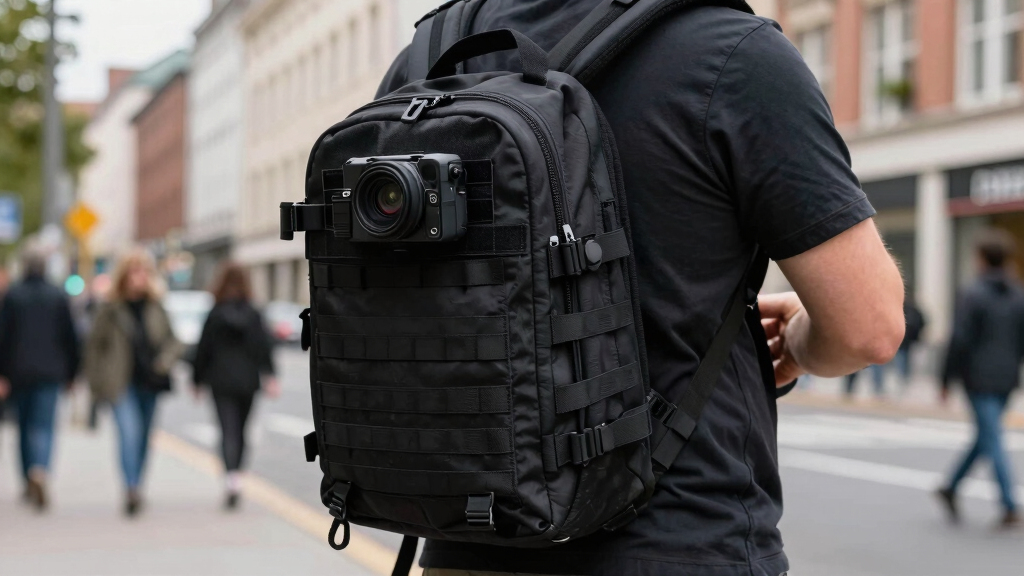

The Think Tank DarkLight 20L is my best overall tactical camera backpack because it pairs a field-ready build with a practical capacity that suits most working kits. The PGYTECH OneMo TAC 35L is the stronger premium choice for larger systems, while the Rainsmore Tactical Photography Backpack offers more accessories and carrying space for the money. The main choice is between compact mobility, high-capacity organization, and outdoor protection, since adding room and modular hardware also adds weight and bulk. Access style matters just as much: quick entry helps event and travel photographers, while controlled rear access better protects equipment on trails and in crowds. Continue reading for my full breakdown of which backpack fits each buyer, kit size, and shooting environment.
Complete the kit


Key Takeaways
- Think Tank DarkLight 20L leads the ranking because its manageable capacity offers a better balance of field organization and mobility than the larger 35-liter PGYTECH.
- PGYTECH OneMo TAC 35L is the premium load-hauler, but its extra room makes more sense for multi-body kits than for photographers carrying one camera and two lenses.
- Rainsmore provides the strongest value package by combining a large laptop compartment, rain cover, and tripod carrying points without moving into premium pricing.
- Lowepro Flipside Trek BP 450 AW is the trail-focused pick, with an access layout and outdoor-oriented design that separate it from the more urban Thule models.
- The two MOSISO options suit different budget buyers: the black model is the simpler beginner choice, while the Night Camouflage version places more emphasis on tactical styling and exterior utility.
| Think Tank DarkLight 20L Tactical Camera Backpack |  | Best Overall | Exterior dimensions: 19.5 x 12 x 8.5 inches | Interior dimensions: 18.5 x 11 x 5 inches | Capacity: 20 liters | VIEW LATEST PRICE | See Our Full Breakdown |
| MOSISO Camera Backpack with Tripod Holder and Laptop Compartment |  | Best Value Pick | Dimensions: 17.32 x 11.81 x 8.27 inches | Material: Polyester | Main organization: Three compartments | VIEW LATEST PRICE | See Our Full Breakdown |
| Thule EnRoute Camera DSLR Backpack |  | Best Compact Hybrid | Camera compatibility: DSLR or mirrorless camera | Laptop compatibility: Up to 13 inches | Camera insert: Removable camera pod | VIEW LATEST PRICE | See Our Full Breakdown |
| Lowepro Flipside Trek BP 450 AW Backpack |  | Best for All-Weather Hiking | Bag type: Camera backpack | Color: Grey and dark green | Weather cover: Built-in All Weather AW cover | VIEW LATEST PRICE | See Our Full Breakdown |
| Thule Aspect DSLR Camera Bag Backpack |  | Best for Camera-and-Drone Kits | Camera compatibility: DSLR camera | Drone compatibility: DJI Mavic Pro or drones up to 260 x 240 x 130 mm | Laptop compatibility: Up to 15.6 inches | VIEW LATEST PRICE | See Our Full Breakdown |
| Rainsmore Camera Bag Backpack |  | Best Weather-Ready Value | Laptop compatibility: Up to 15.6 inches | Material: Waterproof fabric | Color: Army green | VIEW LATEST PRICE | See Our Full Breakdown |
| Thule Covert Camera Backpack 24L |  | Best Modular Travel Pick | Capacity: 24L | Laptop compatibility: Title states 14 inches; supplied specifications state up to 16 inches | Tablet compatibility: Up to 11 inches | VIEW LATEST PRICE | See Our Full Breakdown |
| HAMBOLY Professional Camera Bag Backpack |  | Best for MOLLE Expansion | Main compartment width: 11.8 inches | Main compartment depth: 8.3 inches | Main compartment height: 17.1 inches | VIEW LATEST PRICE | See Our Full Breakdown |
| MOSISO Camera Backpack |  | Best for Multi-Zone Organization | Overall dimensions: 17.13 x 11.81 x 8.27 inches | Lower compartment dimensions: 11.41 x 10.24 x 6.29 inches | Laptop compatibility: Up to 16 inches | VIEW LATEST PRICE | See Our Full Breakdown |
| PGYTECH OneMo TAC 35L Tactical Camera Backpack |  | Best for Heavy Expeditions | Capacity: 35L | Dimensions: 21.3 x 13.0 x 9.4 inches | Laptop compatibility: Up to 15.6 inches | VIEW LATEST PRICE | See Our Full Breakdown |
| tactical camera backpack | Laptop compatibility | Material |
|---|---|---|
| Think Tank DarkLight 20L Tacti | — | — |
| MOSISO Camera Backpack with Tr | Up to 16 inches | Polyester |
| Thule EnRoute Camera DSLR Back | Up to 13 inches | — |
| Lowepro Flipside Trek BP 450 A | — | — |
| Thule Aspect DSLR Camera Bag B | Up to 15.6 inches | — |
| Rainsmore Camera Bag Backpack | Up to 15.6 inches | Waterproof fabric |
| Thule Covert Camera Backpack 2 | Title states 14 inches; supplied specifications state up to 16 inches | Not specified |
| HAMBOLY Professional Camera Ba | Up to 15.6 inches | Water-resistant fabric |
| MOSISO Camera Backpack | Up to 16 inches | Polyester |
| PGYTECH OneMo TAC 35L Tactical | Up to 15.6 inches | Waterproof fabric |
More Details on Our Top Picks
Think Tank DarkLight 20L Tactical Camera Backpack
I rank the Think Tank DarkLight 20L first because it combines genuine tactical expansion with photography-focused security. Its rear camera access keeps the main opening against my back while carried, and the MOLLE panels let buyers attach pouches without consuming internal space. Compared with the MOSISO Night Camouflage, this model offers a cleaner harness and more focused gear layout, while its 3.4-pound weight remains manageable for a structured 20-liter pack. The included waist belt, compression straps, and air-mesh harness make it better suited to uneven ground than the Thule Aspect. The compromise is its five-inch interior depth, which can restrict large bodies with battery grips or bulky lenses. It also costs buyers some carrying flexibility because the compact volume leaves less room for clothing. For a balanced tactical setup, its security, modularity, and comfort earn the lead position.
Pros:- Rear opening improves gear security while the backpack is being carried
- MOLLE panels support modular exterior pouches and accessories
- Air-mesh harness and removable waist belt distribute heavier loads
- Rain cover and compression straps support outdoor assignments
Cons:- Five-inch interior depth may restrict bulky camera configurations
- 20-liter capacity leaves limited space for personal and overnight gear
- 3.4-pound empty weight is substantial for a medium-size pack
Best for: Outdoor photographers who want secure rear access, MOLLE expansion, and a supportive harness in a moderate 20-liter format
Not ideal for: Photographers carrying gripped camera bodies, oversized lenses, or several days of clothing because the interior is only 5 inches deep
- Exterior dimensions:19.5 x 12 x 8.5 inches
- Interior dimensions:18.5 x 11 x 5 inches
- Capacity:20 liters
- Weight:3.4 pounds
- Gear access:Rear opening
- Expansion system:MOLLE panels
- Harness:Air-mesh harness with removable waist belt
- Weather protection:Included rain cover
Our verdict“I recommend this as the most balanced choice for photographers who value secure access and tactical modularity more than maximum capacity.”
MOSISO Camera Backpack with Tripod Holder and Laptop Compartment
I give the MOSISO Night Camouflage the value role because it packs travel-friendly features into one tactical-looking design: a 16-inch laptop sleeve, tripod carrier, trolley belt, anti-theft pocket, and exterior webbing. Its three-compartment layout separates clothing from camera equipment, making it more practical for mixed travel loads than the shallower Think Tank DarkLight 20L. Adjustable lower inserts also offer more configuration freedom than the fixed-purpose sections found in many budget bags. That flexibility comes with friction. The organization can take time to configure, and its 8.27-inch exterior depth creates a bulkier profile than the Thule EnRoute. Polyester provides useful weather resistance, but the supplied data does not list a dedicated rain cover. Once the laptop, tripod, and camera sections are filled, load weight can climb quickly. I see it as a feature-rich budget choice, not the most refined hiking pack.
Pros:- Three compartments separate camera equipment, clothing, and electronics
- Laptop sleeve accommodates models up to 16 inches
- Tripod holder, webbing, and removable inserts support varied loadouts
- Anti-theft pocket and trolley belt add practical travel utility
Cons:- Deep, multi-section design can feel bulky during everyday use
- Complex organization takes more setup than a simple camera pod
- A fully packed camera, laptop, and tripod load may become heavy
Best for: Budget-conscious travel photographers carrying a camera kit, tripod, clothing, and a laptop between 14 and 16 inches
Not ideal for: Daily commuters and minimalist shooters who want a slim bag with a simple, immediately accessible layout
- Dimensions:17.32 x 11.81 x 8.27 inches
- Material:Polyester
- Main organization:Three compartments
- Camera storage:Lower compartment with removable modular inserts
- Personal storage:Upper compartment for clothing
- Laptop compatibility:Up to 16 inches
- External carrying:Tripod holder and accessory webbing
- Travel features:Anti-theft pocket and trolley belt
- Carry system:Breathable padded shoulder straps and back panel
Our verdict“I would choose this for maximum storage utility per dollar, provided a bulky profile and more involved organization are acceptable.”
Thule EnRoute Camera DSLR Backpack
I place the Thule EnRoute in the compact hybrid slot because its removable camera pod lets one backpack move between photography and ordinary daily carry. The side zippered entry is faster for spontaneous shots than the rear-opening Think Tank DarkLight 20L, while the adjustable dividers accommodate either DSLR or mirrorless equipment. A zip-away side pocket can hold a tripod or bottle without remaining permanently extended. This is less tactical than the MOSISO Night Camouflage: there is no listed MOLLE webbing, anti-theft pocket, or large-laptop support. Its electronics sleeve stops at 13 inches, ruling out many work laptops, and minimalist shooters may still find a camera backpack larger than needed. The removable pod does, however, make unused space easier to reclaim than in the Lowepro Flipside Trek BP 450 AW. I favor its adaptable everyday layout over raw field capacity, earning it a role for lighter urban kits.
Pros:- Removable camera pod converts the bag for general daily use
- Side entry provides fast access without opening the full compartment
- Adjustable dividers support DSLR and mirrorless configurations
- Zip-away side pocket carries a tripod or water bottle
Cons:- Laptop compartment is limited to devices up to 13 inches
- Lacks the listed tactical attachment system found on the Think Tank and MOSISO models
- Offers less weather-focused protection than the Lowepro Flipside Trek
Best for: Urban photographers carrying a DSLR or mirrorless kit with a tablet or compact 13-inch laptop who want a bag that can serve non-photo duties
Not ideal for: Field photographers needing MOLLE attachments, dedicated all-weather protection, or room for laptops larger than 13 inches
- Camera compatibility:DSLR or mirrorless camera
- Laptop compatibility:Up to 13 inches
- Camera insert:Removable camera pod
- Internal organization:Adjustable dividers
- Gear access:Side zippered entry
- Side storage:Zip-away pocket
- Side-pocket uses:Tripod or water bottle
Our verdict“I favor this for lighter city kits and buyers who value a removable camera pod over tactical attachment capacity.”
Lowepro Flipside Trek BP 450 AW Backpack
I rank the Lowepro Flipside Trek BP 450 AW as the weather-focused hiking choice. Its built-in All Weather AW cover shields the pack from rain, snow, dust, and sand, giving it broader environmental protection than the Thule EnRoute. The ActiveZone suspension system targets load comfort on the move, while gear access is designed to keep the bag off the ground during retrieval. Multiple attachment points also let hikers carry equipment outside the main compartment. Compared with the Think Tank DarkLight 20L, the Lowepro emphasizes trail protection and accessory space rather than clearly specified MOLLE modularity or rear-access security. Its tablet compartment is useful for mobile editing, but buyers needing a full-size laptop should choose the MOSISO Night Camouflage or Thule Aspect. The main penalty is trail-oriented bulk, which makes it awkward for casual commuting, and the grey/dark-green finish offers no choice. I favor it when weather exposure outweighs laptop capacity.
Pros:- Built-in All Weather AW cover protects against several outdoor hazards
- ActiveZone suspension supports active, longer-distance carrying
- Gear can be accessed without placing the backpack on the ground
- Multiple attachment points expand exterior carrying options
Cons:- Trail-focused construction may be bulky for casual daily use
- Tablet compartment does not replace a specified full-size laptop sleeve
- Available product data lists only a grey and dark-green colorway
Best for: Hiking photographers who regularly encounter rain, snow, dust, or sand and carry a tablet rather than a full-size laptop
Not ideal for: Office-bound photographers who need a laptop compartment or a compact bag that fits comfortably into crowded commutes
- Bag type:Camera backpack
- Color:Grey and dark green
- Weather cover:Built-in All Weather AW cover
- Weather protection:Rain, snow, dust, and sand
- Suspension:ActiveZone system
- Device storage:Tablet compartment
- External carrying:Multiple attachment points
- Gear access:Access designed without setting the bag down
Our verdict“I recommend this for foul-weather trail photography where suspension comfort and environmental protection matter more than laptop storage.”
Thule Aspect DSLR Camera Bag Backpack
I assign the Thule Aspect the camera-and-drone role because its padded interior is sized for a DSLR plus a DJI Mavic Pro or a drone up to 260 x 240 x 130 mm. That makes it more purpose-built for hybrid aerial kits than the Thule EnRoute, whose smaller removable pod favors a lighter camera setup. The 15.6-inch laptop compartment and separate iPad storage also suit creators who edit away from home. Removable padded hip-belt and shoulder components, paired with an air-mesh back panel, provide better load support than a basic commuter bag. Yet this is not the strongest tactical option: unlike the Think Tank DarkLight 20L, the supplied features do not identify MOLLE panels, and no rain cover is listed. Camera, drone, laptop, and personal gear can also produce a large, heavy load. Compared with the MOSISO Night Camouflage, it offers a more focused drone layout but fewer stated security and travel features. I choose it for multi-device creators, not minimalist shooters.
Pros:- Padded layout accommodates both a DSLR and a compact drone
- Dedicated storage fits a laptop up to 15.6 inches plus an iPad
- Removable padded hip belt supports heavier multi-device loads
- Air-mesh back panel improves ventilation during extended carrying
Cons:- Camera, drone, and computer capacity creates a bulky packed profile
- No MOLLE attachment system is listed
- No dedicated rain cover is identified in the supplied product data
Best for: Drone photographers and traveling content creators carrying a DSLR, compact drone, 15.6-inch laptop, and iPad in one padded backpack
Not ideal for: Minimalist photographers or buyers who need MOLLE expansion, a supplied rain cover, or a slim everyday profile
- Camera compatibility:DSLR camera
- Drone compatibility:DJI Mavic Pro or drones up to 260 x 240 x 130 mm
- Laptop compatibility:Up to 15.6 inches
- Tablet storage:Dedicated iPad storage
- Internal storage:Customizable padded compartments
- Waist support:Removable padded hip belt
- Shoulder support:Padded shoulder straps
- Back panel:Air-mesh construction
Our verdict“I would pick the Thule Aspect for a camera-and-drone workflow, but buyers focused on tactical modularity should choose the Think Tank instead.”
Rainsmore Camera Bag Backpack
I rank the Rainsmore Camera Bag Backpack as the weather-ready value pick because it combines waterproof fabric and a separate rain cover with adjustable camera storage, a tripod holder, and laptop space. That package suits photographers who want outdoor protection without moving up to the larger PGYTECH OneMo TAC 35L. Compared with the HAMBOLY Professional Camera Bag Backpack, the Rainsmore offers a similar army-green tactical profile but places more emphasis on varied pockets and external expansion. Quick-access openings reduce the need to expose the whole compartment when changing lenses, while the anti-theft layout helps during travel. The compromise is considerable loaded bulk; this is less appealing for crowded commutes or small mirrorless kits. I would also skip it if color choice matters, since army green is the only listed option.
Pros:- Waterproof fabric and included rain cover provide two layers of weather protection
- Adjustable padded dividers accommodate changing camera and lens combinations
- Quick-access openings help photographers retrieve gear without opening the full bag
- Tripod holder and multiple pockets separate support gear from delicate equipment
Cons:- Bulky proportions are poorly matched to light daily carry
- A full camera and laptop load may become heavy
- Limited color choice reduces its appeal outside tactical settings
Best for: Outdoor photographers who carry a laptop, tripod, and several accessories and want layered rain protection at a value-oriented position
Not ideal for: Urban commuters with a small mirrorless kit, since the tactical build can feel bulky and heavy
- Laptop compatibility:Up to 15.6 inches
- Material:Waterproof fabric
- Color:Army green
- Interior organization:Adjustable padded dividers
- Weather accessory:Rain cover included
- Tripod carrying:Tripod holder included
Our verdict“I recommend this to outdoor photographers seeking practical weather protection and flexible storage without needing a 35L expedition pack.”
Thule Covert Camera Backpack 24L
The Thule Covert Camera Backpack 24L earns my modular travel role because its removable padded camera pod can become a separate shoulder bag. That gives travelers more flexibility than the fixed divider systems in the Rainsmore and HAMBOLY packs: I can recommend the Thule for someone who wants one bag during transit and a smaller camera carrier after arrival. Its 24L capacity, luggage pass-through, side access, expandable pockets, and separate device storage also make airport movement easier. It is less compelling for exposed outdoor work, however, because weather resistance is not stated, while the Rainsmore and PGYTECH include rain covers. The listing also presents conflicting laptop guidance—its title says 14 inches, while supplied specifications say up to 16 inches—so buyers should verify fit. Loaded bulk remains another drawback.
Pros:- Removable padded camera pod doubles as a separate shoulder bag
- Luggage pass-through and side access suit airport and rail travel
- Dedicated storage separates camera gear, a laptop, and an 11-inch tablet
- Expandable pockets and tripod lash points accommodate variable loads
Cons:- No weather resistance or protective rain cover is stated
- Laptop compatibility is inconsistent between the title and supplied specifications
- The 24L layout may become bulky when every compartment is filled
Best for: Travel photographers who want to separate a camera pod from their main carry-on after reaching a destination
Not ideal for: Photographers working regularly in rain or dust, since no weather-resistant material or rain cover is stated
- Capacity:24L
- Laptop compatibility:Title states 14 inches; supplied specifications state up to 16 inches
- Tablet compatibility:Up to 11 inches
- Camera insert:Removable padded shoulder bag
- Gear access:Side access
- Travel feature:Luggage pass-through
- External carrying:Expandable pockets and tripod lash points
- Material:Not specified
Our verdict“I would choose this for travel flexibility, but weather-focused buyers have safer choices in the Rainsmore or PGYTECH.”
HAMBOLY Professional Camera Bag Backpack
I place the HAMBOLY Professional Camera Bag Backpack in the MOLLE-expansion slot because it pairs a large adjustable interior with external tactical webbing. That makes more sense for photographers attaching pouches or field accessories than the cleaner Thule Covert 24L, whose modularity centers on a removable camera pod. Water-resistant fabric, impact-resistant construction, and an included rain cover give the HAMBOLY a stronger outdoor brief than that Thule, while quick-access openings keep commonly used gear within reach. Its 17.1-inch-tall main compartment also leaves room for a substantial DSLR setup. The penalty is bulk and loaded weight, particularly once MOLLE accessories, a tripod, and a 15.6-inch laptop are added. I would not choose it for discreet city work either: the pronounced tactical styling attracts more attention than a conventional camera backpack.
Pros:- MOLLE webbing supports expandable, task-specific external storage
- Large adjustable compartment accommodates varied DSLR and lens layouts
- Water-resistant fabric, impact protection, and a rain cover suit field use
- Padded straps and quick-access openings support long shooting days
Cons:- Large build may overwhelm casual or compact-camera users
- Laptop, tripod, and attached pouches can create a heavy combined load
- Overt tactical styling is less discreet in cities and event venues
Best for: Field photographers who carry a large DSLR kit and want MOLLE attachment points for pouches or outdoor accessories
Not ideal for: Discreet urban photographers or casual users who need a light, understated bag for a small kit
- Main compartment width:11.8 inches
- Main compartment depth:8.3 inches
- Main compartment height:17.1 inches
- Laptop compatibility:Up to 15.6 inches
- Material:Water-resistant fabric
- Expansion system:MOLLE webbing
- Included accessories:Rain cover and tripod holder
Our verdict“I recommend the HAMBOLY for photographers who will genuinely use MOLLE expansion and accept extra weight for field-ready protection.”
MOSISO Camera Backpack
The MOSISO Camera Backpack is my pick for photographers who prefer three defined storage zones over one large tactical cavity. Its removable foam padding, multiple pockets, and 16-inch laptop compatibility help separate camera equipment, personal items, and electronics. Compared with the Rainsmore, the MOSISO adds a trolley belt and a side-load compression system, making it better suited to mixed travel and photography loads. It also accepts DSLR, mirrorless, and drone configurations, so the layout can adapt when the assignment changes. That organization carries a learning curve: users may need time to arrange the compartments, and the 17.13-inch body is too large for a minimal street kit. Polyester with reinforced edges offers practical durability, but no rain cover is listed, leaving Rainsmore stronger for wet conditions. I also flag heavy fully packed carry as a real concern.
Pros:- Three main compartments separate camera gear, electronics, and personal items
- Removable foam padding adapts to DSLR, mirrorless, or drone equipment
- Trolley belt and anti-theft pocket add practical travel utility
- Padded straps, back panel, and reinforced edges support larger loads
Cons:- Multi-zone layout takes more setup than a simple open compartment
- Large dimensions are cumbersome for small daily kits
- No rain cover or explicit waterproof rating is provided
Best for: Traveling photographers who carry camera or drone gear alongside a 16-inch laptop and want separate storage zones
Not ideal for: Minimalist street photographers or frequent rain shooters who need a compact bag with stated wet-weather coverage
- Overall dimensions:17.13 x 11.81 x 8.27 inches
- Lower compartment dimensions:11.41 x 10.24 x 6.29 inches
- Laptop compatibility:Up to 16 inches
- Material:Polyester
- Main compartments:3
- Interior protection:Removable foam padding
- Load management:Side-load compression system
- Travel features:Anti-theft pocket and trolley belt
- Tripod carrying:Tripod holder
Our verdict“I favor this MOSISO for organized mixed-gear travel, while wet-weather shooters should choose a pack with stated rain protection.”
PGYTECH OneMo TAC 35L Tactical Camera Backpack
I rank the PGYTECH OneMo TAC 35L highest for long expeditions and large professional loads. Its 35L capacity clearly separates it from the 24L Thule Covert, leaving more room for multiple bodies, lenses, field accessories, and a 15.6-inch laptop. Waterproof fabric and an included rain cover also make it better prepared for exposed locations than the Thule, while quick-access ports reduce delays when equipment is packed deep. Customizable dividers and MOLLE webbing let photographers build a task-specific layout instead of accepting fixed storage. Capacity is also the main compromise: at 21.3 inches tall, this pack is cumbersome for commuting, short shoots, and small mirrorless systems. A full 35L load may become physically demanding, especially with a tripod attached. Since price is not supplied, I cannot judge its value against smaller alternatives.
Pros:- 35L capacity supports extensive professional camera and field equipment
- Waterproof fabric and included rain cover provide strong weather preparation
- Customizable dividers and MOLLE webbing accommodate specialized loadouts
- Multiple quick-access points reduce retrieval time with a densely packed bag
Cons:- Large 21.3-inch-tall body is cumbersome for commuting and short shoots
- A fully loaded 35L pack can place substantial strain on the wearer
- Missing price information makes value comparisons difficult
Best for: Expedition and location photographers carrying multiple camera bodies, several lenses, a tripod, and a laptop through changeable weather
Not ideal for: Daily commuters, short-session photographers, or small mirrorless-kit owners who would rarely use 35L of capacity
- Capacity:35L
- Dimensions:21.3 x 13.0 x 9.4 inches
- Laptop compatibility:Up to 15.6 inches
- Material:Waterproof fabric
- Interior organization:Customizable padded dividers
- Expansion system:MOLLE webbing
- Weather accessory:Rain cover included
- Tripod carrying:Tripod holder
Our verdict“I would reserve the OneMo TAC 35L for serious expedition loads, where its capacity and weather protection justify the bulk.”
How We Picked
I ranked these backpacks by how well they combine camera protection, field access, carrying comfort, and usable organization. A tactical appearance alone did not earn a high position; I gave more weight to layouts that keep dividers stable, separate fragile gear from personal items, secure a tripod, and provide sensible laptop storage. I also compared stated capacity against likely kit size because more volume can become a liability when it encourages overpacking or creates loose space around a small camera system.
Build details, rain-management features, modularity, exterior attachment options, and value shaped the remaining order. I placed versatile mid-capacity designs above specialized models when they served a wider range of photographers, while still recognizing strong roles for premium load carrying, trail access, compact travel, and entry-level value. Since the list includes products at different price levels, I judged value by the usefulness of the complete layout rather than by choosing the least expensive bag. The final ranking reflects buyer fit and tradeoffs, not a simple feature count.
| tactical camera backpack | Material | Laptop compatibility |
|---|---|---|
| Think Tank DarkLight 20L Tacti | — | — |
| MOSISO Camera Backpack with Tr | Polyester | Up to 16 inches |
| Thule EnRoute Camera DSLR Back | — | Up to 13 inches |
| Lowepro Flipside Trek BP 450 A | — | — |
| Thule Aspect DSLR Camera Bag B | — | Up to 15.6 inches |
| Rainsmore Camera Bag Backpack | Waterproof fabric | Up to 15.6 inches |
| Thule Covert Camera Backpack 2 | Not specified | Title states 14 inches; supplied specifications state up to 16 inches |
| HAMBOLY Professional Camera Ba | Water-resistant fabric | Up to 15.6 inches |
| MOSISO Camera Backpack | Polyester | Up to 16 inches |
| PGYTECH OneMo TAC 35L Tactical | Waterproof fabric | Up to 15.6 inches |
Factors to Consider When Choosing Best Tactical Camera Backpacks
I would choose a tactical camera backpack by matching its access system, internal volume, and harness to the way the equipment will actually be carried. Military-inspired styling and attachment webbing can be useful, but they should support the shooting workflow rather than dictate it. The sections below explain the broader choices that separate a practical field bag from one that merely looks rugged.
Match Capacity to a Real Shooting Kit
I recommend laying out the camera bodies, lenses, drone parts, and personal items that need to travel before choosing a capacity. A 20- to 24-liter backpack generally suits a mirrorless or DSLR body, several lenses, and daily accessories without becoming cumbersome. A 35-liter design makes more sense for two bodies, longer lenses, lighting gear, or an overnight layer. Buying extra room for hypothetical equipment often leads to poor weight distribution and unnecessary bulk. Loose internal space can also let gear shift unless the divider system can be tightened around the kit. If air travel is frequent, I would compare the packed external dimensions with the airline’s current cabin limits rather than relying on the advertised liter rating.
Choose an Access Style That Fits the Assignment
Rear-panel access keeps the main camera opening against the wearer’s back, which can reduce unwanted access in crowds and keep the harness away from muddy ground. Side access is faster when a lens change or camera draw cannot wait, but it usually exposes only part of the compartment. A full front opening makes packing easy yet may require setting the bag down and opening a large area around expensive gear. I see rear access as the stronger trail and security choice, while side access favors fast-paced shooting. Some hybrid bags offer more than one route, though additional zippers introduce more seams and can complicate the internal layout. Buyers often focus on speed alone and miss whether the chosen opening provides clear access to the lens they reach for most.
Evaluate the Harness Before Exterior Styling
A loaded camera backpack concentrates dense weight close to the spine, so shoulder padding by itself is not enough. I would look for a structured back panel, adjustable sternum strap, and a hip belt that can transfer part of a heavier load away from the shoulders. Load lifters and useful torso adjustment become more valuable as capacity rises, especially with long lenses or a tripod attached. Wide tactical webbing can add flexibility, but external pouches may pull the bag away from the body and reduce balance. Ventilated padding improves comfort in warm weather, although thick mesh can hold dust and moisture after a long outing. For a lightly packed commuter bag, a simpler harness may be preferable because heavy suspension hardware adds weight even when it is not needed.
Separate Weather Resistance From Waterproofing
Most camera backpacks described as waterproof are better treated as weather-resistant systems unless the maker provides a specific submersion rating. Coated fabric can shed brief rain, but zippers, seams, and access panels remain common entry points. A fitted rain cover adds useful protection during sustained weather, though it can block quick-access doors and exterior attachment points. I favor bags with raised or well-padded bases because wet ground poses a different risk from falling rain. Sensitive equipment should still travel in internal dry bags or sealed pouches during severe conditions. After exposure, the backpack should be emptied and dried fully so trapped moisture does not remain beside lenses, batteries, or dividers.
Decide How Much Modularity You Will Use
Removable cubes and adjustable dividers let one backpack serve camera, travel, and daily-carry roles. That flexibility is valuable when the same bag must switch between a full photography kit and mixed personal cargo. The tradeoff is that modular inserts consume internal space and may move more than a compartment built into the shell. Exterior attachment grids work best for lightweight items such as gloves, straps, or a compact pouch; loading every loop can create snag points and advertise the bag’s tactical purpose. I would pay more for modularity only if the layout will be changed regularly. For a stable one-camera kit, a simpler divider system is often faster to pack and easier to keep organized.
Spend More Where Failure Would Hurt
Higher prices are easier to justify when a bag carries heavy equipment for long periods or faces frequent outdoor use. Better harness geometry, firmer structure, dependable zipper paths, and carefully shaped dividers can matter more than an extra pocket. A budget model can still suit occasional trips, short walks, or a modest beginner kit, especially when it includes a rain cover and laptop sleeve. I would avoid paying a premium solely for camouflage fabric or tactical branding. Money is better directed toward load support and protective construction, since those features affect both comfort and equipment safety. If the backpack will be used weekly for paid work, small gains in access and organization can repay the higher cost through fewer packing delays.
Frequently Asked Questions
Is a Tactical Camera Backpack Better Than a Standard Camera Backpack?
A tactical model is better when you need external attachment points, durable fabrics, and adaptable organization. It can carry accessories that do not fit neatly inside a conventional photography bag, but added webbing and hardware may increase weight. Standard camera backpacks often look less conspicuous and can be better suited to offices, city travel, or venues with strict bag policies. I would choose based on the working environment rather than appearance. For most buyers, access and harness quality matter more than whether the design is labeled tactical.
What Backpack Capacity Works for One Camera and Three Lenses?
For one body and three ordinary lenses, I would usually start around 20 to 24 liters. That range leaves space for batteries, filters, a compact layer, and a small laptop without forcing a half-empty large pack onto every outing. Fast telephoto lenses or a 70–200mm lens may require a deeper compartment and a different divider layout even when the stated capacity seems sufficient. Internal dimensions are more useful than volume alone because camera inserts taper and divide space differently. A 35-liter pack is better reserved for multiple bodies, long glass, lighting equipment, or mixed travel cargo.
Can These Backpacks Protect Camera Gear in Heavy Rain?
A rain cover and coated shell can provide useful protection during showers, but I would not treat them as permission to leave equipment exposed during prolonged heavy rain. Water may reach the compartment through zipper junctions, seams, or the opening created when gear is accessed. A removable cover also needs to fit securely around any tripod mounted outside the pack. For severe weather, I would place cameras and lenses in sealed internal pouches and keep spare batteries isolated. This layered approach offers better protection than relying on one fabric claim.
Should I Choose Rear Access or Side Access for Hiking?
I favor rear access for deliberate trail photography because it keeps the main opening protected while the bag is worn and lets the front of the pack face the ground when opened. Side access is more convenient when the camera must be drawn without removing the entire backpack, which helps with wildlife or fleeting scenes. The drawback is that a side door may not expose every lens or divider bay. A bag that offers both systems can cover more situations, but the layout should remain stable when opened from either direction. Your preferred pace matters: rear access favors security and organization, while side access prioritizes speed.
Are Tactical Camera Backpacks Suitable for Air Travel?
Many are suitable for cabin travel, but airline size and weight limits vary and can change between routes. Exterior tripod pockets, attached pouches, and stiff harness parts count toward the packed dimensions even when the main body appears compact. I would detach accessories, keep batteries in line with airline rules, and measure the fully loaded bag before departure. A 20- or 24-liter model is generally easier to manage under a seat than a structured 35-liter pack. If flying is a main use, compact dimensions and removable modules deserve more weight than maximum field capacity.
Conclusion
For most photographers, I recommend the Think Tank DarkLight 20L as the best overall choice because it balances tactical utility, practical capacity, and everyday mobility. The Rainsmore Tactical Photography Backpack is my value pick for buyers who want a rain cover, tripod support, and a large laptop compartment at a more accessible price, while the black MOSISO Camera Backpack is the easier beginner option for a modest starter kit. Buyers carrying multiple bodies, larger lenses, or mixed production gear should move up to the PGYTECH OneMo TAC 35L, my premium and high-capacity recommendation. For hiking and controlled rear access, I would choose the Lowepro Flipside Trek BP 450 AW; for modular urban travel, the Thule Covert 24L makes more sense. The right final choice comes down to whether the assignment calls for mobility, load capacity, rapid access, or outdoor protection.