
TL;DR

Get audio and creator gear delivered free with Prime
- Fast, free delivery on millions of items
- Prime Video, Amazon Music and more included
- Member-only deals all year
Photographing pets works best when you focus on the eyes, use a shutter speed suited to the animal’s movement, and shoot in soft, comfortable light. Keep sessions brief, use treats or toys sparingly, and watch for a natural pause or glance rather than forcing a pose. Good timing and a relaxed pet matter more than expensive gear.
The best pet portrait often happens in the half-second after the toy drops: your dog pauses, ears forward, eyes bright, and suddenly the room feels still. To catch that moment, you don’t need a studio full of gear. You need a focus point you can trust, enough shutter speed for the way your pet moves, and a session that feels safe and familiar.
I approach pet photography as a conversation with a subject who may wander off mid-sentence. In this guide, you’ll learn how to focus on the eyes, choose practical camera settings, use treats without creating chaos, and spot the small pauses that make a photograph feel alive. You’ll also learn when to put the camera down. A relaxed animal makes better pictures, and comfort comes first.
Focus on the nearer eye, using animal-eye detection or a single focus point you can verify.
Start near 1/500 second for a playful pet and go faster for running or jumping; raise ISO when indoor light is dim.
Use soft window light or open shade, and check white fur for clipped highlights and dark fur for lost shadow detail.
Offer a treat or toy as a brief cue, then let the pet reset instead of waving it constantly.
Watch body language and stop if the animal tries to leave, turns away repeatedly, or shows signs of stress.
Photographing Pets Focus, Treats, and Timing
Sharp eyes, comfortable light, and a relaxed pet matter more than expensive gear. Watch for a natural pause instead of forcing a pose.
Set focus and shutter speed
Focus on the eye nearest the camera, and adjust shutter speed to match movement.
Use animal-eye detection or a single focus point, and check that it lands on the nearer eye.
Start near 1/500 second for play; go faster for running or jumping. Raise ISO if indoor light is dim.
Review focus and exposure, then adjust if the eyes are soft or movement is blurred.
Choose comfortable light
Soft window light or open shade helps keep expressions relaxed and fur detail visible.
Favor soft light
Avoid harsh midday sun, which can create deep shadows and make pets squint.
Watch the coat
Check that white fur keeps texture and dark fur retains shadow detail.
Keep it familiar
Use a simple background and get down to the pet’s eye height when you can.
Guide attention gently
A brief cue can bring a glance toward the lens; give the pet room to reset.
- Ask a helper to hold a familiar treat or quiet toy near the camera.
- Take a few frames when the pet looks, then reward and pause.
- Waving the lure constantly, which can make a pet restless or fixated.
- Forcing a pose when the animal turns away or tries to leave.
Wait for the natural moment
A head tilt, glance, stretch, or pause after play can make a portrait feel alive.
- Let the pet explore and keep the session short and positive.
- Watch body language and stop if the pet seems uncomfortable or stressed.
- Use short bursts, then review the images and adjust focus or exposure.
Start with the eyes and choose a shutter speed that can keep up
Photographing pets gets easier when you make the eyes your focus target and set a shutter speed that matches the animal’s movement. Start near 1/500 second for a playful pet, then go faster for running or jumping; for a calm animal, you can often use a slower speed if the pet and camera stay still. These choices give you a practical base before you worry about fancy gear.
The eyes act like the anchor in a portrait. If your camera has animal-eye detection, try it, but check that it has actually found the near eye; focus systems can miss when fur covers the face or light runs low. Without eye detection, use a single focus point and place it on the eye nearest the camera. With a moving subject, continuous autofocus can follow as your cat turns toward the window or your dog trots closer.
Shutter speed is the brake that freezes movement. A dog sitting on a rug might look sharp at 1/250 second, while the same dog bounding after a ball may need 1/1000 second or faster. If you keep getting soft paws or a blurry nose, raise the shutter speed first. In dim rooms, increase ISO or bring in soft light instead of letting the shutter crawl so slowly that every head turn becomes a smear.
Use a wide enough aperture to separate your pet from the room, but don’t open it so far that one eye stays sharp and the other disappears into blur. For example, when photographing two dogs shoulder to shoulder, a little more depth of field can keep both faces readable. A strong pet portrait is usually less about expensive equipment and more about the decisions you make before pressing the shutter.
Products Worth Considering

Kindle Paperwhite Signature Edition 32GB (2024) – Auto-adjusting front light, wireless charging, weeks of battery life – Metallic Black

LG UltraGear 32GX850A-B 32-inch 4K UHD Glossy OLED Gaming Monitor

Apple AirPods Pro 3 Wireless Earbuds with Active Noise Cancellation
As an affiliate, we earn on qualifying purchases.
Use soft light and a familiar background to make fur shine
Photographing pets in soft window light or open shade helps you keep fur detail and comfortable expressions. Avoid harsh midday sun when you can: it can carve deep shadows under the eyes and make an animal squint. Choose a simple background, check for bright distractions, and leave space in the frame where your pet is looking or moving.
For an indoor portrait, start near a large window and turn off any harsh overhead light that gives the fur a yellow or green cast. A dog stretched across the floor beside a bright window may need you to expose for the face rather than the whole room. If the background goes dark, that can be fine; a clear expression matters more than a perfectly even room.
Black and white coats both need a little care. White fur can lose texture when bright patches clip to pure white, while dark fur can sink into a featureless shadow. Look at the animal’s coat on your screen and adjust exposure gently. Soft, even light helps both cases because it keeps strong highlights and heavy shadows from fighting each other.
Get down to your pet’s eye height when you can. From standing height, a small dog can look like a shape on the floor; from the dog’s level, the room opens up behind its face and the photograph feels like an introduction. If your cat looks toward a doorway, leave some breathing room in that direction. The setting matters as much as composition because familiar surroundings help an animal settle into its own rhythm.
Use treats and toys to guide a glance without turning it into a chase
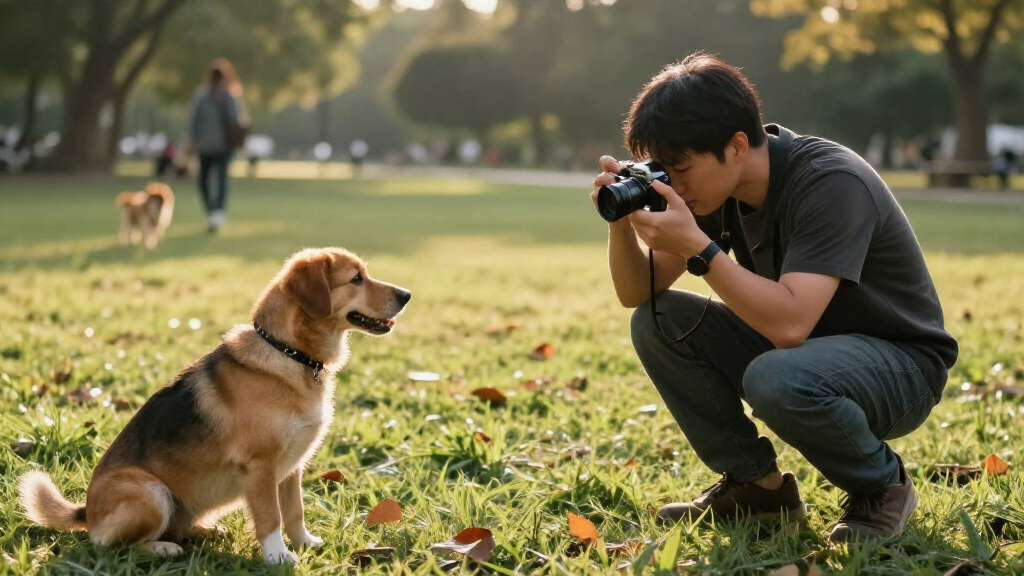
Photographing pets with treats works best when the reward helps you time one brief look toward the lens. Ask a helper to hold a small, familiar treat or quiet toy close to the camera, wait for the pet to notice it, and take the photograph during that short moment of attention. If you wave the lure constantly, the animal may become restless or fixate on the reward.
Think of a treat as a cue, not a remote control. For example, if your terrier keeps looking down at your hand, have a friend hold the treat just above the lens while you keep both hands free for the camera. Take a few frames when the ears lift or the eyes meet the camera, then reward the dog and let it reset. That gives you a clear expression without asking the animal to hold a stiff pose.
Keep rewards safe for that pet, use small amounts, and account for dietary limits. A familiar toy may work better for a cat that ignores food or for an animal that gets overexcited by snacks. Some pets respond to a soft sound, a squeaky toy, or the rustle of a familiar bag. Try one cue at a time so you can see what captures attention without startling the animal.
When you photograph two pets, a helper becomes even more useful. One person can keep the animals close and relaxed while the other watches the frame and focus. For a pair of cats on a sofa, a quiet toy held beside the lens may bring both faces forward for a beat. Take several frames, but keep the interaction easy; the goal is a moment they offer, not a pose you force.
Catch the quiet moment before and after the obvious action
Photographing pets often means watching for the pause just before or after the big action: a head tilt, a stretch, a glance back, or the breath after a run. The best frame may arrive when the ball has stopped rolling and your dog looks up to see what happens next. Aim for alert but settled behavior, then shoot as that natural attention appears.
Start with a familiar activity instead of an unfamiliar setup. A dog may relax after a short walk, while a cat may become curious in a quiet room with its favorite toy. If your puppy is already bouncing off the walls, a rapid-fire session can turn the camera into another source of excitement. Give the animal space to explore and let the energy rise and fall on its own.
Pets move unpredictably, so bursts can help you catch a blink-free expression or the peak of a jump. Use short bursts, then review the images for focus and exposure. If every frame misses the eye, adjust your focus area; if the whole sequence looks smeared, raise shutter speed. Taking hundreds of photographs without checking them is like throwing darts with your eyes closed. A few thoughtful changes can improve the next sequence.
Pay attention to body language between frames. Turning away, flattened ears, a pinned-back posture, panting unrelated to heat, or repeated attempts to leave can signal discomfort. Pause and give the animal a clear way to move away. If those signs continue, end the session. You can reschedule a portrait; you cannot ask an uncomfortable animal to explain its limits in words.
Follow this five-step routine for sharper, calmer pet photos
Photographing pets becomes more predictable when you prepare the space, set your camera, and keep the session short. This five-step routine gives you a simple way to work from setup to review, whether you’re using a camera or a phone.
- Choose a comfortable spot. Pick a familiar room, a patch of open shade, or a safe place your pet already likes. Clear bright clutter from behind the animal and let it explore before you raise the camera.
- Set the exposure for movement. Start around 1/500 second for play, and move faster for running or jumping. Use a wide enough aperture for separation, and raise ISO when the light is low rather than accepting motion blur.
- Set focus on the face. Use animal-eye detection if it works reliably, or place a single focus point on the nearer eye. Choose continuous autofocus for a pet that is walking, turning, or approaching.
- Give one quiet cue. Have a helper place a safe treat or familiar toy near the lens. Wait for the look, take a short burst, and reward the pet without repeatedly waving the lure.
- Check a frame and adapt. Zoom in on the eye and look at the coat for lost highlight or shadow detail. If focus is off, change your focus target; if movement blurs, raise shutter speed. Take a break when your pet needs one.
For instance, if you’re photographing a cat on a chair near a window, you might begin with eye detection and a moderate shutter speed while it watches birds. Once the cat starts batting at a toy, raise the shutter speed and leave more room in front of its paws. The routine gives you a plan, while your pet’s behavior decides the pace.
Use phone and camera features as helpers, then check the result
Photographing pets with a phone can produce lovely results when you use the main camera, tap the eyes to focus, hold the phone steady, and work in good light. A dedicated camera adds control over shutter speed and focus behavior, but it still cannot predict every twitch or turn. Use the tool you have and pay attention to the image it actually made.
Modern cameras and phones may offer animal-eye detection, subject tracking, burst mode, and portrait blur. These features can save a moment when a dog crosses the yard or a cat springs onto a chair. They also have limits: autofocus may lose a face in dim light or behind long fur, and software blur can cut awkwardly around whiskers, ears, and flyaway coat.
Check the photograph at full size before you decide it worked. A phone image can look sharp on its small screen while the eye is slightly soft when enlarged. Avoid excessive digital zoom, which can make fine fur look waxy; move closer when it is safe, or crop modestly afterward. Keep an unprocessed original if you use portrait mode so you can compare the natural edges with the software effect.
A standard lens or phone camera can handle a pet in a familiar room, while a short telephoto lens can give a flattering view and help simplify the background. Neither choice replaces patience. If the light is good and your dog is resting by the door, a phone held at floor level may make a more honest portrait than a longer lens used from across a cluttered room.
Frequently Asked Questions
What camera settings should I start with for pet photography?
For a playful pet, start around 1/500 second and use a faster shutter for running or jumping. Choose an aperture that separates your pet from the background while keeping the face sharp, then raise ISO if the light is dim. The right settings depend on the room, lens, and movement.
How can I get my pet to look at the camera?
Ask a helper to hold a familiar toy or safe treat close to the lens, then photograph the brief moment your pet looks toward it. A quiet, familiar sound may also catch attention. Give the cue a rest if the animal becomes restless or startled.
Can I take good pet photos with a phone?
Yes. Use the main camera, tap your pet’s eye to set focus, keep the phone steady, and find soft natural light. Move closer when it’s safe instead of relying on strong digital zoom.
How do I photograph a pet that won’t sit still?
Photograph a familiar activity and use continuous autofocus or subject tracking if your camera offers it. Set a fast shutter, leave room in the frame for movement, and use short bursts so you can check what worked. A helper and brief sessions can make the experience calmer.
How do I photograph black or white fur without losing detail?
Use soft, even light and check exposure on the coat itself. Keep an eye on bright white fur so its highlights do not turn into featureless patches, and lift shadows in dark fur carefully. Adjust exposure after reviewing a frame rather than relying only on how the overall scene looks.
What should I do if my pet seems stressed?
Pause, give your pet space, and allow it to leave or rest. Turning away repeatedly, flattened ears, a pinned-back posture, or repeated attempts to get away can signal discomfort. End the session if those signs continue; the animal’s comfort comes first.
Conclusion
Remember one simple rule: set your focus on the eyes, give the shutter enough speed for the movement, and let your pet set the pace. A quiet room, a familiar toy, and one unguarded glance can do more for a photograph than a complicated setup.
Keep the camera ready, but stay present with the animal in front of you. When your pet relaxes, the photograph starts to feel less like a pose and more like a moment you were lucky enough to notice.