
TL;DR

Get audio and creator gear delivered free with Prime
- Fast, free delivery on millions of items
- Prime Video, Amazon Music and more included
- Member-only deals all year
Focus breathing is a visible change in framing or field of view as a lens moves focus between distances. Video shooters care because that unwanted zoom can distract from a deliberate focus pull; you can manage it through lens testing, restrained focus moves, careful framing, built-in camera compensation, or limited correction in post-production.
Your camera stays locked down, your subject barely moves, and yet the frame suddenly creeps inward during a focus pull. The background swells. The edges tighten. What should feel like a quiet shift in attention starts looking like someone nudged a zoom ring.
That movement is focus breathing, and it can turn an otherwise polished shot into a subtle visual wobble. You will learn what causes it, why stills and cinema lenses often behave differently, and how to test your own glass without charts or specialized equipment. You will also see where camera compensation and editing can help—and where they cannot.
I pay close attention to breathing when a shot depends on precise visual timing: an interview subject leaning forward, a hand placing a letter on a table, or an actor coming into focus behind a foreground object. In those moments, focus carries the story. The goal is simple: let sharpness move the viewer’s attention while your framing stays calm.
Lock your camera and watch objects near the frame edges while pulling focus; edge movement reveals breathing more clearly than centre sharpness.
Test the exact focal length and focus distances planned for the shot because one lens can behave very differently across its range.
Reduce visible breathing by shortening focus moves, slowing the pull, framing slightly wider, or using compatible in-camera compensation.
Choose cinema glass when repeatable focus pulls and stable framing outweigh size, weight, autofocus speed, and portability.
Treat post-production correction as a limited rescue method because cropping, distortion changes, subject movement, and resolution can restrict the result.
Focus Breathing: Why Video Shooters Care
Your camera stays locked down, yet the frame creeps inward during a focus pull. The background swells. The edges tighten. That unwanted zoom is focus breathing: a change in magnification caused by the lens as it shifts focus between distances.
The lens does two jobs when you asked for one.
Focusing should move the plane of sharpness. In a breathing lens, shifting internal elements also changes effective magnification and rewrites the composition.
Focus distance changes
The operator turns the focus ring or autofocus moves from a near subject to a farther subject.
Glass groups shift
One or more internal optical groups move, altering the path of light through the lens.
Magnification changes
Objects expand or contract and frame edges move, creating a subtle zoom without camera movement.
Composition begins at one effective magnification.
Internal elements reposition during the pull.
The field of view tightens or expands as focus lands.
A still hides the journey. Video records every millimetre.
Breathing becomes most distracting when a deliberate focus transition is supposed to guide attention without announcing the lens mechanics.
Stills lens or cinema lens?
Neither category wins every shoot. The better choice depends on whether stable, repeatable focus pulls matter more than portability, autofocus speed and compact size.
| Lens characteristic | Typical stills lens | Cinema lens |
|---|---|---|
| Breathing control | ~Varies widely and may be visible | ✓Often reduced through optical design |
| Focus ring | ✗Short rotation or electronic control | ✓Long, repeatable manual rotation |
| Focus markings | ~Limited or absent | ✓Detailed distance markings |
| Size and weight | ✓Usually smaller and lighter | ✗Usually larger and heavier |
| Best fit | Photography, mobile work and autofocus shooting | Planned focus pulls and crew-based production |
Important: cinema design often reduces breathing, but price alone is not proof. Test the exact lens, focal length and focus distances planned for the shot.
Test any lens without charts or specialized equipment.
Use a locked camera, two objects at different distances and one recorded focus pull. Keep exposure, focal length and camera position fixed.
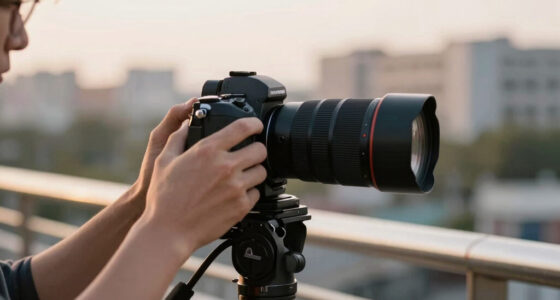
Place the camera on a tripod or another rigid support. Disable stabilization if it reframes the shot.
Position one object close to camera and another farther away, with visible details near the frame edges.
Set the focal length, exposure and framing you intend to use. Do not zoom or reposition between takes.
Record a slow focus move from the near object to the far object, then reverse the direction.
Watch shelves, doorframes and other edge details. Measure apparent growth or movement, not softness.
Ignore the centre for a moment. If objects near the border creep inward or outward while the camera remains locked, the lens is breathing.
Prevent first. Compensate carefully. Rescue last.
No single method works in every production. Combine lens knowledge, restrained focus technique and realistic expectations about digital correction.
Test the planned setup
Breathing varies with lens design, focal length and focusing distance. Test the exact combination before the take.
Most reliableShorten the focus move
Moving between closer focus marks usually exposes less breathing than a rapid pull from close focus toward infinity.
TechniqueSlow the pull
A controlled transition can make the change less abrupt, although smooth focus-ring movement cannot remove optical breathing.
Perceptual aidFrame slightly wider
Leave breathing room around important edges so a small field-of-view change does not crowd the composition.
Requires marginUse camera compensation
Compatible camera-and-lens systems can apply a corrective crop during recording to stabilize apparent framing.
Compatibility requiredCorrect in post
Keyframed scaling may reduce the effect, but cropping, distortion changes, resolution and subject movement limit the result.
Limited rescueBreathing matters when focus is part of the performance.
For casual or handheld work, mild breathing may disappear inside natural movement. For interviews, narrative scenes and precision product shots, it can turn a controlled rack focus into an unintended zoom. Choose equipment by shot behavior—not by category, price or specifications alone.
What Focus Breathing Does to Your Frame
Focus breathing is a change in image magnification that happens as you focus a lens from one distance to another. The camera does not move, but the composition appears to zoom because internal lens elements shift and alter the framing or field of view. According to PhotoMocha’s lens guidance, this optical behavior varies by lens design, focal length, and focusing distance [1].
The phrase focus breathing refers to that visible expansion or contraction, not to ordinary softness while the lens searches for focus. Watch the edges of the image. A bookshelf may creep toward the border, a lamp may grow larger, or a person’s shoulders may suddenly fill more of the frame as you pull focus from the background to the foreground.
Imagine filming a cook at a counter with a 50mm lens. You begin on steam curling above a pan, then pull focus to the cook’s eyes. If the lens breathes heavily, the cook’s face seems to swell while the pan slides outward, creating a faint zoom even though the tripod remains as still as stone.
The optical reason sits inside the lens. Many designs focus by moving one or more groups of glass, and those movements can change the effective magnification along with the focus distance. The lens is doing two jobs when you asked for one: moving the focus plane while quietly rewriting the composition.
A clean focus pull changes what looks sharp. A breathing lens changes what fits in the frame at the same time.
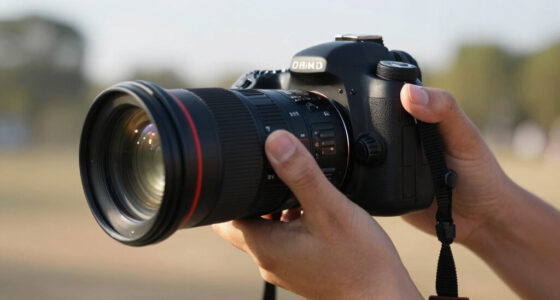
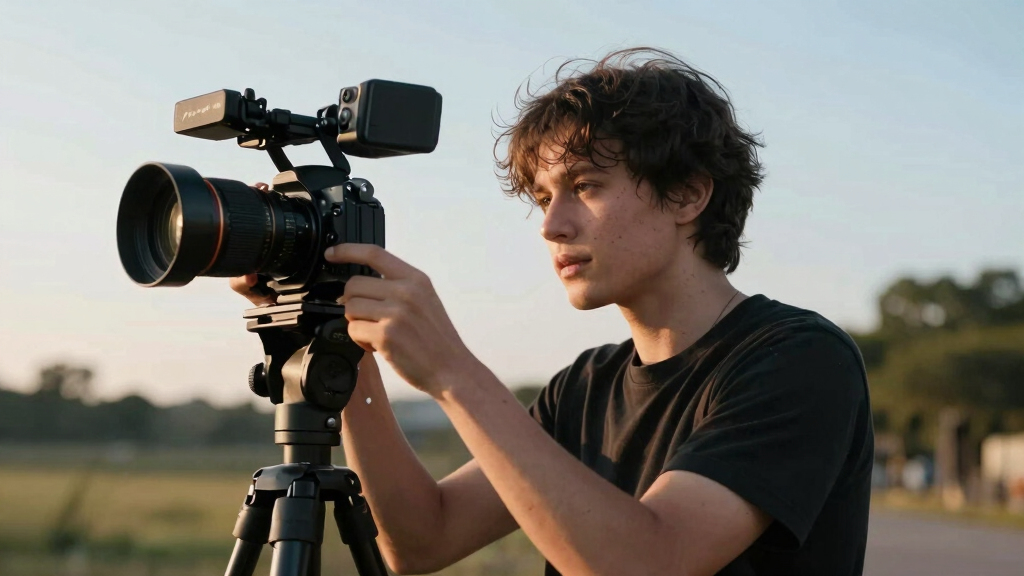
cinema lens with minimal focus breathing
As an affiliate, we earn on qualifying purchases.
As an affiliate, we earn on qualifying purchases.
Why a Tiny Framing Shift Can Pull Viewers Out of the Story
Focus breathing matters for video shooters because viewers see the entire focus move unfold over time. A still photograph hides the movement between focus distances, while video records every small change. During a visible rack focus, even a modest shift can make the frame feel restless rather than intentional.
That is why video shooters, especially those working on narrative films, interviews, music performances, or product scenes, inspect more than sharpness. A focus pull often acts like a pointing finger. It directs attention from one face to another, from a key on a desk to the door it opens, or from rain on a window to the person waiting outside.
Consider a dialogue scene with two actors positioned at different distances. You pull focus from the nearer actor to the farther one just as the second actor reveals something important. With low breathing, the viewer follows the change in sharpness; with heavy breathing, the whole room seems to inhale, and the visual trick competes with the line.
Speed and distance make the effect easier to spot. A rapid pull from close focus to infinity usually exposes more breathing than a slow adjustment between two nearby faces. Longer focal lengths can make the apparent framing movement more obvious, although any focal length can breathe when its optical design permits it [1].
Not every project suffers equally. A handheld documentary shot already contains natural movement, so mild breathing may disappear inside the organized chaos. A locked product close-up with straight table edges tells a harsher story: those edges reveal every shift, and the frame becomes a quietly loud distraction.
As an affiliate, we earn on qualifying purchases.
See Why Cinema Lenses Usually Handle Focus Pulls Better
Focus breathing is usually less pronounced in cinema lenses because designers expect those lenses to move focus during a recorded shot. Many stills lenses prioritize compact size, fast autofocus, and sharp photographs instead. Neither approach is automatically better; each serves a different shooting job [1].
| Lens characteristic | Typical stills lens | Typical cinema lens |
|---|---|---|
| Breathing control | Varies widely and may be visible | Often reduced through optical design |
| Focus ring | Short rotation or electronic control | Long, repeatable manual rotation |
| Focus markings | Limited or absent | Detailed distance markings |
| Size and weight | Usually smaller and lighter | Usually larger and heavier |
| Best fit | Photography, mobile work, autofocus shooting | Planned focus pulls and crew-based production |
On a fast event job, I would often value a light autofocus lens more than flawless breathing control. The camera follows faces, the operator changes position, and the background keeps moving. In that setting, speed and portability can matter more than a perfectly fixed field of view.
A controlled tabletop scene reverses those priorities. Suppose you pull focus from the engraved face of a watch to its reflection in a mirror. The smallest framing change makes the watch appear to grow, so a lens designed for repeatable manual focus and reduced breathing earns its extra weight.
Focus-by-wire lenses add another wrinkle. Their electronic rings can produce smooth pulls when the response is predictable, but some models change focus by different amounts depending on how quickly you turn the ring. They may soften the human jerkiness of a pull, yet electronic smoothness does not remove optical breathing.
Cinema glass also brings tradeoffs: larger barrels, slower setup, manual operation, and more gear around the camera. You do not need it for every shoot. What you need is a lens whose behavior matches the shot, because expensive glass can still be the wrong glass.
As an affiliate, we earn on qualifying purchases.
Test Any Lens for Focus Breathing in Five Minutes
Focus breathing can be tested with a locked camera, two objects at different distances, and one recorded focus pull. Keep exposure, focal length, and camera position fixed. You are watching for a change at the frame edges, not merely the moment when one object becomes sharp.
- Lock the camera down. Place it on a tripod or a solid table so physical movement cannot mimic breathing.
- Build two clear focus targets. Put a mug about 1 metre away and a bookshelf several metres behind it.
- Frame visible edges. Include a doorframe, shelf, or window near the border so small magnification changes become easy to see.
- Pull focus in both directions. Record from the mug to the shelf, then return from the shelf to the mug at a steady pace.
- Review at full size. Ignore sharpness for one pass and watch whether the border objects expand, contract, or slide out of view.
I use this simple check before filming interviews with layered compositions. If a plant sits close to camera, the subject occupies the middle distance, and a lamp glows behind them, the three depth layers make breathing easy to judge. A wall of plain grey gives your eyes far less information.
Run the test at the actual focal length and focus distances you plan to use. A zoom lens may breathe strongly at its long end but behave well at its wide end. A lens can also look calm between two people seated close together, then lurch when you pull from minimum focus toward the horizon.
Do not judge the lens only from a fast pull. Record one quick move and one move lasting about four to six seconds. The quick version reveals the total framing change, while the slower version shows whether that change will feel distracting at the pace of your scene.
Compare lenses with identical framing rather than identical markings on the barrel. If one lens starts wider, its movement may appear less obvious simply because the subject occupies less of the image. A fair test gives you matching compositions before you turn the focus ring.
As an affiliate, we earn on qualifying purchases.
Keep Focus Pulls Smooth Without Replacing Your Lens
Focus breathing can often be made less visible through careful blocking, slower focus pulls, restrained focus distances, and extra room around the subject. These choices do not alter the lens design. They control how strongly the viewer notices the unwanted framing change.
- Shorten the focus move: Keep both subjects within a narrower distance range when the scene allows it.
- Slow the pull: Spread the change across several seconds so the frame does not snap inward.
- Frame a little wider: Leave space around faces and props in case the lens tightens at close focus.
- Avoid rigid edge references: A blank wall hides movement better than a grid of shelves or window frames.
- Check camera compensation: Some modern camera-and-lens combinations can crop and resize the image during focusing to counter visible breathing [2].
Suppose you are filming a bride reading a note before a ceremony. The planned shot moves focus from the handwritten page to her eyes. If your lens breathes, placing the note slightly closer to her reduces the distance the lens must travel, while a five-second pull makes the remaining movement gentler.
A dedicated follow-focus unit can help your hand produce a steady, repeatable move. Mark the start and end points, rehearse the timing, and let the actor’s movement meet the focus rather than chasing them wildly. This improves the pull, but remember the distinction: a smoother ring movement hides breathing; it does not remove the optical cause.
Built-in focus breathing compensation can work very well with supported equipment. The camera applies a changing crop to keep framing steadier as focus moves, trading a small amount of the image area for cleaner motion [2]. Check lens compatibility, available recording modes, and the added crop before relying on it during a paid shoot.
Sometimes the best choice is to leave the shot alone. Mild breathing during a handheld walk-and-talk rarely deserves a complicated workaround. Save your effort for locked frames, close-ups, architecture, product work, and any moment where the focus pull carries the story.
Know When Editing Can Fix Breathing—and When It Cannot
Post-production can reduce focus breathing by animating scale and position in the opposite direction of the lens’s framing change. The correction works best when breathing is mild, the camera stays still, and the image has enough spare resolution for a crop. Heavy breathing creates harder geometric problems.
For a simple locked shot, choose a stable object near the edge and watch how it moves during the pull. Add keyframes that gently resize and reposition the clip until that object remains nearly fixed. If the lens zooms inward as focus moves closer, your correction usually scales the image outward, which requires cropping the edges.
A 4K clip delivered in 1080p gives you more room for that adjustment than a 4K clip delivered in 4K. The extra pixels act like trimming space around a print. Yet resolution does not solve everything: a large correction can soften detail, magnify noise, and reveal changing distortion near the corners.
Imagine a product shot where a bottle stands against a tiled wall. You may steady the bottle with a scale correction, but the grout lines can still bow or drift if the lens changes distortion while focusing. The centre looks repaired while the corners whisper that something moved.
Subject motion also complicates the job. If an actor walks toward the camera while you pull focus, the person should naturally grow in the frame, and software must separate that real size change from the lens’s breathing. Automated tools may help, but prevention remains more reliable than rebuilding the composition frame by frame [2].
Use editing for a short shot that is otherwise strong, not as permission to skip testing. A five-minute lens check can save an hour of keyframing later. On set, you still have choices; in post, you have pixels, patience, and limits.
Frequently Asked Questions
What causes focus breathing in a camera lens?
Moving internal lens elements can change magnification while they change the focus distance. That altered optical path makes the image appear to zoom, even when the camera and zoom ring remain fixed [1]. The amount depends on the specific lens design, focal length, and focusing distance.
Do all lenses have focus breathing?
Many lenses show some degree of breathing, but the amount ranges from almost invisible to very obvious. A lens may behave well during a small pull between two seated people and breathe heavily from a tabletop object to infinity. Test the exact shot setup rather than relying on a broad label.
Are longer lenses always worse for focus breathing?
Longer focal lengths can make breathing easier to notice because small magnification changes occupy more of the frame. They are not always worse, since optical design matters more than focal length alone. A well-controlled telephoto lens can breathe less than a poorly controlled standard lens [1].
Can autofocus cause focus breathing?
Autofocus does not create optical breathing; it moves the same focusing elements that a manual ring moves. Fast autofocus can make the effect feel sharper because the framing changes quickly. A slower focus response may hide the movement better, but the underlying magnification change remains.
Is a cinema lens worth using just to reduce breathing?
A cinema lens makes sense when your work relies on planned, repeatable focus pulls, such as narrative scenes, product films, or controlled interviews. For events, travel, or documentary work, a lighter autofocus lens may serve you better even if it breathes slightly. Base the choice on the shot you need, not the label printed on the barrel.
Conclusion
Your most useful habit is simple: test the focus pull before the real take. Watch the borders, not just the subject’s eyes, and decide whether the lens movement supports the shot or steals attention from it. If breathing appears, change the distance, pace, framing, lens, or compensation setting while the camera is still in front of you.
A good focus pull feels almost invisible. The viewer notices the letter, the face, or the figure in the doorway—not the glass shifting inside your lens. Keep the frame quiet, and let focus tell the story.
Fall Picks
fall essentials
As an affiliate, we earn on qualifying purchases.