
At a Glance
| Criteria | Condenser Microphones | Dynamic Microphones | Winner |
|---|---|---|---|
| Sound Quality | High detail, crisp highs, ideal for vocals and delicate instruments | Less detailed, more coloration, suited for loud or live sources | A |
| Durability | Fragile, sensitive to impacts and moisture | Rugged, resistant to impacts and moisture | B |
| Price Range | Typically higher, especially for studio-grade models | Generally more affordable, with a range of budget options | B |
| Frequency Response | Wide, flat response emphasizing subtle details | Limited high-frequency response, focused on mid-range | A |
| Sensitivity | Very sensitive, picks up nuanced sounds | Less sensitive, better for louder sources | A |
| Handling of Loud Sources | Less suitable for very loud sources | Best for loud instruments, live sound, rough environments | B |
| Use Cases | Studio vocals, acoustic instruments, podcasting | Electric guitar amps, drums, live recordings | A |
| Size & Portability | Varies from compact to large-diaphragm models | Typically more compact and portable | B |
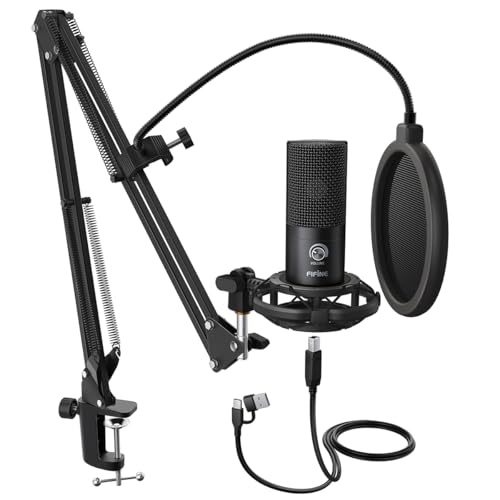
FIFINE T669 Studio Condenser USB Microphone for Recording Podcasting
- Easy USB Plug-and-Play: Connects directly to PC or laptop
- High-Quality Sound: Wide frequency response and clear audio
- Durable Construction: Robust build for long-lasting use
As an affiliate, we earn on qualifying purchases.
FIFINE T669 Studio Condenser USB Microphone for Recording and Podcasting

<p>The <strong>FIFINE T669</strong> stands out for its straightforward USB connection, making it ideal for users who want a hassle-free setup with professional-sounding results. Its cardioid capsule captures vocals and voiceovers clearly, while the included accessories like a pop filter and shock mount elevate the recording quality. Compared with more complex setups, it sacrifices expandability for simplicity, making it perfect for beginners or those who prioritize convenience. However, it’s incompatible with Xbox and can pick up ambient noise if not positioned correctly.</p>
FIFINE T669 Studio Condenser USB Microphone for Recording and Podcasting
- ✔ Connection: USB
- ✔ Frequency Response: Wide
- ✔ Polar Pattern: Cardioid

NearStream AM25X Gen3 USB/XLR Podcast Microphone for PC/Audio Mixer
- ✔ Connectivity Technology: USB, XLR
- ✔ Special Features: AI Noise Canceling, Supercardioid, Real-Time Monitoring
- ✔ Compatible Devices: Audio Interface, Laptop, Macbook, PC

RØDE NT1 Signature Series Studio Condenser Microphone, Black
- ✔ Type: Condenser Microphone
- ✔ Color: Black
- ✔ Includes: Shock mount, pop filter, XLR cable, dust cover
Pros:
- Easy plug-and-play USB connection
- High-quality cardioid sound capture
- Includes useful accessories like pop filter and shock mount
- Sturdy and adjustable arm stand
Cons:
- Incompatible with Xbox consoles
- May pick up ambient noise if improperly positioned
Best for: Beginners, podcasters, streamers seeking quick, quality recordings without additional gear
Not ideal for: Users needing XLR connectivity or professional studio setups
Bottom line: A highly accessible, all-in-one USB mic ideal for newcomers and casual studio recordings.
“A highly accessible, all-in-one USB mic ideal for newcomers and casual studio recordings.”
NearStream AM25X Gen3 USB/XLR Podcast Microphone for PC/Audio Mixer
<p>The <strong>NearStream AM25X Gen3</strong> offers a compelling combination of dual connectivity—USB and XLR—making it highly adaptable for various studio setups. Its supercardioid pattern and AI noise canceling deliver excellent sound isolation, perfect for streaming, podcasting, or music recording in noisy environments. The adjustable stand and real-time monitoring give users fine control over their sound. Compared to the FIFINE, it’s more versatile but requires an XLR cable (sold separately) and a bit more setup. All features are only accessible via USB, which limits its use if you want to switch fully to XLR without further gear.</p>
Pros:
- Excellent noise reduction with AI canceling
- Dual USB and XLR connectivity for flexibility
- Adjustable stand and real-time monitoring
- Sleek, stable design
Cons:
- XLR cable sold separately
- Limited pickup distance (up to 14 inches)
- All functions via USB, no standalone XLR control
Best for: Streamers, podcasters, and musicians who need noise reduction and dual connectivity
Not ideal for: Beginners on a tight budget or those with limited space for additional gear
Bottom line: A versatile, noise-reducing microphone suited for serious streaming and podcasting, with some extra investment for full XLR compatibility.
“A versatile, noise-reducing microphone suited for serious streaming and podcasting, with some extra investment for full XLR compatibility.”
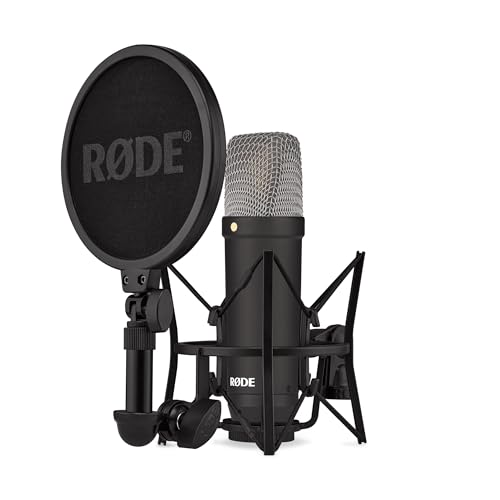
RØDE NT1 Signature Series Large-Diaphragm Condenser Microphone with Shock Mount, Pop Filter and XLR Cable for Music Production, Vocal Recording, Streaming and Podcasting (Black)
- Microphone Type: Large-diaphragm cardioid condenser
- Capsule: HF6 1-inch true condenser capsule
- Frequency Response: Smooth frequency response
As an affiliate, we earn on qualifying purchases.
RØDE NT1 Signature Series Studio Condenser Microphone, Black
<p>The <strong>RØDE NT1 Signature</strong> is a top-tier condenser microphone favored in professional studios for its ultra-low self-noise, making it ideal for capturing vocals and streaming at the highest quality. Its large diaphragm and cardioid pattern focus on the voice while rejecting room noise, providing a clear, detailed sound. It comes with a comprehensive accessory bundle—shock mount, pop filter, XLR cable, and dust cover—offering a complete setup right out of the box. However, it requires an external audio interface for recording, and its sensitivity means it can pick up handling noise if not mounted carefully, making it less suitable for mobile or casual use.</p>
Pros:
- Ultra-low self-noise for pristine recordings
- Complete bundle with essential accessories
- Excellent for vocals and detailed streaming
- Large-diaphragm design for full sound capture
Cons:
- Requires an external audio interface
- Sensitive to handling noise if not mounted properly
Best for: Vocalists, streamers, and professionals seeking studio-quality sound with minimal noise floor
Not ideal for: Beginners or those without an existing audio interface, or mobile recording needs
Bottom line: A premium condenser microphone for professional vocal recordings, best paired with quality audio gear but less portable for casual use.
“A premium condenser microphone for professional vocal recordings, best paired with quality audio gear but less portable for casual use.”
As an Amazon Associate we earn from qualifying purchases.
Key Differences
Condenser microphones are designed to capture detailed, high-frequency sounds with a broader frequency response, making them ideal for studio vocals and acoustic instruments. Their sensitivity allows for capturing subtle nuances but also makes them more fragile and susceptible to environmental noise. Dynamic microphones, by contrast, have a more limited frequency response but offer robustness and high SPL handling, making them suitable for loud sources and less controlled environments. The choice impacts recording quality, durability, and versatility, directly influencing the kind of recordings you can produce and the setup environment.Detailed Comparison
Sound Quality (Condenser Microphones wins — major)
Condenser microphones deliver superior clarity and detail, emphasizing high frequencies and capturing nuances in vocals and acoustic instruments. Dynamic microphones, while less detailed, provide a warm, robust sound that handles loud sources better. For studio vocals and delicate recordings, condensers are preferred; for loud instruments or rough environments, dynamics excel. The gap is major, affecting the final audio quality significantly.Durability (Dynamic Microphones wins — major)
Dynamic microphones are built to withstand impacts, moisture, and rough handling, making them more durable for varied environments. Condenser microphones are fragile, requiring careful handling and stable conditions. This makes dynamics suitable for mobile recording setups or environments prone to bumps, while condensers are best in controlled, static studio settings. The difference is major in practical terms, affecting lifespan and maintenance.Price Range (Dynamic Microphones wins — moderate)
Condenser microphones tend to be more expensive, especially at the professional level, with high-end models delivering exceptional detail at a premium. Dynamic microphones generally offer more affordable options and excellent value for money, especially for beginners or budget-conscious setups. The price gap is moderate but meaningful: investing in a condenser can significantly improve sound quality but at a higher cost.Frequency Response (Condenser Microphones wins — major)
Condenser microphones typically have a broader, flatter frequency response that captures a wider spectrum of sound, emphasizing high frequencies and subtle details. Dynamic microphones have a narrower response focused on midrange and lower frequencies, which can color the sound but are effective for certain sources. This difference impacts the tonal quality and versatility of recordings; condensers are better for capturing natural sounds.Sensitivity (Condenser Microphones wins — major)
Condenser mics are highly sensitive, capable of picking up faint sounds and subtle nuances, making them ideal for detailed studio work. Dynamic mics are less sensitive, better suited for louder sources or when background noise needs to be minimized. This makes condensers ideal for studio vocals, whereas dynamics are better for loud, aggressive recordings. The gap is major in affecting recording fidelity.Handling of Loud Sources (Dynamic Microphones wins — major)
Dynamic microphones excel at handling high sound pressure levels without distortion, making them suitable for loud instruments like drums or guitar amps. Condenser microphones can overload easily, requiring careful gain staging. For loud sources, dynamics are the safer choice; for delicate sounds, condensers shine. The difference is major in practical recording scenarios.Use Cases (Dynamic Microphones wins — depends)
Condenser microphones are preferred for studio vocal recordings, acoustic instruments, and voice-over work due to their detail and accuracy. Dynamic microphones are favored for recording loud instruments, live performances, or in situations where durability matters. The distinction guides users toward their ideal application, with condensers for precision and dynamics for robustness. The gap is major for determining the right microphone for specific tasks.Size & Portability (Dynamic Microphones wins — minor)
Condenser microphones come in various sizes; large-diaphragm models are common for vocals but require external power. Dynamic microphones are generally more compact and easier to transport, with some models designed specifically for mobile recording or live use. Portability may influence choices for mobile setups or touring. The difference is minor but practical in certain contexts.Condenser Microphones: Pros and Cons
Pros:
- Exceptional detail and clarity, perfect for vocals and acoustic instruments
- Wide frequency response captures natural sound nuances
- High sensitivity allows for capturing subtle dynamics
- Ideal for controlled studio environments
Cons:
- Fragile, requires careful handling and stable conditions
- More expensive at higher quality levels
- Less suitable for loud sources or rough environments
Dynamic Microphones: Pros and Cons
Pros:
- Durable and impact-resistant, suitable for mobile or rough use
- Handles high sound pressure levels without distortion
- More affordable, offering good value for beginners
- Compact and portable for mobile setups
Cons:
- Limited detail and frequency response compared to condensers
- Less sensitive, may require higher gain in quiet environments
- Colors sound more, which may affect natural recording fidelity
Who Should Choose What
Choose Condenser Microphones if:
- You primarily record vocals, acoustic instruments, or need detailed, natural sound in a controlled environment
- You have a dedicated studio space with proper acoustic treatment
- Budget allows investing in higher-end microphones
Choose Dynamic Microphones if:
- You record loud sources like drums or guitar amps
- You need a durable microphone for mobile or live setups
- Budget is limited, but you still want good sound quality